
Benin’s Coup Foretells an Unstable ECOWAS and Future
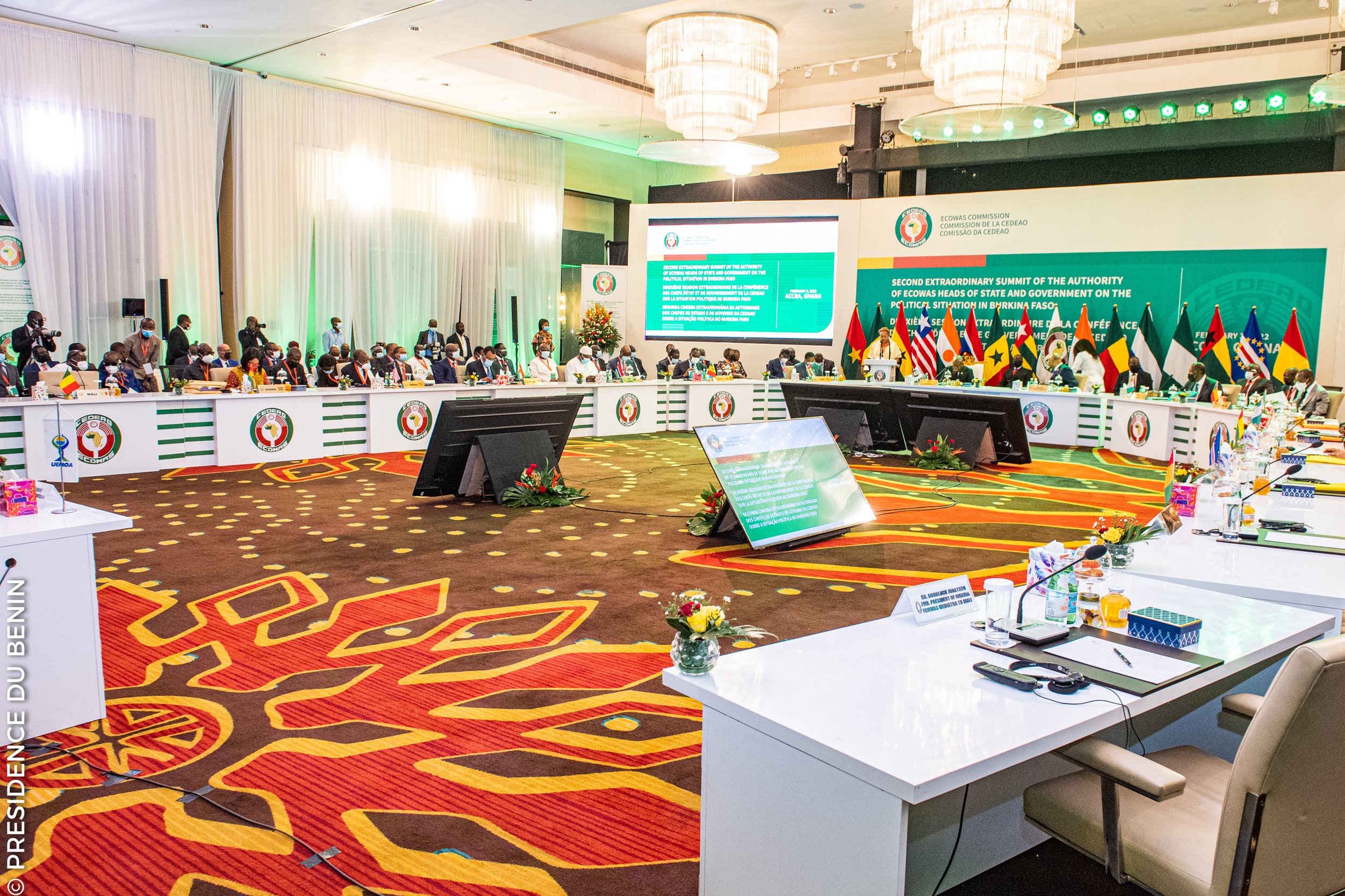
In a scenario that is becoming more and more familiar in West Africa today, the country of Benin found its regime threatened by dissenters from within. During the dawn hours of December 7, 2025, Beninese military units attempted to overthrow Beninese President Patrice Talon in a coup d’etat at the Presidential Palace in Cotonou. However, this story brought a new twist: peacekeeping soldiers deployed by the Economic Community of West African States (ECOWAS), the main regional bloc of West Africa, thwarted the coup and restored Talon’s rule.
The coup in Benin comes at a time of national unrest: jihadist terrorist groups in the country’s north compete for local footholds and regional dominance among rival jihadist groups and the Beninese military. Meanwhile, President Talon is increasingly unpopular among the Beninese people, chiefly because of his attempted curtailing of opposition parties and press freedoms, threatening Benin’s hard-fought democracy. Discontent among the army arose from their continuing fight against the jihadist insurgency in the country’s North. This discontent manifested in a coup among Beninese military officers, who took control of the national broadcaster and attacked the Presidential Palace in Cotonou. The ECOWAS intervention was composed of soldiers from multiple ECOWAS militaries, including Cote d’Ivoire, Ghana, Sierra Leone, and Nigeria. The operation, led by next-door neighbor and regional power Nigeria, was reinforced by strikes by the Nigerian Air Force on both the national broadcaster and the Presidential Palace as the ground force went to re-establish government control.
Benin is a microcosm for the overarching issues which have plagued West Africa and ECOWAS for the last decade. Jihadist insurgencies have torn through the communities of the Sahel and Northern Nigeria, leaving civilian violence, destruction, and dangerous gaps in state power and legitimacy in their wake. Coups in the Sahel states (Mali, Niger, and Burkina Faso) have deprived ECOWAS of over half of its landmass and crucial economic integration. Meanwhile, the coups in Guinea-Conakry and Guinea-Bissau and the contested elections in Cote d’Ivoire have cast doubt on the vitality of democracy in West Africa. By circumventing democratic norms and failing to address endemic corruption and economic inequality, many of these leaders have eroded their legitimacy in the eyes of the people and diminished faith in the democratic process as a way to solve national issues. The debates around foreign influence, the resource economy, and wealth inequality continue to haunt West Africa’s biggest players as they struggle to work towards ECOWAS’s stated goal of “collective self-sufficiency” in both economic and political realms.
In the context of its manifold challenges, ECOWAS’s swift and decisive military response to the Beninese coup can be interpreted as an effort to reassert its political, regional, and military legitimacy. ECOWAS seeks to demonstrate to regional insurgents, the increasingly popular Alliance of Sahel States (AES), and the international community that it can respond to military threats, can coordinate and maintain order among its member states, and can maintain some semblance of democracy and rule of law within its borders. While ECOWAS seeks to shore up its legitimacy, it still must contend with shifting political conditions and public opinion.
Ibrahim Traore, President of Burkina Faso and de facto leader of the AES, has been dubbed “the most popular leader in Africa” for his Pan-African ideology, rejection of French military and cultural influence, and nationalization of industry. Traore has captured the cultural zeitgeist precisely because he is seen as decisively addressing the issues which young Africans are passionate about, doing so in new ways, and using social media to reach Africans and bolster his popularity. For ECOWAS to maintain its political solvency and reach its economic goals, it must find ways to deal with the issues of terrorism, political repression, economic inequality, and souring opinions toward the West among many Africans.