
The World Cup, a competition where the best nations compete to determine the world champion, has generated considerable excitement in the run-up to the 2026 tournament. The best nations compete for the honor of being the best, sparking feelings of nationalism and excitement among fans worldwide. With 1.5 billion people watching the 2022 World Cup final, nations are eager to qualify for the world’s biggest stage. However, with such a global event occurring, global politics and narrative inevitably permeate. The 2026 World Cup qualification campaign revealed that soccer still has issues of marginalization, discrimination, and inequality towards Africa that are intertwined with broader social and political struggles.
211 FIFA members participate in the qualification round across six confederations (North America, South America, Europe, Africa, Asia, and Oceania), with each confederation having a specific number of slots. Europe has the most available spots, with 16, while Oceania has the fewest, with one automatic qualification spot. The 2026 World Cup is bringing massive changes to the tournament format, expanding the number of nations from 32 to 48. FIFA president Gianni Infantino argued that the expanded format will increase interest in soccer worldwide, beyond Europe and South America. This is evident with Africa gaining 4.5 (5 to 9.5) additional slots and Asia receiving 4 (4.5 to 8.5) additional slots.
It has been no secret that since the early 1990s, FIFA has been trying to stretch soccer’s influence in the Global South and the Asia-Pacific. As nations in the Global South continue to bolster their economic and political influence, FIFA has sought to capitalize on opportunities to expand soccer’s global reach and generate revenue from untapped markets. In 1998, FIFA expanded the tournament from 24 to 32 teams, and subsequent editions were held in Asia (Japan and South Korea, 2002) and Africa (South Africa, 2010). The extra revenue generated from the 2026 World Cup will go towards helping develop soccer in less developed nations. The new format has already broadened the horizons for nations such as Jordan, Uzbekistan, and Curaçao, which will make their tournament debuts. However, this new allotment format has come under criticism, most notably from Italian manager Genaro Gattuso.
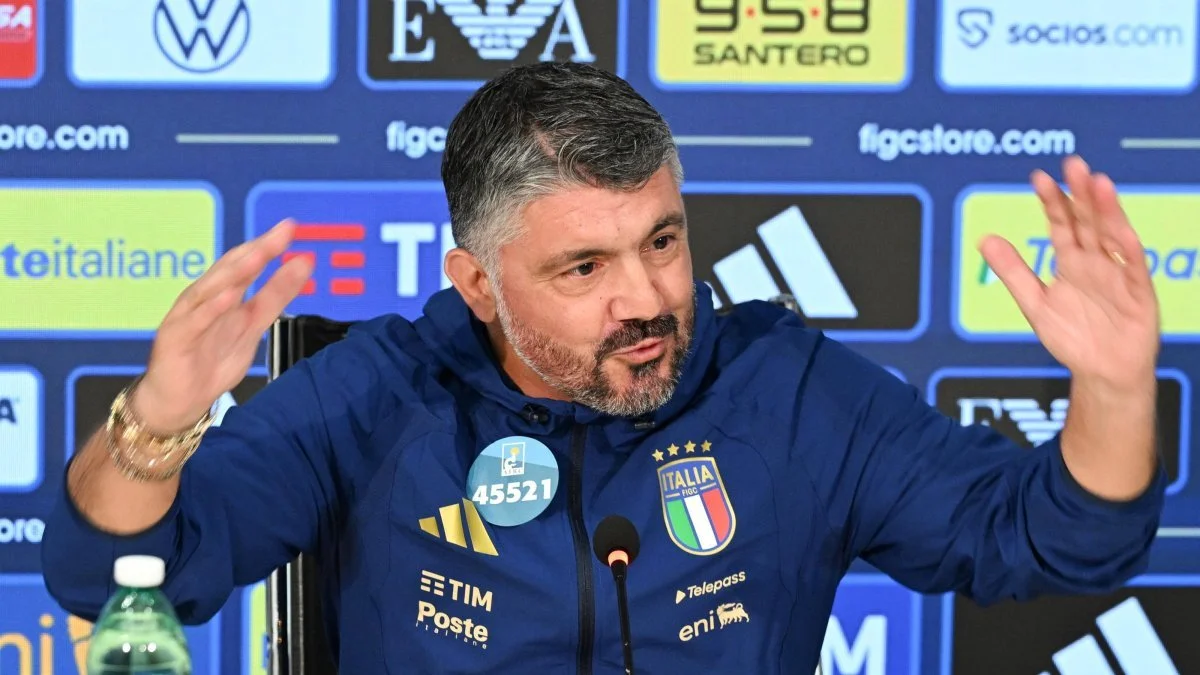
Gattuso's recent comments on the World Cup qualifying format have revealed a much darker side of international soccer, one rooted in stereotypes, discrimination, and cultural superiority. This issue has persisted since the game's inception and shows no signs of abating. While soccer seems like an innocent sport that the world enjoys, it exemplifies the racial marginalisation and discrimination toward non-Western nations. In November of 2025, Gattuso spoke out on his frustration with the new system. He lamented the difficulties of qualifying in Europe, as his Italian team missed out later in November after a second defeat to Norway. Consequently, Italy will face a playoff round of qualification, with the potential of missing their third consecutive World Cup. In his complaints, Gattuso told the press, “In 1990 and 1994 there were two (African) teams – now there are nine. It’s not a controversy, but it creates difficulties.” He proceeded to express his dismay that a nation like Italy, with such a strong football pedigree, can fail to qualify, while smaller nations such as Cape Verde, Haiti, and Curaçao have secured their place.
Gattuso’s words highlight the continued racial marginalisation of certain groups, an issue far greater than the World Cup or soccer. Gattuso demonstrates a Western bias, alluding that Europeans are inherently better at soccer and therefore should be given the most World Cup spots and have an easier qualification path. This is despite Morocco reaching the semi-finals in 2022, defeating powerful European nations such as Spain and Portugal during the tournament. He appreciates the previous framework, where only 2 out of 54 African nations qualify because, in his view, African nations are inherently worse at the sport. Therefore, if the World Cup is supposed to feature the best nations, “inherently” bad teams in Africa and Asia should receive fewer slots. Gattuso's transparent cultural superiority complex stems from a history of colonialism, which emphasises Europeans as naturally superior while demeaning other groups, including Africans and Asians, as “lesser” people.
Many African teams have called out Gattuso in his recent comments, highlighting this colonial mindset. Senegalese and Moroccan pundits claim Gattuso's comments were colonial thinking masked by nostalgia. Nigerian football legend John Utaka pointed out that Europe still obtains more allotment spots than Africa, emphasising internal issues that stopped Italy from qualifying. The disdain for Gattuso's comments extended far beyond pundits and players, with everyday Africans uniting as #GattusoOut dominated X across the continent.
The statement and assumption that Europe contains all the best players compared to Africa fail to consider the colonial context. Many of the top players on elite national teams such as France and England are of African descent. During the colonial period, Western powers discriminated, tortured, and ravaged the native population, leaving these nations poor, underdeveloped, and unstable when achieving independence. This underdevelopment, though mostly talked about in an economic and political context, had a huge impact on soccer in the region. Currently, youth programs are not fully established, there is insufficient outside funding, and there are poor-quality stadiums. Many professionals fail to get paid on time and have little to no insurance. Children wanting to participate in higher levels are forced to migrate to Europe, where training resources and opportunities are superior. As a result, many locals immigrate to their former colonial rulers, seeking a better life.
Additionally, soccer in Africa has a lot less exposure worldwide compared to areas like Europe and South America. This incentivizes African players to pursue careers in Europe, where leagues are marketed as the pinnacle of sports, and players can gain more recognition. This causes Western powers to perpetuate the notion that colonial powers are just more prosperous and advanced, when in reality, it is because of their colonial destruction of Africa. Despite the hurdles and narratives African nations and programs have to overcome, recently, strong progress has been made. Deals from broadcast networks to host the Africa Cup of Nations (AFCON) games have generated mass revenue used to fund infrastructure projects such as roads, hospitals, and stadiums. Following 2028, the confederation has decided to align AFCON with the EURO schedule to generate even greater revenue for development.
However, when young stars are not deemed good enough to start for England or France, they switch nationalities and appeal to their African heritage. Upon Ghana’s qualification to the World Cup, both Eddie Nketiah and Calum Hudson-Odoi expressed interest in playing with the Ghana national team. This is despite both players previously refusing to represent Ghana in favor of England. The shift highlights a pattern rooted in colonial dynamics, driven by the assumption that earning minutes in Africa is easier because the competition is weaker. The situation presents a dilemma for the Ghanaian Football Federation and other African teams. On one hand, allowing these players to represent Ghana adds much-needed talent to help develop soccer and compete at a high level. On the other hand, accepting players who previously intended to represent European nations only perpetuates the notion that Africa is second-class compared to European superiority. This is not just an issue with Ghana, but with many African and Caribbean nations that reinforce Western hierarchies in the soccer world.
Overall, soccer can be a uniting factor that brings a nation together. Even so, with such a popular sport, narratives, beliefs, and biases from pop culture permeate it. Despite decolonization ending around 50 years ago, its impact persists in unfairly marginalizing groups. Racism has always been a problem in soccer, and with Gattuso's comments, there is still a long way to go before it is resolved. Despite past struggles, soccer in Africa, Asia, and the Caribbean has been on the rise, and with the expanded format, many nations will get the opportunity to play at the World Cup and develop infrastructure.