Expanding Our Definition of Meat: Changing perceptions of alternative protein sources for potential benefits
Guest Writer Audrey Velanovich discusses perceptions of Veganism and Vegetarianism and obstacles to adopting alternative protein sources.
Introduction
I’m vegetarian. I’m vegan. These are two statements that can mean very different things to different people. For some, being a vegetarian or vegan means giving up animal products in order to save the lives of other living creatures. For others, it means eating a healthier or “cleaner” diet in order to obtain a certain weight-loss goal or body image. And in some cases, these statements can be heard with resentment or negativity, incorporating another meaning to vegetarianism and veganism that’s tied with an undesirable social context.
However, it is agreed that choosing to follow a vegetarian and vegan diet is so much more than simply giving up meat or only eating vegetables. A vegetarian diet excludes the consumption of animal meat (including any livestock, seafood, and wild animals), but can include the consumption of some animal byproducts, such as milk and cheese. A vegan diet, meanwhile, excludes the consumption of all animal meats and by products, including gelatin and honey. Vegan diets have also been referred to as “total vegetarian.”
Recently vegetarian eating behavior rose in popularity, almost as much as participation in the vegan lifestyle; between 2014 and 2017, there occured a 600% increase of the number of people in the United States who identified as being vegan. The reasons that more and more people have chosen to consume a meatless and/or no-animal-product diet are numerous, complex, and many are justifiably sound. It’s common to associate vegetarianism, veganism, and meat-selective diets with the ethical desire to avoid killing animals unnecessarily or with religion. But the rise in choosing an exclusively or almost exclusively plant-based diet over a diet that includes meat and animal products is linked to environmental, health, and economic benefits. These benefits have been thoroughly researched and examined for legitimacy with an abundance of scientific data as support.
Yet there is still a strong negative social response to veganism and vegetarianism. While most people in contemporary culture avoid “open expressions of prejudice towards racial outgroups,” many people feel that they can be openly prejudice towards vegetarians/vegans. Most of this prejudice is voiced in the form of social media, especially online memes, to represent non-vegetarians’ exasperation over vegetarian and vegan lifestyle choices. Stereotyping, exaggeration, and misunderstanding have all contributed to anti- vegetarian and vegan discourse, discrediting and diminishing many of the positive benefits these diets can provide. One of the main criticisms of meatless diets is the assumption that one cannot get sufficient protein from non-animal sources, or alternative protein sources. This assumption illustrates the fundamental lack of understanding and nutritional education of many people, especially in the United States. However, the negative perception of vegetarianism and veganism has been, and can continue to be, changed as new health related research, plant-based products, environmental concerns, and economic justifications provide a more holistic understanding of these diets. Changing consumers’ perceptions about alternative protein sources that are essential parts of vegetarian and vegan diets may lead to better public and individual health outcomes, environmental sustainability, and more economically affordable food options.
Today’s Meat Consumption Culture and Perceptions of Vegetarianism
Although vegetarianism and veganism is on the rise, it is sound to say that the consumption of meat will continue to grow as well. In 2004 the average American consumed 203.2 pounds of meat per year, which translates to over half a pound of meat per day. The meat industry continued to grow and strengthen its production capabilities throughout the decade until the economic shock of the Great Recession reduced Americans’ consumption of meat to 186.6 pounds a year in 201. Now, the average consumption of meat per person in the U.S. is creeping back up to 200 pounds per year and is expected to reach 219 pounds a year by 2025, according to the USDA Economic Research Service.
Indeed, even with the rise in meat-less and meat-restricted diets, Americans in general are demanding and eating more meat. There are several speculations for why this is, such as the idea that meat consumption has been a fundamental part of the “American” diet since the early settlement period. Increase in meat consumption can also be correlated with the steady increase in United States’ GPD over the past 50 years, offering the idea that as Americans generate more wealth they can afford to eat more meat. However, an increase in meat consumption is strongly correlated to other, more harmful, trends related to Americans’ health and environmental destruction. As Americans are eating more meat, they’re also increasing rates of obesity, cardiovascular disease, and diabetes among other weight related health problems.. Meanwhile, the food industry has contributed to a quarter of the increase in greenhouse gas emissions with 80% of that are linked to animal meat and livestock production. These massive livestock production farms are housed on huge areas of land that are depleted of their original and natural vegetation and create 3 times more animal waste than the amount of human waste the entire U.S population creates per year.
Yet with all of this data that emphasizes the disadvantages, an understatement for sure, of Americans’ current meat consumption habits, there are still strong negative perceptions of vegetarian and vegan diets. Unsurprisingly, an experimental survey to explore prejudices against vegetarians, found that individuals who enjoy beef tend to have to “anti-vegetarian prejudices”. This result emphasizes the sociological need that people have to distance themselves from groups who they disagree with. Simply put, people who eat meat really enjoy eating meat and it bothers some people that vegetarians and vegans don’t eat meat. And that is one of the fundamental reasons why there is resistance to vegetarianism and veganism: people enjoy and take great pleasure out of purchasing, cooking, and eating meat. Animal meat is delicious and high in protein so it leaves people feeling full and satisfied, so of course it would be difficult for a lot people to give up.
But what if we could change the perception and concept of “meat” to more than strictly animal products? There is an emerging market in the food industry that has been developing plant-based food products meant to resemble, taste like, and ultimately be able to replace meat as alternative protein sources. Beyond Meat, one of the leading companies, has already created and is now actively selling plant-based “meat” products that are changing how people view being vegetarian and vegan.
Changing Perceptions of Alternative Protein Sources and the Potential Benefits
Beyond Meat is a company based in El Segundo, California that was founded in 2009 with the mission to “create mass-market solutions that perfectly replace animal protein with plant protein”. The company’s desire to use plant-based proteins to replace meat-based proteins is aimed to improve global and environmental health, decrease the demand for mass livestock production farms, and conserve natural resources. The company recognizes that to achieve this goal it must appeal to more consumers than just vegans and vegetarians. Alexandra Sexton thoroughly analyzes and the way in which the Beyond Meat company creates, markets, and justifies its products in pursuit of its mission.
One of the main concepts that Sexton focuses in her study is how the Beyond Meat company curates the experience of purchasing, preparing, and consuming its product to reflect almost identically the experience one has with the meat equivalent. Sexton argues that the experience, or the “non-stuff”, plays a strong role in the perception, categorization, and enjoyment of what we eat. This is particularly true with how we perceive meat and meat consumption. Culturally, socially, nutritionally, and psychologically speaking, foods that are labeled as “meat” have a very different process of being prepared than those that we would traditionally label as “non-meat” or plant-based. However, through her research and experience with Beyond Meat, Sexton shows that this distinct perception between meat and non-meat can be challenged by utilizing the experience and “non-stuff” of the food itself.
Sexton performed field work analysis of the actual Beyond Meat product and carefully describes the entire experience. She first describes her trip to the local Whole Foods where she walked to the refrigerated meat section of the store and picked up a package Beyond Meat “chicken strips” that are shelved just a few feet away from real, raw chicken breasts. When she opened the package back in her kitchen to prepare a meal with the Beyond Chicken Strips, she carefully describes the texture, consistency, and smell of the strips prior to cooking. Although they did not have a distinct smell, Sexton was surprised to find that when she “broke” a strip in half, it shredded like real cooked chicken meat would. At this point she emphasized her visceral reaction of preparing the Beyond Chicken; up until this point she had had the same experience she would have had with real chicken strips. The only significant difference was that she saved time from not having to worry about the health risks with actual raw chicken. While cooking her Beyond Chicken strips in a sauté pan with onions, spices, and coconut milk to make a “chicken” coconut curry, she reported that the “sounds and smells of the dish” were almost identical the what she had experienced while cooking the same dish but with real chicken. When she ate her meal she reported that although the chicken strips did not contribute largely or combat with the overall flavor of the dish, she said that “[if] I had not known they were plant-based I would have quite likely passed them off as pre-cooked conventional chicken pieces from the supermarket”.
It is at that crucial moment, the culmination of the entire process of preparation and consumption, where Beyond Meat can change one’s perception of what is meat. Based on Sexton’s, and many others’ experience with this alternative-protein product, there is reason to reconsider what we think of as “meat.” If this product looks like meat, is sold in the same grocery store location as meat, cooks like meat, smells like meat, tastes like meat, and even has the same texture as meat can it be considered meat? A follow up question would then be: Why not? Just because the Beyond Chicken strips do not come from an actual chicken and are in fact made of mostly soy protein isolate and pea protein isolate , can they not be considered meat? Ultimately, it is up to each individual consumer to decide that. Nevertheless, the Beyond Meat company has been able to capture the experience one has with meat and mimic it with a product that contains only plant-based protein. In the same way that we accepted the endless types of cakes, pizzas, soups, and many other foods with large varieties, perhaps we can include plant-based protein products in our “meat” category.
The potential benefits for substantially changing Americans’, if not other high meat-consuming countries’, perceptions of meat to include alternative protein sources from plant-based products are profound on both the individual and global level. First, increasing people’s intake of nutrient-dense vegetables from plant-based protein products while decreasing the amount of fatty meats will lead to more nutritious diets and curb the obesity epidemic. With the country’s current eating habit, Americans on average consume daily 2 to 5 ounces of meat more than the American Heart Association recommends to avoid heart disease from high saturated fat and cholesterol intakes. Meanwhile, the average American eats less than 60% of their daily recommended amount of nutritious vegetables.
Secondly, eating a more plant-based diet will also save people economic costs both at the grocery store and in weight-related medical bills. Plant-based protein is more cost efficient to produce as it only requires the farming of plants instead of clearing land, raising, feeding, maintaining, slaughtering, and packaging the meat of livestock. If Americans were to shift towards a predominantly vegetarian diet, the country could save up to $735 billion per year on groceries, medical bills, and other costs related to meat production and consumption. The greater affordability of mass-produced plant-based products would also help people with low-income obtain more nutritious forms of protein.
Thirdly, reducing the consumption of animal meat due to an increase consumption of plant-based protein sources would dramatically reduce the negative effects the livestock industry has on the environment. A vegetarian diet produces 76% less greenhouse gas than a diet that regularly consumes red meat and requires a fraction of the water waste used to produce red meat products. Additionally, reducing the size and quantity of livestock farms and replacing them with a healthy rotation of plant crops would help preserve the land. The land that is used for mass livestock farms becomes depleted and destroyed by animal waste that traps large quantities of carbon and nitrogen in the soil. Using more land for alternative protein crop production instead of livestock could also create a more efficient and sustainable method of food production to feed the world’s growing population. Research from National Geographic reveals that only 55% of the world’s crop production goes to feeding people while the rest goes to feeding livestock or is turned into biofuels and industrial products. The world population is expected to grow to 9 billion people by 2050, but the world’s harvestable land mass cannot expand to sustain our current meat production rates. Whether or not we voluntarily switch to more plant-based diets, we may not have a choice in the very near future.
Potential Challenges and Concluding Remarks
Even with clear, tangible benefits, there are many challenges that can hinder the process of changing perceptions of meat to include alternative-protein sources to reduce animal meat consumption. One of the most substantial challenges is that current plant-based protein sources meant to mimic and replace animal meat products are not perfect. Even with the many positive reviews of Beyond Meat’s products, there are still strong critiques and criticism that highlight the products flaws. The main ones comes from scrutinizing the ingredients list of any of the Beyond Meat products. Although the Beyond Chicken strips were made mostly of water, soy protein isolate, and pea protein isolate, it also contains “natural flavoring”, maltodextrin, and “0.5% less of dipotassium phosphate”. Chemicals like these in processed foods draw skepticism and concern from consumers who would call this not a ‘natural’ product. However, since this is a new and emerging industry, there is great potential for future innovation from other alternative protein companies with similar missions to that of Beyond Meat.
Another substantial challenge is the fact that it’s hard to give up animal meat products. It is culturally ingrained for many Americans that meat is not only a necessity in daily diets, but is hailed as a proponent of the ‘American Dream.’ People may resent Beyond Meat products because it’s not the “real thing” and of course cannot compare them to a thick-cut, perfectly grilled, medium-rare steak that’s chard ever so slightly on the outside and satisfyingly chewy on the inside. But the point of Beyond Meat is not to attempt to make plant-based “meat” take on every aspect of beef meat; the point is to provide another option for meat products. Plant-based meat is different from beef meat as chicken meat is different from pork meat as lamb meat is different from fish meat, etc.
The growing shift towards eating more plant-based diets can be interpreted as a positive sign. People are becoming more informed and aware of how their consumption habits affect both their individual health as well as the health of the planet. One of the best parts about being human is our love for cooking, eating, and sharing food. Shifting towards our eating habits and changing our perception of meat should not be considered as “giving up” an aspect of our diets, but a celebration of even more diverse protein sources to come.
Protectionist Policies Threaten Newfound Stability of Global Airline Industry
Contributing Editor Michael Donaher explains the ramifications of American protectionist policies for the airline industry.
The international airline business has always been known by economists and business experts to be an unpredictable and volatile industry. Its success depends on accurately forecasting major world events, bracing for changes in consumer preferences, and careful management of capital stock during extreme weather and natural disasters. Governments in the 1980s would routinely fund airline companies at a loss in order to ensure the availability of transportation, due to the airlines’ razor-thin profit margins. As a result, profit margins have historically been razor-thin, so much that until the 1980s, governments would routinely fund airlines companies so that air travel could endure. In recent years, however, airlines have found stability. Profit margins have bounced back from the recession and have exceeded pre-recession levels. Any yet, despite this, the airline industry is far from being safe from calamity in the near future. The recent shift of countries favoring nationalistic and protectionist policies, most notably Great Britain and the United States, threaten the newfound stability of the airline industry. Policymakers must actively work to sustain this stability, to encourage free market competition, and to refute the recent compulsion to uptake protectionist trade policies.
Starting an airline requires enormous sums of up-front investment. Moreover, the financial components of this process entails building capital stock, which can vary from the facilities where airplanes are held to the airplanes themselves. To put that in perspective, the cheapest passenger airplane that Boeing makes in the 737 model, at an estimated cost of $51 million. These purchases occur in tandem with hiring an army of employees ranging from pilots, flight attendants, and gate workers, to facilities maintenance and management. The airline, moreover, must lease gates at airports, which are enormously costly; control over airport gates is typically determined through a bidding process. The cost is much higher for a newly-formed airline to buy a gate at an airport and fly planes out of it. Should that route be unprofitable, it can mean the failure of the airline. However, bigger airlines can afford to take losses at times for they can afford to fly half-full airplanes, repair their jets with considerable profit loss, and most of the time, remain functioning even after a severe supply shock. After the 9/11 attacks on the World Trade Center in 2001, the U.S. Federal Government closed airports for over 2 full days, and global demand for airline travel shot down. As a result, Swissair, Sabena, and Ansett airlines shut down, while others like United, US Airways, and Delta all filed for bankruptcy shortly thereafter, despite still being in operation today. In addition to a drastic change in the industry as airlines faltered, airport security in the United States was revamped, with the creation of the Transportation Security Administration (TSA), or the scapegoat many travellers blame for delaying travel. Less noticeably but perhaps just as importantly, the U.S. Congress created the Air Transportation Stabilization Board, which allocated $10 Billion to help failing airlines in the aftermath of 9/11. From the industry breakdown and structure to the aftermath of 9/11, it is clear that airline companies face considerable risk, and as a result, operate under an economy of scale, meaning that they become more efficient as they acquire more resources and market power. It is therefore up to our policy makers and global decision makers to work diligently to ensure the stability of the airline industry so that it can remain competitive and profitable.
Recently, however, airlines have been more stable than any other time in their history. One possible reason for this overall strengthening of the airline industry in the global economy post Great-Recession. During the recession, airlines around the world felt the burden of a decline in consumer spending. Global giants like KLM and Lufthansa put a hold on ordering new planes – leading to a serious shock for Airbus and Boeing. Between 2008 and 2009, United and American airlines cut over 10,000 jobs. More recently, however, economic conditions have been better for airlines. According to the International Air Transportation Association (IATA), in each year since 2009, when the recession began its downswing, annual profit margins have exceeded 3%.
Another explanation is the increase in mergers that allow airlines to experience economies of scale and increase their profits. The increase in airline company mergers is another contributing factor to airline industry stabilization. Prior to 2005, there were nine major airline companies that dominated the United States domestic airline market. However, since 2005, the number of ‘major’ US airlines has shrunk to four, the most recent being Alaska Airlines’ purchase of Virgin America. These 4 major companies now currently represent over 70% of the total airline industry marketplace. When the Alaska Airlines/Virgin America merger was announced, it worried legislators that a small concentration of airlines with considerable market power had the potential to stifle free market competition with low-fare airlines and other companies. This scenario had the potential to lead to an increase in fares and a lower quality of airline travel overall. As a result, the U.S. Department of Justice blocked the merger but eventually agreed to concessions, which included divesting from gate slots, or take-off and landing authorizations, at major airports. The results have thus far been satisfying of all parties involved, as the increased profits of airlines have coincided with decrease in cost of flying.
The stabilization of airlines has lead to new sources of investment in the industry. In February, 2017, famed billionaire investor Warren Buffett made headlines by taking a $10 billion stake in American, Southwest, United, and Continental Airlines. Just a few years earlier he had vocally warned of the risk associated with investing with investing in airlines. Yet, despite great progress towards a stronger and more stable global market for airlines, various parties who have benefited from this change must worry about political factors that could upend this recent phenomenon. In particular, the policies of the United Kingdom and the United States have worried airline executives. According to The Guardian, the trade organization Trade for America has been actively lobbying members of British Parliament to carefully consider Brexit negotiations impact on airline travel – specifically between Heathrow Airport in London and carriers from the United States. The organization argues that even a day’s delay in implementing a policy change could deeply impact carriers. It is estimatedthat 140 passenger flights and just under 50 cargo flights travel between the United States and London each day. Grounding these planes for 24 hours or more could have a monumental impact on global trade. Even with recent improvements in profitability, not all airlines could successfully absorb the shock of losing business within a full 24-hour cycle, which would imply for many millions in losses, and other residual effects on commerce.
It should be noted that airlines flourish under current rules that allow for the free-flow of people and goods between the United States and Europe, otherwise known as the “Open Skies” agreement. Since the likelihood of Brexit talks would place the United Kingdom outside of the European Union, which is under the jurisdiction of the agreement, this privilege would no longer be offered to carriers travelling between the UK and the US. Losing this privilege, or even adjusting to some slightly different system, would take a heavy toll on a handful of international airlines.
Many feel that President Trump’s ban on electronic usage on flights from certain airports threaten the stability of global air travel as well. This March, both the United States and the United Kingdom banned electronic usage on flights, which precludes the use of laptops and tablets, from specific airports that pose as likely targets for terrorists. However, the US conspicuously included more airports on this list than the UK. Political scientists Abraham Newman and Henry Farrell, accredited experts on global and international affairs, suggest that this could be retaliation against specific Middle East-based airlines. Etihad and Emirates, whose hubs are included on this list of US airports, receive more government funding from their home countries to operate. In the past, many US companies have complained that this creates an unfair advantage, as they can operate at a loss but receive government subsidies that allow them to remain operating and competitive. Regardless, retaliatory actions from governments in the name of security threaten the overall freedom and stability of the global marketplace and airlines specifically.
Airline travel will continue to be a crucial part of the global marketplace. Its efficiency and stability will determine the success of transporting information and knowledge across borders for the foreseeable future. Actions that attempt to draw arbitrary boundaries around trade, for protectionist sake or otherwise, only threaten the stability of an industry with an already tumultuous history. In the future, policy leaders must be steadfast in addressing these issues, for the progress of global markets depend on it.
Climate Change and the Long-Run Economic Health of the Arctic
Marketing Editor Samuel Woods explores the way that climate change and economics intersect in the Arctic.
Although one may decry the environmental circumstances that allowed it to happen, the economic possibilities of the Arctic have never been more interesting. Warming temperatures and receding summer ice coverage have expanded the menu of economic opportunities that the region could previously support, and countries and companies around the world have taken note. According to a 2008 U.S. Geological Survey assessment, the Arctic holds 13 percent of the world’s undiscovered oil resources (approximately 90 billion barrels of oil) and 30 percent of the world’s undiscovered gas resources (approximately 1,669 trillion cubic feet of natural gas and 44 billion barrels of natural gas liquids). As receding sea ice and technological investments render the Arctic region increasingly accessible, this vast reserve of resources has become an attractive commercial opportunity for multinational corporations and state-run entities alike. According to estimates by Northern Economics, an Alaska-based economic consulting firm, oil and gas extraction in Alaska’s Beaufort Sea and Chukchi Sea sites alone are estimated to be capable of generating between $193 and $312 billion in state and local tax revenue through 2057, assuming oil prices remain between $65 and $120 per barrel. Even at the current $55 a barrel Brent Crude benchmark, Alaska and the regions around the two sites still stand to bring in roughly $165 billion in tax revenue from these two sites alone. Additionally, these two sites stand to bring an average of over 28,000 jobs to Alaska from now until 2057.
In addition to oil extraction, mineral- and other resource-extraction exploits promise greater economic returns with a warming Arctic. In Alaska alone, exports of mineral resources (such as gold, lead, zinc, etc.) generated $1.3 billion in 2010, and it is estimated that one mine, the Red Dog mine in northern Alaska (which accounts for 5 and 3 percent of the global zinc and lead production respectively), “has contributed $558 million to the statewide economy and $66 million to the Northwest Arctic Borough” between 1989 and 2011. Receding summer ice has also expanded the area available to fishing, and yields have grown steadily in recent years.
In the United States, much of the Arctic extraction activity has come following federal land leases to the highest-bidding commercial company. Between 2003 and 2007, the Bush Administration issued 241 leases covering over a million and a quarter acres in the Beaufort Sea, receiving $97 million in bids. In 2008 alone, 487 leases covering almost 3 million acres of the Chukchi Sea were issued for a total for $2.66 billion. In 2011, the Obama Administrationauthorized three more areas in Alaska to be available for leasing between 2012 and 2017, but these lease sales were later postponed due to environmental concerns. In addition to the initial revenue from bids, federal, state, and local taxes all allow the U.S. to extract revenue from the process.
Unsurprisingly, the United States is not alone is the race to capitalize on newly-extractable Arctic resources. In Russia, where as much as half of state revenue is derived from oil, the government offers special tax rates to encourage Arctic exploration and drilling, in addition to funding university research on special drilling methods and materials, such as supermagnets. Russia has also plantedtheir flag at the bottom of the Arctic Ocean at the North Pole, symbolically indicating their intention to maintain a presence in the region. Concurrently, Norway has recently offered a new round of oil leases in the Barents Sea, continuing an over 50 year practice of selling off drilling rights in explored areas. For its part, Finland looks to capitalize on the rush for Arctic resources through its world-leading icebreaker industry. In Greenland, optimists are even suggesting that tapping into its vast Arctic reserves might allow Greenland to become financially self-sufficient enough to formally split with Denmark and become an independent nation.
Though Greenlandic independence powered by oil extraction may be a slight oversell, for a region like the Arctic that has never seen large-scale economic activity, the ability to capitalize on existing reserves of natural capital represents an unprecedented opportunity for development. However, the abundance of natural capital in a given region can prove to be a curse if not managed proactively. A resource curse – or alternatively referred to as “Dutch Disease”, named after the role that oil wealth played in the decline of the Dutch manufacturing sector – refers to the tendency of communities to over-invest in a specific profitable sector of the economy at the expense of maintaining a diversified and stable long-run portfolio. While lucrative in the short-run, this approach tends to concentrate wealth in small communities and discourage balanced long-run growth. When the resource is non-renewable, such as oil and natural gas in the case of the Arctic, the country or region with Dutch Disease finds itself unable to compete in the long-run, as the region’s natural capital has not been properly re-invested into more sustainable economic endeavors. In a previous issue of The World Mind, Deborah Carey described this counterintuitive phenomenon in the context of Africa.
While it is difficult to definitively diagnose a given country or region with Dutch Disease, the data coming out of much of the Arctic region is symptomatic of a resource curse. In Alaska, a full 36.8 percent of the state’s 2010 foreign export earnings came from mineral resource extraction. More strikingly, petroleum extraction and other mining directly accounted for 30.6 percent of Alaska’s Gross Regional Product (GRP) in 2012, including the value added from transporting the resources across the state via pipeline. Indirectly, taxes on petroleum and mineral activity contribute the lion’s share of the state’s revenue, rendering the state budget heavily dependent on external demand for the state’s oil, gas, and minerals. For comparison, only 0.4 percent of Alaska’s 2012 GRP could be attributed to non-fish or oil extraction-related manufacturing, and only 6.2 and 1.9 percent can be attributed to health care/social work, and financial/insurance services respectively.
A similar story is also playing out in Russia, where over half (51.7 percent) of the entire Russian Arctic region’s GRP in 2012 came exclusively from the extraction of petroleum and other natural resources. In contrast, a mere 4.0, 3.0, and 0.1 percent of GRP came from the manufacturing, healthcare and social work, and financial and insurance service sectors respectively. Like Alaska, much of the economic benefit from resource extraction is realized by companies located outside of the region, and the local population realizes little economic benefit outside of what any local taxes levied may pay for. Not only do Arctic Russia and Alaska to rely heavily on natural resource extraction for generating wealth, but the wealth generated by resource extraction in these areas is not being re-invested in other, more sustainable sectors of the economy, but transferred out of the region entirely. Just as over-investment in oil production led to the neglect of other sustainable Dutch industries in the 1960s, it appears as though Alaska and Russia – who together make up over 60% of the land area of the region – appear to be forgoing a sustainable growth plan in exchange for the promise of short-term riches.
However, while diagnosing Dutch Disease is difficult on its own, it is equally difficult to propose a workable cure for a region so rich in natural resources and capital-starved in just about every other sector. Nevertheless, some Arctic countries seem to be developing more balanced portfolios. Sweden’s Arctic region, for instance, relies on petroleum and mineral extraction for only 10.9 percent of its 2012 GRP, compared to 11.7 and 11.8 percent on manufacturing and healthcare and social work respectively. Others, such as Canada, have ensured that local regions receive transfers from southern regions in exchange for petroleum and mineral extraction.
Yet, in order to construct a compelling long-term growth plan for the Arctic that does not rely exclusively on non-renewable resource extraction, one must identify other comparative advantages that the region may exploit in lieu of resource extraction. Surprisingly, some argue that electronics manufacturing and data storage have a natural long-term home in the Arctic, simply due to the Arctic’s year-long cold temperatures. The idea is that the natural, year-round cold of the Arctic substantially reduces the cost of keeping electronics from overheating, thereby reducing a major cost involved in large-scale data storage. With the global data center construction market expected to increase from $14.6 to $22.7 billion and the global fiber optics market expecting to grow 9.5% by 2020, the gains are there for Arctic countries who are able to exploit their unique climatic advantage. Tech giants like Facebook and Google both seem to be convinced of the advantages of Arctic cold, as the former recently opened a data center in Luleå, Sweden, to service its European traffic, and the latter has begun the process of repurposing an old paper mill in Hamina, Finland, to serve as a data storage center.
Not to be outdone, the Finnish government has already taken significant steps toward developing an electronics manufacturing operation in Oulu, a university city in northern Finland. Feeding off of the pre-iPhone success of Nokia (a Finnish company), Oulu has become a regional hub for the electronics industry. Though the city and region endured a painfully long period ofcontraction after the 2008 crisis and Nokia’s significant loss of marketshare, it has appeared to have bounced back. According to local economic development officials, over 500 tech startups have opened shop in the area since 2014, helping to support about 17,000 high-tech jobs, including around 7,500 in research and development. Additionally, Nokia and the University of Oulu recently announced their intent to collaborate on a new project to develop a 5G test network, which will include a 5G hackathon in June, promising to attract top tech talent to the Arctic town.
More ambitiously, the algorithmic stock trading industry may also be moving North in the near future. Quintillion, an Irish fund administration company, is currently heading phase 1 of a project to build an underwater fiber optic cable network that connects London with Tokyo through Canada’s Northwest Passage. Currently, it takes about 230 milliseconds for data to travel through the network of cables connecting London to Tokyo through the Suez Canal. However, Quintillion claims that its cable will cut this time by just over 26% to around 170 milliseconds, simply by virtue of the shorter distance that the data must travel between points A and B. While this speed boost may offer little more than a nice convenience for most users, to algorithmic stock traders this slight speed advantage is everything. Given that traders in this industry have historically fought to be physically closer to financial centers, it is not inconceivable that the existence of a faster cable in the Arctic may entice this industry to move North, giving Arctic regions a realistic chance to woo traders (and their tax dollars) to their cities. In addition to Quintillion’s Northwest Passage cable, the Finnish government and the Russian company Polarnet have discussed plans to build a submarine cable from Europe to Tokyo via an eastwardly route around Northern Russia, though the plan looks to be impossible without financial backing from the Russian government. Regardless of the ultimate profitability of submarine cable projects like these from the perspective of algorithmic stock traders or city governments, the provision of fast, high quality internet needed in order to facilitate meaningful economic and human development is a boon for the Arctic region that is already being realized.
Of course, transitioning from an economy driven by resource extraction to a digital economy hosting premier electronics manufacturing, data storage, and high-speed trading operations is not straightforward or guaranteed. Perhaps the Arctic climate will keep companies from being able to attract top tech talent, or the data storage or electronics manufacturing markets do not grow as quickly as anticipated. However, if Arctic governments are serious about pursuing healthy long-run growth, they must find a way to keep from over-investing in natural resource extraction, no matter how tempting the short-run gains from doing so may be.
Overestimating Refugees’ Economic Impact: An Analysis of the Prevailing Economic Literature on Forced Migration
Contributing Editor William Kakenmaster disproves prevailing myths surrounding refugees’ economic impact.
The UNHCR reported in June 2016 that the number of number of refugees, asylum seekers, and internally displaced persons reached a record high of 65 million individuals worldwide. How will all these individuals impact the economies of the countries in which they find asylum? Do refugees, as some politicians claim, force domestic workers out of the labor market? Do refugees exert a substantially negatively net fiscal impact? This paper attempts to address these questions by analyzing the prevailing economic literature from 1990 until the present on refugees’ and immigration’s economic impact. I argue that, although the estimated economic effects of immigration and refugees vary, their overall impact is negligible. Refugees exert a slightly negative impact on domestic wages if domestic labor is immobile. At the same time, refugees’ net fiscal impact depends more on their tax contribution—which is a function of their labor market integration—than their consumption of publicly funded goods and services.
Overview
Refugee and forced migration issues have dominated recent political debates in Europe and other parts of the world. Those on the political Right claim that refugees threaten European national security, economic prosperity, and cultural traditions; those on the political Left claim that the influx of refugees represents a humanitarian crisis that demands accepting additional refugees. Perhaps the Economist’s attempt to reconcile these two opposing opinions puts it best: “Humanity dictates that the rich world admit refugees, irrespective of the economic impact. But the economics of the influx still matters.” Setting aside that international law does require states to provide refugees with asylum, this paper attempts to address the two most salient economic questions regarding refugees’ arrival in Europe.
First, do refugees displace domestic workers, leading to higher rates of unemployment and lower wages? Second, do refugees exert significant strains on public finances? While perfect data do not exist to answer either of these questions beyond the shadow of a doubt, evidence suggests that, in the short run, granting refugees asylum leads to a negligible overall effect on the labor market and public finance. In the long run, however, refugees positively contribute to the labor market and public finances, the extent of which depends mostly on the success of their integration into the economy.
Refugees and the Labor Market
Economists disagree about the precise nature and extent of immigration’s impact on the wages and unemployment rates in immigrant-receiving countries. On the one hand, some studies suggest that immigration has “essentially no effect on the wages or employment outcomes” of domestic workers. David Card’s famous analysis of the Mariel Boatlift found that refugee immigration had a positive, yet minimal impact on the Miami economy due to the city’s ability to absorb refugees into previously unexploited sectors. On the other hand, George Borjas argues that, because of labor mobility, the impact of immigration on unemployment and wages may be tenuous in regional labor markets, while simultaneously depressing labor market conditions at a national level. Borjas measured skilled and unskilled immigrant labor in terms of educational qualifications and found that a 10 percent increase in the labor force due to immigration resulted in a three to four point decrease in domestic workers’ wages.
However, other studies attempt to find some sort of middle ground, disputing both the argument that immigration has no effect on the labor market and the argument that immigration drastically depresses wages and employment. Gianmarco Ottaviano and Giovanni Peri, for instance, adopt the qualification bands from Borjas’ framework, but they assume that, even within those bands, immigrant and domestic workers are not perfect substitutes. In other words, immigrants with the exact same educational qualifications as domestic workers can function as “imperfect substitutes” because of labor market discrimination. Even if immigrants could do the same job as domestic workers, they don’t practically function as perfect substitutes because, in reality, they may not be hired by employers who consider them less capable because of their race, ethnicity, nationality, language, etc. As a result, Ottaviano and Peri find that immigration has “a small effect on the wages of native workers with no high school degree (between 0.6% and +1.7%) […and] a small positive effect on average native wages (+0.6%).” Moreover, Ottaviano and Peri also note that, given the standard error, this effect is not “significantly different from 0.” The largest impact on the labor market observed was on the wages of previous immigrants, which were found to have “a substantially negative effect (−6.7%).” Thus, even at the theoretical level, the effect of immigration on the labor market has been highly contested.
Later, even more tweaks were made to the traditional methodology used to study the economic effects of migration. Stephen Nickell of the University of Oxford and Jumana Saleheen of the Bank of England recently studiedmigration’s impact on average British wages in any given region of the country between 1992 and 2014. Crucially, Nickell and Saleheen measure skill distribution by occupation, a clever methodological tweak considering “that it is often very tricky to accurately compare education qualifications across countries.” In addition, treating skill distribution as a function of occupationhelps to translate the economics of migration directly into the jargon of public discourse, which treats immigrants principally by occupation rather than by educational attainment, such as with the “stereotype of the Polish plumber—used widely as a symbol of cheap labor.” Ultimately, Nickell and Saleheen findthat migration exerts “a statistically significant, small, negative impact on the average occupational wage rates of the regions” studied. The largest effect on wages observed related to semi-skilled and unskilled labor, where a 10% increase in migrant labor resulted in a 2% decline in the average wage. Nickell and Saleheen’s occupational measure of qualification might be said to be more accurate than educational measures such as Borjas’ considering that, oftentimes, educational credentials do not transfer between countries. Therefore, Nickell and Saleheen’s findings suggest that refugees immigrating to Europe may adversely affect the labor market, but not nearly to the extent that some politicians claim.
Moreover—and with specific regard to refugees—the Economist notes that the wage-dampening may “even have positive side-effects” for the domestic labor market. A recent paper by Mette Foged and Giovanni Peri finds that, in Denmark between 1991 and 2008, domestic workers pushed out of low-skilled industries by refugees changed jobs to other, “less manual and more cognitive” labor-intensive sectors. Such jobs included “legislators and senior [government] officials,” “corporate managers,” and even “skilled agricultural and fishery” sectors. By contrast, the proportion of refugees composing manual skilled sectors such as “machine operators,” “drivers,” and “mining laborers” rose substantially, resulting in “positive or null wage effects and positive or null employment effects” for domestic populations over the long run. So, to the extent that refugees substitute for domestic labor—however imperfect that substitution may be—their overall economic impact also depends on the abilities of displaced domestic workers to find employment in other sectors. Additionally, evidence exists from Congolese refugee camps in Rwanda to suggest that one additional refugee receiving cash aid contributes an estimated $205 to $253 to the local economy. Taking the difference between contributions and per-refugee cash aid, refugees yielded a positive individual contribution of between $70 $126 annually. Most of the refugees’ individual contributions resulted from spillovers with the local economy, such as the “purchase [of] goods and services from host-country businesses outside the camps.” If refugees displace workers who move into other sectors of the economy and experience higher wages, then they also positively contribute to the sales of local businesses.
Refugees and Public Finances
Refugees exert a similarly ambiguous impact on public finance as they do on the labor market. In fact, a 2013 OECD report notes that including or excluding non-personal sources of tax revenue, such as corporate income taxes, as well as non-excludable goods like roads, in an analysis of immigrants’ net public fiscal impact “often changes the sign of the impact” itself. Estimates of immigrants’ net fiscal impact thus vary depending on the methodology employed, although the report’s main findings suggest that—however measured—the impact “rarely exceeds [plus or minus] 0.5% of GDP in a given year.” In fact, the OECD observed the highest impact on public finance in Luxembourg and Switzerland, where immigrants positively contributed an estimated 2% of GDP to the public purse. Compared to domestic populations, however, the OECD report found that, on average, immigrants have a lower net fiscal contribution overall.
This is an especially salient concern in the short run, because refugees can potentially exacerbate strains on the public purse, contributing to increases in demand for public services while the supply of those resources remains temporarily fixed. In fact, precisely because of the protections afforded to asylum seekers under international law, “additional public spending for […] housing, food, health, and education, will increase aggregate demand,” therefore making such services more costly to provide, all else equal. However, in many cases, the short-term costs of accommodating asylum seekers are borne by international donors rather than governments. In fact, University of Oxford Professor Emeritus Roger Zetter notes that global programs to accommodate refugees in the short term total 8.4 billion USD globally, but that economists “rarely analyze the economic outcomes of their program[s].” Instead, they “tend to assess the impacts and costs for the host community” as a percentage of GDP regardless of whether or not the government actually pays for the accommodations provided to refugees. Such analyses are frankly misleading because, while aggregate demand for publicly funded goods may increase in the short run, the cost of meeting such a higher demand puts strain on NGOs, the UNHCR, and other international donors, not on governments.
Among the three countries with the highest numbers of Syrian refugees—Turkey, Lebanon, and Jordan—GDP is expected to rise, while estimates of the costs of accommodating refugees are paltry. The OECD predicts that Turkey’s GDP growth will “remain close to 4% per annum in 2016 and 2017.” Meanwhile, the 5.37 billion euros that Turkey spent between 2012 and 2015 on “the perfect refugee camp[s]” amount to less than 0.2% of GDP per year. Turkey, importantly, is one of the only countries paying the entire costs of short term asylum accommodations out of pocket, “except for some relatively minor international donations” Similar trends have been observed in Lebanon and Jordan, where GDP growth far outpaces the short term costs of accommodating refugees largely due to the fact that—in contrast to Turkey—refugee camps and resettlement programs are funded principally by NGOs and the UNHCR.
Yet even following the short term costs of accommodating refugees, their net fiscal impact over time depends more on the success of their integration into the labor market than their raw consumption of publicly provided goods and services. Joakim Ruist from the University of Gothenburg, for instance, suggeststhat the net fiscal contribution of refugees in Sweden steadily increases from approximately 10,000 kronor (approximately 1,100 USD) during the first year of residence to over 30,000 kronor (approximately 3,300 USD) during their seventh year. In a similar vein, the IMF observed that, depending on the speed of labor market integration, “the level of GDP could be about 0.25 percent higher for the EU as a whole and between 0.5 and 1.1 percent higher in the three main destination countries (Austria, Germany, Sweden)” by 2020.
Importantly, Ruist found that four-fifths of refugees’ net fiscal impact has been estimated to result from their smaller contributions to tax revenue, while only one-fifth was due to “higher per-capita public costs.” In other words, the net fiscal impact of refugees has more to do with their limited contribution to government revenue than their increased demand for public services, suggesting that refugees are more than capable of paying for the public services they consume if successfully and fully integrated into the labor market. This further justifies the need to focus on integrating refugees into the labor market of their destination country, as opposed to simply denying asylum claims based on perceptions that refugees will “steal” domestic jobs.
Furthermore, attempting to estimate refugees’ net fiscal impact based on previous models of migration like Borjas’ wrongly assumes that refugees have a reasonably similar economic profile as other immigrants. In reality, the net fiscal impact of any immigrant varies depending on both the economic profile of the immigrant and the economic conditions of the receiving countries. For example, immigration to Europe between 2007 and 2009 heavily strained public finances because “lots of [immigrants] were pensioners, who tend to drain the public finances,” according to the Economist. By contrast, most refugees fleeing Syria, who “constitute[d] the biggest national group migrating to Europe in 2015,” are both younger and more skilled than those fleeing the last “refugee crisis” in Europe—that of the former Yugoslavia in the 1990s. The median age of Syrian refugees in 2014 was 23 years-old, and compared to the former Yugoslavia, the ratio of “youth cohorts” to “near-retirement-cohorts” has declined from 1.3 to 0.7 since 1990. Moreover, the International Labor Organization reported in 2014 that an average of 56% of Syrian refugees residing in Lebanese camps worked either in skilled or semi-skilled sectors. Therefore, the impact of refugees on the economy overall, and specifically on a country’s public finances, depends on the economic profile of the refugees with particular regard for working-age and job skills.
Conclusion
According to the Pew Research Center, a record 1.3 million people applied for asylum in Europe in 2015, nearly double the previous record of 700,000 set in 1992, and the number of forced migrants across the globe continues to rise. Therefore, understanding refugees’ impact on European economies will become hugely important as more and more are granted asylum and resettled in their new homes. While previous studies of immigration’s impact on the labor market and public finances is somewhat ambiguous, the prevailing economic literature suggests that, in the short run, refugees will have a slightly negative impact on average wages and employment rates in substitutable sectors, and a slightly negative impact on public finances. However, in the long run, if prevailing economic scholarship holds true, wages will stabilize while those forced out of employment by refugees will find work in other sectors, and refugees will yield a net positive fiscal contribution. Finally, considering the fact that refugees hardly function as perfect substitutes for domestic labor, their integration into the labor market would bolster the overall net fiscal expenditure of immigrant-receiving countries.

Excessive Resource Specialization and Openness to Trade
Guest Writer Sam Mason discusses the connections between resource overspecialization and regime type.
Above, Saudi Arabia’s King Salman bin Abdulaziz Al Saud in conversation with Prime Minister Narendra Modi of India. Saudi Arabia has almost one-fifth of the world’s proven oil reserves and ranks as the largest producer and exporter of oil in the world.
In an era where global trade is powered by an insatiable thirst for primary resources, those in control of the lands blessed with the right fixes for the world’s addictions bear incredible influence on the futures of their own nations. Add to the mix a lack of viable economic alternatives and the endowment of an abundant resource can serve as easy temptation for a country to overspecialize. To a political leader, the allure of lining your nation’s coffers with the riches promised by a hefty resource endowment is hard not to give into. And indeed, a valuable exportable asset is exactly that; valuable. But what happens when country leadership goes full throttle with only one tradable resource? How does this affect the overall trade outcomes of that country? Throughout the process of overspecialization, the political elite of resource-dependent countries may look at their windfalls and be tempted to rest easily about the economic future of their nation, but data suggests that when it comes to overspecialization, it is typically the resources in control of the countries, not the other way around.
Looking into the issue of excessive resource specialization, there is no shortage of analysis connecting resource overdependence to poor governance outcomes and a host of economic maladies, yet very little is done to take the next step in connecting overspecialization to overall outcomes in trade specifically. Considering this gap in research as well as the reliance of many resource-dependent economies on exports for their very economic existence, there is a compelling case to be made for us to explore just where embarking down a path of overspecialization leads, especially as it concerns a country’s overall, long-term trade outcomes. To be sure, overspecialization can mean different things to different people. Thus, this analysis will focus on just the most extreme cases of specialization; from economies where one primary resource or resource sector (i.e., petroleum, refined petroleum and petroleum derivatives would be considered one ‘resource’) comprises or comprised at least 70% of exports, and/or at least 25% of national GDP.
Upon first glance, the main culprits of overspecialization demonstrate a few immediately identifiable commonalities. The most dominant trait across the board is the dominance of mineral resources. Though non-mineral, primary resource exports like bananas and coffee in some countries like Guatemala and Honduras make up significant percentages of government revenues, it would seem that no exportable asset wields the same potential to completely dominate a country’s export portfolio as raw mineral materials. Secondly, these over-indulgers in mineral resources tend to be low to middle income economies. In fact, according to a 2011 study, nearly “75% of all mineral-dependent countries are now low- and middle-income countries, while the number classed as mineral-dependent has increased by 33% since 1996 from 46 to 61 nations.” The same study also finds a “strong negative correlation between non-fuel mineral dependence and GDP per capita,” suggesting that resource wealth actually aggravates, rather than alleviates, domestic inequality. This means that we will be talking primarily about petroleum and oil exporters like Venezuela, Iraq, Azerbaijan, Angola and Equatorial Guinea, but also occasionally about exporters of other important commodities like the Democratic Republic of Congo, or Zambia, where copper reserves rake in over 77% of export wealth. Additionally, given a lack of prior development in many overspecialized economies and the sheer abundance of the specialized resource, export capability tends to vastly overshadow domestic consumption capability, reflecting a domestic economy that is not industrialized enough to consume the abundant resource, further contributing to export concentration.
When it comes to the academic take on the effects of overspecialization, most scholars agree that there is a connection between singular resource wealth and the consolidation of authoritarian regimes and weakening of political and economic institutions. Though there are disagreements about processes, the main hypotheses on this point can be summarized into three general points: 1) “easy resource revenues eliminate a critical link of accountability between government and citizens” 2) “[resource] revenues generate staggering wealth that facilitates corruption and patronage networks” and 3) “together, [these factors] consolidate the power of entrenched elites and regime supporters, sharpening income inequality and stifling political reform.” The caveat here, however, is that not all countries that fit the scope of this investigation are officially autocratic, though many of these democracies on paper still indeed display indicators of weak institutions, such as corruption, uninterrupted political terms, as well extra-constitutional powers afforded to political figures. Examples of these countries would be Azerbaijan, Zambia, DRC, Nigeria, Algeria and Venezuela, all ‘democracies’ given a rating below 45/100 on theOxford Policy Management economic and institutional development index, developed from the World Bank’s six world governance indicators. These characteristics of resource-dependent states are particularly important to this investigation as they deal with the very policymakers steering a country’s economic vehicle and the economic climates that they operate in.
Implications for Trade
Foreign Direct Investment
At the outset of discovery, a given low-middle income resource overdependent nation typically does not possess the necessary capital, technology and expertise required to get a resource out of the ground and into the hands of consumers and industries the world round (and at a profit at that). This paves a clear path for foreign MNCs with the right stature to assume the immense risks and costs associated with resource exploration. Thus, at first, there is a high incentive for host countries to embrace foreign access to their country’s resources. Over the long term, however, governments tend to shed foreign ownership with time. Today, foreign ownership varies from region to region, being the highest in the least developed countries. According to a 2007 reportfrom the United Nations Conference on Trade and Development, the share of oil production by foreign firms was 57% for Sub-Saharan Africa, while it was a mere 18% for Latin America, 11% for middle income countries, 19% for all low income countries, and nonexistent for some countries like Kuwait and Saudi Arabia. But even in these latter cases, initial foreign ownership has proven unavoidable, like in Saudi Arabia, where foreign partners were not completely bought out until 1988, a full fifty years after the discovery of oil. These transitions make sense given the fortifying effect resource wealth can have on a regime’s grasp on power. Despite these general patterns for oil producing countries, however, autocratic countries with poor institutions can still ostensibly exercise their domain over the export industry through their control of the enforceability of contracts and their final say on the issue of nationalization. Furthermore, in some resource-rich sub-Saharan African countries for example, navigating bulky bureaucracies often means engaging in quid-pro-quo transactions that favor the established powers, serving as a tantalizing way to bypass red tape. It is important to note here that a lack of transparency surrounding dealmaking in institutionally weak countries makes finding official figures notoriously difficult.
Foreign Reserve Usage
If FDI and exploration prove successful in developing a resource promise, host countries face the prospect of being on the receiving end of seemingly boundless sums of foreign reserves. In autocratic regimes, these windfalls are concentrated in and directed by the hands of the powerful few, who may dispense of their wealth to ensure the continuation and enjoyment of their own entrenched political interests. Thus, outcomes may be seen as depending disproportionately on the incentives of domestic leadership, and may be used to squander resource wealth just as they may be used to invest in future diversification and trade in other sectors, though the former seems to be more popular choice. According to a 2015 report from the Natural Resource Governance Institute, “resource-rich governments have a tendency to overspend on government salaries, inefficient fuel subsidies and large monuments and to underspend on health, education and other social services.” Securing popularity is not free, and in resource-rich autocratic regimes looking to preserve power, high on the list of priorities for the national budget is financing patronage networks that distribute jobs to political supporters and buying off opponents. Perhaps most recklessly, foreign reserves may be also be blown on lavish personal endeavors. Consider the ruling families of Equatorial Guinea, Gabon, and Republic of Congo; all nations that fit the confines of this investigation who have international investigations opened against them for embezzling millions of dollars worth of state money.
The implications these spending habits have for trade lie within their sustainability over the long term, and to what extent they direct or misdirect investment to/from industries outside of the resource sector. This is because overspecialization subjects an economy to the fluctuations of international commodity prices, and when prices inevitably take a dip, if country leadership has not properly mitigated against this inherent risk, governments will likely have to stifle foreign exchange usage so that reserves don’t dry up. This limits a country’s options for financing imports and is observable time and time again in developing, resource-dependent countries. In 2015, Angola’s central bank had to request companies and citizens to cut foreign-exchange usage in half amid a dollar shortage caused by dwindling revenue from oil and diamond exports. This year in Nigeria low international oil prices have devastated government earnings, causing rating agencies to downgrade the economy and President Muhammadu Buhari to slash his budget, reducing the country’s overall growth prospects. This included ending Nigeria’s infamous fuel subsidies, for which the government this year alone spent over $5 billion trying to maintain. According to experts, these subsidization policies, as part of government spending in an institutionally weak country, were corrupt and highly inefficient. In Brunei, where oil windfalls in the sultanate have historically meant no income tax or sales tax for locals, as well as free university education and and subsidized housing, the government has recently had to make sweeping budget cuts in light of falling oil prices. In Venezuela, where oil exports account for 95% of revenue, and imports account almost entirely for nationwide consumption, socialist leadership has historically diverted money from increasing productivity or ensuring production to building houses for the poor, distributing subsidised food to state-owned markets, and funding social programmes, neglecting not only alternative industries, but the oil producing sector as well. Today, Venezuela’s economy lies in shambles and the availability of basic products is scarce, to say the least. As a whole, in countries where transparency is low and institutions are weak, it can be assumed that low accountability for foreign reserve spending diminishes the probability that resource wealth is used responsibly.
Despite these doomsday predictions, however, as noted before, foreign reserves may indeed be used more sustainably, as observed in several Gulf Arab countries. In Saudi Arabia, for instance, serious dedication to attracting diverse foreign investment is corroborated by General Electric’s recent announcement of an investment of $1.4 billion in the country, creating a $400 million manufacturing facility as well as 2,000 new jobs for Saudi citizens. This implies that nationwide investment in infrastructure (i.e., roads, electricity distribution, etc.) and alternate industries, enhances trade capabilities and widens overall domestic consumption capabilities.
Import & Export Restrictions
Excessive resource specialization can have a sway on leadership in some cases to pursue protectionist policies, such as import substitution, in a vain attempt at diversification. In describing the political failures of Zambia in its pursuit of excessive resource specialization, Arne Bigsten notes that “during mineral booms, most governments behave as if the inflows of resources are permanent, embarking on new projects, including import substitution.” Bigsten further describes that once “boom turns to bust,” it can be quite difficult to reverse economic policies as strong economic interest groups become entrenched by large initial investments. In the case of Indonesia, high worldwide oil prices in the late 1970s brought Indonesia’s mining sector production composition ratio up to 25% by 1980. Amidst this oil boom, Indonesia chose to overlook the role of foreign investment and pursue policies of import substitution, not switching to an export-oriented policy until oil prices plummeted in the 1980s. Since 2015, Angola has also taken several import substitution measures to diversify its economy. According to a report from the World Trade Organization, “customs tariff rates (especially those on agricultural products) have risen considerably and fall within a range of 2% to 50%, with an average of 10.9% (compared to 7.4% in 2005). These cases reflect a desire to open up trade prospects, but in a way that relies too heavily on government directed-windfalls.
With regard to export restrictions, as described by a staff working paper from the World Trade Organization, “the need for export diversification of a resource rich economy can justify the use of export restrictions to promote domestic downstream production,” though “this strategy has a number of drawbacks.” Other incentives also exist for export restrictions, such as is commonly seen amongst OPEC member nations, who are widely known for controlling world oil production supplies so as to secure a collective advantage in regulating worldwide oil prices. Forward thinking oil exporters may also limit output in the short term through production quotas so as to conserve resources for future, sustained exploitation.
Conclusion
Ultimately, not every country shares the same story for how excessive specialization came to play such a dominant role in their economies. In general, oil-dependent Gulf countries (Saudi Arabia, Kuwait, UAE) tend to reflect more positive trade outcomes than the rest of the countries in this investigation. Noting that oil-exporting gulf countries congregate at the higher end of the previously cited economic and institutional development index, perhaps strong institutions, even under autocracies, can mitigate the negative economic forecast generally predicted by resource dependence, though this explanation still leaves the question of how these institutions became strong in the first place. Other academics offer that the oil-rich countries of the Middle East have so far escaped some of the worst economic consequences of the resource curse due to a ratio of relatively small population to a vast amount of oil. The question of what determines sustainable outcomes still remains largely unanswered.
At the end of the day, however, it can be said with confidence that the incentive and initiative for which policies an overspecialized country will choose and why, ultimately fall on country leadership, according to the demands, strains, and opportunities available to them. Thus, the connections that can be drawn between resource overspecialization and regime type, as well as economic conditions, are essential to bridging the broader relationship between excessive resource specialization and openness to trade. Certainly, external political and historical factors, as well as personal traits of individual leaders not addressed here wield their influence on trade outcomes, yet all of these factors seem to pale in comparison to the almighty resources themselves. Ultimately, if a country chooses to devote itself to the riches and promises of one resource and one resource only, it must also accept the unbounding dominance that resource will have on its future.
The Way: Religion as a Path for Postcolonial Identity Creation
Contributing Editor Andrew Fallone forwards the benefits of religion as an inclusive path towards independent postcolonial identity creation.
As populations emerge from the fires of colonial oppression, alone and newly independent, they are left to make sense of the ashes with fires lit by imperialists still burning. Very often, groups embark on the journey to claiming their postcolonial identity devoid of any organized efforts to undo some of the strife that colonizers wrought. This juxtaposes nations on the cliff’s edge, scrabbling to find some foothold, from which they can begin to push back up the slope. The road to identity creation that emerges from this tumult is a long and twisting one, which nearly all postcolonial nations and populations arising out of colonization endure in an effort to renarrativize the legacies of colonization. There exist paths through which positive identity creation can be facilitated, but those paths can be confounded by convenient pitfalls of identity creation which target or repress portions of the population with the society’s newly invested power. One route to this positive identity creation can be reverting to or reclaiming a prior religious identity, which sees success due to its transferrable nature and its strong moral backbone.
Using a religious identity to unite people and create an idiosyncratic cultural identity marks a stark contrast to instances of traditions which spontaneously arose out of the identity vacuum left by vacating colonizers. One such case manifests in the emergence of bride kidnapping in Kyrgyzstan, which demarcates a deft lunge at formulating some sense of national identity. Instead of revitalizing some portion of identity which may have been previously castoff, in cases such as Kyrgyzstan, inhabitants create a united identity through the propagation of an invented tradition. Members of the populace can ignore any collateral damage caused by the tradition such as the threats it poses to women’s education in Kyrgyzstan in lieu of protecting this new artificial practice. Professor Simon Gikandi quotes author Chinua Achebe to say that “most of the problems we see in our politics derive from the moment when we lost our initiative to other people, to colonizers.” Indeed, in many cases where colonizers were able to supplant preexisting identities with a colonial identity, it is difficult for populations to find an on-ramp on the road towards modern identity creation. One way in which countries and cultures can make an effort to take their initiative back and create a positive postcolonial identity is through the use of religion, for religions are accompanied by moral structures that dissuade .
Identities can be created through many means, for the imperative is created once colonizers have withdrawn to unify nations and push forward together. The departure of a domineering power leaves a void that must be filled. An identity must be created on or around some unifying concept. As highlighted by Professor Roger Keesing, it is superfluous whether the concept that a group’s new identity is oriented by is ‘real’ or not, because its purpose is simply to distance the population from the legacy of the colonizer. The substance veiled behind the larger separation is extraneous to the end goal of the process of identity creation. Yet, this indifference to foundation is not without its dangers; it can allow avenues for identity creation that have no historical backing and complacently target subsets of the population. Gikandi summarizes another scholar Frantz Fanon to elucidate that the creation of new separate identities restores “…dignity to…peoples, describes and justifies, and praises ‘the action through which that people has created itself and keeps itself in existence.’” Thus, it is important that the nuanced process of identity formation is done in a way that is conducive towards the formation of positive and inclusive postcolonial society. These newly created identities place their aspirants at a crossroads, between the different identities they have lived during different parts of their lives. In this confusing place, it is important to create a shared identity that is easily accessible so that all of society can move out of the shadow of colonization together. It is an easy derailment for identities to have certain exclusivities or specifically ostracize some groups, because that is one way to find commonality. Yet, it is of tantamount importance that any identity creation can be shared across an entire population so that a nation can assume its postcolonial identity.
A moral structure can serve as an important aspect of positive identity creation, which can often be found in religious structures. It is suggested that value is socially created, and thus what we value is a resultant of our socially created identities. Thus, in the creation of a group identity, it is important to have a moral structure that creates common moral values, so that those values are adhered to as the new identity forms. There can be societies who undergo drastic shifts in moral structures, but the imposition of a moral structure that is not common can have large ramifications. Religious structures often come with moral structures such as these, and can thusly serve as a positive compass to orient identity creation by.
All across Asia, religion has served as a tool for cultures to undertake identity reclamation and renarrativization. Religion can provide a structure to organize the new identity by, complete with its own moral guide stones to keep aspirants on course. Faiths throughout nearly every example have some larger moral structuring principles, telling followers what actions were permissible and what was to be eschewed. It also creates a unifying universal identity that can allow countries to take something that may have initially been imposed by colonizers and surpass this to join into the larger identity. Indeed, religious identity structures have also been shown to help spur increased social mobilization throughout South East Asia, which is key for societies recovering from trauma. Churches can also serve as a platform and catalyst for the creation of hybridity and facilitate cultural encounters. By involving populations all across the planet in the name of a single faith, churches can allow for the intermingling of populations possibly even previously in conflict with one another. Introducing aspects of hybridity into newly forming national identities can help to defer any tendencies towards hyper-nationalism, tendencies that may fan the flames of internal divisions and result in the targeting of a specific sect.
The final facet of religion that makes it a positive tool for postcolonial states is that it is entirely transferrable. No matter where someone is on the planet, their religion and the basic ways in which it is practiced are unified. In the case of the Hindu population on Portugal, all of its members can carry their religion with them as a way of maintaining their unique and separate identity. Faith can also be altered to fit the needs of the population it serves in relation to the identity it plays a part in. The Khojas of South Asia have had to change aspects of their faith to fit a need for a resilient identity, and these changes, as explained by researcher Inês Lourenço, are not “…in any case are not ultimately of great significance for a group that doctrinally considers the esoteric dimension of faith more significant than the exoteric.” Similarly, the Ghazal hymns of the Himalayas have been adapted and modernized to fit the same organizing moral structure that they were created out of to modern pop-music tastes. Just as a religious identity can help to give freshly born identities a bulwark to withstand the travails of a disparate populace, it can help to bridge the gaps between the desire to formulate a unique identity with encroaching modern global influences. With such significant evidence pointing towards the benefits of religion as a tool for identity creation, it is no wonder that one can observe Tengrism reemerging in Mongolia and a resurgence in Islamic movements all across the region.
Obstacles in the way of creating a new national identity arise out of the fact that there are no guiding lights to illuminate the path for positive methods of identity formation. Identity creation has a unified goal, as highlighted by Professor Keesing: “That is, colonized peoples have distanced themselves…from the culture of domination, selecting and shaping and celebrating the elements of their own traditions that most strikingly differentiate them from Europeans.” Yet, simply denoting that the goal of identity creation is to differentiate one’s self from European colonizers is hardly helpful, for there are numerous ways to drive a wedge between one’s own identity and one’s colonizer’s.
In Zimbabwe, the ZANU-PF exploited underlying national sentiments lusting for a new renarrativized identity to create a nationalist identity that gave their ruling party an “exclusive postcolonial legitimacy to rule,” as explained by Sabelo J. Ndlovu-Gatsheni. By turning the emotional tension of voters seeking an identity change, ZANU-PF was able to insert chauvinism into the new national identity and solidify their hold on power.
Other attempts to undo the pain of colonialism, such as land reparation or reclamation attempts in Australia and South Africa, where even though efforts were made to make recompense for the theft of ancestral homelands, ineffective implementation and a lack or orienting concept made both efforts ultimate failures. In the instances where people were given land or money, they were still left without the separation they sought from the colonizing power. There was no group identity that could spawn out of the poorly administered reparations, and thus the reparations without any orienting structure proved to be of little help on the long path towards postcolonial identity creation. Even when there are attempts made to formulate or reclaim a cultural identity, the efforts are not always grounded on a sound foundation.
The primary example that scholars can turn to illustrate the dangers of identity creation is the invention of the supposed tradition of ‘bride kidnapping’ in Kyrgyzstan, which blurs the lines of consent, inhibits education, and disenfranchises a significant portion of the population. What is especially important to note is that this tradition is pure invention: the populous wanted to separate from the colonizer, yet this tradition had never existed previously outside of ambiguous references from hundreds of years prior. Vested with a lust for a new identity, but left without any predetermined foundation to start creating that identity from, states can become derailed by lackadaisical efforts that target some subset of the population in order to unify the majority. Thus, we can see that not only is having an orienting principle important to identity creation, but also the choice of principle is equally key.
Religion can serve as a funnel, pushing societies that are renarrativizing their identities towards an ultimately positive end result through their inherent moral structure and their transferrable and alterable characteristics. As identity is created, it is important to adhere to a moral structure so that chauvinism or discrimination do not hijack the process. As nations continue to cast of their colonial bonds, we should not be surprised if we see an uptick in alternative or reemerging religious movements. With it’s transferrable universal character, strong moral mettle, and its propensity to grow and change with its devotees, while religion is not a panacea to the travails of postcolonial identity creation, it is certainly a strong and defensible foothold.
The New Nuclear Question(s)
Contributing Editor Erin Bovee explains Americas role advocating for nuclear disarmament.
Serious discussions of nuclear weapons and their use have not left the international stage since the 1940s. This year has seen significant developments in nonproliferation and disarmament efforts – but also more uncertainty and divisiveness regarding nuclear policies in general. From the international community seeing both progress and setbacks regarding legal intervention in nonproliferation; to the US elections, which have caused a frantic reorganizing of academic projections for future US foreign policies and actions; to, of course, the fact that North Korea is inching ever closer to full nuclear launch capability, this is a time of increasing unpredictability regarding the global response to the threat of nuclear weapons, arguably unlike any time since the Cold War. It’s 3 minutes to midnight, but that clock was set almost a year ago – and since then, nuclear tensions have only risen.
New international legislation: one step forward, one step back, one step sideways
The United Nations (UN) has always stood for peace and responsibility in regards to nuclear weapons, and has facilitated key treaties like the Nuclear Nonproliferation Treaty (NPT). The NPT, the most important nuclear legislation to this day, asserts member states’ commitments to disarmament, nonproliferation, and peaceful use of nuclear energy, and reinforces a continued commitment to the treaty through periodic conferences. Just last year at the 2015 NPT Review Conference, the P5 (China, France, Russia, the United Kingdom, and the United States) issued a statement praising the three pillars of the NPT, vowing to “pursue practical steps towards nuclear disarmament,” and committing to bring into full force another key piece of legislation: the Comprehensive Nuclear-Test-Ban Treaty.
2015 also saw efforts by the UN General Assembly (GA) to work towards disarmament with the passage of Resolution 70/33, which created a working group to advise on steps forward regarding multilateral disarmament negotiations. This working group’s report, published September 2016, is revealing because it shows the underlying divides between states regarding the legality of disarmament, the limits to legal prevention, and the different understandings of the importance of nuclear weapons to collective security. The report also emphasized a focus on stigmatizing nukes and otherwise reinforcing an anti-nuclear weapon international community through other types of norm reinforcement. This report recommended convening in an official conference about disarmament, and from this suggestion spawned Resolution L.41 which attempts to take “forward multilateral nuclear disarmament negotiations,” and was adopted by the GA on October 27th. L.41 became the catalyst in highlighting the divides within the international community’s debate on nuclear disarmament and caused a major shift in US policy: namely, the reversal of the Obama administration’s anti-nuclear position, which meant the US, instead of supporting L.41, actively campaigned against it alongside other P5 members.
To put this shift in context, compare the US’s campaign against L.41 with Obama’s 2009 speech in Prague in which he became the first US president to express support for full disarmament. Even in June of 2016 when Obama visited Hiroshima, his speech focused on changing the nature of war itself to eliminate nuclear weapons from the conversation – a very normative approach, as was suggested by the GA working group report. In regards to the 2017 conference proposed by L.41, the US agreed with the rest of the P5, who all reiterated their nonparticipation in the voluntary conference, citing the current security climate and the lack of concrete solutions expected from the conference. The US even pressured NATO countries to vote against the resolution, arguing NATO was fundamentally incompatible with full disarmament.
So the new vote to, as one international anti-nuke campaign headlined triumphantly, “outlaw nuclear weapons in 2017” is actually not a very sure sign of progress. The resolution did pass and enjoyed a great deal of support within the GA, especially from Africa, Latin America, Southeast Asia, and the Pacific. What remains to be seen is how these states, especially rising regional powers who supported the resolution such as Brazil and South Africa, can use the conference as a platform in the favor of disarmament. While the conference will be a gathering of states that do not have nuclear weapons, and therefore might seem useless, there is also the potential to both reinforce anti-nuclear norms within the broad international community. This may include working to put into force the Comprehensive Nuclear-Test-Ban Treaty, as well as possibly putting diplomatic pressure on the P5 to at least come to the table on nuclear disarmament.
Addressing the DPRK-shaped crisis in the room
As much as the international security community works to regulate existing nuclear arsenals and frets about the massive destruction possible if a non-state actor like IS somehow got access to a nuclear weapon, there is a real and rapidly evolving threat of enormous importance in North Korea. The Democratic People’s Republic of Korea (DPRK) is an authoritarian regime that, since the Korean War, has called for the destruction of the Republic of Korea (ROK), the US, and all of the US’s allies. Following the successful development of its nuclear program, the DPRK is relentlessly pursuing nuclear strike capability. In the past four years alone the DPRK has conducted over 25 missile and nuclear tests, detonating a 10-kiloton bomb in September and conducting one of the most powerful rocket launches the same month. Heightened DPRK aggression prompted one of the largest military drills conducted yet between South Koreans and Americans, which for the first time included training on the “Korea Massive Punishment and Retaliation” plan (KMPR). KMPR is a military response to be used in the event of a North Korean nuclear attack; the fact that the ROK and US have now felt the need to include it during the drill is a clear indicator that the US and its allies are increasingly concerned about the developing situation in the DPRK.
Due to the lack of diplomatic contact between the DPRK and much of the international community, the US and allies have so far relied on exacting pressure through sanctions, mostly on luxury goods. China and the US worked together to increase sanctions last March in response to North Korean aggression. Due to recent tensions, however, some argue that sanctions should be increased to include non-luxury or resource goods. Increased economic sanctions on non-luxury goods, however, is neither a simple nor necessarily ethical solution, and the international community must keep in mind the effect of increased sanctions on the North Korean people. The human rights situation in the DPRK is, in a word, abysmal, as the UN continuously points out. The international community must make sure that a resource ban would not interfere with the North Korean people’s ability to survive. This might mean relying even more on the Chinese to put more diplomatic pressure on the DPRK, a solution which would require delicate and probably difficult negotiations between the US, regional allies, and China, and which, due to the new uncertainty of the future of US foreign policy, might prove un-obtainable.
The future of US commitments to nuclear disarmament
The Obama administration’s back-and-forth on full nuclear disarmament has certainly set the US on track to ignore the upcoming 2017 conference and maintain that nuclear weapons are a fundamental part of current international security doctrines, but the US’s position could shift in the very near future. In a few months, of course, the Obama administration will exit and the uncertainty of the Trump administration will begin. The foreign policy platform Trump ran on is an ill-defined mixture of realism, isolationism, and American exceptionalism that seems to hinge on moving towards a more ‘transactional’ approach to US diplomatic relations, rather than continuing the tradition of broad alliance networks and participation in liberal institutions. Trump’s remarks on the campaign trail ignited a combination of fury and fear regarding his nuclear and defense policies in Asia: not only did he suggest more countries should have nuclear weapons, he also suggested pulling back US support for security alliances and defense treaties (including with Japan and South Korea) since he believes the US disproportionately holds up these agreements. And, while his campaign was mostly consistent with its anti-nuclear and anti-proliferation rhetoric, Trump has been critical of the state of the US stockpile and additionally refused to “rule out anything” in regards to whether he would ever actually deploy them.
This rhetoric has changed somewhat with his election, though. Trump deniesthat he ever meant Tokyo and Seoul should go nuclear, and senior foreign policy advisor Michael Flynn insists the Trump administration considers nuclear non-proliferation one of two top foreign policy concerns (the other being terrorism) and remains committed to US military presence and support. What remains to be seen is what specific actions the US will take in regards to Obama’s ‘pivot’ in support and attention to Asian allies, and whether a potential regression of US presence in the region will open a power vacuum for others. While nothing is clear in terms of concrete policy, it is incredibly likely that the US will remain firmly against banning nuclear weapons. Additionally, the US is likely to remain aloof, and perhaps will become more harshly against, binding international legal solutions to situations especially regarding security. The legitimacy of international courts in the US has little traction as is today, and Trump’s “America First” viewpoint also means he’s unlikely to compromise on American security in favor of what some countries would argue is better collective security through nonproliferation.
Going Forward
During the Cold War, it likely seemed unfathomable to most that one day, the world would look back to the simple bilateral principle of Mutually Assured Destruction with anything resembling wistfulness. Yet the years of two main bilateral security blocs have obviously passed, and instead states must now attempt to find a solution to the most pressing nuclear development, the DPRK’s increasing capability, even though they are fiercely divided on the legal, ethical, and practical merits of full disarmament.
Despite the P5’s dismissal of the GA’s disarmament discussions, there is significant merit in having those debates, and the GA should reflect on the working group report and continue to apply pressure to reinforce and tighten restrictions on nuclear stockpiles. Arguably, the most effective way the conference could change the nuclear security situation for the better is by figuring out how to get the Comprehensive Nuclear-Test-Ban Treaty into force, and looking to that and other legal precedents to work towards more long-term solutions.
In terms of the DPRK, too much depends on unknown factors: communication with the DPRK, and with China, could change because of US politics. The security alliances in Asia, while stable for now, are also a little uncertain post-election. Acknowledging the DPRK from an official, diplomatic standpoint is not an option for the US and many other states, and the DPRK is similarly unwilling to increase participation in the international community, so multilateral negotiations or mediations is unlikely. Instead, the states most vulnerable and most active in preparing for a theoretical DPRK nuclear strike – the ROK, US, Japan, and other South Asian and Pacific states – must rely on the little diplomatic contact provided mostly by China and on economic and political sanctions to influence the DPRK as much as possible. Meanwhile, the logical increase in military exercises to prepare for combat is just one more antagonization of the DPRK regime, and their development of nuclear weapons continues. Whether the solution is in stricter sanctions, which is potentially a human rights concern, or working to possibly open more communication between China, the DPRK, and the rest of the P5 and allies, the international community is left with more unanswered questions.
Microwork: A New Approach for Labor Disparities
Secretary Deborah Carey provides a new way to address the changing labor market.
Labor disparities across the world have gained attention recently, regardless of income level. In wealthy countries like the United States, recent elections have addressed the “losers” of trade, with the unavailability of ‘blue collar’ jobs taking center stage. In many lesser-developed countries (LDCs), workers are historically excluded from global supply chains due to lack of education or technological knowledge. A new approach to labor development may be revolutionary in providing workers entry (or re-entry) back into the labor market, and it is similar to a development buzzword: microfinance.
Employing ‘Micro’ in the Labor Market
To combat the challenge of lower-income people’s exclusion from access to capital, microfinance was created by Mohammed Yunnus and his colleagues at Grameen Bank. Just a couple of decades later, thousands of microfinance institutions are providing small loans to low-income populations, connecting them to capital markets and economic opportunity. The idea of splitting up a loan into bite-sized, accessible portions was revolutionary when it was proposed. In 2012, Leila Janah, founder of “Samasource”, begged the question—why not create a similar model for labor markets?
Janah recently spoke at the World Bank Annual Meetings in Washington, DC, and explained on a panel for cutting-edge innovation how a concept she created—microwork– is revolutionizing the labor market. She founded “Samasource,” a NGO from San Francisco that uses technology to break up the job of one highly-skilled worker into ‘bite-sized’ pieces. Workers worldwide, with only a knowledge of reading and writing in English, receive on-the-job training, and easily program one part of a digital role in the supply chain. By focusing on just one aspect, they pass on the job to the next person, who completes their specific role, and so on. The end result is fully programed technology that costs the same, if not less, as hiring a highly-skilled programmer. Many more people from the “bottom of the pyramid” are employed, and at higher wages than their peers.
Challenges with Microwork in LDCs
Of course there are many challenges to this approach, as any new idea in development. First and foremost is local ownership. Convincing people to take part in a new, unfamiliar technology poses a challenge. Samasource, while the most famous, is not the only organization exploring “Microwork.” In the scholarly realm it is referred to as “Impact Sourcing” (ImS). A study by Sandeep and Ravinshankar found that it is difficult for impact sourcing companies to translate their objectives to local communities, but framing the endeavor as mutually beneficial will give ImS ventures the most success possible. Samasource believes their role is simply to be a middleman. They compete for contracts with large tech companies, break up the work, and send the pieces to centers in lower-income countries. Local entrepreneurs who know their communities and have invested their own capital in the centers staff these centers. They complete the trainings and oversee operations to ensure ownership.
Another major challenge is access to technology. Samasource is based on the motto “Give work, not aid,” advertising that “all [workers] need are laptops, connectivity, and training.” While technology, especially mobile phones, are widespread in lower-income countries, there is still a digital divide that separates low-income populations from access to technology. Phone ownership is commonplace, but laptops are much more expensive. By requiring each worker to have his or her own laptop, Samasource risks rewarding the young middle and upper classes, and excluding the most disparate populations. Impact sourcing boasts business objectives in addition to a social component. It is designed to create social value by providing lower-income people access to markets they would not have access to otherwise. Samasource accounts for this social value through their extensive on-the-job training, but they (and other ImS organizations) should also consider financing necessary tools such as laptops.
A macroeconomic challenge to microwork is infrastructure development. Many countries in sub-Saharan Africa where Samasource works do not have access to the internet, or consistent electricity that allows them to complete their jobs on time. At the World Bank Meeting mentioned above, Janah appealed to policymakers not to view infrastructure as roads and bridges alone, but to provide connectivity through fiber-optic cables and a stronger electrical grid in lower-income countries.
Overall Impact Sourcing has proved effective in lower-income countries to provide higher-paying jobs to those who have ‘lost’ from globalization by exploiting the lucrative, globalized high-tech markets. However, in the past couple of years this model has also been accepted in high-income countries like the US with large populations of displaced workers due to globalization and outsourcing. Janah stated in an interview with Readwrite “I’ve been to parts of America like Mississippi where it’s as difficult to access high speed Internet as it is in Africa.” This infrastructure failure contributes to a domestic digital divide, and further separates populations from the high-tech labor market. Samasource and other companies are targeting the most at-risk populations in America (mostly in the Midwest and Rust Belt) where displaced workers are frustrated and have fueled the protectionist sympathies evident in our recent presidential election.
Challenges to Microwork in the American Context
The biggest employer of technological microworkers is Amazon Mechanical Turk. It lacks a social component, which categorizes it as a ‘crowdsourcing’ platform, rather than Impact Sourcing. It offers opportunities to complete ‘human intelligence tasks’ for small tasks for money, but with less structure. A 2012 article in the Portland Press Herald frames microwork as a self-employment mechanism, like Uber or dog-walking app Barkly: “”Crowd-sourced labor started off as this weird thing with people doing these funny little jobs in their spare time, but now it’s really catching on.” This approach, unlike Samasource’s, does not offer retraining skills or social value propositions. So while microwork does exist in the US, Samasource identifies the necessity of their nuanced model in addressing displaced workers.
While those who engage with microwork earn an income and new transferrable skills, there are still challenges that accompany this alternative approach to labor in the U.S. Microwork is nuanced and contract-based. For many displaced workers who may miss walking into a physical building every day, there is a cultural adjustment to self-starting each job and working on the computer, outside a physical space. Some workers may enjoy the independence, while others may feel further isolated. The establishment of microworker communities or meet-up groups could address this challenge.
A study that followed Amazon Mechanical Turk also found that workers may not be treated as fairly, especially as they are non-salaried and do not physically interact with their superiors. Jorg Flecker’s book “Space, Place and Global Digital Work” also reports that microworkers are less likely to create collective action, leading to exploitation. Samasource calls for those involved in Impact Sourcing to remember their social bottom line, as well as financial. Microwork, in the way Samasource originally founded it, is meant to lift communities out of poverty through access to the modern, digitized labor market. Social investments may need to be made in the communities of impact sourcing (such as health care access, financing local schools etc.), even when it does not maximize profitability.
Conclusion
Microwork, when carried out creatively and responsibly, is an effective approach to disparities in the global labor market. The target population—those who have ‘lost’ from free trade in both high and low-income countries—has seen an increase in income, as well as social capital through digital training. During a time of free trade skepticism, development solutions like microwork offer an alternative narrative, that personal losses from globalization may present new opportunities for growth.
Fighting Corruption through Monetary Policy
Marketing Editor Samuel Woods analyzes India’s recent monetary policy decisions.
While much of the world was focused on the day’s US presidential election, India’s Prime Minister and TIME’s Person of Year Narendra Modi announced on November 8, 2016 that the current 500 and 1000 rupee (around $7.5 and $15 respectively) notes will no longer be considered legal tender in India. While citizens have until December 30 to exchange the old notes for their new versions, many airports, railway stations, hospitals, and fuel stations only accepted the soon-obsolete notes until November 11. The ₹500 and ₹1000 notes are by far the most widely used denominations in India, together representing 86% of the bills in circulation in an economy where 98% of all consumer transactions use cash. Prior to Mr. Modi’s surprise live announcement, there was little to no public indication of this move, inciting a flurry of panic and quick analysis.
Why is this happening?
Deemed a ‘surgical strike’ on black money by Revenue Secretary Hasmukh Adhia, Mr. Modi implemented this program as a part of a larger effort to fight black money and corruption, which he has said “are the biggest obstacles in eradicating poverty”. India’s economy is heavily reliant on cash, therefore it is relatively easy for traders in black and grey markets to launder money made in those markets. For example, it is difficult to tell the difference between a ₹500 note that was obtained by selling illegal goods and a ₹500 note obtained by selling fruit on the street corner. A cash-driven economy allows an individual to be more flexible with which markets that they participate in, making participation in black markets more profitable than it otherwise would be.
But this flexibility comes with a crippling weakness. By suddenly declaring the most popular denominations worthless, anyone who holds any of the worthless notes must go to a bank and exchange them for their replacement currency. For legitimate business, this shouldn’t be too difficult, as they have income statements on hand that justifies their large cash deposits. Similarly, households who are not engaged in black markets are unlikely to have exorbitant amounts of cash lying around, and will thus face little questioning from banks when they attempt to trade their old notes in for new ones. However, individuals holding black money have a tougher time explaining where their money originated, meaning that much of this illegally obtained money will be lost.
However, there are ways for black money holders to get around the new policy and recoup some of what they stand to lose. Before airports and railways stopped accepting the soon-obsolete notes, many airlines and railway companies saw a surge in first-class ticket purchases paid for in the newly obsolescent notes, followed by cancellations the same afternoon and demands for payment in new notes. Additionally, some black money hoarders have reportedly paid others to deposit medium amounts of hoarded cash (under ₹2,500 so as not to alert authorities) in bank accounts accessible to the hoarder, or with the stipulation that the depositor would soon withdraw the money and pay it back to the hoarder when the new legal tender is available. Both of these methods, if inconvenient and laden with transaction costs, allow hoarders of black money to soften the blow of Mr. Modi’s ‘surgical strike’.
What is the extent of the problem of black money?
While placing an exact number on the size of the Indian black money economy has proven difficult, estimates are consistently reported to be in the hundreds of billions of US dollars. In 2012, India’s Central Bureau of Investigation reportedthat “Indians are the largest depositors in banks abroad with an estimated 500 billion US dollars[…]of illegal money stashed by them in tax havens”. Ambit Capital Research, a research firm focused on Indian economic activity, estimated in June of 2016 that, while the black economy had been steadily contracting since the 1980s, it’s current size is around 20 percent of India’s GDP, and larger than the GDP of countries like Thailand and Argentina.
Despite encouraging participation in illegal commerce, the size of the black economy also hides billions of taxable dollars from the Indian government, stunting the impact of development projects and anti-poverty programs put forth by the government. While the Indian government cannot easily recoup all or near all of its lost tax revenue, it has announced that deposits of more than 2.5 thousand rupee be taxed, and that individuals depositing large amounts inconsistent with personal income statements would be subject to be taxed at “the tax amount plus a penalty of 200 per cent of the tax payable…per the Section 270(A) of the Income Tax Act”. Assuredly, the government should see a large boost to its coffers by the new year, as well as a higher flow of incoming tax money in the future if participation in black markets is considered less safe economically as before, which one would expect it might.
Has this been done before?
This is not the first time that the Indian government has demonetized certain bank notes. In January 1946, the ₹1,000, and ₹10,000 notes were declared illegal, only to be reintroduced eight years later along with a new ₹5,000 note. In an effort to curb the growing presence of black money in 1978, India again demonetized the ₹1,000, ₹5,000, and ₹10,000 notes, thinking that the demonetization of the highest value notes would address corruption issues with minimal collateral damage. However, there had been unofficial consideration of this move since late 1972 when the Wanchoo committee, a direct tax inquiry set up by the government, released a report suggesting the then-hypothetical move would help curb the short-term influence of black money. This long run-up of unofficial talk undermined the surprise of the move when it was finally implemented, allowing hoarders of black money to prepare by depositing their earnings in banks or in assets like real estate and jewelry.
Elsewhere, demonetization – or stripping banknotes of their value – is relatively common worldwide. For example, the demonetization of various European currencies to make way for the euro is a salient example. However, demonetization for the specific purpose of fighting corruption is more rare, though the demonetization of higher value notes to fight illegal trade has gained some traction in the West as of late. Early in 2016, economist Peter Sands supported the elimination of the $100 and £500 bills, stating that the use of electronic payment systems has made these bills far less useful for individuals involved in legal trade, whereas these high end bills are essential to carrying out large scale black market commerce. Still, some doubt the feasibility or use of retracting these higher end bills, and the idea has yet to be really seriously considered.
What are the short-term and long-term economic impacts?
Undoubtedly, hoarders of large amounts of the illegal cash will be hurt by India’s demonetization of specific notes, as their stashes of wealth are now hardly worth more than the paper that they are printed on. Though there are ways around the issue as aforementioned, the circuitous route taken to convert the illegal cash carries transaction costs that are inconvenient at best. However the precision of Mr. Modi’s self-described ‘surgical strike’ leaves much to be desired. In addition to punishing purposeful tax evaders and black market tycoons, India’s small and medium sized businesses are expected to see activity slow dramatically over the next few weeks. Unlike large businesses who can run on credit, these businesses rely on cash transactions from customers for their products and cash payments to secure inventory and goods. Undoubtedly the lack of access to the most popular denominations of cash will only hurt these cash-based businesses, though the exact severity of the impact depends on how quickly these businesses and their customers can obtain access to the new ₹500 and ₹1000 notes. At this point, it is not clear how quickly this is expected to happen.
As time as gone on, it is becoming increasingly difficult to believe that Modi’s government has sufficiently considered many of the details of managing the transition. Banks are still not receiving enough of the new notes to meet their needs, and 33 people had died from exhaustion standing in queues to exchange old bills for new. Also, a week after the announcement, over 60 percent of the nation’s 9.3 million truck drivers have walked off the job after not having access to legal tender to pay road tolls. Considering that 65 percent of the country’s freight is road-based, the government’s lack of prioritizing the distribution of new currency threatens to slow the country’s domestic economy considerably for the next couple of months.
Additionally, Indian housewives up and down the country stand to lose personal fortunes. “For many generations”, it is said that Indian housewives have been stashing small shares of their husband’s incomes in shoeboxes and dark closet corners, which over time can build up into small fortunes. For many Indian women, these small fortunes represent a rare form of financial and personal freedom, as the fortune’s unbeknownst-to-many form of existence allows the holders to spend them however they please. Now however, women across the country are facing the difficult decision to come clean about their conduct to their families and face ridicule and humiliation, or lose the fortune’s altogether.
In the long term, this policy’s effect on the Indian economy is unclear. On the one hand, shocks like this demonstrate the ironically fickle nature of fortunes based upon large holdings of cash, which might encourage Indians to open bank accounts and trust electronic payment systems more than they have in past. Doing so would allow the government to tax more efficiently, and make it more difficult to hoard large fortunes in cash from illegal activity. Additionally, the move will make obsolete the rash of counterfeit ₹500 bills flowing in from Pakistan, often to fund terrorist activity.
While this move may well come to represent a potent one-time strike against black money fortunes, it is not clear whether it addresses the structural conditions that allow black money to flow freely in India. A one-time obsolescence of the most popular bills does not deter future black money holders from buying value-holding assets like real estate with illegally-obtained tender, and selling it later for legally-obtained tender. Indeed, much of India’s black money is laundered this way through the real estate, jewelry, and gold markets. While in the short term one would expect these markets to depress in the absence of black money, it is highly unrealistic that these markets do not rebound in the near future and re-emerge as a haven for black money as black markets get back on their feet.
Transhumanism and Critical Theory as Alternatives to Liberalism
Contributing Editor William Kakenmaster provides an alternative to mainstream liberal thought.
From where does political theory’s contemporary opposition to the dominant Liberal political order arise? Surely few would deny the rise of alternative philosophical opinions in recent decades. Post-structuralism, postmodernism, neo-Marxism, and further schools of thought suggests the limits of our traditionally held views. To make a long story short, our current politics’ validity was sold to us on such grounds as constitutionalism, human rights, and the rule of law, and now certain critical scholars simply aren’t buying it.
Different alternatives to Liberalism vary in their emphasis on human conceptions from the top (e.g., the powerful, wealthy elite) or from the bottom (e.g., the powerless, impoverished multitude). Here, I attempt to provide a cursory sketch of these two alternatives and ultimately argue in favor of the latter.
Liberalism Who?
Mostly, we accept that the world’s current political order consists of various different arrangements of Enlightenment-inspired premises that we might characterize as “Liberal.” At least four major premises make up this view of politics. First, any good Liberal firmly believes in human rights. Human rights are, most basically, those things to which we are entitled because of the fact of our humanity. The concept of human rights first arose as a prominent Liberal ideal during the Enlightenment in the work of philosophers like John Locke, whose Second Treatise of Government issued modern politics’ familiar claim to “life, liberty, and possessions.”
Second, Liberals argue that the state’s constitution best separates the government into different branches to prevent abuses of power. In The Spirit of the Laws, Montesquieu argues in favor of a republican, constitutional order based on a love of virtue—in contrast to monarchs, who love honor, and despots, who thrive off of fear. Montesquieu’s work subsequently formed much of the basis for the American legal system; even today, “courts generally acknowledge his influence on the Constitution” and separation of powers. After all, what good are human rights if the state can revoke them at will?
Third, citizens within a Liberal state are considered equal. John Rawls claims in A Theory of Justice that, if you were placed behind a “veil of ignorance” that removes all social contexts like race, religion, sex, and nationality from a person’s decision to whom rights should be granted, any rational person would choose equality. Because any other person theoretically behind the veil of ignorance could choose my share of rights just as I choose another’s, I face an incentive to minimize the differences between the rights afforded to me and those afforded to another. On the Liberal view, not only can the government not prevent you from exercising your rights, it must provide those rights equally to all its citizens.
Fourth, Liberal states opt for market capitalism over socialism’s emphasis on state-owned enterprise. Adam Smith, arguably the founder of economic Liberalism and the ideological basis of the modern market system, wrote in The Wealth of Nations that the “invisible hand” of the market directs producers and consumers toward positive outcomes. By harnessing individuals’ self-interest and leaving the market up to its own devices—e.g., a small public sector and a large private sector—we create competition, which in turn creates positive economic conditions like lower unemployment and higher wages.
This combination of human rights, separation of powers, equality, and capitalism forms the foundation of the modern world order. Countries strive to adopt all four of these premises or are pressured into doing so. In pundits’ terms, liberal democracy is the “price of admission” to the international community. Transhumanism, however, does not square with at least one Liberal premise: equality.
The Transhumanist Alternative
Transhumanism is a philosophy that posits that individuals and governments can and should use technology to surpass innate human potential. Their principal assumption treats humans as deficient in one way or another. Transhumanists might say, “We don’t live long enough, we don’t prevent enough natural disasters, we are susceptible to disease, we don’t help refugees, we start wars and commit genocides, we cause climate change.” Essentially, humans “have a lot of [unnecessary] limitations,” in this view.
For example, Julian Savulescu advocates for transgenesis as an acceptable bioethical practice, claiming that we can and should manipulate human genomes because we face a moral imperative to correct such genetic deficiencies for future generations, even if we make them non-human in the process. In fact, making humans into non-humans presents itself as one of the main goals of transhumanism’s political project (literally, we should transcend humanity). Therefore, governments that limit and regulate practices like cloning and transgenesis can be seen as morally corrupt. “[W]e should,” Savulescu argues, “allow [genetic] selection for non-disease genes [in embryos] even if this maintains or increases social inequality.”
I want to briefly note that I only highlight the more extreme forms of human enhancement which propose to alter society’s genetic composition. Using, for example, a notebook to augment one’s memory capacity differs inordinately from replacing one or more genes in select embryos. I don’t focus here on human enhancement, but rather on transhumanist human enhancement.
Transhumanism directly opposes the Liberal premise that all citizens merit equal treatment from the state because of the random distribution of talents qualities by nature. As Francis Fukuyama put it, “[t]he first victim of transhumanism might be equality.” According to a Liberal worldview, whatever rights we are due from our government must be due equally to all. But, through biomedical processes like transgenesis and eugenic embryo selection, transhumanism seeks to (1) identify superior genetic traits, and (2) increase the proportion of those traits in society. If Liberalism proposes to reduce social inequalities, transhumanism accepts those inequalities, implying first off that they have less value to society than human enhancement, and second off that inequalities are such a low priority that they can be rooted into humans’ genes without significant consequence.
Transhumanism’s problem is not so much that it can’t establish a principled typology of desirous and non-desirous genetic traits, nor that it can’t or define the value those traits. Whether or not it remains “silent on the value” of people’s lives with non-desirous traits, transhumanism proposes to alter the biological definition of humanity and create a new, elite class of super-humans. That elite class then could easily claim to be entitled to more state benefits, rights, seats in Congress, and so on than natural humans. As an alternative to Liberalism, therefore, transhumanism supposes a vastly different political subject, where talents, strengths, and weaknesses are not distributed randomly by nature, but rather purposefully by individuals through the use of technology.
The Critical Alternative
The critical alternative is one that one could characterize as a broad mélange of different ideologies sharing the same ultimate premise: the modern Liberal paradigm perpetuates and sometimes exacerbates political, economic, and social inequalities.
Consider, for instance, Homo Sacer by Italian philosopher Giorgio Agamben. Homo sacer—as opposed to someone like Homo politicus—is a person stripped of his or her political life, or the life of the citizen and reduced to bare life, or the life of one outside the state, who therefore enjoys no guarantee on his/her individual rights, and can therefore be killed by the state. Agamben uses the ancient Greek terms bios and zoē to distinguish between these two forms of life. Practically, Hitler reduced people to bare life forms by removing Jewish and other “undesirable” members from the body politic both legally (by taking away citizenship rights) and physically (by sending “undesirables” to concentration camps). For Agamben, laws that reduce people to zoē represent a “state of exception” that dangerously violate human rights and characterize both modern authoritarian and democratic regimes. In other words, as legal entities, Auschwitz and Guantánamo Bay prison differ only in form, not essential character, since the latter hides behind a Liberal, democratic façade.
In the past, dictators survived because their states’ existence depended on territorial integrity. However, leaders of modern Liberal states depend more on public opinion than on territorial integrity, meaning that—according to the critical alternative to Liberalism—Liberal states have to sell their laws and policies under the guise of protecting or promoting Liberal values, even if those laws and policies further distance the world’s state of affairs from a Liberal state of affairs.
Slavoj Žižek echoes this sentiment. Liberals soften many of today’s problems, framing them as problems of ignorance or intolerance rather than problems of injustice, inequality, or exploitation. According to Žižek, because of the “multiculturalist’s basic ideological operation;” namely that “political differences, differences conditioned by political inequality, economic exploitation, etc., are naturalized/neutralized into ‘cultural’ differences […] which are something given, something that cannot be overcome, but merely ‘tolerated.’” In other words, Liberals’ view of toleration simply glosses over modern forms of injustice and indeed assumes that anyone labelling injustice as such is simply ignorant of other worldviews. This then obfuscates the distinction between good and evil. In fact, it means the Liberal paradigm is that much more dangerous for the critical alternative because prolonging and indeed remaining complicit in acts of injustice can be justified under such well-intentioned efforts at “tolerance.”
If Agamben claims that Auschwitz and GTMO prison are essentially the same, Žižek might argue that the disparate state of inequality between the global North and South differ only in form—not essential character—from colonial times. A modern Liberal economic system doesn’t alleviate that problem, it just sweeps it under the rug.
Forks in the Road
At what ontological premise(s) do the two alternatives to Liberalism diverge? Beyond their shared enemy, the two schools of thought seemingly share nothing in common, with the latter claiming there is too much inequality in the world and the former claiming that there is too little.
Transhumanism represents a top-down political power structure, whereby elites decide policy and administer it down to the masses. The transhumanist alternative begins with an aristocratic premise—individual citizens able to do so should be given the choice to correct their human deficiencies and become a member of a superior, super-human class. The state should then sanction policies that allow (1) experiments to determine the specific areas in which humans require enhancement, and (2) the biomedical enhancement procedures themselves. Even arguing that we should enhance humans to be more moral beings does not solve this. Such a solution reflects, on the one hand, an aristocratic premise now as we must decide which moral code will rule society or, on the other hand, an aristocratic premise later as the new super-humans must decide which moral code to rule society. Either way, transhumanism represents a top-down view of politics.
The critical alternative begins from the opposite perspective of oppressed classes. Individuals should pursue emancipation through political activism or “even armed struggle” because one class of people ruling another invariably leads to inequalities and injustice; and remaining passive or complicit in those instances is just as bad as committing them in the first place. Any viable body politic, therefore, must relinquish any theoretical, legal, or other capacity to implement a “state of exception” for one reason or another. Therefore, if transhumanism allows for—even if it doesn’t necessarily advocate for—a state of exception for its class of super-humans, it doesn’t just accept today’s injustices, it enables them, according to the critical vein.
It is this fork in the road that seems to most fundamentally separate these two contemporary alternatives to Liberalism. Transhumanism pursues an aristocratic political future while critical scholars pursue a radically egalitarian one. Transhumanism emphasizes helping those at the top while critical theory emphasizes helping those at the bottom.
Conclusion
The alternatives to Liberalism are not limited to post-structuralism, postmodernism, neo-Marxism, and other leftist schools of thought. Of course, we should remain wary of any ideology that purports to have all the answers. However, we should also remain wary of ideologies that root inequality in human genetics. As it stands now, human inequality is limited to socially significant factors such as income, wealth, race, religion, and so on. Most contemporary political theory no longer attempts to defend aristocracies based on people’s heritage. And while the modern Liberal system may not be perfect, the transhumanist alternative which allows for the creation of a new class of elite super-humans potentially deepens social inequality, on the one hand, while certainly creating biological inequalities on the other. Rather than more inequality, critical theory rightly views things from the bottom-up and strives to end oppression and injustice, not enable them.
Cuffing the Invisible Hand: Private Industry’s Failings in the Pursuit of Profits
Contributing Editor Andrew Fallone argues against privatization the provision of public goods.
In terms of making the product, the magical invisible hand of the free market can take its course. Consumers can buy the product that they think tastes the best, has the most compelling packaging, or has a new, intriguing variation on the established norm. When it comes to the production of people’s lives, we have no incentive to protect the ability for private industry to profit off of people’s necessities. In industries like healthcare, education, even transportation, we should not bow our heads as subjects to the supposedly-omnipotent private industry.
We have ample evidence government is not only better at meeting the needs of its citizens, but it also is morally justifiable. Governments should be providing for the health and education of its people. When we make such industries public, we eliminate those looking to profit off of our necessities. The government should be competing with private industry to provide our energy, transportation, and other industries where people’s lives or livelihoods depend on the successful provision of the service – then it can provide the best possible services for its people and incentivize private industry to innovate and provide better services for people if they want to profit. The primary role of the government is to provide for its people, as opposed to a corporation whose primary goal is to make profits. If people are a source of profit, we can be squeezed and cramped into a more efficient airplane seat to create larger profit margins. The source of the disparity in the quality of service between private and public industry stems from the conditions for their relative successes; a company succeeds when it generates the largest profit, whereas a government succeeds when it provides for the needs of its people. In the interest of profit, the service or product provided by private industry has often been brought to the cutting block, yet that can change if private industry is forced to compete with the government. The government should be used to ensure that there are options for consumers that meet their needs without exploiting that necessity for extravagant profits. We have no reason to trust this supposed paternal invisible hand that will always guide the economy to take care of our needs. It is that same invisible hand of the free market that led to rat feces ending up in breakfast sausage and necessitated the creation of the FDA because private industry was trying to cut costs to maximize profits. We already know that we cannot allow our workers to be subjected to the ungloved hand of private industry. From child laborers to seven-day work weeks and 20-hour days, the federal government had to create regulations to protect workers from being abused and exploited by private industrialists in the pursuit of profits. Thus, after having to protect our health and happiness from private industry, why would we still falsely believe that private industry would provide a better service than the government could in cases where necessity instead of quality drives consumption? It is a fallacy to believe that we must protect the for-profit industry’s propensity to exploit and capitalize on the necessities that can be better provided by the government.
Let us take, for example, air travel. Which would provide better air travel, private or public industry? It is important to note that I am not discussing a new Ghana Airways Limited or any of the other small failed nationalized state airlines; I am talking about the full potential of the United States federal government being utilized to create the best airline they possibly could to compete with private industry to provide the best service possible. In the current situation, it doesn’t matter if we get to our destination as quickly as possible, it just matters how cheaply we can be brought to our destination while still paying extravagant ticket prices for the privilege to be crushed along with less than 24” of our belongings into the sweaty armpit of the passenger next to us. Private industry doesn’t care about providing the best service possible, it cares about providing the most profitable service possible. When private industry has a monopoly on a public responsibility it operates like a cartel, where all companies are so blinded by profit that they forget what service they are even supposed to be providing and just look to cut weight and space and streamline the profit margin as much as possible. How clean does the airplane really have to be? Because the consumer has no better option so they’ll sit right on that pile of crumbs left by three passengers prior. Furthermore, if the government is a competitor to airlines, it will incentivize them to provide a better service to consumers if they want to profit off of them As long as there is no other option passengers are captives to the hand of the free market taking another bill out of their wallets. Airlines are not interested if it’s faster to go straight from Chicago to New York as long as people are still willing to pay for their ticket – even if that ticket only buys them a seat barely as large as their body and the trip takes 8 hours with a 6-hour layover in Saskatchewan. We think that competition in the economy will always deliver us the best product, but as commentator Jim Hightower editorializes, “…oops — the bottom line of thinking you can simply apply corporate methods and ethics to public responsibilities is that very bad things can happen.” Instead of choosing whether or not to buy a product, in our modern society almost all Americans have to take an airplane at some point, and that necessity means that no matter how low the quality of the service provided is, passengers will still fly. Yet, why should we allow some already-rich executive to profit off our discomfort and the substandard unsatisfactory service provided? Public responsibilities can be better served by the government, and competing against the government can force private industry to heighten the quality of their service. The federal government can map flight plans and times so that there are quick and regular flights all over the nation. While many Americans will need to fly somewhere in their lives, only a small portion profit in our current system. Why should the profits of the vast minority of Americans necessitate the lack of quality and affordable service to the majority? As of now, if a company develops a new innovation to get you from coast to coast in the nation in an hour, they would put an exorbitant price tag on it and limit the seats as to ensure that demand is always high, guarding the technology with their life in the interest of profit. If the government administered an airline with the interests of the people at its heart then technology could be used to benefit Americans the instant it is developed. The government’s intentions are to provide the best service to its citizens, as opposed to the airline whose only goal is to make more money than their competition. Ever since the Nixon and Reagan administrations, privatization has been the vogue in America; where we can cut federal spending and involvement we have, yet there is little evidence that private industry actually benefits the regular citizen, while there is ample that it benefits the rich executives. The New Economics Foundation elucidates that “[p]rivate sector dynamism versus public sector inefficiency has been the dominant political narrative of the last few decades. It has supplied the excuse for repeated, one-directional upheaval in many of the services that we rely on, and which are essential to our quality of life.” The pursuit of profits has perverted the goals of providing necessary services. The current government, even without entering into the industry, could easily force airlines to better provide for the public good, but it currently pulls in $116 billion in tax revenues yearly off of the compromised public good from airlines. Instead of paying extravagant ticket prices for something that almost all of society uses, we could split the cost between all of us and create a government airline. A federal airline could have ticket prices low enough to force private industry to either lower their prices to be competitive or provide substantially better service to merit the price. When we are paying for a service that we will see the direct benefit of, we have ample examples of how Americans don’t mind paying for it. That is because the government is not like a company that is going to abuse us to shave decimals off costs. The public good is not a public resource that we have to protect the propensity to benefit off of; instead, government should be a competitor forcing private industry to do a better job providing for citizens’ needs than the government can to make a profit.
A democratic republic government like the one we have in the United States exists by the people, thus it is accountable to them and holds the interest of the people as its first priority. Take hydraulic fracturing, for example. Many Americans are firmly against the practice, despite it being a monumental technological advancement, which could open the door to potentially more than a century of resources, as President Obama said of the innovation in 2011, “…the potential here is enormous.” Yet, Americans are understandably opposed to fracking because in its current manifestation it exists for the profit of already-wealthy energy executives. Instead of seeing lower energy costs and a majorly energy self-sufficient nation, Americans might see rivers catching on fire. If the government were to facilitate fracking, being accountable to the American people opposed to shareholders and executives, there would be increased transparency and less cost cutting. The goal of an energy corporation is to profit off of a resource, thus the cheaper it can procure that resource, the more it profits. This results in fewer safety measures and environmental considerations because public safety is a public good, existing unprotected to be exploited by the business for profit. The government, on the other hand, has the primary goal of extracting the resource to benefit its constituents. Thus, it will not be looking to exploit the public good for profit because the public goal is in its best interests. Take the example of the sale of narcotics. When it is not regulated, it exists only for the profit of the drug dealer, with no consideration of the customer. Yet, in Colorado, where the government put limits and regulations on the sale of marijuana, its sale has been widely successful. Indeed, the regulation of the industry has been a further boon to citizens for beyond protecting their safety, the taxes collected from the industry in Colorado have gone towards funding education. Fracking exists in the exact same vein. Without government intervention, there is no incentive for consumer considerations, as the end goal – profit – is the primary interest. If the government were to step in, even if simply competing against private industry instead of taking full control, it could still forcibly protect the best interests of its people. Even simply regulating the practices of private industry and taxing their profits can help ensure that citizens health is protected and their needs are better met. President Obama is referenced in Daniel Yergin’s book on modern energy policy The Quest to say that fracking holds “…enormous potential to provide economic and environmental benefits for the country,” yet in its current manifestation we sacrifice efficiency and environmental considerations to allow individuals to cut costs and destroy the environment for everyone for their own personal benefit by surrendering control of the industry to the free market.
We further surrender the good of the American people to line the pockets of executives by giving up on our own problems and throwing them to private industry to profit off of instead of addressing them. Charter schools are the premier example of this complacency. It is easy to take something that is flawed and difficult to rectify such as our education system and toss it off to the free market, telling ourselves that it will be better than our government at fixing its problems. But since when has the education of our young people been something worth capitulating and giving up on Instead of actually believing that private industry will do a better job of educating our youths, politicians simply tire of searching for solutions. Instead of investing in our education system they delegate the task to the free market. Yet, what is lost is the end goal of the process. When the government facilitates education, they have no incentive to do anything but provide students with the best education possible, as it should be. Private industry, on the other hand, is a racketeering business. When corners are cut in our children’s education futures are lost. The education of the future leaders of our nation of our nation should never be a source of revenue, and their education is not something that we can risk entrusting to ventures that have ulterior motives. A report from the National Education Policy Center elucidated the problems of running education like a business, explaining that “when we begin to think of schools as business, then test scores are a measure of profitability. Indeed, students of teachers who get high achievement scores are rewarded in the same way that employees earn bonuses. But when scores are low, it is analogous to an unprofitable business, which might mean layoffs, store closings, and fired staff.” Indeed, these are not abstract fears, they are concrete realities that have lasting ramifications for the young people whose education is put in jeopardy by lackadaisical politicians reticent to address the problems in our education system and too quick to pass it off to become someone else’s problem. In Florida, from 2008-2014 119 charter schools closed, 14 of which never even made it through an entire school year. One charter school was repeatedly kicked out of buildings that they rented classroom space from. Perpetually plagued with a lack of ample space, they took students on daily field trips to ensure that students were not in classes that lacked the room to accommodate them. The desire of the executives to make a profit overshadowed the desire of the executives to properly educate the students they were given. Their wallets were filled at the price of the education of students because, like a business, as long as someone is buying the product, the quality of the product, or the education, doesn’t matter (in this case states that don’t want to deal with education students themselves and consistently feed charter schools customers). Yet education isn’t a Hot Wheels car; if the wheels fall off, students’ futures are lost. Education motivated by profit, not by the desire to educate the students, leads to corners being cut where they cannot afford to be. The Harvard Business Review made the argument in 1991 that “a profit-seeking operation may not, for example, choose to provide healthcare to the indigent or extend education to poor or learning-disabled children.” In the more than two decades since, we have seen ample examples that further support this claim. Charter schools have spearheaded attempts to cut the cost of education, which have only succeeded in cutting into the education of our young people. The only reason that charter schools have seen a rise in prevalence is the propagation of the false idea that our education system is struggling because of some inherent failing in government. While there is still work that remains to be done, our government is the most effective actor we have at addressing the problems that exist. It not only has the funds to invest without fear of sacrificing profit margins in our children’s education, but it also has the most integrous motivation to do the work. Private industry can be a player on the field of education, but we should not be supplanting public education with profit-motivated education. Private industry is an important part of the equation only when it provides a better education than the government can, which charter schools clearly do not. Instead of taking a problem we don’t want to address and sacrificing the education of our young people for the privilege of not having to deal with it and for the profit of private industry executives, we should reinvest in public education.
The entire argument against privatization can be summarized by the maxim: You cannot risk the good of the public to allow for profit. When major government failings exist, they stand out because they are anomalies, not the norm. That is because the government has the resources it needs to be effective at its primary job – providing the best services possible for its people. Look at examples such as the national parks, or the U.S. Institute for Peace; when we aggregate the funds of all citizens the government can afford to invest in creating the best institutions it can to provide for its people. Take prisons and healthcare, for example, by allowing for both to be privatized we are allowing for individuals to profit off of the institutions without any direct benefit, as the private manifestations of both provide no better quality of service at significantly higher overall cost. When prisons are a source of profit, their goal ceases to be rehabilitating offenders into society, for they profit off of filling their prisons and thus are incentivized to encourage recidivism and systematically-broken justice systems. The same is true, as discussed above, of oil and education, where privatization has only benefitted the gross minority without providing any benefit to the populous as a whole. Prisons and healthcare are just two examples of industries where the public good depends on quality of the services provided, and they government competing with private industry can force an adherence to high standards of quality. As highlighted by The Atlantic, “Each side of the divide has strengths and weaknesses, but in every case the public sector is providing something the private sector cannot: A backup that's there if and when you need it; a benchmark for private providers; and a backstop to make sure costs don't spin out of control.” We should welcome government’s entrance into private sectors so that it can compete against private industry with its superior budget and sound motivation. That is not to say that it can always provide the best service, but it can keep private industry accountable by providing for the public good without looking to profit off of it. Then, if private industry is capable of competing to provide for the public good better than government, it can be allowed to profit off doing so. Instead of sacrificing the public good to allow for profits, the government can incentivize private industry to compete to profit by innovating to provide for citizens better than the government can. Government competition with private industry does not eliminate the propensity to profit, it simply changes how private industry can profit for the better. Instead of attempting to profit by cutting corners when they know people are forced to give them business, private industry can compete to do the best job of providing for the people.
The government has the potential to provide for the good of its people better than private industry because it is not looking to profit off of doing so and it has the budget to fund the most effective services possible. Yet, too often we protect the potential for profit because of the fallacy that all Americans can profit. In reality, only a fraction of a percentage of Americans will benefit while all of the rest lose out to give them the opportunity to do so. We see ourselves not as a nation of haves and have-nots, we see ourselves as a nation of haves and maybe-someday-could-haves. We protect private industry’s right to profit off of the public good because we hope to one day profit too, ignoring the major failings of the free market in the interest of profits. By using power of the federal government to invest in providing the best service possible we will not eliminate private industry but instead will alter how it can profit. Instead of profiting off of Americans forced to use their service, they can still profit by achieving the same thing the government looks to: providing the best service possible for Americans. Instead of supplanting government with private industry to eschew problems we do not want to work to fix, we can allow for competition between government and private industry to provide the best result for American citizens and protect the integrity of the public good.
What’s Wrong with Liberty?
Contributing Editor William Kakenmaster analyzes the shortcomings of the modern Libertarian doctrine.
Or, as a former professor of mine phrased it less presumptively, is anything wrong with liberty? Specifically, I should ask what—if anything—is wrong with the libertarian conception of justice. Robert Nozick’s emblematic libertarian argument in Anarchy, State, and Utopia posits liberty as a sure-fire means of achieving justice. Nozick ultimately argues for a “minimal state” that does not infringe on individual property rights, thereby protecting its citizens’ liberty as a result. However, Nozick assumes that liberty results primarily, if not exclusively, from individual action. In excluding consideration of our liberties which depend on others’ actions for their fulfilment, Nozick wrongly conceives of the state as the principal violator of people’s freedoms. Rather, the state can also enable people to be freer than they would otherwise be without its influence.
In order to arrive at his conclusion, Nozick draws on classical state of nature theory. In the state of nature, Nozick suggests that “several different protective associations or companies” arise in order to enforce individuals’ rights. With the help of an invisible hand, a dominant protective association enters into the business of selling its protective services, crowding out all other competitors and becoming what he calls the minimal state. The minimal state is that protective association which retains a monopoly on the legitimate use of force and imposes taxes only to the extent required to maintain the infrastructure that prohibits individuals’ from limiting the freedoms of other individuals. In other words, the minimal state is justified in taxing its citizens at the lowest rate that will fund a military, police, courts, and other similar such institutions.
But how are individuals justified in owning and making decisions about their property? Philosopher Will Kymlicka identifies three explanations for this in Nozick’s theory. First is the principle of transfer, where individuals are allowed to freely transfer whatever they acquire legitimately. Second is the principle of just initial acquisition, which accounts for how people originally come to own things. Third is the principle of the rectification of justice, dealing with the things that may have been unjustly acquired or transferred. In essence, these principles amount to the following: as long as individuals acquire goods justly in society, then Nozick’s minimal state would be unjustified in coercively redistributing goods from some people to others. If Jordan stole Pamela’s blowtorch, then Jordan did not acquire that blowtorch legitimately and therefore has no legal right to own it, let alone decide what to do with it. Thus, the minimal state has a right to confiscate Pamela’s blowtorch and return it to her using the bare amount of force necessary to do so.
Nozick’s theory relies, moreover, on the primacy of individuals’ rights as Kantian self-owners that represent ends in themselves. Individuals are said to be “inviolable” because they possess existences independent of other people. According to Nozick, there is no social entity that undergoes sacrifice for its own good; there are only people within the bounds of the state. Therefore, because there are “only individual people, different individual people,” each person is entitled to his or her individual rights, which may not be sacrificed as means for another person’s ends. Kymlicka suggests that, while the premise that individuals are ends in themselves is valid, Nozick’s property-ownership conclusion does not necessarily follow. Instead, Kymlicka argues that the goods that result from the exercise of self-owned powers cannot adequately be traced to a reliable position whereby they were initially acquired legitimately, thus violating either the premise that individuals are self-owners, or that individuals legitimately owning property means they necessarily obtained that property legitimately in the first place. For instance, land was—for the most part—initially appropriated by force. Generals of olden times, bullies, bandits, barbarians, and so on raided, pillaged, and stole land from people long ago. Thus the assumption that buying land means that that land was initially acquired legitimately does not hold. One could easily claim that, if Alex legitimately bought a plot of land that was stolen from John’s family long ago, then John’s descendants also deserve that land. In other words, any transfer of that land is illegitimate to some degree since that land was not acquired legitimately in the first place. So, true enough that individuals are ends in themselves, but that does not imply their absolute right as property owners.
At least two kinds of freedom constitute liberty, although Nozick accounts for only one. Liberty consists of simple freedoms (what Nozick’s conceptualizes as the entirety of liberty) and complex freedoms. Simple freedoms are, essentially, the freedoms people enjoy from others’ restraint on their actions. In other words, I can freely study in the library because no one stops me from doing so. But liberty also consists of a series of complex freedoms that depend on the actions of other people for them to take shape in the real world. I am free to study in the library not just because no one stops me, but also because someone built the library in the first place. As consisting of both simple and complex freedoms, liberty results from both top-down constraints such as society’s laws and rules, as well as society’s bottom-up structures and public works.
Nozick assumes that liberty only results from top-down, simple freedoms. Take his argument for minimal taxation, for example. According to Nozick, just uses of tax revenue include maintaining the police to prevent against theft, a judicial system to enforce contracts, a military to protect the state’s external borders, and so on, because these uses protect individuals from other people’s attempts to restrain their freedom to transfer their (supposedly legitimately acquired) property as they see fit. In contrast, government expenditures on public works like roads, hospitals, or schools “involve coercive taxation of some people against their will.” Nozick famously gives the example of Wilt Chamberlain to illustrate how, as long as an individual acquires his or her property legitimately, the state is unjustified in anything more than minimal taxation.
Wilt Chamberlain’s contract pays him twenty-five cents for every ticket sold in a home game. Chamberlain, in Nozick’s example, ends up with a hypothetical $250,000 after the season. Nozick argues that any tax on Chamberlain’s income unjustly violates his absolute property rights if it pays for anything except the infrastructure required for protecting others from stealing Chamberlain’s money, or otherwise causing him to transfer it to another person against his will. However, Chamberlain’s freedom to spend his income however he deems fit does not just depend on the state minding its own business; it depends on fans paying tickets to come see him play. Fans who, presumably, drove to games on government-funded roads, or became fans by playing varsity basketball while attending government-funded high schools. Without Nozick’s so-called “coercive” taxation, Chamberlain’s freedom to spend his income is contingent upon market forces—as opposed to state protection—to generate a fan-base through private high schools’ basketball teams and private toll roads that bring people to the stadium. Whether or not the private market would build enough roads and high schools to supplement Chamberlain’s hypothetically lost income through “coercive” taxation is unexplored here, though my hunch is that it is highly unlikely. What I believe confidently, though, is that when the model of liberty consists of both simple and complex freedoms, people’s ability to acquire and transfer wealth freely expands greatly.
Furthermore, in conceptualizing liberty merely as a set of simple freedoms, Nozick glosses over violations of liberty by individual market actors and downplays the validity of people’s complex freedoms. Consider Kymlicka’s example of hypothetical individuals Ben and Amy’s land-owning relationship, which he gives in the context of Nozick’s Lockean proviso. (Nozick’s Lockean proviso states that people can legitimately acquire property rights over a disproportionate share of the world’s material resources as long as no one is left worse off.)
Ben and Amy work a plot of land collectively. Amy, however, appropriates so much of the land that Ben can no longer live off the crops produced by his share. Thus, Ben comes to rely on Amy to provide a wage to compensate him for working a portion of the land for her. This satisfies Nozick’s Lockean proviso because both Ben’s and Amy’s shares of the land’s crop increases through the division of labor, though his increases less than hers. Despite the widening inequality, no one is worse off than they were before. For Nozick, the logical conclusion of the Lockean proviso stipulates a free market of labor and capital in order to protect both individuals’ private property rights. Nozick’s free market conclusion assumes the state to be the primary violator of individual property rights as Amy, a private market actor, fairly compensates Ben through consensual wage labor. According to Nozick, if the state were to regulate either Ben’s ability to contract with Amy or Amy’s willingness to provide a minimum wage, this would infringe upon both parties’ absolute property rights. However, by emphasizing the state’s violation of property rights, Nozick ignores Amy’s illegitimate appropriation of Ben’s land rights. Moreover, Nozick takes Ben’s consent to the wage-labor arrangement as given. More likely, Ben is left with two options: sign the contract and take Amy’s buy-out, or die of starvation since he has no land upon which to grow crops, nor any money to buy food—hardly indicative of freely given consent. In terms of simple freedoms, Nozick’s justification of free market capitalism only protects against violations of freedom committed by the state, not violations that occur amongst individual market actors.
In addition to this tacit legitimation of simple freedom violations by individuals, Nozick’s theory endangers complex freedoms. In the libertarian view, the minimal state is unjustified in coercively taxing citizens in order to redistribute wealth from rich people to poor people. As in Nozick’s Wilt Chamberlain example, individuals’ self-ownership leads to ownership over their talents and, by extension, the fruits of their labor. However, individuals only own themselves to the extent that their liberty depends on simple freedoms. Individuals’ freedom also depends more or less equally on the actions of others. Chamberlain’s income depends on publicly funded roads that brought fans to his games. Therefore, the taxation required to build public infrastructure contributes to Chamberlain’s ability to make money rather than detracts from it.
If we are to accept Nozick’s view that the state is never justified in taxing people for things like roads, then we have to accept that our complex freedoms cannot be guaranteed, but only hoped for. Simply put, the endangerment of complex freedoms represents the legitimation of non-minimal state in contrast to libertarians’ viewpoint. Humans’ lives depend on certain freedoms that depend in turn on someone to provide them, but which have no guarantor in a totally free market. For example, a family living in northern Alaska depends on heating, which requires someone (whether the government or an energy company or whomever) to take active steps to ensure that the family’s need is fulfilled. If Chamberlain plays a basketball game in northern Alaska, then the family’s freedom to see his performance relies on their not freezing to death. If an energy company charges a higher price because they cornered the market on heating in northern Alaska, then individuals face potential hypothermia and cannot freely see Chamberlain play, let alone live. Not to mention that now, because the family’s lack of heating limits their ability to see Chamberlain play, Chamberlain’s own freedom to spend his money is limited as he has just lost paying customers. Ultimately, the libertarian reliance on simple freedoms undermines their own premise that the state should not intervene in the individual transfer of property lest it infringe upon such freedoms—without the state, both our simple and complex freedoms may be in jeopardy in an unregulated free market.
Nozick, as a libertarian, privileges simple freedoms and private property rights in a free market system unregulated by a minimal state. People who hold the preponderance of wealth and influence in society are justified so long as they acquired both honestly. Therefore, government regulation, including things like coercive taxation, baseline health and safety standards, or publicly funded infrastructure unjustifiably forces the wealthy to give their property to those in society who have supposedly not earned their fair share. However, simple freedoms make up only one element of liberty, with complex freedoms making up another. Ironically, libertarians ignore at least half of what liberty means.
By claiming that complex freedoms violate individual property rights, libertarians apologize for a system that denies some members of society the freedom to attain even simple freedoms. Libertarian philosophy crucially implies a system where rights and freedoms founded on the rational, self-interested part of humanity triumph, while those founded on empathy and altruism enter into consideration as distinctly subordinate. Under libertarian assumptions, we remain subject to a narrow and dangerous view of freedom predicated on our baser instincts towards individual self-interest. In modern society, these primal instincts no longer hold as we have developed empathy and recognized our role in promoting others’ liberty.
A Weapon or a Consequence? Sexual Violence in Armed Conflict
Executive Editor Emily Dalgo elucidates the theories surrounding sexual violence’s role in conflict.
“We know now, as we knew even before the passage of this resolution, that rape is a kind of slow murder.”
—Slavenka Drakulic on the UN Security Council’s Resolution 1820
Sexual violence is not merely an unfortunate side effect of war, but a deliberate tactic used to humiliate, dominate, disperse, and instill fear in women and their communities. This essay evaluates several key examples of sexual violence being used against women during wartime including the Bosnian War, ongoing conflicts in the Democratic Republic of Congo, and United Nations peacekeeping missions, with the goal of discussing the validity and consequences of the categorization of sexual violence as a “weapon of war.” While males and gender nonconforming people also suffer from sexual violence, and while men are not exclusively the perpetrators of rape during war, this paper focuses on sexual violence against women and girls since they are disproportionately targeted by the use of sexual violence. Although this paper incorporates evidence from scholars who believe sexual violence is only a consequence of war, or as I will refer to them, “Consequence Theorists,” it focuses on their challengers, “Weapon Theorists,” who believe sexual violence is a deliberately used weapon. This paper focuses on Weapon Theory since the passage of United Nations (UN) Resolution 1820 shifted the dominant paradigm in its favor in 2008. This paper does not consider conflict actors as homogeneous and recognizes that while sexual violence is, overall, a weapon of war used by most conflict actors (e.g., states and non-state groups), it may be an unfortunate side effect in other conflict actors’ operations (e.g., inter-governmental organizations and peacekeeping forces). I first review each theory by considering the validity and consequences of each, as perceived by differing scholarly opinions. I then test the theories against the historical record. I conclude by demonstrating that sexual violence is most appropriately and accurately categorized when it is defined as a weapon of war.
Weapon Theory
Weapons: guns, knives, swords. Weapons: emotion, gender, power. The way the international community—civilians and governments alike—has redefined what constitutes a “weapon” of war has dramatically changed since the turn of the twenty-first century. Today, many forms of sexual violence such as rape are considered war tactics that threaten international peace and security. This outlook was established for the first time in the UN Security Council’s 2008 Resolution 1820, which stated that sexual violence during conflict was an international threat. Weapon Theory scholars argue that sexual violence is a weapon of war due to its intentional use, its systematic nature, and its strategic execution. Hillary Margolis, leader of the International Rescue Committee’s sexual violence program in North Kivu, claims that rape is a deliberate (not a random) tactic. Dara Kay Cohen also attests that rape in wartime is intentional; however, she maintains that rape is not only used officially as a weapon against women, but is also used passively to promote bonding within a militia group. Wartime sexual violence is often systematic in nature, while side effects are not predictable. Weapon Theorists emphasize that male sexual desire fails to explain patterns of sexual violence because most men, given the opportunity, do not rape. Historian Antony Beevor says that rape during war has been used strategically to achieve political or military objectives by humiliating and terrorizing since ancient times. Even ancient academics believed wartime rape to be as old as war itself; Saint Augustine called it an “ancient and customary evil.” Elisabeth Wood shows that rape is used strategically, to terrorize people and force them to leave an area. She also says that militia leaders’ claims that they lack control over their troops are groundless, because a commander with enough power to direct military operations has enough power to stop his soldiers from raping.
Weapon Theory: Consequences
Anna Hedlund argues that the labeling of rape as a weapon of war is often inadequate, simplified, sensationalistic, and stereotypical. Kerry F. Crawford, Amelia Hoover Green, and Sarah E. Parkinson believe that classifying rape as a weapon causes inaccurate rape claims to be made out of hopes for case money, disincentivizes programming focused on other types of suffering during conflict, and makes other wartime crimes harder to prosecute. All four scholars believe that the selective media narratives that focus entirely on women, compounded with calling rape a “weapon,” create challenges for non-visible survivors. “Media narratives about Iraq and Syria are almost exclusively focused on women, concealing and marginalizing male and LGBT victims who may be equally in need of help,” write Crawford, Hoover Green, and Parkinson. They also write that calling rape a weapon of war gives outside states a disingenuous justification to intervene due to the “impulse to ‘save’ Syrian and Iraqi women from sexual violence.”
However, interventions in the name of “saving” women are not new phenomena. In 2001, Laura Bush advocated for the intervention of Afghanistan under a humanitarian front to fight “brutality against women and children” in the name of “our common humanity.” Categorizing rape and sexual violence as a weapon of war in 2008 did not give rise to this neo-imperialist façade. The goal of classifying rape and other forms of sexual violence during wartime as “weapons of war” is to bolster international accountability and eradicate the culture of impunity that supports sexual violence. Of course international policies could do more to help male and LGBTQ survivors of sexual violence. But this is beside the point; identifying rape as a weapon of war—and thereby creating legal mechanisms to hold military commanders accountable to the law—puts international law on a path to combat sexual violence that can be developed to include all victims. Having a system of accountability designed to affect deterrence is a better option than accepting the violence and allowing it to continue due to a lack of sufficient legal labeling. Furthermore, calling all forms of sexual violence—including rape, sexual slavery, and sexual humiliation—weapons of war legitimizes the suffering, pain, and damage that it inflicts on survivors and their communities. Associating traditional instruments of war and sexual violence with the use of the word “weapon” is an important shift in discourse that has helped to break stigmas and the silence attached to rape. Lastly, the weak argument that women might lie about rape in exchange for money is historically unsubstantiated and, frankly, the product of a patriarchal, victim-blaming mentality. These critiques do little to negate the importance and usefulness of recognizing sexual violence as a weapon of war.
Consequence Theory
Consequence Theory holds that sexual violence is not a weapon intentionally and strategically used during war, but rather an inevitable or unfortunate side effect of war due to a culture of rape that war often creates, the increased opportunities to execute sexual violence, soldiers’ sexual desires that cannot be satiated by consensual sex during wartime, and because poorly-trained soldiers do not realize sexual violence is wrong. Richard Malengule states that years of fighting have resulted in a culture of rape in the Democratic Republic of Congo (DRC), where sexual violence is accepted as a by-product of the conflict. Susan Brownmiller, author of Against Our Will, wrote, “War provides men with the perfect psychologic backdrop to give vent to their contempt for women.” This belief suggests that sexual violence is an inevitable result of war due to an increased opportunity for men to perpetrate violence against women. Consequence Theory holds that soldiers see sex by rape as a “spoil of war,” and when sexual violence occurs it is a randomized result of an individual’s sexual desires. Military leaders in Japan and the DRC have argued that rape is not a weapon, but a consequence of male desire and a substitute for consensual sex. As evidence, Japanese commanders instituted the system of “comfort women,” who were forced into sexual slavery, to satiate soldiers’ desires. Leaders in the DRC have said that an inability to pay sex workers during warfare is what leads to rape. Others hold that sexual violence is not a weapon but a result of young, ill-trained men who do not understand their wrongdoings. Dearbhla Glynn argues that perpetrators are oblivious to their actions’ harmfulness because they are often part of the cycle of violence that has normalized rape and sexual violence. Similarly, Antony Beevor claims that it is the “indisciplined soldiers,” free from religious and social constraints, who commit sexual violence.
However, Consequence Theory’s claims are widely disputed. First, wartime sexual violence is not inevitable. There is a high level of variation of sexual violence across countries, conflicts, and armed groups. Perpetration is also heterogeneous among groups within the same conflict, proving that many armed groups can and do limit their perpetration of rape when commanders choose to prevent it. In El Salvador’s civil war, insurgents rarely committed rape. Likewise, sexual violence was virtually absent from the strategy of the Sri Lankan Tamil secessionist group, the Liberation Tigers of Tamil Eelam (LTTE). Since some groups do not engage in sexual violence in war because their leaders do not condone it, it is not inevitable. If it is not inevitable, there are therefore “stronger grounds for holding responsible those groups that do engage in sexual violence.” This also defeats the argument that rape in war is opportunistic. It is a misconception that given the opportunity, men will rape, and it is over-simplistic to believe that all perpetrators, as Brownmiller implies, do so out of “contempt for women.”
Margot Wallström, UN Secretary-General’s Special Representative on Sexual Violence in Conflict said, “There are no rape cultures, only cultures of impunity.” Critics of the Weapon Theory claim that a rape culture is produced as a side effect of conflict because even when wars end, rape continues. However, wartime rape used as a weapon often goes unpunished, thus creating a culture of impunity that sanctifies its continued perpetration. Rape and sexual violence do continue after the guns are put down, but this further exemplifies rape as a weapon of war. A culture of rape is a necessary but not sufficient condition for sexual violence’s use as a weapon. In other words, sexual violence perpetrated with rape culture and with strategy is a weapon, while rape culture without strategy is merely a side effect of wartime rape impunity.
The myth of uncontrollable male sexual desire also fails to explain sexual violence as an unfortunate side effect of war. Oftentimes, widespread rape of civilians is committed where soldiers have full access to sex workers or sexual slaves. Furthermore, sexual temptations cannot explain the extreme brutality of gang rapes or sexual torture that many women and girls suffer. Instead, participation in rape is often a way to build internal ties when armed groups are not cohesive, as seen in The Revolutionary United Front (RUF) in Sierra Leone. When fighters have been forcibly recruited, they are more likely to commit rape, particularly gang rape. Soldiers are usually not lacking in women to appease whatever sexual desires do exist; therefore, Weapon Theory more accurately explains this violence due to its intentional, systematic nature, and the internal strategies behind these rapes.
Finally, the claim that sexual violence is only a side effect of war committed by poorly trained soldiers who do not understand the evil of their actions fails to account for (i) the ill-trained insurgent groups that do not perpetrate this violence, and (ii) the highly trained and educated groups that do commit sexual violence in wartime. Perhaps only child soldiers who are born and raised in violent conflict zones, and where rape is common, are immune from this critique. The prisoner abuse scandal at Abu Ghraib in 2003, in which Iraqi prisoners were sexually abused and humiliated by U.S. soldiers, is a key example of sexual violence being used as a weapon of war by a highly trained military. Many Iraqi prisoners were made to perform homosexual acts. While dehumanization is unacceptable in any culture, homosexual acts are against Islamic law and have been punished by execution in Iraq. In the case of Abu Ghraib, as in many others, the three tenants of Weapon Theory were clearly present: the use of sexual violence was intentional, systematic, and calculated, and was constructed based on cultural dynamics to humiliate, dominate, and instil fear in the prisoners.
As a Weapon of War: Bosnia and DRC
Several historic examples give credit to the Weapon Theory of sexual violence in war. The war in Bosnia-Herzegovina (Bosnia) from 1992 to 1995 was the first to gain international attention for the use of systematic rape as a weapon of ethnic cleansing during war. While numbers remain highly controversial, it is estimated that between 20,000 and 50,000 women were raped during this war. Women’s bodies were widely seen as another battlefield where violent, ethnic conflict could be fought. Rape by Bosnian Serb forces was ordered by head military figures, with the goal of wiping out particular ethnic groups. As in many conflict, sexual violence in Bosnia was used as a weapon against a particular people. The use of rape during the Bosnian War is considered genocidal because the objective of the perpetrators was to forcibly impregnate women to create “more babies with the perpetrator’s ethnicity and through this to destroy and erase the ethnic, religious and national identities of their female victims.” Sexual violence in the Bosnian War was a weapon of war due to its intentional, systematic, and strategic nature.
Wartime rape can also be used as a way to deliberately instil fear, displace communities, and spread sexually transmitted diseases. Raped women are often stigmatized by their communities or blamed for their rape. In eastern DRC, which has been called the rape capital of the world, brutal and systematic sexual violence has plagued the region for almost two decades, leaving tens of thousands of victims enduring some sort of sexual violence. Essentially all sides of the conflict perpetrate sexual violence, including civilians, militiamen, armed groups and members of the Congolese Armed Forces. During one of the largest instances of mass rape in eastern Congo, three armed groups raped at least 387 civilians in 13 villages between July and August 2010. The indiscriminate, widespread nature of these mass rapes support the Weapon Theory, which holds that sexual violence is systematically used to impart fear on the victims and their communities. Since rapes in DRC are carried out regularly from village to village, women, girls, and their families often feel afraidto leave their homes to obtain food and water, go to school, or work in the fields. In contrast, some families are so afraid of staying in place (or are directly threatened with rape) that they flee their homes. This forced displacement breaks up communities that are often grouped on ethnic lines, giving perpetrators and armed groups power, as well as the resources that villages leave behind. Carrying out mass rapes is a strategic weapon of this particular conflict because it allows military objectives to be met and provides perpetrators with terror-based power.
As a Consequence of War: Peacekeeping Missions
While the majority of reported sexual violence during wartime is used as a weapon by state militias or non-state armed actors, Consequence Theory holds weight in the context of UN peacekeeper perpetrators. These operations involve military personnel but do not have enforcement powers, and are based on the cooperation of the parties to the conflict. As UN peacekeeping operations increased, a major problem emerged: peacekeepers were found to be sexually abusing or otherwise sexually exploiting local populations during missions.
Peacekeepers have been found guilty of sex-trafficking, soliciting prostitutes, forcing children into prostitution, and having sex with minors. This has occurred among both military and civilian UN personnel across a wide range of countries. Sexual exploitation and abuse is not tolerated by the United Nations, and as former UN Secretary-General, Kofi Annan said, it “violates everything the United Nations stands for.” In 2001, allegations of sexual violence emerged, and after refugee communities in Guinea, Liberia, and Sierra Leone were monitored, confirmation of these crimes was reported. In 2004, the UN reported 121 allegations of sexual abuse and exploitation.Forty-five percent of these reports involved sex with minors. In 2005, 340 cases were reported; in 2006, 357 cases. In a Côte d’Ivoire mission in 2007, 800 peacekeepers were suspended on allegations of having sex with minors.
Many scholars have speculated (like Consequence Theorists) that the conditions of the missions allow the exploitation of local girls and women.Peacekeepers are seen as powerful figures in the areas they inhabit during missions, and are likely to believe they can get away with sexual abuse. One UN employee on a peacekeeping mission in eastern Congo who admitted to having sexual relations with 24 girls said he committed these crimes because, “Over there, the colonial spirit persists. The white man gets what he wants.”
The imbalance of power—along ethnic, cultural, and institutional lines, and a culture of impunity provide increased opportunities to execute sexual exploitation. This gives weight to the Consequence Theory: peacekeepers perpetrate sexual violence without gaining strategic political or military power and without a systematic agenda. When governments and non-state armed groups commit sexual violence, it is a weapon. In peacekeeping missions, however, sexual violence is a consequence of war. Nevertheless, these instances are the exception to the international norm, not the rule.
Conclusions
Not every incidence of sexual violence during wartime is a weapon of war; in some instances, it is a consequence of war or conflict. Typically, however, the use of sexual violence in conflict zones is widespread. It is deliberate. It is systematic, strategic and calculated. In these cases and for these reasons, it is a weapon of war. Women and girls have endured physical and psychological trauma in conflicts across the world. The current culture of impunity needs to be eradicated and international support should be fervently thrown behind the sentiments in the United Nations Security Council Resolution 1820. Sexual violence is as much a weapon against international peace and security as it is on the bodies and minds of the women and girls who have endured it.
The 2016 Hangzhou G20 Summit Meeting: A Success for Anyone?
Contributing Editor Erin Bovee discusses the 2016 G20 meeting in Hangzhou.
Dubbed “the political equivalent of the Olympics,” this year’s G20, or Group of 20, summit was held on September 4-5 in Hangzhou, China, and brought together the heads of state of the top 20 economies in the world. Together, participating nations make up two-thirds of the population and 85% of the global economy. The G20 has grown in influence and importance since member states’ response to the 2008 global financial crisis, when the G20 organized fiscal stimulus packages and “rebuilt confidence in the international financial system.” Since then, G20 meetings have been an opportunity to focus not only on the economy but on other international issues. The theme in Hangzhou this year, opened by President Xi Jinping, was “Towards an Innovative, Invigorated, Interconnected and Inclusive World Economy.” Yet as much as the Hangzhou Summit wanted to promote international cooperation, the reality of the diplomatic tensions between key members led some heads of state to leave less successful than others.
Before the Summit: Sherpas and Media Buildup
The official summit meetings take place between heads of state, but important discussions and negotiations are made prior to the actual conference. Nations send representatives called Sherpas who meet in order to discuss and produce preliminary agreements. This year’s Sherpa meeting was focused on climate change, a uniquely important aspect of the Hangzhou summit. Before the official Summit even started, the Sherpa meetings resulted in praise and promise to follow the Paris Agreements on the environment, drawn up earlier this year. The Sherpa meetings set a hopeful tone regarding the commitment to react to climate change at the Summit. While this seems like quite the accomplishment considering the amount of work done to even recognize climate change as a relevant global issue, the vast majority of that work was already accomplished in Paris. Heads of state were likely hopeful about, if unsurprised by, the agreements made in the Sherpa meetings and the subsequent expectation of this year’s G20 summit to produce good news in regards to the fight against climate change.
Media reporting up to the summit varied in tone. Chinese news sources focused primarily on looking forward to summit agreements regarding international trade and investment as well as the Chinese emphasis on “green financing,” which is a focus on environmentally-friendly and sustainable technology and development practices. The Chinese government also placed an emphasis on the economy as the main topic, instead of, for example, the tensions between China and Japan over the South China Sea. That dispute was recently complicated by the Permanent Court of Arbitration at The Hague ruling in favorof the Philippines and against China’s territorial claims. The careful emphasis on the economy by the Chinese government is not just due to the economy being the main point of G20 summits, but also in response to the extreme diplomatic tension over the uncertain future of the South China Sea dispute. Considering even Chinese news sources noted the less than friendly atmosphere between Japan and China, it is clear there was fear the Hangzhou Summit could have derailed into a debate on security and aggression. The Chinese government clearly wanted to avoid that outcome and instead focus on constructive and positive economic outcomes at the summit.
Lead-up to the 2016 Summit was not all focused on what agreements heads of state would produce or what topics would be discussed. China’s image and reputation were also on the line. The New York Times insisted one of China’s main goals, on a very basic level, was to successfully organize the gathering itself, quoting Matthew Goodman from the Center for Strategic and International Studies. Further than just being a successful host, nearly all news sources agree China had a keen desire to be seen less as a low-cost manufacturing state and more as a high-tech, modern economy driver. Hangzhou was not chosen at random to host the country’s first G20 summit; Hangzhou is not only a beautiful tourist destination but also the home of internet giant Alibaba and many other internet-based companies, which have drawn young entrepreneurs and international business to the city. The goal of the Hangzhou summit was to not only produce agreements regarding the global economy, but also to successfully and safely host one of the most influential political gatherings in the world while projecting China’s modern high-tech image.
Despite the carefully chosen location and determination to be a successful host, China did not escape media speculation or criticism. Controversy already surrounded the summit meetings before heads of state arrived. China prepared Hangzhou to receive the conference by extending worker’s vacation periods, cutting hours during the week of the summit, and giving incentives for citizens to leave the city altogether, citing traffic and security concerns as motivation. Restrictions on shipping and receiving packages forced many places in Hangzhou, especially restaurants, to close; in at least one case, Uighurs, a Muslim minority, were restricted from cooking. Security was also heavy throughout the city, limiting movement. These concerns were, of course, highlighted by mainly Western journalists.
Accomplishments of the Hangzhou Summit
G20 summits typically result in a series of agreements and affirmations by member states, and the Hangzhou Summit produced a number of positive outcomes centered primarily on the economy put forth in the G20 Leader’s Communique, which outlines the Hangzhou Action Plan. The White House released a report highlighting a number of positive developments, including that world leaders “reaffirmed their commitments to refrain from competitive devaluations” of their currencies. Key issues like China’s flooding of the steel market were also addressed and the G20 agreed to a Global Forum to address the issue. Positive statements on inclusive growth policies and promises to ratify the World Trade Organization (WTO) Trade Facilitation Agreement were included in the economics-heavy summit. Also present in the Communique are themes of effectiveness and efficiency regarding global financial governance, sustainable development, open global trade, and stability in the economy.
Unique to and of particular interest regarding the 2016 Summit was the emphasis placed on the environment and sustainability. The Hangzhou Action Plan put in place through the Communique lists member states’ support for the Paris Agreement on climate change as well as the 2030 Agenda for Sustainable Development and the Addis Ababa Action Agenda on financing sustainability and development matters. Specifically, six out of 48 total clauses in the Action Plan specifically referenced and voiced support for key aspects regarding the environment. These agreements, including clause 21 on the development of green financing and clause 23 on developing efficient energy sources, were agreements highlighted by the Chinese government and the Sherpa meetings as critical focal points of the Hangzhou Summit. The other clauses included the commitment to sustainable development through the 2030 Agenda and in areas like agriculture. Leaders also voiced support for agreements on transport efficiency, including the Montreal Protocol, and on building a ‘green’ global economy, including the Environmental Goods Agreement. Overall, the affirmations made by member states are representative of the goals set forth by President Xi Jinping at the beginning of the Summit as well as the broader G20 commitment to improving and cooperating on the global economy, with the new focus on sustainability and the environment.
Aftermath of the Summit and China’s Goals
The Hangzhou Summit produced a communique that focused on an interconnected world economy with a special focus on sustainability and the environment; however, the conference was not a total success for all. From the US perspective, there were few real victories: the pledge to ratify the Paris Agreement and cut greenhouse gasses is arguably the most successful aspect of the conference, even though the conference also included consensus on a number of economic issues. However, the Action Plan, despite being the resolution of the conference, was not at all the main focus of media coverage, and according to some the actual economic and environmental issues were not even the focus of the summit itself. The 2016 Summit was a veritable whirlwind of tense diplomatic incidents, beginning for Obama before he even exited his plane. Obama met with Putin which resulted in no agreements on the Syrian crisis or cybersecurity concerns, and Obama assured that sanctions against the Russians would not be easing anytime soon. He also had a tense meeting with President Erdogan of Turkey. US relations with host country China are also incredibly tense for multiple reasons, including but not limited to the South China Sea dispute and the proposed US-South Korean Terminal High-Altitude Area Defense (THAAD) Antimissile system, which China strongly dislikes. While these issues did not distract the US and China from collaborating on economic measures, it is also true that the summit did nothing substantial to warm or significantly change relations. The Hangzhou Summit was also the first of a few stops made by Obama in Asia, and the outcomes of the Summit was overshadowed by the tense meetings in Hangzhou and the controversy involving a cancelled meeting with the Philippines over statements made by the Philippines’ president. These diplomatic tensions made for a more dramatic story than the economic and pro-environmental outcomes, which distracted the media and the public from the positive aspects of the conference.
In contrast to the US, China should be satisfied with the outcome of the Hangzhou summit. There were no serious security concerns, and only a mild, initial focus on the effective emptying of the city and the degree to which city life was disrupted to present a better view of Hangzhou. Most importantly, the G20 meetings were successful in highlighting the commitment of China and the global economy towards ‘green financing’ and environmental sustainability. The prioritization of the environment and sustainability by summit participants is made explicit in the Hangzhou Action Plan, an aspect of the summit emphasized as a key topic for the G20 following the Paris Agreement. This was accomplished without explicitly addressing the serious diplomatic problems plaguing China at the moment – most notably, of course, the security issues around and legal legitimacy of China’s heavily contested claim to the South China Sea. Instead, most diplomatic tension gathered between President Obama and states like Turkey and Russia, effectively keeping China out of the spotlight during and after the summit. Other victories for China’s image include Canada’s submissionto join the Asian Infrastructure Investment Bank, a recently created international organization designed to be in league with the International Monetary Fund (IMF) and the World Bank. On the whole, the Hangzhou Summit reinforced China’s leadership in the regional and global financial sector.
Whether or not the successful completion of the G20 meeting owes more to heads of state willingly ignoring the South China Sea controversy in favor of other diplomatic tensions or to the concentration on truly dire environmental matters as a priority is up for debate; either way, China should celebrate the relatively smooth Hangzhou Summit and the progress made there. Unfortunately for the US in particular, the economic and environmental successes of this year’s G20 gathering were overshadowed by other concerns.
Who Does Foreign Aid…Aid?
Contributing Editor Deborah Carey critiques framing foreign aid as an endeavor for power.
In the midst of terrorist attacks and domestic economic debates, foreign aid and its implementation has not been a prioritized talking point in America’s election this upcoming November. However politicians on both sides of the aisle have stated the importance of foreign aid throughout recent history. In April, even rock star Bono appealed to the senate, encouraging senators to increase foreign aid expenditure. So is foreign aid really that important? If so, why has it been minimally discussed in debates for the presidential bid this year?
In the broadest sense of the phrase, foreign aid is defined as “assistance (as economic aid) provided by one nation to another”. Throughout history is has allowed the United States to have a stake in the political decisions of other countries, curb global epidemics, create wealth in other countries, among other results. It is no secret that the amount of aid the US gives to each country often directly correlates with our interests there. We have also engaged in humanitarian foreign aid to build relationships with other governments. In their article, Benjamin Goldsmith, Uysaku Horiuchi, and Terence Wood argue that foreign public opinion is favorable toward the United States when we “do good” in other countries, which benefits Americans abroad and our foreign policy in the long run. However while foreign aid can be a great tool and demonstrates the American values of creating a more prosperous, free world, it is also a topic of large contention.
Foreign aid is not always used effectively. In 1987, Ronald Reagan made a speech opposing the mismanagement of foreign aid funds, stating “with this money we bought a yacht for Haile Selassie”. Since this time, more safeguards have been instituted to ensure the responsible spending of foreign aid funds. To increase transparency in foreign aid spending, a new official government website reports all foreign aid data expenditures and breaks down funding by country and type of aid assistance. Development projects have also been increasingly contracted out to third party organizations that have greater oversight capacity to manage projects funded by foreign aid. So while there is still a margin of error and room for improvement, foreign aid spending has become much more responsible since Reagan’s speech in 1987.
Regardless of these changes in implementation, foreign aid is a highly unpopular concept. In 2014 the US gave a total of 32 billion dollars in foreign aid to other countries. While this sounds like a large amount, it was only 0.19% of the US national income. The US gives the most foreign aid in dollar value, however we fall short of generous on a global scale in percent of national income. Sweden gives the most percentage of foreign aid, with 1.1% of their national income. In reality the US is average in its foreign aid expenditure, relative to national income. However Americans do not perceive aid this way. The Kaiser Family Foundation polled Americans and found that on average they believed 26% of our federal budget goes to foreign aid—more than all of military spending, education, transportation, and veteran’s benefits put together.
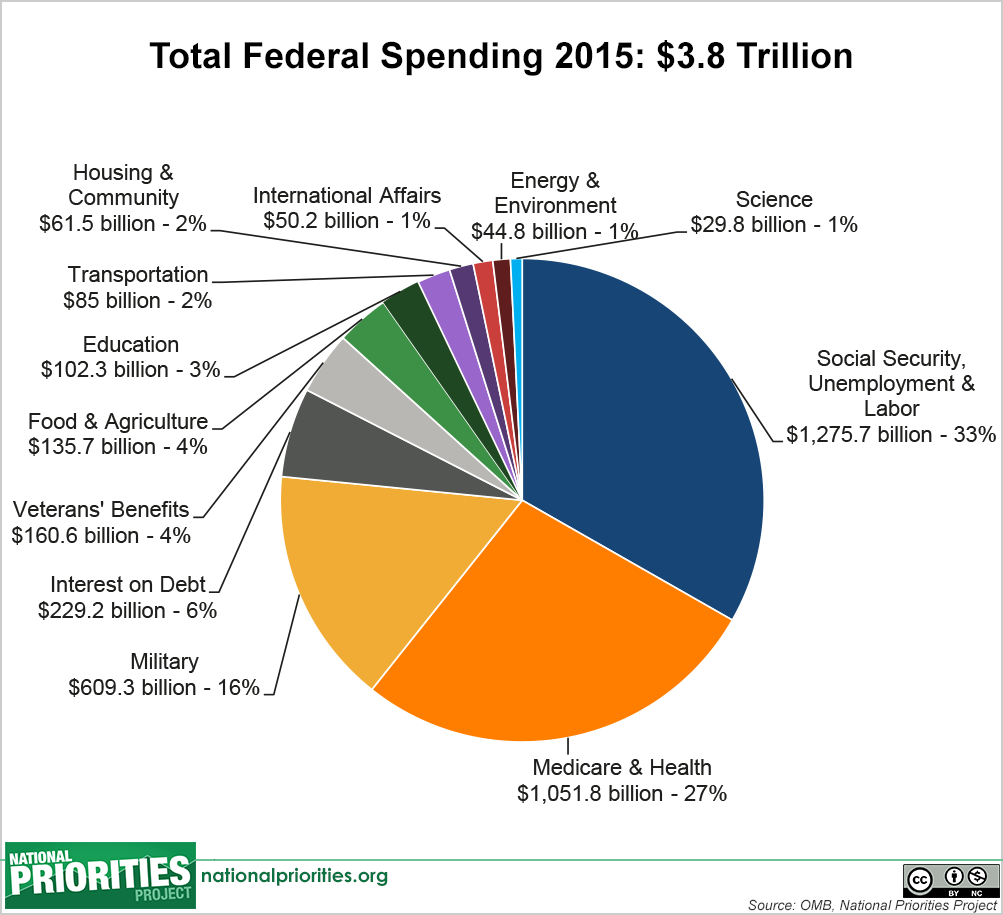
Considering these misconceptions about foreign aid, it is easier to understand why an important topic like foreign aid, so capable of shaping international opinion of the US, has not been a greater priority in election 2016. Both candidates address their foreign aid positions on their websites. Hillary Clinton refers to foreign aid as a component of her formula for “smart power” in her statement “we have to use every pillar of American power – military might but also diplomacy, development aid, economic and cultural influence, technology, and the force of our values, that is smart power.” Donald Trump directly mentioned aid in his bid announcement when he stated “It is necessary that we invest in our infrastructure, stop sending foreign aid to countries that hate us and use that money to rebuild our tunnels, roads, bridges, and schools […].” By “countries that hate us”, Trump is referring to Pakistan and Egypt, two of the largest recipients of foreign aid. However most—almost half—of the aid we give to each of these two countries is categorized for “peace and security”. That is what can be so confusing about foreign aid. There is no specification within the term for what is given in military aid, and what is given in humanitarian and infrastructure assistance.
President Obama has proposed that foreign aid should be combined with the defense budget, since the multifaceted wellbeing of other nations and their citizens is vital to America’s national security. With this assertion by our sitting president and the statements made by both president-elects of America’s two largest parties, we can conclude that aid cannot be supported by the American people unless it is framed as a power-inducing factor to America’s national security. To revisit my initial question regarding foreign aid’s nonexistence in presidential debates this past election, what I least expected in starting this research has seemed to be true—foundationally, foreign aid is a nonissue in this election, with both candidates viewing it as a similar tool, from different sides of the aisle.
It could also be the case that recent events in Paris, Brussels, San Bernardino, and Orlando, and the nativist sentiments that followed, do not allow for discussion of spending more money on aid that would not directly result in greater safety for Americans. However Bush’s support of PEPFAR to reduce the AIDS epidemic, Obama’s “Power Africa” program, America’s support of other countries after national disasters, and funding to make elections in budding democracies more transparent are efforts that do not go unnoticed globally. By framing foreign aid as solely an endeavor for power, we may miss out on opportunities to make deeper partnerships, greater developmental advancements, and participate in the successes of lesser-developed nations. While it is strategic to use foreign aid to make America more powerful, it is just as beneficial in the long run to use our power to promote—and fund—aid projects that reflect American founding ideals of life, liberty, and the pursuit of happiness beyond our own borders. To our president-elects, it may be time to debate aid, and all categories of it, more in-depth. After all, foreign aid matters, and not just to those who vote for you.
Taking Socialism Home to Meet Your Parents
Staff Writer Andrew Fallone explains why the Socialist model of governance is attracting so many young voters.
So you come home from your first year at college. You wave goodbye to the rear fender of your friend’s beat up 1998 Toyota sedan as it drives away into the distance. You see your parents standing in your doorway smiling proudly, happy to have you back. You walk inside and sit down to a freshly cooked family dinner to reconnect after a year away. Your parents start to ask you about your life, how are the grades, have you locked down a job for the summer yet, do you remember your curfew is still midnight, and for god’s sakes do you have a boyfriend yet? “No,” you reply, no job and no boyfriend yet, but you have started to really like this idea you learned about in your introduction to political theory class; you’ve become a socialist.
Dad dramatically pushes his chair back and storms off to his study to drink scotch straight from the bottle and contemplate where he failed you, while your mother sobs into her apron, and your little brother runs off to alert the neighborhood watch that there’s a dangerous Marxist guerilla living in the area. The white-picket fence has caught on fire and all of the years of wholesome upbringing and money spent on college tuition have gone to waist…or not. Maybe it should not be so shocking that socialism is seeing a resurgence in popularity amongst many young college-age Americans. Now, this is not the socialism of the radical socialism of envisioned by dusty theorists where the government is in direct control of distributing wealth equally to all of its citizen. Instead, this article refers to democratic socialism, which is growing in popularity because it gives the government the tools it needs to administer economic policy and welfare programs, while still maintaining individual rights such as private land ownership and free markets. This allows the enhanced power of the government to be wielded by the larger populace. Indeed, to those who are educated, the ideas that drive socialism are not so foreign or exotic, but are actually reasonable and effective.
Now, in order to evaluate different forms of government, there must be some agreed upon metric by which to do so. For this article, an effective and efficient government is one that can most successfully carry out its laws and directives. Yet this comes with an important caveat, for a truly effective government must also take the best care of its citizens’ needs. In summary, an effective government must be accountable and responsive to its people, while still creating policy that is actually effective at accomplishing a government’s first job—to provide for its citizens—opposed to blindly following every brash impulse of its electorate. While an authoritarian government might be effective, it is not the most humane because large constituency of people are victim to the wants and choices of the small concentration of power in a ruling party or a dictator. A democracy, conversely, while the choices of the electorate might not always be the best or most humane, does have the largest portion of the total populace making the decisions, which is in theory the most humane form of government. Yet that large and theoretically humane electorate is slow to take action and thus is actually not the most responsive or effective in executing its policies. In this article, I posit that a socialist democracy is the best way to execute effective governmental action in the most egalitarian and humanitarian way.
A student of political theory might tell you that an authoritarian or autocratic government is one of the most effective at just directly carrying out its directives. In terms of the economy, a government that does not have to worry about any opposition, nor any approval, can make the changes it decides are the most beneficial for itself much more quickly than if it had to go through more widely accepted democratic routes. While other nations may make economic success more difficult for autocratic governments by punishing them for their system of rule, case in point the embargos that stood for decades against Cuba, authoritarian governments are some of the most capable in terms of implementing their own policy within the confines of their own economy. When speaking about economic development, Modernization theory puts forward the idea that democracy was something for rich and developed nations, and in order to achieve that affluence other less-developed nations had to go through a period of non-democratic rule. Indeed, this idea is supported by London School of Economics professors Timothy Besley and Masayuki Kudamatsu, who illustrate it thus:
[A]utocratic government is not always a disaster in economic terms. Indeed, throughout history there has been growth and development in autocratic systems of government. For example, the British industrial revolution predates the introduction of free and fair elections with mass participation. Modern China is also a case in point with a spectacular growth performance in a non-democratic setting.
The example of modern China is especially pertinent here, for many other countries in Southeast Asia—Taiwan, South Korea, and Singapore just to name a few—all experienced incredible economic growth and success under military dictatorships similar to that experienced by China under single party, autocratic rule. This is because of how efficiently they are able to administer their economic policy. Columbia University economist Jagdish Bhagwati is quoted by G. William Dick to say that “No policy of economic development can be carried out unless the government has the capacity to adhere to it […] Quite often, however, democratic governments lose equanimity and determination in the face of opposition.” Yet, the ability to effectively orchestrate policy comes at a price, for few would disagree that authoritarian or autocratic systems are not the most beneficial to the average citizen, thus violating our second rule for effective governance. In China, the economic growth that the single-party government has fostered has not equally benefitted all of its subjects: the elite have become richer and the wealth is not shared equally. This leads us to one alternative to an authoritarian system: democracy.
Yet while democracies are typically far better for all of their constituents in terms of holding their governing figures accountable to the populace, the question remains: can they achieve the same economic success as authoritarian systems? As NYU professor Adam Przeworski notes, “The reason everyone opts for democracy in affluent societies is that too much is at stake in turning against it” because the alternative is so much worse for the average citizen, especially those not aligned with the ruling party. Furthermore, it is true that, as Pranab Bardhan says in the Financial Times, “Democracies are better able to avoid catastrophic mistakes, (such as China’s […] massive mayhem in the […] Cultural Revolution), and have greater healing powers after difficult times. Democracies also experience more intense pressure to share the benefits of development among the people, thus making it sustainable.”
In essence, Bardhan is saying that democracies avoid dangerous blunders because all decisions must first come from the people or those who they elect to represent them. Yet while it might be better for the average citizen in terms of sharing the wealth, a democracy can prove to be painfully slow and inefficient when it comes to deciding upon and administering economic policy. One needs only to look at the struggle the American government goes through every year to pass a budget to simply keep itself operating, and the number of times it has shut itself down due to partisan differences, to see how cumbersome and lethargic a democracy such as our own can be. As Timothy Besley and Stephen Coate posit in the American Economic Review, “[W]hile political equilibrium does satisfy a certain efficiency property, this does not imply that policies are efficient according to standard economic criteria,” for even if we do manage to agree on an economic policy, there is no guarantee that all of the concessions made to reach that agreement have not stripped the policy of all actual effectiveness. This leaves us with one essential question: how do we maintain the economic efficiency of an autocratic government while imparting the social equity of a democratic one?
Our answer lies back in that one dirty word—socialism. A socialist government has a large federal government empowered by its electorate to be able to more directly implement its economic policies, while giving the fruits of its prosperity to its citizens equally instead of having it funneled directly to the top as an authoritarian system would. Cedric Muhammad of Forbes put it eloquently when he said of socialism that
[a] socialist system that is working well is one that is fully deploying the nation’s resources through a central plan that has the approval of the people. It would be superior to a capitalist system that is working so poorly that its adherents must find excuses for mass unemployment, widely diverging income classes, and deepening social pathologies.
Indeed, it is the effective implementation that is the crux of what makes democratic socialism the best choice for America. In post-WWII America, we had a massively powerful federal government that was able to capitalize on the economic success that the nation was experiencing and return it to the people in terms of social welfare programs. This union of the ability of the government to make decisive and responsive economic actions while still having a government by and for the people that makes socialism such a potent and attractive form of governance. I’ll leave you with another quote from Jagdish Bhagwati of Columbia University: “Another advantage of the socialist countries is their passionate conviction and dedication to the objective of economic growth—which contrasts visibly with the halting and hesitant beliefs and actions of democracies.” A socialist system gives the government the power it needs to enact successful policy, while still being accountable to and benefitting its people, and that’s an appealing concept.
The Refugee Camp Economy and the Economic Argument for Re-Conceptualizing Camps as Permanent Cities
Contributing Editor Samuel Woods argues for a re-conceptualization of refugee camps due to the new economies they create.
Though the European Migrant Crisis has refocused Western attention toward the plight of the refugee, the issue of how a host country should deal with incoming refugees is not new. Many host countries choose to house refugees in camps, or designated areas often prepared in haste for the temporary housing of incoming refugees. However, these camps tend to exist longer than initially anticipated, and eventually begin to resemble makeshift cities, sometimes with tens of thousands of inhabitants living in a given area for an extended period of time. In time, a local economy begins to take form, and while the refugee camp economy is currently rather under researched, what economic and ethnographic research that has been done reveals key economic inefficiencies in the way camps are constructed.
In a few ways, the refugee camp economy functions much like one might expect. The primary economic actors tend to be the inhabitants themselves (as opposed to local citizens of the host country), many of whom come into the camp with previously developed productive skills and some even with access to valuable commercial networks or even financial capital back home. That being said, there are no large corporate businesses, and instead most commerce is conducted through either small specialized shops in designated market districts, or generated via the refugees’ agricultural production.
Perhaps surprisingly, there are often benefits to living and working in these camps as well. The 1951 Refugee Convention requires that taxes and tariffs levied on refugees may not be higher than the level that nationals of the same tax category pay, though often refugees do not pay taxes at all, or pay lower taxes than citizens of their host country. For example, Afghan refugee truckers working in Pakistan are exempted from licensing fees that Pakistani truckers must pay. Likewise, asylum seekers coming to Nakivale (Uganda) receive a plot of land with which to start a farm for free upon arrival. It seems from these observations that host countries generally recognize that there is typically little revenue to gain from refugees, and that refugees can typically contribute more to a country’s overall economic well-being as cheap labor than as direct revenue sources.
However, the economic costs associated with living and working in a refugee camp tend to offset or even overshadow the small benefits enjoyed by refugee workers. The most fundamental of these costs is the restrictions on movement outside of the camps. In order to travel outside of a given camp, refugees are almost always required to possess a permit issued by a settlement commander. These permits, though often in high demand, are not always easy to obtain. Werker (2007) notes that in the Ugandan camp in Kyangwali, the commander only issues permits on “one or two scheduled days each week.” Though these permits are generally free, they are issued at the commander’s discretion, exposing the permit allocation process to favoritism, prejudice, or even outright corruption.
This makes it difficult to conduct trade as a refugee. First, there are significant time costs involved, even if you know exactly when you will need the permit and when to see the commander, as the refugee must travel to the commander’s office and wait for however long it takes to see the commander, a process that the refugee must set aside at least a half of a day to complete. In addition, the refugee must have the foresight to plan ahead when exactly they will require access to an outside market, and then hope that they will be able to obtain the needed documentation when they expect to need it. Because of these high transaction costs associated with doing business with the outside world, a refugee is incentivized to start a business that caters to the needs of those inside the settlement. This means that refugee entrepreneurs are limited to maintaining small shops or general stores inside the camp itself, limiting themselves to smaller market sizes and lower growth potential.
Additionally, refugees face restrictions on their ability to work outside the camps, in addition to restrictions on their ability to leave the camp. Typically, in order to work outside of the refugee camp, refugees must get a work permit from the national visa office in the host country’s capital. This permit is difficult to obtain because of both time and monetary costs associated with obtaining the visa. In terms of monetary costs, the refugee must pay for transportation to the host country’s capital and back, and pay administration costs for the work permit itself. All-together, for the refugees living in the Kyangwali camp in rural Uganda, it costs more than a season’s worth of agricultural revenue just to make the journey to Kampala (which itself does not guarantee the permit), and around 6.5 times as much as the average season’s agricultural revenue to cover administration costs, which is “prohibitively expensive” for many refugees to obtain. With respect to time costs, the refugee must obtain a permit to leave the camp, travel to the host nation’s capital, jump through all the hoops associated with obtaining the work permit, and return to the camp before the permit to leave the camp expires. One mistake could throw off the timing of the delicately constructed journey, jeopardizing the refugee’s ability to make it back to the camp on time. The complexity and financial infeasibility of the process of obtaining a work visa discourages refugees from working outside the camp, even if the job opportunities within the camp limit the refugee’s ability to realize their full earning potential. Though specific details concerning its nature have not been recorded, similar restrictions to refugees’ movement (either by law or economics) have been reported in Zaatari (Jordan) and Calais (France), indicating that the Kyanwali account is not unique.
In addition to limiting one’s ability to work, barriers on easy movement present at many refugee camps (as well as the physical distance from the host nation’s population centers found at some of the more rural camps) contribute to unreasonably high information costs concerning economic activity in the outside world. In refugee camps, there tends to be little to no up to date information for refugee businesses concerning prices, new suppliers, best fertilizers, who is selling what crop, etc. This is particularly detrimental to farmers, and appears to at least partially explain why farmers in the Nakivale (Uganda) tend to grow maize more often than not, even when other crops have reportedly brought in seven times as much revenue in markets nearby, but outside of, Nakivale. Obviously this puts refugee businesses at a disadvantage and, much like how restrictions on work limit a refugee worker’s earning potential, the lack of up to date information limits the growth potential of refugee businesses.
Additionally, the extreme isolation, maintained in part by restrictions on movement, creates an environment that is ripe for predatory pricing on behalf of host country nationals doing business with refugees. The isolation of the camp means that the camp receives relatively few external traders selling goods to the refugees and buying the refugees’ agricultural products. Even if the external traders do not explicitly collude in a collective effort to cheat the refugees, the nature of this kind of oligarchic market sustains unfair prices for longer periods than in the more competitive markets that exist outside of the refugee camp.
Likewise, the isolation of camp, either as a product of sheer distance or by movement restrictions imposed on refugees, limits the market size and complexity available to refugees. As a business, this limits one’s growth and diversification potential, as it forces the business to cater to the demand of the camp exclusively, as opposed to being able to diversify to the demands of the camp and several other local markets in the region. As a laborer, the lack of diverse employment options limit’s one earning potential, as it becomes increasingly difficult to find employment that best matches one’s particular set of skills as the total market size of the camp, and subsequently the total amount of employers, decreases.
In fact, we see again and again that the status quo of refugee camps imposing strict constraints on refugees’ ability to move and work outside the camp yields economic inefficiencies (without mentioning, of course, the potentially unlawful nature of such restrictions). Naturally, one may wonder why host countries adopt these restraints on refugee movement and work in the first place. The obvious explanation is that there are security concerns with allowing refugees to move freely around a host country. Concerns over security are certainly legitimate, and can justifiably supersede concerns about economic inefficiency. Less justifiably, but certainly realistically, it would be difficult to doubt that there is a prejudicial tendency on behalf of the host country to want to keep refugees confined to certain areas, and that sometimes these prejudices can overshadow one’s better judgment.
Additionally however, restrictions on movement and work are put in place because the refugee camp is intended to provide temporary asylum from immediate danger. They are often built in haste and grow in an ad-hoc manner, as tents are pitched the day they are needed. This lack of long term planning and emphasis on temporary solutions indicates that there exists a conception that refugee camps are merely interim working and living arrangements meant to exist after the refugee has fled their home country, and before they return. Therefore, the host country is not looking to assimilate refugees into their economy, but merely support them for a few years before they leave. Restrictions on work and movement become comprehendible policies, as this makes it difficult for refugees to root themselves in their host country long term.
In the face of this observation, it becomes clear that in order to make it easier justify lifting barriers to movement and work, and realize the economic gains to be had from a large population of laborers with diverse skills, it would behoove host countries to re-conceptualize refugee camps as permanent refuge cities instead of mere spaces of temporary asylum. At first take, this idea of accepting the permanent nature of these refugee settlements explicitly undermines any hope that refugees or host countries may have of the refugees returning to the life that they once had. The ideal narrative of refugees coming to a camp to wait out a conflict in their home country until it is safe to return, is only a valid conception of the situation if it is understood that the camps, and the circumstances that drive refugees into the camps, are ultimately temporary. For the refugees themselves, framing life in a refugee camp as ultimately temporary implies an eventual return to normality, fueling a feeling of hope that is doubtlessly valuable at such a difficult time.
But this narrative has been deemed incompatible with reality by recent history. By UNHCR estimates as of 2003, the average amount of time spent in “protracted refugee situations” (i.e., refugee situations including, but not limited to, living in refugee camps) is 17 years. This explicitly undermines the narrative that refugees only need asylum for a few years while they wait out danger. In reality, refugees who come to refugee camps (or choose to formally migrate to other countries altogether) should be seen as individuals who are, more often than not, there to stay.
And once this idea of permanence is accepted, the host country is in a better position to lift the restrictions of movement and work currently imposed on migrant communities. If one believes that refugees are only in a host country for a couple years to wait out a conflict, it is easier to accept the inefficiencies associated with limiting the growth potential of refugee businesses, constricting the earning potential of refugee laborers, subjecting refugees to unfair trading dynamics, and lack of access to information. If it is accepted that the refugees will be in a given camp for an average of 17 years, the economic inefficiencies derived from restrictions on movement and work become glaring, as the host country is essentially giving up a generation of lost productivity. It becomes obvious that both the individual refugee and the host country’s economy stand to gain from the refugee’s free movement and ability to work.
Unfortunately, empirically estimating the economic effects of these restrictions on movement and work has proven difficult, and much of the academic work concerning refugee camp economies has been founded upon direct observation and the application of general economic principles. Likewise, no refugee camp has officially been designated as a permanent city or area of asylum, denying the opportunity for a natural experiment. This lack of empirical work leaves room for further exploration as to the magnitude of the claims made in this article.
What is no longer up for debate however, is whether refugee camps should be seen as temporary housing, or as permanent cities with citizens able and willing to contribute to the host country’s economy. What the persistent metropolis’ of Dadaab and Nakivale make clear is that camps tend to stay open much longer than intended, and are better thought of as permanent fixtures in their regions rather than temporary anomalies. Considering this fact, it simply makes sense to re-conceptualize refugee camps as cities, and to lift the economically unnecessary restrictions on work and movement currently imposed on the inhabitants of these cities. At the very least—perhaps if security concerns render this solution improbable—it must be recognized that current restrictions on movement and work that refugees face in camps is economically inefficient, and that finding a way of easing these restrictions would improve the welfare of the individual refugee and host country concurrently.
Of course, basic asylum for refugees fleeing immediate danger should remain the priority, and capturing the economic gains from these refugees should be of second order to this immediate need for safety. But acknowledging that there is a hierarchy of priority when dealing with refugee camps does not preclude realizing second order goals entirely. This is not about shifting the focus from providing asylum for people in need to turning desperate people into economic gains. Rather, it is about capturing what is already there.
The Tragedy of NGOs: A Faustian Perspective on Human Rights Activism
Executive Editor William Kakenmaster provides us with poetic thinking about Human Rights, NGOs, and their critics.
I feel as if I’d drummed into my brain
the wealth of human knowledge all in vain.
I finally stand back, only to find
no new-born power rising in my mind.
Not one hair’s breadth is added to my height,
nor am I any nearer to the Infinite.
—Johann Wolfgang von Goethe, Faust
International relations (IR) is typically considered a social science, but it can learn a lot from thinking poetically. Here, I strive to adopt a lesson from poetry in order to explain some of the actions and criticisms of transnational human rights non-governmental organizations (NGOs).
According to German folklore, the philosopher-scientist Faust exasperatedly sells his soul to the devil as his attempts to discover the universe’s truths fail to reveal any deeper meaning in his scholasticism. The deal gives Faust limitless knowledge and worldly pleasures. In early versions of the legend, Faust delves into a life of sin with the devil as his servant only to discover that, at the end of their agreement, he has been irrevocably corrupted, and is dragged to hell. The legend is meant to metaphorize those who sacrifice their principles for their ambitions.
IR, along with other social sciences, asks why questions that determine causal mechanisms and how questions focused on constitutive explanations, to borrow from Alexander Wendt’s phrasing in Social Theory of International Politics. In that sense, I ask how the moral authority for human rights activism is constructed by NGOs and how their theoretical critics reinterpret such supposed moral authority. I argue that such organizations are best understood through a Faustian perspective. NGOs balance concerns over adhering to their principles or their ambitions when it comes to human rights; and their critics recognize this. Criticisms of NGOs suggest that the human rights bar has been set too high, causing NGOs to be seen as irrelevant on the one hand, or as hypocrites on the other. The tragedy is therefore that human rights NGOs have painted themselves into a corner, in terms of their authority. By lambasting states’ conduct in the human rights arena, any cooperation NGOs have with states seemingly sacrifices their principles for their ambitions. Until the world’s human rights NGOs devise a strategy by which to convincingly propagate their ideals without acceding to the pressures of governmental cooperation, they will be fighting a two-front war.
Ambitions and Principles
Central to an understanding of their authority is the balance that NGOs give to their commitment to independent human rights monitoring and governmental interactions. NGOs’ take their independent, impartial reporting—as exemplified by Amnesty International and Human Rights Watch—to be their primary source of authority when it comes to human rights activism. Both organizations cite these as their core principles in their governing documents. While the principles which govern the most successful NGOs seem somewhat clear, balancing those with their ambitions to expand their member-base and bind more governments to human rights conduct is less so.
In 2011, former Hillary Clinton aide—Suzanne Nossel—was appointed Executive Director of Amnesty International with a commitment to internationalism and a belief in the US’ ability to reassert Liberal principles in IR. Nossel also defended preventive war as a way to enforce human rights obligations in other countries, which contradicts international legal obligations to secure UN Security Council authorization. Eventually, Nossel resigned from Amnesty International. Nossel notably demonstrates the ways in which human rights principles stand in opposition to NGOs’ ambitions: in order to promote and enforce liberal values of human rights, Amnesty International drew on government experience and military might.
One might further point to the increasingly professionalized trend of human rights activists and NGOs that strives to establish a firmly defined set of “shared values” as evidence that human rights discourses constitute principles and ambitions as opposing interests. Along with the movement’s professionalization and the codification of a shared value set comes an exclusion of contending interpretations and theories of human rights. In other words, to realize the movement’s growing professional ambitions, NGOs invariably narrow the scope of what human rights are, thereby sacrificing at least some activists’ principles. (The reader should be clear that by no means do I wish to philosophize on human rights in this article, but rather merely seek to identify and contextualize the contradictory interests of NGOs to either professionalize and uniformly propagate human rights standards, or endorse alternative sources of human rights justification.) By accepting, for instance, the Universal Declaration of Human Rights as the world’s principal source of human rights, Amnesty International’s statute limits debate over the extent to which economic and social rights equally constitute basic human dignity. In cases like Nossel’s and the professionalization of human rights, principles that underpin NGOs’ authority—independence, impartiality, and broadly defined human rights standards—diverge from ambitions related to enforcing human rights through force, interacting freely with governments, and creating a shared understanding of human rights.
But, how does the above discussion of NGOs’ ambitions and principles relate to Faust, and, more importantly, why should anyone care? Recall the once-idealistic Faust who, with his commitment to intellectualism, makes no headway and—increasingly disillusioned—forms a pact with the devil, thus abandoning his convictions. Indeed, this is Goethe’s lesson. In the prologue, the reader learns of God’s challenge to the devil: “Try to seduce his soul from its true source […] and if things do not go quite as you planned, / admit, with shame, among those souls that you would devour / are some that can’t be moved, even by you, / from the good they dimly, stubbornly pursue.” Faust’s entire role is predicated on his eventual decision between his principles and the temptations of ambition. NGOs similarly constitute their interests in maintaining their principles or fulfilling their ambitions, to the extent that they cannot realize both. We should care about this divide because it helps explain how, in the way that human rights discourses have been constructed, critics target NGOs from more conservative Realist perspectives, as well as more left-leaning Marxist, and Constructivist perspectives. It is worth noting that I deliberately exclude Liberalism from this analysis due to its general acceptance of NGOs—Liberals tend not to criticize NGOs, and I seek to explain NGOs critics. Therefore, I focus on Realism, Constructivism, and Marxism. However, and in spite of Liberalism’s NGO optimism, when a significant portion of the world’s population seems in favor of human rights, but several IR theorists doubt their main proponents’ normative value, IR has a significant question to answer.
Realist Critics
Human rights NGOs endure staunch criticism from Realist theorists who argue in terms of state-systems, material capabilities, balance of power, and security dilemmas. According to a 2002 interview with John Mearsheimer at the University of California, Berkeley, “there is not much place for human rights and values in the Realist story.” At least three theoretical assumptions clarify why human rights NGOs have little place for Realists. First, Realists claim that states’ material capabilities make them the principally legitimate actors in IR as opposed to NGOs’ supposed moral authority on human rights. Second, Realism holds that states pursue their interests defined in terms of power as opposed to things like human rights. Third, according to Realists, the absence of a supranational, centralized authority makes enforcing human rights untenable, and thus, their place in IR practically irrelevant.
The arguments against Realism are well-known, but few seek to explicate Realism’s relationship to NGOs. In Faust, the main character is unsatisfied with his studious life and its lack of insight into any improvement for humankind. As Goethe puts it, Faust’s “laborious studies only show that / Nothing is the most we ever know.” Moreover, Faust laments his scholarship’s inability to find “a way to improve or convert Mankind.” Faust’s commitment to learning is hence undone by the realization that it does not reveal any deep or practical insights. Discipline and studying claim a higher standard of conduct for Faust, but end up betrayed as the main character doubts their substantive ability to fulfill his life’s ambitions.
Realists take a similar stance on human rights. In The Tragedy of Great Power Politics, Mearsheimer writes on the American public’s general “proclivity for moralizing” politics and IR. In opposition to baseless political moralizing, Realists like Mearsheimer “tend not to distinguish between good and bad states” because all states pursue power in the international system. We can extrapolate the implications for NGOs from Mearsheimer’s argument with a quick parallel to Faust. In the German legend, the principles of scholarship and studiousness lacked substance like the Realist claim that distinctions between good and bad states (e.g., those states committed to human rights and those that are not) lack substance for IR theorizing. Realism tells us that states attempt to accumulate power and material capabilities and that they likely will not pursue human rights principles unless they advance a state’s power ambitions. Hence, for Realists, believers in human rights—and certainly human rights NGOs—delude themselves into believing that human rights reveal theoretical or practical wisdom for IR.
Faust sets too high of expectations for an erudite life’s ability to glean some quotient of meaning in the world, then doggedly abandons his principles because of their inability to lend insight into the universe. For Realism, NGOs similarly set their hopes too high for human rights. States, as the main actors in IR, pursue power over morals, making NGOs irrelevant and clearly unauthoritative.
Marxist and Constructivist Critics
NGOs also face criticism from Marxists who claim that their interaction with government policymakers betrays the anti-establishment principles NGOs were founded on, and Constructivists who argue that NGOs are a biased project to promote the Western, Liberal monopoly on human rights.
In his 2012 article, “The Contradictions of Human Rights Organizations,” Samuel Farber argues that NGOs provide legitimacy and support for governmental and intergovernmental agencies that they seek to hold accountable to contemporary human rights norms. According to Farber, “the world of NGOs and their supporting foundations is not self-contained,” because their implicitly liberal bias “blinds them to the political and socioeconomic context of the countries they report on.” Rather than tearing down the system as they may have originally sought to do, say Marxists like Farber, NGOs have betrayed their anti-establishment principles.
Noted scholars Makau Mutua and Stephen Hopgood offer two unrelated by similarly constructed arguments. In Human Rights: A Political and Cultural Critique, Mutua suggests that there are explicit, direct links between human rights norms and Western, Liberal principles. The abstract and seemingly apolitical nature of NGOs’ “universal” truths hides the deeply political reality of the human rights power struggle. In a similar but slightly unrelated vein, Hopgood’s Keepers of the Flame: Understanding Amnesty International unpacks the internal structure of Amnesty’s moral authority on human rights and their method for consolidating that authority. Hopgood ultimately finds that Amnesty International mirrors a religious organization’s belief in an objective moral authority for human rights and its ethos devoted to voluntarism, individualism, practicality, self-discipline, self-effacement, and moral import.
Essentially, the way that the human rights movement developed has betrayed its purpose for all of these critics. For Farber, NGOs were designed to be anti-establishment, yet now rely too heavily on governmental support. For Mutua, NGOs succumb to overly narrow Western conceptualizations of human rights, thus reconstructing a discursive power struggle that privileges the Liberal democratic system. For Hopgood, Amnesty International represents one example of an organization that has drifted from its roots towards a mission-oriented quasi-religious global operation.
Each argument presupposes a certain principled standard towards which NGOs strive. For Marxists, NGOs lost sight of their original, anti-establishment purpose, much in the same way that Faust sold his soul, therefore “exploiting everything [he] thought of worth” (Goethe’s words). For Constructivists, NGOs’ privileging of Western human rights is Faustian in the sense that human rights ideals, like the ideals of scholarship and enlightenment, constitute an overly-narrow and unfulfilling human rights theory. No wonder NGOs betrayed their principles for their ambitions as “[n]ot one hair’s breadth is added to [their] height.” Faust’s scholarly principles, like claims to universal human rights, do not imply any intrinsic higher moral authority, only the primacy of Western, Liberal norms.
Conclusions: Fighting Two Fronts
IR scholars ought to look beyond more traditional forms of knowledge in the discipline. As Professor Patrick Jackson asks: must international studies be a science? There is an immensely diverse and varied way of interpreting the world around us, whether scientific, poetic, or otherwise. Lessons taken from the poetry of German folklore, for example, shed light on the interactions between human rights NGOs and their contemporary theoretical critics across the political spectrum.
I began with the premise that IR can learn from poetic knowledge like Goethe’s. From this premise, I advanced a Faustian perspective of human rights NGOs and their critics which holds three principles. First, NGOs construct both their principles (e.g., western, liberal human rights) and ambitions (e.g., independence of state actors which they endeavor to hold accountable) that stand in opposition to one another. Second, NGOs’ independence and impartiality justifies their authority for human rights monitoring and advocacy. Third, by adopting a stringent standard of states’ compliance to narrowly-defined human rights, NGOs make it difficult to pursue their ambitions without sacrificing at least some of the movement’s principles, thus inviting Realist, Marxist, and Constructivist critiques.
Faust crammed his head full of knowledge in vain. Woefully unsatisfied by his scholastic principles, he sacrificed them for ambition and pleasure. Human rights NGOs and their critics demonstrate the same lesson. By adhering to a strict narrative of human rights and claiming a monopoly on independent monitoring, NGOs set themselves up to be cast as either ineffective idealists bent on moralizing the international system, or as hypocrites betraying the principles they set out to realize. As of right now, human rights NGOs face a two front war from both conservative Realists and left-leaning Marxists and Constructivists. Unless they can rectify the disparities between realizing their principles and ambitions, the world’s NGOs will continue to fight such a two front war.
While critics wage war against NGOs, however, we ought to remain wary of the assumption that human rights principles are mutually exclusive of organizational ambitions. To some it would seem that NGOs’ assertive—or downright aggressive—strategies for naming and shaming countries in the global South that violate human rights advances neither their ambitions nor their principles. For few will continue to support an NGO so harshly critical of so many international actors. And furthermore, few would contend that asserting human rights by force—as in Nossel’s advocacy for preventive war—genuinely constitute a principled stance on human rights. NGOs’ critics must recognize that support for human rights is on the rise across national, racial, ethnic, religious, and other lines; they do have a place in the story of IR, and they are not simply monopolized by anti-establishment politics or a sinister Western, Liberal order. NGOs, however, must recognize that human rights have the power to stand on their own. We do not need to professionalize the human rights movement. We do not need a single standard of human rights. We do not need violent enforcement of human rights. We do not need to sacrifice our principles for our ambitions.
Recent Articles