Life Without the Flashing Lights: the Reality of Living in East Germany
Guest Writer Olivia Valone examines Germany’s history under the DDR’s repressive regime.
November 9, 1989: East and West Germans broke through the Berlin Wall, coming together to celebrate the dissolution of the DeutscheDemokratische Republik (DDR) after 44 years of separation. As SED (Socialist Unity Party) officer Günter Schabowski announced that the citizens of the DDR were allowed to cross the border into East Germany, Beate Lukas was sleeping. People buzzed about the news in the Straßenbahn (tram) on the way to work, and when she arrived she realized that several of her coworkers decided instead to travel to West Berlin. A few days later, she made her way to West Berlin for the first time and encountered bright neon lights and colorfully lit signs. Flashing lights advertising products she had never heard of, shopping centers crammed with people, Cadillacs driving around instead of the usual Trabbis – she had never seen anything like it. At some point it becomes too overwhelming, and she returns to East Berlin. “When I returned to Alexanderplatz, everything was suddenly terribly gray – something which I had not noticed before.”
On the surface, these starkly contrasting images present a lively West Berlin and melancholy East. Although the strong wave of anti-communism that accompanied the Cold War has receded, it continues to affect the way we see communist and socialist societies, and these images may be taken to be indicative of the general sentiments within the respective governments. However, despite close surveillance, various restrictions, and a struggling economy – which, to Americans, is inconceivable – Beate and her colleagues recall a sense of security, community, and simplicity. Coming from the simple, unquestionable reality of the East, it was difficult for the Ossis (East Germans) to get used to the bright lights of the West, which drew them into a harsh, competitive world.
Following the surrender to the Allied powers in 1945, Germany was divided into two separate entities: the Bundesrepublik Deutschland (BRD) in the West and the Deutsche Demokratische Republik (DDR) in the East. Beate’s colleague Olaf describes the DDR as “a political entity that arose from German soil in the outcome of World War II and as a result of the Cold War.” And as it existed behind the ‘Iron Curtain,’ “the DDR was never a fully sovereign state, but always a part of the occupied territories of the Soviet Union, and treated as such.” Under the “benevolent eye” of the Western powers, the BRD adopted a democratic government with a market economy, “whereas in the Soviet zone the occupiers raided all the industrial equipment and confiscated private property” (Romano 145). In the DDR’s state-controlled economy, there were often shortages. When Beate turned 18, she received a form to apply for a car; the usual waiting period for a Trabant was about 10 years. When her family was remodeling their house in 1983, they were forced to trade items they had in order to get the material they needed.
Italian historian Sergio Romano’s obvious distaste for the command economy established by the U.S.S.R. was also shared by the United States. The U.S. government viewed the BRD as the only legitimate government and the future of Germany (Office of the Historian). While reading from Romano and the State Department’s website, I noticed that their arguments were relatively one-sided. It is true that the U.S.S.R. confiscated East German property, but it was used simply as a repayment for the damages sustained by the U.S.S.R. during the Second World War (Lindemann 328). The State Department focuses solely on the fact that the DDR was not a legitimate country in their eyes, and that its collapse was an inevitable victory – a triumph of light over darkness.
Beate grew up in an environment where the grim aspects of the DDR were not as apparent to her. There was always heavy Überwachung (surveillance) and a certain pressure, but she did not feel it personally. “Those who, in any way, ‘stepped out of line,’ for example, did not want to work, spoke out against the State, wanted to leave the DDR, watched television from West Berlin or West Germany (and listened to Western radio messages) felt [the pressure] quickly.” For disobedience, punishment ranged from losing the right to an education to being sent to jail. She recalls that a classmate, Susanne, did not receive a place in a university despite having high marks, because her father left for a business trip and did not return. Beate and her colleagues note that it was difficult to follow one’s desired career path. Without relatives who held high positions, worked internationally, or were members of SED, Beate did not receive a place at Humboldt University in Berlin. Instead of pursuing Ethnography, her preferred career, she only had the opportunity to study economics. Her brother was prevented from being a pilot on the basis that their father was a pilot. “It was feared that they would not return to the DDR and the rest of the family would also want to leave.” Similarly, her colleague Olaf was prevented from studying because only one to two students were accepted into Erweiterten Oberschule(EOS), a school which extended high school education after completing the eighth grade. He could not attain his preferred career as a geologist unless he enlisted in military training for three years, so he decided on job training. “No real performance or payment system existed in the economy, so one as a trained worker has earned partially less than his colleagues.”
Although the DDR restricted and controlled the outputs of its citizens in many ways, the government provided many benefits for its citizens. “The DDR was a state that, on one hand, offered its people a lot which is not typical today – work, support, free health care, free places in Kindergarten and schools, affordable houses. On the other hand, the economy was a Mangelwirtschaft (economy of scarcity). In the GDR, there was a persistent unpredictability of supply, which often expressed itself in shortages of chocolate, meat, butter, and other consumer goods. “There were many items which we did not have or rarely had – one often had to improvise or trade.” She remembers going to visit her grandma and getting the chance to eat a whole banana herself, the nicest thing she had ever eaten. The memories of scarcity, however, are not as compelling as those of security and simplicity in her childhood, along with the sense of community. She remembers being able to let her four-year-old brother walk the rest of the way to school alone without having to worry. As a society that valued community, or Gemeinschaft, everyone watched out and cared for one another regardless of status or financial standing. People typically associate socialism with oppression and constant misery, but that is not the case; Olaf contests that “otherwise the suicide rate would have been higher. Certainly one is often upset about certain inadequacies and restrictions, but one must also partially engage and adapt. Just like in every social system.” Initially following the reunification, the economic disruption caused a drop in life satisfaction in East Germany. Olaf believes the feeling he experienced in the DDR was the same as other young people in the BRD; the surveillance, pressure, and scarcity did not affect him as much as one would expect based on denunciations of socialism. In the current integrated society, former West and East Germans now display equal levels of happiness, which are far greater than the years directly after the reunification.
“I have predominantly good memories of the DDR. Sometimes I miss it.” Beate clearly displays the Ostalgie, nostalgia for East Germany, which many Ossis who grew up in the DDR experience despite higher levels of happiness under the current system (Lindermann 394). After the fall of the DDR, life was very different. The anticipated “swift and peaceful” German reunification was not feasible (Lindemann 393). Although Wessis and Ossis celebrated together when the Wall came down, it was still many years until the entire Berlin Wall and the psychological barriers separating them would be removed. The economy of East Germany was far behind the West and proved difficult to reintegrate (Lindemann 394). Regional inequalities still exist, leaving the East behind the West with higher unemployment and poverty rates, population decline, and scarcity of large companies. Unemployment in the former West Germany is at 5.6%, whereas in the former East Germany it is above 9%. Despite the economic difficulties, the United States viewed the fall of the DDR as a victory; Beate, however, had a different experience. “Life was totally different. There was no more security. I lost my job half a year after the Wende, something which would not have happened in the DDR.” After going through a retraining course and getting a new job, she was out of work for an operation. While there, she received a letter from her coworkers. Thinking it was a get-well-soon card, she was surprised to discover a termination notice. She repeats, “Such a thing was inconceivable in the DDR. People worked and held together. If someone was sick, then they were helped.” Olaf recalls that during DDR time, his wife received a year of paid maternity leave and still had her job at the end of it. Focus had shifted from collective well-being to profit. Beate also had to repeat her studies, because her credentials were not recognized under the new regime. The individualism of the new capitalist economy proved to be a lifestyle that was difficult for East Germans to adopt. Olaf appreciated that performance and skills became more important than belonging to a certain political party, but Beate resented the superficiality of the bright lights and flashy images. “People pay more attention to the outside, and to present yourself well is more important than a person’s character or to do something good… People have become ruthless, selfish, and superficial.”
After the fall of the Berlin wall, socialism in East Germany offered people a security which they had not felt since hearing Hitler’s promises. A 2009 pollfound that 57% of East Germans still defend and glorify the DDR. Citizens knew what was expected of them and what to expect of the government. Choice was mostly taken from the hands of the individual, but to some people, the simplicity and lack of many responsibilities was a sort of freedom. They may not have had the democratic rights to vote or openly express their opinion, but they were ensured the rights to basic necessities and security. Opinions about communism and socialism tend to focus on the negative aspects without mentioning the benefits, because it is seen as a great threat to American capitalism. Helmut, another colleague of Beate, said “socialism is an idea which also has to do with – somewhat philosophically – a common good. The theory can be difficult to implement, and in the DDR there was not truly socialism but actually a dictatorial state with Mangelwirtschaft.” It is difficult to put a finger on the concept of the DDR, but for some it represented a period of simplicity and togetherness.
Like the other DDR citizens, Beate received 100 Deutsch Marks as Begrüßungsgeld (welcome money) on her first trip to West Germany. Combined with her savings, she and her friends use this money to plan a trip to South Tyrol. They were the first citizens of the DDR to ever be greeted there. As they walked along the shore of a lake, some loud Italians tried to sell them leather jackets. “When we did not want to buy anything, they asked us where we were from – East Germany or West Germany. After our answer – from East Germany – they went away, because they knew we had no money. I can remember their disparaging look well.”
Britain and Immigration: Before and After the Referendum
Guest Writer Fifi Baleva examines the relationship between Brexit and international migration.
When citizens of the United Kingdom headed to the polls on June 23, they became the first group in history to opt out of the European experiment by popular vote. While many reasons prompted the British exit, growing migration was a prominent justification given by the Leave campaign. Boris Johnson and Nigel Farage, leaders of the Leave campaign, stated that there was no consent for the scale of migration witnessed in the past few years. They promised to bring migration to the normal levels of the 1990s when more people were leaving the UK than entering.
In the past few years, British citizens have continuously voiced their desire to halt or at least reduce the influx of migrants. After failed attempts by Prime Minister David Cameroon to fulfill these requests, Brits decided that leaving the EU was the only viable way to control their borders.
Now that Brexit is a reality, immigration continues to be a complicated issue as many EU citizens in Britain remain uncertain about their future in the country. Anxiety about growing migration is intricately woven into the decision to leave the EU and will remain a defining issue in the post-Brexit world. To understand Brexit, then, one must first understand migration.
United Kingdom Migration Laws
The European Union has adopted an open border policy to facilitate traveling and working throughout the continent. The Schengen Area is a zone of twenty-six European Union countries that have agreed to ease travel requirements with other Schengen Area members. The agreement allows EU citizens within the Schengen Area to travel throughout the area only using an identity card. It also allows non-citizens within the Schengen Area to acquire one visa and move throughout the twenty-six countries.
There are different types of Schengen visas including work and student visas. Work visas, for example, are acquired by individuals who would like to work in one or more of the Schengen area countries. The student visa is used by students who have secured a place to study within an educational establishment in a country in the Schengen Area.
The two European countries that have opted out of the Schengen Agreement are the Republic of Ireland and the United Kingdom. According to laws in the United Kingdom, migrants are divided into non-visa nationals and visa nationals. Non-visa nationals encompass a variety of groups including EU citizens. These non-visa nationals do not require a visa to enter the UK at ports or other points of entry. However, if migrants want to remain the country for longer than six months they must receive entry clearance. Additionally, European Union nationals traveling to the United Kingdom must show a passport or identity card which is strictly scrutinized against security databases.
Around 3.2 million people living in the United Kingdom in 2015 were citizens of another European Union country. European Union migrants make up half of the migrants in the United Kingdom, most of whom hail from Poland, Ireland and Germany. European Union nationals are more likely than UK citizens to participate in the labor market. Currently, 78% of European Union citizens are working in the United Kingdom compared to 74% of UK citizens.
Although foreign born citizens are employed in a variety of sectors, their presence is most prominent in low skilled sectors. In 2015, 59% of EU born workers were in a low skilled job compared to 45% of UK-born citizens. Conversely, 41% of EU born workers were in a high skilled job compared to 55% of UK-born citizens. The presence of EU workers in low skill sectors shows that EU workers are more likely to take on jobs that may be undesirable to those born in the UK.
So if the United Kingdom is mostly benefitting from European Union migrants why did the country choose to leave the European Union?
The Referendum and Immigration
While the Leave campaign presented several justifications for leaving the EU, a persistent theme was an emphasis on national sovereignty and the reduction of migration.
In 2015 the United Kingdom welcomed 630,000 migrants and in 2016 thus far the UK has welcomed 333,000 more. This influx of migrants, prominent throughout Europe, has prompted 77% of Brits to declare that there needs to be a reduction in migration. In fact, 50% of Brits believe that immigration is the most important issue facing Britain, compared to 27% who say the same about the economy.
This anxiety over booming migration played a major role in the Leave campaign’s justification for a European Union exit. The UK Independence Party, led by Nigel Farage, focused on the threats of migration leading up to the Brexit referendum, and anti-immigrant rhetoric persisted throughout European Parliament debates over the Syrian refugee crisis. Like U.S. presidential candidate, Donald Trump, UKIP painted migrants as potential criminals and terrorists taking over the United Kingdom. Nigel Farage even used a poster to emphasize that if the UK remained part of the European Union, the country would be flooded with migrants. The poster displayed by Farage leading up to the referendum depicts a long line of Syrian refugees on the Slovenian border with a caption which reads “Breaking Point: The EU has failed us all.” The posteralso cautions readers that Britain must break free and take control of its own borders. Now that referendum results are in, the country has “broken free” but what does that mean for its borders?
Immigration after Brexit
The Leave campaign proposed an Australian style point-based immigration system which would apply to all migrants, even those from the European Union. Under this system, the more in demand the skills and qualifications of an immigrant, the more eligible the immigrant is for a visa.
As resentment over Brexit mounts in Europe, it is likely that European countries will use migration as a concession for any future trade deals with the UK. In fact, Germany, Portugal, and the Czech Republic say the UK must accept free movement of people in return for access to the single market. The EU single market is an association of countries which trade with each other without restrictions or tariffs.
There are three main models for the UK’s post- Brexit relationship with the EU proposed by the Leave campaign. The first option is the Norwegian modelwhereby the UK exits the European union to join the European Economic Area which is what Norway did in 1994. Under this model, EU policies not covered by the EEA Agreement such as agricultural and fisheries policy would not apply to the UK. The UK would need to retain a range of EU legislation, however, including the free movement of people. So, under this model the promise of curbing migration would not be fulfilled because the UK would be forced to maintain the free movement of people.
The other alternative is the Swiss model. Under this model, the UK would join the European Free Trade Association but not the European Economic Area. The Swiss model is unique because Switzerland enjoys some access to the single market through bilateral agreements. In order to maintain access to the single market, Switzerland was required to allow the free movement of people, which would likely be a prerequisite for any bilateral agreements with the UK as well.
The last alternative is a total exit from the EU and the single market. Under this model the UK could join a Customs Union. The EU does not impose tariffs on goods traded from Customs Union countries in exchange for those countries’ compliance with EU single market regulations. The UK could also rely on the World Trade Organization rules on nondiscrimination whereby trading partners are not treated any less advantageously than others, unless there is a separate free trade agreement between the members. Under WTO rules, the UK would be treated as a third country that does not have a free trade agreement with the EU. The last option is the negotiation of a completely new free trade agreement with the EU. Even with a new agreement, however, there is a chance that free movement of people would be a prerequisite for any access to the EU market.
Implications
As European Union and British politicians continue to negotiate, European migrants in the United Kingdom are living in uncertainty. While those who have lived in the UK for more than five years are afforded permanent residence, no one knows if the EU migrants who have been in the UK for less than five years will be asked to leave. Additionally, there has been no clarification as to when European Union migrants will be forbidden from freely entering the United Kingdom.
The United Kingdom was never fully integrated in the European Union system of free movement but the country has welcomed EU migrants for decades. With growing hysteria about migration, however, Britain was unable to sustain its open border policy any longer. Capitalizing on anxiety, the Leave campaign framed migration as a threat to both security and sovereignty. The consequences of this fear mongering were grave—Britain became the first and only nation to leave the European Union by popular vote. Anxiety about migration led to a catastrophic decision which will have lingering effects for years to come.
So, as the world prepares to assess the state of geopolitics in 2016, it must consider the impact of Brexit. As individual nations and as a collective, we must not let anxiety about migration be a leading factor in any future elections. We must pick leaders who can unite us as a global community which can tackle the problems of the 21st century, not leaders who will divide us into fragmented nations living in fear.
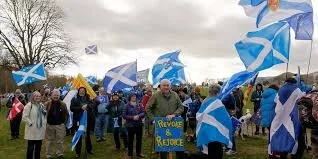
A Tale of Two Memberships: Scotland and Northern Ireland’s Possible Paths to EU Membership as Independent States
Staff Writer Claire Witherington-Perkins examines the relationship between Brexit and independence movements.
The Brexit referendum on 23 June 2016 brought 30 million voters (with a 71.8% voter turnout) to the polls to decide whether the United Kingdom (UK) would stay in the European Union (EU). The “Leave” campaign narrowly won with 52% of the vote; however, when split by countries in the UK, Wales and England voted to leave while Northern Ireland and Scotland voted to remain by much larger margins. Additionally, demographics with a higher income, more education, and younger age generally voted to remain. Although the referendum was not legally binding, the new Conservative UK Prime Minister, Theresa May, stated that she has committed herself to the will of the people and will guide the UK leaving the EU. However, Prime Minister May also said that she will not invoke Article 50 of the Lisbon Treaty, which gives the country two years to negotiate its exit with EU members, before the end of 2016. Thus, the UK would remain a full member of the EU until Article 50 is invoked and the UK begins negotiations to leave. Once negotiations are fully over, the UK will officially no longer be a part of the EU; however, until that time, the UK is a full-fledged member. When the UK leaves the EU, it will need to negotiate a new trade deal because it will no longer be a part of the EU single market. Thus, there is a possibility that the EU would instate trade tariffs because the UK would not be part of the single market.
Since Scotland and Northern Ireland both voted overwhelmingly to remain, one or both of the countries may leave the UK in order to stay in the EU. However, there are two paths for the different countries. Scotland only has one option if it wants to remain in the EU: secede from the UK and join the EU as a separate country. Northern Ireland has two options: it can unite with the rest of Ireland in the EU and become part of the EU by joining an EU member state, or it could leave the UK and try to become a member of the EU member. The best option for Northern Ireland to remain in the EU is unification. Otherwise, Ireland would go through the same accession process as Scotland, which will have a long, difficult road to EU membership, if it gets in at all.
Accession Process
As the UK now has to negotiate its exit from the EU, there are talks of Scotland and Northern Ireland leaving the UK to join the EU. If Northern Ireland were to join independently, it would join Scotland in the EU accession process.
The EU has strict criteria for membership: a country must have stable institutions that represent and ensure democracy, human rights and minority protection, and rule of law, a functioning market economy capable of dealing with competition in the EU market, and the ability to effectively implement membership obligations and to adhere “to the aims of political, economic and monetary union”. The first step to membership is an application for candidacy. Negotiations can only begin with a unanimous decision in the EU Council.
Accession involves 35 chapters relating to policy areas such as environment, rule of law, human rights, energy, and transportation. These chapters are non-negotiable, but candidates can determine how and when to adopt and implement them. Meanwhile, the EU receives guarantees on completion and effectiveness from the candidate country and from the Commission, which monitors implementation and benchmark requirements. Outside the 35 chapters, candidate countries also negotiate financial and transitional arrangements. The negotiations occur between representatives and ministers of the EU and the candidate country at what is called an intergovernmental conference. For each chapter, in a process called screening, the candidate country must meet the opening benchmarks before the chapter can be opened. Then, for each chapter, the candidate country must submit a position for negotiation while the EU adopts a common position and sets closing benchmarks for the chapter, which must be met before closing negotiations for that chapter. Some chapters have interim benchmarks that must be met. Thus, the length of negotiations may vary depending how prepared the country is to join the EU.
In closing negotiations, all negotiations for individual chapters must be finished. Details of membership, arrangements and deadlines, financial arrangements, and potential safeguard clauses are all in the Accession Treaty. The treaty has three steps to becoming a binding agreement: it must have the support of the EU Council, EU Commission, and European Parliament; the candidate and all EU member states sign it; the candidate country ratifies it according to their constitution. Once ratified, the candidate becomes an acceding country and will become a full member on the date agreed in the Treaty.
Scotland
In the event that Scotland secedes from the UK, the EU headquarters in Brussels stated that Scotland has to exit the EU with the UK and cannot remain on its own. Additionally, if Scotland were to secede before the UK leaves the EU, it would be leaving an EU country and thus be leaving the EU. Therefore, Scotland will have to go through the accession process as an independent country.
The accession process poses a number of problems for Scotland, mainly the length of the negotiations and its financial burdens and obligations. Due to the lengthy negotiations, Scotland would be on its own, neither in the UK nor the EU, for some time, which would hinder trade and investment. Additionally, Scotland’s projected country deficit is three times that of the UK, and Scotland would have a higher deficit than the UK does now. The EU limits the amount of debt and deficit its member states can have, and since the economic crisis and the Eurozone crisis, it will likely oversee these requirements more closely and ensure that its members adhere to them. Thus, Scotland might have to reduce their deficit in order to become a member of the EU. Additionally, as reported in 2015,, Scotland has 6.2% unemployment, compared to the UK’s 5.1%, and GDP growth of 1.9%, compared to the UK’s 2.3%. In addition to these potential economic problems, EU membership would be vastly more expensive for Scotland than it was under the UK because Scotland would lose the UK membership contribution opt-outs that Margaret Thatcher negotiated during her time as Prime Minister.
Another potential problem for Scotland’s EU membership is the potential problems regarding its referendum to leave the UK. The EU values democracy, rule of law, and human rights; however,many Scots were ineligible to vote in the referendum. Anyone who is a citizen of a Commonwealth country, the EU, or the UK living in Scotland was able to vote; however, Scots residing outside of Scotland were unable to register to vote. This could call into question whether the process was truly democratic, as some Scottish citizens could not vote in the referendum. This issue must be addressed during negotiations, and Scotland would have to comply with EU democratic ideals, as many Scots were unable to vote in a decision. Thus, looking at all of the problems with Scotland’s independent path to EU membership, it would take years, if not over a decade, to negotiate membership.
Northern Ireland
Given the difficulties that Scotland will face if they try to become an EU member on its own, Northern Ireland’s best path to EU membership is through unification with the rest of Ireland. Using the case of German unification after the fall of the Berlin Wall as a precedent for EU accession, if Northern Ireland becomes part of Ireland, it will enter the EU as part of a member state.
When East Germany and West Germany united, East Germany gained from joining the EU because it “could rely on the tried and tested rules and institutions, the West German social market economy and immediate access to large amounts of financial resources”. Unification inspired high expectations, and East Germany gained advanced, sophisticated institutions and administrators. Unification eliminated most of the legal barriers regarding sovereignty, which usually delay establishment of institutions and full EU membership. However, there was a cultural difference between the two Germanys, and institutions were established on top of East Germany’s previous institutions.
There is still a divide between the two sides of Germany in terms of economic prosperity. After ten years of membership, labor productivity was still 60% of that of West Germany. There has been moderate improvement since unification, though. In 1991, East German income per capita compared to West Germany was 40%, and in 2016, East German income per capita compared to West Germany reached two thirds. Due to Soviet occupation for over forty years, East Germany has a higher level of social distrust than its Western counterpart, which plays a role in its development and integration in the EU. Overall, the economic gap between Germany and East Germany has significantly decreased despite remaining differences.
Although the German unification was successful, it highlights potential problems for Northern Ireland to light. Aside from cultural, religious, and historic tensions between Ireland and Northern Ireland, Northern Ireland might not be as developed because it would not go through the negotiation process or receive EU funding for meeting set benchmarks. However, Northern Ireland has been a part of the EU as long as the UK has, so it has the infrastructure required. Additionally, Northern Ireland was not under Soviet rule and has been developing alongside the rest of the UK and Ireland. Given the minor economic differences between the two countries, Irish unification would be the best option for Northern Ireland to remain in the EU.
Conclusion
Although Brexit will likely have a negative economic effect on the United Kingdom, the country is large and developed enough to thrive regardless of its EU membership status. However, if Scotland opts for independence, it will struggle while if Northern Ireland unites with the rest of Ireland, it will continue on its path in the EU. In particular, Scotland trades more with the rest of the UK than any other country, dwarfing its exports to non-UK countries by comparison. Looking at other economic indicators like deficit and debt, Scotland’s independence would likely increase borrowing and decrease economic stability and security. As Scotland relies heavily on its robust banking sector, the decrease in stability would lead to less investment and fewer banks in the country. As a result, Scotland would regret leaving the UK because the UK would remain stable and prosperous, as it could get products that usually come from Scotland elsewhere. In addition to economic instability, the likely lengthy amount of time it would take to join the EU, if at all, should dissuade Scotland from independence. With neither the UK nor the EU, Scotland would be a small country of just over 5 million with an unstable economy and decreased trade, investment, and movement of human capital. These consequences should, if Northern Ireland were to pursue independence, persuade Northern Irelanders to unite with the rest of Ireland and join the EU upon unification. Northern Ireland has a simpler path out of the UK and into the EU than Scotland, so it would likely not have a major effect on the economy other than changing currency.
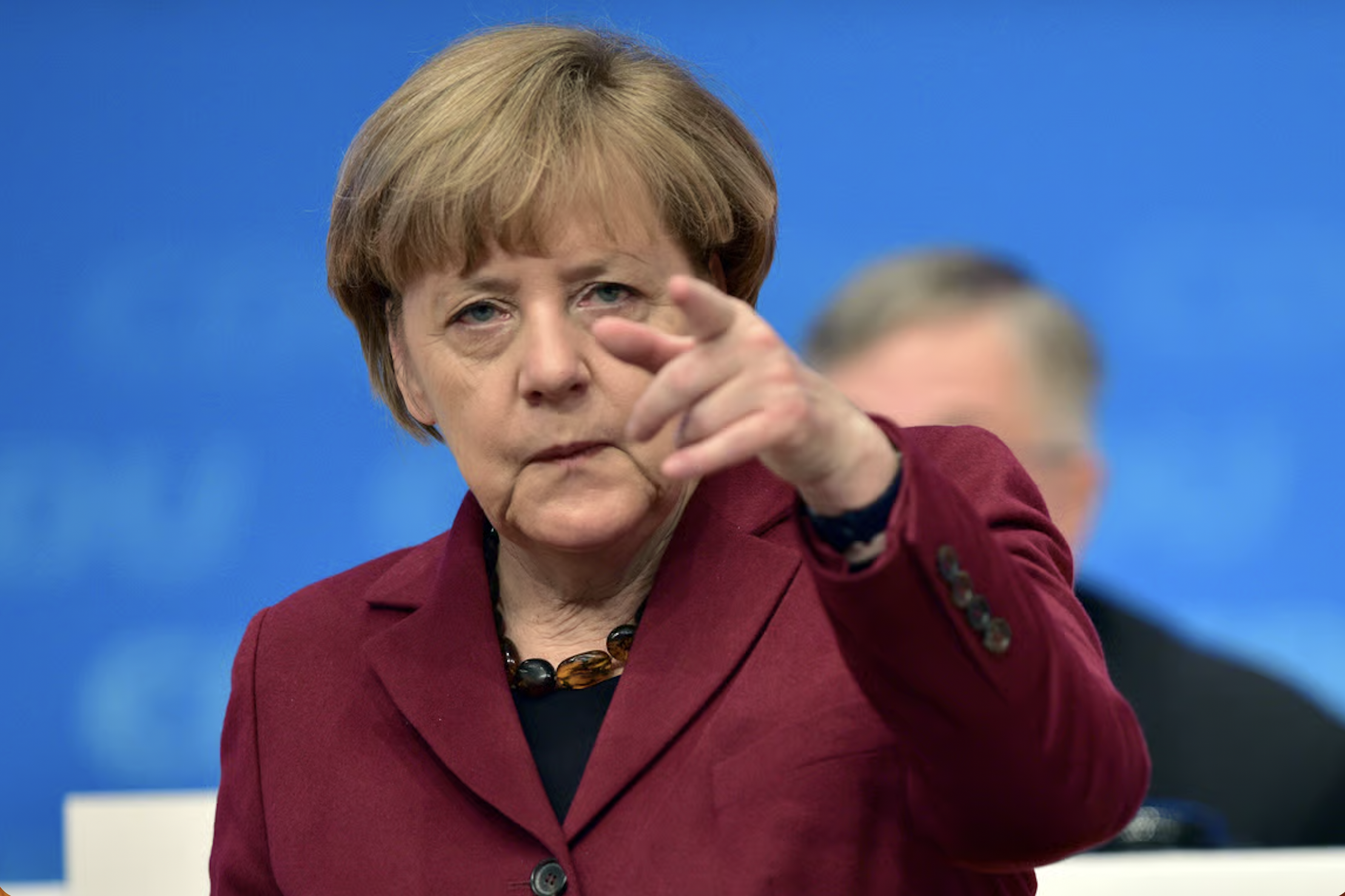
Merkel’s Far-Right Conundrum
Staff Writer Erik St. Pierre analyzes the implications of rising right wing sentiments in Germany.
Recently, Germany held two regional elections that may foretell doom for Angela Merkel’s Christian Democrat (CDU) party in Germany’s 2017 federal election as well as for Merkel’s open-door refugee policy. The CDU’s two setbacks in the Mecklenburg-Vorpommern and Berlin elections can be explained by the recent rise of the rightwing populist party, Alternative for Germany (AFD). AFD has been campaigning on a platform opposed to Merkel’s open-door refugee policy, which faces the enormous task of integrating over a million refugees into German society. In early September, the Christian Democrats placed third in Merkel’s own regional constituency, Mecklenburg-Vorpommern. CDU placed behind the Social Democrats (SPD) in first and the three-year AFD in second, which gained 30.5% and 20.9% of the vote, respectively. While CDU’s loss in this region won’t impact the current administration’s composition, it has been largely seen as a symbolic victory for AFD and its anti-refugee rhetoric, especially considering Mecklenburg-Vorpommern makes up Angela Merkel’s own constituency. Despite this blow caused by AFD’s symbolic victory, the Christian Democrats experienced an even larger wake up call a few weeks later in Berlin, a notorious stronghold for the Social and Christian Democrats, where AFD, with 12.2% of the vote took third behind the Christian Democrats with 17.8% of the vote and the Social Democrats with 22.8% of the vote. While both the Christian Democrats and the Social Democrats claimed victory in Berlin, many are calling it a meager win. For AFD, a fledgling and fringe political party, to do so well in Berlin signals that the far-right now has an opportunity to jump onto Germany’s national stage in its next federal election.
AFD’s victory over the Christian Democrats marks an impressive rise for the right-wing populists. They are now represented in ten state parliaments and show no sign of stopping or slowing down. AFD leaders state that their victories in Berlin and Mecklenburg-Vorpommern amount to a de facto referendum on Germany’s open-door policy to refugees. Prime Minister Merkel has been steadfast in defending her open-door policy. However, as her party bleeds voters to AFD, she has begun to signal that she may begin walking away from asylum seekers. As much of Europe becomes weary of the refugee crisis and dubious of its capacity to accept more, it now appears that Germany has also reached its limit. However, the question remains just how much Germany’s recent regional elections will impact the Grand Coalition between Merkel’s party and the Social Democrats that have defined German politics since 2013. If the far-right continues to surge as it has in Germany and other European countries then surely this Grand Coalition will falter. Currently, the world is looking to Angela Merkel to see whether she will accept the backlash against the open door policy or if she will stand strong and continue championing Germany’s dedication to refugees. Both stances will have profound effects on German and European politics.
AFD was founded in 2013 as a response to the Eurozone debt crisis and Angela Merkel’s policies towards it. At its founding, it was primarily composed of liberal academics and economists who opposed Merkel’s Eurozone bail out policies. In September of 2013, AFD were not able to win the 5% of the national vote needed to secure seats in the German parliament, however those days have largely changed with AFD now polling at more than 10% in national opinion polls. This remarkable surge of support since 2013 is no accident. Party leaders of AFD purposely focused at wooing xenophobic voters through the use the use of fear and paranoia during the peak of the refugee crisis. This is evidenced through the party’s link with the Patriotic Europeans Against the Islamization of the West (Pegida) movement, which has recently created a political party of its own, and is further exemplified by their shared commitment to work together to bring their anti-refugee platform to the federal level within Germany. Pegida is famous for its right-wing and hateful rhetoric that often electrifies the many protests against refugees and Islam it carries out in Europe. More recently the group attempted to boycott Kinder chocolate after the company began a marketing campaign that contained pictures of two children of African and Middle Eastern descent. Little did members of the movement know, the boys were actually German footballers. This illustrates just how quickly this movement’s Islamophobia and xenophobia can take hold. In addition to being affiliated with xenophobic groups, the leaders of AFD themselves have been accused of both Islamophobia and anti-semitism. The newly-elected AFD senator from Berlin, Kay Nerstheimer has recently taken fire from critics for both calling civilian victims of the Nazi regime “guerrilla fighters” that were not protected under international law and downplaying the atrocities of the Nazis. Nerstheimer has also referred to Syrian refugees as “disgusting vermin” and as “parasites that feed off the juices of the German people.” Despite AFD originally arising as a response to the Eurozone bailouts, they have now pivoted to scapegoating refugees as a way to power; and it’s working. The only question is exactly how much it will change the political landscape of German politics, and subsequently, that of the European Union.
Immediately after the Berlin elections, it appeared that Angela Merkel began backpedaling on her open-door refugee policy due to the rise of AFD in what was traditionally a bastion for the Christian and Social Democrats’ Grand Coalition. In a press conference, Chancellor Merkel expressed regret for Germany’s open-door policy stating, “If I could, I would go back in time to be better prepared for the refugee crisis in 2015, for which we were rather unprepared.” She’s also signaled that she is willing to be flexible regarding the policy’s future by stating, “If I knew what change in refugee policy the people in Germany want, I would be prepared to consider it.” This shows just how Merkel, who has previously been a staunch defender of the open-door policy, has been taken aback by the unexpected potency of the AFD. It also subtly shows just how much of a threat the AFD is for the Grand Coalition of the Christian and Social democrats in Germany’s federal elections. However, after these statements Merkel has continued on to say that she does “not see a change of course, but coherent work over many, many months” in regards to Germany’s refugee policy. These opposing statements make it unclear exactly how Merkel will move forward concerning refugees and AFD’s challenge to the Grand Coalition, however, Merkel’s stance will certainly have implications for Germany’s 2017 federal election.
The rise of the AFD has many questioning whether Chancellor Merkel will lead the Christian Democrats as their nominee for chancellor next year. Merkel has not yet publicly stated whether she will “stand again in next year’s general election,” and the growing disquiet around her chancellorship could create many challengers for her in the election, not just from the AFD, but even within her own party. If Merkel stands by her refugee policy and the AFD continues to surge it would not be surprising to see a candidate within the Christian Democrats challenge her for the chancellorship. This would be incredibly damaging for the Christian Democrats and would all but guarantee the fracture of the Grand Coalition and victory of the AFD. However, Merkel may still back down as the AFD gains political power in a move to win back voters and lick the CDU’s political wounds. The Grand Coalition may still survive, but it would concede a symbolic AFD victory as the country shifts right on refugee policy. Lastly, Merkel may concede her leadership and let her party choose a new standard bearer. This would allow her to continue standing strong on her refugee policy while at the same time let her party distance itself from the policy to save the Grand Coalition.
Regardless of Merkel’s next steps and the outcome of Germany’s 2017 elections, the surprising power of AFD’s challenge to the Christian and Social democrats spell a dark future for German politics, but also for European politics as other European countries also deal with their own far-right political party challenges. Racist politics have once again made their way into Europe’s most progressive policies and the unfortunate victims will be war-weary men, women, and children looking for an escape from violence.
Maskirovka and Predicting Kremlin Actions in the 21st Century
Guest Writer Tanner Holland provides a contemporary analysis of Russian decision making.
The word Maskirovka might not be familiar to many of us post-9/11 international affairs wonks but the word is all too familiar to our predecessors, namely the Sovietologists of yore. Maskirovka was a tactic born in the Russian Civil War that followed the October Revolution of 1917 and became official Soviet strategy not only in war but also in all manners of foreign statecraft in the Cold War. The concept emphasized the need for stealth, concealment and misdirection in all things in order to confuse one’s enemy, and though many Soviet ideas have fallen out of favor in modern Russia, Maskirovka remains very fashionable. Russian president Vladimir Putin was born and raised under the doctrine and has become one of its best contemporary practitioners, as he holds nearly all of Russia’s foreign policy decisions in his hands. Putin has demonstrated his mastery of the doctrine in Ukraine with constant misdirection, concealment, and stealth most recently with his military escalation in Ukraine after the death of a Russian security officer near the Crimean border, not to mention his equally rapid de-escalation.
This time, however, Russia’s de-escalation was perplexing for nearly all observers. Signs of the Kremlin’s escalation into open war were all there; an incident shrouded in secrecy that made Russian troops appear as the victim, an increase in Russian-backed separatist violence in the east, Putin’s statement of withdrawal from talks to end the conflict, and many others that Russian expertssaw as classic Maskirovka tactics. What could’ve gone wrong? The problem lies in the indicators being used by observers in media and academia. If peace and stability in Europe are to continue, a better set of indicators must be composed to monitor Russian aggression not just for Ukraine, but for all of Eastern Europe. If a line can be drawn between the realm of Kremlin disruption and imminent Russian invasion then European governments can tailor their response appropriately. Failing to understand the nature of Maskirovka and when it is being used for disruption versus invasion could mean a drastic miscalculation on the part of the local government that allows the Kremlin to capitalize on the situation. For example a scenario many scholars and defense writers think of is a crisis in a Baltic country that usually begins with an ethnic Russian protest that draws a harsh response from the local government. Seeing an opportunity to disrupt stability, Russia deploys large troops near the border and sends intelligence officers into the area to increase disruption. If the host country misreads these tactics and concludes that the military is needed to protect this region instead of routine riot police, the situation could easily spiral out of control thus allowing the Kremlin to appear as if it is forced to act on behalf of its Russian brethren. In this case, and many other cases of Russian Maskirovka, miscalculations can be fatal. This means discerning between indicators of Maskirovka that signal an impending military confrontation and indicators that are simply signs of Russian attempts to destabilize and disrupt.
Among the most often-cited indicators of an impending invasion is a Russian troop movement to a given area, but using troop movements to convince your reader of an impending invasion has proven recently to be no more than alarmism. Russia routinely moves troops in large numbers as a tool of political leverage. This is not to say that monitoring troop movement is useless, but to use it as an indicator of impending invasion will more than likely lead to incorrect conclusions and bad advice for NATO states and local partners. While Russia used troop build-up in Georgia prior to the 2008 invasion, recently Russia has moved troops in response to NATO announcements, used troop movements and exercises to exert political pressure in Moldova, and in response to Turkish actions along the Syrian border. Yet the Kremlin did not open hostilities against these countries and most likely had no desire to—the objective was political pressure and intimidation, not invasion. While it is difficult to know for sure, as the Kremlin constantly seeks to redefine its Maskirovka tactics, it is safe to assume that Russian troop movements are tools of disruption, not indicators of imminent invasion. Another flawed indicator of invasion is increased violence in separatist regions in Ukraine and other former USSR states where the Kremlin holds sway. This is flawed, since the Kremlin uses upticks in violence for the goal of political pressure in the same way it does with formal military movements. In the case of Ukraine, a rise in violence has now become a tool for political persuasion at pivotal moments such as the 2015 Ukrainian local elections when violence on the front line rose. However this uptick in violence was not the worst a sign of impending invasion as there were no reports of direct Russian involvement as in earlier parts of the conflict. Unfortunately, escalation at key moments has continued to imply that this routine escalation pattern is not a sign of impending invasion but rather of routine political pressure. The Kremlin uses this same tactic throughout the former USSR to exert pressure on local governments such as in Moldova and Georgia. Many times, these escalations in separatists regions have been cited as signs of impending invasion and have been inaccurate.
Yet some indicators recently cited as pretext of Kremlin invasion are worth retaining, namely, abandonment of peace talks, snap military exercises, and most importantly an incident (a bombing or gunfight) that ends in the death of Russians or Russian security personnel often shrouded in secrecy by the Russian government but still seemingly points clearly to a responsible party (a hostile government or terrorist organization) and thus puts the Kremlin on a defensive footing. For the Kremlin, exiting negotiations is generally a very significant decision and is not usually taken lightly—even as the battle to capture the cityof Debaltseve raged in Ukraine at Russian behest, the Russians remained in Minsk to sign a ceasefire deal with the Ukrainian government and as bombs rained down in Aleppo Russia remained at the negotiating table as well. Furthermore, snap military drills and inspections are classic Kremlin tactics used to disguise the deployment of troops as they did in Georgia in 2008, and shortly before and during the Russian military intervention in Syria. Unfortunately this indicator is tricky as snap military drills can also represent a Kremlin tactic of disruption, however if forces involved remain on alert or are kept out of their normal base of operations–as was the case in Georgia–the drills take on a different meaning. In this case in order to determine whether the Kremlin seeks to destabilize or invade, the focus must be on a micro level–watching how troops move after or during a drill–rather than a macro level. Lastly, a major incident that kills or harms Russians is the allowance of the Kremlin to appear to be in a defensive stance. This tactic was utilized in the run-up to the Georgian invasion when South Ossetian separatists baited Georgians into an attack by striking into Georgian territory with artillery—it’s important to note that Russians see Ossetians as a brother nationality. Additionally many believe the Russian security apparatus conducted alleged terrorist attacks in Russia, leading to the Second Chechen War, and thus are themselves an indicator of impending war. The Kremlin seeks to put itself on a defensive footing in order to justify its actions to the Russian public and make it seem like their actions are justifiable by international law as a part of their information warfare, a major aspect of Kremlin Maskirovka tactics that set the stage for greater Russian intervention and invasion.
However, to truly discern between Kremlin operations to disrupt and those pre-empting an invasion more new layers of analysis must be applied to the Maskirovka tactics we observe. Analysts and observers should rely on some traditional methods such as looking at operational level indicators of a Russian invasion; for example, the lack of field camps for Russian soldiers as pointed out by Nolan Peterson. Peterson, a journalist who has covered the Ukrainian conflict extensively, also notes that Russian troops only had enough fuel for one day of operation—another indicator of a lack of preparation. After the extensive reforms carried out by the Kremlin following the underperformance of Russia’s military in the Georgian invasion, it is safe to assume that if Russian forces were preparing to invade another country they would not be undersupplied. Other indicators that can be taken from the Kremlin’s preparation for the Georgian invasion include the deployment of separatists far beyond the theater of battle as Ariel Cohen and Robert Hamilton point out in The Russian Military and the Georgian War: Lessons and Implications in order to assist in laying the operational groundwork for an invading force. Cohen and Hamilton state that Russia used irregular forces from separatist states in Georgia to conduct advanced reconnaissance inside Georgian territory, a move that could easily be replicated in Ukraine. In Ukraine, “sabotage teams” from the separatist side occasionally attempt to break through Ukrainian lines, but if they were sighted farther inside Ukraine it would be a cause for serious concern.
The Kremlin, and Putin especially, pride themselves on being expert practitioners of Maskirovka and thus will always seek to confuse their enemy and change tactics. Unfortunately that means that the nature of the new age of Maskirovka is constantly changing and including more tactics of concealment, misinformation, and confusion. As the Kremlin seeks to conceal its intentions, the West must seek to pull back the curtain by analyzing more completely. As the Kremlin seeks to misinform, the West must seek to properly inform its decisions and ensure it has considered the consequences. Lastly, as the Kremlin seeks to confuse, the West must seek to understand Russian actions in order to more appropriately counter them. Western observers and analysts must have a more rigorous set of indicators to determine Kremlin goals, based on a tried and true study of Maskirovka tactics. Once again, the understanding of the goal of Maskirovka in the 21st century, whether it is simply to disrupt or to lay the groundwork for a large-scale conflict, is crucial in ensuring that the West appropriately responds to counter Kremlin objectives. The difference between an appropriate and inappropriate action has life or death consequences and could mean destroying the post-WWII peace that has become the European norm.
The Euro: A Win or Loss for Poland?
Guest Writer Daniel Lynam explores the benefits and shortcomings of Poland joining the Eurozone.
Introduction
The Euro, currently in circulation in 19 of the European Union (EU) member states, first came into physical circulation in 2002 following the electronic adoption in 1999. The introduction of the euro was originally manufactured as part of the Union’s broader plan to limit extreme nationalism following World War II and the fall of the Soviet Union. Caps on nationalism and closer economic interdependence would limit the likelihood of war breaking out again on the European continent. While originally introduced in 6 of the member states, the Euro’s rollout has extended due to the requirement, as spelt out in the Maastricht Treaty, of all member states to join. The treaty, however, does not spell out an exact timetable for accession into the Eurozone.
Accession into the Eurozone is contingent on 6 convergence criteria. The criteria as spelt out by the ECB include:
Low inflation: max 1.7% 2. Less than 3% budget deficit
Debt-to-GDP ratio less than 60%
ERM II Membership for minimum 2 years
Stable interest rates
Stable long-term interest rate max 6.7%
Once it has been determined a country satisfies the convergence criteria, a vote is taken in Council to permit the state to join the Eurozone. Since its conception, 8 member states have completed the accession process bringing the total membership to 19. The Euro was most recently introduced in 2015 replacing the Lithuanian lita.
In this paper I will discuss the economic basis of the euro, introduce theory behind Eurozone accession, and apply the two discussions to the current debate over Poland’s accession to the Eurozone and address some of the major concerns of citizens.
Economic Basis and the Theory of the Optimum Currency Area
Euro accession begins with the alignment of a country with the convergence criteria which cover conditions from inflation, deficit, and debt. Additionally, the national Central Bank must be independent of political control as it will be folded into the structure of the European Central Bank.
The economic benefits of switching a country’s currency to the Euro are undeniable: elimination of transaction costs of converting currencies and allowing for further integration of Eurozone economies. It contributes to the development of the single market’s free flow of goods, labor, and people which can be facilitated even easier with common currencies.
However, there are very clear economic disadvantages of joining the Eurozone. Accession to the Euro means the member state gives up its control over its monetary policy to the ECB. While that member state’s central bank will have a vote in the ECB, policies and positions contrary to that country’s interest could still be voted upon and carried out. Additionally, the ECB’s sole-mandate of price stability might play contrary to the needs of particular member states such as achieving full employment, the two of which sometimes can seem mutually exclusive.
For the majority of this paper I will be discussing the economic situation of Poland vis-à-vis accession into the Eurozone. To chart this discussion, I want to begin by discussing the economic basis of the Euro as theorized by the so called ‘Optimum Currency Area’ (OCA). The OCA theory, as developed and attributed to Robert Mundell, stresses the need to be able to control asymmetric shocks in order to build a currency union. The four main criteria he lists as needed to achieve a successful currency Union are:
i. Labor mobility across the region
ii. Open capital mobility; price and wage flexibility across the region
iii. A risk sharing system (such as a taxation redistribution)
iv. Similar business cycles across the region
If a region can meet these criteria, then Mundell stipulates it very well may be an optimal currency area. It is interesting to note that these currency areas don’t need to be multiple countries, but in fact a single country could have several optimal currency areas—but are tied under a single currency system for geopolitical reasons rather economic.
The Case of Poland
The presence of a resistance to Euro accession in Poland is clearly evident through the results of the Flash Eurobarometer 418 (FEB418). The FEB was conducted in April of 2015 in the 7 non-Euro member states with legal and treaty obligations to accede to the Eurozone. The goal was to measure public knowledge, perceptions, support, and expectations of the Euro.
In response to the question “Do you think the introduction of the Euro would have positive or negative consequences for (OUR COUNTRY)?” 54% of Poles said ‘negative’. When asked about the consequences on a personal level, 53% anticipated ‘total negative’ consequences. These results reveal that a majority of Poles see Euro introduction as a negative event (however the wording of the question does not indicate exclusivity of economic impact). This perceived negative impact, however, seems to be a native phenomenon as in the same FEB, 53% of Polish respondents indicated they believed Euro introduction has had an overall positive impact in other countries that have already introduced it versus a minority of 34% stating it was negative. The disparity in results suggests that in fact Poles do not have negative perceptions of the Euro as a whole, they just have negative perceptions about implementation of the Euro in place of the Polish Złoty.
Prior to the recent October 2015 election, Poland was under political pressure from the ECB and in particular Germany, to push towards meeting the convergence criteria, in particular officially joining the Exchange Rate Mechanism (ERM II). Political attitudes were split at the time, with justifiable economic concerns about speculation driving down the value of the złoty. However, with the outright majority victory of the right-wing, euroskeptic Law and Justice Party in the October national elections, discussions about the Euro are now a non-starter, politically speaking.
This shift in the Polish political regime has halted progress towards accession to the Eurozone. It also raises the question of whether Poland should join economically. When I posed this question to my International Economics Professor Steven Silvia at American University, he argued the most important indicator in determining the economic vitality of accession to the Eurozone (or any shared currency regime) is understanding the business cycles of the currency regime and the country in question—the fourth of Mundell’s principles. This information can be found in DG Economic and Financial Affairs’ 2014 Report in European Business Cycle Indicators. The below graphs compare growth with the Economic Sentiment Indicator (ESI).

The above graphs show the disparity of the economic conditions that struck the Euro area in the 2008 downturn versus the less dramatic recession in Poland. It is important to highlight how dramatic the disparity is: Poland’s growth rate never went negative, which cannot be said for the Eurozone. Poland’s ability to remain above the red line while the rest of Europe succumbed into recession is due to many reasons, but the main being the successful exercise of monetary policy of ‘Narodowy Bank Polski’ (National Bank of Poland).
Accession to the Eurozone, as stated earlier, means the National Bank would lose its monetary policy autonomy, and rather the country would be subject to the decisions taken at the ECB. Often portrayed as “giving up sovereignty” to Brussels, many opponents to the Euro like to leave out the fact that the National Bank will have a voting seat in the ECB. On the other hand, Poland is a single vote, and can be easily outvoted. The National Bank representative sitting on the ECB will take an oath stating that he will put the economic interests of the Eurozone as a whole before national interests. And at the end of the day, what is best for the Eurozone might not necessarily be best for Poland and vice versa.
The graphs above regarding the business cycle are telling because any central bank makes its monetary policy decisions based on the business cycle. In general, (along with other policies as well): when growth is slowing down, they will buy back bonds and infuse more money into the market, and when inflation gets too high, they will sell bonds to restrict money flows. The ECB follows the same basic logic and premises. So, with that in mind, if the Polish business cycle aligns closely with that of the Eurozone, it is safe to say we will see a history of similar policy actions taken by the ECB and the Polish National Bank. And theoretically, if Poland were to accede into the Eurozone, we should continue to see the two business cycles stay similar and thus ECB policies will continue to help the Polish economy grow.
On the other hand, if the business cycles did not align, it makes a very clear case to not accede. If the ECB sells bonds at the same as the Polish business cycle is at a peak and inflation is increasing, the ECB decision would wreak havoc on the Polish economy with high inflation. The same goes for buying bonds at a low in the business cycle: the constriction of cash will mean even less growth will occur, and the economy could experience negative growth and even go into recession if the adverse policies are sustained for a prolonged period of time.
Looking at the above graphs of Poland and the EU, there is visually a generally similar trend of business cycles. There were disparities in growth from 2004-2006(ish) but then the trends seemed to converge. This is very much likely due to business cycle synchronization which can be achieved through strategic trade. 2004 marked Poland’s entry to the single market, and thus trade between the Eurozone (and the EU as a whole) has increased dramatically, allowing for convergence to be achieved through trade.
To address the issue of business cycle synchronization, the EU has a long-standing Exchange Rate Mechanism (ERM II) which is designed to help move a country’s economy towards convergence with Eurozone trends in terms of inflation, long-term interest rates, fiscal deficit, public debt, and exchange rate stability. The goal of business cycle convergence explains why membership in the ERM II for at least 2 years is one of the 6 convergence criteria a state must reach to accede to the Eurozone. Poland has not of yet joined the ERM.
The remaining three ‘criteria’ for an OCA are all semi-related. They are labor mobility, capital mobility, and a risk sharing system. These three elements are seen as necessary in forming an OCA as they are essentially for “promoting balance-of-payments equilibrium and internal stability”. BOP instability was a major concern of Mundell’s as well as concerns over balancing inflation and unemployment. He argues “the pace of inflation is set by the willingness of central authorities to allow unemployment in deficit regions”—essentially one region benefits at the expense of another in a common currency area in a monetary policy decision. In order to limit these type of situations, the three criteria are needed.
If unemployment rises in one region due to higher inflation in others, it is essential that labor has free mobility to move within the currency area. If labor can move, then the region can maintain full employment without having to enact monetary policies that might decrease unemployment in one region at the expense of another. Eventually, ideally, as the economy recovers, employment levels will balance back out across the region. The single market (all EU-28 member countries) allows for the free movement of goods and labor. Within that market, the Schengen zone allows for the free movement of peoples. Poland is part of both.
Capital mobility coupled with openness of wage and price flexibility acts part of a natural economic mechanism to redistribute supply and demand across the region. This ensures that should there be any supply or demand shocks, the impacts of such will not be isolated to one area of the currency region. If it were to be isolated as such, it would result in a disparity in BOP, which can cause undue stress and uneven economic development in the currency region. Free mobility of capital and flexible prices and wages will allow the economy to naturally adjusts to those shocks and the whole region will be affected similarly. The Eurozone (as well as the EU as a whole) has these sorts of mechanisms.
The last component: a risk sharing system. The ideal example of a risk sharing system would be an automatic fiscal transfer mechanism; think government bailouts or tax redistribution. The idea is that the governing authorities should be able to reallocate resources (money) to areas and sectors that are falling behind. The EU’s cohesion funds could have been seen as a sort of risk sharing system, as it redistributes money from wealthier regions to poorer less developed regions, but it is not an ideal example. EU law forbids state aid to business, including bailouts. However, bailouts were given out in April 2010 during the Eurozone crisis. Poland is a major recipient of cohesion funds; and has not been in need of any bailouts.
Analysis
Looking at the four factors often used in considering OCAs, Poland and the current Eurozone seem compatible on all four components. In fact, the National Bank of Poland released a report in 2004 following its EU Accession about the status of Poland’s accession to the Eurozone. The Bank indicates “there is a relatively low risk of monetary policy of the ECB being inappropriate for economic conditions prevailing in Poland after euro entry”. In reaching this conclusion, the authors of the report cite several reasons including the role that free movement of capital will have on stabilizing the exchange rate, high levels of cyclical convergence due to high trade volumes, and reductions in government debt will allow for stronger fiscal stabilizers.
Economically, the transition to the Euro makes sense in theory. The people of Poland themselves have acknowledged the benefits the Euro has. So what is the problem? In talking informally with several of my colleagues and friends in Poland, a common concern kept emerging: switchover would trigger a rise in prices, which would hurt the people. More formally, they are concerned about losing their purchasing power parity (PPP). I initially suspected this concern has emerged out of Polish people’s interactions with the Euro taking place in countries where price levels are higher compared to those in Poland (such as Germany, Belgium, and other western European countries) leading to false connotations that “euro = expensive”.
This concern, however, is not unique to Poland. Giovanni Mastrobuoni of Princeton University discusses how incomplete information led to similar “euro-biases” as they are generally referred to in other Eurozone states. In Lithuania, the most recent country to switch to the Euro, Flash Eurobarometer 412, taken in the weeks following the dual-circulation period, revealed that 58% of citizens felt the Euro has increased inflation with only 26% say it maintains stable prices. Models revealed that inflation during changeover was higher for cheaper goods, which are purchased more frequently by consumers, like food and drinks. Therefore, they make overall assumptions about the status of the economy on that limited piece of information, making it seem like there is overall greater inflation than actually present in the economy.
But, why are there different inflation rates? It turns out it is a vicious cycle. Mastrobuoni extends his model to include price uncertainty. He argues that on-the-spot conversions of the new price (in Euros) to the old currency involves a level of uncertainty “about the old-currency-equivalent of the price in euros [which] is higher the higher the price in euros is”. The graph below illustrates the vast effect of this problem as more than half of citizens in new Eurozone states still thought about prices in their own currency following switchover. Each of the results are from surveys taken in the weeks after the dual-circulation period.

This phenomenon creates an artificial demand curve by consumers, which yields a higher general equilibrium. The table below, borrowed from Mastrobuoni’s paper illustrates the difference between actual and perceived inflation pre- and post- accession to the Eurozone. He also includes Denmark, Sweden, and the UK in the chart as a means of comparison to nations that were not included in the Euro switchover and consequently did not adopt the Euro.

Mastrobuoni concludes that once consumers begin to think in Euros rather converting to their old currencies, the effects of the artificial inflation will be reduced if not eliminated.
Returning to the case of Poland, the phenomenon of “euro-biases” and price hikes is founded in a widespread economic phenomenon. While citizens are rightfully worried, the EU has taken steps to try to reduce such effects. During euro switchovers, a period of “dual price display” occurs in which stores and firms are required to display prices of goods in both euros and the former currency for a designated period of time. This is an improvement from the original switchover in 2002 where dual price display was not mandated. Mastrobuoni remarks that surveys in Belgium indicated only 50% of stores participated in the dual price display, and all for varying amounts of time during the two-month switchover process. The room for error in converting currencies was much higher under those conditions. During dual price display it limits the number of conversion errors that may occur.
However, some have expressed concerns that the dual-price display may be harmful in the long-term, as displaying prices in the former local currency encourages citizens to continue to rely on that price marker rather that of the Euro. This means that once the dual display period (usually 2 weeks for new member states) ends, consumers will have to go through the same process of conversion miscalculation as discussed prior. The EU also now provides a currency calculator to citizens of new Euro member states to help them make more accurate conversions on the spot. This enables citizens to continue to gauge euro price levels in their former national currencies beyond the dual display period.
Drawing Conclusions
The case of Poland is nothing unique from an economic aspect. We saw similar concerns in other countries including Lithuania only last year in 2015. However, the political conditions of the country simply do not permit for Euro accession to happen in the next couple of years. Will we see Poland in the Eurozone? Absolutely, but it very well may be 5-10 years down the line. Poland has a legal obligation to do so under the Maastricht treaty, and no one is denying that. Concerns are about when is the best time to join.
Poland first needs to join the ERM II to bring stability to its exchange rates, and it will have to remain in the ERM II for atleast two years (unless the ECB and Council waive the requirements—which the political will to do so seems present). However, Poland will not join the ERM II under the current euroskeptic government, which will remain in power for nearly another three and a half years, and then we will have to a wait for the election results.
While citizen’s fears of price increases very well may come true: we have to remember that any shocks to the economy will be bore by the Eurozone as a whole and limit the impact on Poland. Joining the Eurozone will also only increase high levels of trade between Poland and other countries. This small economic stimulus may be essential for Poland as it struggles to keep its young population from moving to other countries and create more jobs at home to keep them.
To ultimately answer the question of whether the Euro is a potentially win or loss for Poland: I argue that it will someday be a “win”. It is hard to draw a conclusive conclusion now due to the simple fact that we don’t know what will happen were Poland to accede to the Eurozone. While the country is close to converging on the requirements for Eurozone accession, there are valid concerns about the state of the economy and how Eurozone policy will be appropriate for the economy. The government should continue to develop the economy in order to catch up with other Eurozone countries to ensure a smoother transition.
Refugees Suffer and Europe Falters
Staff Writer Erik St. Pierre argues that Europe condemns asylum seekers within Greece to a hellish limbo through the recent EU-Turkey refugee deal.
The sprawling makeshift Idomeni refugee camp now risks becoming a permanent shantytown after the recent closure of the Balkan migrant route through Europe. The Idomeni refugee camp, lying on the Macedonian-Greek border, is home to fourteen thousand refugees from war torn Syria and Libya who face squalor conditions, food shortages, disease, and little options of what to do next. Idomeni, a small town on the Macedonian-Greek border, contains roughly half of all migrants attempting to use Greece as a transition state to more affluent nations in the North of Europe. The 2,000 capacity limit refugee camp originally served as a waiting station for refugees with the hope of passing through the border into Macedonia. With the recent closure of the Balkan route, the Idomeni refugee camp is now becoming a bottleneck of refugees as it becomes severely overpopulated with little funding for proper shelter. However, rather than improving the conditions of refugees within Europe, the EU has opted to discourage those escaping war from fleeing to the West. The recent implementation of the EU-Turkey refugee deal attempts to do this by converting refugee camps, such as Idomeni, into bona fide detention facilities as newly arrived refugees face deportation back to Turkey. The EU-Turkey deal is has made it clear that Europe would rather send asylum seekers back into the fire rather than extend a helping hand. Idomeni is an unfortunate embodiment of the EU’s priorities.
The creation of Idomeni and closure of the Balkan route by Macedonia, Slovenia, Serbia, and croatia illustrates the divide within Europe over the solution to the refugee crisis. Chancellor Merkel of Germany slammed the recent closure stating “Sure, it brings us less refugees [...] but it brings Greece more, and that’s not sustainable.” The chancellor then went to underscore the importance of finding a European solution. In other words, a solution in which all countries of the European Union participate, rather attempting to slow the flow of refugees through unilateral action. Balkan countries are still standing by their decision to close their borders. They claim that the closure have slowed the flow of refugees from Greece into the rest of Europe and that a consistent stop will discourage more refugees from entering Europe through Greece. Regardless of the truth to this Greece is still left with over 36,000 refugees hoping for asylum and little resources to properly care for and process them.
Despite this it appears that many asylum seekers will be taking up residence in Greece. Why is it that Greece has been so hard hit by the refugee crisis? The answer is a combination of Greece’s geographic location, the Schengen Agreement and the Dublin Regulation. First, Greece is located across the Aegean Sea from Turkey and is one of the first European Union countries in close proximity to Turkey that provides direct land access to other EU countries such as Germany. This makes Greece an ideal entry point into the EU for refugees fleeing the Syrian civil war through Turkey. Second, the Schengen Agreement abolished internal borders within the EU, allowing for ease of travel for all once granted entrance. The Schengen agreement then created an external border of countries that lie on the edge of the EU, such as Greece. As a country that lies along this external border, Greece faces greater strain than other members in processing refugees as they are checked in Greece before entering the EU. Third, the European Union’s common law concerning asylum seekers, the Dublin Regulation, devotes the duty of asylum application processing and relocation to the refugee’s country of entry. Under the Dublin Regulation if a refugee moved on to another EU country, the government of the country can file a transfer request to the country of entry. This places the majority burden on all EU border countries in regards to the refugee crisis, but Greece most of all.
The EU attempted a so called “European solution” for the refugee crisis as mentioned by Chancellor Merkel with a recent deal between the European Union and Turkey. This agreement attempts to ease the disproportionate strain on Greece. Largely endorsed by European leaders as well as the prime minister of Turkey, the deal attempts to “smash the business model of people-smugglers.” However, it has been condemned by the United Nations High Commissioner for Refugees (UNHCR) for arresting refugees and turning refugee processing “hotspots” into detention centers. In short, the proposed deal states that all future refugees entering Greece through the Aegean Sea after departing Turkey will be deported back to Turkey. For every refugee sent back to Turkey, another will be relocated in Europe from Turkey. Furthermore, the European Union will double the 3.3 million euros already pledged to increase the quality of Turkey’s refugee camps, renew talks concerning Turkey joining the EU, and release visa requirements of Turkish citizens. This deal has divided Europe with some hailing it as the solution to Europe’s refugee crisis and others slamming it for turning a blind eye from Turkey’s border closure to thousands of refugees escaping war torn Syria. On top of this the legality of this potential “solution” in Europe’s refugee crisis has been called into question. Critics who question the legality of the EU-Turkey refugee deal point out that Turkey not only has a large number of refugees without adequate facilities to house them, but also has not fully accepted the Geneva Convention. As such, this deal may break European and international law concerning that all asylum applications must be properly considered and cannot be sent back to any country without necessary protections for them. Due to the question of legality regarding the deal and the subsequent detention of refugees the office of the UNHCR has withdrawn much of its support for facilities in Greece that registered and assisted entering refugees, refusing to participate in the unlawful arrest of people escaping war. Despite all its flaws, this potential deal is seriously seen by the EU as a solution to the refugee problem in Greece and Europe as a whole. However, with the recent Balkan route closure and the stranded 36,000 refugees within Greece this couldn’t be farther from the truth. European leaders should be focused on improving the current humanitarian conditions of refugees within Greece, rather than condemning them to a figurative and literal limbo before deporting them back to where they risked so much to escape.
The Idomeni refugee camp is unfortunately an excellent example of the consequences of Europe placing a higher priority on denying safe haven to refugees rather than properly housing and protecting them. Jim Yardley of the New York Times visited Idomeni the day of the Macedonia border closure and describes an outrageous scene. Women and children sleep in mud, sewage flows from portable toilets, and illness spreads from person to person. Pictures from Quartz also depicts the Idomeni refugee camp as hopeless situation for an unfathomable number of men, women, and children. Seemingly endless rows of tents cover a ground littered with trash as people sit with hope that they will be allowed to move on from Idomeni into the rest of Europe. In an attempt to make Idomeni at all visible to Europe, two refugees lit themselves ablaze in a recent protest to illustrate their desperation. Europe cannot call the refugee crisis solved by the EU-Turkey deal with such cries for help emanating from Idomeni and other camps.
The International Rescue Committee (IRC) recently concluded that refugees who were recently prevented from crossing into Macedonia from Northern Greece are at an increased risk of humanitarian problems. The IRC found that refugees at the Idomeni camp faces water, sanitation, and hygiene facilities pushed past their limits, a despairingly large amount of trash with no sanity location for it, a short supply of feminine and general hygiene products, as well as limited heating. Limited heating is of a particular concern as refugees resort to lighting their own fires, often in close proximity of tents which presents a very large fire hazard. The increasingly permanent refugee camp also lacks the proper number of actors to protect women, children and the elderly from those who seek to take advantage of the most vulnerable in humanitarian crises. Women lacks safe spaces to seek solace from abuse and the camp has limited sufficient lighting which makes it even more dangerous for the vulnerable. Idomeni is nothing less than a humanitarian crisis and becoming worse. Europe must act and provide funding to care for the refugees within Greece, rather than cutting them off and shouldering them onto another country that is equally ill prepared to house them.
The EU’s focus on preventing more refugees from entering Europe combined with the recent Balkan route closure has created a situation in which Greece is becoming a hellish nightmare for asylum seekers. The EU-Turkey refugee deal is an attempt at a “European solution,” to the refugee crisis, but it prioritizes ending the flow of refugees into Europe through inhumane and illegal methods, rather than improving the conditions of asylum seekers suffering in Greece. It’s clear the EU has the resources to properly care for refugees already within Europe, as evidenced by the money given to Turkey. However, the European Union lacks the will to extend a helping hand in the name of humanity, preferring instead to give that job to somebody else. Whether the recent refugee deal does end the flow of refugees from North Africa and the Middle East into Europe will remain to be seen. Regardless, it overlooks the thousands who already risked it all to escape war and violence present in Idomeni and other camps within Greece. If the refugee crisis is to be truly solved we cannot ignore those who have found themselves at the mercy of our care.
Ukraine’s Debt to Russia: Efficient Breach Vindicated
Contributing Editor Paul Jeffries discuses the International Legal Remedies for Ukraine’s Debt to Russia.
Russia has had quite a year. The Kremlin’s militaristic gallivanting has become a staple of this year’s news cycle, with perhaps its most pugnacious acts of hostility being those involving Ukraine. While Russia’s armed harassment of Ukraine has received the lion’s share of the media’s attention, it is its financial badgering with respect to sovereign debt that may prove to be most harmful of all to the bedeviled nation.
In this article, I endeavor to explicate briefly Ukraine’s sovereign debt dispute with Russia, with an eye towards arguing how Ukraine might make use of different international legal remedies to exculpate itself from its regrettable situation. One of the most discussed of these remedies is the legal notion of “odious debt,” and many—most prominently Georgetown University Professor Anna Gelpern and Newsweek’s Anders Åslund—have argued that the “odious debt” legal remedy is Ukraine’s golden ticket out of repayment. I will argue that the legal grounds for the use of the “odious debt” solution are shaky at best, but that rather “efficient breach” is the optimal legal remedy for Ukraine in this case. On the first day of 2016, Russia formally began legal proceedings against Ukraine over the non-payment of their $3bn debt, as reported by the Financial Times. This issue will now come down to a courtroom battle, and to understand the legal implications of this dispute, we need to understand its history.
The story behind Ukraine’s sovereign debt to Russia is convoluted. The Economist called it “the world’s wackiest bond.” Ukraine has had many issues with external debt as of late. In August of 2015, Ukraine finished negotiations with numerous creditors (primarily investment houses) over Ukraine’s international bonds, altogether valued at around $18 billion. These renegotiations included a slashing of 20% of the bonds’ principal on average, as well as postponement of repayment until 2019. Even in August, Russia’s immediate rejection of these terms adumbrated the growing conflict brewing today over the $3bn bond that Ukraine was due to pay Russia on December 20th, 2015.
The bond in question was issued in December of 2013. Listed on the Irish stock exchange, the bond was clearly backed by spurious motives. As the Economist’s Christmas double-issue summarized:
The bond was essentially a bribe to Viktor Yanukovych, Ukraine’s now-ousted president, who was dithering between European and Eurasian integration. Senior Ukrainian officials say that the government itself never saw the money; most probably it was spirited out of the country by Mr. Yanukovych’s cronies.
While some might disagree with such a malicious characterization of the Russian debt, they would be in the minority, as numerous reputable sources—from the Financial Times, to Reuters, to Bloomberg—have lamented Ukraine’s unfortunate situation. Vladimir Putin proposed a staggered plan in November in which Ukraine would pay back the debt over three years, but the stipulation that a western government or bank serve as guarantor went unfulfilled, and the deal fell through. Some have attempted to argue that the whole issue of a legal remedy to Ukraine’s debt to Russia does not merit consideration, as the debt is commercial, not sovereign. On this issue most of the international community disagrees with Kiev, including the IMF, that on December 16th confirmed the sovereign status of Ukraine’s debt to Russia.
So, where does this leave us? The December 20th deadline has come and gone, along with the 10-day grace period thereafter, and Russian President Vladimir Putin has given the green light to file a lawsuit against Ukraine. In short, the bond, as it stands, will not be repaid. Given that the solution doubtlessly lies at the tail end of arduous, drawn-out courtroom arguments, let us now delve into some potential legal remedies to which Ukraine may take recourse as it attempts to rid itself of this debt.
As Anders Åslund argues in his piece on Ukraine’s debt to Russia, published on the Atlantic Council’s site, one potential legal remedy is proposed by Professor Gelpern from Georgetown, who argues that “Ukraine should not pay this debt because it amounts to "odious debt.” I refute this argument, as the argument for the applicability of the “odious debt” remedy is tenuous at best in this scenario.
“Odious debt,” as defined recently by the Centre for International Sustainable Development Law (CISDL), is a debt that meets three criteria: “it was contracted without the consent of the population of a debtor state, without benefit to it, and the creditor had knowledge of the circumstances.” To borrow the summary of odious debt from Jeff King of CISDL, this means that “under the contemporary definition… a debt is said to be odious when there is an absence of popular consent, an absence of benefit, and creditor awareness of these two elements.” As those familiar with the field of International Law will know, the sources of International Law are treaties, customary international law, and general principles. While some may disagree with the legitimacy of certain sources of International Law, these are the principles that will govern the courtroom arguments between Ukraine and Russia. Given that Russia and Ukraine are not signatories of any binding treaty that references odious debt, and there is no “general principle” of odious debt, to prove the applicability of the odious debt remedy in this situation, it is necessary to prove that it has crystallized as customary international law in a way applicable to Ukraine’s case.
For customary international law to be considered binding, certain thresholds must be met; namely, the “thresholds in customary international law of uniformity, consistency and generality of practice, together with the requisite opinio juris,” as explained by King. Thus, Professor Gelpern and those who advocate for the doctrine of “toxic debt,” are arguing against the customary international “rule of repayment,” arguing instead that there are cases where forgoing repayment is a legal norm of customary international law due to toxic debt.
Upon examining the legal history of “toxic debt” as a defense against repayment, one can recognize that the argument is instantaneously weakened given that for most of the history of the “toxic debt” doctrine, the defense only referred to cases of “cessation and dissolution of a state, where the legal personality of the borrowing state often remains intact.” As the Ukrainian case involved neither cessation nor dissolution, the interpretive window whereby the “toxic debt” defense might be applicable is quite small.
Next, we can look for cases in which a successful application of the “toxic debt” defense has been outlined. In the Tinoco Arbitration case, we saw that for the debt to be toxic, there must not only be a change in regime (normally revolutionary), but also a failure on the part of the bank or government in question to show that the funds were used for “legitimate governmental use.” Few doubt that Ukraine’s debt was not used for legitimate governmental purposes, but the lack of a concomitant regime change renders the application of the “toxic debt” defense unsupported by precedent.
There is only one subset of legal scholarship on “toxic debt” that may support the applicability of the defense in Ukraine’s case: O’Connell’s “hostile debts” doctrine. Also referred to by scholars such as Mohammed Bedjaoui as “subjugation debts,” this subset of “toxic debt” is defined as “debts that are contracted by a state representative without the population’s consent and against its interests, with both these issues to the creditor’s knowledge.” While this may sound perfectly fitting in Ukraine’s case, Bedjaoui—the intellectual father of “subjugation debts”—suggests a “very high threshold for the standard,” specifically: “debts contracted by a State with a view to attempting to repress an insurrectionary movement or war of liberation in a territory that it dominates or seeks to dominate, or to strengthen its economic colonization of that territory.” While most of the evidence suggests that Mr. Yanukovych did not use the funds for the benefit of his country, it would be challenging for anyone to make the argument that Yanukovych used the $3 billion to quell insurrection.
In summary, given the lack of precedent in utilizing the “toxic debt” defense in cases where no revolutionary regime-change took place, the “toxic debt” defense is weak in Ukraine’s case. There is a small possibility that Ukraine could argue its bond debt to Russia is a “subjugation debt,” but here there is no precedent of such an argument being made when it has not been proven that the state leader who incurred this debt utilized the funds to quell an insurrection. Moreover, all of these considerations necessitate the assumption that the “odious debt” doctrine can be considered customary international law, which, on its own, is questionable. While, in theory, legal scholars might wish that such a norm had crystallized in the system, there appears to be no case in recent history where a tribunal has accepted the “toxic debt” defense. Moreover, there is a dearth of opinio juris et necessitatis, meaning that for the “toxic debt” defense to crystalize as customary international law in the future, we must not only see more states decline to pay “toxic debt,” but we must see more states officially argue that the reason for their forgoing repayment is their belief that they are absolved of the responsibility because of the “toxic debt” defense.
As I have argued, there is little chance that a “toxic debt” defense will exculpate Ukraine from paying Russia; so, the question remaining is, what might? In general, my perspective on international law derives from an economic perspective of international law similar to that advocated by Dunoff & Trachtman. Put colloquially, this is a legal perspective based on optimal welfare outcomes, not one based on any a priori assumptions of the morality and bindingness of international law. For this reason, the case of Ukraine offers an interesting case where Posner & Sykes’ argument of “efficient breach of international law” may pertain. The logic behind Posner’s “efficient breach” theory is that if the costs of compliance outweigh the costs of non-compliance, then a breach of international law—such as the customary law of repayments in Ukraine’s case—is efficient, and thus, can be an optimal remedy.
In the case of Ukraine’s sovereign debt, simple non-compliance with the law of repayments may be optimal. Differently stated, one of the best present legal strategies for Ukraine might simply be not to pay back Russia until they concede more in negotiations. The reasoning behind this ploy is simple: few entities aside from Russia are against Ukraine in the case of its bond debt. Most of its private international bondholders have already settled a restructuring package with Ukraine. Moody’s—the international rating agency—has made it clear that it expects Russia eventually to restructure Ukraine’s debt. Perhaps most importantly, however, is the surreptitious way in which the IMF has gone about altering its rules for aid provision, so as indirectly to show its support for Ukraine. On the 15th of December, the FT reported that the IMF decided “to change its strict policy prohibiting the fund from lending “to countries that are not making a good-faith effort to eliminate their arrears with creditors.” The decision was criticized by Moscow, as it will allow the IMF to continue doing business as usual with Kiev even if it fails to pay its sovereign debt to Russia.”
Most of the western world—i.e. most of the power players in international finance—are in Ukraine’s camp. Ukraine is trapped by a predatory bond deal orchestrated by a lecherous former leader with no desire to use the funds to strengthen Ukraine. While Ukraine has been left with a repugnant debt to pay, it is not one that meets the legal thresholds necessary to deem it “toxic debt.” That said, if one is willing to accept an economic perspective of international law in place of a moralistic one, then “efficient breach” seems to be both the current choice Ukraine has selected in proceeding to deal with its debt, as well as the legal course of action that may be most beneficial for Ukraine, as even the IMF—one of the most important entities with a role in determining Ukraine’s economic wellbeing—appears to be supporting Ukraine in its abstention from repayment by the accommodations it is making in its policies. With Russia’s foreign reserves tanking, and its economic outlook growing dimmer each day due to the plunging price of oil, it is likely that Russia will eventually take whatever they can get from Ukraine, and, like Moody’s predicted, will agree to restructure Ukraine’s debt after a period of suffering efficient breach.
France’s State of Emergency
Staff Writer Erik St. Pierre discusses France’s increasing tendency to forgo civil liberties for security following recent terrorist attacks.
After threats, or attacks upon a country’s security such as the recent terrorist attacks in Paris, a state will most likely strive to undertake measures to reestablish security and prevent future attacks from occurring. However, the steps a state undertake to do this must be in line with the rights and freedoms their citizens are entitled to under the United Nations Universal Declaration of Human Rights, which every UN member is expected to promote and protect. After 9/11 the United States attempted to prevent future terrorist attacks by a number of measures. However, not all of them, such as the CIA torture program and NSA mass surveillance program, respected human rights. Fortunately, due to a collected public outcry, the CIA’s use of torture is no more, and many aspects of NSA’s mass surveillance that infringe on a person’s right to privacy are currently under heavy scrutiny. However, the same environment of fear that lead to those programs still lives today.
Following the recent Paris attacks in November by a group of individuals linked to ISIL, France’s President Hollande enacted a state of emergency. This state of emergency gives regional authorities a number of powers such as setting curfews, forbidding public gatherings, etc. However, what makes this state of emergency significant is that it gives authorities the ability to conduct raids and enforce house arrests without a warrant. Without judicial oversight, French authorities have been allowed to conduct anti-terrorism operations with no consequence. This has led to an extensive police presence, overuse of raids, and abuse of house arrests by the French government. However, rather than actually being effective against terrorism, France’s state of emergency has only created an environment in which its Muslim citizens experience trampled civil liberties and are targeted as potential terrorists with little to no evidence. As a member of the UN, France is expected to uphold the UN Universal Declaration of Human Rights and extend the rights defined within it to all of its citizens. However, France’s extensive use of raids and detention under grounds of state of emergency violates the declaration.
Grey Anderson writes an extensive background of the state of emergency law within the Jacobin magazine, which is best summarized to explain the important role its history plays in the violations of civil liberties in France today. The state of emergency law was first composed in 1955 during the Algerian war of independence. France had a peculiar relationship with Algeria in that rather than viewing Algeria simply as a foreign colony, many French citizens regarded Algeria as part of France. France’s identity became entwined with Algeria’s. In 1955, when Algerian nationalists took up arms against the French government in a bid for independence, France sought to put down the nationalist movement in a way that didn’t recognize the conflict as a foreign war. Doing so would legitimize the Algerian nationalists and go against the French discourse of France and Algeria as one and the same. Instead of using military action, France thus crafted a law that imposed a state of emergency in which emergency powers were given to French authorities within Algeria as a tool of repression during a time of war. These roots give France’s state of emergency today its repressive nature. Rather than effective anti-terrorism measures that respect civil liberties, the French government has recalled this 1955 piece of legislation that was intended to prevent a free Algeria.
While the law that defines France’s state of emergency is over 60 years old, it was recently updated and enhanced in November when the French parliament extended it for three months. A recent LawFare article written by Daniel Severson, a graduate student at Harvard University, explains the recent updates to France’s state of emergency legislation. The new, 2015 law has significantly broader language than the previous, which has played a significant part in France’s civil rights abuses. The old 1955 law stated that a person could be placed under house arrest if they were involved in activities that “prove to be dangerous to security and the public order.” However, the updated law now states anyone may be subjected to house arrest if there is “serious reason to think that the person’s conduct threatens security or the public order.” The new 2015 law also allows for raids without a warrant upon a place a person frequents if there are “serious reasons to think the place is frequented by a person whose conduct threatens security or the public order.” This broad language makes it far easier for the French government to define terrorist threats and react, but it also makes it far easier for the French government to abuse the civil rights of those who are not affiliated with terrorist groups.
According to the Guardian, there have been 3,099 house raids with more than 260 people detained for questioning, and more than 380 people have been placed under house arrest, including 24 climate activists preceding the November Paris climate summit since the establishment of France’s state of emergency. However, the majority of those who have been affected are French Muslims. In addition, The Guardian also claims that of the 3,099 raids, only 4 have resulted in “judicial proceedings linked to terrorism.” It is obvious that most of the raids and detentions are conducted on little to no evidentiary grounds if out of more than 3,000 raids only 4 have resulted in actual court cases. Lack of judicial oversight has led to the French government acting in a dangerous and lawless manner with many innocent citizens being put in harm’s way. For example, in a video a Muslim man describes and shows the results of a French police raid upon his home. His daughter was hit in the neck by shotgun pellets when they shot the door open and his home was upturned. In an interview with Democracy Now, Yasser Louati, a spokesperson for the Collective Against Islamophobia in France, elaborates on this video and states that the French police had the wrong house, apologized, and then left. Louati goes on to say that carelessness and targeting such as that seen in the described video has created a sense of “outrage and deep humiliation and complete abandonment by the government” within the French Muslim community. With little to no accountability for their actions, the French government is alienating the Muslim community within France.
The UN Declaration of Human Rights establishes a groundwork of civil liberties for every human being regardless of race, religious affiliation, etc. When a state becomes a UN member they must pledge to uphold this declaration and apply it to each of its own citizens. France, however, has violated Article 3, Article 7, Article 9, as well as Article 13 which deal with security of person, representation before the law, arbitrary detention, and freedom of movement, respectively, with its current state of emergency. If France’s raids and detentions actually resulted in prosecutions after extensive evidence of terrorist connection was found before a raid, then yes, the raids would be warranted. However, when 3,000 raids are conducted and only 4 result in prosecutions on grounds of terrorist connections, something is horribly wrong with the anti-terrorism process. Substantial evidence to justify a raid should be found before one occurs, not sought for during. Lack of judicial oversight has allowed for raids to be ordered with little to no justification, which explains the large disparity in France’s number of raids and number of prosecutions. However, this disparity illuminates the heavy handedness of the French government on the Muslim French community as French police detain people and raid home with no terrorist connections.
Currently, the French government is seeking to extend the state of emergency another three months. The Prime Minister of France, Manuel Valls, recently stated that emergency powers may have to be kept until ISIL is defeated. Frankly, an indefinite extension of these laws is frightening and signal that civil liberties have lost out to supposed security in France. If the French government truly values liberté, égalité, fraternité and its role as a UN Security Council member, it should immediately revise its state of emergency law and add judicial oversight while specifying the law’s language to prevent civil rights abuses. It is well within the French government’s right to do what it feels is best for the safety of its people, however as a member of the United Nations and the Security Council, France’s current actions are unacceptable.
The Euro Mistake: The Good, The Bad, and Potential Solutions
Guest writer Claire Witherington-Perkins argues that creating the Euro was a mistake, but it cannot be undone without serious consequences for the Euro and its member states.
Introduction and Background
The Economic and Monetary Union (EMU) consists of a single currency, the Euro, and the Eurosystem, made up by the ECB and national central banks of Euro member states. The Euro, introduced in 1999 in 12 states that “abandoned their national currencies in favour of a European alternative” had been in development since 1992 . It now covers 19 EU member states, and for the first time since the Roman Empire, much of Europe has one currency. Member states control their national budgets and structural policies while staying within deficit and debt limits the EMU imposes.
The European Central Bank (ECB), the central bank for the Euro controls monetary policy. Its primary goal is price stability but is also responsible for defining and implementing euro area monetary policy, foreign exchange operations portfolio management, and smooth payment systems in addition to other tasks . Despite the many benefits of the Euro, the European Monetary Union (EMU) was a mistake because the negatives, such as asymmetric shocks, outweigh its positive effects, like greater economic integration. However, dismantling the Euro would create substantial economic setbacks and is not a viable option, meaning the Euro will remain regardless of its problems.
Benefits of a Single Currency
The Euro, despite its controversy, has played an important role in the development of the EU’s economic integration. Its introduction lowered barriers to trade, which increased competitiveness of and trade between Eurozone businesses. Business contracts are no longer subject to exchange rate uncertainty, increasing certainty and investment while lowering business’ capital costs . The Euro has not only stimulated trade, but also the free movement of capital, goods, and people.
The Euro has also strengthened the EU’s single market. The introduction of the Euro increased transparency and allowed simpler comparison of cross-border prices. With transparent prices, it is easier to see whether the EU single market has achieved price convergence, indicating the level of market integration. Eurozone states will cooperate more closely with one another to create a stable currency and economy, thus making the Euro a “tangible sign of a European identity.” Additionally, countries around the world are using the Euro for reserves, and some are even pegging their currencies to the Euro, demonstrating the importance of the Euro and the EU as a global economic power. Since the introduction of the Euro, there has been a “stronger presence for the EU in the global economy”, and the Euro is “considered a viable alternative global reserve currency and competitor to the US dollar” (564).
The Euro was a major political accomplishment of EU member states, and politicians and citizens believed that the Euro “would lead to peace and prosperity”. The recent economic crisis proved that the Euro, in fact, heightens asymmetric shocks due to the lack of cyclical correlation. Overall, “the euro is an integral part of the economic, social and political structures of today’s European Union”, but was ultimately a result of political desire for more European integration rather than an economic motivation.
Negative Effects of a Single Currency
The Euro created a loss of economic sovereignty and individual monetary policy, making it difficult to respond to national economic problems. The ECB sets monetary policy even if it helps some countries while hurting others in order to act based on “what is good for the whole Euro zone, rather than any individual economy”. Individual exchange rates can no longer respond to national economic booms and busts, but rather, the Euro exchange rate responds to the Eurozone as a whole. Eurozone countries can neither devalue their currencies nor use interest rate policy in order to achieve their national objectives. Additionally, the Euro weakened “the market signals that would otherwise warn a country that its fiscal deficits were becoming excessive”. Although countries willingly gave up their right to control monetary policy, the Euro has had an overall negative effect on the economy of many, if not most, Eurozone countries.
For instance, Greece is suffering at the expense of the Euro. Although Greece began failing before the financial crisis, European authorities failed to intervene at the first sign of trouble. The introduction of the Euro lowered interest rates in Greece, who previously had high interest rates, which increased borrowing, leading to more problems. A “Grexit” might end up improving the Euro credibility because it would remove a member who “should never have been allowed to join in the first place”. The ECB was not supposed to bailout countries, so Greece had to choose either to leave the euro or achieve an unsanctioned bailout. Without borrowing from other Eurozone countries, Greece would have failed to pay its national debt or other payment obligations such as salaries or pensions.
The EU and EMU economic governance has been unsuccessful. Despite the fact that the Euro helped capital movement within the EMU, it led to the funding of bubbles like the property bubble in Ireland and many Eurozone countries still have other barriers such as intense administrative regulations, immovable labor markets, and high business expenses. If individual states have negative economic indicators, they can cause an overall euro depreciation. Finally, the Euro was supposed to increase price transparency and bring about a single price, which it has not yet done.
Optimum Currency Area
An optimum currency area is “a phrase used in economic theory to define the geographical area in which the conditions are most favourable for sharing a single currency.” A single currency implies imposing a single monetary policy, meaning countries must be similar in order for all to benefit. One monetary policy is only appropriate if countries have similar economies and similar economic cultures. In order to have similar economic cycles, member states must have similar shocks, institutions, and policies in addition to economic integration. If a currency union does not have synchronized business cycles, “the common monetary policy does not satisfy the needs of all and may even contribute to cyclical divergence,” which the Eurozone has been experiencing.
The convergence criteria in the Maastricht Treaty of 1992 addressed exchange rate, inflation, and interest rate stability as well as debt and deficit limits in the attempt to create an optimum currency area; however these convergence criteria should have also considered economic structures, cycles, and political culture. This condition of similarity in the optimum currency area theory implies that “countries suffering from asymmetric shocks should not yet join the eurozone,” which the convergence criteria did not address, thus leading to problems.
There are two main groups in the Eurozone with opposite business cycles: the north, or core, and the south, or periphery. The core wants the periphery to take on economic reforms and has allowed the ECB to provide relief to struggling countries in the periphery. Although reforms in the periphery could help the Euro, the main challenge is whether those countries will do what is necessary and whether a compromise between the core and periphery is possible. Despite convergence criteria, some periphery countries joined the Euro with high debt and deficits. The main problem with the Euro that signals that it might not work is that “European economies are too different” and “going in two opposite directions”.
For example, in 2001, the Eurozone’s main economies, France and Germany, slowed with increased unemployment while Ireland and Spain experienced a boom. These groups needed opposite solutions; however, the ECB lowered interest rates to help France and Germany prosper, which made Ireland and Spain suffer, contributing to a crisis in the periphery. Similarly, after the economic crisis, France and Germany are booming but Ireland, Greece, and Spain are in a recession, so the “core needs higher interest rates whereas the periphery needs lower interest rates”. Thus, the ECB has a choice to make between inflation in the core or unemployment in the periphery, but since the core has more power within the EU and the Eurozone, generally, monetary policy benefits the core and hurts the periphery.
Adjustment mechanisms such as labor movement, price and wage flexibility, and “interregional fiscal transfer payments” that work in the United States when only certain areas are under duress are less likely in the Eurozone due to linguistic and cultural barriers, limited labor market reform, and the political impossibility of core countries paying to support periphery countries. Without these mechanisms available to the Eurozone as they are to the United States, the euro-area will struggle with asymmetric shocks and divergent cycles among many other difficulties. The Euro will not work while the core and periphery have opposite economic conditions with no possible adjustment mechanisms and will further fiscal problems in the periphery because the Euro is “a one-size-fits-all policy for fundamentally different economies”. Despite economic changes, “the fundamental problems of forcing disparate countries to live with a single monetary policy and a single rate” persist.
Analysis and Conclusion
As a whole, the Euro has been an unsuccessful monetary union for many reasons, most importantly because of the lack of an optimum currency area and the divide between core and periphery economies. Despite the trade and job creation and greater European integration, the euro was mainly a politically motivated rather than an economic decision. However, despite the mistake of this monetary union, the euro is irreversible and will survive because of Germany’s economic influence, risk-averse voters, and potential further ECB powers.
One potential solution to the divergent economic problem is for the outliers to leave. Leaving the Euro could be disastrous for both the Euro and those countries that leave and thus is not a viable option. If the struggling countries formed a new currency union separate from the core countries’ currency union, there would be greater economic harmonization and more similar business cycles since the periphery and core separately would be closer to creating optimum currency areas. This solution would mean that the separate central banks would be able to help all countries in its optimum currency area by setting one monetary policy. Since the core and periphery states are on opposite boom-and-bust cycles, the ECB is unable to set monetary policy without hurting one set of countries. However, the periphery countries will not want to leave the euro because they desire to be part of a strong currency. If the periphery countries had their own currency, it would be weak even though the monetary policy would be better suited to those states’ economic situations. Additionally, the unplanned change of currency could lead to a market panic or loss of investor confidence, which could spark bank runs leading into another financial crisis. Thus, the breakup of the Euro is not a viable future option.
The EU must do something to improve the Euro situation, though. The EU plans to “improve the economic governance framework” of the EMU by improving and reinforcing the EMU. By the end of June 2017, the EU will complete the financial union, enhance democratic accountability, and increase competitiveness and convergence of structures. By 2025, the EU plans to increase convergence through legal means and to have established a treasury for the EMU. There is no correct solution to the Euro problem, and it is clear that the monetary union was a mistake. The Euro will not break up because it would create instability and potential crises. The EU’s plan going forward will not solve all of the Euro’s problems nor will it make up for the economic mistake it made by introducing the Euro, but it might bring the Euro closer to what politicians tried to start. The mistake of introducing the Euro is now an important part of the global economy and cannot easily be broken up without economic backlash, so it is important that EU institutions attempt to fix what they can to increase harmony in the EMU.
Recent Articles