
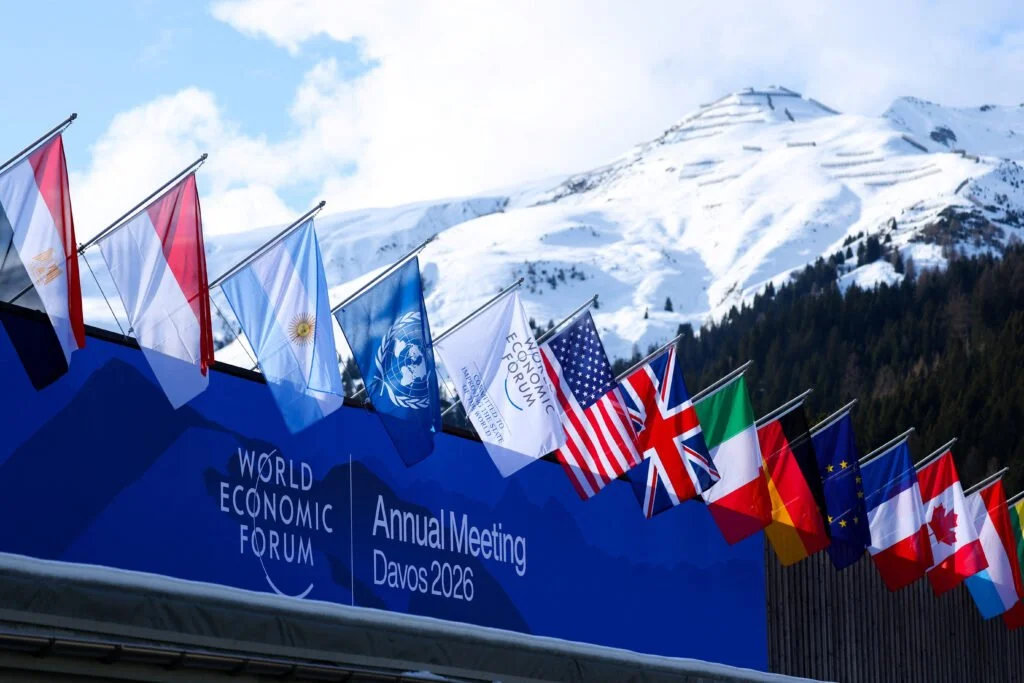
NATO After Davos: What Changed and What Comes Next?
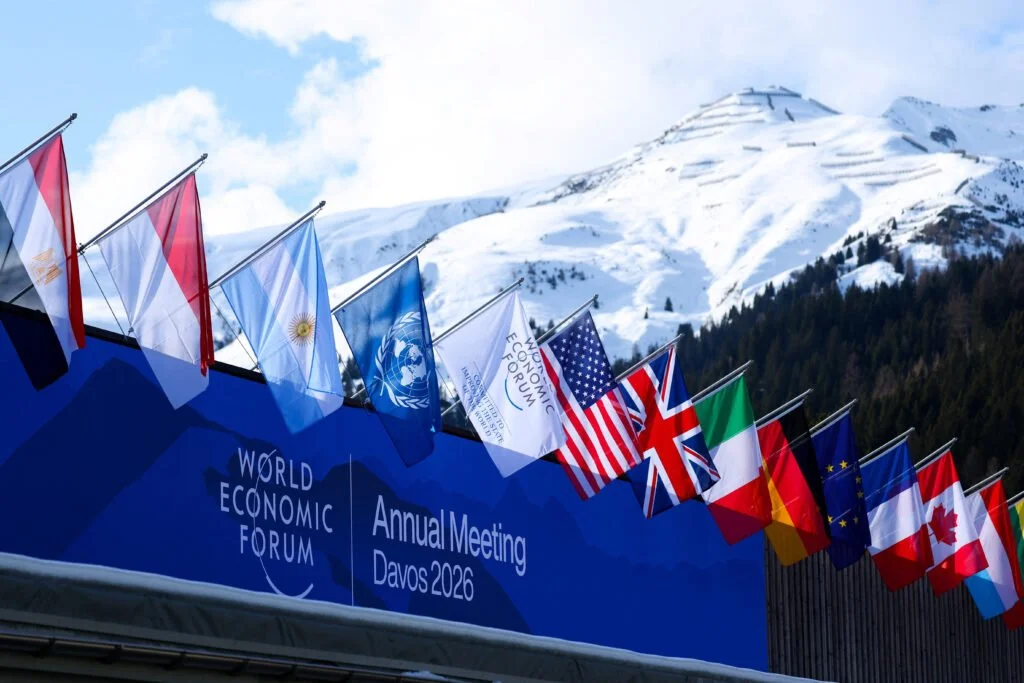
NATO after Davos: What changed and What Comes Next?
The North Atlantic Treaty Organization (NATO) has long been the heart of the pan-American and European security order, a bulwark designed to ensure collective defense and strategic stability across the Atlantic. Yet recent upheavals and growing unpredictability in U.S. foreign policy have fueled a renewed skepticism about the alliance’s long-term cohesion and credibility. Concerns intensified in the aftermath of the Venezuela operation, driven by renewed U.S. posturing toward Greenland, which sparked unease across European capitals. Fears of potential hostile action further stirred Europe, forcing the deployment of European military personnel to Greenland. Although this deployment was limited in practical effect, the event underscored broader anxieties about the reliability of the alliance despite efforts at de-escalation.
The 2026 World Economic Forum in Davos marked a notable convergence in allied messaging. Officials from across the Euro-Atlantic alliance used public remarks and follow-on engagements to reaffirm NATO’s priorities amid the prolonged war in Ukraine, mounting industrial strain, and uncertainty surrounding long-term transatlantic political cohesion. Even though Davos isn’t a security forum and doesn’t create binding policies, it has become a place where leaders reinforce shared strategic messages rather than create new ones, as well as discuss potential future policy.
NATO’s Post-Davos Messaging Shift
In the weeks following Davos, allied officials emphasized NATO’s continuity and endurance rather than escalation. Public statements from NATO leaders and member states reinforced the alliance’s commitment to collective defense while recalibrating expectations. The focus was not particularly on dramatic policy shifts or confrontational posturing toward Washington and the current administration, but on preserving deterrence over time in a shifting security environment. More aggressive rhetoric risked deepening transatlantic friction at a moment when the alliance's cohesion is paramount to its survival. NATO leaders leaned into statements that directly addressed the long-standing U.S. concerns about burden sharing and mutual military readiness. Former Secretary General Jens Stoltenberg repeatedly stressed that support for Ukraine would require “long-term commitment”, while current Secretary General Mark Rutte has emphasized the need to boost defense production and move to a “wartime mindset.” By stressing higher defense spending and industrial expansion, NATO positioned itself as responsive and proactive to American pressure.
This approach appears to be particularly effective in managing relations with the Trump administration, which has consistently criticized allied nations' shrinking in their responsibilities for defense spending. By highlighting the number of allies that now meet or exceed the 2 percent spending target, the alliance has begun to reduce grounds for confrontation while preserving its directional goals.
Historically, NATO has favored a calculated and calibrated deterrence strategy and avoided overt confrontation, preferring to operate under firm U.S. leadership. What distinguishes today's NATO is not necessarily a break in tone but a shift in the alliance's substance. The alliance remains cautious in rhetoric, yet it is more radical on issues pertaining to long-term military buildup, defense industrial coordination, and collective resilience. In that sense, NATO’s strategy reflects not only its continuity but its evolution in the changing world stage by being steady in posture, but increasingly structured to withstand volatility in Washington while reinforcing European responsibility within the alliance.
Ukraine
Following Davos, NATO also began to adjust how it framed its support for Ukraine. Rather than leaning on crisis-driven, short-term aid rhetoric, alliance messaging shifted toward a long-term framework, emphasizing sustained assistance in combating Russian adventurism in the east. NATO Secretary General Mark Rutte highlighted that allies continue to coordinate weapons deliveries and training with a long-term view, saying essentially that NATO will be with Ukraine on training and arms supply while ensuring strong security guarantees over time.
This is a subtle shift from the earlier phases of the war, when allied support was often presented as an emergency response. As the conflict approaches its fourth year and costs rise, NATO is increasingly incorporating aid to Ukraine into its planning arrangements. NATO’s Prioritised Ukraine Requirements List (PURL) and the NATO Security Assistance and Training for Ukraine command are some of the many examples of structures designed to sustain support beyond one-off pledges.
NATO stresses that continuous and sustained deterrence, as well as capability provisions, are necessary to ensure Ukraine can bargain from a position of strength in any future negotiations. European and allied leaders recently reconfirmed broad backing for Ukraine as the war’s fourth anniversary was marked, even as debates over peace proposals and future strategy continue.
Defense Industry and Burden Sharing
As stated earlier, under pressure from the Trump administration, NATO’s burden-sharing debate became more concrete and data-driven. Trump repeatedly pushed allies to increase defense spending and even advocated for a 5% of GDP benchmark by 2035, a notable rise from the long-standing 2% guideline. This pressure helped shift NATO discussions from abstract concerns about free-riding to a concrete plan on a fixed budget with reasonable commitments. At the 2025 Hague Summit, alliance leaders agreed to pursue a 5% spending target with stronger reporting requirements, a move highlighted by both allies and U.S. officials as a response to Trump’s long-standing pressure.
The effects on defense spending are visible. According to SIPRI, according to NATO estimates, 23 allies were expected to meet or exceed the 2% benchmark in 2024, compared to just 11 in 2023, and several Eastern European states were spending well above it. For example, Poland was estimated at 4.5% of GDP, while Lithuania and Latvia were also significantly above target. For comparison, historically lower spenders like Germany have been steadily increasing defense budgets and reached near or above the 2% mark in recent years.
This dynamic has helped NATO reduce its friction with Washington by showing measurable progress on burden-sharing. Rather than confrontation, NATO leaned on quantifiable increases in allied spending and capability investments to address Trump’s critiques without undermining cohesion. The result is a gradual but notable shift toward institutionalized long-term deterrence.
Why It Matters
NATO is confronting a more uncertain strategic environment marked by wavering U.S. support, persistent Russian threats, and rising internal political volatility among member states. For example, Trump’s shifts in U.S.-Russia policy have unnerved NATO’s eastern flank and raised questions about Washington’s long-term commitment to European security, which in turn pressures European capitals to reconsider their own roles in collective defense. Simultaneously, the concerns on uneven burden-sharing and domestic pushback, such as criticism of NATO spending targets by leaders like Slovakia’s Robert Fico and Spain’s resistance to higher defense spending, highlight how populist and sovereigntist politics can undercut alliance cohesion. At the same time, Russia’s large-scale war in Ukraine, expanded defense spending, and aggressive posture along NATO’s borders continue to underscore the need for a strong deterrence.
To address these challenges, NATO’s updated approach emphasizes predictable, long-term deterrence and collective resilience over one-off crisis-response. Allied leaders have agreed to boost defense investment and modernize planning, reflecting sustained strategic competition rather than short-term threats. By doing so, NATO is reinforcing its foundational role in transatlantic security while adapting to a landscape where great-power competition, domestic politics, and resource constraints shape how deterrence must be sustained.

Failure After Failure: Let’s Ditch Small Modular Reactors.

REUTERS/Stephane Mahe
Imagine a revolutionary new coffee machine – one that can get twice as much coffee from the same amount of beans. This machine would make coffee cheaper to make at home and buy at shops like Dunkin’ and Starbucks. This coffee machine starts to get buy-in from major companies in the coffee business, like Keurig and Nespresso, and is projected to be launched in Summer 2025. Halfway through the spring, it’s announced that, due to delays, it will now be launched in Winter 2027. After another delay, it’s announced that the project is now expected by 2030. Keurig and Nespresso, in response, withdraw from the project, further delaying it until 2035. After 10 years of delays, would you still invest in this machine? Probably not, so why are we investing in an energy technology that’s built on the same promises?
Small modular reactors (SMRs), unlike the coffee machine, are a real technology that promise to make nuclear energy cheaper and more accessible. In theory, their smaller size allows them to be deployed more quickly and in a variety of settings, an advantage over solar panels, wind turbines, and tidal energy, which have location restrictions. Some of these reactor designs can reprocess spent fuel (known as a “closed fuel cycle”) to extract more energy than traditional reactors can from the same amount of fuel. As such, many have hailed these nuclear reactors as the key to addressing the climate crisis, as they seem to resolve a lot of the current problems that have plagued nuclear power thus far.
On an international level, France and India have announced plans to begin constructing SMRs together, praising the energy source for its potential to enable the transition to a low-carbon future. India is also expected to work with U.S. firms to enhance investment in the technology. Similarly, Trump’s pick for energy secretary, Chris Wright, served on the board of Oklo Inc., a company that focuses on advanced nuclear technology, and is pushing for investments in nuclear energy (alongside fossil fuels). As the Trump administration ditches renewables for fossil fuels and nuclear energy, some, including Wright, have said that now is the time for the nuclear renaissance.
Unfortunately, however, it seems increasingly likely that these reactors will fail to live up to their promise. Talks of deploying small modular reactors have been ongoing for over a decade, and while around a hundred designs exist, only two reactors have been deployed–one in China and one in Russia. In the U.S., while private companies and the federal government have invested billions into their development, projects have faced delays and cancellations. Long construction times, issues with quality control, and disproportionately high energy costs (for producers and consumers alike) have led many to conclude that the energy source is a false promise. Recognizing this failure, many of the largest energy companies, such as Babcock & Wilcox and Westinghouse have withdrawn their investments, leaving many other investors hesitant to put any of their assets in the nuclear cause. While the potential of these models is exciting in theory, investors would much rather hedge their bets on just about anything else.
To make matters worse, small modular reactors come with an additional catch: they risk enabling the proliferation of nuclear weapons. SMRs are a dual-use technology; after reactors have extracted energy from the fuel rods (the real-life equivalent of the coffee beans from earlier), they’re left with weapons-grade plutonium in the nuclear waste that could be used to create a potent nuclear weapon. This risk is particularly acute for reactors that reprocess for more energy, as the leftover waste is more potent and more viable for a nuclear weapon. This presents a particular challenge, as in order for the touted benefits of SMRs to materialize, they need to distinguish themselves from the nuclear reactors we have now. As such, these new designs have to be more efficient and take advantage of their versatility, which means a lot of smaller reactors capable of reprocessing. More fissile material (in quantity and quality) coming out of more reactors makes it difficult to effectively monitor where all the waste goes. To complicate things, monitoring is already a problem, as it’s difficult to accurately measure nuclear material as it’s being transported from the facility to a waste disposal unit. The ease of diverting material could provide a pathway for states that have long had nuclear ambitions, such as Iran (who is also in a proxy war against a nuclear-armed adversary), or opportunistic non-state actors (such as domestic extremists or terrorist groups like ISIS) to finally get their hands on a nuclear weapon.
Unfortunately for proponents, it’s unlikely that the U.S. will be able to control or monitor the spread of this technology. The U.S. cannot set the standards for SMRs when it continues to lag behind Russia and China in production. Even then, why would countries already in China’s global infrastructure program, known as the Belt and Road Initiative, choose to get nuclear reactor designs from the U.S. further down the line when they can get nuclear reactors from China now? Chinese energy technology is likely more interoperable—able to work with pre-existing infrastructure—than U.S. designs, further restricting the U.S.’ potential market share. Even our closest allies wouldn’t want U.S. models, as some of them, including Germany and Japan, have given up on nuclear energy altogether. Given this hesitation and the long delays, SMRs would either fail to be deployed at a sufficient scale to resolve climate change, or would be completed hastily, which increases the risk of state or non-state actors acquiring a nuclear weapon.
While some may argue that any investment in renewable energy is a net positive in the fight against climate change, investing in nuclear energy hamstrings the response of future administrations. Investing in nuclear power creates a dangerous moral licensing, wherein future leaders may feel less incentivized to invest in other, effective renewable energy sources because they feel that they already have it covered with nuclear power. Historically, because of the way subsidies are distributed under the Clean Power Plan, nuclear energy actively stifles the development of other energies. In an effort to make nuclear power prices competitive, the U.S. government subsidizes it, which actively siphons those subsidies away from solar, wind, and tidal energy. As solar energy becomes the cheapest option available, subsidies to expand its gap or aid its clean partners could enhance renewable energy’s grip on the market. Absent these subsidies, however, fossil fuels may retain their foothold in the market for the foreseeable future. Given the existential threat at stake, the risk that this poses for the climate response cannot be overstated.
While advocates of SMRs are right that renewable energy needs to be adopted swiftly, trying to haphazardly rush out these reactors to deploy around the world risks trading one crisis for another, enabling a new era of nuclear proliferation. Similarly, if the Trump administration wants to keep its promise of low energy prices, their best bet is to stop investing in the nuclear power industry and let solar and wind energy take the reins. Like the hypothetical coffee machine, the benefits of SMRs will remain a nice thought, but nothing more than that. As climate change beckons at our doorstep, we can’t afford to invest in a false promise—it’s time to ditch SMRs.
Recent Articles