Building Influence: Chinese Infrastructure Investment in Latin America
Staff Writer Gretchen Cloutier explores China’s growing influence in Latin America through development projects.
As China’s economic power grows, the Asian giant is extending its reach around the globe. While the country has maintained strong economic ties with Africa since the early 2000s, it has also recently ramped up trade and investment in Latin America. Chinese president Xi Jinping has agreed to double bilateral trade with the region to $500 billion and increase investment to $250 billion over the next decade, according to various deals signed with Latin American countries in 2015. Currently, China is the largest trade partner of three of the leading economies in the region: Brazil, Chile, and Peru. These countries, along with the rest of Latin America, mostly export primary goods and natural resources; copper, iron, oil, and soybeans account for 75 percent of the region’s exports to China. In addition to trade and investment, Chinese loans to the region have also increased from $7 billion in 2012 to $29 billion in 2015.
This investment in Latin America often comes in the form of large infrastructure projects aimed at improving transportation and better connecting the region to lower costs for Chinese imports. As the U.S. is turning its back on relations and trade with Latin America, most prominently exemplified by protectionist calls to end NAFTA and thus free trade with Mexico, China has recognized an opportunity to supplant the U.S. as the extra-regional hegemon. However, this is not due to China’s goodwill and altruism towards the region, but rather an opportunity to control global trade flows through Chinese owned transportation links, and reduce costs of trade to Asia. This is an ambitious goal, and although China has made promises of increased investment and signed deals for large infrastructure projects, it is uncertain if the plans will actually come to fruition.
Considering China’s own domestic politics, it is no surprise that the country favors trade and investment with left-leaning Latin American nations. The former Kirchner administration in Argentina had several deals with China, including plans for a nuclear plant, a satellite tracking station, and a $1 billioncontract to buy Chinese fighter jets and maritime patrol vessels. When current center-right president Macri came into office, he said the deals made under Kirchner would be reviewed and may face rejection, however after five months of internal review, the Argentine government successfully ratified the contracts. China has also loaned $65 billion to Venezuela since 2007, more than any other country in the region. China has a growing need for energy, and Venezuela mainly pays back the loans with oil. However, the current economic crisis in Venezuela could mean that the country may not be able to supply enough oil to China or pay back the loans, and so China announced in late 2016 that it would no longer issue new loans to Venezuela.
Chinese loans and investment are particularly appealing to Latin American countries since they rarely come with political and economic conditions or other requirements, such as implementing austerity of structural adjustment programs. Unlike loans from Western international institutions such as the IMF, Chinese loans have no (apparent) strings attached. Following the Latin American debt crisis of the 1980s, countries that sought relief from the IMF were required to implement structural adjustment policies that imposed austerity measures as a condition of the loans. This resulted in a “lost decade”of economic growth for the region, during which living standards and growth both plummeted. Considering this history with lenders from Western-dominated international organizations, China has found the ideal opportunity to shape Latin America for itself by investing in infrastructure, and, in return, gaining cheap access to the primary and natural resources needed for its booming population and industry sector. Two examples of the largest infrastructure projects currently proposed in Latin America are the Nicaraguan Canal and the Twin Ocean Railway.
Nicaraguan Canal
The Nicaraguan Canal, approved by the government in 2014 with a goal date of completion in 2020, is China’s alternative to the historically U.S.-controlled Panama Canal. The proposed design would stretch 178 miles between the Atlantic to the Pacific Oceans, running across the southern portion of the country, through Lake Nicaragua. It is estimated to cost $50 billion, and Chinese businessman Wang Jing (who owns HKND, the company responsible for developing and building the Nicaraguan Canal) is the only known investor in the project.

Photo: The Guardian
It remains unclear whether or not the Chinese government is directly involved in the planning or implementation of the project. Further complicating matters is Nicaragua’s diplomatic recognition of Taiwanese independence. Every Central American country, excluding Costa Rica, is politically aligned with Taiwan. However, China refuses formal diplomatic ties with any country that recognizes the island as a separate nation. But Taiwan has little to offer Central America, and as China’s economic and political power grows, Nicaragua and its neighbors are likely to shift diplomatic ties to the mainland.
Regardless of the Chinese government’s involvement, the current project is facing setbacks due to Wang’s reported loss of 85 percent of his personal wealth in a stock market crash, which he was using to fund the canal. Additionally, the construction of the canal has faced scrutiny and backlash for its effects on the communities in the surrounding area. It is estimated that about 30,000 people will be displaced due to construction of the canal. HKND has a compensation budget of $300-$400 million, or up to $13,300 for each displaced person. This has not stopped opposition from affected communities, however, and the last two years have seen more than 80 protests against the Nicaraguan government and HKND. These demonstrations have occasionally turned violent, and there have also been reports of arbitrary detainment of protesters. Additionally, concerns have been raised over the environmental impact of the project, including the pollution of Lake Nicaragua, the largest source of fresh water in Central America, which currently supplies water to over 80,000 Nicaraguans.
The construction of a Nicaraguan Canal would give China access to a shipping route across the geopolitically strategic isthmus without having to pass through the Panama Canal. This would lower costs dramatically for Chinese imports, since tariffs and fees for trade through the Panama Canal have tripled over the past five years. It would also give China unprecedented access to the region, with control over how both their imports and exports are traded. Like the revenue the U.S. gained from the Panama Canal, China, or at least the overseeing company HKND, could also profit from other nations paying fees to ship goods through the canal. Nicaragua, too, would benefit economically from increased trade in the region and probable shared profits with China.
While the canal is likely to be economically advantageous for both countries, its environmental and social impact could prove insurmountable. The construction has already faced setbacks due to environmental concerns, and, amid questions about funding, the Nicaraguan canal seems increasingly unlikely, at least in the near future. There has not been much additional construction since ceremoniously breaking ground in 2014.
Twin Ocean Railway
Another ambitious project proposed by China is a transcontinental railway stretching from Brazil’s Atlantic coast to Peru’s Pacific coast. As with the Nicaraguan canal, this railway would facilitate movement of goods and greatly reduce trading costs for China. There are two possible routes for the railroad: one running directly from Brazil to Peru along a northern corridor, and one that passes through Bolivia further to the south. The latter, dubbed the Twin Ocean Railway, follows a more direct route and would cost about $13.5 billion to build, stretching over about 3,700km. The former is estimated at an untenable $60 billion, and would be over 1,000km longer, measuring 5,000km from start to finish. If the project moves forward, it is likely to be built along the more feasible Twin Ocean Railway corridor.
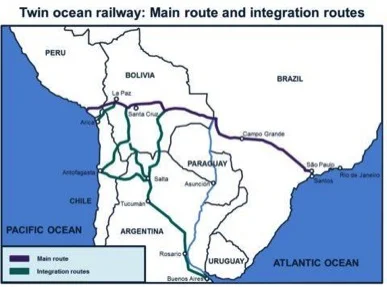
Photo from: Inter American Dialogue
This marks a win for Bolivia, who has been in discussions with China, Peru, and Brazil about being included along the route since 2014, following the signing of a Memorandum of Understanding creating a trilateral working group on the railway that did not include Bolivia. The landlocked country of Bolivia, which has the lowest GDP per capita in South America, has been looking for a way to access the sea since Chile annexed part of its territory on the Pacific coast in a war during the 1870s. The opportunity for Bolivia to once again be connected to seaports via a major trade-based railway could provide a much-needed boost to the economy.
Like the Nicaraguan Canal, the railway project has also been met with criticisms of possible environmental degradation and threats to local communities. Some of the route passes through delicate Amazon ecosystems, and it is projected to expose up to 600 remote indigenous communities that have never previously had contact with other societies. Current Peruvian president Pedro Pablo Kuzynski has also raised concerns that the railroad will be too environmentally harmful to build.
Looking Ahead
The Nicaraguan Canal and the Twin Ocean Railway are two impressive megaprojects, which, if completed, would underscore China’s economic influence abroad, and help to further cement its role as a global economic power. However, both projects are far from completion. In addition to their environmental and community impact concerns—which could halt the projects in and of themselves—many questions have been raised about their economic feasibility and long-term success, especially given China’s track record with similar endeavors in the region.
The Twin Ocean Railway’s aims are very similar to those of the InterOceanicatranscontinental highway, which also incorporated Brazil. The project began in 2006, however it was never fully completed, and the parts that were finished are not entirely structurally sound. Today, it remains a collection of unfinished, damaged, or impassable sections of highway, with no further construction or completion date in sight. Another Chinese company signed a contract with Brazil in 2011 to build a soy processing plant valued at $2 billion; however the proposed project site remains an empty field. Plans for a different railroad to be built by a Chinese company in Colombia in 2011 never materialized, along with another train project that failed in Venezuela. Given China’s history with these other infrastructure projects, it is entirely possible that the Nicaraguan Canal and the Twin Ocean Railway could end up in a similar situation – never completed or, at best, only partially built and then abandoned.
In addition to the projects that were never finished, other contracts have been pulled due to allegations of corruption between host governments and China. A rail project worth $3.7 billion slated for Mexico in 2014 was terminated after a public outcry due to evidence that the deal benefitted allies of Mexican President Enrique Peña Nieto. Additionally, a recent scandal in Bolivia revealed that the government awarded almost $500 million in no-bid contracts to a single Chinese company, raising concerns about unlawful special privileges. China’s record of not completing projects or engaging in shady contracts could sour relations with the region and foment public skepticism about foreign infrastructure investment, deterring future opportunities for China to grow its economic influence and for Latin America to develop valuable infrastructure and trade links.
Investment in large infrastructure projects in Latin America could be monumental for China’s economic influence and ever-expanding soft power, while at the same time offering sizeable benefits to many Latin American economies. However, Chinese firms must overcome their previous shortcomings and actually make progress on constructing these projects in a socially and environmentally responsible manner. Transcontinental trade and transportation links are largely missing from the region, and these proposed projects would provide much needed connections not only among neighbors, but also to Asia and the rest of the world.
Migration, Assimilation and Identity: The Effects of the Salvadoran Civil War and State Violence on Migration to the U.S.
Guest Writer Camille Torres unpacks the difficulties that the current model of immigrant assimilation in America incurs.
INTRODUCTION
This research aims to investigate how the Salvadoran Civil War of the 1980s affected migration patterns from El Salvador to the United States of America and how these migrants have assimilated or are assimilating in the U.S. The research defines assimilation as the “[a]daptation of one ethnic or social group – usually a minority – to another. Assimilation involves the subsuming of language, traditions, values, morals and behavior or even fundamental vital interests.” Examining the change in the ethnic identities of migrants, specifically first and second generation migrants, will bring light to any future migratory patterns returning to El Salvador or potentially permanent plans to settle in the U.S. Interest in this topic stems from a lack of general awareness about the 1980s Civil War and its effects. In the Nations of Emigrants, the Salvadoran population in the United States has been conceptualized as the fifteenth department of El Salvador, because of its sheer size. Yet, there seems to be a lack of generalized knowledge on this population. Also, and significantly, the research aims to give a voice to the stories of many Salvadoran-Americans who have not been able to share their experiences, aiming therefore to create empathy and greater understands for their circumstances. The research does not differentiate between illegal and legal migration, but rather considers anyone who has emigrated from El Salvador to the U.S. as within the population of study.
This research’s data consists of existing personal accounts of migrants, relevant published statistics, and original interviews conducted with the local migrant population. The research will first present a comprehensive case study of the 1980s conflict and its subsequent effects on El Salvador with the goal of then identifying demographics and patterns with a better understanding of their origins.
CASE STUDY
Thus far, over two million people have emigrated from El Salvador as a result of the civil war. The civil war is said to have been a result of agricultural concerns that led to military action. Leading up to the civil war, El Salvador’s governmental power relied on the success of coffee exports and the relationships of coffee plantation owners with the military. Because of how the power was concentrated in the hands of the coffee exporting sector, the government began to pass reforms “aimed at creating splits in the middle and lower social groupings.” However, the concentration of power in the hands of the elite also created problems as the world became more globalized and modern technology began to play a larger role in coffee growing, thus disproportionately hurting poor, indigenous small-share landholders. This role meant larger rates of unemployment for those previously employed in the coffee industry, which led to increased strength and presence of labor unions in the late 70s. These labor unions combined with student groups and peasant organizations to rebel and seize several government buildings and embassies; however, they did not take into account the consequences of angering existing opposing armed forces. The Salvadoran military, known as the Fuerza Armada de El Salvador (FAES), countered with an armed attack against the perceived insurgency as tensions came to a climax on February 28th, 1977. Protests emerged, advocating for a fair election and military forces in response began to massacre opposing demonstrators, such as the main leftist group the Farabundo Marti National Liberation Front (FMLN). Thus began a slew of massacres from both “terror squads of the ultra-right” and left-wing guerillas. People even in El Salvador’s middle classes were not spared and, under the guise of a “state of emergency,” the government justified sustained military action against those whom they perceived as leftist insurgents. One civilian wrote that “men were blindfolded and killed in the town’s center” and “young women were taken to the hill nearby, where they were raped, then killed and burned.” She further wrote that she listened to children being choked to death, three of whom were her own. Soon after, in 1979, when Carlos Humberto Romero’s government was overthrown, right-wing death squads increased their activity to about 1,000 killings per month. This directly resulted in the forced displacement of over one million Salvadorans, most of whom were expelled from the country and sought refugee status abroad; about 61,000 died in total. To put these numbers into perspective, close to one-third of the total population was either killed or forced into exile, and this does not include those killed by “government cleansings.” The government and military specifically targeted the peasant populations. Due to these mass movements of communities within El Salvador, communities began to go without water, sanitary services, and electricity, thus exacerbating the existing infrastructural problems. By 1985, over 70% of displaced households lacked permanent employment, and of those, 20% were depending on the employment of children under the age of 16.

*Note, this table is estimated to be 30x beneath actual values due to those who arrived illegally.


The U.S.A. was seen as the primary destination for exiles turned refugees, with Mexico following close behind. This choice is most likely attributed to the perceived economic opportunities in these nations. The Salvadoran government has attempted to recognize exiled citizens and migrants as “allies” rather than enemies because of the economic contributions they make to the home population. About half of all refugees have stated that they would like to return to El Salvador. However, for those that have already returned, conditions were so poor and United Nations High Commission on Refugees (UNHCR) return camps had such awful conditions that most did not actually stay. Additionally, because those who have returned even just for a small amount of time tended to face discrimination and shame for lack of “patriotism,” most did not end up staying permanently. Most are also punished or targeted by the military upon return. Also, many who did at one point intend to return, have found that their villages have been completely destroyed. Leaving and returning is seen as a massive betrayal by the government and thus those who have been identified as returnees are usually targeted and killed. American deportations are seen as a source of increased conflict violence in El Salvador. Therefore, the cyclical migration process is much more feasible.
MIGRATION PATTERNS
Most Salvadoran emigrants who fled to Mexico or the U.S.A. were recognized by the UNHCR as having refugee status. However, between Mexico’s refusal to acknowledge the 1951 Refugee Convention and 1967 Refugee Protocol, over 1 million Salvadorans were left at risk of deportation. Also, the U.S.A. did not help the situation as their immigration policy in the late 70s and early 80s only allowed in 20,000 immigrants from any one country in the Western Hemisphere.
Refugees of the Salvadoran Civil War and Salvadoran state violence have been categorized into three groups. Emigres are those who leave and do not return, while return migrants return to resettle and repatriate in El Salvador, and circulators, who migrate from El Salvador to various different countries with no specified end destination. Adrian Bailey and Joshua Hane cite most migrants from this crisis as being circulators who made “short-term myopic” decisions to escape the ongoing war. They also argue that the initial choices and forces behind this displacement affect future behavior due to higher rates of education and younger ages, providing them with the characteristics to continue to move from place to place. The majority of these circulators migrate with economic goals in an effort to “maximize family welfare and practice risk aversion.” These Salvadoran migrants relocate in one of the largest economic migrant circulation systems between the U.S.A., Mexico, and Puerto Rico. In the Washington D.C. metro area alone, a 1995 study cited a population upwards of 150,000 migrants from El Salvador.
However, despite sustaining themselves in a cyclical migration pattern, issues with English proficiency stunt migrants’ mobility. In a 1982 study by Guy Poitras, 259 Salvadoran refugees were interviewed and only 22% of the respondents could speak English “well” or “very well.” This, in combination with having less education than many non-Salvadoran-Americans, gives migrants limited social mobility in U.S. society. Also, their obligation to family members in El Salvador deters upward mobility. In terms of sheer numbers though, it is predicted that the Salvadoran population will continue to increase steadily as migrants gain legality and can begin to petition for family members.
THE JOURNEY: TRIALS AND TRIBULATIONS
The journey of the migrants is not an easy one, with many forced to travel by foot for the majority of the way. Many people are lost along the way to coyotes, drowning, abuse, or murder when they return home. Some are literally dismembered by trains or have their fingers sliced while jumping fences. Mexican officials have also reported finding bloated bodies of those who have perished along the way, with their identification documents on their chest so that relatives at home can be notified. Their journey is classified as clandestinesince migrants travel below the radar for safety. Many are also subject to the will of smugglers, who can detain or extort them. Most migrants travel illegally, thus forcing them to keep quiet about any injustices committed against them along the way. These migrants are multidimensional. Some gain legality to travel through Mexico, but not to arrive in the U.S. Some also leave unbeknownst to the people of their hometowns, shrouding their journey in mystery and creating more dangerous and vulnerable circumstances for the travels themselves. Also, many take out loans to finance their travels, which can become a major burden even if the journey is successful. One man named Miguel Lopez Herrera worked for six months at an hourly wage of $4.25 to repay a $750 loan he took out to finance his journey. The majority of people are willing to undertake these risks. In an interview conducted in August 2000, every one of three Salvadorans was looking for a way to leave the country. The people who facilitate the smuggling are called coyotes, defined as smugglers or a smuggling group. The coyotes generally use illegal vehicles to transport migrants and sometimes force migrants to carry drugs across the border. Some have even begun to refuse to take women or children, because they believe they are too likely to die during the journey. In an interview with NPR, Rey Kowalski says the price of smuggling across the Mexico-U.S. border is about $2,500. However, after crossing, the coyotes sometimes hold migrants for ransom if they understand their family members are already in the U.S. waiting for them to arrive. Also, many who arrive do not even know they have illegally immigrated to begin with. The United States Agency for International Development (USAID) is trying to improve school infrastructure and educational resources about the dangers of coyotes to try to decrease this practice of human trafficking. They, along with other organizations and the host governments, are trying to limit migration and work on remedying the causes of migration in El Salvador itself.
As stated earlier, there is a level of multidimensionality in the journey from El Salvador to the U.S. Many migrants arrive to Mexico legally, and the problem arises in their crossing of the U.S.-Mexico border. It is not illegal to leave Mexico without papers, therefore, many migrants do not realize that crossing into the U.S. is illegal. I had a chance to interview Salvadoran case worker Marina Ortiz recounted the story of her three siblings who made the trek to the U.S. in 2013. Her three siblings were being threatened by the government and chose to walk from El Salvador to the United States. When they arrived in the U.S., none of them applied for asylum. Ortiz says they did not know applying for asylum was even an option, and therefore they still remain undocumented today. The three live in a community of people with stories similar to theirs in New York city. None of their bachelor’s degrees translated to the U.S. educational system, so between that and a lack of English proficiency, finding work is a difficult task.
On top of being unaware of their rights, if they make the journey, many migrants have access only to limited resources. According to an interview I conducted with United We Dream Policy and Advocacy Analyst Zenen Perez, oftentimes migrants will give the little money they have left to a business that will claim to help them with their asylum process. Later, the business will have disappeared entirely, along with their money. Perez said that, in 2014, an analysis by the Transactional Records Access Clearinghouse observed that less than 30% of Central American women and children had access to legal representation. Consequently, less than 1.5% of those were allowed to stay in the United States, compared to the 25% who were allowed to stay that did have attorneys.
AN ONGOING DEBATE: ECONOMIC MIGRANTS OR REFUGEES?
To this day, Salvadorans are mostly labeled as economic migrants and thus still face a great risk of deportation in the United States. Many come to the U.S. seeking protection from threats or possible death back home, but U.S. policymakers cite their illegal entrance via Mexico as evidence of their economic goals, rather than their legal eligibility for asylum under the 1951 Refugee Convention. However, asylum seekers Maria Yolanda Mejillo and Pedro Antonio Leibo strongly contest this point. I had the opportunity to talk to Maria and Pedro, and in late 2013, their second son was targeted by the military for having graduated and earned his bachelor’s degree. As such, he made the decision to walk from El Salvador to the United States, where he believed he could be granted asylum. At the Texas border, due to increased border controls, he was turned away. In 2012, the Consequence Delivery System (CDS) was implemented by border enforcement, in which people caught crossing the border were less apt to be allowed their request for political asylum and underwent “expedited removal” instead. As an educated individual who knew about the asylum process, one can assume he fell victim to this system at the Texas border. Border patrol officers have also more than doubled in number since 2004, and even drones are being implemented to survey the area. Most of the people who arrive at the border are also abused, with up to 25% of arriving migrants reporting such instances. In the same year that border patrol doubled, a panel presentation was held in El Salvador where many people posed the question “If they say it’s a crime for us to travel to the United States without papers, then why don’t they give us papers?” As of right now, one can only apply for asylum once inside the United States. It is not economically feasible for people to arrive by plane or other safe means though, and sometimes travelling by foot is the only option.
The Salvadoran military kidnapped and killed the interviewee’s son upon his return on February 18th, 2014. To this day, his family does not know the kind of death he suffered or where his body was buried, only that he is dead. Following this, the oldest and youngest sons, who also have bachelor’s degrees, fled the country. The two walked from El Salvador to New York, successfully crossing the border. The two have not had their bachelor’s degree translated and currently work at a local bakery, waiting for their parents to immigrate and hopefully be granted asylum. In March 2016, Mejillo and her husband arrived in New York and applied for asylum with the help of a case worker, hoping to be a part of the over 60% of cases that are granted asylum in New York.
Stories like these are at the heart of heated policy debates, as the children of Mejillo and Leibo came to the United States to utilize the education they had acquired. They knew if they remained in El Salvador, they would face government persecution, but at the same time, would risk economic stagnation without the opportunity to use their bachelor’s degrees. As William Stanley states, “The motivations of individuals are complex: some individuals who leave El Salvador out of fear may also hope for economic success in the United States.” Additionally, migration from El Salvador is not exclusively rooted in the conflict of the civil war. Before 1980, people were already migrating for economic reasons on a seasonal basis. Immigration and Naturalization Services (INS) statistics show a sharp increase in migration following the start of the war, however, indicating motives that are greater than just economic goals. Reports from many global organizations point to fear as the primary motive for migration although it is difficult to find precise data on this. Also, more than one thousand Salvadorans were killed by military forces in 1979 alone, and since then, those numbers have only grown. The current atmosphere of fear makes it easy to label people as economic migrants and deny them asylum, but the extreme human rights violations occurring in El Salvador force huge numbers of people into exile and illustrate the deeper fear that exists.
MIGRANT DEMOGRAPHICS
A 2009 study found a strong correlation between major depressive episodes and downward social mobility of migrants. Since most migrants are not able to bring their papers validating their education over to the U.S., cannot fund returning to college, or cannot afford to take a recertification exam, many are forced to work jobs for which they are highly overqualified. Unfortunately, this comes in the form of menial jobs such as manual labor or janitorial work. This creates extreme downward social mobility. In this study, most migrants felt they faced downward mobility as opposed to stable lateral or upward mobility. This means that these migrants were far more likely to experience at least one major depressive episode, controlling for exogenous effects. This was also found to be especially true for migrants to which finding a job was of major importance to them.

Most of these migrants are in the lower classes of the U.S. economy because of institutional discrimination. Since many employers are aware that these migrants are unauthorized, there have been reports of them sending empty checks to migrants or forcing them to work overtime. The knowledge of their lack of authorization can also lead to worksite raids and sometimes deportation. This is incredibly problematic because, for those with American-born children, their children legally have U.S. citizenship. This fractures families and has severe traumatic consequences. Furthermore, a Migration Policy Institute (MPI) study shows that second-generation Salvadorans actually see a lower level of employment than their parents. The second-generation population cites 70% of those under eighteen working, and this number drops exorbitantly to a mere 30% after the eighteenth birthday. This is especially interesting as the second generation tends to see higher education levels than their parents. However, overall, their median household income was about $10,000 less than the average American household, indicating that they were entering the workforce with lower paying jobs than the average American.
Returning to the Ortiz family, their story is not unique and most migrants are in situations similar to theirs. MPI says these communities are called ethnic enclaves, and although they make the migrants feel safe, they result in social and linguistic isolation and can thus propagate institutional discrimination. Understanding the scope of ethnic communities allows businesses to limit these communities’ access to better jobs, quality schools and viable social networks. Also, they can be left out of zones of insurance coverage and not covered by personal physicians, creating a system of health effects as well, according to an MPI report.
Many of these migrants are classified as unaccompanied minors because coyotes incorrectly advertise the migration process. As was mentioned, many migrants are not aware of the legitimate process by which to cross the U.S.-Mexican border. As a result, coyotes capitalize on this and “increasingly influence the rate of migration through more aggressive and misleading marketing.” For instance, coyotes will tell families that if children are sent over unaccompanied, they will be able to request for their families to come over for reunification and as a result be allowed to stay in the United States. This however, is not true. This information was collected by looking at USAID focus groups, surveys, and deportee discussions. Along with information published by other organizations, this shows that, although there are many factors that push migrants to come to the U.S., they do not see a main one.
One major issue related to this kind of migration is the fact that many of these children can be so young that they do not know exactly where they came from, or only know the name of a larger nearby city instead of their city of origin. Additionally, there is a huge language barrier that limits progress in reunification with families or finding basic information about these children.
The language barrier is of course not only prevalent in deterring family reunification, but basic mobility once in the United States. This greatly affects migrant demographics as many states utilize the high school tracking system and students who are not fluent in English, get categorized as English Language Learners, and put on lower tracks. NPR follows the story of a student by the name of Alejandra Galindo who is a gifted student that was put in lower level classes because of her lack of English fluency. English Language Learners, or ELLs, get put in separate classes from native, white students. From a young age, kids are exposed to institutionalized racism which has severe psychological effects. Also, they are told that because of the color of their skin, they do not have as much potential these other students. ELLs are often not tested to be gifted, and as undocumented parents are not always informed about different tracks and programs in the school system, these children’s talents can be overlooked. Educators in Arizona, a state where 80,000 gifted students have been identified, say there is a moral obligation to better serve ELLs and create funding for those who are gifted within the state.
IMPLICATIONS
Existing statistics and research seem to show that the patterns of migration from El Salvador we have seen in the past thirty years shows no indication of letting up. Publications have shown increased gang violence pushing people to leave, and the increased number of deportations contributes to violence at home. Interviewed individuals say that when someone is found out to have tried to leave and then forced to return, they become a target for the government and local gangs. This cycle is vicious, and there currently does not seem to exist a solution to break it. Given current deportation numbers and anti-immigrant rhetoric in the U.S., the cycle of deportation and a hometown push to leave will most likely continue. These numbers will only continue to rise in coming years as more people seek to gain better economic opportunities and a viable life in the United States, something that is not feasible in their countries of origin.
CONCLUSION
This research began with the aim of uncovering questions of assimilation and integration into the U.S. from El Salvador, but more questions arose as it began. Statistics showed surprising downward mobility from second-generation children of migrants, who, in theory, should have been more integrated. This raises questions about what is failing in our current methods of assimilation, and how can this be improved. Furthermore, there is much to be said about the debate between economic migrants and asylum seekers, and how this plays into admittance into the U.S. Based on the firsthand accounts of Salvadoran migrants, it is evident that these people are first and foremost asylum seekers. Although many do try to create better economic opportunities, this is only a latent factor to the overarching issue of violence and instability in El Salvador.
In January of 2016, the Restoring Family Links branch of the Red Cross published an article about the increase in gang violence and environmental concerns as a push factor for Salvadoran migration to the U.S. The U.S. has attempted to stem migration by publishing ads to warn migrants against doing so. In tandem with this, the U.S. has increased deportation raids. However, most of these raids have been targeted on newly arrived families awaiting asylum as opposed to those with criminal records. Hopefully, seeing these new statistics, the argument for Salvadorans as asylum seekers will gain more traction seeing the violence and issues they face currently from their nation of origin.
In the future, research should aim to fill gaps in terms of how these people are integrating, as there was not much real life data on this. Additionally, as the second-generation gets older, their progress and mobility should be tracked as well as for their kids to see patterns among the generations that are living in the United States, and how they perceive their own mobility.
The migrants from El Salvador all have their own incredibly complex stories, some unfortunately with similarly saddening outcomes. Hopefully, as more of their stories come to light to humanize their journey and explain their experiences, people can use the compassion they use for those around them for them as well to help them integrate and achieve the quality of life they are working so hard for.
A False Sense of Democracy: Dilma Rousseff as a Scapegoat in Brazil
Staff Writer Laura Thompson analyzes how Rousseff’s impeachment may allow underlying corruption to be swept under the rug.
As Dilma Rousseff steps down from her position as the first female President of Brazil, some speculate that this is a victory for democracy and a step in the right direction. The removal, instigated by an impeachment trial and shrouded by rumors of corruption and fiscal violations, comes after a two-year process headed by the former president of the Chamber of Deputies, Eduardo Cunha. Rousseff was the primary choice of former president Luiz Inácio Lula da Silva, a man now facing corruption charges of his own. And at the time, she had taken up the mantle as leader of the leftist Workers’ Party, her election proving to be an enormous exercise in democratic election.
By appearances, Rousseff is being brought down from a legacy of corruption during a period of significant economic turmoil and a lack of consistent popularity—so what’s the issue? Perhaps this victory is only a superficial one; although Rousseff is not a pure or innocent figure in this mess, she is hardly the larger culprit—and what does it mean for the future when the bigger criminals in the game are the ones orchestrating the legal efforts?
A Troubled Foundation
Although Rousseff’s election was democratic, it was hardly a unanimous event. According to a Huffington Post account of the vote, she won with 54.5 million votes of the 143 million possible; however, competition against candidate Aécio Neves of the Brazilian Social Democratic Party lost her roughly another 50 million votes. According to that same report, if one accounts for abstentions, blank, null, and protest votes, as well as those voting for Neves, then Rousseff did not win by a majority at all.
At the same time these voting numbers were taking place, Brazil was under the impression that, following Rousseff’s term, the Workers’ Party would continue to see dominance in the 2018 campaign of Luiz Inacio Lula da Silva, who is Rousseff’s predecessor and arguably one of the biggest icons of the Workers’ Party. 2014 has since passed, however, and the situation is far darker. Currently, Lula da Silva—affectionately known as Lula—is now the subject of his own investigation. Federal prosecutors have filed corruption charges against him on several accounts, and in particular corrupt kickbacks and donations in relation to the Brazilian oil giant, Petrobras.
Lula and Rousseff have quite a bit in common when it comes to problems with Petrobras. Prosecutors in Lula’s case claim that he did not pocket illegal funds during his presidency, but rather gave it to oil executives, Workers’ Party leaders, and lawmakers, all with the intention of sustaining the strength of the Party. Rousseff, on the other hand, has claimed that the nature of her impeachment is uncalled for, and akin to a coup; her crime was a series of budgetary tricks to hide the growing economic deficit. These allocations amounted to some $11 billionborrowed from state banks to fund social programs associated with the Workers’ Party.
Rouseff’s involvement with Petrobras is a bit more complicated, and requires a timeline. Rousseff was chairman of Petrobras between 2003 and 2010, when plenty of the corruption in Petrobras recently revealed by Operation Car Wash took place. Operation Car Wash, pursued by Brazilian law enforcement to pursue and discover bribes in R$6.2 billion, is currently leading to massive internal upheaval in Brazil as dozens of significant figures are implicated. In the larger picture, Rousseff’s fall is far, but she is one of many.
Behind the Curtain
The question is not whether or not Dilma Rousseff has done anything wrong—that is almost certainly true. Although her impeachment rests on the grounds of her decisions surrounding budgetary reallocation, Petrobras’s vast corruption allegations also largely took place under her purview. What makes the impeachment trial tenuous, and subsequently makes its value and contribution to the advancement of democracy questionable, is the driving force behind it. The face of the impeachment trial thus far has been Eduardo Cunha, an evangelical Christian radio commentator and former speaker of the lower house. Accompanying Cunha is Mr. Michel Temer, the interim president and former vice president of Rousseff, a member of the centrist Brazilian Democratic Movement Party.
Since his vigorous assault of Rousseff’s qualification to retain her position, Cunha has faced legal charges of his own. The lower house of Congress in Brazil, of which Cunha is a former speaker, has since voted to expel the lawmaker on the grounds of graft charges. The vote was perilous to Cunha, coming in at 450 to 10; this sudden change means that, amongst other things, Cunha will lose the legal privileges of a federal legislator and can now face imprisonment. Mr. Temer, meanwhile, has so many ties to Rousseff and the Workers’ Party that he already stands on a perilous edge, and holds approval ratings as low as Rousseff’s due to his conservative inclinations and racial biases.
In fact, the men who have accompanied Mr. Temer in his rise to power have already begun to resign: his anticorruption minister and his planning minister, ironically, have forcibly resigned due to allegations that they attempted to use their powers to stifle investigations surrounding Petrobras and Operation Car Wash. Mr. Temer is technically set to hold his position for the duration of Rousseff’s original term, through 2018, but with the increasing scandal it is unclear if he will stay in power.
But Wasn’t This Democratic?
Brazil’s current situation is representative of a few things. The first, that when a state has a significantly diverse population, multiple candidates, and a voting populace who also submits null or blank votes in droves, the democratically elected candidate is not necessarily always the one that the greatest majority of the state actually desired. Now, this is as much a criticism on the system as it is the behavior of the people. Voter apathy is nothing new, though—nations around the world who identify as democratic regularly contend with the struggle to elect the most largely desirable and representative candidate, and to combat issues such as voting numbers, turnout, and legitimate nominations (i.e., null votes over fake names, fictional people, etc.). Brazil’s situation is critical because, amidst these democratic struggles, hidden layers of corruption are constantly shifting and maneuvering to take control of resources.
Eduardo Cunha’s position as a leader in Rousseff’s impeachment immediately calls it into question not only because of possible political machinations (rather than simple integrity-based questioning), but because Cunha himself is a culprit of corrupt dealings. And although Rousseff has made mistakes, her errors are by no means the most damaging—she is but a fish in the sea, so far as corruption in Brazil is concerned. However, the time for questioning the validity of Rousseff’s impeachment is past; Mr. Temer has taken up her seat, so to speak, and now the future of Brazil is in question, particularly given the fragility of its economy.
The curiosity here is that this has all been regarded as democratic. If we define democracy in general terms, in that it promotes majority rule with prioritization of values such as justice and liberty, and a representation of equal minority rights, then it is hard to say that any of this has really been democratic. By numbers, it is exciting to say that a country with 143 million eligible voters engaged in a democratic election to vote for a woman to be president. However, the reality is far more complicated: Dilma Rousseff was the pre-selected choice of former president Lula de Silva, a man who had championed the Workers’ Party, a larger body that has dominated much of Brazilian politics over the last decade. That Rousseff won, then, was no real shock; although she clearly had competition, it would be foolish to say that she won standing on her own two feet, or that her efforts were purely her own.
Furthermore, Mr. Temer’s failure to name a single woman or Afro-Brazilian to his cabinet of ministers, as well as his own recent legal troubles—having been found guilty of violating campaign finance limits—is hardly a nod in the right direction either. Rousseff did not have a significant or decisive victory, but it seems unlikely that Mr. Temer would be president at all had he not succeeded based on the claims afforded him as vice president. What ought to be a purification of corruption from the leading ranks of Brazil is instead a very tired case of ‘more of the same’.
The trouble with Brazil’s corruption is not simply a question of judgment by the people, a case of apathy in the voting populace, or even any grand exercise in stealth by corrupt financiers in the biggest companies in industries such as oil. Rather, the issue is that the degree of corruption, and its incessant presence, is practically old-hat to the people of Brazil. Rousseff’s impeachment and Operation Car Wash ought to be a sigh of relief felt around the world, and particularly amongst the Brazilian people, but it is not. There is a sense of complacency amongst those in charge in Brazil where corruption is concerned, and those who might claim to feel relief that Rousseff is on her way out are only fooling themselves—Rousseff’s absence offers no real relief, because her impeachment solves very little in the grand scheme of things.
The very man who urged on Rousseff’s impeachment has undergone his own trial, and the man who has replaced her as president has also been convicted of a campaign finance crime that makes it illegal for him to even attain the presidency via proper election. It is, in some ways, a stroke of luck for Temer that these circumstances came to be.
That Dilma Rousseff was caught borrowing funds to support social programs that largely benefited the poor so early into her presidency is simply unusual in a country where corruption so often goes unnoticed. Petrobras’s belated investigations, and Rousseff’s implications in it, are just one example of that chance likelihood. And although arranging funds for social programs seems altruistic—if altruistic politics are an accepted concept—the method behind the actionwas certainly illegal. Rousseff borrowed money from public banks, such as the Banco do Brasil and the Caixa Econômica Federal; this type of loan is illegal according to fiscal responsibility law in Brazil. Why? These loans can, unfortunately, be used to manipulate public accounts—which, on a governmental scale, can be critical. What does seem to ring true is that, by allowing Rousseff to be the face of this slew of anti-corruption efforts, people are being potentially misled as to the intentions of the government. The implication here is that Rousseff is not a political heavyweight being brought to justice; she is, instead, a scapegoat to distract from everything else happening around her. Men like Temer and Cunha are not rare finds in Brazilian politics, after all—they are entirely typical.
Where Is This Coming From, and Where Are We Going?
Corruption is hardly new in Brazil, both internally and concerning its international reputation. Ultimately, although Rousseff did make a mistake, it is important to note that her impeachment is not a victory against corruption. That false sense of security some may sense—though it is important to note that disillusionment is no stranger to the Brazilian people—is at the cost of incredible political maneuvering. Rousseff was left vulnerable by the Petrobras investigations, as well as economic downturn, and opposition such as Cunha saw a golden opportunity to take her down, as well as the Workers’ Party, from the leading position.
When a majority of Brazilian Congress is facing corruption charges, it is foolish to assume that good intentions rest anywhere in between. A problem with dynasties is that people can rest too much confidence in the value of a name. For example, it seems likely that former president Lula, when he backed Rousseff, put too much confidence in his own national affections, as well as the strength of the Workers’ Party, rather than on Rousseff’s genuine qualifications as president. This possibility is certainly plausible, given that Rousseff’s primary previous experience is with Petrobras, not with major governing. Furthermore, intimate reflection on her characterreveals further problematic qualities unsuitable for a tense position: “her blustery arrogance, her refusal to listen to even her closest aides and her apparent inability to understand just how much trouble she was in, right to the very end.” In many ways, Rousseff was a downfall waiting to happen in Brazilian politics.
If one considers the number of corruption charges in current government, as well as the sheer depth of it all, it is hard to see a cheery future. These problems are not new to Brazil, but the intensity of the spotlight on them is something newer: people go on trial, yes, but often are able to get by under-punished and unnoticed. It may not be the case this time for everyone, which is not a perfect outcome, but is certainly a step in the right direction. Corruption itself is not the most critical concern for Brazilians, but its outcomes are—the people face economic peril, governmental incompetence, and with the current leadership of Mr. Temer, racial tensions. In a country wrought with complicated racial diversity based around notions of equality dating back to the colonization of the New World, and economic tensions between extremely divided classes, it is hard to see a future that doesn’t put the endurance of corrupt politicians to the ultimate test.
Crisis in Venezuela: The Fall of the Left in Latin America
Staff Writer Gretchen Cloutier examines the political landscape of Venezuela.
Venezuela is in crisis. Falling oil prices have severely stunted the state-run economy, where petroleum products account for roughly 96 percent of total export goods. Government revenue has taken a deep plunge as the world price continues to fall, and printing money in attempts to offset decreased income has resulted in high inflation – projected to hit 480 percent in 2016 and top 1,640 percent in 2017. There are also chronic shortages of basic goods and food; store shelves remain empty, and people line up for hours with the hope of receiving necessities such as rice, medicine, and toilet paper. To make matters worse, desperation has turned violent in recent months, with incidences of protests, riots, and looting reaching into the thousands.
Venezuela’s economic crisis has been exacerbated by low oil prices, however the roots of the current situation stem from Chavismo policy implanted under the populist leader Hugo Chavez, who held power in Venezuela from 1999 until his death in 2013. As with most socialist revolutions, Chavez’s aim was to redistribute wealth and land, and improve poor Venezuelans’ quality of life. The cornerstone of Chavez’s economic policy was petroleum-funded state spending on social services and human development projects. Chavez also implanted price controls to keep the cost of basic goods affordable for everyone. In theory, these practices seem as though they would transform Venezuelan society for the better. However, while they did some good for Venezuela’s poor, in practice the long-run economic consequences of these policies proved severe.
Price controls decreased profit incentives for the increasingly shrinking sector of private businesses, discouraging them from stocking the forcibly under-priced basic goods. While a boom in the oil market meant that the government could prop up a supply of these goods in state-run stores with artificially low prices, as discussed previously, the country’s dependency on revenue from petroleum exports and high rates of government spending was unsustainable in the long run. The drop in oil prices meant government spending was forcibly slashed, and the artificially high supply of goods at artificially low prices have vanished. The official private sector is weak due to nationalization that occurred under Chavismo, and goods on the black market are being sold for hundreds of times more than their official prices. For example, a recent report found that milk, which is capped at 70 bolivares, is being sold on the black market for upwards of 7,000 bolivares. The same is true for other staple goods such a flour, sold at 3,000 bolivares instead of its capped price of 190 bolivares, and pasta, sold at 3,000 bolivares instead of its usual 15. As inflation spirals out of control, the problem is likely to get worse.
Nicolás Maduro, Chavez’s successor, has had little success in finding a solution while maintaining leftist economic and social policy in Venezuela. Maduro’s approval rating, currently hovering just above 20 percent, has plummeted along with the country’s economic stability. In December, the opposition won controlof the national assembly for the first time in 17 years, demonstrating Venezuela’s discontent with the status quo of socialism. More recently, the national electoral council has announced that they have collected enough signatures to begin the process of holding a recall referendum, and polls show that over 60 percent of the public would vote to remove Maduro from office.
Maduro has accused the opposition of organizing a coup d’état against his regime, while the opposition maintains that they are solely seeking a recall referendum to replace him. In attempts to quell the opposition, authorities have carried out numerous arrests under direction from Maduro. Other repressive techniques employed by the regime amid recent protests include deployment of military in Caracas and creating a no-fly zone above the capital. As public unrest and economic insecurity grows, Maduro will face increased challenges remaining in power. Although the military is still on his side, the opposition is gaining strength in numbers.
The case of Venezuela, though extreme, is not unique in South America. Recently, the region has experienced a falling political left and a rise of the political right. It seems that the so-called pink-tide of socialist Latin American governments is subsiding. Although this phenomenon may be observed across the continent, the most relevant cases to be discussed in this article, in addition to Venezuela, are those of Argentina and Brazil. By analyzing the political and economic situation of Argentina and Brazil, which are further along in developing center-right policies, one can consider possibilities for Venezuela’s future, and learn from the policy mistakes of other administrations.
Brazil’s senate recently impeached president Dilma Rouseff, ending thirteen years of leadership by the socialist Worker’s Party. After the 61 to 20 impeachment vote, a center-right politician from the PMDB party, Michael Temer, has replaced her. Dilma was the Worker’s Party successor to Luiz Inacio Lula da Silva, who was President from 2003 to 2011. Under da Silva’s leadership, Brazil thrived.
Although also involved in a corruption scandal, da Silva was fortunate enough to enjoy high approval ratings that stemmed from a booming economy. He focused on improving the microeconomic situation of Brazilians, and thus created the Bolsa Famila conditional cash transfer program. Consequently, 36 million Brazilians were lifted out of extreme poverty and the middle class expanded rapidly during da Silva’s two terms in office. Brazilians also witnessed real wage increases, expansion of credit, and increased employment during this period. For da Silva, socialist policy worked.
However, Rouseff’s policies were far less successful. She was unable to sustain the healthy economy seen under da Silva, which caused social unrest and tension between the government and its people. Rouseff’s involvement with a corruption scandal involving her party and contract bribes with the nationalized oil company Petrobras, along with violation of state budget laws, led to her final demise. Rouseff was impeached on the latter charges, although she has pledged to appeal the impeachment, which she has called a parliamentary coup – despite parliament carrying out the impeachment proceedings in accordance with Brazil’s constitutional framework. With Rouseff’s impeachment, it appears that socialism has come to an end in Brazil.
Temer, Brazil’s new President, has vowed to restore the state’s political and legal credibility. Additionally, he is planning to enact austerity measures to improve Brazil’s credit rating – which was downgraded to junk status under Rouseff – and reduce the deficit. Temer also plans to overhaul the state pension system and transition national infrastructure projects to the private sector by auctioningthem off to foreign investors. However, he will need Congressional support to pass these tough measures that have made him deeply unpopular with the public. With Temer’s term just beginning, it remains to be seen how successful Brazil’s swing to the center-right will be.
In late 2015, Mauricio Macri, a center-right politician from the Republican Proposal party, was elected president of Argentina, ending 12 years of leftist leadership by the husband and wife team Nestor Kirchner and Cristina Fernandez de Kirchner. Macri is both fiscally and socially conservative; he is anti-abortion and opposes marijuana decriminalization. In fitting with his party’s center-right platform, Macri is also a proponent of free-market economic policy, and has cut energy and transport subsidies in order to reduce government spending. However, he has promised to continue and improve upon welfare programs started in the Kirchner era.
The largest challenge facing Macri is reining in fiscal policy enough to lower the deficit and reduce inflation without letting social programs and infrastructure suffer, and while also continuing to grow the economy. Inflation in Argentina continues to rise; when Macri was elected it stood at about 25 percent, and it topped 40 percent last April. The Central Bank has raised interest rates to 38 percent, hoping to increase savings and decrease spending that contributes to inflation. Macri has also announced that the government is unlikely to meet its year-end goal of 4 percent deficit reduction, which stood at 5.4 percent of GDP when Macri took office.
However, the Central Bank expects recession recovery to begin soon, predicting that GDP will rise 3 percent next year. Macri’s is also seeking to attract investors and new business to the country to help bolster the economy. Recently, Argentina held a conference in Buenos Aires for global investors and received over $32 billion in corporate pledges, signaling that the reforms are being taken seriously by multinational industries.
Despite an 18 percent drop in approval ratings this past summer – down to a moderate 46 percent approval rating – Macri has remained committed to his economic reforms. While Argentinians are feeling the squeeze of austerity measures, they are necessary to get the economy back on track, decrease inflation, and balance the budget. However, with legislative elections set for October 2017, Macri will need to demonstrate to the people that these measures work in order to avoid the government swinging too far back to the left and halting economic reform.
As demonstrated by these cases, the fall of the Left and subsequent rise of the Right is not a singular occurrence but rather a marked phenomenon in recent Latin American politics. The region has experienced a number of political and economic ideologies since its independence from Spain and Portugal was won in the 1800s. In the last half-century alone, the region has shifted from inward looking import substitution industrialization, to socialist and communist regimes, and later responded with neoliberal economic policy. It is only expected that countries and regions undergo economic and political reform as ideology changes and people look to restore balance after moving too far in one direction. The economic policies necessary to get the economy back on track will be painful in the short term, as seen in Argentina and Brazil. If these policies are not met with political stability and social welfare programs, the people may push out these new governments just as swiftly as they ushered them in. As nascent center-right regimes take hold in Venezuela, Brazil, and Argentina, only time will tell how large, and successful, the shift will be. For now, the pink tide of Latin America is receding.
The Candidates and Latin America: Policy in our "Backyard"
Staff Writer Gretchen Cloutier compares all candidates positions on issues affecting Latin America.
Ahead of the 2016 presidential election, questions on candidates’ foreign policy positions have mainly focused on the Middle East, with tough debates surrounding ISIS, the Iran nuclear deal, and the Israeli-Palestinian conflict. Second and third in line for candidates’ foreign policy concerns seem to be the growing economic influence of China and Russia’s political aggression. Although hailed as the United States’ “back yard,” Latin America is merely a blip on the foreign policy radar this election season. However, three issues regarding Latin America have been widely discussed by most (if not all) campaigns: Immigration reform, normalizing diplomatic relations with Cuba, and NAFTA. The candidates’ stances on the issues vary, not only between political parties but within them as well.
Immigration
With an estimated 11 million undocumented people living in the U.S., immigration is no small issue. The two parties are vehemently divided on the issue of immigration reform. Democrats often promote a “pathway to citizenship,” while Republicans tend to favor securitization of the (southern) border.
As the son of a migrant from Poland, Bernie Sanders proposes an immigration policy that emphasizes justice and human rights to keep families together and protect workers from exploitation. He plans to build on the Obama Administration’s immigration reforms by expanding the DACA and DAPA programs. Sanders will not wait for Congress to act, instead he has said he will take executive action within the first 100 days of his administration. Sanders specifically addresses the flow of unaccompanied child migrants, primarily from the Northern Triangle – Guatemala, El Salvador, and Honduras. While it reached a peak in 2014, the U.S. is still dealing with the repercussions of the massive influx of tens of thousands of unaccompanied children. Sanders condemns the deportation of these children, amid reports that children who are returned to their home countries are being killed by the same gang-incited violence they fled.
Hillary Clinton also supports comprehensive immigration reform. Her proposed immigration plan includes creating a pathway to citizenship, closing family and private detention centers, and upholding President Obama’s previous executive orders on immigration reform. Clinton also plans to provide deportation relief for DREAMers, DAPA candidates, and to “extend those actions to additional persons with sympathetic cases.” As a senator, she cosponsored the Development, Relief, and Education for Alien Minors (DREAM) Act. Although Clinton mainly addresses the legal aspects of immigration reform, she also emphasizes that immigration is a “family issue” and wants to work to keep law-abiding immigrant families together.
The current GOP front-runner, Donald Trump, proposes the radical and improbable solution of building a wall to seal the border with Mexico. Trump also plans to make Mexico pay for it, by refusing to process remittances from relatives and friends in the U.S. Trump states, “ It's an easy decision for Mexico: make a one-time payment of $5-10 billion to ensure that $24 billion continues to flow into their country year after year.” According to experts, the proposed 2,000-mile wall would be the largest infrastructure project in the U.S. since President Eisenhower’s highway program. While Trump estimates the cost at about $10 billion, it could actually cost up to $25 billion and would take until the end of his first term to complete. It is also unclear if it is feasible or even legal to halt remittances. To make matters worse, Trump has also come under fire for racist comments, equating Mexican immigrants with gang members, drug traffickers, and rapists.
In keeping with reductionist immigration reform, Ted Cruz states on his campaign website that “he will stop illegal immigration.” Not only that, but he also plans to build a wall across the southern border, as well as triple border security, and implement a biometric tracking system. Although his campaign does not delve into details, a biometric tracking system would likely include collecting the fingerprints of every foreigner who entered or exited the country. Congress passed a biometric tracking bill shortly after 9/11, but the Department of Homeland Security has maintained that the program is too costly and impractical. A preliminary study found that it would cost up to $6.4 billion to install the system just in all air and seaports, which would not even track the 79% of migrants who enter the U.S. over land.
The more center-leaning GOP candidate, John Kasich, fails to mention immigration on his campaign website. Even more vexing, Kasich has changed his position several times, even within the campaign season. In June 2015, he stated at an Iowa forum that undocumented immigrants who otherwise follow U.S. laws should have a pathway to obtain legal status. However, he also added that this legal status should not lead to citizenship, although that may have to be part of a compromise. Later, he told an Ohio newspaper that he does not support any legal status for undocumented immigrants, and he wanted to end birth right citizenship.
The Democratic candidates are proposing massive reforms, which will greatly improve the current system and provide desperately needed services to millions of migrants and their families. However, it will likely be extremely tough to get these reforms through a gridlocked Congress. On the other hand, the Republic candidates’ plans are either non-existent or so preposterous that they might as well be non-existent, as they will likely never bear any semblance of reality.
Cuba
President Obama’s actions to normalize relations and lift the embargo against Cuba have become major topics in most candidates’ foreign policy proposals. Since the process began in December of 2014, Cuba has been removed from the State Sponsor of Terrorism List, the U.S. Embassy in Havana has been re-opened, and direct mail flights have been re-established. On going efforts are working to lift the trade embargo and allow to greater freedom for Americans wishing to travel to the island.
Sanders has long supported the normalization of relations with Cuba, however, his stance is nuanced. In an interview from 1985, Sanders commends Castro’s socialist reforms to improve access to universal health care and education. While Sanders has expressed hope that Cuba move towards a more democratic system of governance, he has also emphasized the need for the U.S. to respect Cuba’s sovereignty. This last statement is evident of Sander’s non-interventionist position, and he has often criticized the U.S.’s habit of toppling left-leaning regimens in Latin America (from 1898 to 1994 there were at least 41 U.S. interventions in the region – an average of one every 28 months). More recently, in 2014, Sanders traveled to Cuba to discuss human rights, trade, and health care as part of an official U.S. delegation.
Clinton’s position has slowly shifted from her time as First Lady to her more recent position as Secretary of State for the Obama Administration. As First Lady, she supported the 1996 Helms-Burton Act, which President Bill Clinton signed into law, that prevents the embargo from being lifted until Cuba fulfills certain requirements, including fair elections, freeing political prisoners, and uncensored press. In her 2008 presidential run, she maintained her position of opposition to lifting the embargo, however she added a caveat, stating, “As president I would be ready to reach out and work with a new Cuba government, once it demonstrated that it truly was going to change that direction.” Then, as Secretary of State, Clinton recommended that Obama reconsider the embargo, as it “wasn’t achieving its goals.” In July of 2015, Clinton made a speech in Miami, a highly symbolic location due to the number of Cuban immigrants living there, in which she declared, “The Cuba embargo needs to go, once and for all.” Hillary’s changing position on Cuba could be the result of a progression in thought, though it may also just be an attempt to court Latino voters.
Although not entirely clear or detailed on his position, it appears that Trump is not opposed to the normalization of relations, stating, “Ultimately, it’s going to be good.” However, in the same interview, he went on to express that, “we could have had a better deal, a much stronger deal,” though he does not reveal what a stronger deal might entail. Other Republican candidates have criticized Trump, as they generally oppose lifting the embargo and normalizing relations with Cuba.
Despite his Cuban heritage, Cruz strongly opposes normalizing relations with Cuba, especially if the country remains under the Castro regimen. During the GOP primary debate in Miami, Cruz stated that he would reverse Obama’s actions and re-break diplomatic ties with Cuba, a “nation that hate[s] us.” He has also promised to block the appointment of a U.S. ambassador to Cuba, a necessary step in re-establishing diplomacy between the two countries. Currently the ambassador is serving in an “acting” role since the U.S. re-opened the Havana embassy in July of 2015. Cruz’s plans would set a dangerous precedent for U.S. foreign policy and damage relations in the region.
Kasich has not outlined a definitive position on Cuba thus far in the campaign. However, as Representative he voted against two measures in 2000 that would reduce the economic and travel embargoes. In an interview in February, Kasich responded to a question on breaking diplomatic relations with Cuba by stating, “Well let’s see where we are when I come [into office] and what the administration has done…I think [the Obama Administration] made a big mistake because I think Cuba needed to do something. Why are we always reaching out?...They keep demanding things so I don’t understand what the administration is doing.” It seems only time will tell what his final stance is.
The candidates express varying degrees of enthusiasm for normalizing relations with Cuba. Clinton and Sanders would build on the Obama Administration’s policy, while Cruz would break ties once again, severely damaging the budding diplomatic relations. In keeping with their lack of foreign policy experience, or even interest, Trump and Kasich have said little on the issue.
NAFTA
The North American Free Trade Agreement (NAFTA), enacted in 1994, is a multilateral agreement between the United States, Mexico, and Canada to increase economic cooperation. NAFTA has been highly controversial. Critics say it causes job losses in the U.S. and unfavorable working conditions abroad. Supporters respond by saying it will actually help create jobs and spur economic growth across the region. Currently, most experts conclude that NAFTA has been net positive for the U.S., although it has failed to deliver on the big promises made in its early years. Furthermore, it is difficult to distinguish the direct effects of NAFTA on economies in the wake of globalization and increased technology use.
Sanders strongly opposes NAFTA, blaming it for increased poverty in Mexico, loss of jobs, and an influx of undocumented migrants in the U.S. His plan is to rewrite trade deals such as NAFTA to promote fair trade in lieu of free trade. Sanders has been consistent in his position, stating in a debate in early March, “I was on a picket line in the early 1990s against NAFTA, because you didn’t need a Ph.D. in economics to understand that American workers should not be forced to compete against people in Mexico making 25 cents an hour.” While Sanders’ draconian interpretation of NAFTA may be a bit exaggerated, a fair trade agreement would likely be more beneficial for the American worker than the current free trade model.
Clinton has a complicated history with trade deals. She supported NAFTA as the First Lady during Bill Clinton’s Administration. As a Senator, Clinton supported free trade, as long as it “can increase living standards and foster…economic development for all parties.” In 2007, during her first presidential run, she remarked that NATFA was a mistake because it did not deliver on many promises that were made in 1994, which is mostly true. As Secretary of State, Clinton embraced free trade with the beginnings of the Trans Pacific Partnership (TPP) – which she has since turned against. Her stance as a current presidential candidate has been fuzzy; she does not openly support NAFTA and other free trade agreements, but she does not decry them as middle-class and job destroying plans, either. This is another case of questioning whether Clinton’s change of heart is due to gradual belief progression, or, as is likelier in this case due to her sudden turn against TPP, an attempt to round up votes.
Trump also opposes NAFTA, as he believes it is destroying the U.S. manufacturing industry. In an interview in which Trump was asked how he would respond to an American car company that wished to open a plant in Mexico, he stated that he would charge the company a 35 percent tax on each product that was then sent back into the U.S. However, this measure directly violates NAFTA and disregards the fact that only Congress can establish separate tax rates. In a separate interview, Trump said, “I am all for free trade, but it’s got to be fair.” This statement under scores his lack of basic economic knowledge, as free trade, by definition, cannot be constrained by measures to make it “fair.”
Cruz’s positions on NAFTA and free trade have been murky. At press time, he has not given a position on NAFTA, and has only vaguely expressed opposition to the Trans Pacific Partnership.
Although he has not said much on this issue during his presidential campaign, Kasich voted for NAFTA as a Congressman in 1993. He has not spoken at length on the issue, but Kasich currently supports free trade, and also maintains that many American jobs are the result of free trade.
Conclusions
The foreign policy positions of the candidates represent a large range of experiences, interests, and perceptions. Clinton, having served as Secretary of State, is by far the most qualified candidate. However, her record in Latin America is stained by revelations that she played a role in the 2009 Honduran coup d’etat. Sanders remains fervently committed to his ‘diplomacy first’ and non-interventionist beliefs, and often connects foreign policy with reducing inequality and promoting social services – two core points of his domestic campaign. Trump’s proposals are either outlandish or half-baked, and there seems to be no moderate middle ground in sight. Similarly, Cruz’s views are both simplistic and extreme, and he would not hesitate to turn back the clock to the 1950’s on the U.S.’s relationship with Cuba. Finally, Kasich leaves much to be desired in the realm of foreign policy, and, really, in his campaign in general. It seems that the only issue the candidates might be able to agree on is their condemnation of NAFTA, which, in reality, is not the catch-all to blame a stagnant economy and loss in industry jobs on that they want it to be.
Reproductive Rights and Violence against Women in Latin America: Spotlight on Paraguay
Staff Writer Gretchen Cloutier analyzes the consequences of Paraguay’s restrictive abortion policies.
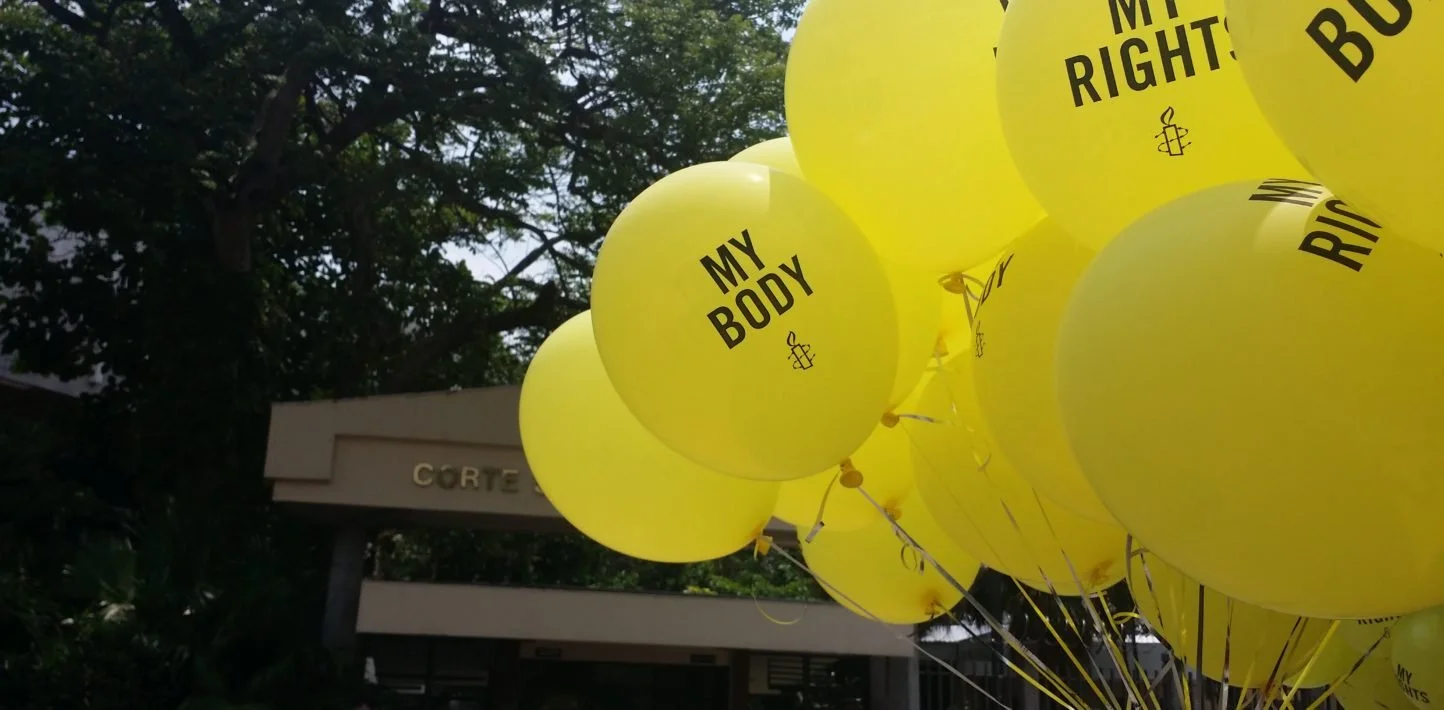
As the pro-choice versus pro-life debate surrounding abortion continues in the United States, the status of reproductive rights in Latin American remains highly restricted. The politically conservative and predominately Catholic continent generally restricts access to contraceptive and family planning services, and denies abortions except when the mother’s life is in immediate danger.
The cultural and legal taboo of abortion is exemplified by the tragic case of an eleven-year-old Paraguayan girl who gave birth in 2013. According to Amnesty International, the girl was taken to the hospital by her mother in April, when she was then only ten-years-old, and was found to be 21 weeks pregnant. The father of the child is alleged to be the girl’s own stepfather, who raped her on several occasions. An international outcry among human rights groups and pleas from the girl’s mother to terminate the pregnancy proved unsuccessful. In Paraguay, abortion is restricted only in cases of serious danger to the mother’s life. The girl carried the pregnancy to full term, and was placed in a center for young mothers. The girl’s mother has been arrested and charged with negligence, despite reporting the sexual abuse of her daughter in 2013. Her stepfather has been arrested, though he denies the allegations, and it is unclear whether he will face time in prison.
This case hinges on the fact that, despite the girl’s young age, doctors ruled that she did not face immediate physical danger from carrying the pregnancy to full term, the only permissible reason for abortion under Paraguayan law. However the risk of maternal death in Latin America is four times higher among girls under sixteen years of age than among women in their twenties. This is due to complications of underdeveloped reproductive organs and physical immaturity among younger girls. Paraguay’s record for maternal and reproductive health is troubling, especially in comparison to regional, albeit more developed, neighbors.
The maternal mortality rate is extremely high, with 132 deaths per 100,000 live births, compared to 22 in nearby Chile and 14 in the United States. Infant mortality is in the double digits, at 18 per 1,000 live births, compared to a rate of seven in Chile and six in the United States. Instances of infant and maternal mortality are even more likely among younger mothers. It is crucial that women have access to quality health care to reduce these rates--especially family planning services and prenatal care.
Contraceptive prevalence in Paraguay was 79 percent among married women ages 15 to 49 in 2008. While 79 percent represents relatively good access, there are many problems with this indicator. First, it only includes married women. Most statistics regarding contraceptive prevalence only measure married populations, making it difficult to estimate prevalence among single, or cohabiting populations. This is a group that has an arguably higher demand for contraceptives because they are not in a traditional union that signals a readiness to settle down and have children. This group may also face greater stigma and challenges in obtaining and using contraceptives. This indicator also does not include access or availability of emergency contraception, such as the “Plan B” pill, which is often outlawed in Latin America. Finally, this indicator does not capture girls younger than fifteen who are likely survivors of rape and sexual assault, such as the eleven-year-old girl mentioned previously. In order to address the contraception needs of a modern and diverse population, better indicators must be developed to uncover and close the gaps. Survivors of sexual assault and rape should be offered every possible option -- including emergency contraception and abortion, or pre-natal care if she chooses to continue the pregnancy.
The measures of physical health determined by Paraguayan doctors in evaluation of eligibility for an abortion do not take into consideration the mental health of these mothers, who may be victims of rape and sexual assault. According to Amnesty International spokesperson Guadalupe Marengo, in the case of the Paraguayan girl, “the physical and mental repercussions of continuing with…high-risk pregnancy could be devastating and are akin to torture.” The World Health Organization finds that violence, including sexual violence, by an intimate partner is related to higher instances of injury and death, depression, alcohol abuse, sexually transmitted infections, unwanted pregnancy, and low birth-weight babies. Among women in Paraguay who had experienced partner violence in the past twelve months, 68 percent reported severe anxiety or depression and 14 percent had considered or attempted suicide.
Systematic denial of quality health care services and reproductive rights in Paraguay is related to the larger crisis of violence against women. Violence against women is a form of gender-based violence and “refers to any act that results in, or is likely to result in, physical, sexual and psychological harm to women and girls, whether occurring in private or in public.” It is a not unique to Paraguay, and plagues societies all around the globe. Sexual violence can cause unwanted and unintended pregnancy leading to devastating results if women cannot access health care that prioritizes their psychological and physical health, as well as their quality of life.
It is estimated that one in three women ages 15 or older in Latin America has experienced physical or sexual violence in their lifetime. Most of these transgressions are not committed by strangers in dark alleyways, but rather by men who have close relationships to the survivor. In Paraguay, prevalence of intimate partner violence is highest among girls aged 15 to 19, and this trend is fairly consistent across Latin America. The 20 to 24 age bracket also experiences high levels of intimate partner violence. As can be seen, violence against women starts disturbingly young. Among women ages 15 to 24 who have had sexual intercourse, 2.2 percent reported that their first experience was forced or rape, and 14 percent reported that their partner “convinced them.” Power inequality dominates young women’s intimate experiences, and it persists throughout their lives.
According to a report by WHO/PAHO, almost 8 percent of women in Paraguay reported unwanted sexual intercourse with a partner out of fear of what he might do if they refused. Even more troubling, only 12 percent of women sought help in dealing with sexual assault from police, a hospital, a religious group, or a women’s organization. The most common reasons women did not seek advice or assistance were that they “thought she could solve it alone,” “shame,” and “fear of retaliation.” These last two responses are indicative of the social stigma placed on survivors of assault. Women who seek help or report the crime often face humiliating questioning by officials who do little to investigate. Perpetrators then benefit from high levels of impunity. Cases of sexual assault are frequently characterized by victim blaming and “he-said-she-said” adage. Although Paraguay’s parliament passed a law against domestic violence in 2000, it does not outline avenues for justice by including criminal repercussions. Without proper institutional support and policies that act in the survivor’s best interest, it is unlikely that assault reporting will increase and impunity will be reduced.
As stated previously, limited reproductive rights and violence against women is not unique to Paraguay. The situation is similar across the Americas. Latin America has the highest rate of maternal death (an estimated 2,000 women annually) from attempting to obtain an unsafe abortion. Only three regional bodies-- Cuba, Uruguay, and Mexico City-- permit abortions within the first term of pregnancy for any reason. On the other hand, El Salvador, the Dominican Republic, and Chile prohibit abortion under all circumstances, including risk to the mother’s life, rape, and unviable fetus. El Salvador has come under scrutiny for imprisoning women who have miscarried naturally, under allegations that they induced an abortion. In Honduras, it is even illegal to provide women with information about emergency contraception (which does not terminate an already fertilized egg) and abortion. Millions of women experience physical and sexual abuse each year across the region, with high rates of impunity and few options to bring their abuser to justice.
The case of the eleven-year-old Paraguayan girl who was denied an abortion is just one example of the perils of allowing violence against women to persist while systematically stripping them of their right to chose how, when, and if they have children. Regardless of an individual’s view on the morality of abortion (which is outside the scope of this article), it is morally unquestionable that women should be provided with quality healthcare that prioritizes their health and wellbeing, as well as resources for support and justice in the case of rape or assault. Paraguay, along with the rest of the region, should work to improve the lives and health of its women by introducing effective legislation that condemns gender-based violence, and providing resources for women to control decisions about their bodies and health.
Guatemala and the Limitations of Democratic Peace Theory
Executive Editor William Kakenmaster explores U.S. Intervention and Expanded Conceptualizations of Peace and Democracy.
In 1954, the United States covertly intervened in Guatemala, orchestrating a paramilitary coup d’état that deposed the democratically elected, Liberal government and installed a brutally repressive right-wing military junta. The story is well-known among Latin Americanists and foreign policy skeptics, but its theoretical significance for international relations (IR) has thus far been understated. More than just a foreign policy blunder, the case of Guatemala in 1954 represents the limitations of one of IR’s dominant frameworks: Democratic Peace Theory (DPT). DPT fails because it improperly conceives of its two key concepts—democracy and peace—ultimately narrowing them beyond any practically useful definition (e.g., one whose premises accurately reflect the world’s state of affairs). Western-style democracies—founded on Liberal values and free market capitalism—have no theoretical monopoly on legitimate democratic governance. To suggest otherwise ignores the realities and possibilities of equally legitimate democratic governance that may differ in form. Furthermore, and in spite of DPT, the absence of war does not sufficiently imply peace. To suggest otherwise insults the realities of torture, police brutality, disappearances, and other human rights abuses that happen off the battlefield, but which violate peace nonetheless.
DPT and Its Discontents
DPT is the closest thing we have to a natural law of international relations—we are often reminded—and its mainstream proponents claim three principal reasons that, when combined, create a special peace among democracies. First, citizens of democracies wield power over their governments, and their natural reluctance to go to war limits democratic countries’ proclivity for war-making. Second, the leaders of democratic countries face institutional constraints on their powers; unlike kings and emperors, presidents and prime ministers must answer to legislatures and voters, causing decisions to go to war to be based on multiple actors and timelines. Third, democracies are founded on values that naturally prioritize and respect individuals’ right to life, ensuring their philosophical predisposition to peace. Beyond these three mainstream explanations, some scholars argue that democracies enjoy peaceful relations due to their related economic development—war disrupts trade, and hence, democracies desirous of economic prosperity stop fighting and start signing trade agreements. Others argue that democracies are better at trusting one another because of their “unique contracting advantages” that make them more able and willing to negotiate peacefully amongst themselves. Whatever the reasons, proponents of DPT all ultimately maintain the same principle: democracies “don’t attack each other.”
Though several scholars support DPT, several others do not. DPT’s discontents consist of both quantitatively and qualitatively oriented critiques. Quantitative critiques suggest that theorists manipulate their variables and selectively limit the scope of their dataset in order to produce more favorable results. Qualitative critiques argue that democracy is a subjectively understood construction and, therefore, unreliable as a variable upon which to base peace claims. However, such critiques are not without flaws of their own. Quantitative opponents of DPT suffer from the same hindrance as the theory’s proponents, for the danger of quantitative methodologies is that of over-simplification, which excludes alternative, but nonetheless democratic forms of political participation. If we can rank countries on a scale of “objective” criteria required for democracy, then we risk excluding phenomena like protest, union membership, and so on that less traditionally characterize democracies and which are generally more observable through qualitative methods. DPT measures any given country’s democratic-ness with the Polity index, scoring countries out of ten on—for instance—open and fair elections, constitutionalism, and political participation. But, the Polity index does not account for alternative forms of democratic political action such as non-violent demonstrations and human rights activism. In Guatemala, the former led to the overthrow of the U.S.-backed dictator Jorge Ubico and the latter led the world to recognize the government’s genocide of indigenous Maya people. Defining which countries count as democracies and which do not is a political project and, if we remain skeptical of DPT proponents’ supposed objectivity, then we must also remain so for DPT’s opponents that adopt the same methodology. In addition, I remain skeptical of mainstream qualitative critiques’ subtle Eurocentrism. It is quite easy to claim that democracies are constructed by “America-like” discourses when the cases studied consist primarily of central and eastern European countries—countries with which a large portion of the U.S.’s population shares its heritage. It is a bit harder to identify cases that contradict DPT from the global South, as Guatemala does. Though DPT’s proponents may not get it right, to a certain extent, neither do its critics.
Usurpation and Inter-Democracy Violence in Guatemala
The U.S. intervened in Guatemala in 1954 to overthrow the legitimately elected government that sought to promote Liberal, capitalist reform. In 1901, the Guatemalan dictator Manuel Estrada Cabrera granted the United Fruit Company, an American multinational agricultural corporation, the exclusive right to transport post between the U.S. and Guatemala, which became the company’s first entry into the country. United Fruit primarily produced bananas, eventually dominating the market, and creating disparate inequalities in Guatemalan landholdings. By 1944, 2% of Guatemala’s population held over 72% of the land. Moreover, according to Insatiable Appetite by the University of California, Davis’ Richard Tucker, U.S. agro-industrial capitalists—who needed ports, roads, and other vital infrastructure to export their products from Guatemala—controlled nearly every aspect in the chain of production through centralized, vertical integration of Guatemalan production and infrastructure. By 1902, Tucker finds that agro-industries like United Fruit “controlled most banana shipping to Europe, as well as to the United States,” and by 1912, it controlled the International Railways of Central America. Furthermore, Tucker notes that United Fruit ran the Guatemalan postal service and Latin America’s first wireless telegraph company, the Tropical Radio and Telegraph Company. Meanwhile, policymakers in the U.S. Departments of State and Defense lined their pockets with shares in United Fruit (now known as Chiquita Brands International).
Eventually, popular uprisings ousted the authoritarian government and elected Guatemala’s first democratic president, Juan José Arévalo, who dreamed of Liberal, capitalist reforms and cited Franklin Delano Roosevelt’s New Deal as his primary source of political inspiration. In 1950, Arévalo’s democratically elected successor, Jacobo Árbenz implemented the controversial land expropriation policy Decree 900, which sought to break up United Fruit’s monopoly and combat the inequalities in landholdings. Árbenz’s Decree 900 drew upon Arévalo’s vision. In 1954, the Central Intelligence Agency (CIA) intervened in Guatemala, training Honduran and Nicaraguan proxy troops that stormed Guatemala City and forced Árbenz to abdicate power. As justification, the U.S. labelled Guatemala a communist state infringing upon free market capitalism and individuals’ land rights. According to the then-Ambassador to Guatemala, John Peurifoy, and despite significant evidence to the contrary, Árbenz “thought like a communist, he acted like a communist, and if he is not one […] he will do until one comes along.” In a nearly cartoonish exaggeration of the Guatemalan political situation, the CIA overthrew a legitimately elected democracy that deliberately incorporated elements of American policy in order to advance Liberal, capitalist development and promote market competition.
The Limitations of the Democratic Peace
U.S. intervention in Guatemala in 1954 demonstrates how DPT improperly conceptualizes democracy as a specific type of government that is Western-styled, Liberal, free market, and allied with the U.S. politically and ideologically. Polity IV counts Guatemala just before the U.S. intervention as an “open anocracy” characterized by “mixed, or incoherent, authority.” Arévalo’s and Árbenz’s reforms therefore do not sufficiently reach the threshold of democratic governance for DPT. But, Polity’s mistake lies in its lack of consideration for states’ democratic capacities. In its first ever legitimate, national elections, Guatemalans clearly showed their democratic volition, but were plagued by the lack of democratic institutions typical of other, established democracies. To the extent that it could reasonably be considered so, Guatemala was a democracy in 1954 in that it had open, fair elections, support for Liberal human rights, and reforms to establish free and fair market competition. However, factoring in democratic capacity did little to make Guatemala a democracy in the eyes of policymakers. Recall how, despite the Liberal, democratic, and capitalist reforms instituted and sought after, U.S. policymakers claimed that, if the Árbenz administration was not communist, it “would do until one came along.” U.S. policymakers imagined the threat of communism in Guatemala because it did not pursue conservative, free market ideologies as the U.S. did, and because it did not explicitly reject the same Cold War allies that the U.S. did; and Guatemala subsequently was not considered a democratic country in spite of evidence to suggest otherwise.
Moreover, DPT improperly conceptualizes peace, excluding violations of peace present in cases like Guatemala. Following the U.S. installation of the junta, Guatemala entered a decades-long period of authoritarian rule resulting in state-sponsored violence, disappearances, torture, and genocide against Guatemala’s indigenous population. According to mainstream DPT literature, “peace” is defined as the absence of war. War is defined as any formal, organized, inter-state conflict resulting in the deaths of over 1,000 belligerent soldiers. The Guatemalan Historical Clarification Commission estimated in 1999 that over 200,000 people were killed or disappeared during the county’s civil war and as a direct result of authoritarian rule. Few, if any, troops on either the U.S. or Guatemalan side died during the 1954 coup, however. Therefore, according to DPT, Guatemala’s is a case for peace. From this intuitively false conclusion, we can derive two important implications, the first of which deals with how we conceptualize peace. If peace is restricted to DPT’s definition, then repression, civil disobedience and political cleavages, torture, ethnic cleansing, and so on, count for peace besides our natural beliefs to the contrary. Leaving these instances out of the dataset makes the theory useful only for explaining the absence of war, not peace, especially given that these concepts are not perfect opposites.
The second conclusion deals with the dangers of narrowly conceptualizing peace in this way. If we exclude one type of violence that breaches the peace in vor of including another, then we introduce structural elements to IR theory that privilege one type of violence over another. War, at least DPT’s version of it, may be on the wane for a number of factors, but that does not necessarily imply a more peaceful world. Excluding Guatemala renders DPT potentially dangerous and privileging of a narrow, antiquated view of peace and its conceptual opposite. If we privilege formal, organized, inter-state war as the only acceptable form of peace for IR theorizing, then other atrocities that violate peace between people (not to mention between states) fall off scholars’ radars. Essentially, genocide and the legacy of human rights abuses in Latin America from colonial mass killings and rapes to the state-sponsored slaughter of indigenous people as recently as the late twentieth century equally violate peace in IR.
Conclusions
The U.S. coup in Guatemala deposed of a democratically elected regime seeking to advance Liberal, capitalist reforms. DPT’s proponents rely on overly narrow and useless definitions of peace and democracy. To claim that DPT adequately explains inter-democratic relations ignores the fact that Guatemala’s open, fair elections constituted democratic governance to the extent that its limited democratic capacity allowed. To further suggest that, because fewer than 1,000 belligerent combatants died on either side of the intervention, Guatemala sufficiently constitutes peace obfuscates the U.S.’s use of proxy troops and the resulting brutality of the U.S.-backed authoritarian regime.
The 1954 U.S. intervention in Guatemala represents more than just a foreign policy blunder—it shows the vastly insufficient conceptualizations of peace and democracy that underpin one of the dominant contemporary IR theories. Of course, fully developed, accurate conceptualizations of both democracy and peace would be exceedingly useful for IR theorizing if defining these concepts were removed from countries’ and scholars’ political agendas. Such conceptualizations are, however, outside the scope of this essay and would require more in-depth research. But what is clear is that those employed by DPT are insufficient. To secure its place in IR scholarship, DPT would need to rectify its definitional shortcomings and adequately account for alternative forms of democracy and violations of international peace off the battlefield. However, to the extent that they represent subjectively understood elements of a Liberal political project, the inherently narrow representations of peace and democracy only indicate DPT scholars’ inability to objectively determine them. Democracy consists of innumerable philosophies of governance far beyond its narrow understanding in the DPT literature and peace consists of a state of human affairs, whose maintenance or violation inter-state wars’ have no theoretical or practical monopoly—neither concept can be so reductively defined as in the literature lest we ignore alternative, valid approaches to democracy and alternative, tragic violations of peace.
Brazil’s Trilemma
Staff Writer Gretchen Cloutier unpacks the economic, political, and social crises in Brazil.
Brazil is facing a challenging economic, political, and social landscape. The economy is expected to contract by 3 percent this year and the real, Brazil’s currency since 1994, has depreciated sharply against the dollar. Standard & Poor’s, the U.S. credit-rating agency, has downgraded Brazil’s investment-grade credit rating to “junk” status. Unemployment has also increased, with 100,000 formal jobs disappearing each month. Current president Dilma Rousseff is facing impeachment proceedings, a corruption scandal, and her approval rating has sunk to single digits. Ahead of the 2016 summer Olympics in Rio de Janiero, water pollution remains a significant challenge, and social tensions are heightened over accusations that the government has funneled spending away from social programs and into building Olympic infrastructure. This grim economic situation combined with unraveling political and social situations sets a difficult course for Brazil in the coming year.
Although a shift away from the dominant policy paradigm of state capitalism, in which industry is privatized but still heavily influenced and guided by the state, seems unlikely due to long-standing precedent and nationalism, Brazil’s economic performance is probably going to get worse before it gets better. Fiscal discipline is needed to lower the deficit, reduce inflation, and restore confidence in the real, but this will likely result in further deterioration of the social and political situation because these unpopular economic measures will be undertaken with little outside support. Brazil’s penchant for state capitalism is evident in cases like Petrobras, an oil company; Banco do Brazil, a bank; and key electric providers, such as Electrobras. These formerly state-owned companies have been privatized and the majority of share holdings have been sold off, yet the state has retained enough minority shareholdings in ways to reinforce the state’s influence over the industry. Ironically, shares of these companies were originally sold off in order to balance the budget. However, the persistence of state influence in these companies has made investors wary. Although complete privatization of the industries may help restore confidence for investors and boost the economy, Brazil’s nationalist sentiments are unlikely to allow this to happen. Petrobras represents a major source of revenue and is a symbol of state pride. Brazil is unlikely to let this industry slip entirely from its grasp, no matter the economic situation.
Under the administration of leftist President Luiz Inácio Lula da Silva (affectionately called “Lula” by his constituents) from 2003 to 2011, Brazil thrived. When Lula first came to office, the economy was in peril amid fears that Brazil would default on its debt. Thus, Lula cut government spending and raised interest rates in order to stabilize the economy and achieve a fiscal surplus. It worked. He then implemented a three-pronged economy policy: fiscal surplus, inflation targeting, and a floating exchange rate. In addition to these macroeconomic stabilizers, Lula focused on improving the microeconomic situation of Brazilians. This emphasis on social welfare ushered in the Bolsa Famila conditional cash transfer program, which provided money to female heads of households for sending their children to school and making sure they receive vaccinations. Consequently, 36 million Brazilians were lifted out of extreme poverty and the middle class expanded rapidly during Lula’s two terms in office. Additionally, real wage increases, expansion of credit, and increased employment all contributed to the rise in living standards witnessed by Brazilians. Those living in the historically poorer eastern side of the country, women, and ethnic minorities especially benefitted from these social programs. The economic success of this era stuck with Lula’s Partido dos Trabalhadores (PT, Portuguese for Worker’s Party) and helped ensure the election of the party’s successor, President Dilma Rousseff.
However, Dilma has been unable to translate Lula’s policies into a healthy economy. We see an attempt to achieve a fiscal surplus, with a target of 1.2 percent for this year, according to the Economist. Although Brazil has since recovered from a period of hyperinflation, inflation still remains at 10 percent, higher than the regional average with the exceptions of Venezuela and Argentina. Finally, a floating exchange rate means that the market is left to set an efficient rate, but for Brazil’s faltering economy this results in a depreciating real. Brazil has officially entered recession, and the economic outlook is poor. Congress is struggling to make necessary budget cuts while also facing limited borrowing options due to the credit rating downgrade. Furthermore, microeconomic growth and social spending have stagnated.
Brazil’s weak economy is complicated by problems in the political and social spheres. The country faces a multitude of hazards including jarring inequality, social unrest, and corruption.
Protests erupted in 2013 over increased bus fares, and quickly devolved into violent clashes and strikes over general discontent with the government. Reforms promised by Dilma in an attempt to appease protesters never materialized, and the social unrest continues. More recently, Brazilians have taken to the street to call for President Rousseff’s impeachment and protest Olympic spending and the economic crisis. Government funding and resources have increasingly gone towards building World Cup and Olympic infrastructure instead of towards affordable housing, roads, and other necessary provisions for the Brazilian people. Furthermore, although social programs like Bolsa Familia helped reduce extreme poverty, inequality remains a prominent characteristic of the Brazilian economy. The Gini coefficient (a measurement of inequality with a score of 0 representing perfect equality and 100 representing perfect inequality) of Brazil stands at 52.9, according to the World Bank, while most South American countries average a coefficient between 40 and 50. The disparity in income equality in Brazil is clearly observed in the favela slums that surround urban centers, where violence and crime are rampant and the rule of law is incredibly weak.
Politically, Brazil is headed for crisis, with President Rousseff at the center of it all. She is currently facing impeachment proceedings for violating Brazil’s budget laws, although we are unlikely to see a definitive outcome of these proceedings until spring of 2016. Arguably worse, she is also at the center of a corruption scandal enveloping the PT party, in which politicians are accused of accepting $4 billion in bribes in exchange for unfairly improved contracts with Petrobas. Corruption is not new in Brazilian politics. In fact, the Mensalão vote-buying scandal during the Lula administration resulted in the resignation of several top advisors. However, due to the economic success of Lula’s term, it barely made a dent in his popularity and he went on to be re-elected in 2006. Dilma, on the contrary, has not been blessed with the mask of a healthy economy, and this corruption scandal is further eroding her legitimacy as president.
Brazil faces a trilema of economic, political, and social crisis. The current economic policy is unsustainable, as it is failing to produce the successful results it once did under the Lula administration. Digging the economy out of recession, reducing inflation, increasing employment, and restoring faith for international investors must become priorities. Furthermore, attention must also be paid to the microeconomic situation in Brazil. The government can no longer push aside the social problems plaguing Brazil, as inequality, violence, and crime create vulnerability, which economic instability only exacerbates. Political crisis also mutually reinforces economic and social problems, as investors become unwilling to invest in a politically unstable country and social unrest is fomented. Significant --and likely painful-- institutional reforms are needed to fix the economy, keep politicians accountable, and improve the social situation in Brazil.
Recent Articles