
Treaty Negotiations in the Face of Strained India-Bangladesh Relations
Introduction
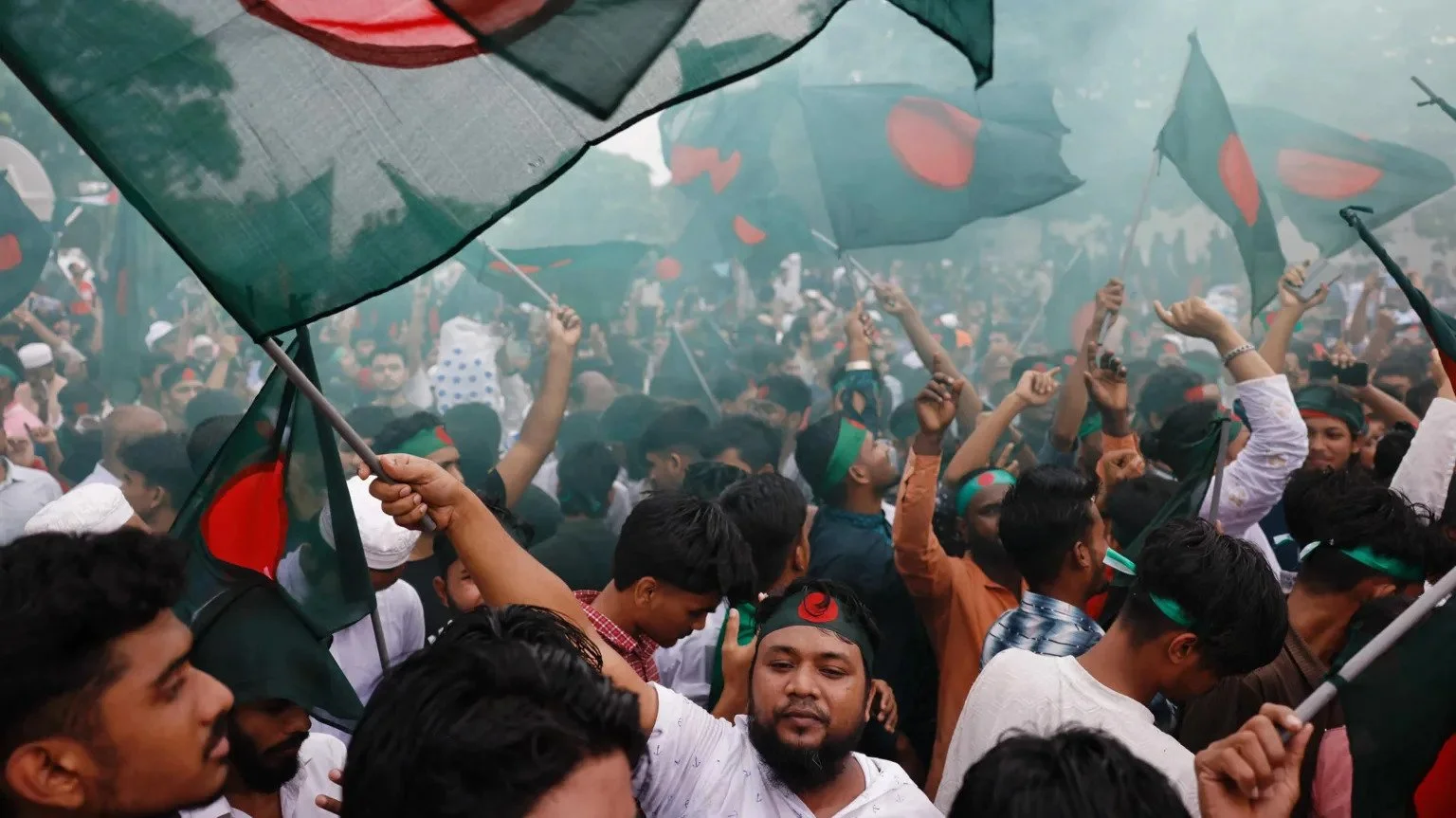
India-Bangladesh relations are at a historic low ever since the August 2024 ousting of former Bangladeshi Prime Minister Sheikh Hasina. Her regime was accused of enforced disappearance, power abuse, and other human rights violations in protests that left almost 1,400 people dead, according to a press release by the United Nations. Hasina subsequently fled to India, which granted her asylum, and whose historic ties with her Awami League party have fuelled accusations of India supporting her authoritarian rule. Since her removal, Bangladesh has been under a caretaker government led by Nobel Prize economist Mohammad Yunus for almost 18 months. A return to a democratically elected government may provide India with the fresh start it needs to revitalize relations between the two countries.
However, this is not guaranteed. On February 12, 2026, Bangladesh elected Tarique Rahman of the Bangladesh National Party (“BNP”) to the position of prime minister in a landslide victory, with the Islamist party Jamaat-e-Islami coming in second. Rahman campaigned on a Bangladesh First policy, reflecting the strained ties between India and Bangladesh. Although this is a slight change from Yunus’s foreign policy positions, which favored closer ties with Pakistan and China, India faces an uphill battle in relations with its eastern neighbor.
Extradition Treaty
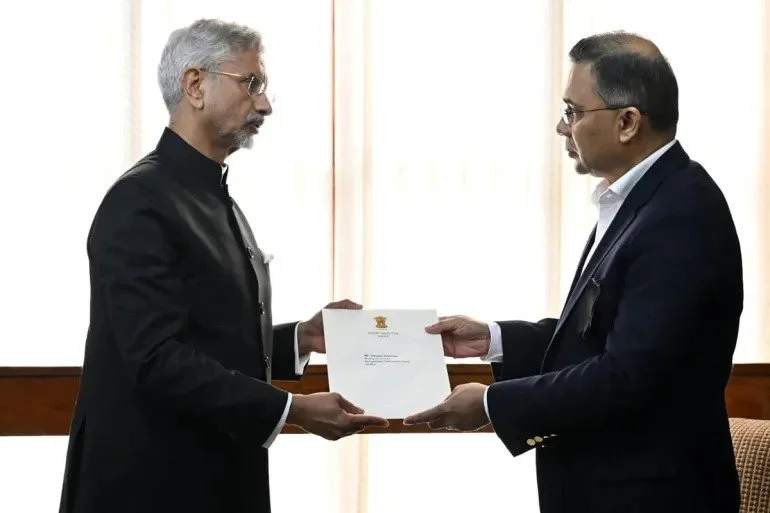
Arguably, the most pressing diplomatic issue between India and Bangladesh recently is the extradition of former prime minister Sheikh Hasina, who is currently being granted asylum in India. Although India and Bangladesh have a bilateral extradition treaty, New Delhi has denied Dhaka’s request for extradition, arguing that she is being extradited for a political offense — an exception under the extradition treaty. Bangladesh has sentenced Hasina to death in absentia, along with former Bangladeshi home minister Assaduzaman Khan Kamal, through its International Crimes Tribunal, originally established by Hasina to prosecute war crimes in the Bangladesh Liberation war.
It is unclear whether Bangladesh and India will come to a solution via negotiations on this issue.
Ganges Water Treaty
Bangladesh and India are also set to renegotiate the Ganges Water Sharing Treaty, set to expire at the end of this year. The treaty, signed in 1996 after India constructed the Farakka Barrage, aims to regulate water-sharing issues on the Ganges river. The treaty mainly focuses on downstream water flows for agricultural purposes. Bangladesh also cites climate change as a concern for renegotiation, as the drawing of water at Farakka and changes in climate patterns have increased salt-water flows from the Bay of Bengal into the Sundarbans mangroves, an ecologically protected site straddling the India-Bangladesh border. This is causing erosion on the Indian side of the Sundarbans, and salinity levels and sea level rise issues are being exacerbated. Additionally, the lack of freshwater, an issue raised by Bangladeshi negotiators, is causing health problems on both sides of the border. Women who work planting crops in the mangroves report sores, infections, and other health issues caused by bathing in and consuming salt water.
The issue is further complicated by Bangladesh’s plans to construct a water management system on another shared river, the Teesta, with Chinese help, Bangladesh alleges that the current arrangement benefits India at the expense of Bangladesh’s freshwater flows. A previous proposal that would have granted Bangladesh almost 40% of the dry season river flow was blocked at the last minute by West Bengal’s chief minister, Mamata Banerjee, citing farmers’ concerns over adequate irrigation in India. The Teesta River Master Plan was originally devised by the Sheikh Hasina government, who wanted India to help manage the river. However, Yunus sought the help of Chinese technology, calling China a “master of water management” at a meeting with Chinese Water Resources Minister Li Guoying.
India cites security concerns as this river flows through the Siliguri Corridor, a thin strip of land connecting India’s northeastern states to the rest of the country. As this is an important strategic and military zone for India, they argue that any Chinese activity in the area poses a security and intelligence threat. The BNP, who were recently elected to a majority in the parliament, have voiced support for the project, so bilateral negotiations may be back on the table if New Delhi wants to have a say in the management of the river.
Identity Politics
Identity politics, particularly with regard to religion, have further strained relations between New Delhi and Dhaka. Additionally, Bangladeshi protesters are not pleased with India’s perceived influence over their country’s affairs. Although India may prefer a democratically elected government for stability, it has voiced concerns with attacks on Hindus in Bangladesh and the rise of Jamaat, an Islamist political party. Dhaka claims that these attacks are exaggerated and not the result of sectarian tensions. However, due to these tensions, Bangladesh has suspended visas for Indian travelers for about two months. This has also spilled into sports, with the Bangladeshi cricket team boycotting the T20 Cricket World Cup for alleged security reasons that may stem from political tensions with the World Cup host, India.
Conclusion
Ultimately, the ability of India and Bangladesh to resume peaceful relations depends on the political will of both sides. Their interdependency, coupled with India’s desire to remain the guiding force in the subcontinent may force negotiations to occur. Rahman’s new government has indicated that it is open to talks to ease tensions between New Delhi and Dhaka, but it is to be seen whether they will simmer down for good.

Indictments for Former Prime Minister and President of South Korea
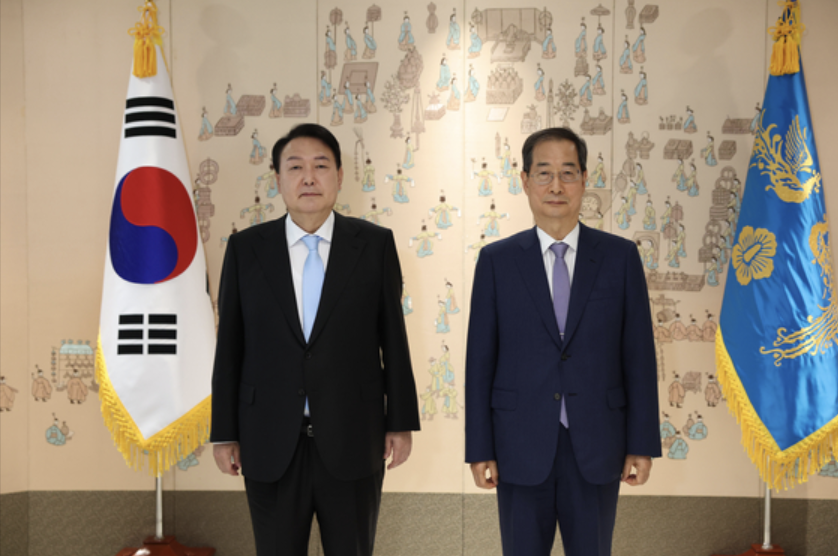
On January 21st, former South Korean Prime Minister Han Duk-soo was sentenced to 23 years in jail for his involvement in former President Yoon Seok-yeol's imposition of martial law on December 3rd, 2024. Han initially acted as president after Yoon was impeached, then Han was later impeached for refusing to fill vacant seats on the Constitutional Court, which oversaw Yoon’s impeachment trial. He was sentenced for assisting in the passage of the martial law decree by the Cabinet Council, lying under oath, and falsifying parts of a martial law document. Han is the first of Yoon's associates to be convicted of rebellion charges in relation to the decree. Other associates involved include former Defense Minister Kim Yong-hyun, Major General Kim Yong-dae, and Army Chief of Staff General Park An-su, who took on the role of Martial Law Commander.
Nine months since former South Korean President Yoon Seok-yeol was removed from office, Yoon faces eight trials for imposing martial law, which is considered to involve “anti-state activities.” In South Korea, rebellion is one of the most severe offenses due to its role in impacting overall stability. An independent counsel team led by prosecutor Cho Eun-seok is calling for Yoon to receive the death penalty based on rebellion charges. The death penalty has not been used in South Korea since 1997.
Former South Korean President Yoon Seok-yeol was able to impose martial law for six hours before lawmakers were able to gather and vote to end the decree. The National Assembly voted to impeach Yoon, with a majority of 204 of 300 officials. The investigation over the former leader’s intentions ended in December of 2025 and revealed that he had been planning to use martial law to eliminate political rivals and maintain power. By imposing martial law, Yoon attempted to “[restrict] the freedom of speech, publication, assembly and association,” and apply “special changes to the authority of governments or courts.” Yoon, currently in jail, has explained that the purpose of imposing martial law was to alert the public to opposition from the Democratic Party. He specifically cited their opposition as “legislative dictatorship,” based on 22 impeachment attempts since he took office in 2022, reductions in the government’s budget, and proceedings to impeach other officials. This raises the legal question of whether a president’s emergency powers are safe from being considered rebellion. Rebellion is defined in legal terms as an action undertaken with the intention of “overthrowing constitutional order or seizing national territory,” and is considered “a mens rea–driven crime.”
Yoon’s call for martial law evoked panic due to the historic use of martial law in South Korea in the 1970s and 1980s. Post-Korean War dictatorships imposed martial law against protesters and critics of the country’s leadership. The Gwangju Uprising, for example, is considered to be the largest massacre under the military dictatorship of Chun Doo-hwan, which lasted from 1979 to 1988. Chun was initially sentenced to death by the Seoul District Court in 1996 for treason, then imprisoned for life and later pardoned by former President Kim Young-sam as requested by the then President-elect Kim Dae-jung.
The former leader’s first trial covered charges relating to Yoon’s resistance to investigation and detainment, for which he was sentenced to five years in prison. The next trials will address charges regarding corruption, rebellion, and abusing power. Yoon is expected to be in a pretrial hearing over alleged interference in a Marine death probe on February 10th. Special counsel Lee Myeong-heon’s team claims that the former president “made unlawful orders to the defense ministry and the presidential office,” and indicted Yoon last year for other interference-related charges.

Japan Elects Sanae Takaichi as the First Woman Prime Minister

On October 21st, in a historic first for Japan, the nation elected its first woman as Prime Minister–Sanae Takaichi, a member of the Liberal Democratic Party (LDP). Her election comes after the previous LDP Prime Minister, Shigeru Ishiba, announced his resignation earlier this September after leading the LDP in two elections where the party suffered heavily. She was elected by both houses of the Japanese Parliament, or Diet, with 237 votes in the lower house and 125 in the less powerful upper house.
Takaichi, an admirer of the late British Prime Minister, Margaret Thatcher, and a protege of the late Japanese Prime Minister Shinzo Abe, is a member of the staunch conservative wing of the LDP, echoing Japan’s recent rightward shift. Her hardline, right-wing stance is evident from her election. The LDP’s longtime coalition partner, Komeito, a generally centrist party, withdrew support at the last second, but the LDP was able to make a last-minute deal with the right-wing Japan Innovation Party (JIP) to ensure her election to the office. Even with the support of the JIP, the LDP’s coalition was unable to secure a majority in either of the houses, meaning that in order to pass legislation, Takaichi will be required to work with the opposition, which may hinder some of her efforts in the Office.
While Takaichi is Japan’s first female Prime Minister, she is far from a feminist. She is among the politicians in Japan who have opposed measures aimed at increasing women’s involvement in politics. Furthermore, she has been opposed to allowing couples to have separate surnames, same sex marriages, and favors male-only succession for the Imperial family. Still, her election acts as a measure of progress in itself, as many in Japan didn't believe a woman would be able to secure enough votes to win the Prime Ministership.
Being elected is far from the only challenge Takaichi will have to face. Now that she has been elected, Takaichi will be responsible for guiding Japan and the LDP through a myriad of challenges, both domestic and international. She must build back trust in the LDP after a series of domestic controversies, such as the party’s involvement in the slush-fund scandal, and will have to grapple with soaring prices in the Japanese economy.
The domestic side might be the least of her worries. Following in the footsteps of the assassinated Shinzo Abe, Takaichi has generally had a more hawkish foreign policy supporting the strengthening of the Japanese military to counter Chinese influence in the region. However, Takaichi’s biggest foreign policy trouble may actually come from Japan’s allies. Takaichi will have to reassure regional partners like South Korea, who fear more nationalist streaks in her right-wing foreign policy. She must also navigate Japan’s relationship with the United States and the Trump Administration, facing Trump for the first time when the President visits the country on October 27th. While Japan has already reached a tariff deal with the United States, Takaichi will have to deal with the ever-unpredictable Trump administration. How she handles these early challenges will set the tone for her administration and provide crucial clues to Japan’s policy leanings for her Prime Ministership.

Discord Elections and Youth Revolutions: Nepal’s Gen-Z protests
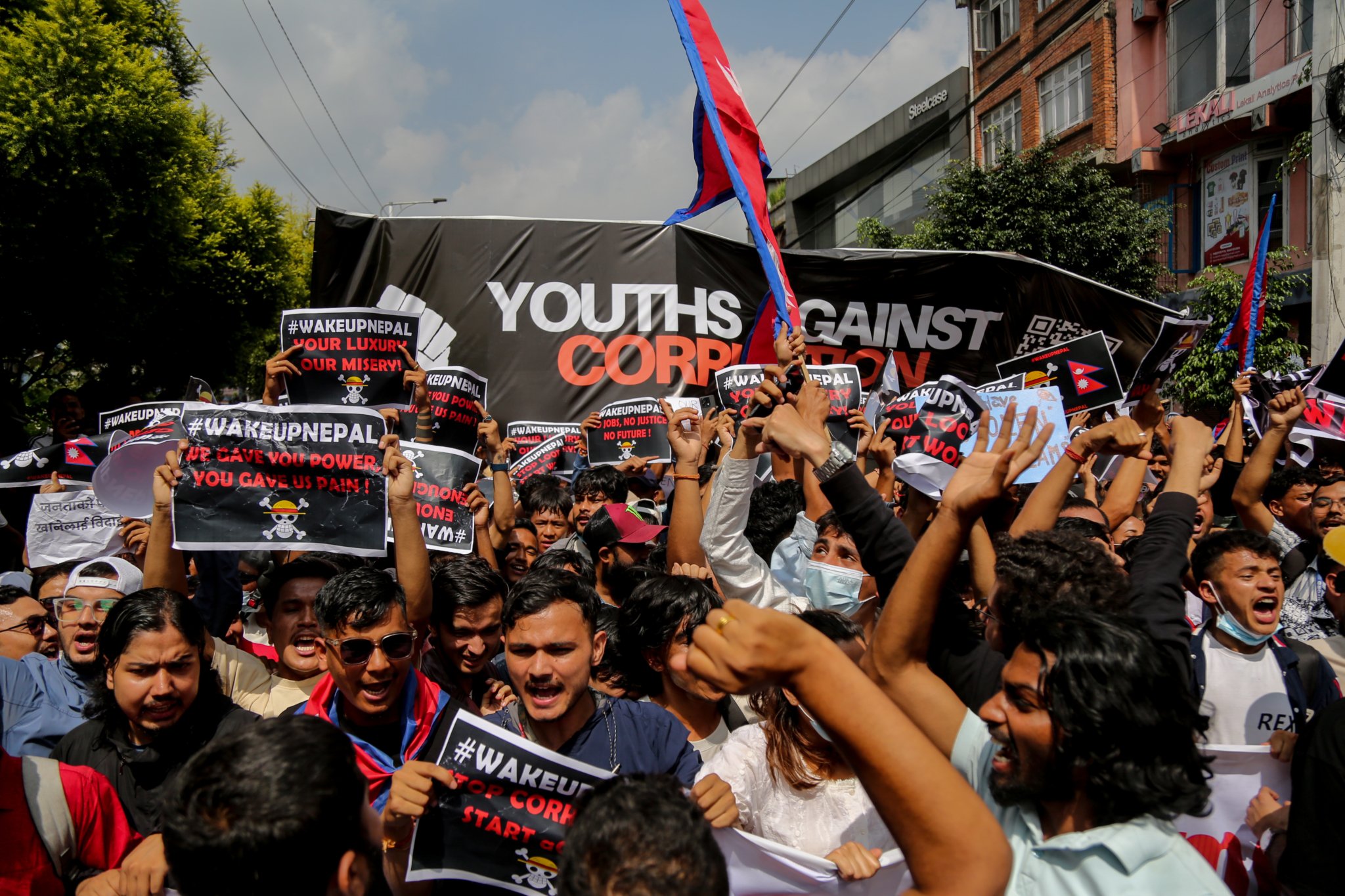
The youth-led protests that erupted in Nepal on September 9 have led to a new dawn with the appointment of former Chief Justice Sushila Karki as the country’s Interim Prime Minister on September 12th. The sun set on Prime Minister Sharma Oli’s administration after the anti-corruption protests forced him to step down. In a uniquely Gen Z election, Karki was chosen via an election on Discord, a social media platform, due to protesters’ support of her previous stands against corruption.
The “Gen-Z” protests were in reaction to the rising corruption and authoritarian actions by the Nepali government. Viral videos of the luxurious lives of politicians’ children, also known as “Nepo Kids,” further exacerbated frustrations amongst Nepalis. Protestors were frustrated by the government’s recent ban on major social media platforms, including Facebook, Instagram, WhatsApp, YouTube, and X. Protestors thus took to the streets, fighting for a government that could better manage the faltering economy and the mounting unemployment rate. The protests grew violent, leading to the deaths of at least 72 people, according to official accounts. Among the injured was the wife of former prime minister of Nepal, Jhala Nath Khanal, who sustained serious burn injuries as their home was set on fire.
Hami Nepal, the group that organized these protests, notably used social media to coordinate its cause. Discord, a messaging platform often used by online gamers, served as the stage for debates regarding the appointment of the interim prime minister. Hami Nepal created a channel on the platform titled “Youth Against Corruption,” where more than 10,000 people participated in discussions. Ultimately, former Chief Justice Sushila Karki, known for taking a stand against corruption during her time on the Supreme Court, was chosen. She was sworn in on September 12th with the help of the military and the president. Elections for Nepal’s post-interim elections are set to be held on March 5th.
As Nepal looks toward its future, its history brings up key questions for nations worldwide. Nepal’s protests connect to a broader global phenomenon of rising frustration with corrupt and increasingly authoritarian governments. With TikTok bans being considered in the United States during the Biden administration, as well as various social media platforms being banned in other nations, the straw that broke Nepal’s back may soon occur elsewhere.
There are many possible implications of the presumed success of these protests. Hami Nepal’s uniquely social media-oriented organization presents new possibilities for protests and revolutions in the 21st century. This form of virtual polls on Discord was considered by supporters to be more egalitarian, accessible, and transparent to the general public, especially in comparison to the backdoor actions of Nepali politicians in the past. At the same time, possible issues include misinformation or misuse of accounts on social media. With youth voter turnout lower in rural US states, these Discord polls can present a unique opportunity. Furthermore, social media users from around the world have taken inspiration from the Gen-Z style revolution put together by the Nepali youth, and are highlighting similar frustrations with their governments, with the desire to replicate the revolution. For other countries, particularly in the region, these protests could inspire similar outcries from their own young adults. The question thus arises: Could more countries see Discord elections in their future?

Rodrigo Duterte Arrested Under ICC Warrant

Omar Havana / AP Photo
On March 11, former President of the Philippines Rodrigo Duterte was arrested on an International Criminal Court (ICC) warrant for crimes against humanity. Duterte was taken into custody by Philippine authorities at the Manila Airport upon returning from a trip to Hong Kong. Following his arrest, the former President was flown to the ICC’s headquarters in The Hague, Netherlands and appeared for his first hearing on March 14.
The case against Duterte was filed to the ICC in 2018 for the killings that occurred from November 1, 2011 to March 16, 2019, under his anti-drug and crime campaigns as Mayor of Davao City and as President of the Philippines. The Philippine National Police recorded the deaths of over 6,000 Filipinos while human rights groups estimate up to 30,000 were killed. Investigations conducted by the ICC Pre-Trial Chamber I found evidence suggesting Duterte “jointly with and through other persons, agreed to kill individuals they identified as suspected criminals or persons having criminal propensities.” The extrajudicial killings, Duterte maintained, were part of a larger scheme to rid the nation of illegal drugs, dubbed the “War on Drugs.” In a video posted to Facebook after his arrest, Duterte declared “I am the one who led our law enforcement and military. I said that I will protect you and I will be responsible for all of this.”
While in office, Duterte issued the withdrawal of the Philippines from the ICC’s Rome Statute on March 17, 2018, arguing that the ICC case infringed upon principles of sovereignty and non-intervention. One year later, the withdrawal became official, making the Philippines the second to rescind membership after Burundi.
The ICC began its formal investigation in 2021. In an attempt to suspend it, the Duterte administration claimed the Philippine government was actively investigating the accusations, rendering the ICC’s jurisdiction as a “court of last resort” – invoked in the case that a country is unable or unwilling to investigate international crimes – null and void. The international court temporarily suspended their investigation based on the administration’s claim, but later resumed in 2023. A warrant of arrest was then issued on March 7, 2025.
Without a police force, the ICC relies on states to carry out warrants of arrest, conduct transportation operations, and enforce sentences. INTERPOL Manila was given a copy of the ICC warrant, encouraging Philippine authorities to carry out the arrest. Despite previously refusing to aid the ICC case, President Ferdinand Marcos Jr. complied. Avoiding mention of cooperation with the ICC, Marcos framed the arrest as a matter between the state and INTERPOL: “Mr. Duterte was arrested in compliance with our commitments to INTERPOL.”
Marcos’s reconsideration comes amid bubbling tensions between the President and Vice President Sara Duterte, daughter of the former President. Following their win as the “UniTeam” in the 2022 elections, divisions began to stem from disagreements over drug enforcement policy and relations with the U.S. and China. Disputes escalated as accusations of alleged corruption and a comment from VP Duterte threatening the assassination of the President sparked a case for her impeachment in the House of Representatives. Inflaming tensions heightened weeks prior by the House vote favoring impeachment, the arrest placed further strain on the relationship between Marcos and Duterte. Vehemently opposing her father’s arrest, the Vice President has questioned the court’s jurisdiction and condemned the administration’s response.
Duterte’s legal defense and supporters insist that the ICC lacks the jurisdiction to issue an arrest, given that the Philippines is no longer a member. Others, including the judges responsible for issuing the warrant, maintain that the ICC’s jurisdiction is valid, given that the crimes he is accused of transpired prior to the 2019 withdrawal. Awaiting hearings and possible trial, Duterte could apply for a provisional release from the detention center. If the accusations are confirmed, the trial may proceed several months or years later.
For the Philippines, the arrest has deepened the rift between dominant dynasties and rekindled debates over Philippine sovereignty, contributing to the growing political turbulence of the period leading up to the May midterm elections. With 12 of the 24 seats up for re-election, the Senate recently announced its decision to investigate Duterte’s arrest. Leader of the probe and sister of the President, Senator Imee Marcos explains, “It is imperative to establish whether due process was followed and to ensure that his legal rights were not just upheld but protected.” The investigation, given the politicization of the arrest, holds the potential to sway support for Senators, such as Imee Marcos, who face re-election in the upcoming midterms.
The case, situated amid a divisive political feud and the last leg of campaigning before midterms, demonstrates the way in which international justice can hinge on political context. While this context is not to be underestimated, it is worthwhile to recognize the stride this case makes towards accountability. The arrest, as UN High Commissioner of Human Rights Volker Türk maintains, “is a very important step towards seeking accountability for the thousands of victims of killings and other abuses, as well as their families who have courageously pursued justice.”

Filipina Vice President Sara Duterte Awaits Senate Trial Following House Impeachment
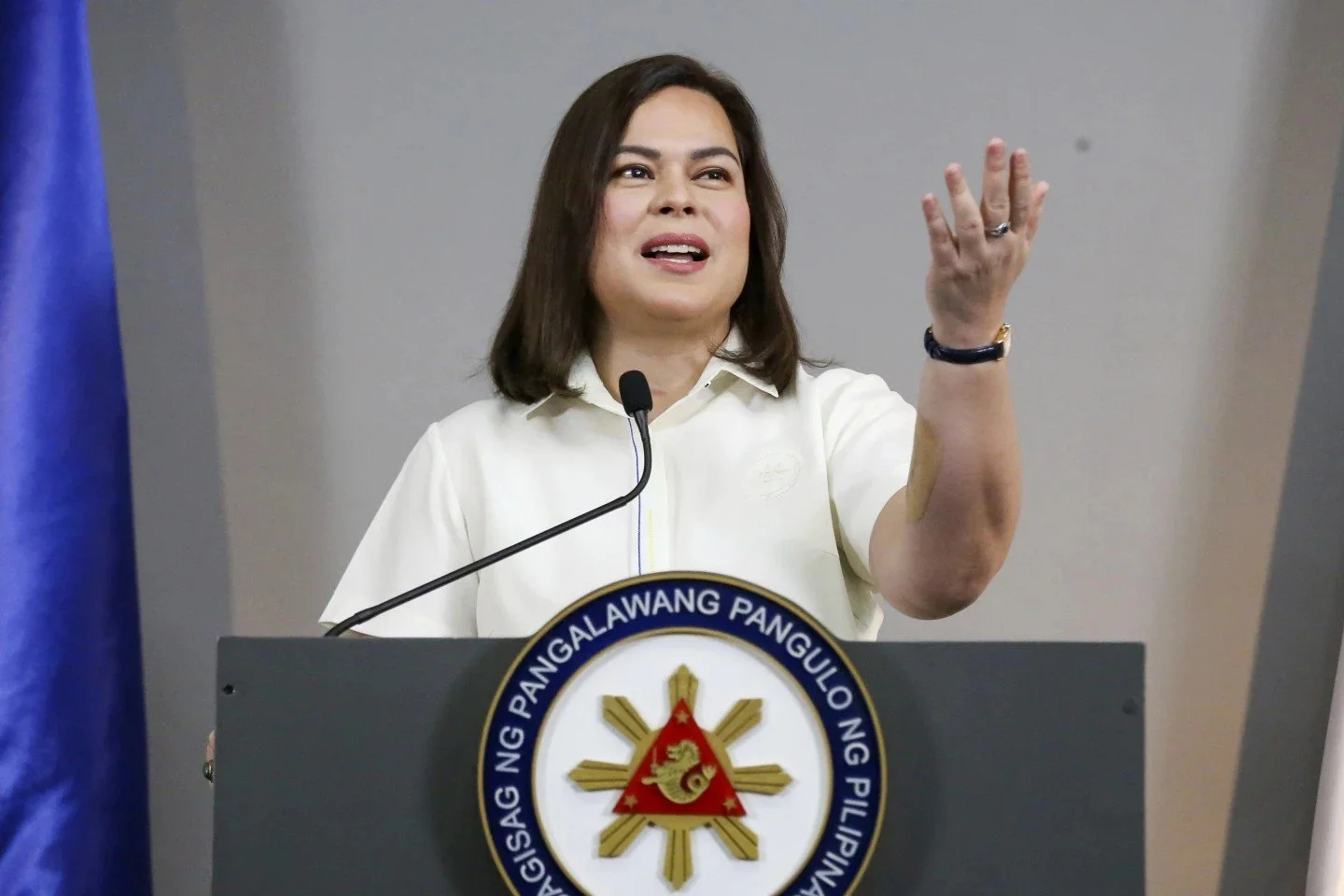
Vice President Sara Duterte speaking at a Manila press conference on February 7, 2025 Basilio Sepe, AP Photo
On February 5, the Philippine House of Representatives voted to impeach Vice President Sara Duterte. The vote was raised over complaints of alleged corruption involving the misuse of public funds and failure to declare wealth as required by law, alongside plotting the assassination of President Ferdinand "Bongbong" Marcos. At a news conference on November 23, the Vice President claimed she contracted an assassin to kill Marcos, his wife, and the Speaker of the House Martin Romualdez. Later, she contended the comment was not a threat, instead an expression of worry for her own safety. Concerns regarding the VP’s lack of assertiveness towards China, citing her failure to denounce Xi Jinping’s behavior challenging Philippine presence in the South China Seas, added to those raised in the vote. Duterte has denied all accusations.
Exceeding the one-third minimum for an impeachment, with 215 of the 306 members in favor, the vote will proceed to the Senate. The impeachment claim is set to be addressed in June, when Congress resumes following the May midterm elections. Given that 12 of the 24 Senate seats are up for re-election, and 16 votes are needed to convict, the midterms are imperative in deciding the outcome of the impeachment trial.
If convicted, Duterte would be ousted from her current position and barred from future entry into public office, squandering tentative plans for presidential candidacy in the 2028 election. The impeachment, if passed, would mark the first of a Vice President in the Philippines. In this instance, Marcos would nominate a member of Congress as a successor. The newly-appointed senators are among the potential candidates.
The impeachment case is the latest manifestation of the feud between Marcos and Duterte. Since landslide victories in 2022, the “UniTeam” has experienced rifts over diverging anti-drug agendas and foreign policy. Duterte’s absence of defiance against China’s aggression in the SCS has created tension with Marcos’s continued efforts to strengthen U.S.-Philippine relations. With speculation swirling around the VP’s intentions to run for President following Marcos’s term, the impeachment trial holds the potential to not only shape the outcome of the 2028 presidential elections but the direction of the country’s relationships with the U.S. and China.
The House decision comes amid an ongoing International Criminal Court (ICC) investigation into the mass extrajudicial killings that occurred under the “War on Drugs” launched in 2016 by the VP’s father and former President, Rodrigo Duterte. The UN Office of the High Commissioner for Human Rights estimates that over 8,000 people have been killed under the banner of the campaign. On the claim that the case violates principles of non-intervention and sovereignty, Rodrigo Duterte issued the withdrawal of Philippine membership from the ICC’s Rome Statute. The Philippines officially withdrew in March 2019, making it the second to rescind membership following Burundi in 2017. Retaining the assertion that the case threatens sovereignty, Marcos stated that “the Philippine government will not lift a finger to help any investigation that the ICC conducts.” Given the lack of cooperation exhibited by the government and the court’s means of enforcement, the violence is likely to persist as the campaign, though toned down, carries on. Human rights groups are concerned that the VP may intensify the campaign, if given the opportunity. The impeachment trial, granting or denying Duterte’s ability to maintain and run for office, may be critical in determining how the crisis unfolds.

Thailand Legalizes Same-Sex Marriage

Patipat Janthong, Reuters
On Thursday, January 23, 2025, Thailand became the first country in Southeast Asia to legalize same-sex marriage. Joining Taiwan and Nepal in becoming only the third country in all of Asia to do so, the legislation is no less impressive from a country with widespread conservative ideals. Nonetheless, Thai LGBTQ+ individuals have often expressed their experiences with blatant discrimination despite Thailand’s long-standing reputation as a queer safe haven, especially in comparison to other states in the region. Representation at the federal level has also long been dominated by conservative politicians.
However, the legislation swept through both the House of Representatives and Senate last year with overwhelming support. Of the 415 members present at the voting ceremony in Thailand’s lower chamber, 400 voted for the measure; similarly, of the 152 members present to vote in the Senate, 130 approved. Furthermore, as a constitutional monarchy, the legislation was officially codified after King Maha Vajiralongkorn’s endorsement. Under the new law, same-sex couples receive all the same benefits of marriage that heterosexual couples do: full financial, medical, and legal rights and protections.
The Marriage Equality Act, as the legislation is known, amends Article 1448 of Thailand’s Civil and Commercial Code by changing the qualifications for marriage from “man and woman” to “individuals.” The country’s Prime Minister, Paetongtarn Shinawatra of the ruling Pheu Thai party, supported the legislation and celebrated its enactment in a video address to the country where she announced, “From now on, all love will be certified by law. All couples will live with honor and dignity in Thailand.”
According to the Department of Provincial Administration, at least 1,832 couples from across the country registered their marriages on Thursday. Though there is much work left to be done in Thailand regarding equal protection under the law, especially for LGBTQ+ individuals, Thursday nonetheless marks a significant milestone in a positive direction for the queer community in Southeast Asia.

South Korea: President Yoon’s arrest, impeachment, and declaration of martial law

Photo Credit: Ahn Young-joon/AP
After an hours-long standoff, former South Korean President Yoon Suk-yeol was arrested on January 15 on insurrection charges following his declaration of martial law on December 3. This arrest, which saw the deployment of 1,000 officers, came after a failed attempt twelve days earlier during which officials were blocked by his supporters and security team.
Earlier, on December 14, 2024, the South Korean National Assembly voted to impeach President Yoon following his brief declaration of martial law on December 3. Yoon defended his decision, arguing that he had a legitimate use of military rule due to his belief that the opposition in control of Parliament consists of North Korean communist sympathisers. Since assuming office in 2022, Yoon has faced consistent opposition from Parliament and has had marginal success in getting his policies adopted.
The constitutional provision granting the president the right to declare martial law has a dark history in South Korea. The Constitution grants the executive the ability to impose military rule in the case of “wartime, war-like situations or other comparable national emergency states.” However, past presidents have misused this power, giving them the right to impose a de facto dictatorship over political opponents and civilians. To alleviate this risk, the National Assembly has the right to check this use of power and can lift martial law with a majority vote. Immediately after President Yoon’s declaration, lawmakers voted 190-0 to revoke the order. The National Assembly’s adherence to the rule of law through the use of democratic institutions shows a commitment to the balance of power between branches, and a dedication to political accountability for the executive.
Following the failed insurrection attempt, the Corruption Investigation Office for High-ranking Officials (CIO) launched an insurrection case against Yoon. In addition to his declaration of martial law, Yoon has been accused of failing to cooperate with the CIO. After ignoring court-sanctioned questioning and refusing to comply with investigative procedures, the court issued a warrant for his arrest, making him the first South Korean president arrested in office. If found guilty of insurrection, the penalty for offense is life in prison or the death penalty.
During this time of political turmoil, South Korea had Finance Minister and Deputy Prime Minister Choi Sang-mok fill in as acting president since December 27. Han Duck-soo, the previous successor, was impeached by the legislature for refusal to fill vacancies on the Constitutional Court.
Despite the fact that many South Koreans disapprove of his actions, the political disorder around Yoon has brought a resurgence to his approval rating, and a consolidation around his political party, the People Power Party (PPP). According to recent polls, support for the PPP was at 40.8 percent versus the main opposition, the Democratic Party, whose support stood at 42.2 percent. This difference lies within the margin of error, indicating no clear winner in a future presidential election should Yoon be found guilty of impeachment and removed from office.
In the coming days, authorities will question Yoon and decide on whether to charge and arrest him for attempting a rebellion. However, according to the CIO, Yoon has resisted questioning and refused to participate in the investigation. Additionally, on January 14, the Constitutional Court launched a parallel investigation regarding the Parliament’s decision to impeach Yoon. If endorsed by the courts, an election must be held within sixty days.
Update January 19:
On Sunday January 19, a South Korean court officially issued a warrant for Yoon’s arrest and extended his detention for up to 20 days. This announcement sparked a swarm of his supporters to storm the court building, smashing windows and doors to reach the entrance of the building. Once inside, they blasted a line of police guards with fire extinguishers, destroyed furniture, and physically assaulted the officers. Once peace was restored, forty-six of the rioters were arrested.

China and South Korea: Foreign Ministers talk while Kim Jong Un threatens war
Written by: Luke Wagner; Edited by: Diya Jain
During a Wednesday phone call with South Korea’s top diplomat Cho Tae-yul, Chinese Foreign Minister Wang Yi vowed to uphold “stability and continuity” in its national policy. Yi said that he hoped South Korea would pursue a “positive, objective and friendly” policy towards Beijing.
Chinese-South Korean relations have deteriorated in recent years as Seoul has grown closer to the United States in an apparent effort to counter China and North Korea’s (NK) longstanding security alliances.
Wednesday’s call was the first time that the countries’ two top diplomats have personally spoken to each other. Foreign Minister Cho took this opportunity to request that Beijing play a “constructive role” in curbing NK’s recent aggressive behavior.
This request may be tested sooner than either minister would have expected. A day after the call, NK Supreme People’s Assembly voted to scrap all economic and cooperative agreements with South Korea. On Friday, NK Supreme Leader Kim Jong Un declared that its southern neighbor remains “enemy No. 1” and that he would not hesitate to use every power at his disposal to wipe out all enemies that threaten NK.
These recent tensions reflect what regional expert Scott Snyder from the Council on Foreign Relations has called “an escalatory dynamic between the two Koreas following North Korea’s successful satellite launch last November.”
If China heeds Cho’s request and works at de-escalation, it will likely be away from the public eye. However, South Korea and its partner Japan may have the chance to bring this issue up with China again soon; during the call, Beijing and Seoul agreed to accelerate preparations for a China-Japan-South Korea summit. Although China hopes South Korea would adopt a positive policy towards Beijing, that will remain complicated while NK’s Kim Jong Un is left unchecked.

Pakistan: Relations with Iran improve amid promises of security cooperation
Written by: Diya Jain; Edited by: Luke Wagner
Less than two weeks after exchanging airstrikes that led to national outrage and an unraveling of diplomatic relations, Iran and Pakistan have agreed upon terms to pursue joint security cooperation and de-escalate tensions at their border.
Iran initiated attacks against Pakistani military bases which Tehran claimed were being used to harbor military combatants and violent separatist factions. Islamabad faced immediate pressure by its constituents to punish Iran’s actions, prompting retaliation within the next 48 hours. By January 25, both sides had launched their respective offensives, Pakistan had recalled its ambassador to Tehran, and all diplomatic and trade engagements were temporarily frozen.
This recent escalation reignited fears amongst world leaders that the instability emanating from the conflict in Gaza may be destined to spread and engulf the Middle East. Over the weekend, the United States and European Union both issued statements to deescalate tensions between Iran and Pakistan.
On Monday, despite the confrontation and its resulting deaths – totaling eleven – top Iranian and Pakistani diplomats sat down to talk. Both Tehran and Islamabad re-emphasized a shared commitment to combating terror and preserving political stability in the region. They announced mechanisms for strengthening their relations, including returning ambassadors and diplomats to their posts, pushing for more frequent and transparent diplomatic meetings, and sharing security and counterterrorism technology for identification and targeting of insurgents. Iranian negotiator Hossein Amirabdollahian touted the establishment of new free-trade zones near border regions to facilitate higher volumes of bilateral trade.
The prospect of nuclear-armed Pakistan providing more robust security technology to Iran poses deep concerns to the international community. While the resolution of tensions between Pakistan and Iran comes as an immediate relief to many across the region, closer alignment between the two could pose worrying trends for Iran’s nuclear ambitions.

Philippines: Defense Cooperation with Canada amid Simmering South China Sea Tension
Written by: Chloe Baldauf
Today, the Philippines and Canada signed a memorandum of understanding, securing the countries’ shared hopes for deeper defense cooperation. Gilberto Teodoro, the Philippines’ Defense Secretary, referred to the historic moment in Canada-Philippines relations as a sign of “strong intention on both sides to deepen and strengthen the relationships by forging new milestones in our defense relations” and alluded to the possibility of a Visiting Forces Agreement.
The Philippines already has a VFA with the U.S. in addition to the 2014 Enhanced Defense Cooperation Agreement, which ensures U.S. military forces have access to certain training locations in the Philippines and authorizes them to assist with humanitarian initiatives and disaster relief. This may be mirrored in the Philippines’ future defense collaboration with Canada, who has been an open supporter of the Philippines during the dispute over the South China Sea. Canada backed the Permanent Court of Arbitration’s ruling in 2016 that China’s claims to the South China Sea were unfounded, incentivizing the two countries to cooperate more closely but not entirely deterring Manila from striving for peaceful relations with Beijing.
Last month, a Chinese embassy spokesperson responded to Canada’s support for the Philippines with a statement warning that the South China Sea should not become a “hunting ground” for Canada and the U.S. to “pursue their geopolitical interests.”
However, China-Philippines relations have swiftly improved this month with the release of a statement yesterday by the Philippines Department of Foreign Affairs (DFA) saying that China and the Philippines both agreed to “calmly deal with any incidents…through diplomacy.” This came after a meeting in Beijing between Chinese Assistant Foreign Minister Nong Rong and Undersecretary of the Philippines DFA Theresa Lazaro that resulted in discussions surrounding maritime security and the need for stability in the South China Sea.
While no more than the initial memorandum of understanding has been signed by the Philippines and Canada, Teodoro expressed expectations that it would “jumpstart” defense cooperation between the two countries by way of military training, military education, and disaster relief.
Recent Articles