
The Israeli-US War Against Iran
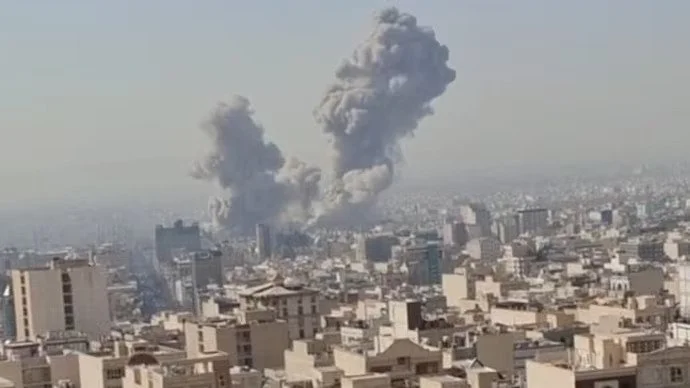
In the early afternoon of February 28th, Jordanian air raid sirens went off all across the country. Those sirens, which I heard from my apartment in downtown Amman, went off following the launch of US and Israeli missiles towards Iran over Jordanian airspace.
Mid-morning this Saturday, President Trump announced that the United States and Israel had begun “major combat operations” against Iran. The president claims that these attacks— referred to as “Operation Epic Fury”—are meant to neutralise the threat of Iran's military and nuclear programme. Only a few minutes later, after the President posted a video to the social media site Truth Social claiming that the US government “can’t take” the Iranian threat anymore, the Israeli government announced that it would also be launching strikes against Iran.
Strikes between the US-Israel alliance and Iran have become increasingly common in recent years. However, this latest round of strikes could indicate the beginning of a larger and longer regional war.
The US attack came early on Saturday morning—a weekday in Iran—as hundreds of Iranians were travelling to school or work. President Trump warned Iranians to shelter at home and claimed to support them by openly calling for regime change. Israel also issued a warning for Iranian civilians to move away from government areas. These warnings were hamstrung by the fact that many US and Israeli missiles targeted buildings in the middle of residential areas. In at least one case, it had extremely deadly effects. During the first wave of strikes, at least 153 Iranian civilians, including 40 young girls, were killed as a result of an Israeli-US strike on a girls’ primary school in a busy residential neighborhood. The timing and locations of the strikes ensured that more people would be on the streets and strengthened the likelihood of civilian casualties from the strikes. At the moment, the total number of wounded and killed is unknown, but the Red Crescent has said that at least 742 civilians are dead, including 176 children, and countless more are injured.
Another shift in the nature of this attack came in its first wave. In an unprecedented move, one of the first rounds of missiles fired by the United States struck the house of Supreme Leader Ayatollah Ali Khamenei. While it is unclear if the Ayatollah was in his house at the time, sources later confirmed that the Ayatollah was killed during this attack. After news of the death of Ayatollah and at least four other high-ranking government officials, Iranian officials said that this attack crossed “a very dangerous red line” indicating that Iran’s plans to retaliate are of unprecedented scope.
Both the killing of the Ayatollah and the increase in civilian deaths have increased the stakes for Iran. That is clear in the nation's response. The Revolutionary Guard—Iran's paramilitary force—has stated that Iran's “response will be crushing.” Iran has since launched an unprecedented series of missile and drone attacks on Israel and on US bases in neighbouring states. This wide-scale attack on multiple countries could shift the political balance in the region.
While Iran has retaliated against Israel, that is not all that it has done. Iran has also launched several attacks towards the Gulf states. While some reports are still unconfirmed, explosions from Iranian missiles have been heard in Kuwait, the United Arab Emirates (UAE), Qatar, and Bahrain. In the UAE, one person is confirmed to be dead, and others are injured. The targets of the attacks in Qatar are unclear, as were the targets of the attacks in the UAE and Kuwait, although both countries’ international airports were bombed. In Bahrain, however, it seems as though Iran is following up on its promise to retaliate against US military bases. The Bahraini state news agency has announced that missiles struck the US naval base in the nation, which is the headquarters of the US Fifth Fleet.
In response to these attacks, Bahrain and the UAE have both released statements condemning the attacks as “flagrant violation[s]” of their sovereignty and affirming their right to retaliate in the case of further aggression. In addition to releasing a similar statement, Kuwait has summoned Iran’s ambassador for talks concerning the attacks and to assert Kuwait's right to self-defense in person.
Qatar has also released a statement regarding the Iranian strikes in its territory. In this statement, Qatar similarly affirmed its right to defend itself and condemned Iran’s infringement on its territory and sovereignty. In the statement, Qatar reaffirmed its intent to remain distant from the conflict between the US and Israel and Iran, but the state also noted that if bilateral relations between Qatar and Iran were to fail, this distance would become unsustainable. Qatar’s role as a neutral site for negotiation between MENA actors has been significant. If the threat of Iranian attacks forces Qatar to arm itself and stop allowing for negotiations to take place inside its borders, brokering peace in the region could become significantly more complicated.
Another action that Iran has taken in response to these attacks is to close off the Strait of Hormuz. The Hormuz Strait is one of the most important oil trade paths in the world and it provides many Asian countries with a majority of their fuel. India—a country that gets around 50% of its oil through the strait—has already had to activate contingency plans to safeguard its energy. By closing off the Strait, oil prices around the world could rise to over $100 per barrel. Already, oil has risen by 8% up to around $75 per barrel. This spike could continue to grow if the strait remains closed.
China, one of Iran’s largest buyers of oil, gets a large portion of its fuel through the Strait of Hormuz. This consumption has only increased since the US capture of Venezuelan president and Chinese ally Nicolás Maduro on January 3rd cut China off from the nation’s other major oil supplier. The country has been a longtime ally of Iran, and in the immediate aftermath of the attacks, announced its continued support for Iran. While the country has been building its oil reserves for some time, if Iran maintains its closure of the Strait of Hormuz and China’s oil supply dwindles, the country could become a wild card in the region.
If the joint US-Israeli attacks persist and if Iran continues to bomb US bases in neutral or uninvolved states like Jordan, the UAE, and Bahrain, the tensions in the Middle East could increase to a breaking point. President Trump has claimed that the US operation will last weeks instead of days. As Iran responds in turn, the conflict between the two blocs could boil over into other countries, inside the region and out, and plunge the region even deeper into instability and war.

Saudi-UAE Clash in Yemen
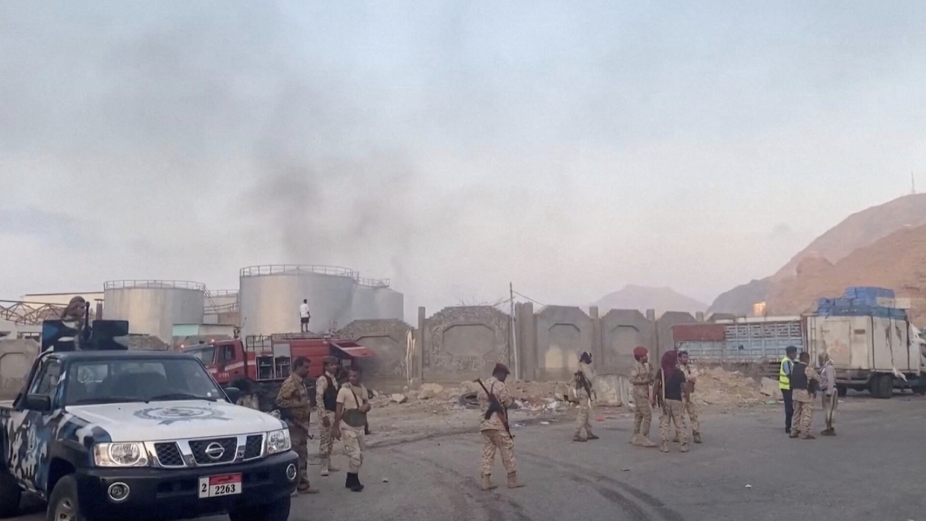
On December 30, 2025, the United Arab Emirates (UAE) announced it would withdraw its remaining military forces from Yemen. This announcement came hours after Saudi Arabia—a nominal partner of the UAE—bombed an Emirati weapons shipment in the Yemeni port city of Mukalla. This bombing was a response to recent territorial gains made by the UAE-backed Southern Transitional Council (STC), a separatist group calling for an autonomous South Yemen, which came at the expense of the Saudi-backed National Shield Forces (NSF) near the Yemen-Saudi border.
At the same time as the Mukalla bombing, NSF forces were rapidly pushing the STC back, regaining control of Hadramout and eventually, the southern capital city of Aden, which had previously been held by STC forces. The STC’s leader, Aidarous al-Zubaidi, then reportedly fled to the UAE. Shortly after this, the STC announced its dissolution. This was a complete reversal of its quick gains made only weeks earlier. After this announcement, protests broke out in Aden calling for an independent South Yemen. These events were the culmination of a long-simmering rivalry between the two Gulf States, once regarded as allies, now publicly feuding with each other.
The origin of this feud goes back to 2015, when Saudi Arabia and the UAE decided to jointly intervene in Yemen to restore President Abdrabbuh Mansur Hadi’s government after the Houthis seized the country’s capital, Sanaa, the year prior. Over time, their priorities in Yemen diverged, with the Saudis more focused on reducing their direct involvement and maintaining border stability, while the UAE put its backing behind the STC. In 2018, Saudi Arabia reached an agreement with the Houthis in an attempt to wind down its involvement in Yemen, and eventually folded the STC into the Yemeni government in 2020, seemingly solidifying the status quo until recently.
The most recent explosion of tensions in Yemen has broader implications for the region and beyond. While Saudi Arabia and the UAE have long been considered a close duo—cooperating in their intervention in Libya, blockading Qatar, and containing Iran—they are increasingly divided on their strategy and outlook for the future. The Saudis have been strengthening their relationships with Egypt and Turkey, as well as mending their relations with Qatar and working more closely with Oman. Meanwhile, the UAE has adopted an opposing strategy focused on controlling ports along the Red Sea and the Gulf of Aden through local allies and proxies. This is most noticeable in its support for the Rapid Support Forces (RSF) in Sudan’s Civil War. The RSF are in opposition to the Sudanese Armed Forces, a military group supported by Saudi Arabia.
The breakdown between Saudi Arabia and the UAE will have a significant effect on regional politics, especially regarding Israel. Israel’s increasing aggressiveness across the region since 2024 has affected how Saudi Arabia views regional dynamics, especially considering the 2020 Abraham Accords, which strengthened ties between Israel and the UAE. In December, the UAE was the only Arab League member not to condemn Israel’s recognition of Somaliland. These all signal a shift in the region, with the UAE and the local groups it funds aligning more with Israel, while Saudi Arabia grows closer to Egypt and Turkey and builds its relationships with Oman and Qatar. Going forward, these two opposing blocs will likely keep competing for influence in similar battleground countries, foreboding uncertain futures for those in Yemen and beyond.
This will likely change the nature of security and strategy in the Middle East, with the old paradigm of Saudi, UAE, and Israeli rivalry with Iran replaced by these two new opposing blocs competing for influence in the region and beyond. Domestically, both Saudi Arabia and the UAE have pursued large propaganda campaigns to portray the other as duplicitous to their citizens. The close business ties between Saudi Arabia and the UAE are also likely to be affected, especially as the two countries continue to compete for investment opportunities and tourism in their pursuit of development. This could hamper both countries’ attempts to diversify their economies and reduce dependencies on oil, including Saudi Arabia’s Vision 2030 and the UAE’s Abu Dhabi Economic Vision 2030. Oil itself is another important factor in this feud as both countries are major oil producers and members of OPEC, which pumps around half of the world’s oil. This feud could extend into OPEC’s decision-making on oil production, potentially causing volatility in oil prices, harming the entire world economy.
The hidden feud between the UAE and Saudi Arabia is starting to show some visible cracks. If their relationship gets increasingly antagonistic, it will affect the entire strategic make-up of the region, creating new competition among geopolitical blocs, as well as impacting both countries’ desire to be the regional hub for investment and innovation.

Yemenis Face Death As Trump Administration Blocks Aid

On March 15, drones and fighter jets from the USS Harry S. Truman conducted the first in a series of “relentless” bombings across Yemen. These attacks lasted for a little over seven weeks before a ceasefire was achieved. US President Donald Trump and his administration have stated that the targets of those attacks were members of the Houthi militant group, however, many of the people killed or injured in the strikes were civilians not affiliated with the terrorist organisation.
While the March 15 strikes were the first U.S. actions that actively harmed Yemeni civilians since Trump’s reelection, many of the cuts and changes made by his administration to U.S. policy may have ripple effects that could place more innocent Yemenis at risk.
One Trump-era policy change with such side effects was the administration's re-designation of the Houthis as a Foreign Terrorist Organisation (FTO), a move that came after former President Joe Biden reversed a last-minute policy made by the first Trump administration when he took office in 2021.
On February 5, 2021, only seventeen days after the Trump administration designated the Houthis as an FTO, former President Biden removed the designation. In a now-deleted White House webpage, the Biden administration said that it was lifting the FTO designation in order to help mitigate the humanitarian crisis that has been plaguing Yemen for years.
The FTO designation makes it illegal for any United States entity—private or public—to provide “support or resources” to an FTO. Since the Houthis control over seventy percent of Yemen, this prohibition greatly hinders any aid initiatives, as U.S. entities must ensure that no aid reaches a Houthi member or civilian with ties to the Houthis.
Critically for Yemen, “support or resources” includes food aid. Yemen relies on imports for up to ninety percent of its food, fuel, and medicine, and while it is legal to provide medical supplies to FTO-controlled areas, U.S. entities cannot legally provide food and fuel to FTOs or any civilians related to FTOs. Currently, 17.4 million people in Yemen are food insecure, 15 million of whom are women and children. The FTO designation risks devastating the Yemeni economy and could potentially send parts of Yemen into a famine.
In 2024, after a series of Houthi attacks on U.S. naval vessels, the Biden administration re-designated the Houthis as a Specially Designated Global Terrorist (SDGT) organisation, a less severe category that would block entities associated with the de facto Houthi government from conducting financial transactions or owning property inside the United States. Importantly, an SDGT designation does not prohibit the distribution of American humanitarian aid abroad. Despite this new designation, and against the warnings of humanitarian aid organisations, the Trump administration redesignated the Houthis as an FTO on March 4.
On top of placing restrictions on U.S.-based entities and NGOs providing humanitarian aid in Yemen, the Trump administration has drastically reduced the amount of American government aid being provided to Yemeni citizens. On his first day in office, Trump signed an executive order “reevaluating” the U.S. Agency for International Development (USAID). This reevaluation came along with a severe reduction in USAID programmes in every region of the world and by March 11, over 80 percent of the agency's programmes had been terminated.
The Trump administration has also been see-sawing on many decisions regarding some of the most important USAID programmes. Among these programmes is the USAID Urgent Food Aid programme—one of the most critical USAID programmes in Yemen. On April 8, the administration cancelled the programme. However, less than 24 hours later, aid was restored for all countries except Afghanistan and Yemen. This cancellation included food already at distribution centres in Yemen, ending lifesaving aid to at least 2.4 million people.
The Trump administration said it was cutting USAID programmes in Yemen because it claimed the Houthis were stealing aid. This statement is likely accurate as the Houthis have been accused of aid theft by multiple different sources. In 2019, the Houthis reportedly stole around 1 percent of the food aid that entered Yemen. This number is significant, but it does not outweigh the potential famine that will come about as a consequence of the FTO designation and the loss of USAID Urgent Food Aid.
The FTO designation will not only starve many innocent Yemenis, but it could even push some into extremism. When people are facing food insecurity and are unable to properly feed themselves and their families they become vulnerable to extremist groups. These individuals often do not want to join the Houthis, but as they begin to starve, joining becomes one of the only options available to them. The Houthis either keep the excess food for the members of their organisation or they resell the food for an extortionate amount. As aid dries up, the people of Yemen will have to face a choice: spend money they do not have to buy food from the Houthis, join the Houthis in order to eat, or die.
Since Donald Trump took office in January, his administration has enacted policies that have put the health and safety of 17.4 million Yemenis at immediate risk. Despite the ceasefire, these innocent Yemenis are still in danger. Not only has it become significantly more difficult for private entities in America to provide humanitarian aid, but U.S. government aid to the people of Yemen has been reduced to next to nothing. If they are unable to access aid, millions of people in Yemen face starvation, thousands of whom will likely die.

Women and the Struggle for Power in Post-Assad Syria

In Syria, women rallied with YPJ flags to demand that Damascus respect women’s rights. REUTERS/Orhan Qereman
The fall of Bashar al-Assad’s regime in December marked a turning point in the governance of Syria. In its place, a new interim government led by Ahmed al-Sharaa, is leading efforts to rebuild state institutions and restore basic services. Al-Sharaa was the leader of Hay’at Tahrir al-Sham (HTS), a Sunni rebel group who maintained extensive military and political power and coordinated the offensive that pushed Assad to flee the state. Al-Sharaa announced the new cabinet Saturday, March 29, promising greater diversity and inclusion in decision-making positions in this “strong” post-Assad era.
On paper, Syria’s authorities have made commitments to gender equality. A newly ratified constitutional declaration was created to facilitate a five-year transitional period that included language guaranteeing women the right to education, work, and political participation. Al-Sharaa called this declaration the beginning of “a new history.” But for many Syrian women who are hesitant to both Assad and HTS, these changes raise more questions than answers. Can Syria’s next political chapter be stable without prioritizing the full inclusion of women in its political and social reconstruction?
A critical examination of the transition reveals troubling early signs. While the constitutional declaration outlines "social, political and economic rights" for women, the sincerity of the commitment to these rights has been perceived by some as dismissive of the demands of Syrian women. For example, the initial appointment of Aisha al-Dibs to lead the Women’s Affairs Office was hailed as progress–until she framed the role of women in society strictly within Islam and the family unit. This narrow vision for female empowerment contradicts the broader equal rights promised in the transitional constitution by institutionalizing and reinforcing this restrictive narrative. This disconnect raises concerns that these reforms are largely symbolic, signaling a shift toward an ideologically-driven government that may limit genuine progress for women’s rights.
Critics from the Kurdish-led Autonomous Administration of North and East Syria, also known as Rojava, have outright rejected the new constitutional declaration, calling it unrepresentative of women’s rights and their political participation. In Rojava, women have been at the forefront of both military resistance and civil governance for years, chanting “Jin, Jiyan, Azadi” (Women, Life, Freedom) as part of their women-centered society. The Kurdish feminist philosophy “jineology” emphasizes women’s liberation as central to democracy. While the national transitional government has taken steps to include women in leadership positions and legal codes within the constitution, its approach is still rooted in conservative interpretations of gender roles. In contrast to this, Rojava’s institutions prioritize co-leadership in politics and hold women’s councils as integral parts of community decision-making. It places women’s liberation at the heart of social transformation, arguing that no society can be truly free without the freedom of women. Sharia courts have been disbanded in Rojava following their revolution, demonstrating a practical commitment to women’s empowerment.
This localized model presents a challenge to the transitional government in Damascus. If the central state fails to incorporate women into political processes–or worse, reverts to conservative rhetoric and ideology–it risks alienating a generation of women who have already experienced autonomy but have also borne witness to gender-based violence. Suppressing these hard-fought gains could incite widespread civil unrest, especially in regions like Rojava where women played key roles in military operations, post-conflict recovery, and everyday governance. As al-Sharaa’s government seeks to prove itself to Syrian minorities and the international community, a wave of civil unrest led by women as a result of these restrictions could threaten its already fragile standing. This could especially endanger their support amongst ethnic minority groups like the Druze and Yezidis, as newly-appointed cabinet members from these communities are trusted as representatives to the state. A perceived failure to address their concerns could weaken their trust, in addition to the weakened trust among women.
In fact, Syria may already be primed for its own version of the 2022 Mahsa Amini movement. Mahsa Amini– a young Kurdish woman– died in police custody for allegedly violating Islamic hijab laws. What began as a Kurdish expression of grievance, “Women, Life, Freedom” soon became a chant for a global women’s movement. Much like Iran, Syria is witnessing the consolidation of a government that claims social and political progress while actively reproducing conservative narratives on women’s societal roles. If the new Syrian government continues to marginalize women, especially those who played major roles in the revolution and in rebuilding their communities, it risks igniting a similar response—a feminist-led call for dignity and justice that shakes Syria’s efforts for stability. Reversing the political gains of women in regions like Rojava could evolve into a regional, minority-led uprising demanding women’s freedom and structural reform.
Unlike Iran, Syria has not yet institutionalized Sharia law, but if the new government takes this step, it would shake Rojava’s “Women, Life, Freedom” philosophy to its core, threatening to erase an existing system where women’s autonomy has been realized. The lessons of the Mahsa Amini movement remain clear: when states fail to include their most vulnerable and politically active populations, both regime and constituent stability is at stake.
International actors involved in Syria’s reconstruction should also take note. Foreign aid and diplomatic recognition must be tied to concrete commitments to human rights– this includes gender equity. Support for grassroots women’s organizations will be essential in sustaining momentum toward genuine reform. For Syrians and the government alike, the stakes are existential. As Syria now faces the challenge of rebuilding, the future of its legitimacy and peace hinges on whether it chooses to uphold the rights of women in every governing institution, street, and home. In this way, jineology is now a warning. A Syria that sidelines women is not a Syria at peace.

A New Lebanese Cabinet Has Filled a Years-Long Political Vacuum

A handout picture released by the Lebanese presidency shows Lebanon's newly formed cabinet, led by Prime Minister Nawaf Salam (center-right), posing for a group photo,along with President Joseph Aoun (center), Parliament Speaker Nabih Berri (center-left) and cabinet members at the presidential palace, on February 11, 2025. (Lebanese Presidency / AFP)
Since the start of 2025, the government of Lebanon has undergone a significant political shift away from Hezbollah. Within the first two months of the year, Lebanon has appointed a president, ousted the Hezbollah-backed prime minister, and established the first full cabinet in over two years. The president’s appointment marks the end of a parliamentary deadlock that started in October 2022, while the new cabinet is the first one since 2008 that Hezbollah’s party does not have a majority in.
This new government is the latest in a series of political developments in Lebanon that indicate a shift in power away from Hezbollah. On January 9, after two rounds of parliamentary voting and robust U.S. and Saudi support, Joseph Aoun was elected to the Lebanese presidency, ending a years-long presidential vacuum. In addition to being close to Washington and Riyadh, Aoun has been vocal about his displeasure with the way the Hezbollah-backed caretaker cabinet handled the Lebanese economic crisis.
Aoun’s election is not the only political blow Hezbollah has taken recently. On the 13th of January, two-thirds of the Lebanese Parliament voted to elect former ICJ president Nawaf Salam as Prime Minister. This further weakened Hezbollah’s influence in the state, as Salam’s appointment replaced Hezbollah-backed Prime Minister Najib Mikati.
The new Lebanese cabinet follows this trend. On February 8, after three weeks of political negotiations between Lebanon’s rival political parties, Aoun announced he had accepted the resignation of the caretaker cabinet and signed a decree with Salam forming a new cabinet. When addressing the press, Salam said that the twenty-four member cabinet would focus on reconstruction, ending Lebanon’s six-year-long economic crisis, and implementing UN Resolution 1701. The resolution, commonly called the “linchpin of peace” in the region, calls for a Hezbollah-Israel ceasefire, the disarmament of Hezbollah, and the creation of the Blue Line–a “line of withdrawal” operated by ten thousand UN peacekeepers. Salam also said that the new cabinet would prioritize the enforcement of a 2024 ceasefire deal that aims to end the conflict between Hezbollah and Israel on Lebanon’s southern border by the 18th of February.
These political developments do not mean that Hezbollah has been completely expelled from Lebanon’s government. In fact, during the three-week negotiation process, Hezbollah engaged in negotiations with Salam over who would hold the Shi’ite Muslim seats in the cabinet. At the end of negotiations, Hezbollah’s political ally, the Amal movement—led by Speaker of the Parliament Nabih Berri—was able to choose four of the cabinet members, including the new minister of finance, and give its approval for a fifth.
While this influence was enough for the U.S. Deputy Special Envoy for the Middle East to speak out against Hezbollah's role in the cabinet, the group’s influence has still significantly diminished. Most decisions in the Lebanese cabinet need a two-thirds majority to pass, and Hezbollah does not occupy the necessary number of seats to have a “blocking third”—meaning a third plus one—in the cabinet. The lack of a blocking third means that Aoun, Salam, and Lebanon’s cabinet will be able to pass legislation without Hezbollah’s support.
The past sixteen months have greatly weakened Hezbollah's strength. From Israeli warfare killing their top officials, to the overthrow of Assad’s regime in Syria, and now with the recent political losses, the group’s regional presence is on the retreat. Hezbollah’s influence in the region is still present,but with a new Lebanese cabinet focused on reform and building stability, the group may face increasing difficulty as they try to re-establish their control.

What To Expect From al-Sharaa in Syria

Ahmed al-Sharaa; Credit: Aref Tammawi—AFP/Getty Images
On January 29, 2025, Ahmed al-Sharaa declared himself interim president of Syria for the duration of the government's transitional phase. His formal declaration as president comes as no surprise, as he has been the de facto leader of the country since Hayat Tahrir al-Sham (HTS) launched a military coup and ousted Bashar al-Assad, bringing an end to the Assad dynasty’s 50-year long rule.
HTS, formerly known as Jabhat al-Nusra, was founded under the leadership of Sharaa, under the nom de guerre Abu Mohammed al-Jolani, in 2011 as an affiliate of al-Qaeda. However, in 2016, al-Jolani broke ties with al-Qaeda and a year later, merged with other groups to establish HTS to defeat the Assad regime.
Understanding the fall of the Assad state, despite their historic grip on power, we can look at two factors. First, the power of the Syrian state has been eroded by years of war, sanctions, and corruption. Second, the military strength of the regime’s most influential allies, Russia, Iran, and Hezbollah, has been significantly weakened. The Russian invasion of Ukraine in 2022, and the ongoing regional-Israeli war has depleted key resources from these states. Thus, when the HTS military launched their offensive attack on the Assad regime, the state was too weak to fight back and their allies were too diminished to intervene.
As the new Syrian president Sharaa took office, he announced his plans for the transitional government. His first priority is to fill Syria’s power vacuum in government “in a legitimate and legal way” by rebuilding state institutions. Specifically, the reconstruction of the military and the development of economic infrastructure. This is crucial because studies have shown peace to be extremely fragile in states where power vacuums leave the government incapable of providing citizens necessary goods or services. Sharaa’s first step to fill the gap in leadership was the empowerment of a legislative council to draft a new legal code, replacing the suspended 2012 constitution and establishing a framework for transitional justice.
One of the first things Sharaa announced in office was the pursuit of transitional justice against “the criminals who shed Syrian blood and committed massacres and crimes.” Although his exact perpetrators are unspecified, he is likely referring to the political and military elite who targeted civilians during the ongoing Syrian civil war. In 2010, pro-democracy protests swept across the country as part of a larger regional movement called the Arab Spring. However, Assad responded with force, firing unarmed protesters and carrying out mass arrests. The peaceful movement transformed into a still-ongoing civil war, with casualties now reaching over half a million. The international community has responded by condemning the atrocities and human rights violations the regime has committed throughout the conflict.
Despite Sharaa’s vow to preserve “civil peace,” the safety of international refugees remains uncertain. As a result of the civil war, Syria has become the world’s largest refugee crisis, with an estimated 14 million civilians forced to flee. This is broken down into 7.4 million internally displaced persons; 5.5 million in the neighboring countries of Türkiye, Lebanon, Jordan, Iraq and Egypt; and 850,000 in Germany. Immediately after Assad’s regime was toppled, many European countries pressed to return Syrian refugees to their home country. Additionally, others have stopped processing Syrian asylum applications.
However, with the state’s political fragility, analysts have argued against this move. First, the influx of returning Syrians would add pressure to the transitional government and could undermine the prospect of a successful transition. This is further exacerbated by the collapse of the Syrian pound due to political instability and a loss of investor confidence. Finally, the destruction from the war has destroyed the housing market, with entire neighborhoods in ruin. As such, the country would be ill-prepared to house an influx of returning Syrian refugees.
What does this all mean for Bashar al-Assad? Immediately after HTS assumed power, the leader fled the country to Russia. Yet recent negotiations between Syria’s interim government and Russian President Vladimir Putin signal that his asylum may not be secure. Since 2015, Russia has had a military presence in the state, and although there has been a transition in the political apparatus, it is too valuable for them to surrender. The Syrian state is particularly valuable because of its strategic geography and intrinsic wealth. That said, Russia has declined to comment on whether they would return Assad in order to secure their position.
Ultimately, the fate of the nation is extremely fragile and in an unpredictable position. Sharaa currently enjoys popular support, but should positive change not come soon, his grasp on power could be quickly undermined. Such a herculean national project requires the support of the international community, particularly lifting Assad-era sanctions to foster their economy and empower economic growth. With international support, Syria has the opportunity to embark on a path to recovery, but without external support, the window of opportunity could be lost.

The Israeli-Palestinian Ceasefire

Photo credit: Rex/Shutterstock (left) and Bloomberg (right)
On January 15, a ceasefire was reached between Israel and Hamas after 15 months of war. This deal aims to end the war in Gaza and facilitate the return of Israeli hostages captured by Hamas in the October 7 invasion of southern Israel.
There are three stages to the ceasefire deal, but as of now, the second and third stages have only been agreed upon in principle. The first stage began on January 19 and is set to last 42 days. During this initial stage, a ceasefire will commence and Israeli forces will leave populated areas of Gaza, allowing humanitarian aid to enter and displaced Palestinians to return. Hamas will then release 33 hostages–children, women, elderly, and wounded–and in exchange, Israel will release 1,900 Palestinian prisoners. In the second stage, the permanent ceasefire will become official and younger Israeli male hostages will be exchanged for more Palestinian prisoners. In the third and final stage, the bodies of dead hostages will be returned, Israeli troops will commit to a complete withdrawal of Gaza, and the reconstruction process will begin.
As of this article’s publication, 18 Israeli hostages have been released as per the terms of the ceasefire agreement. Of the 18 released, 5 were Thai nationals and 10 Israeli citizens–5 female soldiers, 4 women, and 3 men. In return for the released hostages, Israel has released around 600 Palestinian prisoners. Among those individuals was the high-profile terrorist, Zakaria Zubeidi, a former leader of the Fatah militant wing al-Aqsa Martyrs Brigade, who was involved in deadly attacks targeting civilians during the Second Intifada.
Both sides have different factors that coalesced to help explain the timing of this agreement. Hamas suffered a major blow with the death of their leader Yahya Al-Sinwar in October. Additionally, some argue that their attack on October 7th was intended to trigger a regional war, an idea that looks increasingly unlikely. The support they once garnered from Iran’s so-called “axis of resistance” has been significantly weakened with the fall of the Assad regime in Syria and the severe setbacks suffered by Hezbollah. Finally, as argued by some scholars, such as Andrew Kydd and Barbara Walter, they may have already achieved their goal: provocation. Knowing that the Netanyahu government is hawkish, they may have seen this as a chance to provoke the Israelis into responding with indiscriminate repression that could garner support for their side. As we have seen, global support for Israel has dropped significantly since the war in Gaza began.
Looking at Israel, two events are crucial to understanding the motivation behind Prime Minister Benjamin Netanyahu’s acceptance of the deal despite past resistance. First, the ceasefire brokered between Israel and Lebanon in November heightened demands by Qatari, Egyptian, and U.S. mediators to negotiate the war in Gaza. Second, there was a significant increase in pressure from U.S. President Donald Trump’s return to office, as he warned of “hell to pay” if the deal was not reached before his inauguration.
Despite the pressure on Netanyahu to accept the deal, the security of the second and third phases of the ceasefire is incredibly fragile. Many have assessed that neither side is ready to stop fighting. With Gaza destroyed and left with no viable political alternative to Hamas, the opportunity cost to resume fighting is low. In Israel, Netanyahu has already addressed the ceasefire as “temporary,” arguing that his goal of eradicating Hamas is not done. Moreover, the end of the war could mark the end of his time in office. He and his party, Likud, have done poorly in polls since the start of the war. This decline in approval rating, paired with a poll claiming 69% of Israelis want parliamentary elections “the day after the war ends,” could signal the termination of his time in office.
Because of the fragility in the region and the instability of the ceasefire, it is up to foreign pressure to enforce the end of the war. Despite the Trump administration’s commitment to the deal, it remains uncertain the degree of leverage they have over Netanyahu to ensure its implementation, especially after Hamas released the hostages (their most crucial bargaining chips). Ultimately, without substantial external intervention, both sides must honor their commitments to the ceasefire, prioritize effective humanitarian aid, and concentrate on reconstruction for any hope of lasting peace.

Russia and Iran 20-Year Treaty Strengthens Strategic Ties

Russian President Vladimir Putin meets with Iranian counterpart Masoud Pezeshkian. Evgenia Novozhenina/AFP via Getty Images
On January 17th, Russian President Vladimir Putin and Iranian President Masoud Pezeshkian negotiated a 20-year defense treaty titled “The Comprehensive Strategic Partnership Agreement,” outlining new alliance policies between the two states. The deal covers a variety of topics, including science, trade, transportation, agriculture, military, intelligence, education, and culture, all of which are geared toward boosting trade and economic relations between Russia and Iran.
Among the agreed-upon policies, was a prohibition on either state giving aid to an aggressor attacking the other, as well as a policy barring the use of each other’s territory in a way that threatens the stability of the other. However, unlike the treaty between Russia and North Korea, a mutual defense clause requiring one country to come to the other’s defense in the event of an attack was not included. The exclusion of such a policy is particularly notable, as it could have potentially required Iran to get involved in Russia’s ongoing war in Ukraine.
Made just days before President Donald Trump’s inauguration, the negotiation announcement has led to worldwide speculation on the motivations behind its timing, with many pointing to the increasing pressure posed by strict Western sanctions and Trump’s “America First” foreign policy interests. With the American president promising to end the war in Ukraine and threatening a tougher stance on Iran, many believe this deal is meant to coordinate a joint-retaliation response and stir worry across the West.
Yet this deal is not a sudden decision, but rather the cumulation of months of negotiating that began when Pezeshkian took office last July, ultimately being signed on the first visit between these two presidents at the Kremlin. Building off a relationship that began after the fall of the Soviet Union in 1991, Russia and Iran have made a number of strategic moves together over the years, including the construction of Iran’s first nuclear power plant in 2013 and Iran’s entry into the BRICS bloc in 2023. The Syrian Civil War was also a crucial catalyst in the strengthening of bilateral relations, as the two states pooled efforts in support of Syrian President Bashar al-Assad’s government. An effort which, much to Putin and Pezeshkian’s chagrin, failed to prevent his downfall late last year. Russia’s invasion of Ukraine in February 2022 led to further strengthening of relations, as Moscow paid $1.7 billion for 11,000 Iranian Shahed drones to use in the conflict. Given the rich history between Russia and Iran, this treaty has become merely a formality between two well-acquainted allies.
Pezeshkian has even made direct comments on the Russia-Ukraine war, saying he hopes the war can be ended soon with peace talks and negotiations. He further stated that “war is not a good solution to resolve problems and we would welcome talks and achieving peace between... Russia and Ukraine,” emphasizing the need for a mediator to help the states resolve their disputes before tensions worsen and efforts to stabilize become even more difficult.
Looking toward the future of Russia, we can anticipate the construction of more nuclear projects in the region and the creation of a gas pipeline of 55 billion cubic meters per year to Iran via Azerbaijan, a goal which, despite setbacks, is still underway. "This [treaty] creates better conditions for bilateral cooperation in all areas," Putin stated, emphasizing that this “important new chapter” would expand ties and bolster trust and collaboration between the two countries for many years to come.

Saudi Arabia: Biden considers recognizing Palestinian state for Saudi normalization
Written by: Ella Rutman; Edited by: Aliyah Jaikaran
On Wednesday, Saudia Arabia’s Foreign Ministry issued a statement to the United States saying that it will not continue the ongoing normalization talks with Israel unless an independent Palestinian state is recognized with the 1967 borders and East Jerusalem as its capital. They added that Israeli forces must stop its “aggression” on the Gaza Strip and withdraw from the region in the ongoing Israel-Hamas war.
The U.S. has spearheaded diplomacy between Saudi Arabia and Israel for months in the Saudi Deal. In exchange for normalized relations with Israel, Saudi Arabia would receive a U.S. defense pact and assistance in generating its own civilian nuclear program. Progress on the Saudi Deal has ceased as per Saudi Arabia’s demand for an independent Palestinian state.
According to a senior official, the Biden Administration has assigned policy staff to explore options of the U.S. recognizing a Palestinian state before solidifying a complete postwar deal with Israel. If Palestine obtains statehood, Biden has said that it should be governed by a “revitalized” Palestinian authority, which currently narrowly controls some of the West Bank. Israeli Prime Minister Benjamin Netanyahu has opposed Palestinian control over the West Bank, further stagnating the Saudi Deal.
At Thursday’s news conference, President Biden delivered his most piercing criticism of Israel’s actions in Gaza, yet. The president declared Israel’s conduct in Gaza “over the top” and stated that innocent people dying and starving has “got to stop.” Biden emphasized his joint efforts with Qatar, Egypt, and Saudi Arabia to get “as much aid as we possibly can into Gaza.”
Saudi Crown Prince Mohammed bin Salman reaffirmed Saudi Arabia’s “strong interest in pursuing” normalization with Israel to U.S. Secretary of State Anthony Blinken contingent on an end to the war in Gaza and a Palestinian state. Netanyahu has stated he will not compromise on total Israeli security west of the Jordan River, which contradicts a Palestinian state. The U.S. has repeated its support for the two-state solution. Talks of the Saudi Deal remain idle until concrete movement towards a Palestinian state is made.

Iranian-backed militias: Biden decides how to respond to fatal drone attack
Written by: Aliyah Jaikaran; Edited by: Luke Wagner
Three US soldiers were killed and at least 34 injured in a drone attack by “Islamic Resistance in Iraq” (IRI) – a coalition of militias backed by Iran – on a U.S. military base in Jordan near the Syrian border, says the Biden administration. The attack has intensified ongoing tensions in the Middle East since Hamas’ October 7th attacks on Israel, igniting the Israel-Hamas war and Israel’s depredation of Gaza. It is the first occurrence of fatalities among U.S. troops in the Middle East since the outburst of the Israel-Hamas war.
The attack took place at Tower 22, a U.S. military outpost, in northeast Jordan where the borders of Iraq, Jordan, and Syria meet. The armed drone struck the outpost’s barracks.
Speaking to a concerned nation, President Biden vowed to punish those responsible for these unprovoked attacks. Biden then said, “I do hold [the Iranian Government] responsible [for the attacks] in that they’re supplying weapons to the people who did it.” However, direct confrontation between the two rivals seems at this moment unlikely. When asked if the President is considering a strike within Iranian territory, National Security Council spokesman John Kirby said, “We are not looking for a war with Iran.”
Like the Houthis in Yemen, IRI tried to justify its attacks as acts of solidarity with the Palestinians in Gaza. The militias claimed that targeting U.S. military assets served as a “continuation” of its resistance against American occupation in Iraq after 2003.
Iranian Foreign Ministry spokesman Nasser Kanaani rejected allegations that Iran had helped plan or had commissioned the attack. Kanaani asserted that IRI and other militias act autonomously and do not carry out orders from Iran.
Since Hamas’ October 7th attack on Israel, U.S. troops have been attacked more than 150 times by Iranian-backed militias in Syria and Iraq which resulted in at least 70 wounded before January 28th’s drone attack in Jordan.
On Wednesday, Biden publicly stated that he had decided on his course of action. As of Friday February 2nd, the United States has not yet responded.

Israel-Hamas War: Why has the Global South supported the genocide case against Israel?
Written by: Luke Wagner; Edited by: Chloe Baldauf
On Friday, the International Court of Justice (ICJ) ruled that the allegations claiming Israel had committed acts in violation of the United Nations 1948 Genocide Convention were “plausible” enough to justify the court’s continued deliberation of the case. The South African Government brought the case to the international court alleging that “acts and omissions” by Israel in its offensive in Gaza have been “genocidal in character” because they are intended to bring about the “destruction of a substantial part of the Palestinian [people].”
The ICJ case’s strongest proponents have been states of the Global South. Many Muslim-majority states such as Iran, Turkey, Jordan, Pakistan, Bangladesh, Malaysia, and the Maldives have supported South Africa’s case. Additionally, many Latin American and African states have been among the loudest proponents of the genocide case against Israel.
Jakkie Cilliers, founder of the Pretoria-based Institute for Security Studies think tank, said that the Western support for Ukraine and Israel has made many African nations feel neglected while they continue to face their own struggles. Cilliers suggested that this shared feeling is perhaps why many in the Global South have come to identify strongly with the Palestinian cause.
Johann Soufi, an international lawyer and former legal office chief at the UN agency for Palestinian refugees (UNRWA) in Gaza, said that many nations in the Global South feel that the international system has never worked for them and are frustrated to see the international community respond quickly to the concerns of the West – like Russian aggression against Ukraine and Hamas’ October 7th attacks. Many in the Global South view international justice increasingly as “selective justice” and a reflection of a “neo-colonial” status quo, according to Mr. Soufi.
In early January, US Secretary of State Antony Blinken called South Africa’s accusations of genocide “meritless” and a distraction from efforts to improve the humanitarian situation in Gaza although the US has refrained from making any public comments on the trial. Washington’s strong support of Israel has made it isolated among members of the Global South who wish that the United States were more willing to criticize Israel. Steven Gruzd, head of the African Governance and Diplomacy Program at the South African Institute of International Affairs, said that “African states are beginning to identify more strongly with the global south [identity] than the US.” According to Ms. Cilliers, “the momentum has swung to Russia and China.”
These are concerning trends for US diplomats not only in Africa but also in Latin American and Muslim-majority states. This week, Secretary Blinken is traveling throughout the African continent this past week, presumably to rekindle some connections and show some attention to a region which has felt sorely neglected during the conflicts in Ukraine and the Middle East. Additionally, Blinken spoke with South African Foreign Minister Naledi Pandor on Thursday to discuss the conflict in Gaza, including “the need to protect civilian lives,” provide humanitarian assistance to Palestinian civilians, and work towards lasting peace that “ensures Israel’s security and advances the establishment of an independent Palestinian state.”
If alienating members of the Global South becomes an issue of greater American concern, it is possible that more conversations about the future of Gaza include African and Latin American states.

Yemen: Houthi leader says that direct confrontation with the US is a “great honor”
Written by: Katie Barnett; Edited by: Luke Wagner
On Thursday, the United States conducted its fifth round of airstrikes against the Houthis, an Iranian-backed rebel group based in western Yemen. Purportedly in response to Israel’s military operation in Gaza, Houthi militants have launched missiles at Israel and hijacked cargo ships passing through the Red Sea.
The Houthis have claimed that all of the ships they attacked were Israeli-owned or operated, but many have been commercial ships with no connection to the Government of Israel – such as Tuesday when Houthi missiles directly hit a Greek cargo vessel. Houthi Red Sea attacks have severely impacted international trade and many major shipping companies have stopped using the Red Sea route – opting for the much longer route around southern Africa.
The United States and the United Kingdom militarily intervened in the Red Sea earlier this week. On Thursday, Deputy Pentagon Press Secretary Sabrina Singh explained that the United States determined that the Houthis “presented an imminent threat to merchant vessels and U.S. Navy ships in the region.”
Ms. Singh asserted that the US is not at war with the Houthis and does not want to see a regional conflict. However, Ms. Singh was emphatic that U.S. intervention will continue until the Houthis stop their assault on commercial shipping in the Red Sea.
President Joe Biden echoed Ms. Singh’s remarks on Thursday – affirming the necessity of U.S. military action while acknowledging that the strikes have not stopped the Houthis thus far.
Meanwhile, Houthi leader Abdul Malik al-Houthi called it “a great honor” to be “in direct confrontation” with the United States and Israel. This statement indicated that the Iranian-backed militant group would not back off from its aggressive position easily. It seems that a direct conflict with the United States is exactly what the Houthis aim for. Perhaps, a war with the West would please its benefactors in Tehran. As for now, Al-Houthi has shown no intention to bring an end to the conflict in the Red Sea.
Recent Articles