
Boots On The Ground: Accountability and Responsibility for Private Military Contractors Abroad
Marketing Editor Annmarie Conboy-DePasquale forwards methods of holding Private Military Contractors accountable.
Private military contractors (PMCs) are a fixture on battlefields across the globe dating back thousands of years. Their form continues to evolve as state governments become increasingly reliant on them. Today, military contractors are divided into three groups which perform distinct tasks within the broader PMC grouping; military provider firms (MPFs) focus on tactical elements and engage in direct fighting; military consulting firms (MCFs) provide training and advice for the restructuring and operating of a client’s military; and military support firms (MSFs) that provide military services categorized as supplementary including intelligence, technical support and logistics.
As the United States’ use of contractors continues to grow, with contractual obligations rising from $187 billion in 2000 to $283 billion in 2011, the amount of control the US government has over these contractors declines. This lack of oversight and accountability gives rise to situations where the actions and/or ethics of members of the private firms who, while operating on American dollars, are bound by neither the same rules nor protections as American troops operating in the same regions; producing situations such as the Blackwater killings, and raising concerns about their ability to act outside the confines of U.S. laws while under the umbrella of government funding. Allegations of PMC involvement in human rights violations also fuel upset.
PMCs cannot be labeled as purely good or bad, they exist in a complex market wherein they are private firms with leading roles in the theatre of public warfare. They enjoy a level of autonomy which has become increasingly problematic; the incidents of PMC misconduct or mishandling rose as their degree of use in the Iraq and Afghanistan conflicts did the same. There has long been a debate over the loyalties and motives of PMCs. Leaders of the contracting groups claim their employees are subject to contractual accountability, and that it is just as binding as the oaths of enlistment taken by government armies.
Conversely, advocates of PMC policy reform state that controversy occurs when public interests diverge from those of the company. PMCs are businesses first and their ultimate goal is profit, which will always serve as a roadblock to the contractors effectiveness as military forces. By this line of reasoning, finding a way to more closely align the two sets of interests - those of the US military and PMCs - would bring about a more harmonious and successful relationship. In the case of the PMCs this may be done by writing contracts more carefully with stricter regulations or enforcing changes stipulated by the Commission on Wartime Contracting.
The aforementioned issues are largely boardroom fights; the most difficult scenarios to provide answers for take place in the field, where tensions run high and the most important component of maintaining order is a clear, respected chain of command. In the military, soldiers are subject to their immediate supervisors, but also to court-martials and ultimately to the President of the United States, as well as the nation herself. Alternatively, PMCs have little to no disciplinary structure aside from their shareholders. International law currently addresses only traditional mercenaries; there is little to no legal recourse for misconduct. PMC employees currently fall into the grey area also inhabited by detainees of Guantanamo Bay; they are neither civilian nor soldiers. This can be dangerous for the contractors, who are not protected under the Geneva Conventions.
Shrouded in secrecy, PMCs “diffuse” responsibility across actors, and in doing so, the answer to who should be held accountable becomes more and more elusive. Speaking on the subject, U. S. Army Colonel Peter Mansoor said the Army needed to take:
“a real hard look at security contractors on future battlefields and figure out a way to get a handle on them so that they can be better integrated - if we’re going to allow them to be used in the first place...if they push traffic off the roads or if they shoot up a car that looks suspicious, whatever it may be, they may be operating within their contract –to the detriment of the mission, which is to bring the people over to your side. I would much rather see basically all armed entities in a counterinsurgency operation fall under a military chain of command.”
Even before stepping onto foreign soil, PMCs represent a problematic threat from within their ranks; member recruitment is private. While many recruits are well-qualified ex-servicemen, a sizeable percentage lack proper experience or have unsavory records which include possible human rights violations. PMCs like to keep violations hidden from the media and may release employees who are then hired by other firms, unaware of their past misconduct. In the Balkans, a group of DynCorp employees was found to be involved in sex crimes, slavery, illegal arms trade, and prostitution rackets. There was even a tape of the Bosnia supervisor raping two women; DynCorp whisked the men out of the country and they never faced prosecution. Instead, they fired the “whistleblowers.” Another similar situation occurred in the Abu Ghraib prisons.
The lack of oversight present in the operations of PMC is alarming in another facet; it often allows governments to complete public goals through private means. While governments favor this option, it is a slippery slope wherein they can partake in endeavors which may not otherwise be approved, either by the public or by legislative branches. Although PMCs receive government money, their activities are not state-sponsored. Activities are happening away from public view which may have lasting impacts on foreign policy. One example of this is how President George W. Bush used PMCs to interfere in the Colombian Civil War to a greater extent than approved by Congress for U.S. military forces.
This was a source of serious discussion and debate during the Iraq war, where an average of 21,000 PMC troops in the region from 2003-2009, spiking from 10,000 to 40,000 between 2003 and 2008. PMC troops carried out countless military operations which are not accessible under the Freedom of Information Act, and which will remain secret as private contractors are not answerable to Congress. This is another grey area inhabited by PMCs; some engage in tactics not sanctioned, or even not legal, in the countries they are working in and/or under contract with. This issue again has roots in the lack of structure for assigning responsibility and accountability to employees of PMCs as they operate, and the absence of legal repercussions for misconduct.
The foundation for reforms will be the PMCs legally binding contracts. In writing and negotiating them, the DOD has the opportunity to include strict outlines for a chain of command; akin to a hierarchy for responsibility one might find in the U.S. armed forces. The establishment of a clear and necessary power structure will be instrumental in controlling the behavior of PMC employees abroad. While it is unrealistic to expect an immediate willingness from the PMCs to cooperate, the US government funnels billions of dollars to these companies every fiscal year and taking a hard line with them over contractually based responsibilities will be beneficial as the DOD continues to do business with them in the future.
Perhaps even more important than the presence of a mandated accountability apparatus is the need for it to be enforced once agreed upon. As mentioned before, there are currently some documents which place limitations on PMC conduct but they remain unenforced, enabling the accountability vacuum presently seen in the PMC theatre. Enforcement and oversight procedures must be put in place at the same time as the new chain of command.
As there are currently no international statutes under which PMC can stand trial for misconduct, the DOD must require their contractors to submit to U.S. jurisdiction or jurisdiction of the region in which they are operating under in each specific contract. This will likely be the hardest point to reach agreement on with the PMCs, but it is arguably the most important. Creating and enforcing a chain of command aimed at requiring accountability for one’s actions are crucial steps forward, but if at the end of the day PMC employees still cannot face legal consequences for misconduct, some instances being horrific acts of violence, then contractors are able to remain in their loop of unchecked power. The capacity to follow through with disciplinary actions is critical.
These are not all encompassing solutions, there are other issues which will need to be addressed. Presently, the issues of accountability and responsibility for PMC actions abroad are the most pressing in this realm and the basis for reforming these areas lies in the power of contracts.

Damming to Disaster: The Dangers of Hydropower Proliferation in Laos
Executive Editor Andrew Fallone discuss the burden that the Laotian government’s goal of becoming the ‘battery of Southeast Asia’ places on rural populations.
The proliferation of renewable energy is rarely a controversial issue, but painting the construction of new hydroelectric dams in the Lao People's Democratic Republic as exclusively positive ignores the negative impacts of such dam construction on rural communities. Laos hopes to transform itself into the ‘the battery of Southeast Asia,’ enacting a plan that aims to construct upwards of 140 dams at a furious pace. This plan includes building numerous dams on the Mekong itself, which is the lifeblood of 60 million people who fish the river and farm the lands along its banks. Stemming from China, where it is known as the Lancang River, the Mekong flows through Myanmar, Laos, Thailand, Cambodia, and Vietnam before emptying into the South China Sea. The fish caught from the Mekong alone account for more than 10 percent of the world’s trade in fish, with the river supplying food to more than 300 million residents of the Mekong’s riparian nations. Yet, while dam building presents an important opportunity for Laos to utilize the vast stretches of the Mekong that languidly meanders through the nation’s territory in the Indochinese Peninsula to generate power and revenue for the nation, improper project planning and a lack of adequate precautions threaten to destroy the river’s ecosystems and displace the communities that depend on it. The shortcomings in damming projects specifically impact the rural population in Laos, while benefiting the investors and government officials driving the dams’ construction. In order to assuage the harsh criticisms of Laos’ hydroelectric aspirations, the Laotian government must open channels for local input into projects before they are approved, ensure that the proceeds of dams’ construction benefit those who dams displace, and strictly adhere to regional processes addressing the transboundary impacts of the project.
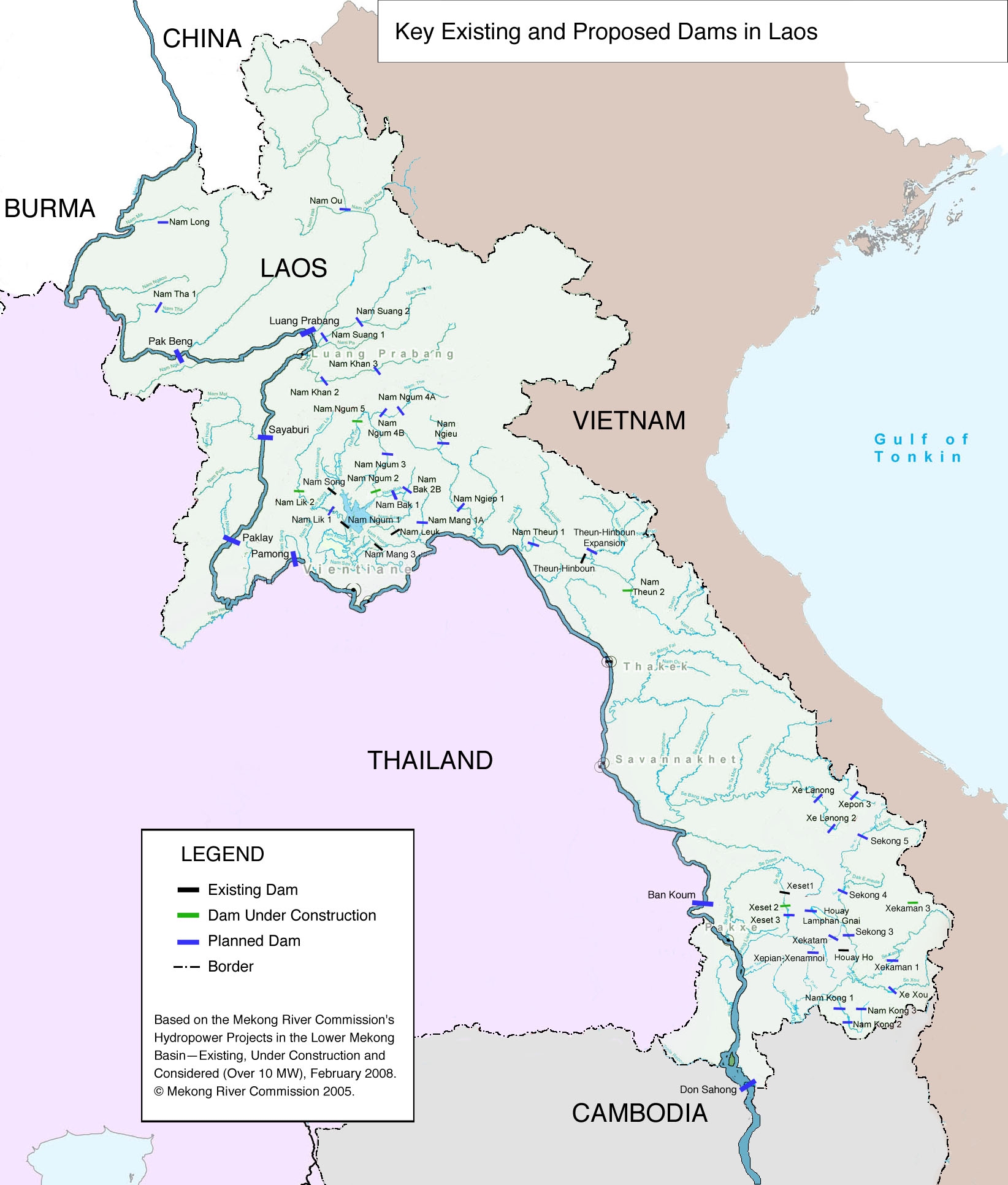
The Mekong is the second most biodiverse river in the world, but inadequately planned dams could denude the fragile balance of life in the ecosystems it supports, robbing littoral communities of crucial food and revenue sources. The Mekong River Commission (MRC), an intergovernmental management institution with representatives from regional administrations, reported in a six-year, multimillion-dollar study that current dam development plans would result in a loss of 97 percent of the sediment in the Mekong by 2040 and reduce yearly fishing revenues by nearly 5 billion dollars. Sediment is a crucial fertilizer for much of the Mekong’s littoral farmland, and plays an important role in preventing sea-water creep in the Mekong delta downriver in Thailand. Existing dams already threaten fishing and farming communities, currently reducing sediment in the river by 40 percent. Another study by the MRC indicates that the losses that local fishing industry would incur as a result of the dams would reduce the economic benefit of the dams’ construction by roughly 25 percent by 2020. While more than 1,300 species of fish currently breed in the Lower Mekong Basin, dam construction plans that do not account for environmental concerns threaten to inhibit fish from migrating to their breeding grounds. The partially-constructed Don Sahong dam in Laos lies a few miles from the habitat of the only 80 Irrawaddy dolphins left alive, and the destruction in habitat caused by the dam may drive the species to extinction. Proper consideration of environmental concerns could mitigate such fears, yet unfortunately the government of Laos and the private investors building the dams fail to demonstrate such adequate consideration. Accusations emerged recently that the officially released impact assessment of the proposed Pak Lay dam contained major sections that are copied and pasted from the previous Pak Beng dam assessment, an assessment subsequently disproven by the MRC. The copied sections falsely claimed that the environmental impact of the dam would be “insignificant or positive.” The paucity of substantial pre-construction environmental consideration illustrates the Laotian government’s callous attitude toward the toll levied on riparian communities by changes to ecosystems and presents significant obstacles to Laos’ goal of becoming a sustainable dynamo for Southeast Asia.
Laos’ dam construction plans particularly impact rural communities where citizens wield insufficient resources to surmount the challenges posed by their forced displacement and changing sources of livelihood. The Lower Mekong Basin’s population is 85 percent rural, and not only relies on the Mekong for more than just their commercial livelihood, but also for their very subsistence, with locals eating 18 times more fish than citizens in the United States. Even if communities downstream of dams successfully weather the water-related shocks, state-sanctioned forced displacement will uproot numerous communities upstream of dams. The reservoir created by the aforementioned Pak Lay dam will displace 20 villages, necessitating the forced relocation of at least 1,000 families. The construction of the Xayaburi dam, Pak Beng dam, Nam Theun 2 dam, and Theun-Hinboun Expansion Project further displaced roughly 20,000 people. Beyond flooding and erosion, the nearly 5,000 people relocated for the Theun-Hinboun Expansion Project face serious concerns about their ability to sustain themselves in their new towns. Now living in consolidated villages without access to the Mekong, this population lost access to land that they historically fished and raised rice on, and land near their new village is predominantly allocated to rubber tree plantations. Dam projects also significantly impact the communities living downstream of the dams. The Xayaburi dam impaired the agricultural and fishing capacity of 200,000 people, placing the population at acute risk of food insecurity, according to estimates by the NGO International Rivers. The construction of the Pak Beng dam altered the water level in regional rapids and pools, damaging the ecosystems that many local villagers fished to eat from and earn a living. The Cambodian director of the World Wildlife Fund criticized the decision to construct the Don Sahong less than two miles from the Cambodian border, given that in Cambodia upwards of 70 percent of the protein eaten by the local population is from fish, noting that “the dam will have disastrous impacts on the entire river ecosystem all the way to the delta in Vietnam.” While the government of Laos is a clear proponent of dam construction, it must commit adequate resources to easing the relocation process for the affected rural population. A decreased number of fish in waterways and insufficient governmental allocation of land for farming specifically endanger the primary income sources of the rural population. The forced displacement of large subsets of the rural population coincides with an effort by the government of Laos to switch agricultural practices from crop rotation to large-scale cash crop cultivation. Such rice and other cash crop cultivation requires lowland areas for farming, which is expensive to acquire because it is already limited in Laos and made further scarcer by the construction of dams in lowland areas. Indeed, although the populations forcefully displaced are often in some of Laos’ poorest regions, switching to monoculture farming requires significant upfront investment, forcing many displaced farmers to go into debt in order to switch their agricultural practices. Furthermore, monoculture farming places farmers at risk of price shocks in the market and pestilence. The government of Laos must pay specific attention to the struggles that the rural population faces as a result of the state-enacted forced displacement in the name of hydropower projects.
Laos’ hydropower proliferation projects follow a prototypical narrative of unequal core-periphery relations, with the governmental elites ignore the impact of dam construction projects on local income and food sources in order to profit off of foreign investment in hydropower projects. While energy from Laos’ dams sold to other nations could yield 17 billion dollars in profits, the damage to the Mekong River could result in costs as high as 66 billion dollars. Scholars criticize international institutions such as the World Bank and the Asian Development bank, along with private investors, for ignoring the needs of local communities in favor of their own profits. Indeed, the Laotian government is similarly at fault, for its model of dam construction relies almost entirely on foreign investment, and the government consistently proves itself unable to ensure that such foreign investors adequately account for social and environmental concerns. Still, the government of Laos continues to pursue such projects because they view them as crucial to maintaining Laos’ growth rate, which is currently characterized as “a star in South East Asia,” at roughly 7 percent. One cannot begrudge Laotian growth aspirations, yet growth-oriented projects such as dam construction must benefit the Laotian people, rather than lining the pockets of governmental officials. The high growth rates enabled by new projects such as hydropower that capitalize on Laos’ factor endowments will evaporate unless the profits of such projects are used to fight poverty and develop human capital resources. Troublingly, Professor Martin Stuart-Fox of Queensland University characterizes the government of Laos as “massively corrupt,” elucidating that “if you are the top of the party you get a lot of money, and there’s a lot of Chinese money coming in, of course, and there are top people in the politburo who are extremely wealthy.” While Laos transitions to a market economy, it remains a single-party political system, allowing those in power to benefit from their privileged position. The Laotian government argues that the revenues of energy sales from dams will finance anti-poverty and social welfare programs. This is a sound policy in theory, but in practice the gross majority of power produced by the dams goes to the foreign companies that financed the dams, and is then reimported back into Laos at a higher price, resulting in electricity prices tripling for some citizens in Laos. After a catastrophic dam collapse in late July of this year, the government supposedly issued a moratorium and nationwide review on dam construction, yet the developers constructing the Pak Lay and Pak Beng dams reported that they received no instructions to halt construction. Just days after the moratorium’s release, Laos, Thailand, Cambodia, and Vietnam agreed to begin the regional consultation process for the Pak Lay dam, a clear indicator that the government of Laos does not plan to end its dam construction any time soon. Laos itself does not require greater hydropower to meet its domestic electricity demand, with energy sales already constituting 30 percent of its national exports. The lack of domestic need for hydropower signifies that the construction of new dams is aimed at foreign markets, thus involving foreign investors who will likely offer monetary incentives to the officials approving such projects, while the rural population continues to bear the burden of new dam construction. Obstacles to Laos’ goals of expanding energy exports may cause the hardship inflicted upon the rural population to be entirely unnecessary. While Laos and Thailand signed an understanding concerning expanding Laotian energy sales to Thailand through 2036, experts caution that Thailand already meets its energy needs, and thus may not be a sustainable market for future energy sales. In March, Thailand retracted its plans to purchase energy from the planned Pak Beng dam, the construction of which was predicated on an agreement to sell 90 percent of the energy it produced to Thailand. The Laotian National Policy on the Environmental and Social Sustainability of the Hydropower Sector outlines that all projects must include full public disclosure of the dams’ impact, yet without a free press and with Laos ranked near the bottom of global corruption indexes, there is little indication that the government of Laos will change its course and properly account for the struggles of the rural population.
Inequitable land titling regulations in Laos exemplify both the preferential treatment of foreign investors and the dearth of Laotian governmental capacity to protect both rural populations and the environment around them. Scholars in Energy Research & Social Science elucidate that without “stronger supervision and conditionality for project implementation,” elites will be able to capture the benefits of dam construction. Indeed, rather than protect rural populations, regulatory apparatuses can also further disenfranchise rural populations. When planning new dam construction, the government is able to designate land as ‘underutilized’ in order to justify the forced displacement of the local population. Given that since the governmental transformation in 1975, the Government of Laos controls all land in the nation, thus requiring that the government give titles for all land use. The Laotian Land Titling Program gives permanent land usage rights to those in urban areas, which cannot be easily withdrawn. In contrast, the Land and Forest Allocation policy in Laos grants rural residents temporary land use rights. As a result of this, not only are rural residents not secure in their homes due to the temporary nature of their land use permissions, but the process to acquire those permissions is also more lengthy. In 2015, the Government of Laos issued barely half of the number of titles that they intended to. Even when titles are issued to the rural population, “...due to corruption, titles may simply be ignored and land taken regardless of titling schemes that involve local land and resource users,” according to the NGO Global Witness. Global Witness estimates that private companies leased between 1.1 million and 3.5 million hectares of land, affecting 18 percent of the villages in Laos. As previously discussed, the forced changes in rural agricultural practices make farmers more vulnerable to crops’ price fluctuations and harvest failure, which may lead to ‘distress sales,’ wherein the residents of an area are forced to sell of their land to survive. For foreign investors, on the other hand, Special Economic Zones grant land at a far more expedited rate to foreign investment projects. Additionally, new dam building plans such as the Build-Own-Operate-Transfer scheme result in foreign investors controlling the majority share in many newly constructed dams. This significantly erodes the Laotian government’s ability to regulate the effects of dams. The Laotian government only owned 25 percent of the Xe-Pian Xe-Namnoy dam, which collapsed in summer 2018. This precedent is increasingly worrying, given that the Laotian government will control as little as 10 percent of the shares in some new dam projects. Researchers write in the journal Global Environmental Change that “ownership and finance is increasingly private and less sovereign as use rights and decision making power over the exploitation of natural resources have been centralized and privatized into the hands of a consortium that has financial interests in maximizing power production.” The trend of decreasing Laotian government ownership in damming projects and the preferential treatment given to foreign investors in land titling demonstrates the need for stronger governmental oversight in the planning of new dam projects.
If Laos aims to transform itself into the renewable hydro-power engine of Southeast Asia, then foreign investment is the gear that allows that engine to turn, but derisory regulatory oversight allows the interests of foreign investors to supercede those of the local populations. Laos’ insufficient capacity to construct dams independently results in 80 percent of the funding for dam projects originating from foreign investors. The demonstrated interest of foreign investors creates new pressure on the Laotian government to use hydropower projects as a catalyst for greater national growth, resulting in greater numbers of dams. The subversive power of foreign capital shifts the Government of Laos’ focus from specific goals such as poverty reduction through dam development to the act of dam construction itself, due to the monetary incentives for officials to support such foreign-funded construction projects. Foreign investment is a large enough component of the Laotian economy that different groups emerged with the Laotian one party government, with a faction of older party members and party members from the South of Laos favoring Vietnamese investment, and a faction of younger party members and members from the North favoring Chinese investment. Serious Laotian infrastructure projects even outside of dam-building exist with both Vietnam and China. A newly announced highway will link the Laotian capital, Vientiane, with the Vietnamese capital, Hanoi. Entirely landlocked, Laos also gained access to the Vung Ang seaport in Vietnam after the two governments signed a joint agreement, with a railway between Vientiane and the port projected to cost 5 billion dollars. In 2013, China surpassed Vietnam to become Laos’ largest foreign investor, with China footing the bill for the most expensive infrastructure project in Laos, a railway connecting China and Laos, which will cost, 6 billion dollars, half of Laos’ GDP. China also funds the construction of the Pak Beng dam, with a Chinese firm to control the sales of the gross majority of energy from the dam. Singapore is also involved in Laotian investment, spending more than a quarter million dollars in the nation. As public debt reached 60 percent of the Laotian GDP in 2017, combined with plateauing demand for the energy produced by Laos’ dams, fears arise about if Laos will ever be able to repay this debt, and about the influence that Laos’ lenders may wield on Laotian policy decisions. The now collapsed Xe-Pian Xe-Namnoy dam was constructed by a South Korean company, with Thai and Laotian partners. Shalmali Guttal, executive director of Focus on the Global South, argues that the dangers of the Xe-Pian Xe-Namnoy dam were sidelined in favor of corporate ambitions, positing that “The risks are masked to make the investment worth it.” The Laotian Prime Minister, Thongloun Sisoulith, aims to combat corruption such as that which enabled the construction of dangerous dam projects during his tenure, yet his administration’s former finance minister was arrested along with four other senior officials for giving out bonds for infrastructure projects that never existed. Thongloun took important steps by advising an audit of public officials’ finances, and banning the opening of new banana plantations and the export of timber to China, both of which caused significant pollution and environmental destruction. While Thongloun’s stated belief that “we can have foreign investment, but we must share the benefits. There should be fairness,” is encouraging, Laos must strengthen its government oversight of foreign investment projects and enforcement of protective regulations in order to achieve such fairness.
The Mekong crosses the borders of six nations, and any change to it will inherently affect the other riparian nations, yet the Laotian government worryingly circumvents the processes of regional regulatory mechanisms. The Mekong Agreement established the Mekong River Commission in 1995, aimed at analyzing the transnational impacts of projects on the river. Laos, Cambodia, Thailand, and Vietnam all signed the agreement, with China and Myanmar not joining the agreement in an effort to escape its jurisdiction. This effort succeeded, with 8 Chinese dams already on the Mekong and 20 more soon to come, none of which were subject to approval by the MRC. This exhibits a clear weakness in the MRC, for it lacks the enforcement power necessary to ensure that nations adhere to its directives. Laos’ unilateral decision to proceed with the Xayaburi dam’s construction illustrates this institutional weakness, for while Article 5.4.3 of the MRC’s procedures states that the committee of nations must jointly approve a proposed project, Laos decided to begin the dam’s construction without the approval of its fellow riparian nations. Laos instead cited a report by a Swiss company that used more than 40 still-unfinished studies to falsely argue that concerns about the dam were adequately addressed. This is a further example of corporate interests subverting regulatory mechanisms and endangering both the local ecosystems and population. The copied and pasted report that Laos submitted to the MRC was at best a tacit attempt to conform the regional body’s rules. The lack of concern for the regional impact of national dam projects sets a worrying precedent for the future of the Mekong and the communities that rely on it.
On July 23rd, 2018, an auxiliary dam at the Xe-Pian Xe-Namnoy hydropower complex burst, releasing a thunderous wave of 5 billion cubic meters of water that claimed 36 lives, with 98 people still missing, and destroyed the homes of more than 7,000 people. Less than a year before the Xe-Pian Xe-Namnoy collapse, the Nam Ao dam broke after the company constructing it did not follow standard practices, yet regulatory enforcement did not expand following that previous collapse. The collapse affected 13 villages, and reportedly destroyed 95 percent of the homes in some of the villages affected. The man made crisis has lasting repercussions, with families losing vast food stores that would have fed them for months, and with waist-deep mud preventing those whose homes survived from returning. The CEO of the MRC expressed hope that following this most recent collapse, sustainable and less contentious paths for development along the Mekong could be explored. Yet, just weeks after the collapse, the MRC began the consultation process for the proposed Pak Lay dam. This raises concerns about the Laotian government’s ability to protect its citizens from predatory business practices, for the dam’s builders knew that something was wrong before it collapsed. The Xe-Pian Xe-Namnoy project was previously criticized in 2013 for its inadequate public consultation, environmental planning, and impact assessments. The support provided to those displaced by the dam’s original construction also proved insufficient, with those displaced without adequate access to food, water, and new land. Following the dam’s collapse, citizens criticized the government’s efforts to conceal the disaster through social media posts, given that all other forms of media are tightly censored. Authorities also failed to notify Cambodian officials about the incoming water, with 1200 Cambodians displaced by the dam collapse. The effects of the collapse stretched as far as the Mekong Delta in Vietnam, where farmers’ fields were damaged. The question remains if this disastrous loss of life and the monumental crossborder impacts will prove sufficient impetus for the Laotian government to reconsider its hydroelectric ambitions. Former analyst for the U.S. Department of Energy, François Le Scornet, expounds that “..hydropower development is too important for the political power in place to significantly challenge the overall development plan,” demonstrating the conflict between the political motivation for dams’ construction and their sometimes-lethal impact on rural communities. The widespread impacts of the Xe-Pian Xe-Namnoy auxiliary dam’s collapse should serve as a call for Laos to reexamine its policy of forcefully displacing its citizens to serve foreign corporate interests.
The former vice minister of energy and mines who was behind Laos’ unilateral decision to proceed with the controversial Xayaburi dam responded to news of the Xe-Pian Xe-Namnoy collapse by saying that “For me, it is for the better. We have done so many projects; it is time we reassess.” Such reassessment is critical to ensuring Laos’ prolonged success. Renewable energy is an admirable aspiration, but it must be constructed in a way that does not unfairly inflict harm on the rural population through forced displacement, insufficient available land, and environmental destruction. The government of Laos must develop regulatory mechanisms capable of standing up to the powerful capital of foreign investors. Furthermore, the Laotian government must follow the procedures of the MRC, to assuage the transboundary impacts of its rapid dam proliferation. Laos as a whole can benefit from dam building, but only if the concerns of local communities are addressed, environmental impacts are analyzed, regional partners are engaged in discussion, and above all else, if the proceeds of dam building benefit the communities where dams are built rather than corrupt officials.

The Mirroring of the Two 9/11s
Design Editor Camila Weinstock elucidates the ramifications of the 9/11 terrorist attacks in the United States and those of the earlier 9/11 authoritarian coup in Chile.
The infamous images of hijacked airplanes hitting the World Trade Center’s twin towers are etched into the minds of every American old enough to remember the morning of September 11th, 2001. The terrorist attacks of that day spurred a decades-long war in the middle east and heightened tensions surrounding what it really meant to be an American. 9/11 is a date known all around the world, but rarely does the world talk about the first violent 9/11 that occured in Chile. Whereas the United States’ 9/11 was the doing of jihadist groups, Chile’s 9/11 was a government military coup. The morning of September 11th, 1973, the military began to bomb La Moneda, the presidential palace. By the end of the day, the president, Salvador Allende, was dead, and Chile’s government transformed from a burgeoning socialist democracy into a bloody military dictatorship that would last seventeen years. Both 9/11s have eerie similarities beyond their dates; the two events can trace their origins to the Cold War, and the United States’ desire to prevent the spread of communism.
The Cold War and the Creation of the Taliban
With the creation of the Truman Doctrine, stopping the spread of communism became one of the United States’ biggest foreign policy focuses. During the Cold War era, the United States’ geopolitical strategies throughout the world were aimed at curbing the slowly spreading reach of the Soviet Union. Beginning in the late 1970s, the Soviet Union attempted to gain control over Afghanistan, first invading the country in 1979, and later establishing a puppet regime in Kabul. Afghanistan’s complex history and ethnic diversity made it difficult for a country-wide takeover, and as a result, the Soviets’ invasion carved out pockets of the country where power was divided between the control of communist forces and Afghani rebels. The Soviets’ attempt to take over the country was met with significant resistant from locals, especially from Muslims who felt that the communists atheist beliefs threatened the practice of their religion. These resistant groups later developed into mujahideen groups, consisting of Muslim rebels. One of the largest forces supporting the mujahideen groups was the CIA.
After failing to prevent Iran’s Islamic revolution, the United States viewed Afghanistan as a key player in the middle east region, and was intent on not letting it fall into red hands. Thus, the CIA created rebel training camps in Pakistan where they trained Afghani muslim rebels, including Osama bin Laden. The United States, along with other anti-communist allies, allocated funds to help arm Afghani rebel groups in their fight against communist forces. The Reagan administration armed the mujahideen with anti-aircraft missiles, breaking previous policies against supplying rebels with American-made weapons. From the underbelly of the CIA training camps, the beginnings of what would later become the Taliban emerged . Michael Rubin of the Washington Institute for Near East Policy, explained that following the collapse of the Soviet Union, the United States left Afghanistan, creating “a policy void in which radical elements” would flourish. The Taliban quickly conquered areas of southern Afghanistan, gaining power and support, viewed as an alternative to the conflict created by territorial control by rival mujahidin forces. The Taliban took control of the Afghan government, under a platform promising peace, disarmament, and a return to Islamic values. Later on, Osama bin Laden came to the aid of the Taliban, providing a few thousand highly trained soldiers, and creating the foundation for the alliance between al-Qaeda and the Taliban.
Neoliberalism and the rise of socialism in Chile
While much of the spread of the Cold War was occuring on the eastern continents, the United States quickly became aware of a communist wave gaining momentum in South America. Prior to the rise of the Unidad Popular, Chile’s left wing party composed of socialist and communist groups, Chile had been one of the first nations to wholeheartedly embrace the neoliberal policies laid out by the Bretton Woods System and the Washington Consensus. Historically, Chile had always suffered from great classism and vast inequality gaps between socioeconomic classes. Once neoliberal policies were implemented, these inequality gap only grew larger, also widening social tensions between the wealthy American-educated upper class, and the lower class dwelling in campamentos on the outskirts of the city. Free market reform was heavily supported by the political-economic elites in Chile, whose wealth would only further increase from foreign trade, but in the long run, neoliberal policies led to high unemployment and the banking collapse of 1982.
Social and economic tensions played out across Chile’s three main political parties, the Unidad Popular, la Democracia Cristiana, and the Partido Nacional. These societal tensions took center stage during the 1970 elections, and as a result, Salvador Allende, running as the Unidad Popular’s candidate” won the presidency with 45% of the popular vote, establishing the first democratically elected socialist government. Allende promised the nationalization of Chilean resources, income distribution, and agricultural reform, all changes that appealed heavily to the lower class who suffered under neoliberal economic policies. While Allende was popular with the lower class, the Unidad Popular lacked a majority in congress, creating a major obstacle in accomplishing his administration’s policy goals. One of Allende’s first steps towards transitioning Chile from a democratic state to socialism was to nationalize the copper mines, Chile’s largest export. One year into his administration, the worldwide price of copper fell, causing the deterioration of the economy. While Allende did not come to power through a revolution, the United States saw him as a threat, due to his close friendships with Fidel Castro and Che Guevara, as well as his staunch defense of the Cuban Revolution.
The morning of September 11th, 1973, Santiago woke up to the sounds of machine guns, and soldiers marching towards La Moneda, as part of an American-backed military coup. By the end of the day, General Augusto Pinochet had poised himself as the head of the new military dictatorship, and Allende had taken his own life rather than surrender himself to the military. Backed by the United States, Pinochet sought to eradicate any and all traces of socialism in the country. Under his leadership, Operation Condor was created. This alliance of right-wing dictatorships included Argentina, Bolivia, Paraguay, Uruguay, and Brazil. With the aid of the United States, Operation Condor launched a campaign of political repression, targeting socialist and communist leaders and sympathizers throughout the continent. Additionally, US interests in the region were represented by the Chicago Boys, a group of economists trained at the University of Chicago. While working with Pinochet’s regime, the Chicago Boys helped to once again revert the Chilean economy to its previous neoliberal practices. Throughout Pinochet’s seventeen year long military dictatorship, an estimated 1,198 people were disappeared, with hundreds more being subject to torture, and political executions.
The United States’ indifference in the face of the human rights violations committed under Pinochet’s regime is a topic rarely discussed. The United States’ involvement in the military coup reached far beyond simply supporting Pinochet in the name of preventing the spread of communism. In one of the more infamous cases, it came to light that the CIA trained the head of the DINA, Pinochet’s secret police force. Manuel Contreras oversaw the DINA, whose operations were responsible for the torture and disappearances of thousands of political enemies. Contreras also claimed that at Pinochet’s request, eight CIA agents came to Santiago with the intention of helping to organize the structure of the secret police. The United States humored the brutality of Pinochet’s dictatorship, a small price to pay for one less communist state. After evidence arose that Pinochet’s DINA was responsible for the assassination, in the middle of DC, of a former Chilean diplomat, public outcry around the world largely condemned the actions of the military dictatorship, but the United States took no concrete steps to sever its ties with the regime During the mid 80s of the Reagan administration, foreign policy advisors and analysts began to feel frustrated at Pinochet’s refusal to return Chile to its former democratic state. Pinochet had served his purpose in eradicating communism, and in 1988 US officials pressured him to hold a plebiscite, where he was succeeded by a member of the democratic christian party.
In Chile, the implications of the military coup still resonate to this day. Under Pinochet’s regime, basic human rights were violated, and the entire country lived under a reign of terror for seventeen years. During the dictatorship, many right wing supporters praised Pinochet for his quick improvement of the economy, while the poor suffered. Pinochet’s regime focused on destroying the informal campamentos that surrounded Santiago, instead forcing the poor to move into conventillos, where multiple families were crammed into small homes. Not only did this forced migration destroy the social fabric of the campamentos, but it also decreased sanitation and nutrition standards for many of Santiago’s urban poor.
9/11’s Impact and Legacy in the United States and its Foreign Policy
Exactly 28 years after Chile’s military coup, American Airlines Flight 11 crashed into the North Tower of the World Trade Center at 8:46am. By the end of the day, the terrorists’ actions killed 2996 people. Shortly thereafter, Osama bin Laden, founder of al-Qaeda, stepped forward to claim responsibility for the attacks, claiming that “it was confirmed to [him] that oppression and the intentional killing of innocent women and children [were] a deliberate American policy. Destruction is freedom and democracy, while resistance is terrorism and intolerance.” Thus, the American “war on terror” was launched with the Bush administration vowing not to end until every terrorist group was defeated. Under the guise of battling terrorism, the United States invaded Afghanistan and Iraq, from 2001-2006. Now, almost two decades since the 2001 terrorist attacks, US troops still remain in both countries.
The terrorist attacks of 9/11 impacted the United States in more ways than just in simple casualties and injuries. After decades of enjoying its position as the hegemonic world leader, the United States felt vulnerable for the first time, shedding the illusion that its power was untouchable. In response, strong pro-American, nationalistic sentiments flooded the country, appearing in everything from renaming french fries to freedom fries to the increasing popularity of the American war hero movie genre. The aggression with which the United States launched its counterattack in Afghanistan was met with widespread hostility towards the west. Since 9/11, the U.S. government has spent more than $7.6 trillion on defense and homeland security, in addition to implementing policies like the Patriot Act, aiming to make America safer against the threat of terrorism.
The Two 9/11s and the Construction of Memory
In both Chile and the United States, the legacies of their respective 9/11s persist to this day. In Chile, there still exists much social division in regards to public opinion of the dictatorship. Outside of the classroom setting, the dictatorship is a taboo subject, with most reluctant to admit their past support of Pinochet. Many Chileans still support Pinochet, emphasizing the good he did for the economy, while glossing over the atrocities committed under his regime. Other former supporters claim that they had no idea that the tortures and disappearances were anything more than rumors. In the many years since the end of the military dictatorship, relatives of the disappeared and tortured have led the human rights movement in the country. Many NGOs dedicate their time to helping to secure evidence of torture and killings, in hopes to bring forth charges against the responsible parties. While many continue fighting to know what happened to their loved ones, others have fought to repress this knowledge. The Bachelet administration fought to lift the 50 year “veil of secrecy” over the testimony heard by the National Commission on Political Prison and torture. Bachelet’s bill was hotly contested, with supporters urging the disclosing of detention sites, and the identities of over 30,000 torture victims. For family, the failure to lift the veil was devastating. Because the identities of many of those who participated in the torturings and killings are still unknown, these individuals continue to enjoy military benefits and pensions. It is undeniable that the dictatorship forever changed the landscape of Chilean society, instilling a chilling sense of terror over the entire country, that to this day still leaves its trace.
Just seventeen years after the United States’ own 9/11, the marks of the terrorist attacks still appear on everything from pop culture to the attitudes of Americans towards foreigners, and vice versa. The surge in American nationalism unified many Americans, while at the same time gave rise to a growing sense of islamophobia throughout the western world. In 2001, 93 anti-Muslim related hate crimes were reported to the FBI. Strong nationalism gave way to strong anti-Muslim, anti-terrorist sentiments. Additionally, research showed that post-9/11, Americans’ preferences for media changed, with most movie-goes now being more likely to prefer films that do not require much cultural engagement. While xenophobic beliefs seemed to have had reduced gradually over the years, they have seen a resurgence in recent years due to anti-Muslim remarks made by then-candidate Trump throughout the duration of the 2016 election cycle. Recent studies have shown that in 2016, anti-Muslim hate crimes actually surpassed those reported in 2001.
Conclusion
With both the Chilean and American 9/11 events, their origins can be dated back to the Cold War and the United States’ anti-communist doctrine. While the two events may seem unrelated at first glance, their roots and aftereffects mirror each other. In both countries, many suffered human rights violations as a result of events that took place in 9/11. In the present day, both Chile and the United States have undergone political shifts towards the right, with the respective administrations of Piñera and Trump. In both countries, the younger generations have shown strong leftist tendencies, fighting to question the beliefs of the right-leaning administrations. While Chile’s 9/11 can oftentimes be mistaken as a long-ago part of the nation’s history, today people still remember that it has many consequences. Recently, the Chilean minister of culture was forced to resign after old Facebook posts of his resurfaces, where he had called the National Museum of Memory and Human Rights leftist propaganda that failed to accurately represent the dictatorship. Even now, many people within Piñera’s administration have faced criticism for their past support of Pinochet. Defenders of human rights urge the importance of preserving national memory in both countries, sparking many conversations surrounding how exactly the respective 9/11s should be remembered and represented for generations to come.

Birth Control: Uses, History, and Policies
Contributing Editor Claire Spangler provides policy recommendations on expanding birth control access in the United States.
Across the country and the globe, some women are fortunate enough to take personal control over their health, economic opportunities, and lives. They are granted an unprecedented freedom with the help of various contraceptive. However, it is only the fortunate that control their fate for various state and federal laws within the United States make this freedom all the more onerous to attain. To understand how we came to these restrictions it is first necessary to explore the purpose of the medicine and then the history of restrictions and allowances in the United States. Finally, alternative methods of access as seen in in certain states will illuminate potential future policy aspirations.
Uses and Affects
All women have personal reasons to take birth control, in any of the many forms available. One such reason is preventing unwanted pregnancy. Of sexually active women of a reproductive age (15-44) in the United States, roughly 70% are at risk of an unwanted pregnancy. Within this group 68% of women who use contraceptives only account for 5% of unwanted pregnancies. The combination of risk and preventability profess the incredible need for accessible birth control. Statistics show the demand; in 1960 the pill became available and within five years 6.5 million American women used it. Today, 80% of sexually experienced women have used the pill. Also, alternative methods are increasing in popularity including sterilization, hormonal methods, IUDs and male condoms.

While many women choose to take birth control to avoid becoming pregnant, there are multiple uses for the drug. An estimated 72% of women take oral contraceptives for non-contraceptive reasons alone, or for non-contraceptive reasons in tandem with contraception reasons. The pill has the ability to reduce cramps, menstrual pain, regulation, and acne treatments. It also has farther reaching effects like controlling endometriosis and polycystic ovary syndrome. Endometriosis is a condition affecting millions of American women that causes such severe pain as to drastically affect women’s ability to go about their daily lives. Polycystic ovary syndrome, on the other hand, can increase the risk of endometrial cancer and death if not properly regulated. This condition affect one in ten women and hormonal birth control is the most common treatment. In addition to health concerns, birth control has the ability to affect many aspects of a women’s lives.
Birth control and reproductive control are essential to women’s legal and economic status. Indeed during her Senate confirmation hearing, Ruth Bader Ginsburg famously said:
“The decision whether or not to bear a child is central to a woman's life, to her well-being and dignity. It is a decision she must make for herself. When Government controls that decision for her, she is being treated as less than a fully adult human responsible for her own choices.”
Restricting women’s access to birth control methods is discrimination on the basis of sex. Sex discrimination is treating someone unfavorably because of their sex; it is cited both in terms of sexual harassment and economic opportunities. To understand access to birth control as a discriminatory issue it is essential to recognize the legal and economic repercussions. First, in regards to legality, women are only treated as independent persons under the law when they have the freedom to choose. Restricting women from this right is paramount to treating then as a lesser person under the law, unable or unqualified to make decisions for themselves. Second, birth control access is essential for protecting women’s economic opportunities. When women are able to regulate pregnancy on their own terms, the results are swift and definite. Birth control advances women’s economic status and educational opportunities. In the job market, young women have previously been relegated to low level jobs and deprived of promotions because companies assumed that they would leave within a few years to start families. Birth control has helped cull this trend and has allowed women the freedoms to choose when and if to start families. Indeed, more women are choosing to put off having children, many in favor of their job opportunities; today, a third of wage gains to women are a result of birth control access. Additionally, women’s educational opportunities are affected. Birth control is the most influential factor in women choosing to stay in college and is a large component of many women’s choice to attend in the first place: even with a bachelor’s degree, an estimated 30% increase of women in skilled jobs (medicine, law, dentistry) can be attributed to birth control access. The effects don’t merely stop with opportunities; oral contraceptives are associated with lessened risk of ovarian and endometrial cancers. However, it is important to mention that there are potential costs to taking oral contraceptives as well; namely, the associated increased risks in cervical (5% increased risk) and breast cancer (7% increased risks). Yet, both risks decline or disappear when use of oral contraceptives end. Considering the evident benefits both to women and the economy it is important to investigate the political history of birth control to understand today’s regulations.
History
The history of birth control is riddled with inaccuracies. Since the beginning of humankind people have avoided unwanted pregnancy. However, many historic methods were very unsafe, if effective. In more modern times researchers have focused on safe and effective methods to prevent unwanted pregnancies. In the early 19th century many methods of birth control were available and easily accessible including condoms, diaphragms and douches. However, the American Medical Association began attacking these options in the 1850s. Anthony Comstock, in particular, crusaded against contraceptives and orchestrated the 1873 ban on sending contraceptives or distributing information through the mail. It was not until the 20th century that birth control increased in popularity, largely in part to the efforts of Margaret Sanger. She is attributed with coining the term “birth control” and started the American Birth Control League, later known as Planned Parenthood Federation of America. Sanger also lobbied biologist Gregory Pincus to develop a birth control pill. Pincus partnered with physician John Rock, a catholic doctor who educated people on sex and treated and tested infertility. Rock’s research on infertility paved the way for birth control pills that were later approved by the FDA in 1957. Regardless of the serious side effects of the first available version of the pill, by 1965 6.5 million American women were taking the pill. Only five years later, President Nixon signed Title X into law providing federal funding for family planning services. Other methods of birth control began taking off following this funding, most notably the IUD.
Other notable victories for birth control include the 2000 Equal Employment Opportunity Commission (EEOC) decision on contraceptives. The EEOC ruled that employers must cover contraceptives costs if their health insurance plans also pay for a number of other products that enhance well-being. Various legislations of this nature were already in effect in 28 states by the mid-1990s. The right to contraceptives through health plans were solidified at a federal level in 2010 when President Obama signed the Patient Protection and Affordable Care Act (ACA). The ACA added contraceptives to the list of preventative services covered without patient co-payments. Ultimately, protections of this manner have been lessened by President Trump. Religious and moral opt-outs by companies are now affecting thousands of women’s access to birth control. The religious exemptions have a basis in Burwell v. Hobby Lobby in 2014. The case allowed Hobby Lobby to opt out of providing contraception under the Religious Freedoms Act. Justice Ginsburg wrote the dissenting opinion, stating that “the exemption sought by Hobby Lobby and Conestoga would…deny legions of women who do not hold their employers’ beliefs access to contraceptive coverage.” A similar case has recently come under scrutiny with the nomination of Judge Brett Kavanaugh to the Supreme Court by Trump. During the senate confirmation hearing Judge Kavanaugh was asked about his decision in Priests for Life v. the U.S. Department of Human and Health Services. Judge Kavanaugh sided with the religious organization that argued against health plans covering birth control because IUDs and emergency contraception are “abortion inducing drugs.” This term, used by Judge Kavanaugh is alarming to those who use and promote access to birth control. This turn of events and increasing restrictions for birth control are making access increasingly difficult, especially considering the price of attaining birth control.
Policies
Birth control varies in cost by type of contraceptive. The average cost of the pill is anywhere in between $0-$50 before insurance that covers birth control. To be able to get the pill, many states require a yearly doctor visit costing from $0-$350, again dependent on insurance. Many have rallied against the provision of having a doctor’s visit, especially considering that many women who take the pill have done so for years, and that women have been proven to be just as accurate at self-screening as a doctor. Additionally, there is a shortage of OB/GYNs in the United states, making it difficult for women to get a prescription in the first place. Indeed, many parts of the world have easier access to oral contraception than America.

Photo from: http://ocsotc.org/world-map/
In response, seven states have made it possible to get the pill without a prescription. California, Oregon, Colorado, New Mexico, Hawaii, Maryland and Colorado all allow pharmacists to sell birth control over the counter. States considering legislation of this manner include Illinois, Minnesota, Missouri, and New Hampshire. The District of Columbia and Utah also recently authorized similar legislation, although they have yet to implement it. This ease of access will not only lower the cost of entry, but this free-market solution also has the potential to drive down costs. Also, birth control via mail is more readily accessible. Companies like Nurx let women get a prescription and order birth control online. The prescription part of the service is mere health questionnaire that is later reviewed and submitted to a partner pharmacy. Nurx offers over 40 types of contraception and emergency contraception. This service is already available in 18 states and is particularly popular in “contraception deserts” where women lack access to health services. Other services offer different types of birth control and have their own methods of prescribing.
Apps are also going up in popularity. There are both apps for ordering birth control via mail or to a pharmacy, and apps that provide birth control advice. Natural Cycles is an app based on the temperature method. The temperature method is the tracking of a woman’s temperature to estimate her fertility on any given day. Natural Cycles tracks the temperature and alerts women to days when pregnancy is likely or unlikely to occur after unprotected sex. The method, if used properly, is 91% effective— the same as the pill. In August of 2018 the app was approved by the FDA.
Policy Recommendations
Birth control is a necessary medicine to the equal opportunity of women under the law and in regard to economic and educational opportunities. Birth control also provides women with needed protections from various ailments and conditions. Given the obvious need for access as seen in statistics mentioned earlier as well as contraception deserts and economic restrictions to obtaining birth control, as well as religious infringes, the United States needs to pass comprehensive legislation protecting and expanding women’s access to birth control. The approval by the FDA of Natural Cycles is an excellent start that will affect many women, yet women who chose other methods or need other methods to curtail personal conditions are not protected. Federal legislation should be pursued to include the following:
Allow pharmacies to write prescriptions
Allowing pharmacies to write birth control prescriptions ensures that women have an ease of access to vital medicine while still receiving a consultation. If a woman has any questions on birth control types or situations, she has a trained professional to ask who won’t cost her. This method is also necessary for contraception deserts where alternative medical professionals are not available.
Allow prescriptions to be sent via mail
Contraception deserts tend to be in rural areas, away from many medical professionals and urban areas. Women in these areas must be allotted the same rights to birth control as women elsewhere, and thus should be able to revenue medication through the mail. Mail prescriptions have already been proven to be highly affected in these areas, and the opportunity should be afforded to all American women.
Restore protections to birth control under all health care plans irrespective of the provider
Companies that refuse to provide their employees with access to birth control are not only overstepping their bounds as a capitalist business but are also imposing their beliefs on their employees. All Americans are free to pursue their own belief system and to not be coerced into a certain religion. The federal government should protect this right by imposing a level rule over health care: companies should not be able to opt out and disproportionately affect their employees. Furthermore, this precedent opens door to refusing such services as antidepressants and anesthesia, to name two medications opposed by various religions.
Conclusion
Birth control is a divisive topic in America, yet it helps both individual women and the enhancement of the American society and economy. Certain companies and states are making headway via online access with enormous success, and should be considered an ideal for the future, yet the government needs to act to apply these benefits across all 50 states. To best serve American citizens and to yield the highest possible results for the country, birth control should be made more accessible through health care protection and ease of access.
Security Implications of Post-Brexit Fragmentation in European Financial Governance
Staff Writer Dayana Sarova expands on the implications of Brexit for European financial systems.
Combating illicit finance, ensuring the stability of capital markets, and preventing crises are not purely financial concerns anymore. Not only has the relevance of military power arguably declined and that of economic power rose since the end of the Cold War, but financial markets themselves underwent major securitization. Budgetary and financial considerations have always constrained foreign policy, but finance and security now merge in less obvious ways. The intensified surveillance of banking after 9/11, rising popularity of financial, rather than trade, wars, and the growth of government interest in acquiring financial data are all making it ever more difficult and dangerous to treat the governance of finance and security as only loosely connected.
The expanding overlap between finance and security should raise additional concerns over the so-called “Brexodus,” the shift of financial power and competence away from the UK and toward the Continent. The UK’s loss of access to the integrated financial market will not only hit bankers and investors. Its implications are of national, regional, and global security importance. The European Supervisory Authorities (ESAs), created to integrate financial supervision within the EU, are now preparing to relocate the headquarters of its major regulatory agency, the European Banking Authority (EBA), from London to Paris. The UK’s departure from the EU will exacerbate preexisting gaps in cross-border cooperation in combating illicit finance, which previously allowed for the movement of dirty funds revealed in the Panama Papers and the Global Laundromat series. Meanwhile, British firms continue to benefit from massive inflows of foreign capital, a significant portion of which the British government believes to be laundered, and London remains one of the most attractive destinations for potential ‘golden visa’ holders. Considering the reputation of the city as the money-laundering capital of the world, the relocation of such a prized regulatory body as the EBA is an especially salient issue, since Britain will now have to assume responsibility for building an independent administrative capacity to counter the estimated £90 billion worth of illicit financial flows that go through London each year. This number constitutes a staggering 17 per cent of total global money laundering – an amount challenging to handle in the absence of Europe’s regulatory framework the UK will lose access to. Having more than one-sixth of the world’s money laundering transactions face less regulation than ever before opens new opportunities for proliferation and terrorism financing, let alone tax evasion and anonymous shell companies.
Back in 2016, British authorities lamented the deterioration of the UK’s status as a world leader on anti-corruption due to the continuing lack of transparency domestically. Now, its reputation as the upholder of European financial market stability is under threat, too. More than 90 percent of the euro-denominated derivatives business of euro banks are currently cleared via central counterparty clearing houses (CCPs) in the UK. Central clearing is a crucial function of the global financial system that ensures investors can access liquidity in multiple currencies across multiple markets. Britain handles the majority of euro banks’ interest rate and credit derivative transactions, as well as a significant number of commodity and equity derivatives. In light of Brexit, EU experts worry the potential CCP failure will result in massive, volatile movements in the comparative cost of using UK CCPs, which might trigger the transfer of hundreds of thousands of trades worth trillions of euros. Such disruption is likely to cause a liquidity drain and erode profitability in the short-run and leave systematic consequences on the global financial system in the long-run. With those concerns in mind, Yves Mersch, Member of the Executive Board of the European Central Bank, encouraged EU authorities to consider taking action to ensure the Eurosystem has adequate control over the impact of clearing activities in the UK. What it ultimately means is a transition towards a new European and global clearing system, over which London will have considerably less influence. Such a dramatic departure from the “London-centrism” of regional financial markets will undoubtedly give Britain more autonomy, but it will also weaken the UK’s ability to impose its preferences on regional and, consequently, global financial governance.
Some view fragmentation of financial governance as less detrimental, claiming it decreases chances of systemic risk due to more diversified and thus more robust regulatory systems. Jon Danielsson of London School of Economics and Political Science argues that divergent governance regimes protect against synchronized reactions of financial firms – one of the few mechanisms capable of triggering a collapse of an entire financial system. However, many consider it undesirable for the new British regulatory system to differ too dramatically from that of the EU. Fearing Brexit might pose a systemic risk not just to the domestic market but to the global financial system, Piers Haben, Director of Oversight at the European Banking Authority, has called for Britain’s exit from the EU’s financial system to be “as smooth as possible,” implying that the UK and EU should not do much to alter their regulatory regimes. Depending on what side of the argument one is on, Brexit can mean both greater and lesser systemic risk. What is certain is that there should be a balance between centralization, which provides convenience for market participants, and decentralization, which mitigates risks. Achieving such delicate balance requires key actors’ trust in one another and an environment conducive to successful negotiations. Brexit is very unlikely to encourage either of these things.
On the Continent, however, things are not looking entirely grim for the future of financial governance without extensive British involvement. While the prospects of a hard Brexit are becoming more and more likely with each week of unsuccessful negotiations, European financial governance is growing its emphasis on operational, rather than regulatory, functions, both regionally and globally. Scholars speculate that the UK’s presence in the EU was, in fact, a major friction preventing the euro area from further centralization of institutional governance. Now that this impediment is removed and the political support for a financial union is sufficiently high, the ESAs will find it easier to come to cooperative positions without the need to factor in the peculiar preferences of the largest financial market in Europe. The ESAs will be able to take a more assertive position and assume a more prominent role internationally. “If you’re tired of London, you’re tired of life,” the famous saying goes, but Brussels will have no choice but to make the most out of its inevitable break from the City.
Is This the End of a Free Internet in Europe As We Know It?
Staff Writer Julia Larkin explains proposed changes to European copyright law.
The Directive on Copyright in the Digital Single Market, also known as the EU Copyright Directive, is a proposed European Union directive intended to give the European Union a singular and universal copyright law, while moving towards a Digital Single Market. The Copyright Directive was first introduced by the European Parliament Committee on Legal Affairs on June 20, 2018. Just recently, as of September 12, 2018, the European Union approved the directive and will enter formal discussions expected to conclude in January 2019. If ratified, each of the EU's member countries would then be required to enact laws to support the directive.
The EU says their main goal for pushing this directive through is to protect press publications, reduce the “value gap” between the profits made by internet platforms and content creators, and encourage collaboration between the two latter groups. This directive has gained a lot of media attention because of Articles 11 and 13.
Article 11, the “link tax,” and would require websites to obtain a license before linking to news stories. This specifically gives press publishers direct copyright over use of their publications by internet platforms like online news feeds. Some critics of Article 11 have said that this part of the law might stop ordinary web users sharing news stories, but the text of Article 11 does exempt individuals. It says that the new rights given to publishers “shall not prevent legitimate private and non-commercial use of press publications by individual users.” However, it’s not clear what counts as a commercial platform. What about blogs or RSS feeds that compile headlines like Google News does? What about a Facebook page that is followed by a lot of people? The other aspect of Article 11 that is unclear is what counts as sharing a news story? One amendment that was added to the directive says individual words or hyperlinks can’t be taxed, but how many words is that exactly and when do those words make up enough to be taxed?
Article 13, also known as the “meme ban,” requires websites which primarily host content posted by users to take “effective and proportionate” action to prevent unauthorised postings of copyrighted content and be liable for their users’ actions. The article further states that “storing and giving access to large amounts of works and other subject-matter uploaded by their users” are liable for copyright infringement committed by users. So, platforms and copyright holders must “cooperate in good faith” to stop this infringement from happening in the first place. The question now becomes how will this Article actually be enforced? The most effective, but controversial, enforcement would be implementing upload filters. Websites like Facebook and YouTube would be forced to scan every piece of content users share and checking it against a database of copyrighted material. The problems with having an upload filter are the filter would be subject to abuse, it would make millions of mistakes, and the technology for it simply doesn’t exist to scan the internet’s content in this way.
Most of the media attention facing Articles 11 and 13 is negative and widely critical. The Articles are opposed by over 200 academics from research centers, authors, journalists, publishers, law experts, internet experts, cultural institutions, internet users, civil rights organizations, and lawmakers. Google, which also owns YouTube, has opposed the directive since it was introduced. Executives from Google say the new rules would “turn the internet into a place where everything uploaded to the web must be cleared by lawyers.” In 2018 Google encouraged news publishers in its Digital News Initiative to lobby members of European Parliament on the proposals. Facebook is also opposed to the directive and released a statement expressing they believe the proposal “could have serious, unintended consequences for an open and creative internet.” A Change.org petition was also started to combat the directive and has gathered more than a million signatures. A few days before the parliamentary vote, Wikipedia also started a campaign against the directive. Members of the European Parliament who oppose the changes include Julia Reda (Germany, Pirate Party), Heidi Hautala (Finland, Green League), and Dan Dalton (UK, Conservative Party). Reda describes the law as large media companies trying to force “platforms and search engines to use their snippets and to pay for them.” Creators, however, are divided on this issue.
For the most part this directive is supported by mainstream newspapers, publishers, and the music industry. A campaign by the European Grouping of Societies of Authors and Composers collected a little over 50,000 signatures from creators in support of the directive, including one from world famous DJ David Guetta. Other famous musicians who support the directive include Paul McCartney and James Blunt. A different set of creators do not support this law - online creators. Cover artists and YouTubers like PewDiePie who use video games as part of their career, and artists who parody music. These are just a few of the creators who can be affected negatively from the directive and who have spoken out against it. YouTubers, like video gamer PewDiePie, used their platform to educate people on the directive and encouraging their viewers to get involved by calling their respective EU parliament members to vote against the law.
While Articles 11 and 13 have gotten the most attention so far, the new directive does also tighten up copyright in lots of smaller ways. There are concerns over how the directive treats text and data mining programs. This could apply copyright claims to automated scanners, for example. Another clause that was recently added to the directive would give sports leagues exclusive rights over any images or video of a game, making sports GIFs and photos taken by sports fans at games subject to copyright claims. This is the same for compilations, videos of people lip syncing to songs (like Music.lys), and many similar forms of media.
Alex Voss, a European Parliament member from Germany, is leading support for the bill in Parliament. Voss says companies like Google and Facebook are waging an unjust smear campaign against the directive. A coalition of European press publishers including the Press Association and the European Alliance of News Agencies issued a letter in support of the law. The publishers said the directive is “key for the media industry, the consumer’s future access to news, and ultimately a healthy democracy.”
The viability and constitutionality of versions of Articles 11 and 13 in the United States all depends on who you ask. Opponents of Articles 11 and 13 in the U.S. will be sure to cite the 1st Amendment as the reason why these articles would be unconstitutional. Putting these types of limitations on people’s creativity and on the press could set a dangerous precedent and it could definitely be seen as a violation of people’s right to free expression and free press. Proponents of the laws, however, would look to Article 1 Section 8, Clause 8 in our Constitution. This clause is known as the copyright clause and it explicitly states the legislative branch has the power “to promote the Progress of Science and useful Arts, by securing for limited Times to Authors and Inventors the exclusive Right to their respective Writings and Discoveries.”
We also have specific copyright laws here as well. The Copyright Act of 1976 is our main foundation for a majority of U.S. copyright law and exceptions to copyright. The Act spells out the basic rights of copyright holders. The United States copyright law protects "original works of authorship," in a tangible medium including literary, dramatic, musical, artistic, and other intellectual works. This protection is available to both published and unpublished works. Our copyright law, however, is not as straightforward as people would think or want. For example, in U.S. copyright law there is this distinction called the idea–expression dichotomy. This protects the “expression” of an idea, but copyright does not protect the “idea” itself and this concept is fundamental to copyright law.
There is also the gray area of parodies and fair use. Fair use is the use of limited amounts of copyrighted material that does not qualify as copyright infringement. There are four factors that determine if something is fair use, but there really are no clear guidelines it really is a case to case basis. The four factors are: “purpose and character of the use, including whether the use is of a commercial nature or is for nonprofit educational purposes; “the nature of the copyrighted work;” “the amount and substantiality of the portion used in relation to the copyrighted work as a whole;” and “the effect of the use upon the potential market for or value of the copyrighted work.” There is also another unofficial factor added on to that list: is the material in question highly transformative? Meaning, is it so different from the original work that it is fair use and cannot even be qualified as copyright infringement since it is so different. Fair use and the transformative nature of copyrighted work comes into question when dealing with parodies. Many musical artists, for instance, do not always like when shows or YouTubers parody them and their music. Back in 2013, YouTube parody creator Bart Baker made a parody of Lorde’s song Royals. Lorde’s team did not like this, filed a complaint, and YouTube took the video down for a few weeks. This instance called into question the issue of fair use and many people were critical of both Lorde’s team and YouTube’s response to them. Eventually YouTube put the video back up but these things happen frequently whether it be on YouTube, Spotify, Music.ly, and more platforms.
Recently, aside from issues of copyright, we now live in a world rampant with fake news, alternative facts, sensationalized news clips, and David Dobrik’s favorite - clickbait. Part of the EU’s reasoning behind the EU Copyright Directive was not just to protect artists, but they say also to protect people from buying into false news. Article 11 is intended to help prevent websites from using such false headlines that leave readers with the wrong impression once they scroll past it.
The EU Copyright Directive is still a long way from becoming law. The EU Parliament has to take it to the European Council, which represents the 28 countries in the Union, and then it goes to the EU’s executive body, the European Commission. The Commission will finalize the law and then send it back to Parliament, who will vote on whether or not to officially make it law in January. If it does pass, which seems likely right now, it then goes to each member state, each of whom have the right to implement the directive as it sees fit. It is possible that some countries may decide to implement it fully whiles decide to implement the law to minimize consequences. Nonetheless, free speech and free internet are at stake in this.

The Ganga Herself: India’s Most Critical Environmental Disaster
Staff Writer Madeline Titus calls for action against the pollution of the River Ganges.
No river in the world is as religiously revered, as economically crucial or as devastatingly polluted as the Ganges [Ganga] River. Former Prime Minister Jawaharlal Nehru proudly declared that, “The Ganga, especially, is the river of India, beloved of her people, round which are intertwined her racial memories, her hopes and fears, her songs of triumph, her victories and her defeats. She has been a symbol of India’s age-long culture and civilization, ever changing, ever-flowing, Ganga.” Yet, the Ganga is sadly changing for the worst, as pollution continues to dirty the sacred waters. The personified goddess, is becoming unrecognizable with pollution levels reaching unprecedented levels. The Ganges, is arguably the most important river in the world not only because of the water supply and economic accessibility, but for the cultural significance. Ganges water is in many Hindu houses around the world and for massive pilgrimages to cities such as Varanasi or Allahabad the river is foundational to these cities themselves.
The Ganges river runs more than 1500 miles from the Himalaya mountains to the Bay of Bengal. As of 2015, the river itself supports 500 million people, and accounts for twenty-five percent of India’s water resources. The use of the river spans from Hindu religious rituals, irrigation of crops, daily water supply and a habitat for many animals. The Ganges is essential to life of many people around the world along with those who live closest to the banks of the river.
Wading Through the Waters in Varanasi
From early European visitors who encountered the murky, muddy waters to locals who bathe daily at the ghats in Varanasi, India, the cleanliness of the Ganges has always been a question. Whereas early visitors were concerned about the mud, today the level of pollution has increased dramatically that the Ganges is the fourth most polluted river in the world.
Victor Mallet, in his book, River of Life, River of Death: The Ganges and India’s Future, takes the reader on a journey on the Ganges from mouth to delta. Mallet states that it is critical to consider the massive scale that this river supports, 700 million people (a little less than the total population of Europe). With every use of the Ganges, the toxic water directly or circuitously impacts about one tenth of the world’s population. From providing much needed water supply in the irrigation of crops in Uttar Pradesh to the fish collected for consumption in West Bengal, to the daily ritual dip in cities such as Allahabad, Rishikesh or Varanasi – when in contact with the river, a once rich resource, now can have devastating even deadly impacts.
Industrial Waste and Domestic Waste
Industrial and domestic waste are the chief culprits in polluting the Ganges River, especially in cities like Varanasi. The water is often tested in Varanasi at various places and the findings are not surprising. From industrial waste, high levels arsenic and mercury are above permissible levels, along with an array of various other poisons. Mallet reported that India has no standard for toxins found in sediment. So when testing the impact of Ganges water, the samples are compared to the international toxicity standards for drinking water, which are stricter than sediment standards but nonetheless a base comparison. Researchers found in the Ganges sediment “796 part per million of chromium and 4.7 ppm of mercury, thousands of times above the international toxicity standards for drinking water. Research done by Anand Singh and Jitendra Pandey of Banaras Hindu University found that the concentration of heavy metals only steadily increases downstream, becoming more dangerous as the river flows. In 2017, 65 percent of the water stations, that had data available, were at unsatisfactory levels. In Bihar, that number rose to 76 percent of the water tested was unsatisfactory – “with no station reporting satisfactory water quality”.
The problem: the sewage capacity for many treatment plants in Varanasi and other cities is only able to treat half of the sewage that is generated. Anil Kumar Singh, an official at the UP Pollution Control Board, stated that, ‘Treatment capacity [in Varanasi] is about a quarter of the total discharge’. The current infrastructure simply cannot handle the sheer amount of it all especially as India’s population continues to grow.
Prime Minister Narendra Modi has taken upon himself to make cleaning the Ganges his personal mission and also divine purpose. Modi stated that, “Ma Ganga is screaming for help. She is saying, ‘There must be one of my sons who will come and pull me out of this filth’ … There are many tasks that perhaps God has set for me”. However very little has been done beyond the superficial. While personally living in Varanasi, Prime Minister Modi has visited twice, and both times major temporary construction has occurred before his visit. The first visit in fall 2017 included the covering of the Assi river, a small river that flows into the Ganges. The Assi River is better known by locals as the Assi sewer, that is filled with high levels of plastics caught between bridges as well as so much human waste that it gives off a powerful stench. The second time, was when French President Macron visited, in Spring 2018 and Assi Ghat was completely swept, resurfaced and even had a red carpet along the steps leading down to the river. Such superficial and surface level action is often described in India as ‘putting lipstick on a woman with a dirty sari’. Resources spent on pretending the problem does not exist but never addressing the core issues.
Who’s Doing What
The local government, central government and non-governmental organizations(NGOs) has taken action to address this issue, however, resulting in little to no progress.
Local Government
The local initiative for Clean Ganga in Varanasi reported that most change has been on superficial levels. The change that has occurred: the addition of 3,000 trash cans along the ghats, nighttime street sweeping and a garbage disposal plant, is much needed, but has been having no major impacts. The biggest change is the addition of two sewage disposal projects still in the building stages. Little progress has been seen made on any noticeable differences in the water quality, and many people feel that the condition of the water is continuously getting worse. With the end of the monsoon and increased water levels, the concentration of the pollutants is lower, but now they are just defused until the water levels lower.
Central Government
The Finance Minister, Arun Jaitely stated in the Union budget of 2018-2019 that the Central Government initiative, Namami Gange, has completed 47 of the 187, and the rest are in “various stages of execution”. The Namami Gange projects seek to address: “sewage treatment infrastructure, river surface cleaning, afforestation, industrial effluent monitoring, making villages on the banks of Ganges open defecation free, riverfront development, among others. The bulk of the projects sanctioned are sewage treatment plants”. While this governmental action is exactly what needs to happen, both local and central government are showing to be ineffective at the implementation of these programs. While the Finance Minister stated that 47 projects have been completed, data suggest otherwise. The National Mission for Clean Ganga reported that only 18 projects have been completed out of the 95 sanctioned with no project being completed in Bihar, Delhi, Haryana, and Jharkhand. Namami Gange, was launched in 2014, with 20,000 core equivalent to about 3.52 million USD allocated for the project.
Non-Governmental Organizations
The Sankat Mochan Temple started a campaign, later an organization, called the Sankat Mochan Foundation whose slogan was “not one drop of sewage”. The founder Veer Bhadra Mishra, the temple’s senior priest, was also a water engineer. Spending years lobbying politicians and government authorities to work towards addressing the problem of sewage pollution in Varanasi. Toward the end of his life, Veer became disheartened by his extraneous 40 years of campaigning and very little action done by the government. At his death in 2013, his son took over religious responsibilities as well as the foundation. While passionate about the work his father started, he continues to meet politicians in hopes of persuading them into action.
The Sankat Mochan foundation along with an array of other NGOs have campaigned and work towards addressing the need of the cleaning of the Ganges but the little action that they do has had very little impact. The work that these NGOs have done is valuable – but ineffective. Inquiry being conducted by Fullbright researcher, Olivia Trombadore has found that the Sankat Mocha Foundation tests the water in Varanasi for an array of harmful substances, yet these recordings have done very little beyond continuing to provide evidence that pollution exists. Providing concrete data is essential in the process, but not enough work is being done. In an interview with Vinod, a wood seller who has spent time researching pollution levels, he even stated that, “a lot of money is going into a slogan[targeting the Sankat Mochan Foundation]”.
The common theme amongst the local government, central government and NGOs, is that inaction and ineffective action is the course of action. The problem is known and solutions are in place – but why is there little to no change in the condition of the river? This answer lies in the lack of collaboration between the local government, central government and NGOs. Rather than working together, each entity focuses on one particularity. Which is resulting in the expansion of the sewer treatment plan but no simultaneous growth to the infrastructure of the sewage lines. Resulting in the potential of more sewage to be treated but falls short when crumbling infrastructure makes it impossible for the sewage to even reach the treatment plant.
Solutions
A local solution for Varanasi could be the addition of simple programs such as the publishing of data and informing the public about the dire state of the Ganges. With renown Banaras Hindu University, combining resources could be both a project for the university and further inform the public. Free water testing for households with questionable water sources is another implementation that would help improve the community with little investment done by the Sankat Mochan Foundation.
The Central Government needs to simply better implement and accountability to the programs they have allocated funds to as well as sanctioned. An alternative solution was offered in March of 2017, when Indian High Court of Uttarakhand state declared the Ganges and Yamuna river legal status as people . It was believed that giving the rivers rights would serve in helping conserve and protect the sacred waters. However, just four months later, the Indian Supreme Court determined that the cause was legally unsustainable. On October 11, 2018, G.D. Agrawal, a renown Indian environmental professor, engineer and activist, who dedicated his life to the cause of the Ganga, died after a four month hunger strike. Agrawa’s self-sacrifice was an attempt to pressure the Indian government to take immediate action to rescue the Ganges by writing a list of demands to PM Modi. A governmental minister was sent to meet Agrawal; he refused give up his fast and his demands were not met.
International solutions have been seen in 2014 Kyoto-Varanasi partner city agreement in which the city of Varanasi, India and Kyoto, Japan cultural exchange as well as the mingling of local university and solutions to environmental problems and cultural preservation with development. The main intention of turning Varanasi into a 21st city that maintains the deep historical traditions. A major focus was the implementation of Japanese water cleaning technology to be introduced and used in Varanasi. Little evidence of this has been seen in the impact of the partner city agreement.
The most damaging part of all this information is how few Indians understand what is happening each time they turn on the faucet or buy vegetables at the local markets. The degree and level that pollution is at, especially in the context of the Ganges, is practically invisible to the public. The information is not hidden, rather the information is not often sought out by the general populous. India is a classist society, those who are being impacted the most, the poor, do not have water filters in their house, regularly bathe, wash clothes and dishes in the Ganges and are the ones who do not have the accessibility to the information they desperately need. Information that could save their life. Pollution of the Ganges is as momentous as the mountains in which the river comes from, but is on the verge of becoming an environmental massacre.
The Need For Scholarly Education and Efficient Promotion Within Police Departments
Guest Writer Alyssa Boeh urges scholarly education for American police departments.
The current police officer promotion system is based on rank, seniority, and test scores. These factors determine where an officer is ultimately placed to serve. Most police departments do not consider an officer’s previous experiences within their new location when making assignment decisions. The system also does not provide sufficient officer training and education on the vital background knowledge needed about the precincts they will patrol. Officers are often placed wherever there is an opening, even if they lack interest, experience, or insight within the area. This problem in the promotion and police training system is an impactful one. Police officers are responsible for protecting members of the distinct communities that they are assigned. To effectively do so, they must have a comprehensive understanding of the community’s culture and the particular challenges that they may face. Officers need to be better equipped to work in the environments that they patrol; improved training and education based on scholarly research will allow officers to protect and support community members in a more sensitive, capable manner. In turn, this will likely lead to stronger relationships with the community, and improved perceptions of police officers, and the law in general. Additionally, crime rates will likely drop due to better policing tactics, case closures will increase, and community trust in police will rise.
The book Ghettoside, A True Story of Murder in America by Jill Leovy, is a commentary on how police officers and specialized units, like gang and homicide units, do not understand the communities they serve. It shows how, within our current systems, there exists a lack of knowledge about the unique needs of the diverse citizens that officers are enlisted to protect. Left without proper training and understanding, promoted officers simply bring their previous experiences in other placements to their new assignments. This makes it difficult for police to effectively do their jobs, as officers treat a new situation with the same approach they used in their last community. Not understanding the specifics of each placement can also exacerbate police-community relationships in areas with high minority populations and strong police presence. When this occurs, it is important to look at the ways new officers, detectives, specialized unit officers, and other command staff get their information about the communities they serve.
This is why more effective promotion and training programs should be implemented in departments, specifically those in major cities like the Metropolitan Police Department (MPD) in Washington D.C. The current system of promotion in MPD consists of a test, an oral board, and a hypothetical scenario. Officers do not get a choice in where they go and often do not have prior experience in that specialty or precinct. As it currently stands, MPD officers receive twenty-four weeks of academic and physical training. The focus of the academy is to learn the basics of police work and prepare cadets for patrol duties. This includes two weeks of intensive firearms training, a week of civil disturbance training, vehicle skills, and survival skills. At this time, the academy does not cover training on the diverse communities found in Washington D.C.’s seven police districts. If the academy does not educate its officers on the variety of residents and cultures that exist within the city, they cannot be expected to consider these nuances when they are involved in specialized units. These aspects are critical to effective policing in the current climate of increased police violence and shootings, decreased trust from the public, and the creation of the Black Lives Matter Movement. Therefore, great effort should be put into reforming the manner in which officers are prepared for new job placements.
Beginning in the early 1900’s, the notion that police officers should be better educated became an important topic in police reform. This focus coincided with the early start of the reform era of policing in America. The goal of the reform effort was to reduce misconduct, corruption and inefficiency through training, standards, technology and education. Since that time, scholarly, on-going education has become one of the central elements in more effective and comprehensive policing. This belief, that scholarly, complex education is universally accepted as the benchmark of success, began to take hold in the expectations for reforming American policing.
Even with this newfound interest in scholarly reform, research shows that police academy training has not changed much in the last twenty years. Training needs to move away from traditional policing and incorporate more community-based skills. New training methods should emphasize problem solving, decision making, and interpersonal skills. A study conducted in 2001 found that the police training academy has a positive impact on new officers’ attitudes towards community policing. However, the positive attitude was found to dissipate over time as the officers moved to their assigned locations and were exposed to the new work settings and organizational culture. It is important to reassess officer knowledge not only to ensure they know all skills and information necessary, but also to update them on new insights within their area of work. Finally, research shows that it is important for the officers’ supervisors to reflect the same values and skills needed for community policing. The superiors in each department must also engage in the training and review sessions in order to set an example for their officers. Most importantly, in order to truly improve officer performance where it is needed, these programs must strive to achieve a successful application of knowledge from the classroom to the field.
Unfortunately, research shows that the programs currently implemented in police departments do not rely on evidence-based practices and research as a guide to success. Instead, these programs reinforce police status quo and do not challenge officers to gain a more intelligent, holistic understanding of the citizens and areas they serve. In Washington D.C. there are a myriad of communities and diverse groups that expand across the District, each having their own unique characteristics. MPD must integrate information specific to these communities into new education practices so that officers can learn to address crime while staying sensitive to the culture and challenges of the people they are tasked with protecting. Not taking a broader approach to education creates a disconnect between classroom training and the kind of practical implementation that actually makes a difference. When police training is grounded in scholarly education and research, it gives departments the skills necessary to create strong relationships with community members so that they can work together to reduce crime.
A well-rounded police training program should be taught by scholarly faculty, with the focus on making police education more intellectually demanding, broad, and complex. Needless to say, policing has not seen this type of education implemented and instead research has shown that police education is not taught by scholarly faculty and is anything but intellectually challenging. Across the board, scholars, police commissioners, activists, and policymakers agree that better education and training for officers is a necessity that must be implemented immediately to address the current issues that plague modern policing.
To improve officer performance, this policy proposal is based around the promotion system and more effective training for candidates after their placement is decided. There is a need for specific training for officers as they are promoted to specialized areas. Officers will be required to complete a certain amount of training hours before starting work in the community, as well as yearly reviews with updated information. Before this policy can be started, a training curriculum must be created, and funds need to be gathered and distributed amongst trainers and curriculum developers. Once resources are accumulated, this policy can, and should, be implemented immediately.
When it comes time for an officer to promote within a police department there is an almost uniform system in which individuals move up the ranks. Across the country, police departments promote based on an officer’s time on the job and performance on the tests required for the new placement. Usually this consists of a different test for becoming a Sergeant, Detective, Lieutenant and Captain. This process may also include an oral board, hypothetical situation, or peer review. Once an individual has completed the test, they are placed on a list that ranks each candidate available for promotion from highest combined score to the lowest. When a position opens in any unit, the first name on the list is assigned to the new position and so on.
When individuals have been assigned to their new placements they will likely move to a different location, as most promoted positions are not in the same district or office where they previously worked. Usually this means officers also get new shift times and may work hours they never have before. When these changes are made and finalized they have no say in the matter; it is strictly up to administrators. Police officers are often thrown into these new situations with little training or preparation. Most of their education is achieved on the job, through practice in their new role, and from those who held positions before them. This approach has left officers without adequate training and the tools they need to best serve the communities they are assigned.
In this proposed policy, the new system for promotion would enable candidates to pick their top three placements when filling out their written test. Candidates could have their names placed, only on, the list for each of their three desired placements. Here they would be ranked in the same manner they were in the previous system, but this time they would have a better chance of being promoted into one of their chosen specialties or units. Making this change would provide a sense of performance accountability to officers in these placements because they ultimately selected where they would like to go. This ownership would reduce the mentality of simply punching into their jobs and leaving as soon as their shift is over. Instead, individuals would work where they want and, in theory, will be more passionate about the assignments and people they are serving. This would also mean that officers that may want to work in areas that do not require a lot of effort, or feel they can’t handle serious and disturbing cases, could therefore choose assignments aligned with their abilities and desires. This would be a critical step in making specialized units more efficient.
After new candidates have been placed on their three chosen promotion lists, and have been selected to serve in an open position in one of their desired specialties, the next step is to educate them on their new units. Since many officers, detectives, and other higher ranking officials get sent to new positions that they have never worked in before, they should have a basic understanding of the communities and cultures within their new service area. This type of training does not currently exist on a wide scale and is something that is vital to effective policing and positive community relations. This proposal would introduce new training, achieved through the introduction of a thirty-hour classroom curriculum that all new candidates would take before making a full transition to their new promotions. This new training would consist of in depth lectures and presentations covering information on how to better serve the specific communities they will work in and the types of crimes associated with those communities.
These classes would be taught by outside scholars, either from the community or local universities, and would discuss the circumstances unique to specific neighborhoods. At the same time, attention will be brought to the issues caused by policing these areas and address ways in which legitimacy and respect could be improved. This classroom curriculum would also cover the particular specialties these individuals will be working in, such as gangs, homicide, or sexual violence. Topics could cover anything from ways to sensitively deal with victims or witnesses, or how to properly and effectively work a case to completion. Candidates should also be tested, in written and oral form, and required to get passing grades, to prove they have learned the information and can successfully implement it in the field. This is a timely process and it seems unlikely that these individual would be able to complete all thirty hours, so a minimum of twelve hours, or two six hour courses, must be required before they can begin working in their new assignment. The remainder must be completed within six months of taking their new position.
A cost benefit analysis of this proposal highlights many different aspects that should be considered when implementing the policy. First, the most impactful cost of this proposal comes down to money. Funds will be needed to pay for the creation of the curriculum and training guidelines for the program. Police departments will need to spend time finding someone who is qualified and willing to create a training course. This person will need to be paid to develop the new curriculum, as well as the basic cost of materials. Additionally, capable instructors must be paid for the time spent training officers during the initial thirty hours, as well as for the yearly review sessions. When it comes down to it, the most substantial financial cost of this program is that money will be spent on education rather than somewhere else within the police department. Another cost of this program is the time officers spend during training instead of policing. Trainees will need to be paid to sit in a classroom for thirty hours initially and six hours yearly. This means that additional officers will need to be paid to police the streets, in place of the ones going through training.
Despite the financial costs of this program, there are many benefits. First, police officers will be more qualified and have a better understanding of the issues facing their specific assignment location. The component of the policy which allows officers to list their top three assignment areas will result in officers being more invested in the area they are assigned to because they have a say in the matter. This will also weed out the officers who do not really care about helping the community. Officers who are not concerned with learning about the environment they are assigned to aren’t likely to be willing to sit through thirty hours of training. This will decrease the number of officers who move up in rank but do not have a stake in the community they are supposed to serve.
Another benefit of this program is that it could potentially increase police legitimacy. If officers have a better understanding of the culture of their community, they will be better equipped to foster meaningful relationships with community members. Police officer safety while on the job will also increase because they will be more prepared for the environment they work in. When residents see officers solving problems that they see as issues, they will be more likely to respect the officers and the local police in general. One benefit of this could be higher rates of case closure due to improved community relationships. Community members will be more willing to speak with and help officers regarding cases in their neighborhood. As a result of this increased legitimacy and better community relations, the crime rate of the specific areas may also decrease. Officers will be able to solve crimes more efficiently with the assistance of local residents.
The current police training system is outdated and focuses on traditional police tactics. There is a growing need for knowledgeable officers who understand the areas they are assigned to police. The present system places officers based on rank, seniority, and test scores. Officers are given little to no training specific to their location after they are given their assignments. This policy focuses on implementing a training course designed to teach newly promoted officers about their specific locations and community contexts. The thirty-hour course will help the officers to develop skills to more efficiently solve issues facing their community. The officers will have a better understanding of the community’s culture and be capable of forming lasting relationships with the residents. Yearly reviews will refresh the officer’s knowledge and provide insight to new information related to their location. Scholarly education and training improves the officers’ safety and ability to do their jobs with a better understanding of the environment they work in. Police are tasked with protecting and serving the public; they are given rights by the public that are not afforded to any other community agency and for that reason they are held to higher standards. When an institution holds that much power an investment should be made in the training required to achieve its highest potential.Through stronger communication and appreciation of the community, crime rates could potentially decrease while case closures increase.
Fork in the Steppe: Ukraine’s Difficult History with Western Integration
Guest Writer Sven Peterson illuminates Ukraine’s difficult history with Western integration.
The success of American strategy in the European continent relies on key instruments, particularly NATO with respect to military affairs, and the European Union with respect to economic and social spheres. These institutions compete with Russian initiatives to the east, which demonstrate a lack of commitment to the liberal norms and values championed by the West, and replace them with opposing governing models and a willingness to assert military force to achieve national objectives. This is particularly concerning for policymakers in Kyiv, who, prior to 2014, attempted to maintain a balance between a Central European and Eurasian identity, and are now trapped in a heated “frozen conflict”. As Ukrainian political debate began to find itself increasingly calling to engage in economic integration with one side or the other, Kyiv realized the mounting difficulty in maintaining its claim of neutrality. The series of events surrounding this struggle within Ukraine demonstrates the disparity between Western and Russian worldviews. Ultimately, they suggest that the United States and its European allies may be unprepared to prevent a long-term Russian success in the region, rendering the prospect of Ukrainian accession into the European Union and NATO low.
Ukraine and Russia have a long and intertwined history, spanning interactions both remembered positively and negatively. Russia notably recognizes the founding of the Russian state in the Christianization of Kievan Rus’, and emphasises the mutual historical and cultural links between Russia, Ukraine, and Belarus whenever it can. Other events, however, such as the Treaty of Pereyaslav in 1654, or the more well-known Holodomor, are understood in the Ukrainian historical narrative as events characterizing a relationship of mistrust with Russia. The former is noted as having legally commenced the characterization of Ukrainians as an inseparable part of the Russian people, after the Zaporizhian Cossacks controversially pledged an oath of loyalty to the Russian Tsar in exchange for protection against Poland-Lithuania. The image of Ukraine as being a branch of the greater Russian nation has survived throughout the Imperial and Soviet eras, and is an important factor in understanding their current relationship.
On the other hand, Ukraine also has a strong Central European influence, most notably in its west. This is best expressed by Foreign Minister of the Ukrainian SSR Anatoliy Zlenko’s assertion in 1990 that “a common history existing a thousand years and a deep cultural, linguistic, and ideological closeness have linked [Ukraine] with neighboring Poland. The western regions of Ukraine and the eastern provinces of Poland … are similar in makeup of population and economy”. While it cannot be denied that historic links exist, he refrains from mentioning that they have been experienced as mostly negative, perhaps even worse than with Russia. Despite this friction, policymakers in Kyiv saw their interests as increasingly aligned with those of Central European states following the collapse of the USSR, lending truth to Zlenko’s claim of the region’s close ideological proximity to Ukraine.
This is largely due to the fact that Central European nations were successful in both severing Moscow’s influence, as well as crafting a new identity for themselves as “Central European.” In search of a similar future, the Ukrainian authorities made it their priority to become a part of several Central European institutions, most notably in what was then the Visegrád Triangle in 1992. Today the Visegrád Four, this institution was a grouping of Poland, Hungary, and Czechoslovakia, and was instrumental in developing a post-Communist Central European bloc independent of Moscow’s control. Despite close Polish-Ukrainian relations at this time, the initiative to “join” Central Europe ended in failure, hampered by other nations’ fears that accepting Ukraine would diminish their claims of a Central European identity and anger Moscow.
This aversion to antagonizing the Kremlin was not out of bad faith, as it is now understood that Russia certainly views social influence, such as perceptions of national identity, in zero-sum terms. In a world marked by greater international cooperation, a failure to participate in blocs or alliances can result in a significant loss of influence. In this way, a truly neutral Ukraine, as neither a part of the European Union or the Eurasian Economic Union, could have been in danger of marginalization. This led to pressure on Yanukovych to engage in an economic agreement with either the Eurasian or European Union, as maintaining equal partnership with both is technically and legally infeasible. Recognizing this, Russia did everything in its power to prevent a preference for greater Western ties, envisioning the risk of the eventual full admission of Ukraine into the European Union and possibly NATO. The Russian strategic mindset places a great importance on land as a defensive resource, most vehemently in the Northern European Plain, where no natural barriers exist between Russia and Europe. A Ukraine in NATO would put Western troops deep into this region, constituting unacceptable threat from the perception of Moscow.
This tug of war manifested itself in the back and forth saga over whether or not President Yanukovych would allow the passing of a Ukraine-European Union Association Agreement, which is designed to significantly increase the nation’s interactions with European institutions. Although having been largely committed to the agreement since March 2014, he experienced a last minute change of heart due to fears of Russian economic retaliation, a move which did not go over well with the Ukrainian public and sparked the Euromaidan Revolution. This climaxed in Yanukovych’s descent from power, putting celebrations in Moscow on hold.
A change in the balance of power almost never passes calmly, and this proved no exception, as, in early 2014, President Putin decided to use military force in Ukraine. This decision was partially inspired by NATO’s expression of military force against Serbia in 1999 as support for the self-determination of Kosovo. This use of hard power mixed with an emphasis on territorial self-determination was expressed in Russia’s use of unmarked soldiers to secure and eventually annex Crimea through referendum, as well as their support for armed separatists in eastern Ukraine. The annexation of Crimea was especially informative, as it not only violates international agreements, but levied accusations of disregarding the precedents set after the Second World War regarding the respect of territorial integrity between states in Europe. The Russian Federation thus revealed itself as a revisionist power in Europe, with a lack of commitment to the current world order that is seen as hypocritical and having been solely crafted by and for the West.
How the frozen conflict in Ukraine will mature is still to be seen. No nation engaged in territorial conflict can be admitted to the NATO alliance, and Ukrainian accession to the European Union has since become more unpopular with some member states, particularly Hungary. The reasons for this shift in Budapest’s positioning towards Ukraine are complex, but generally revolve around the Orban government’s newfound faith in illiberalism, a school of thought associated with Russia. Hungary has also espoused concern for the rights of the Hungarian diaspora in Transcarpathia, after a law was passed that greatly restricted the position of minority languages in education. This law was part of a broader movement of growing Ukrainian nationalism, which has crystalized in ways that would not have been possible without the spectre of an aggressive Russia. This national feeling is also marked by significant growth in Ukrainians’ positive perception of the European Union and Western institutions. This is a result of previous sentiments in Ukraine’s east, which were favorable to Russia, suffering due to the increased perception of a Russia that will act maliciously towards Ukraine, coupled with the loss of the most pro-Russian territories in the country: Crimea, Donetsk, and Luhansk. This has given way to a victory of western Ukraine’s vision of the nation. While there is still a great deal of caution when dealing with Ukraine, Central Europeans have recognized this more profound Western national consciousness, allowing Kyiv to make its way into institutions like the 2016 Visegrád Battlegroup. This stands in contrast to Ukrainian attempts to join Central European institutions in the early 1990s, when Central Europe itself was still fragile, Ukraine divided, and Russia less predictable.
Unfortunately for the current Ukrainian administration, the Russian strategy relies solely on time. As soon as it becomes clear that pro-Western Ukrainian officials are unable to fulfill their promises of economic and political integration, the public will become disenfranchised. This could lead to a rise in the support for more extreme platforms, such as Ukraine’s far-right, which is the most vehemently anti-Russian of Ukraine’s political movements, and has already gained a deal of respect due to its effectiveness in the War in Donbas. However, with enough time, economic stagnation, and Russian resiliency, disenfranchisement could also lead to a more pragmatic approach, one in which there is consensus that admission into the EU and NATO is quite unlikely, and only rapprochement with Russia is a viable path to developing into a prosperous nation. With Ukraine back on cordial terms with Russia, or even latter as a member of the Russian led Eurasian Economic Union, the public would experience increased economic growth and stability, the tangible benefits of which would likely cement support for this policy. Although with the potential to foster greater resentment, this strategy has already proven relatively effective. Moldova, the first country to experience a frozen conflict with pro-Russian separatists, since moved to become an observer state of the Eurasian Economic Union in 2017, 25 years after the Transnistria War.
The series of events surrounding Ukraine are a testament to the zero-sum reality that have materialized out of conflicting perceptions and onto the Ukrainian Steppe. For the post-Soviet nation, a difficult moment of choice between the values and identity of the West or Russia has begun, but only time will tell where that decision ultimately falls. In order for Ukraine to remain committed to Western values, it is in the interest of the United States and its European allies to ensure that Ukraine does not feel it is left out of Western institutions, even if NATO or EU membership is out of the question for the time being. Western assistance to Ukraine can be delivered not only politically, but also economically and militarily, and it would be unwise for Western policymakers to take these off the table. Corruption should be understood as an important piece of the Kremlin’s arsenal, and a tool with the potential to bypass unfavorable public sentiment. With popular support on the side of the West, decreasing the prevalence of corruption and helping to maintain Ukraine as a transparent democracy is a worthy strategy for Brussels and Washington. Despite their ultimate policy choices, however, it is critical for them to understand that time is not on their side.

The Global Struggle to Accommodate Displaced Persons: Options for U.S. Policy Towards the Syrian Refugee Crisis
Guest Writer Diana Roy clarifies different options for addressing the Syrian refugee crisis.
In 2011, a civil war broke out in Syria displacing an estimated 11 million people from their homes. The war led to one of the largest humanitarian crises of the century. As a result, six million people have dispersed inside Syria, and another 4.8 million are seeking solace in neighboring states such as Turkey and Jordan. Further effects on the international community include: the rise of extremist groups like the Islamic State of Iraq and Syria (ISIS) and a change in the United States’ relationship with Russia and China. As a superpower, to help reduce the number of refugees worldwide, the United States must continue to mitigate the effects of the crisis under President Donald Trump. One option is to expand the country’s current “open door” policy. Another option is to implement changes to the current resettlement program. A third option is to increase the aid given to the countries that are hosting the majority of refugees. The preferred method is to reform the current resettlement program.
Background
When the Arab Spring uprisings began, President Bashar al-Assad responded by sending tanks into cities and using regime forces against civilians. Yet, the UN Security Council has since failed to reach a successful diplomatic solution; fighting has escalated, the death toll has risen, and human rights violations such as chemical weapons attacks, torture, and barrel bombing of civilian areas have continued to occur. The war has caused mass displacement. There are over 8 million refugees in Syria, 1 million in Lebanon, over 245,000 in Iraq, and 2 million in Turkey. While the United Nations High Commissioner for Refugees (UNHCR) has provided medical supplies and food, the United States’ focus has been using military airstrikes against ISIS targets. Since the election of President Trump, the U.S. has increased military intervention. With the death toll unknown, the Syrian Civil War shows no definite signs of ending, and the continuation of the conflict will likely result in a greater number of refugees worldwide, prompting action from the international community.
“Open Door” Policy
One approach to mitigating the Syrian refugee crisis is to revitalize the United States’ commitment to accepting refugees with an open door policy. Essentially, this means the U.S. will greatly increase the number of refugees they accept annually. Such a policy has a plethora of benefits, including economic growth and urban revitalization. According to the Organization for Economic Co-Operation and Development, the Turkish economy will expand by 3.5% in 2017-2018 despite spending nearly 5.37 billion euros funding 2 million refugees. While there were expenses, the costs to the stable country proved to be more social and political than economic. If the United States were to take in a fraction of the refugees that Turkey has, the economy would prosper at an even greater level. It is also important to note that an influx of refugees helps to revitalize urban cities that are facing early signs of deindustrialization. While the primary concern is that refugees steal American jobs, in many cases, refugees often take the jobs that Americans don’t want, and can transform “desolate areas into thriving neighborhoods” by increasing the population, expanding the tax base by setting up their own businesses, and providing more customers for domestic companies.
Yet there are several problems with this policy. First, an increase in the number of Syrian refugees in the country does not seem plausible amid the current political climate. As Europe takes in more refugees, violent attacks occur within the European Union (EU). Ever since the September 2001 attacks, the public has viewed refugees through a terrorist lens. After the 2015 attack in Paris, 53% of Americans said the U.S. should stop accepting refugees, which differs when compared to the 75% that supported Obama’s refugee efforts earlier that year. The coverage of the European attacks has caused increased feelings of fear and hostility among the public, who are seeing the risks that go with the acceptance of undocumented refugees in the EU.
On the international level, this policy seems unlikely as the United States is not lawfully obligated to take action. According to the 1951 Convention Relating to the Status of Refugees, states are only told what not to do with refugees, which is to return them to their native country. International law also proclaims that the first country a refugee reaches is responsible for hosting them, and is usually where they will reside. Legally, the U.S. is not required to act beyond accepting those who make it to the border. However, as a global superpower, the U.S. faces international backlash and shaming if they don’t take action. While an “open door” policy seems like a simple answer, accepting more refugees only decreases the number abroad, and does not provide a solution for solving the refugee crisis in its entirety.
Reform the Resettlement Program
Implementing changes to the United States’ current resettlement program furthers the open door policy while remaining both feasible and practical. While a thorough process is necessary to weed out threats, the current vetting process is extensive and arduous. As of now, refugees must wait 18-24 months for acceptance into the country. Refugees must go through comprehensive interviews and security checks by the Department of Homeland Security (DHS) and nine nonprofits before being granted asylum. To speed up the adjudication process, the government should perform background investigations with more force and resources. The U.S. Citizenship and Immigration Services (USCIS) interviews applicants abroad to see if they are eligible for resettlement. Placing more USCIS groups on the ground has proven beneficial thus far; for example, in Maryland and Virginia, over 2,400 Syrian refugees arrived in 2016 due to upgrades in processing facilities and an increase in DHS teams in Jordan and Turkey. As Syrian background checks can take up to three years, the more applicants interviewed, the greater chance they have in moving on in the process. The government must also expand the USCIS’s reunification program to allow Syrian-Americans to bring extended family into the country. The USCIS grants refugees the ability to petition for relatives to stay with them, but it’s limited to their spouse or children. By making petitions available for extended family, such as grandparents or cousins, the number of refugees abroad will decrease, giving DHS teams the chance to quickly send certain refugees to the process’ security screening step.
Making changes to quicken the resettlement process has numerous benefits. For one, it reduces the death toll by immediately taking in the most vulnerable victims of the Syrian war. Those individuals are usually women, children, and the injured. Improving the program also holds symbolic importance by demonstrating solidarity among the United States and other countries within the international community. Simply increasing the number of accepted refugees can alleviate the pressure that refugee-heavy states feel and could convince alternative states to take in refugees themselves. By reforming the system to increase admission, the United States is also affirming their support for refugees and human rights, which improves their standing and reputation among other states in the international system.
Nonetheless, there are several obstacles with this policy. First, given the current hostile climate of the American public, it is unlikely that Congress will increase refugee admissions. Furthermore, the U.S.’s lack of action could prompt international shaming, and can undermine other countries’ efforts to provide asylum. While the U.S. has pulled its weight before when they took in over 700,000 refugees post-Vietnam War, their indecisiveness over Syrian refugees shows state selectivity and a lack of continuity when it comes to assisting in humanitarian crises. Overall, while making changes to the resettlement program lessens the number of displaced persons abroad, it doesn’t serve as a concrete solution to the Syrian war itself.
Increase Aid Abroad
Rather than accepting more refugees or reforming the resettlement program, the United States should provide more aid to the countries that are hosting the highest number of refugees. During the war, close to four million refugees were resettled in Lebanon, Turkey, and Jordan, with more than 1.3 million in Europe. The war has spilled beyond Syria’s borders, which undermines the security in the volatile region, allowing for extremist groups like ISIS to gain power and traction. Due to its severity, many refugees are living with little food, water or shelter. If the hostile environment in the U.S. continues, the country’s objective should shift to ensuring that refugee-heavy countries have the resources to effectively provide for them. To help one such country, the U.S. sent $1 billion to Jordan to help provide military and economic aid. Internationally, multiple donors have contributed $14.6 billion in aid over the past four years, with the United States providing $4.5 billion. Much of the U.S.’s assistance comes in the form of non-governmental organizations relief efforts like UNICEF and the UNHCR, to which the U.S. donated over $1.4 billion. By providing more aid towards asylum countries, the U.S. is furthering efforts that work on crucial issues of displacement, humanitarian relief, and food aid.
If President Trump were to abide by this policy, there would be many benefits. First, there is the potential for the U.S to help prevent the destabilization of countries in the region. Many of the asylum countries are heavily reliant on international support. By providing food, shelter and medical care, the U.S. is slowing refugee travel, and mitigating the war's impact on local governments that are struggling to cope with the influx of refugees. These relief efforts also give the U.S. the chance to prove its ability to lead without directly accepting any risk to its own well-being. As most of the distressed states are western allies, namely Turkey, Lebanon and France, U.S. relief efforts place them in a favorable light in their international relationships.
Yet, despite its advantages, this policy method is not infallible. The current aid provided by the U.S. is not enough to ease the pressure felt by asylum states, and the provision of that aid fails to fix the main source of the crisis. According to the World Food Program (WFP), it became necessary to reduce the value of food vouchers for Syrian refugees due to a shortage of resources and funding. In Lebanon, the ration allowance decreased from $27 per month per person to $13.50. The UN, despite requesting $8.4 billion to fund efforts in Syria in 2015, only received $3.8 billion, which is not enough to help everyone in need. Furthermore, while sending aid relieves and supports in the short-term, it fails to address the root of the refugee crisis. As withdrawing resources is not a practical option, the U.S. must continue to increase assistance while the statuses of refugee camps and states are still known. If the violence were to suddenly escalate, refugees would disperse, aid or not, and chances of survival for displaced people are higher if they have the resources to start with rather than not at all.
Preferred Method
The United States’ best option for effectively dealing with the Syrian refugee crisis is to reform the current resettlement program, as it involves a combination of options one and two. This policy would make procedural changes to increase the number of refugees accepted into the country, while also limiting the burden felt by refugee-laden countries and protecting the economic well-being of the United States. If the U.S. pursued option three, they run the risk of severe economic consequences. Increasing aid is not a practical solution as President Trump has repeatedly pledged to slash non-defense program spending, which includes emergency aid. Furthermore, both President Trump and the Republican party believe that reducing the current $21 trillion debt is imperative for the well-being of the country, and that progress is achievable by enacting cuts within the federal government. Thus, providing even more money to struggling states does not seem feasible in the current political climate, as it only serves to increase the debt.However, since the Syrian refugee crisis is a worldwide concern, it’s important that the United States utilize their available resources and take progressive action. As a global superpower, the U.S. has an international responsibility to protect and aid countries that are unable to do so themselves. By reforming the resettlement program, which then allows for the admission of more refugees, the U.S. is helping to decrease the number of displaced people abroad. Moreover, while reforming the resettlement process has financial consequences, it has the potential of enacting long-lasting change to an immigration process that could prove beneficial in the future if another dire situation arises.
The Willing and Able: Combatting Homophobia and Stigma in American Blood Donation
Guest Writer Jackson Yoder explores the shortcomings of homophobic blood donation policies.
In April 2016, my ex-boyfriend and I went to an on-campus blood drive at our high school a few days after we had each had sex with each other. I had been able to donate blood in spite of my personal sexual activity several times before, so I did not believe that this time would be different. I was wrong. Both of us were deferred for a year on the basis that we were a sexually active, monogamous, protection-using gay couple.
For my ex-boyfriends and myself, along with countless other gay and bisexual men across the United States, this anecdote is not unique. In 1983 and 1992, the Food and Drug Administration issued standard-setting recommendations to blood centers to defer sexually active gay men indefinitely from donating, even if the sex was protected and monogamous. In 2015, the FDA revised these recommendations by shortening the deferral period to one year. While some activists and health organizations heralded the revision as a victory, many individuals still believe that the revision does not go far enough. The Food and Drug Administration’s 2015 revision of its earlier recommendations for blood donation is deeply flawed because the recommendations utilize weak scientific and medical reasoning, they codify homophobia, and they continue to fail to save the lives of potential blood recipients. In order to resolve the issues with the Food and Drug Administration’s blood donation recommendations, the United States should acknowledge its potential role in promoting human rights, follow the example of other countries such as Argentina and Russia as possible models for activism and policy change, and facilitate norm realization in other countries.
Before dissecting the problems within the Food and Drug Administration’s 2015 revised version of the 1992 blood memorandum, it is necessary to first analyze the original 1983 recommendations in order to evaluate the flawed foundation of the current recommendations. In 1983 the FDA published their report, “Recommendations to Decrease the Risk of Transmitting Acquired Immune Deficiency Syndrome (AIDS) from Blood Donors,” that recommended the indefinite deferral of several specific groups of individuals. Among these groups, two groups of “persons at increased risk of AIDS” are defined as “persons with symptoms and signs suggestive of AIDS” and “homosexual or bisexual men with multiple partners.” The first definition is problematic because, as outlined throughout the report “HIV and the Blood Supply: An Analysis of Crisis Decisionmaking,” several leading American health organizations, including the FDA, utilize an illusory correlation when referencing the prominence of AIDS among gay men. Essentially, multiple organizations argue that because there is a high rate of AIDS among gay men, gay men must be at an increased risk or predisposed to transmitting AIDS to others. Following this logic, the FDA outlines the standard operating procedures. In this way, major health organizations such as the FDA cemented the idea that same-sex sexual activity was “suggestive of AIDS,” thus laying the groundwork for the codification of homophobia and stigma through blood donation rhetoric and bureaucracy.
Defining persons “at increased risk of AIDS” as “sexually active homosexual or bisexual men with multiple partners” highlights one of the major disparities between the original 1983 recommendations and the 2015 revised recommendations. Here, the FDA provides an important specification that would not be sustained in future blood donation recommendations; in order for someone to be considered at increased risk, they had to be both homosexual or bisexual and sexually active with multiple partners. Under this definition, a gay man in a monogamous, sexual relationship, regardless of whether or not the sex was protected, would still be eligible to donate blood. Although these provisions in no way represent a perfect understanding of the nature of Human Immunodeficiency Virus (HIV), they do demonstrate a primitive understanding that sexual contact with multiple people may play a key factor in the catalyzing the rapid transmission of AIDS, and that same-sex sexual activity alone may not explain rapid rates of transmission or increased risk among individuals.
What scientists now know is that the transmission of AIDS is much more nuanced than sourcing from scapegoated and disenfranchised groups such as queer men, intravenous drug users, sex workers, immigrants, and hemophiliacs. As the United States Department of Health and Human Services highlights in a fact sheet addressing myths surrounding AIDS, “only certain body fluids – blood, semen, pre-seminal fluid, rectal fluids, vaginal fluids, and breast milk – from a person who has HIV can transmit HIV”. Findings such as these help to explain the prevalence of AIDS among each of the aforementioned groups. Rather than each of these groups being predisposed to contracting or transmitting AIDS due to their lifestyles or behaviors, the likelihood of contraction or transmission is determined as a deviation from an otherwise safe practice. For example, intravenous drug users are not predisposed to contract or transmit AIDS because they use drugs, but rather because they may use unsterile needles with traces of other people's’ bodily fluids still on them. Similarly, as the Centers for Disease Control and Prevention points out in a 2017 fact sheet titled “HIV Among Gay and Bisexual Men,” “most gay and bisexual men get HIV through having anal sex without condoms or medicines to prevent or treat HIV.” The high rate of transmission, then, is not due to same-sex sexual activity itself, but rather unprotected sex. With this nuanced and scientifically validated understanding of the causes of AIDS transmission, it should seem that the FDA would revise its recommendations accordingly to allow for sexually active gay men that have exclusively protected sex to donate blood.
In fact, this assumption is only partially true. In its 2015 “Revised Recommendations for Reducing the Risk of Human Immunodeficiency Virus Transmission by Blood and Blood Products,” the FDA recommended to all blood donation facilities, among other things, that the indefinite deferral of sexually active gay people be reduced to one year. Claiming to have revised their previous recommendations on the basis of responding to new scientific evidence and accusations of discrimination and homophobia, the FDA adjusted its position back to its core 1983 recommendation regarding donors engaging in same-sex sexual activity. The 1983 recommendation reads, “until the AIDS problem is resolved or definitive tests become available, [sexually active homosexual or bisexual men with multiple partners] should refrain from blood donation because of the potential risk of recipients of their blood.” Despite discoveries in the ensuing decades that AIDS was transmitted through bodily fluid exchange rather than lifestyle or identity, the FDA failed to alter its tone in its 2015 revised recommendations: “Defer for 12 months from the most recent sexual contact, a man who has had sex with another man during the past 12 months.” In contrast with the original 1983 recommendations, the concept of frequent sexual activity with multiple partners has seemingly become irrelevant. Additionally, even in light of the groundbreaking scientific discoveries detailing AIDS as transmissible only through the exchange of bodily fluids, the FDA claims that the use of protection is not a factor in its report: “Throughout this guidance the term ‘sex’ refers to having anal, oral, or vaginal sex, regardless of whether or not a condom or other protection is used.” This is the only mention in the 29-page report of the use of protection, one of the biggest factors, as stated earlier, in limiting the transmission and contraction of AIDS. If one utilizes the early and frequent use of protection, honestly answers blood donor questionnaires, has their blood subjected to screening, and takes responsibility to be tested regularly for sexually transmitted infections (STI), the risk of a blood recipient receiving an infected unit of blood is limited to less than a one in 500,000 chance (“HIV Transmission Through Transfusion – Missouri and Colorado, 2008”). With the chance of receiving an infected blood unit proven to be so miniscule, and the subsequent continuation of the deferral of gay men adding to climate of homophobia and stigmatization, it is irrational to continue the twelve-month deferral of gay men from donating blood in the United States.
While many activists and grassroots organizations have already successfully argued against the continuation of the arbitrary deferral recommendations, little traction has been gained since 2015 because of the lack of a clear path to alternative legislation. Grassroots organizations such as the Gay Men’s Health Crisis, Blood is Blood, and Banned4Life have each worked tirelessly to progress the agenda of allowing gay men to donate blood, uninhibited and without fear of discrimination, by organizing community blood drives, providing resources for HIV testing, and lobbying for policy change. These organizations help to catalyze public sentiment in the United States in favor of revising the 2015 recommendations, but they still fail to offer concrete alternative solutions.
Taking a cue from other countries that have allowed gay men to donate blood without a sexuality-based deferral, United States health organizations such as the FDA, can borrow scientific models for sustainable policy change. Of over a dozen countries that have eliminated the deferral of gay men based on their sexuality, two primary alternatives exist. The first, as used by countries such as Spain, Italy, and Russia, assesses individuals based on their sexual behavior, namely, whether or not they have been using protection during sex, and whether they are having sex with multiple partners, rather than their sexual orientation. Thus far, not one of these countries has experienced an increase in the number of AIDS infections via blood transfusions, indicating that this policy is a successful alternative. The second alternative, as utilized by countries like Argentina and Peru, uses the same strategy as the first alternative, but additionally connects the policy change to the progression of queer rights in those countries. For countries with more conservative views towards their queer population, such as the United States under the Trump administration, the first alternative may prove more suitable, while countries with more outspoken support for their queer communities may opt for the second alternative.
Through the work of grassroots organizations and pressure from the international community, the United States Food and Drug Administration will hopefully revise its recommendations and allow for queer people to freely donate blood to save lives. Perhaps then, the United States can begin to reclaim some of its former reputation as a champion of human rights by setting a precedent for blood donation rights around the world.
Expanding Our Definition of Meat: Changing perceptions of alternative protein sources for potential benefits
Guest Writer Audrey Velanovich discusses perceptions of Veganism and Vegetarianism and obstacles to adopting alternative protein sources.
Introduction
I’m vegetarian. I’m vegan. These are two statements that can mean very different things to different people. For some, being a vegetarian or vegan means giving up animal products in order to save the lives of other living creatures. For others, it means eating a healthier or “cleaner” diet in order to obtain a certain weight-loss goal or body image. And in some cases, these statements can be heard with resentment or negativity, incorporating another meaning to vegetarianism and veganism that’s tied with an undesirable social context.
However, it is agreed that choosing to follow a vegetarian and vegan diet is so much more than simply giving up meat or only eating vegetables. A vegetarian diet excludes the consumption of animal meat (including any livestock, seafood, and wild animals), but can include the consumption of some animal byproducts, such as milk and cheese. A vegan diet, meanwhile, excludes the consumption of all animal meats and by products, including gelatin and honey. Vegan diets have also been referred to as “total vegetarian.”
Recently vegetarian eating behavior rose in popularity, almost as much as participation in the vegan lifestyle; between 2014 and 2017, there occured a 600% increase of the number of people in the United States who identified as being vegan. The reasons that more and more people have chosen to consume a meatless and/or no-animal-product diet are numerous, complex, and many are justifiably sound. It’s common to associate vegetarianism, veganism, and meat-selective diets with the ethical desire to avoid killing animals unnecessarily or with religion. But the rise in choosing an exclusively or almost exclusively plant-based diet over a diet that includes meat and animal products is linked to environmental, health, and economic benefits. These benefits have been thoroughly researched and examined for legitimacy with an abundance of scientific data as support.
Yet there is still a strong negative social response to veganism and vegetarianism. While most people in contemporary culture avoid “open expressions of prejudice towards racial outgroups,” many people feel that they can be openly prejudice towards vegetarians/vegans. Most of this prejudice is voiced in the form of social media, especially online memes, to represent non-vegetarians’ exasperation over vegetarian and vegan lifestyle choices. Stereotyping, exaggeration, and misunderstanding have all contributed to anti- vegetarian and vegan discourse, discrediting and diminishing many of the positive benefits these diets can provide. One of the main criticisms of meatless diets is the assumption that one cannot get sufficient protein from non-animal sources, or alternative protein sources. This assumption illustrates the fundamental lack of understanding and nutritional education of many people, especially in the United States. However, the negative perception of vegetarianism and veganism has been, and can continue to be, changed as new health related research, plant-based products, environmental concerns, and economic justifications provide a more holistic understanding of these diets. Changing consumers’ perceptions about alternative protein sources that are essential parts of vegetarian and vegan diets may lead to better public and individual health outcomes, environmental sustainability, and more economically affordable food options.
Today’s Meat Consumption Culture and Perceptions of Vegetarianism
Although vegetarianism and veganism is on the rise, it is sound to say that the consumption of meat will continue to grow as well. In 2004 the average American consumed 203.2 pounds of meat per year, which translates to over half a pound of meat per day. The meat industry continued to grow and strengthen its production capabilities throughout the decade until the economic shock of the Great Recession reduced Americans’ consumption of meat to 186.6 pounds a year in 201. Now, the average consumption of meat per person in the U.S. is creeping back up to 200 pounds per year and is expected to reach 219 pounds a year by 2025, according to the USDA Economic Research Service.
Indeed, even with the rise in meat-less and meat-restricted diets, Americans in general are demanding and eating more meat. There are several speculations for why this is, such as the idea that meat consumption has been a fundamental part of the “American” diet since the early settlement period. Increase in meat consumption can also be correlated with the steady increase in United States’ GPD over the past 50 years, offering the idea that as Americans generate more wealth they can afford to eat more meat. However, an increase in meat consumption is strongly correlated to other, more harmful, trends related to Americans’ health and environmental destruction. As Americans are eating more meat, they’re also increasing rates of obesity, cardiovascular disease, and diabetes among other weight related health problems.. Meanwhile, the food industry has contributed to a quarter of the increase in greenhouse gas emissions with 80% of that are linked to animal meat and livestock production. These massive livestock production farms are housed on huge areas of land that are depleted of their original and natural vegetation and create 3 times more animal waste than the amount of human waste the entire U.S population creates per year.
Yet with all of this data that emphasizes the disadvantages, an understatement for sure, of Americans’ current meat consumption habits, there are still strong negative perceptions of vegetarian and vegan diets. Unsurprisingly, an experimental survey to explore prejudices against vegetarians, found that individuals who enjoy beef tend to have to “anti-vegetarian prejudices”. This result emphasizes the sociological need that people have to distance themselves from groups who they disagree with. Simply put, people who eat meat really enjoy eating meat and it bothers some people that vegetarians and vegans don’t eat meat. And that is one of the fundamental reasons why there is resistance to vegetarianism and veganism: people enjoy and take great pleasure out of purchasing, cooking, and eating meat. Animal meat is delicious and high in protein so it leaves people feeling full and satisfied, so of course it would be difficult for a lot people to give up.
But what if we could change the perception and concept of “meat” to more than strictly animal products? There is an emerging market in the food industry that has been developing plant-based food products meant to resemble, taste like, and ultimately be able to replace meat as alternative protein sources. Beyond Meat, one of the leading companies, has already created and is now actively selling plant-based “meat” products that are changing how people view being vegetarian and vegan.
Changing Perceptions of Alternative Protein Sources and the Potential Benefits
Beyond Meat is a company based in El Segundo, California that was founded in 2009 with the mission to “create mass-market solutions that perfectly replace animal protein with plant protein”. The company’s desire to use plant-based proteins to replace meat-based proteins is aimed to improve global and environmental health, decrease the demand for mass livestock production farms, and conserve natural resources. The company recognizes that to achieve this goal it must appeal to more consumers than just vegans and vegetarians. Alexandra Sexton thoroughly analyzes and the way in which the Beyond Meat company creates, markets, and justifies its products in pursuit of its mission.
One of the main concepts that Sexton focuses in her study is how the Beyond Meat company curates the experience of purchasing, preparing, and consuming its product to reflect almost identically the experience one has with the meat equivalent. Sexton argues that the experience, or the “non-stuff”, plays a strong role in the perception, categorization, and enjoyment of what we eat. This is particularly true with how we perceive meat and meat consumption. Culturally, socially, nutritionally, and psychologically speaking, foods that are labeled as “meat” have a very different process of being prepared than those that we would traditionally label as “non-meat” or plant-based. However, through her research and experience with Beyond Meat, Sexton shows that this distinct perception between meat and non-meat can be challenged by utilizing the experience and “non-stuff” of the food itself.
Sexton performed field work analysis of the actual Beyond Meat product and carefully describes the entire experience. She first describes her trip to the local Whole Foods where she walked to the refrigerated meat section of the store and picked up a package Beyond Meat “chicken strips” that are shelved just a few feet away from real, raw chicken breasts. When she opened the package back in her kitchen to prepare a meal with the Beyond Chicken Strips, she carefully describes the texture, consistency, and smell of the strips prior to cooking. Although they did not have a distinct smell, Sexton was surprised to find that when she “broke” a strip in half, it shredded like real cooked chicken meat would. At this point she emphasized her visceral reaction of preparing the Beyond Chicken; up until this point she had had the same experience she would have had with real chicken strips. The only significant difference was that she saved time from not having to worry about the health risks with actual raw chicken. While cooking her Beyond Chicken strips in a sauté pan with onions, spices, and coconut milk to make a “chicken” coconut curry, she reported that the “sounds and smells of the dish” were almost identical the what she had experienced while cooking the same dish but with real chicken. When she ate her meal she reported that although the chicken strips did not contribute largely or combat with the overall flavor of the dish, she said that “[if] I had not known they were plant-based I would have quite likely passed them off as pre-cooked conventional chicken pieces from the supermarket”.
It is at that crucial moment, the culmination of the entire process of preparation and consumption, where Beyond Meat can change one’s perception of what is meat. Based on Sexton’s, and many others’ experience with this alternative-protein product, there is reason to reconsider what we think of as “meat.” If this product looks like meat, is sold in the same grocery store location as meat, cooks like meat, smells like meat, tastes like meat, and even has the same texture as meat can it be considered meat? A follow up question would then be: Why not? Just because the Beyond Chicken strips do not come from an actual chicken and are in fact made of mostly soy protein isolate and pea protein isolate , can they not be considered meat? Ultimately, it is up to each individual consumer to decide that. Nevertheless, the Beyond Meat company has been able to capture the experience one has with meat and mimic it with a product that contains only plant-based protein. In the same way that we accepted the endless types of cakes, pizzas, soups, and many other foods with large varieties, perhaps we can include plant-based protein products in our “meat” category.
The potential benefits for substantially changing Americans’, if not other high meat-consuming countries’, perceptions of meat to include alternative protein sources from plant-based products are profound on both the individual and global level. First, increasing people’s intake of nutrient-dense vegetables from plant-based protein products while decreasing the amount of fatty meats will lead to more nutritious diets and curb the obesity epidemic. With the country’s current eating habit, Americans on average consume daily 2 to 5 ounces of meat more than the American Heart Association recommends to avoid heart disease from high saturated fat and cholesterol intakes. Meanwhile, the average American eats less than 60% of their daily recommended amount of nutritious vegetables.
Secondly, eating a more plant-based diet will also save people economic costs both at the grocery store and in weight-related medical bills. Plant-based protein is more cost efficient to produce as it only requires the farming of plants instead of clearing land, raising, feeding, maintaining, slaughtering, and packaging the meat of livestock. If Americans were to shift towards a predominantly vegetarian diet, the country could save up to $735 billion per year on groceries, medical bills, and other costs related to meat production and consumption. The greater affordability of mass-produced plant-based products would also help people with low-income obtain more nutritious forms of protein.
Thirdly, reducing the consumption of animal meat due to an increase consumption of plant-based protein sources would dramatically reduce the negative effects the livestock industry has on the environment. A vegetarian diet produces 76% less greenhouse gas than a diet that regularly consumes red meat and requires a fraction of the water waste used to produce red meat products. Additionally, reducing the size and quantity of livestock farms and replacing them with a healthy rotation of plant crops would help preserve the land. The land that is used for mass livestock farms becomes depleted and destroyed by animal waste that traps large quantities of carbon and nitrogen in the soil. Using more land for alternative protein crop production instead of livestock could also create a more efficient and sustainable method of food production to feed the world’s growing population. Research from National Geographic reveals that only 55% of the world’s crop production goes to feeding people while the rest goes to feeding livestock or is turned into biofuels and industrial products. The world population is expected to grow to 9 billion people by 2050, but the world’s harvestable land mass cannot expand to sustain our current meat production rates. Whether or not we voluntarily switch to more plant-based diets, we may not have a choice in the very near future.
Potential Challenges and Concluding Remarks
Even with clear, tangible benefits, there are many challenges that can hinder the process of changing perceptions of meat to include alternative-protein sources to reduce animal meat consumption. One of the most substantial challenges is that current plant-based protein sources meant to mimic and replace animal meat products are not perfect. Even with the many positive reviews of Beyond Meat’s products, there are still strong critiques and criticism that highlight the products flaws. The main ones comes from scrutinizing the ingredients list of any of the Beyond Meat products. Although the Beyond Chicken strips were made mostly of water, soy protein isolate, and pea protein isolate, it also contains “natural flavoring”, maltodextrin, and “0.5% less of dipotassium phosphate”. Chemicals like these in processed foods draw skepticism and concern from consumers who would call this not a ‘natural’ product. However, since this is a new and emerging industry, there is great potential for future innovation from other alternative protein companies with similar missions to that of Beyond Meat.
Another substantial challenge is the fact that it’s hard to give up animal meat products. It is culturally ingrained for many Americans that meat is not only a necessity in daily diets, but is hailed as a proponent of the ‘American Dream.’ People may resent Beyond Meat products because it’s not the “real thing” and of course cannot compare them to a thick-cut, perfectly grilled, medium-rare steak that’s chard ever so slightly on the outside and satisfyingly chewy on the inside. But the point of Beyond Meat is not to attempt to make plant-based “meat” take on every aspect of beef meat; the point is to provide another option for meat products. Plant-based meat is different from beef meat as chicken meat is different from pork meat as lamb meat is different from fish meat, etc.
The growing shift towards eating more plant-based diets can be interpreted as a positive sign. People are becoming more informed and aware of how their consumption habits affect both their individual health as well as the health of the planet. One of the best parts about being human is our love for cooking, eating, and sharing food. Shifting towards our eating habits and changing our perception of meat should not be considered as “giving up” an aspect of our diets, but a celebration of even more diverse protein sources to come.

The Balancing Act: Preserving National Sovereignty in ASEAN while Promoting Regional Growth and Protecting Migrant Rights
Executive Editor Andrew Fallone addresses the contrast between ASEAN’s consensus-based structure and its regional growth priorities, calling for binding language in a regulatory regional structure to ensure migrant rights protection.
As a regional organization, the Association of Southeast Asian Nations (ASEAN) prides itself on forging its own course, yet ASEAN should not allow this fierce independence to inhibit the achievement of its economic and humanitarian goals. Roughly 40% of all migrants who originate from within ASEAN remain within the nations of the regional organization. This arises from patterns of cyclical migration stemming from the temporary nature of the low-paid, low-skilled work that drives the majority of migration in the region. Such transient labor forces result in a population of nearly 7 million intra-ASEAN migrants, constituting almost 10% of the region’s total population. Analysis of ASEAN’s labor force by the International Labour Organization reveals that an amalgamated sum of three-fifths of the total working population in ASEAN work in vulnerable employment. Vulnerably employed workers lack formal work arrangements, and thus lack guaranteed minimum wages or safe working conditions. Of the total 179 million workers in vulnerable employment in ASEAN, 92 million do not earn enough to escape poverty. The migrant population faces additional challenges, for, while formal migration channels are open to high-skilled professionals, the low-skilled migrant population that composes the majority of all migrants lacks the same migration opportunities. This gap in regional migration policy creates large numbers of undocumented migrants. Furthermore, the lack of adequate migration policy endangers undocumented low-skilled migrant by forcing them to work for exploitative employers who hire migrant to work in hazardous working conditions for substandard wages. Current structural limitations and disparate national priorities impede ASEAN’s ability to protect migrant rights, and thus impedes communal growth. Understanding the inimical contrast between ASEAN nations’ distinct national goals and ASEAN’s collective goals allows the reader to understand that binding supranational migrant rights protections are a prerequisite for regional growth.
Due to ASEAN’s organizational structure, which requires full consensus to pass any agreement, and ASEAN nations’ strong emphasis on independent sovereignty, ASEAN lags behind the rest of the international community in terms of humanitarian law. While the United Nations General Assembly passed the International Convention on the Protection of the Rights of All Migrant Workers and Members of Their Families in 1990, ASEAN took its first steps towards cohesive regional migration policy in 2007 with the release of the “Cebu Declaration,” or the Declaration on the Protection and Promotion of the Rights of Migrant Workers. It took another 10 years after this declaration for ASEAN to adopt the Manila Consensus on the Protection and Promotion of Rights of Migrant Workers, signing the declaration in 2017. Scholars often laud ASEAN’s subalternity, noting that the regional organization fights to preserve its postcolonial autonomy through its lack of supranational authority that could infringe on member states’ sovereignty by enforcing external norms. In order to maintain regional priority cohesion without supranational authority, ASEAN periodically releases a statement of its community vision. The most recent community vision outlines in its fourth goal a desire to “…realise a rules-based, people-oriented, people-centred ASEAN Community, where our peoples enjoy human rights and fundamental freedoms…” and, in its tenth goal, a desire to build “a highly integrated and cohesive regional economy that supports sustained high economic growth by increasing trade, investment, and job creation…” with the eventual goal of creating an ASEAN common market. An ASEAN common market would entail the free movement of labor, goods, services, and capital, and in 2015 ASEAN founded the ASEAN Economic Community (AEC) with this goal in mind. Efforts such as the Manila Consensus and the AEC provide clear examples of the potential benefits of heightened communal action, yet they also underscore the difficulty in reaching decisive action in an organization that relies on consensus. Disparate national priorities often become roadblocks to effective action, leaving important issues to be addressed solely at the state level. Indonesia, Thailand, and the Philippines prefer the idea of more robust and centralized ASEAN institutions, while Cambodia, Laos, Vietnam, and Myanmar prioritize protecting their autonomy. These incongruent goals hamper ASEAN’s efficacy on issues that require collective action. ASEAN adopted the Vientiane Action Programme (VAP) at its tenth summit in 2004, aimed at streamlining ASEAN integration; however, while the VAP commits to addressing ASEAN’s lack of a human rights framework, it is limited in function to research and monitoring. Many ASEAN member states have fragmented national identities, which, when combined with a strong memory of external influence during ASEAN nations’ colonial histories, results in a strong emphasis on national sovereignty. The ramifications of this sentiment are elucidated by Pranoto Iskandar of the Institute for Migrant Rights, who postulates that “the predominant activism has willfully disengaged itself from the international concept of human rights and embraced a ‘nationalist’ conception that has eschewed non-citizens’ entitlement to human rights in the domestic legal systems.” As a result, national self-interest often mars ASEAN humanitarian efforts, with the ASEAN Community Vision 2025 specifically identifying the free movement of “skilled labour, [and] business persons” when discussing an ASEAN common market, promoting the rights of upper-class migrants that nations desire while ignoring the rights of low-skilled migrants. National self-interest further complicates consensus on regional migration compacted by stratifying the interests of nations that primarily send migrants, and nations that primarily receive migrants, each of which prioritize their own distinct objectives. The current Manila Consensus privileges the rights of wealthy migrants, such as educated professionals and tourists, while failing to adequately protect the rights of the low-skilled workers who constitute the majority of the migrant population. Although chapter 7 of the Manila Consensus pledges to create an “action plan” on protecting migrant workers’ rights, ASEAN does not command the adequate enforcement mechanisms to implement such an action plan. To maintain its strength, the organization must chart a course that both circumvents interventionist human rights regimes that privilege norms exported by the West and avoids relying on postcolonial elites who mobilize on national autonomy for personal gain for human rights enforcement. ASEAN can preserve its postcolonial autonomy while simultaneously enhancing its subalternity by developing a new structure for regional cooperation that effectively protects migrant rights without imposing external norms on nations. This new structure can take the form of regulatory regionalism, which allows for nations to adhere to mutually agreed upon rules under the auspices of their own sovereign governments. A migrant rights framework with binding language will fulfill the ASEAN Community Vision 2025’s fifth and tenth goals by not only protect ASEAN citizens’ human rights, but also by enabling greater communal growth through regional economic integration.
The ‘ASEAN Way’ of operating purely on consensus is indeed a triumph of subalternity, yet, when combined with sending nations’ and receiving nations’ disparate migration policy goals, it inhibits the creation of an effective migrant rights framework. Current policies problematically distinguish between professional migrants and low-skilled migrants, restricting the rights of low-skilled migrants. The low-skilled migrants denied sufficient legal protection by current laws already work in precarious environs, due to the lack of labor rights that innately comes with their undocumented migration status. Low-skilled migrants in ASEAN endure high migration costs, lengthy travel times, and complex migration paths, even within the legitimate migration frameworks, and inadequate regional guidance exacerbates these tolls for irregular migrants. Article 56 of the Manila Consensus outlines that governments will, “for humanitarian reasons, closely cooperate to resolve the case of migrant workers who, through no fault of their own, have subsequently become undocumented,” however ambiguity in the definition of ‘humanitarian reasons’ imperils migrants by leaving interpretation open to national governments. The focus of the Manila Consensus, as a whole, illustrates its limitations, for the rights outlined in the document only apply to documented migrant workers, bypassing the majority of the migrant population that is undocumented. While drafting the document, the Philippines proposed that the consensus should be ‘morally binding,’ while Indonesia suggested that the document should instead be ‘legally binding,’ and this schism resulted in a final consensus that is neither morally nor legally binding. This is but one example of the difficulties rooted in operating on consensus, yet, interestingly, both the Philippines and Indonesia are primarily labor-sending nations, and the majority of conflicts on migration policy emerge between labor-sending and labor-receiving nations. Migration within ASEAN falls into two normative patterns, with Laura Allison-Reumann of the Nanyang Technological University in Singapore explaining that “the first involves the Greater Mekong Subregion with workers from Cambodia, Laos, Myanmar, and Vietnam primarily moving to Thailand for work; and the second involves Brunei, Malaysia, and Singapore as destination countries for workers from Indonesia and the Philippines.” The priorities of sending and receiving states diverge because sending states focus on the human rights of their citizens abroad, while receiving states focus on the economic implications of hosting migrant workers. State policies diverge due to the disparate national discourses surrounding migration, with some nations portraying their migrant worker populations abroad as victims and others portraying them as heroes, resulting in different policy approaches towards worker rights. Furthermore, the Cebu Declaration and the Manila Consensus both counterproductively stratify the obligations of sending and receiving nations, rather than emphasizing the shared responsibility of all nations to protect the human rights of migrants, both those migrating from them and those migrating into them. Even if the Manila Consensus defined specific national obligations, the lack of binding language makes the agreement virtually superficial. Although Myanmar is a signatory to the Convention on the Rights of the Child, which guarantees children the right to nationality and registration at birth, as well as a signatory to the ASEAN Human Rights Declaration, the Rohingya minority in Myanmar is routinely denied citizenship and are the target of rampant human rights abuses, demonstrating the weakness of nonbinding agreements. Undocumented migrants must be afforded the same human rights as migrants who travel through formal channels, and these rights can only be protected by legally binding language.
Policies that differentiate between high-skilled and low-skilled workers impede human rights promotion because they provide institutional justification for neglecting the needs of populations already prone to dangerous working conditions and exploitative employers. ASEAN member states enacted eight Mutual Recognition Arrangements (MRAs) that expedite the migration process for professions deemed to be especially desirable, such as doctors and engineers. While the AEC should aspire to achieving free migration for all of its citizens, the majority of all ASEAN migration is from the six poorer nations to the Singapore, Brunei, Malaysia, and Thailand, and is predominantly by low-skilled workers. Without legally binding protections, these low-skilled migrants are at risk of abuse, and the economic benefit they confer will diminish. Article 57 of the Manila Consensus provides hope for a more robust migration framework, recommending that nations “take measures to prevent and curb the flow of undocumented migrant workers and explore cooperation and coordination among ASEAN Member States in providing assistance to those who are in need of protection.” For such an agreement to manifest itself, motivated leadership or widespread interest is needed. The Philippines chaired ASEAN in 2007 when the Cebu Declaration was signed and in 2017 when the Manila Consensus was signed, and this makes sense given that the Philippines sends the largest number of labor migrants worldwide, providing the motivated leadership necessary. Currently, however, Singapore occupies the ASEAN Chairmanship, and migration is not one of the issues Singapore identified as is focus. Thus, the nations of ASEAN must recognize the benefits attached to more liberal migration policies and migrant rights protections in order to achieve the widespread interest necessary to adopt a new framework with binding language.
One such benefit is the economic growth that a transient regional labor force facilitates, providing sound justification for ASEAN nations to pursue a binding migrant rights framework that will enable greater worker migration. The Manila Consensus acknowledges that migrants are the “driving force of economic growth in ASEAN,” as expounded by Khampheng Saysompheng, Minister of Labour and Social Welfare Ministry of Lao PDR and Chair of ASEAN Labour Ministers Meeting. The economic growth already experienced within the region is unevenly distributed, tied to the uneven distribution of migrants throughout the region. Unemployment in Thailand is at 1.5%, while it is at 10.9% in the Philippines, and three quarters of Foreign Direct Investment (FDI) in the region flows into Singapore, Thailand, and Malaysia, leaving the other seven nations in ASEAN to split the remaining quarter. Even within nations, the benefits of growth are not equally shared, with women, minorities, and rural communities given short shrift. Despite these disparities, both sending and receiving nations enjoy some level of economic benefit from migration, indicating that a comprehensive and binding migration framework would benefit the region as a whole by increasing migrant flows. Although not ASEAN members, Japan and Taiwan both illustrate the correlation between migration and investment, following what Japanese scholars call the ‘flying geese’ model of development, wherein one nation experiences growth that is a catalyst for foreign investment, and thus becomes the target of migrant flows from neighboring nations, and these regional migrant flows build economic linkages that enhance the prosperity of both nations. The arguments against liberal migration policies such as free labor movement within a common market hinge on the influx of migrants reducing the number of jobs available to locals and lowering wages in already low pay low-skilled work. In reality, data from the World Bank verifies that migration doesn’t depress wages in receiving countries. Indeed, liberal migration policies in a binding consensus would also enable firms to attract populations with specific desired skill sets to migrate to them, allowing nations in the region to build their competitive advantages, and thus all the nations in ASEAN would benefit from gains through regional trade due to nations’ disparate specializations. In addition, a freer flow of labor, goods, services, and capital through an AEC common market would provide more benefit through the jobs created by the economic growth it enables than the detriments perceived to be brought by heightened migration. The World Bank postulates that any ‘brain drain’ incurred within ASEAN due to more liberal migration would be offset by ‘brain circulation’ wherein educated workers move regionally to where their skills are in demand. The regional trade enabled by free labor migration of all types of workers is key to communal growth, with World Bank data demonstrating that “…a 1 percent increase in the bilateral stock of migrants increases bilateral trade by 0.11 percent, though there does not seem to be a difference in the pro-trade effects of low- and high-skilled migrants.” The relationship between regional growth and liberal regional migration is clearly illustrated above, and ASEAN can benefit from such regional growth and quicken its progress towards a common market with a binding regional migration policy.
Achieving both stronger migrant rights protection and greater regional growth does not require the supranational institutions that ASEAN is so reticent to establish, but it does require accountability for member states, which can be provided by regulatory regionalism. A regulatory regionalism structure is multinational and flexible, allowing it to adapt to the demands of the region. Laura Allison-Reumann summarizes the applicability of regulatory regionalism to ASEAN, describing that “regulatory regionalism also lends itself to a more favorable operationalization of ASEAN's foundational norms, given that it does not aspire to be a supranational entity that may threaten national sovereignty.” Thus, nations can align their national agendas through the use of binding language without any greater authority figure. The ASEAN structure allows for sweeping government powers to be exercised in order to promote development, yet the consensus format often results in nations kicking contentious issues down the line rather than addressing them. ASEAN’s attitude towards supranational authority originates from the first three regional behavioral principles asserted in the foundational Treaty of Amity and Cooperation and reasserted in the Bangkok Declaration, respect for state sovereignty, freedom from external interference, and non-interference in internal affairs over all others, yet the Treaty of Amity and Cooperation also highlights that states will adhere to certain norms. This commitment to regional norms enables the efficacy of a binding regulatory regional agreement, transcending the limitations that come with a lack of supranational governing bodies. ASEAN’s inability to enforce its norms while it lacks both supranational authority and binding agreements stems from its emphasis on noninterference, for in 2010 the Thai government rejected efforts for an ASEAN Intergovernmental Commission on Human Rights (AICHR) fact finding mission to investigate its political crisis, and in Myanmar the rampant human rights abuses enacted against the Rohingya are decried but not addressed. The organization defends its noninterference by lauding the broad economic power wielded by its governments, for, as described by Aguirre and Pietropaoli, “While this may weaken ASEAN’s human rights legitimacy, it must be seen within the context that places priority on regional economic development and the maintenance of domestic sovereignty.” Yet, human rights enforcement and economic development are far from mutually exclusive. Indeed, the AEC can enhance its growth by extending protections to all levels of migrant workers, for while low-skilled work such as agriculture, fishing, domestic work, manufacturing, and construction account for 87% of ASEAN’s regional migration, the AEC’s MRAs cover only 1% of member states’ employment. The resulting irregular migration flows result in a massive stateless migrant population within ASEAN, all of whom lack adequate legal protection due to their precarious migration status. Thailand and Myanmar combine to host 10% of the world’s stateless population, and a lack of citizenship documentation precludes effective workforce utilization, with Thai scholars Palapan Kampana and Adam Richard Tanielian positing that “statelessness is an economic death sentence in a world on the move.” Thailand and Malaysia attempted to address the problem of stateless migrants by enacting 10 amnesty programs since 1992, yet this ad hoc approach to migration policy impairs ASEAN’s ability to communally negotiate with external bodies due to the lack of regional migration policy. When Singapore assumed the ASEAN Chairmanship, it highlighted its goal of improving business opportunities, and one way to achieve this goal is implementing a binding regulatory regional agreement on migration. Regulatory regionalism allows ASEAN to maintain its subalternity and avoid supranational intervention while codifying migrant rights, thereby enhancing regional growth.
A binding consensus agreement in the form of regulatory regionalism will protect migrant rights in a way that the current ‘ASEAN Way’ cannot parallel. Protecting migrant rights in ASEAN confers benefits to the migrants whose rights are protect and to the nations whose growth potential is enhanced. A unified regional migration policy allows nations to attract desired workers, thereby allowing national economies to specialize. When combined with the reduction of regional trade barriers, specialized regional economies benefit the entire region. Furthermore, Foreign Direct Investment will be enhanced by such unified migration policy, and the region will also be able to more effectively negotiate with external nations. ASEAN does not need to cave to building supranational institutions to protect its migrants and achieve greater regional growth, but it requires enforceable human rights policy. Regulatory regionalism with binding language will protect migrants and enable growth without infringing on national sovereignty, thus preserving ASEAN’s subalternity while simultaneously achieving ASEAN’s Community Vision goals and making strides towards a regional common market.

Putin and the Central African Republic: Implications of Russian Involvement for Future Peace Prospects
Outreach Editor Gabe Delsol unpacks the implications of heightened Russian involvement in the Central African Republic.
Moscow’s involvement in Sub-Saharan Africa is growing in a manner not seen since the Cold War. Since 2016, Russia weapons, advisors and mining contracts have been quietly trickling into the Central African Republic (CAR), in a new twist to the ongoing conflict. CAR is still recovering from the destabilizing effects of the 2013 civil war and the ensuing intercommunal violence. Despite the presence of a UN peacekeeping force with strong European backing, the Central African state only controls 20% of the country, and one quarter of the population remains displaced. Even prior to the recent violence, CAR ranked at the bottom of most development indicators, the result of a negligent colonial past and external backing for post-colonial autocrats. Today’s violence stems from these unresolved historical legacies and the state’s structural failings. The subtle presence of Russian weaponry and military expertise, a model tested and perfected in Ukraine and Syria, risks worsening ongoing violence and weakening democratic growth. External support for a peaceful resolution to the conflict requires engaging with local communities to renegotiate the social contract, rebuilding inter-communal trust, and ensuring the primacy of CAR’s nascent democratic institutions. Such policies require careful coordination between Addis Ababa, Washington, Paris, Brussels, and now, Moscow.
In 2013, coalition of armed groups known as the Séléka and largely composed of Muslim Central Africans marched on the capital, Bangui, in a bid to remove long-time President François Bozize. In response, a mostly Christian armed movement called the anti-Balaka formed, and thousands died in the ensuing sectarian violence. While the United Nations Multidimensional Integrated Stabilization Mission in the Central African Republic (MINUSCA) deters armed groups from marching on Bangui, it lacks the capacity to restore state presence in the rest of the country or to reduce communal tensions. MINUSCA’s attempt to disarm militias in Muslim districts of Bangui generated backlash from community members who fear reprisal attacks absent the presence of informal security actors. Outside of the capital, clashes continue between community self-defense groups, factions from the former Séléka movement, the anti-Balaka, and various transnational armed groups, including the Joseph Kony’s Lord’s Resistance Army (LRA). The ongoing African Union (AU) peace process attempts to bring together these disparate groups to mediate with the state, with participation from various civil society organizations. This inclusive process has buy-in from most armed groups, who see visible-EU support for the reformed Central African Armed Forces (FACA) as reducing their power to contest the state in the long term, increasing their incentives to negotiate in the short term. Central Africans fear the FACA due to its past involvement in sectarian violence and atrocities. The EU is currently on track to train and equip six battalions, creating a powerful military force that, theoretically, adheres to human rights standards. However, Russia’s involvement in CAR risks sidelining the AU peace process and the EU’s efforts to reform the FACA, while dampening ongoing democratic consolidation in CAR.
Russian engagement in CAR includes economic involvement, military aid, and attempts to build ties with the various armed groups active across the country. Following Moscow’s initial overture on security assistance in mid-2017, the two governments signed bilateral agreements on natural resource extraction. When Presidents Putin and Touadera met in Sochi in October, they discussed opportunities to cooperate on rebuilding CAR’s economy, with a focus on resource extraction, trade and infrastructure development. Russian trucks are now a common sight in northern CAR, carrying equipment to build medical facilities in several small towns. This development-investment strategy has borne fruit, as Bangui and Moscow signed multiple bilateral economic agreements over the last year. The opaque nature of these agreements hints at the involvement of Russian economic elites with close ties to Putin. They likely contain a subtle quid pro quo, in which Moscow provides Bangui with military support in return for Putin’s allies receiving discounted access to CAR’s vast resource wealth, which includes oil, minerals, and rare earths metals.
Moscow’s primary engagement with CAR occurs on the security front. The first joint meeting between the two governments resulted in an agreement for Moscow to provide CAR with security assistance. Moscow followed up by successfully lobbying the UN Security Council (UNSC) for an exemption from the arms embargo facing CAR. Throughout 2018, Russian armaments, ammunition, and civilian and military trainers began arriving into the country. The equipment provided includes 900 Makarov pistols, 5,200 Kalashnikov assault rifles, 140 sniper rifles, 840 Kalashnikov PK 7.62-millimeter machine guns, 270 rocket-propelled grenade launchers, 20 man-portable anti-air defense systems, hand grenades, mortars and millions of rounds of ammunition. As the world’s second largest arms exporter (after the United States), Russia enjoys an advantage in supplying industrializing nations, as its equipment is inexpensive. Building off its role in the Cold War, Russia maintains its status as the largest arms supplier for Africa, accounting for 35% of arms imports in the continent. This explains the recent creation of Russian military across Africa, hinting at Moscow’s long-term strategic interests in the region. Amidst a growing appetite for military spending among African governments, increasing arms sales to African states allows Moscow to increase its influence while benefiting the influential Russia military industrial complex.
In addition to security sector assistance, Moscow has an active footprint in CAR in the form of Russian personal, serving in both official and unofficial capacities. There are about 1,400 Russian forces in CAR, most of whom are employed by private military contractors such as Wagner and Sewa Security Services. Russian citizen Valeri Zakarov is one of Touadera’s advisors, and the Central African Presidential Guard employs 400 former Russian special forces. The use of private military contractors (PMC) with unofficial ties to the Kremlin is an emerging component of Russian foreign policy, as demonstrated by events on the battlefields of Syria and Ukraine. Russian personnel in CAR are bolstering state capacity while also forging ties with various armed non-state actors, including the former Séléka fighters. Russian officials met with former Séléka leader Michael Djotodia and current Muslim rebel leaders Nourredine Adam and Abdoulaye Hissene. While a recent joint Russian-Sudanese attempt to mediate between the rebels and Bangui was largely rebuffed by the Touadera administration, which remains committed to the African Peace Process Initiative, Moscow’s growing involvement in the conflict is unavoidable due its economic investments and strategic interests. Entering in negotiations with rebel groups hedges the risk of clashes between rebels and Russians, and grants Russia access to rebel-held territory, which contains several resource rich sites. Moreover, expanding Russian influence with the government and armed factions is a cheap and effective way to undercut Western influence in the region. This intervention may intentionally coincide with growing American isolationism and fraying transatlantic ties, providing a new space for external powers to intervene in Sub-Saharan Africa. In fact, Touadera originally agreed to meet with Putin due to his frustration with the under-resources UN mission in the country, and his anxiety over a potential loss of Western interest in the conflict. The Kremlin is bolstering its investments and arms supplies to CAR with the presence of Russian personnel, in order to secure access to natural resources and undercut US influence.
Moscow’s invigorated economic and security engagement in CAR generated surprise in foreign capitals. The EU and U.S. openly welcome Russian support for the Central African state, yet reports indicate that senior western policymakers are deeply unsettled by this unfolding dynamic. The EU continues to focus on training the FACA and Western support for MINUSCA and the AU Peace Process Initiative remains strong. The French, who hold relatively healthy ties with Russia compared to other western states, continue to resist unwelcome foreign involvement in their former colony. Under the policy of Françafrique, Paris holds a vested interest in remaining the so-called gatekeeper for external interventions in Francophone Africa. Even non-western powers are wary of Russia’s engagement, including China. Highly visible Chinese engagement with African states easily outpaced regional initiatives by the United States and Russia. Beijing is aims to hold premium diplomatic access to African capitals, a position it is loath to lose. In response to Moscow’s newfound interest in CAR, Beijing is stepping up its own involvement. In 2018, China absolved the government of CAR of $17 billion of debt, created a training program for Central African government officials and donated military equipment to the FACA. Previously, Chinese firms were present in oil drilling in the northeast, although they shuttered operations during the civil war, after the Séléka-aligned Rebirth of Central Africa (FPRC) criticized the close nature of Beijing-Bangui ties. While Moscow and Beijing push for deeper, potentially competitive, engagement in CAR, Washington and Paris risk being crowded out.
Russia is Washington’s current bogeyman. Moscow’s attempts to support its client states often end up on the opposing end of U.S. foreign policy interests. While Americans may exaggerate the extent to which Russia is a consistently destabilizing force, current Russian involvement in CAR risks exacerbating violence, undercutting the democratic gains and weakening the AU peace process.
First, Russian security involvement will further proliferate small arms in CAR, increasing the lethality of the conflict. The FACA participated in atrocities during the outbreak of the conflict, siding with the anti-Balaka and targeting Muslim civilians for reprisal attacks. Russian efforts to train FACA battalions separate from the EU risks creating a splintered state security service, with one branch lacking human rights training and civilian oversight. Moreover, even if Russian support to the FACA overlaps with current EU efforts, the risk of arms spillage is high, as the FACA is plagued by corruption and theft. Past research highlights how increased small arms flows prolong conflicts and increase civilian casualty rates.
Second, Russian involvement is working against the delicate peace process. The AU Peace Process Initiative relies on momentum from the recent Bangui forum to engage with all armed factions, civil society, and the government. This process is broadly inclusive and encourages groups to compile lists of grievances, which can serve as a starting point for future negotiations. Reconciliation at this stage is critical, and Russian attempts to start a new peace process without consulting Bangui represent a dangerous trend. Forum shopping occurs when international actors fail to collaborate in a domestic context, leading different domestic factions to selectively engage with deals that suit them. This race to the bottom fosters distrust and empowers spoilers. In the case of CAR, the presence of a separate peace deal could provide rebel factions with additional leverage over the Touadera administration, or splinter rebel groups and prolong the conflict regardless of the outcome of the AU Peace Process Initiative.
Third, Russian security support for the government combined with investments in the extractive resources sector weakens CAR’s democratic institutions. President Touadera enjoys international support and a reputation as a reformer committed to democratic norms. Yet Central African political institutions remain weak, in terms of capacity and popular support. Historically, external involvement played a crucial role in African elites’ incentives to engage in political reform. External security assistance and access to natural resource rents increase the costs of reform for elites. Powerful backers provide crucial support for elites who rule over hollow states with little legitimacy, as was the case with the French-backed Central African autocrats who dominated most of the postcolonial era. Resource rents provide revenue to elites independent of taxation, eroding bottom-up accountability and the state’s provision of public goods. While these outcomes are far from likely in the short term, the pressures of external military support and increased resource exploitation for CAR, which has a history of unaccountable autocrats, does not bode well. Democratic consolidation enables conflict resolution by providing non-violent means through which communities can resolve contentious issues. In CAR, representation in government and equal distribution of public goods could go a long way to resolving the root grievances at the heart of the conflict.
While the current nature of Russian involvement will further destabilize CAR, careful cooperation between Moscow, Washington, Paris and relevant multilateral institutions could turn Moscow’s new African engagement into a catalyst for peace. On the security front, Russia should work with the United Nations and European Union to provide secure weapons storages and serial numbers to decrease the risks of arms spillage. With that, Russian support for the FACA would promote stability. It would bolster the current trend in which armed groups see their power relative to the state decreasing in the long run. Negotiating from a position from strength while being aware of future time horizons encourages actors to compromise. Moreover, a strong FACA is a crucial step in ensuring state presence across CAR. In terms of the peace process, Russian ties with rebel groups could open up new avenues for back channeling in support of the AU peace process, in which certain armed groups see mainstream external actors as pro-government. Moreover, the limited presence of Russia could spur more productive engagement by other great powers. On one hand, it would limit French dominance over CAR’s domestic affairs. Moreover, it can spur greater US attention to CAR. Finally, Russian investment in CAR’s natural resource industry, coupled with strong western support for democratic reform and local participation, could spur economic growth. The government needs additional revenue to invest in infrastructure and provide public goods. This would support the peace process at the local level, by spurring cross-community trade and restoring state legitimacy. If Russia’s economic interests in CAR win out over its desire to weaken American influence, Moscow can engage collaboratively with other great powers to assist Central Africans in creating sustainable peace.

A Changing Ireland: Catalysts and Social Revolutions
Contributing Editor Claire Spangler discusses the changing social climate of Ireland and its possible ties to high-profile controversies concerning restrictive abortion laws and sex abuse by Catholic priests.
The Republic of Ireland is in the middle of a massive social upheaval that is projected to change the county in an unprecedented way. Ireland is historically and culturally steeped in the Catholic religion, yet the Irish people seem to be finding a more modern interpretation of their faith. In past years the Irish people have not only voted to legalize marriage equality by popular vote, but have also elected an openly gay Prime Minister and repealed their Eighth Amendment: a law defining most cases of abortion illegal. These changes are unprecedented and were thought to never occur in the highly religious country. Some are painting Ireland as the new liberal “darling” of the world. Indeed, it is a marker of the changing social sphere of Ireland that these changes are taking place. Such changes are occuring amidst and in reaction to various scandals within the Catholic Church and increasing economic globalization. To understand the phenomenon and potential future effects it is first important to understand the marker of change that have already taken place.
Repealing the Eighth Amendment
On May 25th, 2018 Ireland voted to repeal the Eighth Amendment. The Eighth Amendment, or Article 40.3.3 of the Irish Constitution, prohibited abortion - the only exception being in cases where the mother’s life was at risk. The amendment did not allow abortion in cases of rape or incest. The consequence for women looking to bypass this law by purchasing abortion pills online was a 14-year jail sentence. Many women, instead, opted to travel abroad, an option legalized by the Irish legislature in 1992. This law has been described by some as “outsourcing abortion” and placed an economic barrier to entry on women seeking this option. The travel option worked for 168,703 women who traveled to England and Wales from 1980 (prior to the legalization of the travel decision) to 2016. In 2016 alone, 724 women traveled to England or Wales for abortions. This number only includes women who used an Irish address and does not include women who traveled to other nearby countries such as the Netherlands; the true number of Irish women traveling abroad for abortions is likely much higher than the number above. Furthermore, the number of women who bought abortion pills online is unknown. Given these numbers, it is surprising that abortion was not legalized earlier. However, what the numbers do not disclose is the stigma surrounding women seeking abortions. While more women have been speaking out about their experiences and needs in recent years, the public had not reached a consensus prior to the referendum. Ultimately, the vote went 66% in favor of repeal with a 64% voter turnout rate. Many were surprised by the vote as one fifth of voters were undecided in early polls. More surprising, however, is that abortion is now legal in a Catholic country. The vote’s passage is a marker of the radically changing social climate in Ireland. Should the vote have been a few years earlier, it might have resembled the 1983 referendum which struck down abortion rights by a large margin. This change calls in question a number of significant events that helped prepare Ireland for this change.
A number of high profile abortion cases affected the public perception of state-controlled abortion. Two cases in particular were used by the pro-choice movement to highlight the necessity of repeal. The X Case in 1992 was the legal case of a 14-year-old girl who had been raped and became pregnant. The girl and her parents applied for her to travel to England to undergo an abortion. The case was appealed to the High Court by the then Attorney General, who intended to ban the child from traveling. Ultimately, the girl was allowed to travel, but not before the case sparked outrage on both sides. A second case symbolically used by the pro-choicers is that of Savita Halappanaver, a woman who asked to terminate her pregnancy when complications arose. The hospital she was a patient at refused to comply and Savita later died from a septic miscarriage.

A mural of Savita Halappanavar in Dublin.
These cases, amongst many others, rose to the forefront of the movement in recent years. The women affected, and those supporting them, connected with the increasingly supportive public. The movement gained in momentum in recent years, with more women speaking out publicly and through art. The movement also gained from support by newly elected Taoiseach Varadkar, a supporter of the repeal movement.
Taoiseach Varadkar
In 2017 Ireland elected its first openly gay Prime Minister, Leo Varadkar. Taoiseach Varadkar (as traditionally titled in the Irish language) is both Ireland’s and the world’s first gay world leader, marking an enormous change in global and Irish sociopolitical psyche. Varadkar is widely recognized as the embodiment of the liberalization of the country. He openly supported the repealing of the Eighth Amendment long before the recent referendum. As a trained physician, he stated that the Irish should “trust and respect women to make the right choices and decision about their own healthcare.” Varadkar was formerly the health minister and supported repealing the eighth amendment during his duration in the office. He spoke out on two cases in particular that changed his mind on the Eighth Amendment. One such case involved an asylum seeker who, when she traveled to England for an abortion, was denied access to the country. The woman had no other options and became suicidal; Varadkar recognized that in cases like this, the constitution was failing women.
Following the referendum vote, Varadkar celebrated by saying “what we have seen today really is a culmination of a quiet revolution that’s been taking place in Ireland for the past 10 or 20 years.” He continued by saying that “this has been a great exercise in democracy, and the people have spoken, and the people have said: We want a modern Constitution for a modern country.” Indeed, the Irish people have been proving time and time again that they want a more modern and progressive country. Changes began in the country in the 1990s, when divorce was legalized and homosexuality was decriminalized. On May 22nd 2015 Ireland became the first country to legalize same-sex marriage by popular referendum. With global attention honed on Ireland, Varadkar was elected just two years later by Fine Gael (the majority party) to become the first openly gay world leader, and last month, just one year later, the Eighth Amendment was repealed. A number of factors contributed to this surprising timeline including the disillusionment amongst the Irish people with the Catholic Church.
Declining Religion
Ireland is a historically Catholic country, with the church considered a pillar of the nation. Some have related the Church's influence to that of England prior to Irish Independence. The Irish, however, attend mass in steeply declining numbers. In 1980, 85% of the population attended weekly mass. Today just 30% of the Irish population attend mass regularly. While 74% of voters in the referendum still identify as Catholic, 27% attend just a few times a year and 29% hardly ever go to mass. The Church, it seems, is no longer a cornerstone of Irish society.
A number of factors led to this decline, one being the number of church scandals uncovered in recent times. Across the world, religious and nonreligious individuals were shocked at the volume and nature of child abuse cases. Ireland, with its intimate connection to the church, was particularly taken back. In Ireland 90% of state funded primary schools are controlled by the church and in 2009 a study found that tens of thousands of children were abused in school. This number is especially alarming in comparison to the 4.5 million population. It is evident that Ireland has been quietly suffering at the hands of the church for many years.
In a more public offense, Bishop Eamonn Casey was found to have fathered an 18-year-old son with Annie Murphy. The Bishop was once a prominent member of the Catholic Church in Ireland and his betrayal of his faith, in addition payments made to the mother from his diocesan accounts, shocked to the country. Situations like this, alongside past instances of abuse and public shaming, helped the Irish public to move away from the Church’s doctrines in their own thinking and beliefs. Bishop O’Reilly stated that “[Ireland has] the reality that many are now cultural Catholics” and that there is a “new reality in Ireland where the Church is no longer the dominant voice in society.” It is true that Ireland today no longer follows the Church as it once did.
Professor McElroy of Trinity College Dublin described the effect of the repeal vote on the Roman Catholic hierarchy as the “final nail in the coffin.” This is evident both in the recent referendum and in political leanings which are increasingly liberal. Former Deputy Prime Minister and Professor Gilmore said that Ireland is changing due to the influence of “a more open and growing economy; the diminishing influence of the Catholic Church, partly as a result of the sex abuse scandals; [and] growing support for the Liberal Agenda” amongst other factors.
Ireland’s Future
Recent legislative changes reveal that Ireland’s social sphere is changing. The significant legal changes on a relatively short timeline are evidence of a meaningful social change. The Catholic Church’s influence is lessening both because of various scandals and decreasing popular participation. The Irish people are less focused on religion to find guidance and are increasingly interested in personal stories of those affected by laws written for an age that has long past. The repeal movement found great success in using the stories of women wronged by past laws to change the hearts and minds of the voters. Indeed, similar methods worked in legalizing same-sex marriage. Considering the remarkable social leaps that Ireland has taken, and the success rate of newfound methods of campaigning for change, it will be interesting to see what comes next for Ireland.

Strategic Political Inaction: The New Norm for the Republican Party
Managing Editor Kevin Weil discusses conservative candidates tendency to stay silent on important issues to avoid controversy approaching the 2018 Midterms.
As the 2018 Congressional midterms approach, election observers will once again fixate on survey research and public polling figures. Of course, these factors are the easiest variables to measure within electoral politics, ironically becoming the one constant aspect of an unpredictable political climate. The 2018 midterms are overshadowed by President Trump’s publicly unpopular and controversial policies. Ultimately, the upcoming midterms are primed as a rebuke of the Trump administration. Though the Republican Party retains a majority in both congressional chambers, many lawmakers remain silent or refuse to publicly condemn the Trump administration’s controversial policies. This behavior reveals an interesting dynamic in today’s highly polarized electoral politics: it is more advantageous for lawmakers to default to political inaction in unpredictable situations than to challenge party leaders - especially President Trump. This is the new norm within Republican Party politics.
The Trump administration ushered in an era hostile to establishment party politics. Among Republicans, many rank-and-file party members fall in line with the President, while those with substantial political capital, like Senator John McCain and former Massachusetts Governor Mitt Romney, vocalize their dissent towards the party’s emerging anti-establishment and anti-elitist platform. As the Trump administration prioritizes issues like trade and immigration, policies championed by the establishment wing of the Republican Party, like health care and tax reform, are pursued haphazardly. This sudden political shift isolated Republican incumbents, ranging from moderate budget-balancers to mainstream conservatives, forcing many into retirement. The majority of Republican incumbents intent on running for reelection opt to remain silent and avoid taking controversial stances that would show opposition to President Trump.
Survey research and public polling indicate an up-and-coming rebuke of the Trump administration’s policies in the 2018 midterms. For Republicans, there has been widespread scrutiny regarding the accuracy of survey research and public polling as a result of the 2016 election. The risk and uncertainty in gauging President Trump’s grassroots support creates a difficult political situation for Republican lawmakers running for reelection. Even with generally high approval ratings, the President’s party typically loses seats in midterm House elections. President Trump’s historically low approval rating, with an average of 39% over his entire term, should incentivize Republican incumbents to distance themselves from the Trump administration, in order to expand majorities within their districts. Instead, Republican incumbents are strategically choosing to remain silent, refusing to publicly condemn the Trump administration. The perceived threat of public shaming through President Trump’s frequent attacks on members of his own party retains a hollow loyalty and political complacency.
Indeed, the Trump administration fosters a certain unpredictable political climate by pigeonholing Congressional Republicans into reluctant obedience. This revives ideas of risk and uncertainty associated with game theory politics in international relations. For instance, the “madman theory,” coined in the 1960s by military strategist Herman Kahn, describes the act of making a threat credible by convincing an opponent of one’s own instability. Realist international theory often notes examples of this concept, specifically with world leaders like former President Richard Nixon and Soviet Premier Nikita Khrushchev. The Trump administration has seemingly adopted this risk-based tactic both in international diplomacy and domestic politics, especially as it pertains to his campaign-style governance. For instance, Trump has created an atmosphere of uncertainty for those who publicly oppose his administration’s agenda by targeting lawmakers and journalists through Twitter, campaign rallies, and press briefings. The effectiveness of this tactic has yet to be measured, it effectively subdues dissidents within the Republican Party.
Under the Trump administration, game theory and risk factors largely dictate behavior in Washington. President Trump’s abrasive behavior amplifies Washington’s uniquely polarized and partisan climate, creating an ambiguous pressure for key players to fall in line with Trump’s agenda. Given Trump’s background as a real estate tycoon and a reality TV star, it was expected that his administration would operate like a business or even a reality-television show. As it turns out, the Trump White House is essentially an unraveling prisoner’s dilemma, with factionalism perpetuating a standoff between self-interest and the goals of the administration. Empty administrative positions, sudden resignations, and the frequent leaks characterize the administration’s dog-eat-dog culture. Such a chaotic administration is unprecedented, which further complicates the policymaking process in a tense political climate.
As the 2018 midterms approach, the Trump administration’s influences on an already unique political climate cannot be dismissed. It is foreseeable that President Trump’s footstep in Washington will be one of acute partisan division. Fear of becoming a target of the administration and the unpredictability of President Trump’s core base is forcing Republican political actors into complacency. Democratic opponents are becoming more ideologically radical in seeking polarizing candidates rather than moderate ones. Though partisan interests are growing increasingly distinct, the Trump administration creates obstacles for those with intentions of returning to a predictable process of legislation and executive action. That said, Trump may have fulfilled his campaign promise of bringing an end to establishment politics, as risk and uncertainty hold Washington in a stall.
The Human Rights of Migrant Asian Caregivers
Staff Writer Izzabelle Secular discusses the hardships faced by Asian migrant caregivers, which many regional health systems rely on.
Ms. Sondos Alqattan was a a social media influencer known for her makeup Instagram, which had up to 2.3 million followers. However, makeup companies have been pulling their support for Alqattan after she released a video of herself complaining about her Filipino domestic worker, and the day off every week that Filipino domestic workers are entitled to: "How can you have a servant at home who keeps their own passport with them? And what's worse is they have one day off every week. I don't want a Filipina maid anymore." Since the release and delete of this video, many responses from Twitter have included a #StopSlavery hashtag, the plight of domestic workers equated to a modern form of slavery. This circumstance of domestic caregivers from foreign countries is not isolated to Kuwait alone. Asia’s history of abuse towards foreign care workers is an antiquated and largely unaddressed violation of human rights, which in some cases results in the ultimate price. While systems may differ across countries, abuse is a consistent factor for the caregiver populations in many of the countries where migrants work.
Migrant domestic care workers, who are citizens of different countries traveling to another to provide labor, are essential components of the healthcare in Asian countries who suffer from population ageing and lack sustainable numbers in the caregiving industry. Some governments, such as those of Japan and Taiwan, implement programs that facilitate the migration of these care workers and provide a special status without giving citizenship. These foreign care workers hold professions such as nurses at hospitals or nursing homes, or work “under the table” as nannies and house cleaners. The situation for some of these workers, however, reveals the ethical dilemma of each host country independently establishing an appropriate process either through government regulation or private enterprise that ensures the preservation of caregivers’ and receivers’ rights, both of which are owed to them as citizens of a global community and protected under the Universal Declaration of Human Rights. Proper healthcare is a human right, as it encourages a life in which one is free to live as one pleases. Taking steps to nurture a healthy and prosperous population requires a tentative balance between government intervention and individual attention from caregivers’ employers and patients alike.
The abuse of those within the healthcare system significantly impedes a solution intended to relieve the relatives of the elderly, especially in countries with declining populations. Governments pass policy to mitigate this difficulty, but the regulation of migrant workers puts them in a vulnerable legal position, without the rights of citizenship to protect them. The rights of migrant workers are not just important, but imperative to the health care systems of countries who depend on them.
The systems and policies in place for foreign caregivers differ across countries. For example, Taiwan has the foreign live-in caregiver programme. This program restricts populations with temporary permits, and caregivers cannot bring their family members with them to Taiwan. Meanwhile, Japan restricts populations by only allowing in highly skilled workers, under several conditions, such as requiring a degree from a 4-year university for nursing. These regulations prevent problems with migrant populations, and provide an organized and regulated system which brings migrants a means of income for themselves and their families back home.

Graphic from the PEW Research Center.
In some countries, remittances account for a large section of a country’s GDP and experts believe that receiving income from family members working in other countries mitigates the effects of severe poverty. For some households, the work of a foreign caregiver is life or death. And yet, the regulation of live-in caregivers is poorly monitored, resulting in government regulation that is not effective outside of the migration process. This leaves live-in caregivers in a precarious position when facing abuse by their employers, especially when caregivers live in the homes they work in. In fact, exploitation of care workers is more likely in a domestic setting than in a non-domestic setting.
The impacts of the difficult nature of regulating domestic care worker conditions are notably demonstrated in the difficulties of Singapore. Singapore does not strongly enforce any policies about the condition of domestic caregivers, due to difficulties imposing such policies and Singaporean fears of overdependence on these migrant workers. Some in Singapore fear that a focus on rectifying inefficiencies such as migrant caregiver abused could bolster that overdependence.
As a result, the extent of abuse and maltreatment of caregivers and receivers is unknown in Singapore. The degree to which a government enforces its policies and caters them to the needs of migrant workers, both through institutions and through household employment, is more important than whether those policies are established in the first place. Policies can be effective in theory and be poor in implementation. In the case of migrant workers in Asian countries, the policies regarding their residence in their country of work are more strictly enforced in comparison to policies regarding their rights. A means of remedying this ethical dilemma lies within proper documentation and deeper statistical analysis of domestic caregiver abuses. While this requires participation and diligence from both analysts and victims of abuse alike, a lack of data yields no progress. Therefore, NGOs should work in tandem with governments to share data and encourage domestic caregivers to share their experiences, so that both parties understand the depth and requirements of both the caregivers and the entities they work for.
Youth as a Catalyst for Change in Nicaragua
Staff Writer Stephanie Hernandez discusses the organization and motivations of the student protests in Nicaragua that have left more than 200 dead since April.
“SOS Nicaragua” the autoconvocados, or self-organized, yell in protest across Nicaragua. College students are organizing nationwide protests in order to change their country’s leadership. Millennials are taking the lead in hopes of bringing serious reform and reversing President Daniel Ortega’s policies. In April, Ortega implemented a social security policy that would reduce benefits for retirees and increase taxes on workers. Since then, the Nicaraguan government has faced backlash. The autoconvocados garner support from the majority of people in the country, despite the authoritarian response exhibited by the Ortega government. During the last election, he banned the main opposition party. He continues to maintain control over the military, the media and most branches of government. Nicaraguan university students want to end government repression, fearing that push Nicaragua will join Venezuela in being one of the only two Latin American countries to regress from democracy.
The first wave of student protest called for democratic change and an end to the recent government policies. These protests culminated in the deaths of several students, who were killed by Ortega supporters that found the students call to action threatening to an already weakening Ortega regime. A civic insurrection followed as furious citizens responded. Journalist Kyra Gurney explains in the Miami Herald that:
“Few could have been psychologically prepared for the violence the Ortega administration has unleashed on the protesters. The intensity of the demonstrations, and the response from government forces, have come as a surprise for many in Nicaragua, which in recent years has been a relatively safe, stable country. The Ortega administration has denied responsibility for the killings, blaming criminal groups and characterizing the protesters as right-wing gangs.”
According to the Organization of American States (OAS), 1,337 have been wounded, 212 killed and 507 arrested since the protests began. This does not include several undocumented kidnappings and murders. These clashes that began in April mark the deadliest protests in Nicaragua since its civil war ended in 1990.
The United Nations condemned human rights abuses perpetrated by pro-government forces. While the UN released a statement claiming that “The UN is available to assist national dialogue efforts to strengthen the rule of law, respect for human rights and the peaceful resolution of differences,” international attention on the situation is lacking.
The United States, which has a history of intervening in Nicaragua’s internal political affairs, should help mitigate the crisis by discussing options to grant asylum and place sanctions on high ranking Nicaraguan officials. Manuel Orozco characterizes the situation well, writing in the New York Times that “Mr. Ortega has shown that he responds only to pressure. In response to the demonstrations, he rescinded the social security plan that triggered the protests, and he freed some of the demonstrators who were jailed. The pressure must be sustained.” The lack of international uproar does not help the civilian agenda calling for stronger democratic institutions and early elections in 2019. The U.S. should enforce the Global Magnitsky Act- an American law used to punish people around the world for human rights violations - to further sanction members of Ortega’s business inner circle who sponsor his political agenda. This could apply to election commissioners who aided Ortega throughout fraudulent elections. Greater sanctions on individuals can aid the peaceful transfer of power in all branches of government.
Nicaraguans are afraid to leave their homes to protest because of the chance that they will be targeted and imprisoned. The Roman Catholic church is working to build peaceful coalitions to mitigate street riots. Following peace talks between student organizers, the Catholic Church and the government, the social security policy was amended. However, this does not make up for the restrictive path the government is continuing the follow.
Nicaraguan students remain committed to political change. Kyra Gurney explains the capabilities of the student movement as such:
“Despite their lack of preparation, however, the students have managed to keep their new bunker running smoothly. Each one of the roughly 900 students living at the university which they have occupied as a main base for their protests, which normally has about 40,000 students, has a specific task based on his or her major. The medical students run makeshift clinics. The law students document human rights violations and communicate with local human rights groups. The economics students administer the meager and financial donations.”
By maintain opposition despite a lack of resource, young Nicaraguans can inspire other youth movements in repressive countries around the world. In an effort redefine their country’s future, students have used social media as an outlet to broadcast the atrocities occurring across the country, since most public broadcasting is censored by the government. Autoconvocados are active in the diaspora as well. Nicaraguan-American citizens are organizing small rallies across the United States and pressuring their politicians to draft bills to sanction multiple Nicaraguan entities. This step is the first of many in hopes of garnering greater international attention while shaping a more stable and democratic Nicaragua.
On the Second Amendment: A Divided Understanding of Liberty
Contributing Editor Kevin Weil analyzes the domestic gun debate in the U.S., in response to the Parkland Florida school shooting.
The most recent mass school shooting in Parkland, Florida has reignited the national debate on gun ownership. The tragedy at Stoneman Douglas High School adds to the long list of the country’s peculiar epidemic and, with it, a divided United States returns to an almost cyclical partisan wedge issue of between the balance of gun rights and gun control. Despite the emotionally-driven campaign to incite a response from Washington, D.C., the federal government appears to be noncompliant with the statistically popular sentiment . Interestingly enough the national conversation is dominated by a conflicting understanding of liberty, specifically in one’s right to life and agency to protect it. In order to make practical and substantive progress and this increasingly pertinent issue, it is necessary to examine our foundational principles of life and liberty and reconcile it with the trend of modernity.
Acknowledging the tension between America’s constitutional rights and the trend of modernity, specifically with the country’s fluid cultural norms, is not a new approach to public policy or politics as a whole. Indeed, Thomas Jefferson is perhaps the most notable Founding Father to express reservations about the Constitution’s amendability, writing to James Madison about instituting a 19-year recurrent expiration date. His letter to Madison echoes the sentiment surrounding the activism being carried out by the Stoneman Douglas survivors, especially in penning the words “ The earth belongs always to the living generation.” To the extent that Jefferson’s ideas give reason to the divide between the millennial/post-millennials and the preceding generations, the issue of gun rights and mass shootings is a persistent issue within American society today.
A major aspect of - and even the primary reason for - society is security. It is no question that the Founding Fathers derived many of our core principles from John Locke, imbuing concepts of “Life, Liberty, and Property” into our founding documents. Defending oneself from harm is ultimately a universal aspect of human nature. Ideally, the Second Amendment enshrines this right to self-preservation, as any individual reserves the right to defend oneself when his life, liberty, or property are threatened. The abuse of the Second Amendment, however, has spurred the topical conversation of limiting, controlling, and regulating the indirect influences on the Second Amendment, namely weapon modifications, models, and mental disorders . This has, in large part, been the despotic response of mass shootings. Yet, this tendency unfortunately neglects the “despotic” nature of limiting these rights, for it presupposes that the state would be delegated these responsibilities.
Delegating the right of security and protection to the state carries culturally divisive sentiment, and it gives reason to Washington’s acute inaction. There is an undeniable divide between more culturally diverse, coastal regions and the demographically homogeneous,
landlocked regions of the United States. The antagonistic sociopolitical relationship between these two regions has recently intensified, as the recent surge of populist sentiment has exposed the stark contrasts between the “forgotten” man and the “coastal elite.” Those who live in removed regions of the country tend to revere their enumerated rights of individual protection. Idaho and Montana are prime examples of this, as their population disbursement is in tandem with their lax gun laws . Neither of these states require universal background checks, prohibit possession to those deemed “high risk,” or have outlawed high capacity magazines and assault-style weapons. Rural areas of the United States preserve the Framers intent to reserve preservation of oneself and property to the individual as opposed to the state.
Alternatively, there is demonstrative assent to gun control measures within coastal regions like the Atlantic Northeast and the West Coast. Connecticut and California, for instance, have the strictest gun laws in the United States. Each state’s respective populations densities , as well as the history with mass shootings, have prompted their governments to take action to restrict the Second Amendment, thereby increasing the agency of state and local law enforcement to protect its citizens. Though “liberty” has been understood by the Framers to be of individual right, it has been redefined under the changing cultural forces on the coasts. Liberty has become understood by coastal and urban/suburban regions of the country to mean the freedom of harm in public. More prevalent and frequent social interactions such as attending schools, concerts, and sporting events, in these populated areas have an increased risk of maximizing tragedy, which has prompted the people to limit their individual rights of self-protection for the individual and collective well-being in public.
This division, though more subtle than partisan rhetoric, poses as an incredibly difficult hazard for those pursuing gun control policy change. There is a cultural grounding to this dual understanding of “liberty,” which has led to an increased use rhetoric, laden with shame and blame against those reluctant to act. This has resulted in more far-fetched solutions being proposed, such as the repeal of the Second Amendment offered by former Supreme Court associate justice John Paul Stevens. Such a forum for discussion isolates specific regions of the country, isolates their political culture, and detracts from any substantive progress being made on the state level.
In reconciling the tension between gun rights and gun control, the cultural foundation in which the respective regions of the United States approach the issue should be acknowledged and accommodated. As it stands, gun control is an incredibly contentious issue and is typically used to consolidate popular support on a partisan basis. To resist the Second Amendment by restricting an individual's right to self-preservation is to forgo Lockean principles that the United States was founded upon. Yet, to say that this sentiment cannot change with America’s fluid culture assumes the inefficiency of its democratic institutions.
Embracing federalism and enacting state-level legislation is an approach that accounts for sociopolitical and geographic national divide. In this way, amassing local support, whether it promotes or subdues the free exercise of the Second Amendment, is the most respectful and efficient manner to approach such a domestic agenda in the face of America’s mass shooting epidemics. If there is to be any progress on this issue, elected officials must adopt the approach of popular leadership rather than partisan entrenchment. Emphasizing similarities of intent rather than differences of opinion--a pursuit which is typically easier to accomplish within smaller majorities--is the best possible approach to convince the American people of the Second Amendment’s value to the individual or of its potential threat to public well-being. Until this notion is understood, nothing can be legitimately accomplished with the backing of popular support.
ETA: What the Future Holds and How the Past Can Help Predict
Contributing Editor Claire Spangler discusses the Basque nationalist group ETA, and its future relationship with the Spanish state.
The organization Basque Homeland and Freedom is fighting its last battle— a legal battle with Spain and France to formally demobilize and begin the reparation process. The organization, better known as ETA, has been terrorizing Spain and France since 1958 as it struggled for a free Basque Country. Basque Country, or País Vasco in Spanish, is the north-eastern region of Spain located just below the south-easternmost section of the Spanish-French border.

Image from Financial Tribune
The area historically also extends into the southeastern corner of France. The region has developed a unique reputation of being unconquerable due to its mountainous land protections and unnavigable seaside. The region was remarkably removed, and prior to the unification of the region in 1512 by Queen Isabella and King Ferdinand, Basque Country was largely left untouched by the world due to its accessibility. Proof of this lies in the fact that the Euskara language is one of the most difficult languages in the world to learn, and holds little traces of outside influence. It is in this fiercely independent pocket of the world that ETA has flourished. Over the past 51 years, the group has engaged in local and national politics, as well as horrific guerrilla warfare. In total, the group has taken over 829 lives, largely civilian, through their comprehensive bombings and shooting campaigns. Their methods have landed 287 group members in prisons across Spain and France. Today, the group is attempting to lessen their prison sentences of their members by demobilizing.
History of ETA
ETAs roots are anchored in the historical battle between Basque Country and the Spanish Crown. The annexation of the region came at an extreme loss of life to both sides, and while it ended with Basque Country being incorporated into Spain, the people revolted against the central powers for decades. The Basque people have long felt that their wealth and freedoms were being drained by Spain, a notion that was captured by Sabino Arana, the founder of the Basque Nationalist Party (PNV) in 1895. Arana, considered the father of the Basque nationalist movement, framed Basque history as an epic of military victories and popular revolts centered on the all-consuming goal of territorial unity and the continuation of the ever-disappearing Basque culture and language. These sentiments captured many Basques and steeped into their national identity until coming to fruition during the Franco era.

Image from Ingelesa Hobetzen
Francisco Franco rose to power following the Spanish Civil War. His reign lasted from 1939 until his death in 1975 and was characterized by a violent pursuit of a united Spain and a singular Spanish identity and culture. His regime demanded the extermination of regional cultures and languages. The insistence of the Basque people to keep their cultures and to continue to speak Euskara caused Franco to declare Biscay and Gipuzkoa (Vizcaya and Guipuzcoa in Spanish) as “traitor provinces.” It is here where the pro-separatist sentiments were the strongest. Halfway through Franco’s regime, in 1958, ETA was formed as a clandestine group with the objective of reunifying Basque Country as its own state and bringing freedom to the Basque people. The existentialist desperation of the group propelled them to focus on guerrilla warfare tactics, often targeting civilians. The group solidified their means 1962 at the first assembly of the Basque Revolutionary Movement of National Liberation. Guerrilla warfare was decided upon as the most visible means of self-determination under Franco’s regime, where dissidents were quickly and publically persecuted. Whereas the Franco regime fell in 1975, these tactics have continued into modern day.
Government Background
Prior to the Spanish Civil War and the Francoist Years, Basque Country had certain regional exceptions from the rest of Spain. Deemed a historical province in 1936, the region had benefited from greater autonomy in comparison to the other regions of Spain (excluding Catalonia, which declared autonomy in 1932). This exception was meant to reflect the varied cultural background of the region in comparison to the rest of Spain. However, these exceptions had very real implications for Basque Country's political situation. It also granted the region a higher level of autonomy. These traditions were ultimately continued as Basque exceptionalism was reflected in the 1978 constitution.
The 1978 Spanish Constitution was introduced to a nation that was scarred by the Franco regime and undergoing a transition to democracy. Each region was also celebrating and clinging to the regional identities that had almost slipped away in the previous years. The Constitution thus formed modern day Spain with respect to these regional identities, but also an eye on what a united Spain could become. Therefore, the constitution (and later decisions) decided upon having 19 regions, generally informed by historical regions. Each autonomous region has its own parliament and lawmakers. However, Basque Country, Navarre, and Catalonia, were allotted the additional autonomy over the police forces in their region. Additionally, Basque Country and Navarra hold near-total control over their tax systems. While each region pays some money into the federal system, the majority of their taxes remain in their respective regions, and help pay for schools, infrastructure and other necessities. Basque Country received the highest level of autonomy in Spain (with Navarra), yet pro-separatists were unsatisfied, wanting a higher degree of separation. The PNV and other more moderate separatists called for abstention of the referendum for the Constitution that resulted in very poor voter turnout. Factoring in the absentees, only 34.9% of the electorate in Basque Country supported the 1978 Constitution. Thus, the dissatisfaction in Basque Country continued to grow into the modern day.
ETA Violence
Soon after the implementation of the Constitution, ETA murdered 100 people in one year. The majority of ETA victims are innocent civilians, not targets of the organization. Some of the most highly successful operations include the June 1987 bomb that went off in a supermarket in Barcelona, killing 21 shoppers. Similarly, in November 2001, a car bomb exploded in Madrid and injured 95 civilians. These attacks are amongst those committed by ETA that harmed the highest number of civilians. ETA has also targeted its direct political opponents-- government officials, police chiefs, and the Civil Guard. The number of lives claimed by this campaign is estimated to be 829. ETA has been a constant terror in Spain, striking with little warning and with complete disregard for human life. Their use of guerrilla warfare extends long past the Franco regime, when the group initially decided on this tactic.
ETAs political affiliations have also continued to grow within Basque Country. The “left abertzale” has gained credibility in recent years - an organization that refers to political parties and organizations aligned with Basque nationalism and separatism. The left abertzale makes up for about a third of the voting population, yet if it is combined with the Spanish left (socialists) they make up half of the votes. It is in this combined political faction that ETA has more recently begun to rely upon. Due to both the relative effectiveness and legality of pursuing Basque goals though the political system, ETA has begun to disentangle itself from violence. However, this is a reiterated theme with ETA, which has caused Spain much grief in the past.
The first ceasefire agreement between Spain and ETA was decided in 1998 and only lasted 14 months. Likewise, in March of 2006 was supposed to be the first “permanent ceasefire” with ETA. ETA broke the agreement nine months later by placing a car bomb in the Barajas airport in Madrid, killing two civilians. These ceasefires are not just validating ETA by allowing it space in the political realm, but ultimately are humiliating the Spanish government. The French government, in comparison, has had more success as the police force has arrested and imprisoned many ETA members. However, it is important to not that not only does the historic Basque region lay primarily in Spain, but also ETA has focused its efforts mostly within Spanish borders as it considers the 1978 constitution humiliating.
Regardless of the targets or reasoning behind the group, it is evident that ETA was not to be trusted in the past in regards to ceasefires. However, the current state of the group may provide the opportunity needed for Spain and France to finally end the reign of this terrorist group.


Image from TIME
2011 and Beyond
In 2011, ETA announced an end to all “armed activity.” This came decision followed a vote by the abertzale within their base on political vs. violent action. 80% supported continued political actions while only 20% supported violence perpetrated by ETA. Based on this vote, the left nationalist involved negotiators to help convince ETA to end its tirade of violence. Indeed, it has worked: since 2011 the group has only made the news when members were caught by the police and sent to prison. This success is mainly attributed to the high percentage of ETA members in prison. Today, over 300 ETA members are in prison and there are an estimated 30 members still at large. The group has little-to-no threat capacity and engaged in disarmament in 2017. They’ve also begun cooperating with authorities; the group alerted the French authorities to eight hiding places over the French border that held over 120 firearms, ammunition, detonators, and three metric tons of explosives.
Currently ETA is only engaged in protecting and advocating for the rights of ETA members in prison. The group is frustrated that prisoners are not being held near Basque Country, preventing families from visiting their loved ones, and that they are not being allowed access to second degree prison rights. All but eight ETA members currently have first-degree status, which is the status most similar to American prisons. Second degree would give the prisoners access to penitentiary rights, including 18 days outside of the prison per year. More than half of the members applied for second degree status last year and were denied on the basis that they are still members of a an undissolved band. Additionally, the prisoners are scattered between prisons in Spain and France, yet only two are held in Basque prisons. The separation of the prisoners in addition to their physical distance from their families has been named by Amnesty International as being against United Nation standards. Thus, the demobilization of ETA will allows members to access second degree status, and could open up talks of moving the prisoners closer to Basque Country.
Demobilization
ETA has announced that it will put demobilization to a vote in the early summer months. They are considering the term ‘demobilization’ as the UN does, and how it has been put to use in the case of the FARC in Colombia. ETA and the FARC have long had ties, as ETA members have provided the FARC with logistical and tactical knowledge, as well as training in explosives. It seems that ETA is drawing a final parallel with the group as it pursuers an outcome similar to that of the Colombian peace process. Likely, it is because of the lenient agreement that ETA is invoking links to the Colombian peace process. FARC members were granted land reforms and the development of rural areas (an original goal of the group), future political participation, and amnesty for all but those to committed the most serious crimes. While ETA is not asking for amnesty, they would lessen their sentences by not being a part of an active group, and would be able to continue to further their goals through the relatively stronger left wing parties in Basque Country. However, the Spanish government has warned the group that any potential agreement with ETA is not comparable to that of Colombia. Contrarily, this type of agreement appears to have crucial public support. Not only do ETA members stand to gain from this deal, but also supporters of their changed penitentiary deals. In 2014 tens of thousands of protesters took to the streets in Bilbao to demand the return of the prisoners to Basque Country prisons. Additionally, the political left in Basque Country, more than half of the votes, would stand to gain from ETA demobilization as the political parties could refocus their efforts on achieving Basque freedoms through the political system. It is unclear at this point how Spain and France will react to the likely demobilization of ETA in the coming months. For ETA to secure its goals, it will be necessary for the two countries to engage in negotiations with the group, a move that both have been reluctant to do since prior ceasefire violations. However, considering the relative weakness of the group and the potentiality for the countries to put behind them this reminder of tragedies suffered, the world may see a historical deal in the coming year.
Recent Articles