
Crisis in Nicaragua
Guest Writer Anna Janson Nicaraguan democratic backsliding and American intervention.
In a letter blaming President Daniel Ortega for driving the country into a “state of terror,” Nicaraguan Supreme Court justice, Rafael Solís, resigned. According to The New York Times, Justice Solís explained that President Ortega did not follow through on his suggestions to negotiate and was pushing Nicaragua down the same path as the Somoza dictatorship they helped overthrow in the 1970s. “The country is not doing well. What is coming is worse,” he warned. With Nicaragua headed in a downward spiral, the United States has begun to step in. It is clear that something needs to change in Nicaragua, but United States intervention may not be the right option.
President Ortega played an important role in the Nicaraguan Revolution. As maintained by The New Yorker, he led the Frente Sandinista de Liberación Nacional — the F.S.L.N., translated to the Sandinista National Liberation Front — in overthrowing the Somoza regime. Due to the Sandinistas’ communist ideology and ties to the Soviet Union, the CIA created the Contras, a rebel group that The New Yorker said ultimately “led to the economic devastation of Nicaragua and the collapse of the Sandinistas’ hold on power.” When President Ortega resumed power, he had created connections with powerful people who helped keep Nicaragua going.
Consequently, the catalyst for the latest “state of terror” began when Venezuela’s economy collapsed and reduced aid to Nicaragua, according to an article by The Economist. The Washington Post said that for a long time, “Hundreds of millions of dollars in cheap Venezuelan oil provided by Hugo Chávez’s government padded the budget and boosted social programs.” After losing the influx of oil and subsequently the aid, Nicaragua’s Social Security Institute was running out of money, so President Ortega proposed some reforms to sustain it. However, the plans announced April 2018 included reducing pensions for retired workers and increasing employer and worker contributions to social security.
In response to the controversial idea, protests broke out and police responded with a strategy that Amnesty International described as “shoot to kill.” Hundreds of people died, mainly due to the police and militias. In addition, World Politics Review said that “at least three public hospitals refused to treat people who were gravely injured during the demonstrations” and “tens of thousands of Nicaraguans have fled into exile.” Many protesters who remained in Nicaragua were arrested.
Next, already swarmed with disapproval towards the government, President Ortega was accused of ordering extreme acts to suppress the media. According to Gulf Times, President Ortega blamed “hate-sowing coup-mongers” for the violence — yet reports dispute that statement. Notably, an article by The Daily Beast reported that the Nicaraguan government tortured a detained protester, Dania Valeska Alemán Sandoval, in order to get her on tape confirming the word of the government. The Daily Beast quoted Sandoval: “They brought one of my compañeros and put him on his knees and put an AK47 to his head.” Later, BBC reported that Carlos Fernando Chamorro, a popular Nicaraguan journalist, was threatened by the government and proceeded to flee to Costa Rica. The New York Times claimed that the government also “expelled teams from two branches of the Organization of American States that were investigating allegations of human rights violations” and shut down certain human rights groups and independent media outlets within the country. Nicaraguans are extremely hesitant to let outside groups meddle in their internal affairs due to the devastating intervention by the United States in the past, however, their own government is not doing them any favors.
Even before some of these incidents were uncovered, many Nicaraguans criticized President Ortega and called for moving up the 2021 elections. It became evident last year that Nicaragua was not moving in a good direction. Nicaraguans worried that the country would repeat history and suffer through a civil war, as evident by the resignation letter of Justice Solís. The economy worsened and World Politics Review stated that the country’s GDP decreased by 4 percent in 2018, even though Nicaragua was already one of the poorest countries in Latin America. To top it off, Nicaraguans felt threatened by their government. For example, Havana Times described how “the presence of police in cemeteries all over the country alarmed Nicaraguans who had arrived to leave flowers on the graves of their deceased family members” and ended up witnessing the arrest of Alex Vanegas, “who remains in jail despite a judicial order for his release.” The Global Observatory clarified that a new Nicaraguan anti-terrorism law “is being used to criminalize political dissent.” People in Nicaragua and abroad noticed the need for change.
Due to the situation, Havana Times quoted people from the “first meeting of leaders of Nicaraguan organizations and groups in the world” supporting United States and other countries’ sanctions against violators of human rights in Nicaragua. Later that month, as stated in The Washington Post, the United States imposed sanctions on Nicaragua’s national security advisor and President Ortega’s wife, Vice President Rosario Murillo. Along with the announcement, Treasury Secretary Steven Mnuchin said, “Vice President Murillo and her political operators have systematically sought to dismantle democratic institutions and loot the wealth of Nicaragua to consolidate their grip on power.” Two months later, Reuters reported that the national security advisor of the United States, John Bolton, announced sanctions placed on Nicaragua’s petroleum company: “Through sanctioning PdVSA, the United States has also sanctioned Nicaragua’s ALBANISA, the government’s joint venture with PdVSA and slush fund of the corrupt regime of Daniel Ortega.” BBC said that the European Union threatened to place sanctions on Nicaragua as well. From an outside perspective, it may seem like implementing more international sanctions is the responsible course of action. However, Nicaragua’s ‘state of terror’ stemmed from a crashed economy and further sanctions may just contribute to the existing problem.
Despite protesters and international pressure, the Nicaraguan government revealed in late January that they are implementing the reforms, as reported by World Politics Review. According to NPR, President Ortega claimed to have scrapped the idea after the pushback from protesters, but World Politics Review reflected that “His resolve only appears to have strengthened amid the crackdown” from organizations and governments around the globe.
As France 24 pointed out, President Ortega needs to “understand that if he continues down this path, the only thing that will happen is he will bury his party and every possibility that his regime survives politically," explained sociologist Oscar Vargas. President Ortega has put himself at risk of falling from power in the same way as his predecessor. Furthermore, The Global Observatory explained that the issue in Nicaragua started a bigger complication in the region: “Costa Rican authorities recently revealed that more than 20,000 Nicaraguan citizens have applied for asylum in that country, raising alarms about a potential new refugee crisis in Central America.” Over the past year, it has become undeniable that President Ortega and the Nicaraguan government forced their country into a critical period. Although something needs to be done, it is likely that international action will be detrimental. The United States should hesitate to step in, especially given its dark history with intervention in Nicaragua.
Mumbai’s Slums: The Positives and Negatives
Guest Writer Anastasia Papadimitiou argues for a reconceptualization of Mumbai’s slums.
Mumbai, the capital of India’s state of Maharashtra, is a global city that is growing every day. It resides on the western coast of India and is comprised of several islands. It is a city full of rich history, including the infamous colonization by the British in 1924. Today it attracts many tourists, who enjoy seeing the beautiful architecture of sites such as Gateway of India and the Elephanta Caves. Though Mumbai is ever-growing, it has dire issues pertaining to its divide between the rich and the poor living in slum communities. Residents of these slum communities, which are often referenced as “slum dwellers,” make up 52% of Mumbai’s population. Mumbai’s slums represent India’s issues pertaining to overpopulation, access to drinking water, pollution, land space, poverty, unemployment, health, and waste disposal. According to Sunil Kumar Karn, Shigeo Shikura, and Hideki Harada’s Living Environment and Health of Urban Poor, India’s definition of slums is “areas where buildings are unfit for human habitation; or are by reason of dilapidation, overcrowding, design of buildings, narrowness of streets, lack of ventilation, light or sanitary facilities or any combination of these factors, are detrimental to safety, health, or morals.” The poor infrastructure of slum communities in Mumbai affect other alarming issues, particularly the access to water, overcrowding, and spread of illness amongst residents. These three factors play a role together in creating a negative effect on the growth of these areas. Though these issues are significant and must be resolved immediately, we also need to acknowledge that Mumbai’s slums are often painted in a negative light. Slum communities in Mumbai and across India obtain a sense of independence and community of their own and can sustain themselves. Though the government has not yet implemented effective solutions for the infrastructure of Mumbai’s slums, there can be a brighter future if government deregulation, overseeing, and funding of redevelopment projects are put in place.
The infrastructure of Mumbai slums affects water access for its residents. In Mumbai, slum communities are categorized as either notified or non-notified. According to Ramnath Subbaraman and Sharmila L Murthy’s The Right to Water in the Slums of Mumbai, India, notified slums are recognized by the government and “are entitled to receive security of land tenure, which means that the people who live in them cannot be arbitrarily evicted.” Residents living in notified slums have access to city services and its water supply. Non-notified slums, however, have more difficulty accessing piped water, electricity, public transportation, and other government services. This is because the residents of non-notified slums do not have property rights over their homes, therefore they cannot access municipal water supplies. Almost half of Mumbai’s slums are non-notified, so this clearly impacts a large portion of the population. To become notified, residents must show that they have lived in a slum that settled on state or city owned land before 2000. Mumbai slums owned by the central government do not apply to the notified category despite being settled for decades. For example, the Mumbai slum Kaula Bandar that resides on central government land was considered a non-notified slum despite its existence there for over 50 years.
In Mumbai, there is a chlorinated central water supply that is administered by the government. Residents in non-notified slums have not been able to legally connect to this central water supply system, so they must illegally tap into the city’s water pipes, which creates a risk of cross-contamination. Each year, 30-60% of households get affected by water-related diseases each year, and two-thirds of those households are children. And, because residents don’t boil the water before consuming it, illnesses continue to spread. During the summer, water is often contaminated with Escherichia Coli, which means that the water had been mixed with feces. People residing in non-notified slums were forced to buy water from street vendors, which cost forty times more than government provided water that residents in notified slums paid for. Each person accessed to less than 20 liters of water per day, which is under the minimum consumption level needed for basic hygiene. Unclean water causes diarrheal diseases in children and increases their mortality rate. In addition, the infant mortality rate in non-notified slums such as Kaula Bandar was more than twice than notified slums and 30% more than the rest of Mumbai. Therefore, the inability to access safe drinking water because of property rights and government policy had a major effect on the health of residents.
In 2014, an organization called Pani Haq Samiti successfully pressured the city government give access to Mumbai’s water supply to non-notified slums. They achieved this by looking at the Constitution of India, which states that every human must have the right to water. The Bombay High Court also referenced international human law, which states that it is a human right to have access to safe drinking water and sanitation. The Bombay High Court additionally stated that having property rights of a slum should not determine whether you have the right to water or not. Though this new policy is now implemented, there are still issues surrounding it. For example, the policy states that it is not necessary for the non-notified slums to pay the same price as the other slum communities, and it is not necessary for individual homes in slums to have their own tap connections. In addition, the government wants to completely remove non-notified slums, which would not only take numerous years, but also would incur forced displacement. The Bombay High Court does not have a say in central government land, which is where many of the non-notified slums reside in. The poor infrastructure of the sewage does not help either. According to Sunil Kumar Karn, Shigeo Shikura, and Hideki Harada’s Living Environment and Health of Urban Poor, “In the slums, typically a small narrow gutter (mostly open or partially covered) is found between the rows of dwellings that serves for all types of drainage including the sewage water. Since such drains are also not technically designed and laid out, they often get clogged and water spills over.” Therefore, the infrastructure and the new policy doesn’t particularly solve the problem of access to drinking water or the spread of water-related diseases in slum communities.
Aside from the fact that the lack of infrastructure and policy affects the access to water and health of the residents, housing conditions also contributes to the prevention of growth of these communities. Historically, housing has been an issue in India for over 150 years. It was furthered by Britain’s colonial administration, which did not care about the living conditions of Indians. There has been an analysis of India’s Five-Year Plans from 1951 to 2017. According to Cheryl Young’s Accommodating Housing in India: Lessons from Development Capital, Policy Frames, and Slums, India’s five-year plans prior to 1985 hadn’t mentioned slums and housing together with economic development and social equity. The 1985-1990 five-year plan was the first plan that had “strong human rights/rights-based discourse in the case for housing.” (57) The most recent five-year plan (2012-2017) mentioned that the affordable housing problem is initiated by a “demand-supply gap.” The government created a plan where they would increase affordability by lowering land prices through land readjustment and floor space index. However, there was no specific reference to slums. Throughout the years, projects by NGO’s, private developers, land-owners, and the Mumbai government have endeavoured to redevelop slums. Most of these projects required the demolishing of these communities and building medium-rise apartments over them. However, many of these initiatives were never completed. Efforts ever since 1980 by state appointed committees, such as the Moghe and Awale committee, have promoted policies to improve housing slum housing conditions. In 1991 and 1995, the Slum Redevelopment Scheme and the Slum Rehabilitation Scheme were suggested as well. However, according to Vinit Mukhija’s Squatters as Developers?: Slum Redevelopment in Mumbai, “Previous attempts at increasing the allowed intensity of development in the city were criticized and not implemented because such changes were believed to lead to an increase in the population and, therefore, more pressure on its infrastructure and environmental resources.” Despite the enormous barrier and gaping fear that overpopulation creates for the idea of redeveloping slums, all parties seem to accept the idea of redeveloping, including landowners, private developers, the state government, and slum dwellers themselves. Redeveloping projects would be a positive action that would increase profits for landowners and private developers while making Mumbai look more attractive as a city. To the government, it would mean a higher property tax collection as well.
However, there would also be many risks involved to redevelopment. The property values would have to be high enough to benefit the residents and compensate the landowners and private developers. If property values were to decrease during the construction process, it would negatively affect all parties, especially the slum dwellers because that is where they live. In addition, slum dwellers wouldn’t have a voice in these projects because they are not the ones investing in them. Those who would have a say would be the private/public sectors and non-profits organizations. In an attempt to make projects work, the government prohibited itself from profiting off redevelopment. However, private developers were still asking for financial support from the local and state government because of the high costs and, as Vinit Mukhija says, the “lack of formal institutional support for development (construction) finance.” This would initiate a variety of arguments between the multiple parties, which would further increase the risk of redeveloping projects because of their uncertainty. It is additionally difficult because of the ‘irregular’ structure of the slums themselves. According to Vinit Mukhija’s Squatters as Developers?: Slum Redevelopment in Mumbai, it would be hard to provide basic infrastructure because of the strange layout of the present slums:
The physical structure of their properties can make it difficult for the slum-dwellers to capitalize on the potentially high land values, without some form of change in the physical structure of their properties through land assembly or land readjustment. Moreover, the city’s slum-dwellers are likely to have already built-up their properties with floor areas equal to, or more than, what the legal development rights allow.
In addition, there is a lack of financing for construction and that slums are considered to be ‘risky collateral’ by investors. Lastly, pre-sales, where the buyers would finance the construction in advance, would be tough because of the fear of uncertainty and the lack of institutional funding for construction. Because of all of these aspects together, there is a lack of attempt by the government and developers to try to improve living conditions of slum dwellers by reforming their homes.
Despite these dire issues, slums should not be seen as all negative. Slum communities, such as the famous Dharavi, create a sense of an independent community. As of 2017, it has been recorded that 700,000 people reside within the 0.8 square miles of Dharavi. According to Sunil Kumar Karn, Shigeo Shikura, and Hideki Harada’s Living Environment and Health of Urban Poor, “… Dharavi have more affection for their present social life and the type of employment, which they fear would be lost otherwise. Environmental problems appear tolerable to them when compared with the degree of social security, their present habitation offered." In other words, despite the problems that this slum community faces, residents still appreciate the unique social networks they create within the area. However, Feargus O’Sullivan’s in In Mumbai, a Push to Recognize the Successes of ‘Informal’ Development states that a Dubai-based firm is trying to demolish this slum and rebuild over it. The source states that “similar redevelopment schemes in other Indian cities have often smashed the heart out of neighborhoods, destroying social and cultural support networks without meaningfully improving conditions for displaced residents or building something sustainable and vibrant.” Dharavi additionally contains about 67 slum communities and holds a variety of identities. Its first settlers were tanners and potters who were part of different communities of numerous religions and caste affiliations. This community was made up of migrants from the center of the city as well as from rural areas of India. According to Jan Nijman’s India’s Urban Future: Views From the Slum, 70% of the population are Hindus (of a variety of sub castes, or jatis), 20% are Muslims, and 10% are Christian. Many residents come from states such as Maharashtra, Gujarat, Karnataka, and Uttar Pradesh. Despite its diversity and prominent community, Dharavi is ‘untouched’ by the government. It is also difficult for outsiders to determine whether something is a public of private space. The lack of space and over-crowding creates a communal identity because no one has real privacy, which promotes social interaction and networking. Therefore, residents’ identities are ‘place-based’ and communal. In addition, 70% of residents say that the most valued aspect of this area is “community.” Jan Nijman’s India’s Urban Future: Views From the Slum states that “venturing outside their community and its territorial confines is often accompanied by apprehension, stress, and feelings of insecurity." Slum dwellers feel as if they are ‘outsiders’ despite being within a city, which strengthens their own community identity and communal feeling of insecurity. After conducting a study, 93% of residents in Dharavi say they aren’t going to move, and, interestingly, 12% even put their neighborhoods in the slum category. 62% of residents said that their lives improved within the past couple of years. Despite numerous problems pertaining to slums such as Dharavi, residents are satisfied with their lifestyles because they have the social networks to support them.
Though poor infrastructure and negative representation creates a significant barrier for them, slum dwellers can create community identities because they all simultaneously work to survive. According to Laura B. Nolan’s Slum Definitions in Urban India: Implications for the Measurement of Health Inequalities, “A slum is often not recognized and addressed by the public authorities as an integral or equal part of the city." Many sources have stated that the Indian government and media paint slums in a negative picture, not even considering them a part of the city. And, to a certain degree, a slum cannot be involved with the city because it simply can’t afford it. Laura B. Nolan continues to state that “…poor living conditions like those found in slums likely have substantial adverse consequences for productivity and human capital development. Slum residents, for example, spend significant time and resources obtaining water and waiting to use public toilets." In other words, because residents in slums are caught up with trying to survive and sustain themselves, they participate less in the city’s society and its labor force. In that sense, Mumbai’s slums have communities of their own because they are all going through the same struggle. According to Jan Nijman’s India’s Urban Future: Views From the Slum, “Cities are shaped not only by large-scale structural forces but also from the ground up, on a daily basis, by city dwellers along with their mindsets and aspirations in addition to the institutions that organize their lives." However, they are viewed negatively and are seen as more of a “burden on the city” because they are the result of overpopulation, poverty, and extreme migration from rural areas of India. In other words, people see slums as a real living example of what is going wrong in their city. The fact that many of the slums’ residents are from rural parts of India promotes the sense of community within their urban neighborhoods. In fact, many of slum dwellers migrate to the city to work but continue to keep their connections and homes in their rural villages. Migrants bring social and cultural affiliations, traditions, cultural identities, and family ties to that of their rural villages. This creates a strong connection between the urban and rural parts of India because slum dwellers continue their rural lifestyles among urban settlers.
India’s lack of job opportunities surprisingly strengthens the sense of community and economy of slums. According to Jan Nijman’s India’s Urban Future: Views From the Slum, India does not invest enough in manufacturing. Indian Manufacturing firms are quite small, where 84% of them employ less than 50 workers, unlike China, which is only 25%. In addition, India invests more in other countries such as the India-based TATA Group, which is the largest single employer in the United Kingdom. This company does not benefit India directly or increase job growth in their own country. Indian cities such as Mumbai don’t invest enough in manufacturing because the service sector is more prominent. However, jobs in services tend to give higher pay to highly educated workers or poor pay to poorly educated workers. This creates the large gap between the rich and poor in Mumbai, where the middle class is non-existent. There is no creation of jobs in the manufacturing sector, which would help Mumbai slum dwellers. Mumbai’s slums are a representation of unemployed former agricultural and industrial workers and the lack of opportunity they had back home in their rural villages. And, again, there is the lack of institutional support. There is a lack of formality of planning on how to fix problems in slums. Because there is a lack of investment towards slums as well as an absence of employment and production, slums look to themselves and create their own economies. Slums create a form of “resilience,” and Jan Nijman states “The idea is that certain slums evolve (arguably out of necessity) into a form of economic and social self-organization that goes well beyond the slum as a mere labor reservoir of residential space." Slum communities are sustaining themselves by creating jobs out of the need to survive.
Dharavi is, again, a prominent example of the ‘slum economy.’ Though it has its overcrowding issue, which would cause high unemployment, it manages to hold down its own economy. According to Jan Nijman’s India’s Urban Future: Views From the Slum, Dharavi holds approximately 1,200 manufacturing units and 8,000 shops. Trucks go in and out delivering goods to outside sources. Almost 80% of heads of the households are employed, and 83% of those unemployed are either retired or not looking for work. 29% of the heads of the households are self-employed, and most of them operate their manufacturing or retailing businesses within Dharavi. Owners of businesses also live inside Dharavi, as well as 95% of their workers. Not only is the employment high, but the job stability is as well. People keep their jobs for an average of 18 years. There is a wide variety of businesses that run in this slum economy, including in garments, food, leather products, recycling/chemicals/plastics, pottery, machinery, building materials, jewelry, and printing. These businesses create a sense of community because certain economic activities are associated with specific communities within Dharavi. All the professions cluster together in order to share the same spaces, and this creates communal identity as well. For example, Hindu men are typically leather workers, potters, or jewelers. Most companies have operated in Dharavi for an average of 15 years. The second most valued aspect by residents in Dharavi is its location and the access to jobs, schools, and hospitals. Therefore, slums are not actually areas that are solely filled with unemployed people; instead, they are extremely active and significantly contribute income in Mumbai.
Effective government policy is necessary to create opportunity to improve living situations in Mumbai's slums. Firstly, the city needs more government intervention and overseeing. Secondly, slum dwellers need to have a voice and the ability to make decisions on these projects. There would be an incentive for slum dwellers to continue to demand for redevelopment if there is a possibility “of creating property assets that have a larger area, are more marketable and have higher property values.” In terms of the local government, there should be more deregulation. They should promote more flexibility in project conceptualization and building plans, as well as remove certain building code requirements and land use plans. This would spark more ‘community entrepreneurialism,’ which would not only build the community, but support the idea that slum dwellers themselves can rebuild their communities rather than having outsiders coming in making decisions on their neighborhoods. There should also be agreements put in place by the government between the developers and the slum dwellers, so the developers don’t take advantage of them, being the dwellers are most at risk when these projects are constructed. In terms of the lack of support for construction, the government must be able to fund private developers, since it is too costly for them to do it alone. In the end, redeveloping is in the best interest of slum dwellers because it doesn’t cause displacement, but rather improves their housing conditions and makes their properties more valuable. It also solves the problem of slums being depicted as outsiders. Slums dwellers would feel less vulnerable by the rest of Mumbai if it isn’t constantly seen as a negative, filthy, poverty-stricken place. To try to solve the overpopulation and overcrowding issue of slums, medium rise living could be an option. Instead of building out, developers can build up. This would also increase the value of the houses themselves. To keep from wiping out the sense of community in these slums, construction businesses and builders must incorporate cultural traditions of these areas. For example, they can incorporate the idea of the chawl, which is a single room tenement that serves as both a living and a work space. This is a tradition that has been historically established in slums and implementing something that has been integrated in their daily life for so long will maintain and continue the culture. The biggest and most fascinating characteristic of Mumbai’s slums is the ability to use a space for multiple functions. Though it may not seem like enough, the residents make it work.
In conclusion, Mumbai slums should not be seen as wastelands or places of despair. Of course, there are many problems that must be resolved such as access to safe water, sanitation, health, and environmental sustainability. We see how these problems stem from the poor infrastructure and policy-making of these communities. If the government makes a greater effort to implement policies that could help improve housing conditions in Mumbai slums, other problems such as water access and the general health of residents could improve as well. Though there are issues that need to be resolved, we also see that slums are communities that value social interaction and work together to sustain themselves and create a unique world of their own. It has been proven that they are able to maintain their communities out of the need for survival. Therefore, Mumbai slums are not as bad as India, as well as the rest of the world, think they are.
Evolution of Contemporary Responses to Human Rights Abuses in the Democratic People’s Republic of Korea
Guest Writer Elizabeth Anderson weighs improved foreign relations with North Korea against continued human rights violations.
North Korea, also known as the Democratic People’s Republic of Korea (DPRK), has become increasingly responsive to human rights criticism since early 2010. The DPRK has recently begun to respond to United Nations human rights investigations, and in 2018 they participated in bilateral meetings with South Korea and the United States to discuss their foreign relations. As a result of these historic developments, the following question is proposed: how have responses to North Korean human rights abuses evolved in the twenty-first century? The international community has attempted two different methods of addressing North Korea’s human rights abuses: The early 2010s were characterized by shaming Kim Jong Un’s regime; and the late 2010s have been characterized by international collaboration with North Korea, notably with South Korea and the United States. These distinct periods are reflected in two diverse responses from the Kim regime regarding allegations of their human rights violations.
Human Rights Abuses
North Korea has been known for its terrible human rights violations since the informal end to the Korean War in 1953. When the two Koreas split, North Korea spiraled into an inhumane dictatorship run by the Kim family. As evidence of this, North Korea placed third-to-last out of 195 countries on Freedom House’s 2018 ranking of free countries, preceded only by Syria and South Sudan.
It is well known that the Kim regime strictly dictates the lives of the North Korean people. As the executive director of Human Rights Watch, Kenneth Roth, puts it, the DPRK engages in “unprecedented crimes against humanity.” The country’s isolation and prioritization of defense and military spending presents a confounding image of both nuclear armament and extreme poverty and starvation. The strict control of food rations also poses major issues for the North Korean population and the country is again at risk of falling into a famine. In a 2017 report, it was estimated that at least forty percent of the North Korean population is suffering from severe food insecurity, with only the capital city of Pyongyang exempted from this issue.
Censorship, travel bans, public executions, and political prison camps are also major human rights violations of the North Korean people. In a December 2017 report on North Korean political prisons, the DPRK was found guilty of ten crimes against humanity. These include enslavement, torture, persecution, and enforced disappearances. It is clear that the North Korean government violates the human rights of the majority of its citizens. As a recent defector explained, “if you don’t have money or power, you die in a ditch.” The international community is aware of these violations and has been increasingly addressing these issues over the past decade.
The First Wave of Responses
The first wave of responses to the human rights abuses committed by North Korea began in 2013 with the establishment of the Commission of Inquiry on Human Rights in the Democratic People’s Republic of Korea. The United Nations created this commission to investigate the widespread violations of human rights. In doing so, they called for North Korean compliance with the investigation and humanitarian assistance if deemed necessary. The Commission released their report to the public in February 2014, finding that the North Korean government was guilty of “systematic, widespread, and gross human rights violations.” The report also includes a letter sent by Michael Kirby, chair of the commission, to Supreme Leader Kim, in which Kirby expressed his disappointment for not being granted access to travel to Pyongyang. Kirby further explains that he had been hoping to speak with the Supreme Leader and his top government officials in order to better understand the North Korean perspective on their own human rights.
North Korea’s noncompliance in the commission and their refusal to respond to various correspondences was of high concern to the United Nations. Kim, however, saw no problem with remaining silent when faced by these claims. Having just taken over power from his father Kim Jong Il in 2011, acknowledging the human rights abuses would have undermined his authority and ability to lead. Therefore, it was a rational decision of the DPRK not to respond to shaming tactics imposed by the international community.
Later in 2014, the United Nations made two more similar attempts at responding to North Korea’s human right abuses:
The United Nations formally added North Korea’s human rights abuses to the Security Council’s agenda as a “threat to international peace and security.”
The UN General Assembly passed Resolution 69/188 addressing human rights in the DPRK. The 7-page document condemns the actions of North Korea, expresses serious concern based on the commission’s findings, and strongly urges the DPRK to respect all of its citizens’ human rights.
Given the heightened importance placed on human rights in the DPRK and constant shaming tactics, North Korea responded to the United Nations by publishing their own report from the DPRK Association for Human Rights Studies. In this document, the regime explains how human rights are respected by their government and, contrary to the world’s belief, North Koreans are thriving. This report described the United States and the European Union as the main obstacles to promoting human rights in North Korea and labels the United Nations reports as vicious propaganda.
This first wave of responses to human rights abuses in the DPRK can be characterized by multiple attempts from the United Nations at shaming North Korea and by North Korea’s persistent denial of any human rights abuses. North Korean foreign relations thawed during this time, however, there was no positive impact made on the human rights of the North Korean people, nor were human rights abuses acknowledged.
Second Wave of Responses
The second notable wave of responses to human rights abuses began in 2017. After remaining dormant for a few years and observing the UN’s failure at diplomatically engaging with North Korea, the international community shifted its focus back to North Korea’s human rights abuses. This interest was likely sparked in part by the imprisonment of American college student Otto Warmbier, who was arrested for stealing state propaganda. His case drew attention to the treatment of political prisoners in North Korea when he died three weeks after his release to the United States in June of 2017. Despite their previous lack of success, the United Nations continued to use the shaming method in an attempt to embarrass North Korea into action. The UN Special Rapporteur on the Situation of Human Rights in North Korea released a report, as has been done every year since 2004, stating the UN’s increasing concern for the worsening of living conditions in North Korea. However, Kim merely continued his tradition of ignoring recommended regime changes.
Two states, South Korea and the United States, diverged from the UN and turned towards collaboration tactics in an effort to engage in dialogue with the DPRK. This was an attempt to move towards a period of tactical concessions, which would eventually move North Korea away from denial of their human rights abuses. In April, May, and September of 2018, South Korean president Moon Jae In met with Supreme Leader Kim to discuss ending the Korean War and the future of Korean relations. These historic meetings were the first time North and South Korean leaders have met in person since 1953. Kim agreed to denuclearize the peninsula before 2019 and a declaration was signed to officially end the Korean War. Plans to remove weapons and guard posts from the Demilitarized Zone were established and a united bid to host the Olympics in Korea was submitted to the Olympics Committee.
These three meetings between North and South Korea shared a key characteristic: they focused on nuclear capabilities and foreign relations, but not human rights. In order to get North Korea to open communication with the rest of the world, South Korea had to shift the dialogue to national security and improving relations. This is reflected in the Panmunjom Declaration, the resolution that came out of the first inter-Korean meeting. While the declaration was highly symbolic of a new era of peace on the Korean peninsula, it was lacking in realistic steps by which to denuclearize North Korea and improve their human rights.
The second key meeting was the US-North Korean summit in June 2018. This meeting, like the Inter-Korean summits, was highly symbolic. After the meeting, United States President Trump tweeted that “There is no longer a nuclear threat from North Korea.” However this declaration has been undermined by recent satellite evidence from CSIS, finding that the DPRK is in fact increasing their nuclear power. This does not come as a surprise, given that the declaration signed at this meeting was lacking in realistic measures by which the DPRK would move towards denuclearization.
In summary, the second wave of responses to North Korean human rights abuses was more successful than the first in bringing about dialogue with the DPRK, especially in regards to denuclearization. However, this increased interaction with the international community will make very few improvements on the human rights of North Koreans. As North Korean defector Jang Jin-Sung says in his autobiography: “North Korea uses dialogue as a tool of deception rather than negotiation.” The DPRK is likely engaging in dialogue with the intention of manipulating hopeful South Korean and American governments into weakening sanctions and de-escalating military threats. Pyongyang is feigning interest in cooperation while continuing to ignore its people’s human rights.
The heightened global attention to North Korea and their human rights abuses, as well as the Kim regime’s recent participation in bilateral summits, offers a promising view of the future of human rights in the DPRK. The United Nations Commission of Inquiry, Resolution, and Special Rapporteur have been effective in highlighting the human rights abuses in the DPRK, but ineffective in dialogue with North Korea and in presenting realistic steps to solve problems. Ultimately, the second wave of responses was far more effective in engaging North Korea in discussion, seen through diplomacy efforts from North Korea unprecedented in contemporary years. Although the summits focused on national security, minor concessions on human rights were made by North Korea. The Kaesong Industrial Region, a South Korean-owned North Korean-operated development complex is set to reopen, which will employ thousands of North Koreans and provide the North Korean state with significant economic assistance.
While human rights were not a particular focus of the second wave, the improved foreign relations brought about by all three summits will be key in long-term eradication of human rights violations. Once the issue of denuclearization has been somewhat mediated, the focus of diplomatic efforts should shift to human rights abuses. Positive progress in the human rights of North Koreans will come about very slowly, just as diplomatic relations with North Korea have been improving slowly. More than seventy years of tension cannot easily be remedied; however, states committed to progress will eventually bring about change. Therefore, further collaboration with the Democratic People’s Republic of Korea is in the best interest of the United States, South Korea, and the broader international community, including the United Nations. Continuing to host summits and strengthen diplomatic ties with Kim Jong Un will bring about gradual positive progress towards recognition of human rights violations by North Korea.
Italy’s Changing Climate
Guest Writer Milica Bojovic analyzes the rise of the Italian far-right.
The refugee crisis that reached Europe by the summer of 2015 is no stranger to anyone now, and the effects are now strongly echoing in Europe’s political climate, including the friendly, and at least until recently, very internationally minded nation of Italy. There exists significant literature concerning the relationship between the rise of the right wing in France and Spain and both nations’ acceptance of a considerable amount of refugees. This is a component of the larger discussion surrounding whether Europe, and the whole world, is headed toward a return to the traditional nation state order with distinctive national differences, little to no interaction amongst states, and absence of international institutions. Given that concerns about globalization are on the rise in many major countries, events such as Brexit and withdrawal of the United States from the Paris Climate Agreement confirm suspicions. Slaughter interestingly points out in her article for The Financial Times that, after the meeting between President Trump and President Putin at the Helsinki Summit this past summer, it is not inconceivable to see the world in which there is emphasis on “rule in the name of tradition, nationalism, and ethnic purity” given that both major presidential figures displayed support of more limited bilateral and international cooperation, agreeing that they will be ‘friends’ on some and ‘foes’ on other issues. Trends such as these seem to suggest that globalization, especially in the cultural sense, has exhausted its power and is now becoming a negative force leaving nations in fear for their own self-preservation. Furthermore, to make matters worse, the praise of a globalized, connected world is not only weakening, but triggering isolationist and nationalist movements to counter advancements in connectedness and blurring of the borders and cultures achieved through globalization thus far. These movements are openly supporting discrimination through their emphasis on national exceptionalism and moving the world into another extreme. Italy’s political change is following the same pattern of isolationism and exceptionalism with its, although still small, very innovative and persistent parties, increasingly attractive to the public worried about the influx of refugees and erasure of the Italian culture. This is challenging the future of the liberal international order previously seen as key to preventing another world war and promoting progress, stability, and protection of people around the globe.
Globalization did not prevent expression of positive, non-discriminating national feelings. However, history of the previous century gives clear warnings of nationalism’s potency to become a major threat to security, leading to discrimination and horrifically escalating into fascism and genocide, which is why more caution is taken with how nationalist tendencies are expressed. Europe, being the epicenter of both world wars, is no stranger to outbreaks of violent nationalist movements, which is why, as The New York Times points out, Germany went on to install laws restricting one’s freedoms of speech and expression when they are used to incite nationalistic violence and support neo-nazism, making events such as Charlottesville in the US unthinkable. Similarly, as ANSA outlines, Italy has been strictly reinforcing Muncino law since 1993, which served to dismantle continuous attempts of resurgence made by neo-fascists following Mussolini’s agenda by permitting persecution for “incitement of violence” and using symbols of hate. While Germany’s conservative Alternative for Germany (AfD) gets a lot of attention, an interesting resurgence of Italy’s right wing more often goes unnoticed. Italy’s last major formal far right political party was Alleanza Nacionale (National Alliance). National Alliance never reached the political organization and parliamentary strength of Germany’s AfD, but the party membership steadily grew with the influx of foreigners, mostly from war-stricken areas of the Balkans and the Middle East. Although National Alliance dismantled, due to mostly internal power struggles, the party still actively supported departure from the EU, emphasis on sovereignty, closing Italy’s borders, and even fought to repeal the anti-fascist Mucino law thus being the first major hint at modern resurgence of neo-fascism in Italy. Rise to power of parties such as these represents a danger to democracy and stability of international relations, and it can have devastating effects on refugees who would face nothing but more persecution and conflict that they are running from in the absence of internationally accepted laws to protect them.
Given the events of this decade and a change in migration flow, especially with the refugee crisis in 2015, some Italians are very actively and zealously returning to nationalist, conservative ideals, and some are joining CasaPound Italy-CPI. The party was formed in 2003 in Rome’s neighborhood of Esquilino. It remains situated in just a handful neighborhoods, mostly surrounding Rome, but it gives a platform to neo-fascists given that its members openly and proudly identify themselves as fascists. CPI and National Alliance both show support for sovereignty, Italian social programs (when centered around Italians), and Italian religious institutions. Many members also emphasize that their agenda matches that of the Third Position, which is political ideology that originated in France and Italy in the latter half of previous century. It is neither communist nor capitalist in nature, but rather looking for midground. This means that they themselves do not recognize classic definitions of right and left and thus do not self-identify as radical right, though their anti-immigration, anti-Zionist, and pro-sovereignty policies suggest they belong further right on the spectrum. Their persistent arguments claiming that they do assume this mid-position make their campaign misleading and draw attention of more people that then get radicalized and begin not only protecting Italian territory and unique cultural identity, but also displaying open hatred, intolerance and violence towards refugees.
CasaPound used to be under the wing of Tricolour Flame or Flamma Tricolore until it got separated in 2008 with its 6000 members. Tricolour Flame has, unsurprisingly, nationalist and neo-fascist, agenda, similar to that of CasaPound. CasaPound has only 6000 members, while Tricolour Flame has 5000, and, unlike National Alliance, neither has any seats in the Parliament,. However, both parties are embodiment of an ongoing social movement storming through Italy and finding recruits in the youth. Additional appeal comes through the passion of these groups to improve failing social program, providing public kitchens and free medical care. CasaPound has 23 families squatting in a state-owned building, owning a “fascist hostel” which provides medical and nutritional services underneath Mussolini’s fascist party flags and national symbols, as reported by Channel 4. However, it is necessary for all aid recipients to prove loyalty to Italy and Italian culture. The party also has its merchandise, but remains committed to its anti-capitalist, communist-leaning goals, though claiming additionally to be better at providing social service than the Communist Party. All of this is making the party even more attractive to young individuals looking for alternative approaches to make a better world. Were this party’s rhetoric and platform to become more dominant, or to find a way to integrate at least some of its agenda into the general public’s mindset, the effects on the marginalized would be unthinkable.
Although not strong enough to gain the 3% of the vote necessary to get into the parliament, a party such as CasaPound can still thrive within Italian provincial offices, holding a seat in Ostia council since 2017, gathering thousands of people to support it and continuously working on spreading its appeal to the youth, thus making it, provided the global trend of returning to similar isolationist right wing movements continues, a potential parliamentary active party of the future. How long will the international institutions (such as the UN, UNESCO, G20, G7) be able to sustain themselves with the pillar countries such as the US, France, and now Italy leaving the international peace and collaboration agenda? What will the world without these systems to mitigate effects of war and poverty look like and who would protect the vulnerable? Are nationalistic parties such as CasaPound really a solution to national and global problems? After all, globalization leads to deterioration of cultural norms and for some people too rapid mixing and even disappearance of cultures, thus becoming a problem and making some nationalistic concerns expressed through these parties very viable. Additionally, providing such effective social services as CasaPound does is truly admirable, as well as being innovative in regards to how resources are allocated not fully adopting either of the two economic extremes. However, it is hard to believe that a world where empathy is exclusively limited to Italians, or any specific nationality, is the key to salvation. It may be best to point out to bright, young individuals, who are willing to do such noble things as committing their valuable time and energy to help fellow party members so extensively, that they might find people worth saving outside of their conventional bubble, that it may be best for them, and their country, to consider alternatives and recognize that hopeful, young, respectful people, not so much unlike them, are willing to work on making Italy stronger together despite of having been born elsewhere.
Closing the Energy Access Gap: Sustainably Addressing Energy Poverty
Guest Writer Brian McDermott discusses steps the United States can take to combat energy poverty. What Is Energy Poverty and Why Is It a Problem?
Whether the worst impacts of global climate change can be avoided and rapidly growing developing nations have an opportunity to expand their economies hinges on how the international community chooses to address the urgent crisis of energy poverty.
Ending energy poverty is one of the 17 ambitious Sustainable Development Goals (SDGs) approved by the United Nations at the UN Sustainable Development Summit in 2015. The SDGs are intended to guide the international development agenda through 2030. Sustainable Development Goal No. 7 aims to end energy poverty across the globe by 2030, with a mission to “ensure access to affordable, reliable, sustainable and modern energy for all.”
The International Energy Agency defines energy poverty as “a lack of access to modern energy services. These services are defined as household access to electricity and clean cooking facilities (e.g. fuels and stoves that do not cause air pollution in houses).”
The need to address energy poverty is clear. There are 1.1 billion people across the world who lack access to reliable electricity. Three billion people lack access to clean cooking technologies. Approximately four million people die each year from indoor air pollution coming from dirty cooking fuels.
The scale of the energy access problem is not the only reason that it is so important to address; the opportunities from ending energy poverty are notable, too. Energy is foundational to economic development. In the process of development, developing countries often pass through an industrial phase on the path to becoming a fully developed country with a strong and diverse economy. Making the transition to an industrial state is energy-intensive because large-scale economic enterprises require lots of energy.
If policymakers choose to neglect energy poverty, developing countries may grow increasingly unstable. The United States government classifies lack of energy access as a “threat multiplier.” Nigeria is an example of a country that may grow even more unstable if energy access is not expanded. Nigeria will have a larger population than the United States by 2045, but it currently has less than one percent of the US’ electricity production levels. If there is not enough energy to power economic development and create sufficient numbers of jobs for the growing Nigerian population, then restlessness and desperation may spark a degree of instability that opens the door to security threats.
Eighty percent of the electricity access gap is concentrated in 20 countries primarily located in South Asia and sub-Saharan Africa. Of those in energy poverty, 84 percent are in rural areas that are difficult to reach with central grid technology.
There are many reasons that energy poverty persists, including insufficient financing. Closing the energy access financing gap is an area where the developed world can be of assistance. According to Rachel Kyte, the CEO of Sustainable Energy for All, energy poverty finance commitments averaged $19.4 billion between 2013 and 2014. Kyte noted in congressional testimony that this figure is much less than the $52 billion that the International Energy Agency estimated will be needed annually through 2030.
Energy poverty is supposed to be fully addressed by 2030, if the international community maintains its commitment and timeline to achieve universal energy access. However, whether fossil fuels or clean energy sources are chosen to address energy poverty will directly impact the global community’s effectiveness at addressing another key priority: limiting the impacts of climate change.
While SDG No. 7 aims to end energy poverty across the globe by 2030, SDG No. 13 is “take urgent action to combat climate change and its impacts.” In addition to SDG No. 13, the Paris Agreement calls for bold international climate action, committing signatories to a shared goal of limiting global average temperature increase to 2 degrees Celsius above pre-industrial levels.
The need to balance these two goals - achieving universal energy access and avoiding the worst impacts of climate change - leads to the following question: What are the most effective actions that American policymakers can take to assist the developing world escape energy poverty while acknowledging the need for rapid decarbonization and adherence to the Sustainable Development Goals? This essay focuses on exploring this question.
In order to answer this overarching question, three other sub-questions must be posed:
1.) Is multilateral or bilateral finance most effective in addressing climate and energy access development needs?
2.) What energy sources and technologies should U.S. foreign assistance for energy poverty support?
3) Should financing be prioritized for projects that provide energy access to rural populations or to projects that support industrialization?
Is Multilateral or Bilateral Aid More Effective?
To address the first question regarding the effectiveness of multilateral and bilateral aid towards addressing energy access and climate change, it is helpful to first explore how multilateral aid and bilateral aid are perceived in scholarly discussion.
Arguments supportive of multilateral aid suggest that it is more effective than bilateral aid because it is allocated based on development needs instead of strategic considerations. Bilateral aid is oftentimes delivered with the self-interest of the donor country in mind. Donor countries may choose to place self-serving conditions on the aid that it delivers, which may diminish the cost-effectiveness of the aid for the recipient country. Additionally, multilateral organizations often have accountability mechanisms that enhance the transparency of their practices. For example, the World Bank Group has an Inspection Panel and Independent Evaluation Group. These accountability bodies will investigate the practices and programs of the Bank and report on operational deficiencies and unintentional harm that the Bank may be causing through its actions. Multilateral bodies also tend to have greater specialization and expertise in development issues affecting their recipient countries than bilateral aid entities.
Arguments supportive of bilateral aid suggest that it is more effective because it attracts more funding due to the compelling strategic reasons that donor countries find to provide aid. These strategic motivations include winning and maintaining allies for military and economic cooperation, preventing rebels or adversaries from taking power away from allied governments, and increasing the standards of living among destitute populaces to prevent transnational threats from emerging. While those who prefer multilateral aid may argue that self-interested strategic considerations diminish the cost-effectiveness of aid, those who prefer bilateral aid would argue that such strategic considerations give donor countries an incentive to provide a larger volume of aid. Similarly, historical ties between donor and recipient countries often make contributing to the recipient more compelling for the donor country. Proponents of bilateral aid also argue that recipients are more likely to use their contributions cost-effectively because they are directly accountable to donor countries.
Though there are strong arguments to be made in favor of both multilateral and bilateral aid delivery channels, an analysis of 45 studies on aid effectiveness found “no empirical consensus on the relative effectiveness of bilateral vs multilateral aid in any particular outcome areas.” However, the study also noted that an examination of specific targeted outcomes from sector-specific aid may lead to different conclusions.
Recognizing that there is no consensus on the most effective development aid channel, it now becomes useful to examine specific aid mechanisms for energy access and climate financing to better understand the likely effectiveness of each financing mechanism or institution in this specific area of development.
Where Does Public Sector Energy Access Financing Come From?
As government officials consider where to allocate public financing to address energy poverty, it is important to first evaluate the current state of public sector energy access financing.
Public sector energy access financing comes from a variety of sources, including multilateral and bilateral development finance institutions (DFIs), national public banks, export promotion agencies, and domestic and international governmental institutions.
Public financing for electricity access has not increased substantially in recent years. According to Sustainable Energy for All’s report Energizing Finance: Understanding the Landscape 2018, “Within the public sector, international financing [for electricity access] from various institutions in absolute terms remained broadly the same over 2013-14 and 2015-16, changing only in the overall percentage of electricity finance, given the increased private financing.” The report concludes that multilateral DFIs were the largest public finance provider in 2015-16 (13 percent), followed by bilateral DFIs (8 percent) and export promotion agencies (6 percent).
In terms of financing for clean cooking in 2015-16, “Multilateral development financial institutions provided the majority of clean cooking finance (45%), followed by bilateral governmental agencies and aid providers (22%).” This represented a large increase from 2013-14 in the share of financing coming from multilateral DFIs. With this said, however, “The significant increase in contributions from multilateral development financial institutions is due to a single financial commitment of USD 23 million made in 2015.” Overall financing for clean cooking dropped five percent between the 2013-14 and 2015-16 periods.
Multilateral Energy Access and Climate Aid
Mechanisms like the Green Climate Fund (GCF) and institutions like multilateral development banks provide energy access and climate financing, but each have shortcomings either in the effectiveness of their governance structures or in the extent of their commitments to addressing energy access.
The GCF is a recent creation established to assist the developing world with climate mitigation and adaptation. During the 15th Conference of the Parties (COP) in Copenhagen, the developed world pledged to mobilize $100 billion per year by 2020 to support climate mitigation and adaptation in developing countries. The Green Climate Fund was officially established in 2010 at COP 16 in Cancun to help mobilize this financing. The Paris Agreement in 2015 emphasized the need to mobilize $100 billion per year in climate financing for the developing world and it prioritized the GCF as a key mechanism to achieving this mobilization.
Many of the fund’s mitigation projects focus on energy access. So far, $4.6 billion has been committed to the GCF, $1.8 billion is under implementation, and the fund has 93 projects that are anticipated to avoid an estimated 1.6 billion tons of CO2 equivalent and help 272 million people increase their climate resilience.
While this is all positive, the GCF faces several major challenges. First, while the $4.6 billion of committed funding to the GCF is helpful, it is nowhere close to the volume of money needed to reach the internationally-agreed upon goal of mobilizing $100 billion each year by 2020 from the developed world to support developing countries in the fight against climate change. While the developed world has pledged through the Copenhagen Accord and Paris Agreement to leverage $100 billion annually by 2020, only $10.3 billion has been pledged to the GCF so far.
Second, the GCF has an ineffective governance structure that is in need of reform. At its July 2018 board meeting, the GCF did not approve any projects despite $1 billion being in the queue. A lack of confidence in GCF governance may decrease the likelihood of future contributions.
Multilateral development banks have allocated funding to energy access efforts, but they have still been subjected to criticism for failing to prioritize energy poverty in their overall energy portfolios. In a 2016 Sierra Club/Oil Change International report entitled Still Failing to Solve Energy Poverty: International Public Finance for Distributed Clean Energy Access Gets Another “F”, authors graded four multilateral development banks: the World Bank Group, the Inter-American Development Bank, the African Development Bank and the Asian Development Bank. The report assigned them all “F”s for their energy access efforts and assigned each bank a poor score for the share of their energy portfolio dedicated to energy access.
The Trump Administration and current Congress have not been friendly to multilateral efforts to combat climate change and build clean energy systems in the developing world. For multilateral environmental funds in FY18, Congress appropriated $139.5 million for the Global Environment Facility and $31 million for the Montreal Protocol Multilateral Fund. Though this funding is important for environmental causes, neither of these initiatives are specifically designed to address climate change or energy poverty.
The 115th Congress and Trump Administration have decided not to fund other international climate initiatives like the United Nations Framework Convention on Climate Change and the Intergovernmental Panel on Climate Change. These institutions are crucial to fostering climate diplomacy and providing policymakers with high-quality climate science assessments. Expressing little dedication to its success, the federal government has also chosen not to fund the Green Climate Fund.
For multilateral development banks in FY18, Congress appropriated $1.097 billion to the World Bank Group, $32.4 million to the African Development Bank, $171.3 million to the African Development Fund, $47.4 million to the Asian Development Fund, and $30 million to the International Fund for Agricultural Development. Though this funding is beneficial to international development, energy access is only a small portion of what many multilateral development banks support.
Bilateral Energy Access and Climate Aid
Though the Trump Administration is no friend to climate financing and foreign aid, the federal government has still pursued bilateral policies to combat energy access and fight climate change.
Perhaps the most notable bilateral effort the United States takes to combat energy poverty is the Power Africa initiative. This initiative brings together government agencies and the private sector with the aim of confronting energy poverty in Africa and adding “more than 30,000 megawatts (MW) of cleaner, more efficient electricity generation capacity and 60 million new home and business connections.” Since 2014, it has spurred $18 billion of financing, mostly from private capital. It has created over 9,500 MW and 12.5 million new electrical connections with 57 million individual beneficiaries.
Most U.S. climate finance is delivered through bilateral funds. Most is channeled through the State Department and the United States Agency for International Development (USAID).
The Overseas Private Investment Corporation, a self-sustaining government agency that helps American businesses make investments in the developing world, provides the largest volume of U.S. climate financing at an average level of $1 billion per year for renewable energy projects. OPIC provides support through direct loans and guarantees, political risk insurance, and investment funds. The agency claims that more than half of its new project commitments each year involve a small business. OPIC takes part in the federal government’s Power Africa project.
What Energy Sources and Technologies Should the U.S. Support?
In addition to a determination about the effectiveness of multilateral and bilateral financing, American policymakers interested in addressing energy poverty must also ask themselves: what energy sources and technologies should U.S. foreign assistance for energy poverty support?
This question can only be answered by exploring whether energy access financing should be allocated for fossil fuels or renewables and whether it should be allocated for centralized or decentralized solutions.
Those who believe that energy access financing should be used to promote the use of fossil fuels argue that fossil energy sources are cheaper than clean energy sources and therefore can lift more people out of poverty. An argument for this theory can be found in the Center for Global Development’s 2014 paper Maximizing Access to Energy: Estimates of Access and Generation for the Overseas Private Investment Corporation’s Portfolio, in which authors “conservatively estimate that more than 60 million additional people in poor nations could gain access to electricity if the Overseas Private Investment Corporation were allowed to invest in natural gas projects, not just renewables.”
Those who believe that energy access financing should be used to promote renewable energy argue that energy poverty can be addressed more quickly and sustainably with decentralized renewable energy solutions. As Rachel Kyte argued in congressional testimony, an understanding of both Sustainable Development Goal No. 7 and the Paris Agreement show that the world must combat energy poverty sustainably. She argues that this path will be driven by decentralization, digitalization, and decarbonization. Proponents of renewables argue that clean energy can be easily deployed in the decentralized forms that are needed to reach the 84 percent of energy poor living in hard-to-reach rural areas.
Proponents of investing in decentralized energy sources argue that though centralized grid extension appears to be the current de facto solution to energy poverty, the grid has failed to reach rural areas, is unreliable in many areas, and is unaffordable for many poor households. They point to the 84 percent of energy poor residents who live in rural areas where grid extension is expensive. To reach SDG No. 7 by 2030, they argue, decentralized clean energy solutions must be utilized. The International Energy Agency has reported that achieving universal energy access by 2030 will require new investment for energy solutions according to the following proportions: mini-grid (40 percent), grid extension (36 percent), and off-grid (24 percent). Totaling the funding percentages needed for mini-grid and off-grid solutions shows that 64 percent of additional investment needs to go to decentralized solutions.
Proponents of centralized grid investments believe that small-scale, off-grid and decentralized energy technologies cannot meet the needs of high energy consumption associated with rising standards of living. They argue that energy consumption rather than energy access is associated with high human development outcomes. They suggest that decentralized solutions can exist where they supplement grid extension or otherwise support industrial economic enterprises or promote agricultural productivity. However, they insist that decentralized energy sources cannot replace energy and infrastructure needed for industrial-scale enterprises. To end energy poverty, this line of thinking goes, energy access financing must prioritize central grid development for large-scale enterprises.
Should Development Finance Prioritize Rural Populations or Industrialization?
With limited resources, policymakers must consider whether to prioritize energy projects for industrialization or for rural populations. Industrial-scale projects require much more energy than projects for rural households.
Those who support development finance for industrial-scale projects argue that industrialization is the main hope for developing countries to grow their economies. They point to rapid urbanization and the large numbers of developing country residents that have descended upon cities and left rural areas behind. Though rural populations suffer from energy poverty disproportionately, supporters of industrial-scale projects suggest that urbanization is necessary to achieve universal energy access. They suggest that industrial-scale investments will pay long-term dividends that will create more economic opportunity and material wealth.
Supporters of energy access investments in rural areas note that 84 percent of those in energy poverty live in rural areas. While cities have access to at least some energy supply, rural populations often have very little or none. Those who prioritize rural energy access suggest that urbanization is not necessary for universal energy access. They suggest that rural populations are being neglected as a disproportionate percentage of energy access financing is allocated to centralized grid technologies that primarily benefit urban areas. Energy access is foundational to economic opportunity and social mobility, and supporters of rural energy projects believe that rural residents deserve opportunity and mobility just as urban populations do.
Recommendations for U.S. Policymakers
As American policymakers consider how to respond to the challenge of energy poverty, they should prioritize investment in decentralized renewable energy sources for rural areas through bilateral channels.
Certainly, the U.S. should continue to support multilateral institutions and mechanisms like the Green Climate Fund and help to facilitate centralized grid extensions and connections where it makes the most sense. However, making bilateral investments in decentralized renewable energy solutions is likely the optimal way to proceed for American policymakers concerned about energy poverty.
Multilateral initiatives and institutions like the Green Climate Fund and multilateral development banks are addressing energy poverty, but sustainably addressing energy poverty is not the driving mission of many of these organizations. The GCF must address its governance challenges before the U.S. should see it as a stable mechanism to address energy poverty with low-carbon sources. Multilateral development banks must increase their contributions to energy poverty projects and the share of their energy portfolios dedicated specifically to energy access. If multilateral institutions can demonstrate greater stability and attentiveness to energy poverty, then American policymakers concerned about energy poverty can allocate more money to them with the understanding that they will be effective partners in the fight against energy poverty. In the meantime, however, American policymakers would be better off scaling up and replicating the model of Power Africa. Such bilateral initiatives also have the benefit of giving the U.S. direct control over how to spend its own money.
U.S. policymakers should primarily allocate financing to decentralized renewable solutions. Decentralized renewable energy is the best hope to effectively address energy poverty and climate change at the same time. As population and energy consumption increase in the developing world, it will become more important to identify opportunities for the developing world to avoid the fossil fuels that powered the economic rise of countries like the United States. If the developing world cannot develop sustainably, then global average temperature increase will likely surpass the internationally recognized limit of 2 degrees Celsius above pre-industrial levels.
Though they will not all support large-scale industrial and economic enterprises, decentralized renewable solutions can deliver energy access to those most in need at a far faster rate than the centralized grid can. The energy access problem primarily lies in rural areas, with 84 percent of those in energy poverty residing in rural regions. Granting rural residents access to distributed renewable energy solutions supports better health, education, and economic outcomes. Such opportunities may not come along for many years if rural communities are forced to wait for expensive and logistically-challenging grid extensions and connections. While the amount of energy provided to rural households may be insufficient to transform the economic outlook of a country in the short term, providing even minimal energy access to rural areas can provide the foundation for these communities to begin a path towards greater economic growth and innovation.
As the IEA reported, 64 percent of energy access must come from off-grid and mini-grid solutions in order to achieve universal energy access by 2030. With its limited development finance resources, the U.S. should help grow the proportion of energy access financing dedicated to distributed solutions to a level proportionate with the needed share of such investment.
Conclusion
Energy poverty and climate change are two of the greatest challenges currently facing the international community. By deploying distributed renewable energy solutions across the most energy-poor countries in the world, both issues can be confronted at the same time. Bilateral initiatives like Power Africa should be prioritized as the main method to deliver energy access financing because many multilateral institutions and funds are either facing governance challenges or failing to prioritize energy access. While providing bilateral climate and energy access financing, the U.S. should also support governance reform of the Green Climate Fund and encourage multilateral development banks to pay greater attention to energy poverty. The U.S. should prioritize rural distributed renewable energy projects in its energy access financing. Investments in these technologies will address the energy access problem sustainably and in the rural regions where most of the world’s energy poor reside. By providing bilateral aid for rural distributed renewable energy, the U.S. can do its part to sustainably solve energy poverty.
Replacing Foreign Intervention for Regional Intervention: The African Union’s Critical Role in Mediating the Anglophone Crisis in Cameroon
Guest Writer Ruti Ejangue discusses the strategies for African Union intervention in Cameroon.
Cameroon’s Anglophone community, which makes up 20% of the population has felt marginalized and excluded from the national government’s agenda since the country’s independence from France in 1961. These fundamental grievances have only grown during the past 50 years due to the blatant disregard of the Anglophone problem by President Paul Biya, the six-month internet shutdown in English-speaking regions back in 2017, and human rights violations by national security forces. These separate events have all contributed to the current surge of protests and sporadic violence. While the government attempted to appease the Anglophone minority, efforts proved inadequate and failed to radically dismantle the systematic inequalities and prejudice faced by the Anglophone population. Consequently, a secessionist group emerged in January 2017, under the name The Republic of Ambazonia, with goals to mobilize the Anglophone population in support of a separate ethnostate. Cameroon’s key foreign partners, the U.S., France, and China, overlook the violence and hostilities in Cameroon’s Anglophone regions due to their ties with the national government and the protection of their interests by Biya in exchange for support. Thus, it is vital that a regional body such as the African Union (AU) intervene immediately in order to deter the possibility of armed conflict and the subsequent destabilization of West and Central Africa.
More importantly, Cameroon’s stability and security is of critical importance to the AU as Cameroon’s military is actively fighting Boko Haram in the far North of Cameroon and militias from the Central African Republic (CAR) in the East of Cameroon. Thus, from a strategic point of view, the AU has high incentives to implement peacekeeping measures in Cameroon in order to guarantee its stability. The AU can play a key role in assisting the Cameroonian government enact sustainable and inclusive reforms that benefit the whole country. Proactive series of actions include establishing an AU mediation intervention that facilitates dialogue between the Anglophone regions and the ruling regime; deploying an extensive peacekeeping operation in Cameroon to closely observe the situation and maintain peace; and urging the Cameroonian government to make immediate social and political reforms that include the voices of Cameroonians from English-speaking regions.
Historical Background & Context
The Anglophone problem dates back to the colonial era when the German colony Kamerun was passed down to Britain and France under a joint administration. Through the 1919 Simon-Milner agreement, both colonial powers unevenly divided the territory along the Picot Provisional Partition Line, with the French having a greater sphere of influence. This resulted in the regions developing separately with “legal, educational, monetary and political agreements being significantly different”. For instance, while the British territory was administered from Nigeria, with a fair amount of autonomy due to Britain’s indirect rule policy, the French applied a centralized form of governance. Once French Cameroun received its independence in 1960, the people of British Southern Cameroon chose to join the already independent Republic of Cameroun without the consent of British Northern Cameroonians who wanted to join independent Nigeria. Eventually, a constitution was drafted and implemented in 1961 for a federal state of Cameroon which united two regions with completely different political cultures. The dissolution of the federal state in 1972 by President Ahmadou Ahidjo into a unitary centralized state was the advent of a gradual effort to belittle Anglophones’ cultural history, customs and socio-political systems by the francophone majority in power. The Anglophone problem has four different dimensions, including: the 1972 referendum which eliminated the principal idea of federalism from the 1961 constitution; the deliberate and systematic erosion of the Anglophone cultural identity from the union; the dissolution of prevalent Anglophone political parties and imprisonment of their leaders; and the continuous repression of all actions designed to improve the status of Anglophone Cameroonians in the Union. Most importantly, “the lack of proper management seems to be what has aggravated the problem” as noted by the Roman Catholic Bishops of Cameroon in their 2017 memorandum to President Biya. Thus, one can argue that the contemporary conflicts that divide Cameroonians are the result of an inimical relationship between competing European colonial powers (France and Britain), which has had far-reaching consequences due to the two different forms of colonial administration.
The Anglophone Problem: What is the Current Situation Today?
Today Anglophones in Cameroon face various cases of abject marginalization including: under representation in strategic government positions and complete exclusion from others. For instance, out of the 33 appointed ministries, only three Anglophones occupy high-level cabinet positions. In the judicial system, out of the 1,542 active magistrates, 1,265 are francophone and 277 are Anglophone. As for judicial officers, there are 514 in total, 499 Francophone and 15 Anglophones. Anglophone student unions have repeatedly complained about the institutional nepotism and the exclusion of qualified Anglophones in admissions into state professional schools, particularly schools of administration, medicine, and higher teacher training---even in the Anglophone regions. In the educational sector, there are various instances of discrimination where the francophone-majority government disproportionately appoints francophone trained teachers to Anglophone educational institutions. This is problematic because Anglophone teachers are further robbed of employment opportunities within their own native regions. Additionally, francophone teachers don’t bother to follow the English Educational Subsystem (which reflects British educational models) depriving students of a full English education that they pay for.
Another glaring inequality is the unequal disbursement of funds in the country and quality of infrastructural development in Anglophone regions versus Francophone regions. Due to the lack of an influential voice in political spaces, it is harder for Anglophone Cameroonians to advocate against the neglect of infrastructure development in the Northwest and Southwest regions of Cameroon. It is also harder for them to advocate for the relocation of top business plants to their regions that contribute to local economies. The consequence of this is Anglophone regions are under-resourced and struggle to meet annual development goals because of inadequate attention.
The issue that is really at the core of the Anglophone crisis and recent protests is public belief in the systematic erosion and disrespect of the Anglophone identity. Specific examples include national entrance exams into professional schools only being in French and state institutions only producing documents and public notes in French. While tensions have always existed between Anglophones and Francophones, they have never been as acute as they are now. The vast majority of Anglophones are frustrated with the systematic targeting of their culture and continuous attempts to absorb them into the francophone language, education and governance system. Such grievances are what led to the most recent October 2016 peaceful protests by Anglophone lawyers followed by major teacher unions’ strikes. The government responded through repressive measures with the arrests and murders of prominent Anglophone elites suspected of fueling the resistance. While war crimes are being committed on both sides, it is important to note that the movement was originally peaceful. However, it has fallen into the hands of Anglophone extremists and separatists who responded with violence after the Cameroonian military directed attacks towards civilians.
Since the crisis escalated in 2017, the humanitarian situation has spiraled. According to reports from International Crisis Group, at least 500 civilians have been killed during clashes between armed secessionist groups (Red Dragons, Tigers and Ambazonia Defense Forces) and national military forces. Based on a Human Rights Watch report, an estimated 32,600 Cameroonians have taken refuge in Nigeria’s Cross River state, with 244,000 civilians displaced in the Far North and 437,500 in the Anglophone North West and South West regions. Students in Anglophone (North West and South West) have been the most affected by this crisis. This is because they have been deprived of an education with schools shutting down for security concerns. According to UN Office for Humanitarian Affairs (OCHA), an estimated 42,500 children were still out of school as of May 2018 and most schools did not open in 2018.
What Can Be Done by the African Union?
The African Union has the potential to serve as a credible and vital mediator in mitigating the Anglophone crisis. The AU’s mission is to help create an “integrated, prosperous and peaceful Africa, driven by its own citizens and representing a dynamic force in a global arena”. While the organization strives to resolve and establish peace in several conflicts throughout the continent, the emphasis on post-conflict resolution rather than the implementation of peacekeeping and preventive measures has left room for several countries to slip into armed conflicts. A similar situation prevails with the Anglophone crisis in Cameroon. Failure to act quickly by engaging with key Anglophone leaders and the current government to mediate inclusive, safe, and open dialogue could lead to an armed conflict which would destabilize Cameroon and ultimately undermine the AU’s security goals in the region. Aside from the prominence and influence that the organization carries in Africa, the AU has more familiarity and common ground with the Cameroonian government due to the shared African context than international organizations such as the United Nations. Thus, instead of solely relying on international assistance, as a respected continental organization, the AU should be able to approach this delicate situation with more depth and understanding of cultural context. This could increase receptivity from the local Cameroonian government and Anglophone populations.
The sporadic violence in Anglophone regions has left the vast majority of Anglophone Cameroonians mistrustful of their government, making the idea of secession even more attractive. A special envoy needs to be appointed by the Chairperson of the AU Commission, Hon.Moussa Faki, and deployed to Cameroon. A group of representatives and mediators need to be strategically positioned in the Northwest and Southwest regions as well as in the capital city (Yaoundé) to engage in both high-level and local mediation or conflict-prevention. In order to deter the possibility of armed conflict, this special envoy would have to ground their actions in the principles of confidence-building mediation. This means that their prime responsibility would be to transform the political and psychological dynamics of the parties involved. Anglophone Cameroonians would be willing to dialogue in the presence of an honest broker that creates a calm and safe place for them to articulate their concerns to the central government.
As a trusted third party, the AU would play a critical role in stabilizing the current crisis in Cameron and ensuring that a constructive roadmap exists between the government and Anglophone minority. While sending a special envoy to Cameroon to mediate dialogue between the affected parties is important, that would only address a facet of this complex issue. In addition to the institutional measures taken by the AU, Hon. Moussa Faki should urge the Peace and Security Council (PSC) to authorize a peace support mission. This would help to bring an end to human rights abuses by military officials and secessionist groups. This peacekeeping mission could be between 2,000 and 3,000 civilian police and technical personnel to promote greater respect for human rights and serve as a buffer between the two opposing parties.
In response to grievances and political demands made by the Anglophone population, Biya’s regime has implemented quick bandage solutions that have not targeted the root causes of Anglophone frustrations. Reforms have not only been deemed inadequate but have been criticized among Anglophone leaders as being “a little too late. The AU should strongly urge the Cameroonian government to cease the continuous denial of the Anglophone problem. Instead, by recognizing that there is an issue and implementing viable solutions could go a long way in de-escalating the current crisis. An equal percentage of Anglophones and Francophones not only need to be appointed to high levels of government in order to reflect the diverse nature of the Cameroonian society, but Anglophones need to be politically empowered. This means providing equal access and real opportunities to resolve the socioeconomic and political inequalities faced by the Anglophone population in the country.
The vast majority Anglophones have lost hope in the current social contract because it curtails their freedoms and fails to hold the government accountable. The most obvious recommendation that could be made to the Biya regime by the AU would be to decentralize the government. While this is enshrined in the 1996 Constitution of Cameroon, it was never implemented. The promotion of local governance would empower Anglophone communities in the North and Southwest regions. Returning to a federal system where Anglophones and Francophones can practice self-determination would allow different provinces to implement comprehensive policies, create impactful changes in the lives of their constituents and foster sustainable economic development. Furthermore, the devolution of power would enhance accountability and transparency in the management of state affairs, while lessening the rampant corruption in government. The prolonged crisis will further divide the country along linguistic and geographic lines. Thus, the support of these recommendations by the AU would provide viable solutions to instilling greater national cohesion amongst Cameroonians and ensuring the security and stability of the country.
Limitations & Alternatives
When considering possible gridlocks to implementing these recommendations, there are high chances that Biya’s regime will not only resist the AU mediation and conflict prevention intervention, but will also dismiss the recommended reforms. While questions of sovereignty and intervening in affairs within the domestic jurisdiction of Cameroon arise, the AU has a duty to fight crimes against humanity and the responsibility to protect (R2P) innocent African lives. The AU cannot and must not sit back and watch as the Cameroonian government marginalizes and violates the human rights of its citizens. The Cameroonian government should not be given a free pass to repress the fundamental rights of its citizens. The AU’s Peace and Security Council could also argue that compared to other African countries where the AU is involved, the situation in Cameroon has not reached a level where it deserves an intervention. This mindset is the fundamental problem with the AU: the organization is so actively involved in post conflict reconstruction and fails to take the necessary precautionary measures for conflict prevention and peacekeeping in several African countries that are on the brink of war.
Failure to dedicate attention to Cameroon now when the situation is still semi-manageable could escalate the crisis to a point of no return. The destabilization of Cameroon would only make the AU’s job harder, as containing transnational crime and terrorists’ organizations without the help of the Cameroonian army would pose a greater challenge. In the event that the proposed measures fail, Honorable. Moussa Faki should urge the Assembly of the AU to impose targeted sanctions on the Cameroonian government and those undermining the stability of the country. Targeted economic sanctions backed by the U.S, France, China and the ECCAS regional community should be swiftly implemented. Since Cameroon has already been stripped of the right to host the African Cup of Nations, the threat of shocking Biya into action that Julius Amin proposes is currently powerless. Thus, economic sanctions will hopefully push the Cameroonian government to be more responsive to the needs of its citizens.
Three targeted solutions that would tackle the Anglophone crisis holistically include: the AU engaging with key Anglophone leaders and the current government to mediate inclusive and open dialogues amongst both parties; the AU preserving human rights through the deployment of a peace mission to Cameroon; and the AU demanding that the current Biya regime make reforms that lead to the gradual decentralization of government and the devolution of power. The potential impediments to implementing these recommendations include the resistance by the Cameroonian government to AU intervention or to implement proposed changes and the refusal of the Peace and Security Council to authorize a peace operation to Cameroon. However, the AU must play its role in promoting African security and step up to the challenge. Instead of continuously relying on foreign intervention and waiting for the U.S., France, or China to meddle in regional affairs, the AU should seek support from African countries such as Chad, Nigeria, Niger, and Ghana in order to ensure the stability of Cameroon. Cameroon, is a vital security partner in the fight against terrorism in the West and Central Africa. Thus, ensuring its stability should be one of the African Union’s primary concerns in order to deter the possibilities of a violent armed conflict, that would have serious consequences for the entire region.
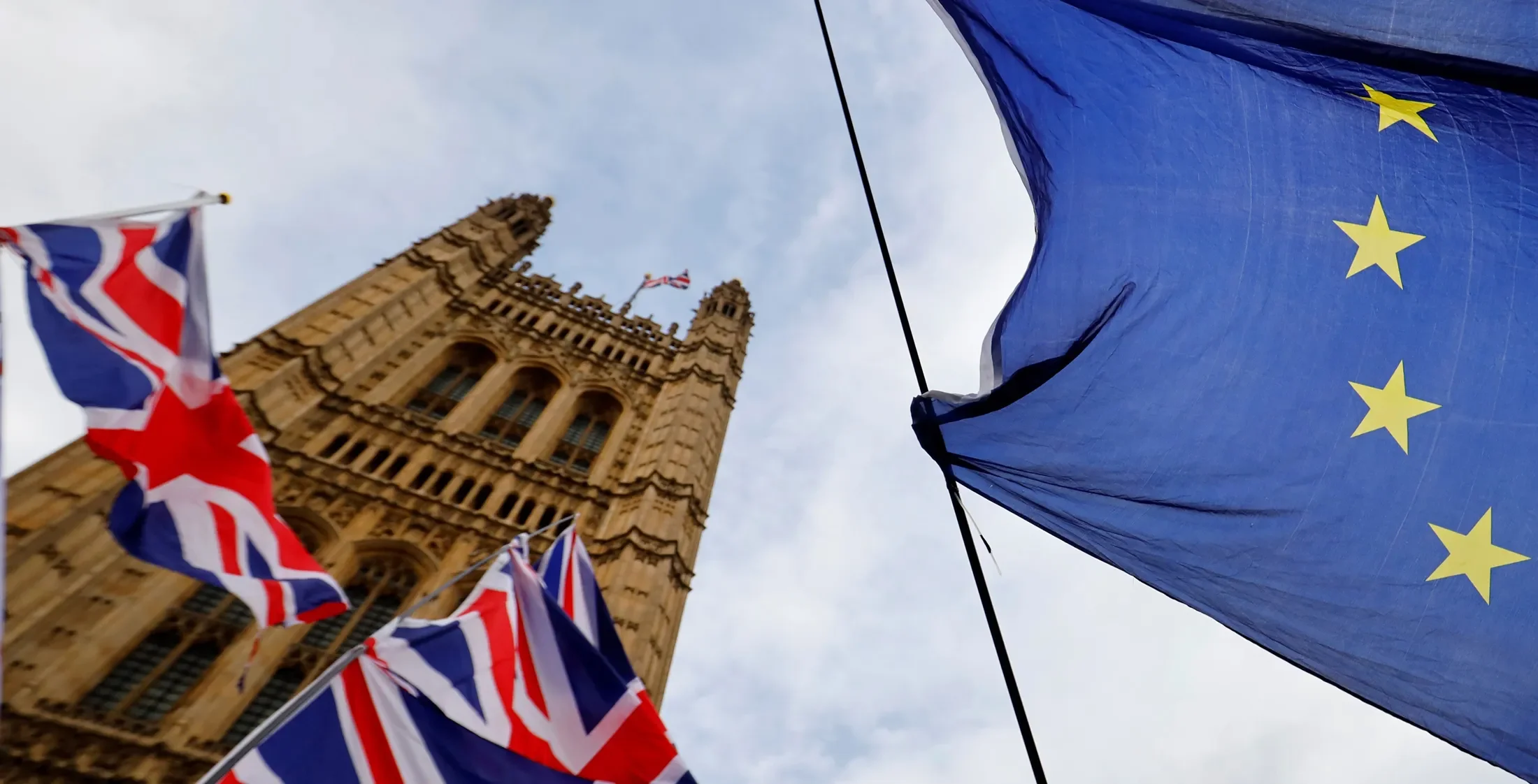
Evolving Unions: Brexit, Scotland, and the British Constitution
Guest Writer Heather Hardee navigates the nuances of Scotland’s relationship with Brexit.
The United Kingdom is having an identity crisis. A fast-approaching March 29 Brexit deadline has thrown Prime Minister Theresa May’s government and Parliament into a state of prolonged chaos as Members of Parliament (MPs) from across the ideological spectrum cannot agree on any single direction. On January 15, the House of Commons rejected May’s proposed deal by 230 votes, the largest margin for a government in history. Beneath the surface of procedural jargon and party politics, major existential questions about the future of the UK in Europe continue to cause gridlock and uncertainty. Leaders of the oppositional political parties, mainly the Scottish National Party (SNP) and Labour have suggested a second referendum to reverse course and remain in the EU, though Labour is also internally divided over Brexit. In the daily political circus, an often forgotten issue is the territorial nature of the modern British system beyond the center of power in London and the consequences that Brexit holds for internal divisions within the plurinational union. This article comprises discussion of political contexts in Scotland which contribute to an ongoing Brexit divide, a brief examination of SNP discourses, and a consideration of Brexit’s impact on the territorial British constitution.
Scotland’s independent religious and educational institutions, in addition to a general lack of confidence in Conservative leadership, have shaped a distinctly Scottish political culture and complicated union with the rest of the UK. Scottish institutional representation in British politics was an incremental process throughout the 19th and 20th centuries, with the creation of a largely symbolic Scottish Office in 1885 in response to criticisms that Scotland was neglected by Parliament and civil service. Administrative devolution left a legacy of limited Scottish political autonomy as well as a national identity shaped by such autonomy and nationalism. Politically, devolution of some legislative powers from Westminster arose out of discontent with conservative government policies during the Thatcher era, reaching a turning point in 1997 when Tony Blair’s government held a referendum on the formation of a Scottish Parliament with tax-varying powers. The Scottish Parliament’s purpose was described by McHarg and Mitchell as “a defensive institution, designed to protect Scotland from Westminster Governments that sought to pursue policies opposed by [the] majority opinion in Scotland.” The Brexit outcome and subsequent implementation tests the absolute limits of this balance between devolved Scottish government and Westminster, as the majority opinion in Scotland has been overruled by the rest of the UK in both a political and constitutional sense.
Contrary to the traditional understanding of the British state, the UK is not a unitary state but rather an asymmetrical union of four nations: England, Scotland, Wales, and Northern Ireland. These unions developed over centuries with the English and subsequently British state absorbing Scottish, Welsh, and Northern Irish cultural identities without wholly replacing them. In the 2016 referendum, only England and Wales voted in majorities to Leave the European Union. Leave defeated Remain by a slim 52-48 margin overall whereas 62% of Scottish voters cast their vote to Remain in the EU. Scotland and Northern Ireland both voted in majorities to remain in the EU but have also expressed a desire to remain in the UK; now they cannot have both. The institutional unions between Westminster, Scotland, and Northern Ireland developed differently and gradually due to complex histories, however British internal politics adapted to plurinational unions with relative stability. According to James Mitchell of the University of Edinburgh, the changing relationship between Westminster and the UK’s component nations characterizes the UK “as a state of evolving unions […] Institutions may frame politics but people make choices as to how the institutions operate.” At the heart of Brexit lies this conflict among institutions and identities, processes of union and separation, and, above all, the constitutional adaptability and volatility of the British state.
As a regionalist political party within the parliamentary system, the original purpose of the SNP was to rally political support for Scottish independence. Ultimately, a 2014 referendum settled Scotland’s status as an independent country, resulting in a 55% “No” vote. Since 2014, the SNP’s vision seeks to advance the cultural notion of Scotland as distinct from the London-centric political establishment. As a center-left party, the nationalism encompassed by SNP rhetoric aligns with the EU and opposes the conservative and insular vision of the UK’s role in the European system. In a study of public opinion from the 1979 and 1997 referendums, Seth Jolly found links between pro-EU sentiment across Scotland and greater public support of devolution and independence. European integration is, therefore, a strategic benefit for an independent Scotland’s viability, not only as an institutional arrangement for trade but as an idea, as the EU provides an alternative to Westminster rule and traditional notions of English hegemony. This strategic relationship between Scotland and the EU is still a focal point for the SNP in the current Brexit debate.
The most principal actor in the formation of Scottish political discourse is First Minister Nicola Sturgeon, Theresa May’s counterpart as the leader of the Scottish Parliament and figurehead of the SNP across Scotland. Sturgeon has recently utilized her public platform to make clear that Scottish interests are not taken seriously by other UK political parties, therefore a renewed consideration of Scottish independence (in addition to a second Brexit referendum) should stay on the table post-Brexit. In a foreign visit to the United States in February, Sturgeon gave a speech on Brexit at Georgetown University’s Institute for Women, Peace and Security:
Scotland has a very proud European tradition. We see ourselves as a European country and people in Scotland by and large, perhaps in contrast with people elsewhere in the UK, don’t really see membership of the European Union as a threat to our own national sovereignty. […] But, amid the confusion and uncertainty of Brexit, one thing I think is clearer than ever. Scotland’s national interests are not being served by a Westminster system which too often treats Scotland as an afterthought, or too often sees our interests as not being material. In my view, they can only properly be served by becoming an independent country. But an independent country that then seeks to play its part in an interconnected world.
Framing Scotland as pro-Europe, culturally distinct from the rest of the UK, and inadequately represented in Westminster is consistent with the scholarly notion of the UK’s asymmetric union as well as the SNP’s political strategy, while the combination of these forces logically leads Sturgeon to steer discourse towards the direction of independence.
Since 2016, Twitter has become an especially relevant medium for the creation and dissemination of political discourse relating to Brexit, whether in the form of official statements, news, commentary, or jokes. MPs often post clips from their speeches in Parliament on social media in order to amplify their message among local constituencies in the Scottish political realm; however, Twitter can also extend beyond Scotland’s borders to shape the national debate. Vocal dissent amongst elected SNP MPs has brought attention to Brexit’s constitutional implications and Scottish grievances over perceived disempowerment due to the proposed Brexit deal going against the democratic will of Scotland’s Remain majority. Joanna Cherry, SNP MP for Edinburgh South West, bluntly described the power dynamic between Theresa May’s government and Scotland in a post on December 10, “Brexit has shown how unequal the Union of the UK is. The PM and her government have no respect for Scotland. Her #Brexit deal has failed and her government is failing. She must put the deal to the people. #PeoplesVote.” On January 21, Ian Blackford, SNP MP for Ross, Skye and Lochaber posted a clip from the House of Commons debate in which he framed Brexit as a precarious and existential situation: “We will not be dragged out of Europe by a Tory Government we did not vote for. We might not be able to save the UK but we can save Scotland. We have an escape route from the chaos of Brexit – an Independent Scotland.” Beyond just political difference on Brexit, the emphasis on the UK government’s authority to override Scotland’s Remain vote exposes the inherent power imbalances in the British system.
The official SNP Twitter account used similar language in a post on January 27: “We don't accept Scotland being dragged out of the EU against its will by a reckless, incompetent Tory UK government. Once the Brexit fog clears, the people of Scotland should have the right to look at a brighter future with independence.” The reality of a second independence referendum is unlikely, especially due to public fatigue with political instability and a complicated process for Scotland to hypothetically re-enter the EU as an independent country. However, the revival of SNP rhetoric about independence signifies not only strong political discontent with Theresa May’s government but a deeper frustration with the asymmetrical territorial distribution of power in the British constitution.
The largely unwritten UK constitution allows a wide range of flexibility to redefine the political fabric of the state, as legislation and convention can be rewritten, repealed, and reconsidered over time based on the governing political party’s interests. Unlike the United States Constitution, there is no single document that defines a unifying constitutional vision or clearly outlines the relationship between the central government and component nations. In the case of Brexit, the lack of a legal roadmap means that the UK is a “real-time experiment” in constitutional change. Scholarly understandings of the British constitution have changed significantly over time, as Vernon Bogdanor asserted in 1979 that the UK was “profoundly unitary” due to the supremacy and sovereignty of Westminster, in following decades a new understanding has emerged framing the UK as no longer unitary but perhaps still organized around the supremacy of the UK Parliament. Since 1999, devolution has allowed greater ambiguity in the constitutional arrangement between the UK Parliament and devolved legislatures. However, Brexit puts into question the nature of the territorial British constitution with semi-devolved powers.
A case that recently came before the UK Supreme Court shows competing constitutional visions in action. In R (Miller) v Secretary of State for Exiting the European Union, or otherwise known as the Miller case, the High Court determined that the UK Government may not unilaterally trigger the Article 50 procedure to formally exit the EU without Parliament’s approval in the form of legislation. The UK Government appealed the case to the Supreme Court which allowed the Scottish government to also claim their approval was necessary to trigger Article 50, due to “a fundamental alteration of the UK’s, and particularly Scotland’s, constitutional arrangements.” The Scottish government’s legal argument hinged upon the Sewel Convention, a principle “that the UK Parliament will not normally legislate on devolved areas without the consent of the Scottish Parliament.” The Court deemed the Sewel Convention not legally enforceable as a norm rather than a law, thus the European Union (Notification of Withdrawal) Act passed through Parliament in March 2017 without the approval of devolved governments. McHarg and Mitchell concluded, “Brexit will affect devolved decision-making and questions of constitutional voice, in terms of how much influence they are able to exert over the form that Brexit takes, or indeed whether it happens at all.” In practice, Scotland’s constitutional influence on Brexit has been significantly limited by the UK Parliament, setting the stage for an even greater degree of SNP rhetoric about disaffection, independence, and self-determination.
It is impossible to know exactly how Brexit will affect UK politics in the long-term. The British constitution is dynamic and adaptable, though the EU referendum has exposed significant fault lines in the union between Westminster and Scotland. If the next generations of Scottish voters continue to feel perpetually unrepresented by British politics and expelled from the EU against their will as SNP rhetoric suggests, the current union arrangement may be unable to resist popular mistrust indefinitely. Similar forces of anti-establishment politics that made Leave appealing to the disaffected UK electorate in 2016 could eventually influence another referendum on a Scottish exit from the UK. Though Scottish independence seems politically improbable and absurd, the idea of Brexit itself also would have been unimaginable only a few years ago. Constant change in British politics is part of its institutional design, and as time runs out on the March 29 Brexit deadline, spectators of Parliament will find that absurd and unlikely things can happen quite often.
Rubles and Reindeer
Guest Writer Danny Anderson examines the struggles of the Siberian Khanty people to preserve their culture in the face of Russian oil companies’ aggressive expansion.
The opinions expressed herein are the writer’s and do not reflect those of their employer.
I. Introduction
Last year marked the 100th anniversary of the Russian Revolution, which makes it an appropriate moment to discuss the plight of one of Russia’s largest indigenous populations who were victims of a modernizing and oil hungry Soviet Russia: the Khanty. According to a profile by the Guild of Inter-Ethnic Journalists, the Khanty currently have a population consisting of about 30,000 people, most of whom live in the region named for them, the Khanty-Mansi Autonomous Okrug (KhMAO). The Khanty are traditional, nomadic, reindeer-herding peoples that have long lived in western Siberia. As stated in a Russian state news profile, from 1930-1940 the autonomous okrug (or region) was “legitimized” by the Russian government, which intended to bring the Khanty into an official and governed status within the Soviet Union.
Today, the Khanty are one of the few remaining indigenous groups with their own autonomous region. Unfortunately for the Khanty, their historic region and home for centuries just so happens to sit on top of one of Russia’s three largest oil basins. In fact, 75 percent of Russia’s oil production comes from the region and the Western Siberia Oil Basin that lies under the KhMAO accounts for 67 percent of Russia’s oil reserves according to the International Journal of Energy Economics and Policy. The location of this particular oil basin puts the reindeer-herding Khanty in a precarious position and they are losing the fight for their traditional rights. They will continue to lose these rights as they confront a much stronger Russian government and Russian oil industry and there is not sign to this slowing down. The resulting environmental degradation that occurs all the while is a source of argument as well with the abuse of land and resources that could set the stage for worsening conflict. A Russian government that would support the ecology of the Khanty lands, assist representation and/or protect the local language would be the solution to this grievance; will the government actually do it is the true question.
II. The natives, oil and environmental degradation
The Khanty historically lived largely untouched alongside the Russian Empire in a fur-trading region with timber to trade, according to the region’s official website. Once oil was discovered in the 1930s and aggressively tapped in the 1960s, the once undamaged, scenic landscape yielded 70 billion barrels of oil over the following 40 years, as Paul Starobin wrote in National Geographic magazine in 2008.
A March 2017 Guardian article on the Khanty by Alec Luhn documented a specific grievance in the Khanty community that encompasses many of the problems they face (such detailed cases do not usually exist). A sub-region of the KhMAO, known as Surgut, is home to the oil and gas giant Surgutneftegaz, which was created as a combination of a few different state oil companies from the Soviet era. While this massive oil company continually drills into the Siberian land, a Khanty population of 4,000 in Surgut continues to hunt, fish, and herd reindeer as they have for centuries. With Russia’s economy in a slump, drilling increased in an effort to energize the economy with oil exports. As a result, the Kremlin knocked down Surgut’s protected status in 2013.
To compensate the Khanty for their land, Surgutneftegaz planned to pay individuals approximately 170,000 rubles (~$2,500) for the rights to their land. However, the contract that the companies have the natives sign is in Russian – a language in which many Khanty are illiterate. Lukoil, one of the largest oil companies in the world, offered 5 million rubles (~$84,700) to one family for a large parcel of land in another part of the KhMAO as reported by Georgy Borodyansky’s Open Democracy article from 2014.
Some land is worth more than others, but the variation in payouts illustrates that these companies have the ability and the will to pay off the population at any amount. Neither sum of money is enough to sustain the large family units the Khanty live in, especially when in some cases the population in question does not live close to another village, so they are unable to easily access food supplies and other goods. In fact, as Andrew Wiget and Olga Balalaeva wrote for Cultural Survival, a group that is known for research into indigenous populations, the food that the Khanty can gather from their limited river and forest land, they are legally unable to sell due to Russian government restrictions. These paltry payouts will not support them, nor are they able to support themselves. Though to the Khanty, money is not their utmost concern – the interruption of a lifestyle that they have maintained for centuries is.
A key issue regarding this situation is the local’s lack of voice in their local government. Lukoil was formed from Soviet state-owned western Siberian oil companies and Sugutneftegaz is another former state-owned oil conglomerate, which provides them strong government ties and influence. With the many sanctions hitting the Russian oil and gas industry, limiting technology to Russian domestic technologies, an oil company succeeding helps the economy keeps the country afloat. The head of Surgutneftegaz, Vladimir Bogdanov, is one of Russia’s wealthiest men. He is a member of the Khanty-Mansi okrug local government, and uses only Russian technologies and contractors. In fact, he employs a third of the city of Surgut’s 300,000 citizens as documented by Voice of America’s Russian service.
The aforementioned rollbacks on environmental protections are a result of Bogdanov’s clout. His domestic enterprise actually benefits from foreign sanctions and also from the powerless ethnic minority that is unable to push back due to oil’s economic importance. In fact, it is not only Bogdanov that represents the interest of oil in the local KhMAO government. A publication from Cultural Survival, noted in 1996 that not a single Khanty member was in the local representative council. The article goes on to describe how those who move into the KhMAO do so looking for oil work without any attachment or care for the community as a whole or the environmental situation at hand. Without a local voice, the risk of the land slipping further into ruin is more likely.
The degradation of environmental resources and general disregard for the Khanty’s lifestyle is the largest source of grievance between the Khanty and their Russian counterparts. The KhMAO suffered a great amount of damage due to the high oil yield the land has experienced. The landscape in 90 percent of the oil-producing areas has been damaged or destroyed, according to a Georgy Borodyansky’s 2014 Open Democracy article. In addition, there are constant forest fires that threaten the locals’ way of life and the lives of the reindeer they rely upon. Oil drilling fires and overall degradation have led to around 54 million acres of reindeer pasture being decimated according to an Ed Ayres piece in the World Watch journal.
The continuing uncertainty in environmental conditions led some of the Khanty victims to speak at the United Nations Conference of the Parties to the UN Framework Convention on Climate Change (COP 21) summit in 2015 to air their grievances to a larger audience. The locals’ calls to the Russian government for an alleviation of drilling activities only results in the government willing to make monuments or national parks out of little corners of affected lands and, of course, allow the oil companies to pay off the locals. Unfortunately, as Wiget and Balalaeva’s article notes, this solution is hardly helpful because oil drilling already blocks access to traditional religious sites that may not have appeared on maps when drilling sites were set up. The oil companies and the indigenous population have no common interests and the former are absolutely powerless vs the latter who have local and national government’s ear.
III: Potential for violence and mitigating the conflict
The conflict’s potential for violence appears quite low. Research on this issue has only revealed a small number of violent incidents, including a 1930s revolution against collectivization and a story recounting a Khanty man shooting an oil company employee’s dog for biting his reindeer in Luhn’s Guardian article. Since, Khanty are a religious, hunting and gathering group that are in an extremely disadvantageous position against the Russian oil companies and they have no reason for violence. If they even consider fighting back or staging another rebellion, the Russian military, which has been known to use violence in suppressing violent conflict (i.e. the wars in Chechnya and Dagestan), would swiftly crush any opposition and likely elect another regional leader into power that would gracefully change laws and allow for more drilling. The more likely battle is a cultural one in which Khanty could lose their language and perhaps become extinct as an ethnic group.
The Khanty language is not widely spoken and Russia’s dependence and promotion of Russian, Khanty as well as other indigenous languages are in danger. Many Uralic languages have already gone extinct (including some Khanty dialects) and very few people today speak Khanty, according to an article on the website Languages in Danger. With fewer children speaking the language, its potential for survival is extremely low. With language, a key identifier of an ethnic group’s existence, its extinction would be a blow to the Khanty’s survival. The Russian government’s efforts to save the Khanty language are just as paltry as the oil companies’ payouts. The possibility of Khanty people eventually taking their payouts, giving up their land and moving to cities to start a new life or joining an oil company to stay close to home are the greatest threat to the culture’s survival. And this is the grimmest part of the conflict between the Khanty, the Russian state and the oil industry. The way to transform the conflict is a proactive resolution and assistance in preserving the Khanty culture, as well as to open up more opportunities for the Khanty population itself. Currently there is no violence in the region but that is simply a sign of Russian government intimidation.
Wiget and Balalaeva previously noted that not a single member of the Khanty community was on the local government in 1996. With statistics hard to come by, it is likely that this situation has not improved. For the conflict to mitigate, the Khanty will need to have more representation in their local government. The federally-appointed current governor of the KhMAO is a woman by the name of Natalia V. Komarova from Western Russia with a background in construction and economics. This illustrates how people not from the KhMAO region are deciding on what happens to it. Ms. Komarova made a statement through UNESCO’s Russia branch that focused on promoting sustainable development and water protections in the region, but made no mention of drilling or its ramifications. Russia’s UNESCO branch also hosted conferences with the local universities, which provides a good start to promoting sustainability, but did not produce results. Having Khanty members on local councils and in State Duma seats is important, as it would check Ms. Komarova’s power in regard to processes that endanger the local ecology. She has also served on the Duma’s committee on natural resources, which influences her decision making on what is best for the Russian economy; especially given her economic educational background. While the Russian government has allowed UNESCO to establish climate change groups at the local university, but Moscow is too top heavy for this to have any effect in the short term where short term change is necessary.
IV: Specific recommendations
The problem with offering recommendations for a solution between the Khanty and the Russian government-backed oil industry is that the damage is mostly done. The derricks have been raised, the land destroyed, water resources contaminated and reindeer population reduced. Furthermore, recommendations only offer an opportunity to control or mitigate the damage rather than solve the grievance. It is important to understand what will not work before designing recommendations that could help. When dealing with the Russian Federation, for instance, sweeping recommendations that limit or hurt the oil industry will likely receive swift vetoes, as the country depends upon the extraction of natural resources. Also, intergovernmental organization decrees (like the United Nations Human Rights Council) would be taken as an insult and/or violation by the Kremlin. Any effective response must come at the local and state level.
The responses and recommendations for resolving the Khanty’s grievance with the Russian state and the country’s oil industry in the country are as follows: 1) restore environmental protections on the land with local engagement; 2) mandate the Khanty have representation in the local government; 3) provide the Khanty language with protected status while creating more local schools that teach Russian as well.
1) Restoring environmental protections is the most crucial recommendation, as the land can become uninhabitable if drilling and oil exploration are to continue at the current pace. The Russian government should meet with the local population, understand their concerns and decide with them how to properly protect their land and reindeer. The reindeer are extremely important for the Khanty, but due to drilling, it is estimated the region’s reindeer population fell by 28 percent during the 1990s as John Ross noted in Smithsonian Magazine. Data on the current status of the reindeer population decline is not easy to find. However, if oil production has yielded 70 billion barrels in the past 40 years, it is unlikely the population decline has ceased. Allowing the land to sink further into an oil-soaked ruin, in which the rivers and forests routinely catch fire will cause problems for the native population and Kremlin alike. Adding more bureaucratic hoops to the government’s process for approving drilling operations will at least slow down the degradation and possibly lead to the reconsideration of some oil drilling operations entirely.
2) As noted above, another key issue is the Khanty’s lack of representation in local government. Mandating two Khanty representatives in the office of the governor and encouraging others to run for local council positions is crucial. The reason for having two is that there would be a better dynamic for discussion and more diversity from even within the Khanty community. A federally-appointed governor like Natalia Komarova needs to be balanced by local, indigenous representatives. The same is true for oligarch Vladimir Bogdanov and local government member Vladimir Bogdanov. This sort of influence without Khanty opinions present is dangerous. Having political checks on this influence can mitigate the disparity the Khanty population experiences as a result of its minority status in the Russian Federation.
3) The Russian government needs to work on protecting the language while bringing the Khanty population in from the fringes of Russian society. The population of Khanty in the KhMAO is only 19,068 people (1.3 percent of the population) according to the 2010 Russian census. Declaring the language endangered would attract some needed attention to this issue within the country. The language issue is lower priority compared to the other two recommendations, as it relates to the culture’s survival, and not specifically the people. It is part of a greater challenge as Khanty typically live in more remote sections of the KhMAO, and have less access to public schools. Improving educational opportunities is essential in not leaving a population in the fringes of society.
V: Final words
When studying any Russian indigenous group it is important to understand that many of them are endangered to a severe degree. The fact that the Khanty population still contributes to a percentage of the overall Russian population is a positive sign and should lead to the Kremlin’s further preservation of it. Unfortunately, as Cultural Survival discussed in 2014, within Russia, the native population councils/forums are either relatively powerless or nonexistent. This will need to change if any of the recommendations made above are going to take place. The Khanty should be able to choose whether to integrate fully into Russian society or not. Living on top of an oil gold mine should not be the reason for their demise, but in this case it is. Currently, there is no violence and there likely will never be. The population could die out quietly, before it ever fights back against the government or oil industry. If the culture dies off, the Russian government would be to blame for being complicit in the booming oil industry’s abuses, given the oil companies’ Soviet history and close ties to the Russian state. The fate of the Khanty lies in the hands of the Russian government.
Freedom vs Equality: Considering the Relationship Between Campaign Finance Reform and the First Amendment
Marketing Editor Annmarie Conboy-DePasquale explicates the jurisprudential history of campaign finance in the United States.
Campaign finance reform: a pillar of debate in United States politics for over a century. For just as long, voters intensely debated this controversial topic. Scholarly discussion on nearly every aspect of reform increased in the years following the Federal Election Campaign Act in 1971, and major amendments to it in 1974. Subsequent court cases altered or validated campaign finance laws to varying degrees. One of the most pressing questions arising from this legal ping pong is the ongoing debate over the constitutionality of limits on two pillars of campaign finance policy: contributions and expenditures. The First Amendment is a keystone of American democracy, and viewpoints from different sides of the debate elucidate the relationship between the constitution specifically, the First Amendment, and campaign finance reform, beginning with scholarly work focusing on the landmark case Buckley v. Valeo, then progress through opinions post Citizens United v. FEC.
The Federal Election Commission defines a contribution as “a gift, subscription, loan, advance or deposit of money or anything of value given to influence a federal election; or the payment by any person of compensation for the personal services of another person if those services are rendered without charge to a political committee for any purpose,” and an expenditure as “a purchase, payment, distribution, loan, advance, deposit or gift of money or anything of value made for the purpose of influencing a federal election. A written agreement to make an expenditure is also considered an expenditure.” In passing FECA in 1971 and it’s major amendments in 1974, Congress sought to limit the amount of money in politics – to level the playing field. They also attempted to halt ‘quid pro quo’ arrangements by limiting both contributions and expenditures. The 1974 FECA amendments came on the heels of Watergate, a time of heightened concern over the potentially corrupting nature of campaign contributions and fundraising.
In 1976, the Supreme Court heard Buckley v Valeo, which brought the First Amendment to the forefront of the campaign finance conversation. The case challenged the constitutionality of the contribution and expenditure limits set in FECA ’74. In their decision, the Court equated money with speech, which is protected under the First Amendment to the Constitution. It also made a distinction between different levels of corruption, which they said may result from different amounts of contributions or expenditures. When a contribution is made, an exchange of money takes place therefore a higher risk of corruption is present, where expenditures are made independent of a campaign - people spend in isolation. Directly addressing the constitutionality in their opinion, the Court wrote,
“The Act's contribution and expenditure limitations operate in an area of the most fundamental First Amendment activities. Discussion of public issues and debate on the qualifications of candidates are integral to the operation of the system of government established by our Constitution. The First Amendment affords the broadest protection to such political expression in order 'to assure (the) unfettered interchange of ideas for the bringing about of political and social changes desired by the people…The Act's contribution and expenditure limitations also impinge on protected associational freedoms.”
To conclude, the Court added, “although the Act's contribution and expenditure limitations both implicate fundamental First Amendment interests, its expenditure ceilings impose significantly more severe restrictions on protected freedoms of political expression and association than do its limitations on financial contributions.” In summary, it is acceptable to limit freedom of speech in giving money but not in how money is spent.
The Buckley decision remains a cornerstone in the debate over the constitutionality of contribution/expenditure limits on both sides of the issue. During the 1980s, in the wake of Buckley, J. Skelly Wright, former Chief Judge of United States Court of Appeals for the District of Columbia Circuit, calls the Buckley ruling a “serious obstacle in the path of our society's advancement toward political equality through law,” and a “vitally important and, in [his] judgment, tragically misguided First Amendment decision.” More specifically, Wright declares that in “equating spending with speech, the Court treated the First Amendment as a near-absolute in the sphere of political debate.” This is, of course, not an unchallenged opinion. Wright’s contemporary Martin Redish, a professor of law at Northwestern University, provides an opposing consideration of the Buckley case, concluding that the Court was right to strike down some of the limits set by FECA as “by limiting spending, such regulation decreases the flow of information which might produce better informed voters and thus undermines important First Amendment values.” Wright and Redish also disagree over what exactly the First Amendment protects.
A key part of the Buckley decision lies in the Court telling the government that it should not attempt to level the political playing field, which was one of the intentions of FECA. The Court famously states in their decision, “the concept that government may restrict the speech of some elements of our society in order to enhance the relative voice of others is wholly foreign to the First Amendment.” Opposing this, Wright believes “democracy is often shadowed by lopsided inequalities in campaign resources” and “the predominance of money comes at the expense of the ideals of liberty and equality that underlie our political system.” Redish is less certain on this point, providing a devil’s advocate stance on the matter, positing that “important values other than equality are at work in First Amendment analysis and that, on occasion, these values may even clash with the equality principle.” He expands on this, with the idea that limits on contributions and expenditures with the intention of normalizing those with significant financial resources are:
“not necessarily unconstitutional, for the benefits of ‘purifying’ political campaigns and equalizing candidate access to the public may outweigh the resulting harms to free speech interests. The outcome of the conflict is, for present purposes, irrelevant. Whatever the outcome, the equality principle and the values furthered by free expression directly conflict...”
Redish notes this important idea that because the Supreme Court’s decision in Buckley equated money with speech, an intersection formed between freedom of speech and the equality principle.
Scholars continued to address this tension in the 1990s, with Gary Stein proposing that “the theoretical conflicts [between First Amendment freedoms and reform efforts] are largely reconcilable…coexistence between the First Amendment and effective campaign-finance reform is constitutionally permissible.” Fred Wertheimer and Susan Weiss concur, citing that the Supreme Court “recognized this when it upheld the constitutionality of campaign finance contribution limits in Buckley.” Wertheimer and Weiss point to the Buckley opinion, which itself states it is “unnecessary to look beyond the Act’s primary purpose,” which is “to limit the actuality and appearance of corruption…in order to find a constitutionally sufficient justification for the $1,000 contribution limitation.” In this case, the authors draw a comparison between a lack of corruption in politics and political equality. The idea that while freedom is speech and speech is nearly unrestricted, preventing corruption will further political equality in the same way that restricting someone from yelling ‘fire!’ in a crowded theater promotes safety.
This argument for the constitutionality of contribution limits is partially echoed by David A. Strauss, who both reinforces and scrutinizes the validity of such limits based on their intended effects, saying that “in fact it is far from clear that campaign finance reform is about the elimination of corruption at all.” He further explains, “corruption-understood as the implicit or explicit exchange of campaign contributions for official action-is a derivative problem,” and therefore, “those who say they are concerned about corruption are actually concerned about two other things: inequality, and the nature of democratic politics.” In this analysis, the Court actually qualified government intervention to ‘level the playing field’ in the Buckley decision by limiting contributions on the basis of limiting corruption which Strauss views as an extension of inequality. On this thread, Strauss concludes that corruption “is not in itself an appropriate target of campaign finance reform,” because it is an outgrowth of inequality and interest group politics, and appropriate reform will seek to address these root issues.
An interesting counter to Strauss’ connection between corruption, equality and democratic politics is offered by lobbyist Scott Harhbarger, “the effort to end unlimited campaign contributions is a fundamental civil rights issue…we need to make it just as clear what we stand for: reclaiming our democracy.” In The Fallacy of Campaign Finance Reform, John Samples describes limits on contributions as a “reason for lamentation, not rejoicing.” He warns, “no one should exercise his or her First Amendment right to freedom of speech without advice from counsel, preferably one schooled in the intricacies of campaign finance regulation.” And leaves readers with his startling take on campaign finance laws, “In the United States, speech is no longer very free…” Samples delves deeply into the anti-limits ideal that money is speech, and speech must remain free:
“The First Amendment offers a classic statement of negative liberty: it enjoins the government from abridging individual freedom. It does not “empower” the individual to achieve some good. It does not give the individual the means to speak or to persuade others. It does not direct the government to use speech as a means to some social end.”
The recurring theme of the government overstepping to promote equality in the political arena is clearly present throughout Samples’ book.
Samples devotes a considerable portion of the book to discussing the divergent Madisonian and Progressive schools of thought on the relationship between the First Amendment and campaign finance reform. Those on the Madison side favor no limits at all, but with full and immediate disclosure requirements, while Progressives advocate public financing of all campaigns and no private money allowed. The narrative Samples lays out is not unlike the current debate over the 2nd amendment and gun control laws.
The views of authors discussed to this point were all penned prior to the landmark case Citizens United v. FEC, a ruling issued in 2010. As such, they focus heavily on the Buckley v. Valeo decision of 1976. The following selection of sources will also include analysis of the Buckley decision, but afford considerable allowance to the Citizens United case.
Citizens United v. FEC incurred serious implications for scholars from all sides of the campaign finance reform arena. In the decision, while the Court denied corporations and labor unions the right to make explicit contributions, it does permit them to use treasury funds to finance independent expenditures. The holding is essentially that political spending is protected under the First Amendment as political speech, and therefore the government cannot restrict corporations and unions from exerting their right to free speech through limits on corporate/union independent expenditures.
In the wake of Citizens United, Floyd Abrams penned a novel in defense of the First Amendment. Abrams spent years arguing against restrictions on the Amendment, delving deeply into issues of campaign finance when he represented Senator Mitch McConnell in an unsuccessful challenge (by a 5–4 vote) to key elements of the Bipartisan Campaign Reform Act which they believed violated the First Amendment. He and Susan Buckley also submitted, during the 2010 Citizens United case, an amicus curiae (friend of the Court) brief on behalf of Senator McConnell to argue orally on his behalf. Abrams favors a broad reading of the First Amendment, “sometimes nearly absolutely so.” He repeatedly describes limits on campaign related finance issues as Congress, “turning political speech into a crime.”
Expanding on this ear-catching slogan, Abrams says, “political speech…has long been considered worthy of the highest degree of First Amendment protection.” It is, in fact, meant to do just that. Justice Elena Kagan summarized the argument Abrams and his colleagues made before the Supreme Court in 2010 as saying, “political speech is the highest form of speech under the First Amendment entitled to the greatest protection and that the courts should be wary of Congress regulating in this area in such a way as to protect incumbents to help themselves.” In turn, Abrams cites Justice Anthony Kennedy’s decision in another case, United States v. Automobile Workers, in which Kennedy wrote, “first Amendment rights are part of the heritage of all persons and groups in this country. They are not to be dispensed or withheld merely because we or the Congress thinks the person or group is worthy or unworthy.” He continues this thread, “political speech must prevail against laws that would suppress it, whether by design or inadvertence… [the First Amendment] has its fullest and most urgent applications to speech uttered during a campaign for political office.” Following his broad analysis of the perils of campaign law infringing on First Amendment protections, Abrams moved on to specific areas of such laws which he believes pose the most concerning threats to freedom of speech.
Abram identifies limits on contributions by anyone, including corporations, and statutes restricting close-to-election speech as particularly worrisome. He calls for the public to carefully examine the cost of restrictions on political speech required for almost all proposed campaign finance reform, and the ‘inherent’ constitutional dangers they present. Abram expresses his bewilderment with public outcry following the Citizens United decision, “what I find inexplicable is the willingness of so many not even to acknowledge, let alone weigh, the powerful First Amendment interests at all.” He concludes his argument on the antagonistic relationship between the First Amendment and campaign finance reform by calling limits on political spending or speech as “an approach which views the First Amendment as an impediment as opposed to a protection, as a disagreeable, painful limitation to be overcome, evaded or eluded rather than as a shield against the government.” This impassioned expression of his views is paralleled in enthusiasm, if not in opinion by Robert Post.
Post, a constitutional law scholar and former dean of Yale Law school, offers his novel in the form of two lectures, followed by commentary from fellow scholars, and concluding with Post’s response. The arguments proposed by Post within this work are particularly interesting because he refutes both pro-regulation claims that the First Amendment supports equality and anti-regulation views that the First Amendment lends itself only to the freest forms of speech. He devotes Lecture I to a detailed – and argumentative – analysis of the history of attempts at campaign finance reform. Post begins with the Buckley v. Valeo decision, in which he says the Court tried to “...split the difference...” between the two issues at hand: freedom of speech and electoral integrity. They did this by creating an proposing an “...arbitrary distinction…” between campaign contributions and independent campaign expenditures. Limits on the former were intended to protect electoral integrity, while restrictions on the latter were prohibited to safeguard freedom of speech. He warns that this compromise is quickly disintegrating, because it “lacks theoretical structure…there is little to stop the slide into chaos.” Post argues that this chaos arises from the fundamental question raised by campaign finance discussions; how does the country reconcile “republican tradition with…our commitment to discursive democracy.”
Post explains that campaign finance Court cases where the juxtaposition of these two American ideals is painfully present, specifically Citizens United, the Court was “forced to choose whether the nation’s commitment to self-governance would be better realized through institutions of representation or through the discursive democracy established by First Amendment rights.” The Court chose the latter path, even though, according to Post, “we have been committed to structures of representation for far longer than we have aspired to democratic self-government.”
The Court’s decision to protect representation over discursive democracy is particularly thought provoking for Post. He observes that in Citizens United “the Court applied First Amendment doctrine as though it were a repository of abstract and categorical rules,” and that because the Court “never asked what these rules are designed to accomplish, it could not begin to explain how discursive democracy might be connected to the representative integrity that campaign finance reform seeks to sustain.” Post continues to address the ambiguity of the First Amendment and the possible relationship between political speech and electoral integrity in Lecture II.
Weaving an intricate web of analysis, Post lays out his argument for the proper role of the First Amendment in campaign regulation. He states:
“First Amendment rights do not ensure that each citizen can exercise equal influence on government action. The First Amendment does not protect direct democracy; within discursive democracy, public opinion should not be analogized to an initiative. The point of First Amendment rights is instead to guarantee that each person is equally entitled to the possibility of democratic legitimation. First Amendment rights institutionalize the hope that affording each person the opportunity to participate in public discourse can create the ‘communion of interests and sympathy of sentiments’ between persons and their government that is the foundation of self-government.”
Post’s presentation of the First Amendment centers on the idea that meaningful – not equal – participation is at the core of what the amendment means. This is in direct contradiction with the views of researcher David Strauss, who was discussed earlier in this paper. However, Post’s view clearly explains why he so vehemently opposes the Citizens United decision that gave free speech rights to corporations; he believes the corporations would use such rights to make a profit, as opposed to individual citizens who may use their political free speech to make an ideological or political position. Perhaps the only author discussed to do so, Post’s writings on the First Amendment offer a hopeful tone for the path forward – for a plausible balanced relationship between the true meaning of the First Amendment and representative integrity, via proper campaign finance reform.
While the arguments of authors presented thus far accept the Constitution as written, Senator Tom Udall of New Mexico penned a parallel plan. Udall describes the Buckley v. Valeo case as having “...laid the groundwork for a broken system...” of campaign finance. He also condemns the Citizens United decision for putting “...the First Amendment rights of corporations and other large organizations on par with those of individual citizens, opening the door to an unregulated influx of special interest campaign dollars.” Senator Udall advocates for an amendment to the Constitution, which he cautions should not be taken lightly. However, he claims that comprehensive and viable campaign finance reforms will only be passed “...if there is a constitutional amendment which provides Congress with the authority to regulate all aspects of the campaign finance system.” Udall’s proposed amendment would not lay out the type of regulations passed by Congress of individual states, leaving room for debate, interpretation and change. He also discusses a more narrowly written amendment introduced by his colleague Senator Max Baucus (D-MT), which would address the issue of corporations having the same political speech rights as an individual person. Senator Udall holds that barring a constitutional amendment or reversal of the damaging Supreme Court precedent unlimited special interest money will continue to flood election campaigns, and influencing the outcomes of elections.
Over the course of this examination, the viewpoints of multiple scholars on the issue of campaign finance reform and the First Amendment have been examined. For the pro-regulatory side, J. Skelly Wright, Gary Stein, Fred Wertheimer and Susan Weiss Mane and Robert Post argue for come form of regulations on campaign contributions and/or expenditures. Martin Redish, Scott Harshbarger, John Samples, Floyd Abrams argue degrees of the opposite: that such regulations are oppressive, illegal, and unconstitutional. Davis Strauss’ argument both viewpoints straddling a delicate and unique middle-ground, while Senator Tom Udall advocates a departure from the First Amendment the other authors all hold dear. All of these works exhibit the same obvious and deep respect for the First Amendment. Pro-regulation works tend to generally hold that the First Amendment supports equality in the political system, and that government intervention is necessary to preserve the integrity of America’s electoral process. Anti-regulation scholars broadly interpret money as speech, therefore validating the view that campaign contributions and expenditures are protected speech under the First Amendment.
Arguments continue in courts, classrooms and coffee-shops across the nation. Campaign finance is far from the only issue where clashing interpretations of the First Amendment lead to heightened tensions and legal uncertainty. Which side’s view will prevail? Currently, precedent backs the anti-regulation ideals money under the umbrella of protected political speech. However, it remains uncertain whether legislation or new court cases could pose a serious threat to this current interpretation.
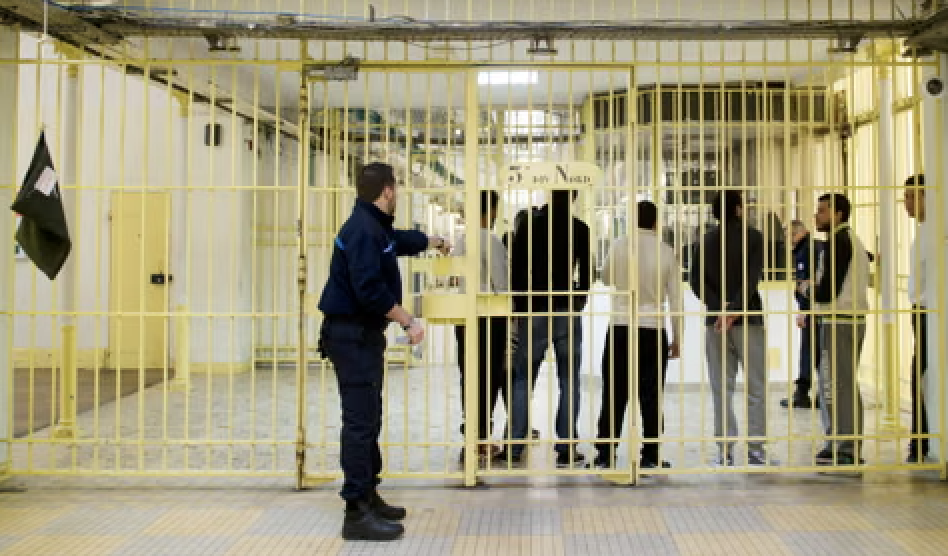
Shedding Light on the “Prison-to-Jihad” Pipeline: Islam, Radicalization, and Terrorism in French Prisons
Outreach Editor Gabe Delsol illustrates the successes and failures of prison policies intending to prevent the radicalization of inmates.
Since the Islamic State’s creation in June 2014, France has witnessed the most terrorist related violence across all of Europe and the United States. Brookings’ scholars McCants and Meserole recently published a landmark study identifying Francophone status as the biggest determinant for whether European countries experience Sunni radicalization and violence. These two data points highlight the continued risks posed by violent extremist organizations (VEOs) to the government of France and its citizens. Terrorism in France is too often wrapped up in conflicting narratives of nationalism, Islam, and immigration. Far-right candidate Marine Le Pen frequently used the trope of Middle Eastern refugees seeking to unleash violence against France in the name of Islam, a narrative that secured her one-third of the national vote in the 2017 presidential elections. Yet the overwhelming majority of recent terrorist attacks haven’t been carried out by refugees, but by French citizens socialized in the country’s secular schools. Moreover, a wide variety of groups have engaged in terrorism across France since the 1800s, including Basque, Breton and Corsican separatists, pro- and anti-Algerian independence movements, the far-left Action Directe, the far-right Organisation Armée Secrète, neo-Nazis, and more recently, Islamic extremists. Islamic extremists, as defined by the University of Maryland’s National Consortium for the Study of Terrorism and Responses to Terrorism (START), engage in the violence in the name of a faith-based ideology in order to impose strict regulations on social life, though they often lack even rudimentary religious education. In the case of Islamic extremism in France, this violence is particularly anti-state, as the French government’s strict interpretation of secularism, or laicite, results in heavy restrictions on Islam in public spaces. Yet the roots of radicalization lie in specific social processes which take place at the individual rather than community level. While Muslims in France, and overlapping African and Maghrebi immigrant populations, face state violence and widespread economic discrimination, the overwhelming majority continue to reject violence and extremist ideologies. Prisons offer a clearer view of this complex relationship between government policies, Islam, radicalization, and terrorism. If authorities are to effectively dismantle radicalization networks in prisons, they must create targeted rehabilitation programs, end isolation of suspected radicals, empower Imams as independent authorities, and avoid securitizing entire populations who face continued discrimination.
Race and identity in the French criminal justice system
French pundits consistently highlight prisons as “incubators” for radicalization. The government estimates that 1,400 radicalized inmates currently reside in prison, 300 of whom are serving sentences for terrorism charges. A major blind spot for security services comes not from convicted terrorists, but from petty criminals who are radicalized while serving their sentences and who carry out attacks upon leaving. Notable former inmates charged with crimes like petty theft, drug possession, and larceny include Mohammed Merah, perpetrator of the 2012 Toulouse attacks, Mehdi Nemmouche of the 2014 Brussels Jewish Museum attack, and the assailants from the January 2015 Paris attacks, Amedy Coulibaly and Cherif Kouachi. Countering violent extremism (CVE) policies must, therefore, highlight both convicted terrorists and inmates more broadly susceptible to radicalization, despite clear indicators.
Hardline ideologies in French prisons exist alongside more broadly followed religious practices, namely Islam, which plays a major role in inmates’ social networks. Islam spread rapidly across the prison population in the 1970s with the spread of Tablighi, a movement within Sunni Islam which emphasizes piety. At first, prison authorities welcomed this trend and its stabilizing effect on prisoners, as it weakened the influence of organized criminal groups. It was only in the 1990s, during the Algerian Civil War and the growth of Groupe Islamique Armé (GIA) cells across France, that prison officials began securitizing Islam, resulting in greater surveillance and the use of isolation on Muslim inmates. Currently, more than 60 percent of inmates identify as Muslim (almost 40,000 inmates total), despite making up only 12% of the general population. One reason for this overrepresentation stems from the failure of integration on the part of the government, as explained by sociologist Moussa Khedimellah. Many Muslim inmates come from banlieues, segregated neighborhoods predominantly populated by immigrant communities, with few opportunities for higher education or employment. Arrest rates in these neighborhoods far surpass the national average. While the government is prohibited from collecting statistics on race or religion, French Muslims, mostly from Arab or African descent, are estimated to comprise the majority of those arrested on drug charges, especially for marijuana. Another potential reason for the skew is widespread institutional violence directed towards France’s Arab and African population. The state of emergency passed in the aftermath of the November 2015 Paris attacks saw wide-scale police repression targeting French Muslims, with tens of thousands targeted with random searches and online surveillance, and thousands more subjected to house raids. Economic and political discrimination create additional issues. French Muslims are reportedly 400% less likely to receive a job offer than their Catholic counterparts, even when controlling for education and skill level. Second and third generation citizens with Arab and African surnames are told to change their names when submitting job applications. As a result of this widespread discrimination, charismatic “influencers” in prisons have little difficulty persuading inmates about the perceived irreconcilability of French identity and Islam when they can easily draw on lived experiences of institutional Islamophobia and the openly racist and violent discourse of political groups like the French National Front.
While the linkages between impoverished banlieue and radicalization are appealing, a closer look at recent attacks shows a more nuanced picture. In fact, while some attackers like the Kouachi brothers fit an expected pattern of fragmented social networks, poverty, barriers to employment, and repeat criminality, other attackers emerged from middle-class, secular families with access to education, like Coulibaly. Moreover, the average French citizen traveling to Iraq or Syria to fight for the Islamic State is increasingly white, middle-class, and occasionally female. France must address the rampant economic and social exclusion facing Arab and African populations in banlieu neighborhoods but should do so without the pretense of addressing the root causes of radicalization, which are far more nuanced. While difficult conditions certainly shaped the path to radicalization for some notorious individuals, the fact remains that the overwhelming majority of ‘banlieusards’ are not taking up arms against the French state. Therefore, while environmental factors can serve as stressors to sensitize an individual to radicalization, the unique social process that place in prisons requires a closer look.
The “Prison to Jihad Pipeline”
Most literature supports the idea that prisons, under certain conditions, can serve as potent incubators for radicalization. Across the Middle East, prisons hosted numerous jihadist figures, including Al Qaeda notables Ayman al-Zawahiri and Abu Musab al-Zarqawi and ISIS founder Abu Bakr al-Baghdadi. Spanish, British, Belgian, and French prisons have all produced terrorists socialized during their detention who went on to carry out major acts of terrorism. Given the varying quality of life and style of detention across these different countries, radicalization is likely an individual process of socialization exacerbated by broader environmental stressors. Prisons offer unique opportunities for ideological indoctrination. The combination of emotional shock, isolation, and the need for social belonging push many prisoners to turn to moral frameworks or spirituality during their incarceration. Sociologist Farhad Khosrokhavar explains prison radicalization as a multi-stage process. Often, vulnerable inmates enter prison on minor charges and have little to no religious education. Once in prison, highly charismatic individuals will approach them and offer them a sense of belonging, beginning a gradual socialization process. The ideology used is designed to push individuals out of existing social isolation by giving them a worldview that is both empowering and highly intolerant, one that is especially attractive to those who already hold anti-state views. Once the relationship is established, the influencer uses a combination of violence and social norms to create a social network. These groups can outlast prison sentences, and connect former inmates to other extremists across Europe, and even with VEOs around the world. This radicalization process is seen clearly in the cases of Merah and Coulibaly. Both grew up in mostly non-religious households, and as a result of repeated experiences with criminal networks and the French justice system, came into contact with charismatic convicts who socialized them to violent, anti-state ideologies. This process of socialization continues to produce terrorists within the criminal justice system, and requires a strong policy response.
The general French state’s response to terrorism, informed by waves of domestic terrorism in the late 20th century, established a system that easily arrests and convicts suspects by casting a broad net over any individuals remotely linked to terrorist networks. While this allows a whole-of-network approach and can theoretically preempt terrorist attacks, it also solidifies otherwise weak links between terrorist networks and larger illicit economies present in banlieues. For example, the trabendo criminal networks present among first and second generation Maghrebi communities are mostly unconnected to terrorism, yet are frequent targets during mass arrests targeting potential terrorists, creating new linkages. Salah Abdeslam, the only surviving perpetrator of the November 2015 Paris attacks, managed to evade capture for over 150 days using social and family networks tied to the drug trade in the suburbs of Brussels. The very same ISIS cell involved in the attacks previously worked with petty criminals and drug dealers to recruit fighters for ISIS. While terrorism ought to be treated as a law enforcement issue, the government’s current approach is to broad and risks strengthening ties between otherwise unaffiliated criminals and terrorist cells. Moving beyond this approach would require greater intelligence gathering to target individual suspects, as well as broader policy shifts in urban development and limited drug legalization to weaken existing illicit economies.
Beyond arrests, the French approach towards deradicalization within prison focuses on more on sentencing than rehabilitation, an approach which undermines the potential for effective deradicalization programs. Over the last decade, in light of high profile attacks committed by former inmates, the government adopted several new approaches. First, prison officials gained an increasing power to overrule prisoner rights, notably the right to privacy, in the name of security. With the creation of a new Bureau of Prison Intelligence, prison officials can now wiretap phones, place hidden cameras, and examine electronic communications, using tools previously only available to intelligence services. Second, the government launched a new program designed to separately target “influencers” and inmates in the process of being radicalized. The program involves a higher ratio of wardens to prisoners, with staff trained in psychology, sociology, Islam, and history. Inmates are offered theatre workshops, debate seminars, and courses covering subjects ranging from legal studies to Japanese literature. These programs are intended to last six months, after which the inmate is released into the general population under close supervision by prison staff. Beyond prisons, the government has attempted to passed new laws to counter radicalization within schools, by better communicating the reasons for laicites to faith communities, teaching more colonial history in classrooms, and encouraging Arabic language courses within public spaces, although these have proven politically unattractive with conservative voters. This combination of policies seeks to deradicalize individuals through a variety of tools, which combat root factors in marginalized populations, engage with individuals along the path of radicalization, and isolate individuals deemed “too far gone.”
Results so far have been mixed. While the combination of isolation targeting influencers and robust CVE engagement with those at risk of radicalization has reduced the number of reported incidents of radicalization in prisons, analysts warn against premature declarations of success. In fact, many argue that influencers are now more hidden than they were in the past, as the policies have not stopped radicalization but rather pushed it further underground. This mirrors the government’s crackdown on hardline Imams in the early 2000s. One unintended consequence of this policy was that radicalization moved underground into social spaces where it couldn't be monitored or challenged by the government or community members. Another policy, the construction of dedicated isolation facilities for radicalized inmates, poses numerous problems. First, radicalization is difficult to measure and this sort of segregation results in pious inmates being lumped in with hardened extremists. Second, isolating radical prisoners from the general population risks pushing them furthers their radicalization, as they lose exposure to information beyond their personal beliefs and that of prison officials. Finally, this move risks empowering more radical cells amongst convicted terrorists. When the UK established such a special segregated unit in 2005, it put members of Al Qaeda, the Egyptian Islamic Jihad, and smaller Algerian outfits in the same unit. The result was a book, Limatha Intasarna (Why We Were Victorious), written by one of the inmates, collecting lessons from different inmates on military and organizational tactics, which was then smuggled out of prison for distribution to VEOs worldwide. Isolating radicals in special units may give the appearance of greater security, but simply enforces existing hardline ideologies and reduces the chance for radicalization to be challenged through a marketplace of ideas with other prisoners. However, the higher staff-to-inmate ratios and opportunities for education are promising, and show strong results in other countries where they are already deployed.
Beyond the potential backlash produced by isolating high-level influencers and radicalized inmates from the general population, these programs fail to fully interact with the environmental stressors that make inmates vulnerable to radicalization. One major issue in French prisons is the lack of faith services available to Muslim inmates. Research points to the crucial role that Imams can play in counter-radicalization efforts, as they can use theological arguments to dispel extremist ideologies. Yet as of 2008, only 100 Imams serviced France’s 200 prisons, compared with 480 Catholic, 250 Protestant, and 50 Jewish chaplains. More broadly, general debates about religion are heavily stifled by France’s strict interpretation of secularism, or laicite. In stark contrast to the United States, which bans government interference in religion, French laicite places strict restrictions on religious displays in public, notably in schools. Yet the country’s strong Catholic roots ensure that, to some degree, these restrictions target French Muslims to a greater degree than any other group. What debates do occur within prisons, are often undertaken by underpaid Imams and Islamic scholars who are vetted by authorities. The strict regulations placed on their sermons by officials limit their ability to engage with radicalized inmates and result in their image as a tool of the state. As a result, radicalized inmates avoid contact with them, out of suspicion or fears of being punished for interacting with them. The government ought to empower Imams with more resources and independence, in order to create strong voices in prisons which can mediate between prisoners and officials, and counteract the power of influencers.
In addition to empowering religious figures, French prisons must better support the freedom of Muslim inmates to express their faith while serving their sentences, as current restrictions on gives additional ammunition to influencers. While Muslim prisoners can forego pork products, true halal meals are not an option in most prisons. Christian inmates receive special gifts from family members for Christmas, but Muslim inmates don’t receive the same on Ramadan. French authorities can significantly weaken “influencers” by enforcing religious requirements in line with standards established by the European Court of Justice and the United Nations. These include, among other things; defined halal menu options, alarm clocks to indicate prayer times, access to Korans, flexible dinner schedules to accommodate for fasting during Ramadan, the provision of soap and water at prayer spaces, and the right to meet with spouses in a private room. Religious accommodations in line with international standards can only serve to weaken influencers, and is crucial to promoting human rights in prisons.
If France seeks to break the prison to jihad pipeline, it ought to move beyond discourses which securitize broad segments of the population and empower moderate voices in prison indirectly, by giving Imams more support and autonomy, while ensuring that prisoners can freely practice their faith. While targeted support for prisoners at risk of radicalization can provide positive outcomes, it should be done in a manner that doesn’t fully isolate them, at risk of cementing hardline views. Finally, the prison debate should force a broader discussion in French society about the treatment of Muslims in general, with an emphasis on economic inclusion and genuine police reform.
Searching For a Hero Like Trump The Parallels of Right-Wing Politics in Brazil and the United States
Staff Writer Samantha Diaz explains the political atmosphere that enabled Brazilian President-elect Bolsonaro’s election and the parallels between his and Trump’s proposed policies.
The arrest of Brazil’s former president, Luis Inácio Lula da Silva. As a result of his twelve-year sentence for taking part in one of the biggest corruption scandals in Brazil’s history, Lula’s arrest opened the window for the opposing political party to rise to the occasion. The Social Liberal Party’s (PSL) candidate Jair Bolsonaro has done just that: garnering support for his far-right policies and winning the presidential election with a huge margin of victory. His election is the first election of a candidate with far-right views since the end of Brazil’s military dictatorship in 1985. Bolsonaro’s rise parallels that of U.S. President Donald Trump. Both candidates campaigned on fixing a broken political system and gained support around general dissatisfaction with the political status quo. In fact, pundits often refer to Bolsonaro as the “Trump of the Tropics”. With Trump in the White House and Bolsonaro at the helm in Brasilia, there exists the possibility of even stronger relations between the United States and Brazil on many fronts. However, with a right-wing president in charge of the world’s 8th largest economy, it should be questioned how the international community should respond to his ideas and the policies he wishes to advance. The international community should also be aware of how these election results will affect other nations whose elections are fast approaching especially in Latin America.
Despite Bolsonaro’s clear win over his competitor Fernando Haddad, his support base was not always so widespread. The left-wing Workers Party (PT) - of which Lula and his successor, the impeached President Dilma Rousseff were members - was highly supported amongst Brazilians until the revelation of rampant government corruption under the so-called Operation Car Wash: a string of scandals involving the state-owned oil company Petrobras accepting bribes from contracting firms in exchanged for inflated prices as well as the left-wing Workers Party using funds in order to pay for the votes of politicians in order to strengthen their political campaign. Despite the numerous arrests, Lula’s charismatic personality, charm, and past political accomplishments and promises placed the corruption accusations on the back burner. When Lula entered office in 2002, it marked a turning point for a country where the political elite was controlled by upper-class white people despite more than half of the population being comprised of minorities and people below the poverty line. As a self-proclaimed “leader for the people,” he proclaimed “hope has finally defeated fear and the people have decided it [was] time to pave new roads,” in his inaugural speech. Similarly, Barack Obama’s election in the United States marked a turning point in a country that had only seen white presidents. He proclaimed that “we must pick ourselves up, dust ourselves off, and begin again the work of remaking America.” Both leaders marked the possibility of change for marginalized communities.
The Workers’ Party, both during Lula’s and his successor’s, made accomplishments that cannot go unnoticed. According to the left-leaning magazine The New Republic, some of the Worker’s Party greatest accomplishments include the establishment of different programs such as affirmative action policies which increased the attendance and retention rate of students at national universities, as well as the largest cash transfer program which gives families living under the poverty line a stable income as long as parents invest in their children’s education and health by ensuring attendance at school and regular visit respectively. Programs such as these elevated about forty million Brazilians above the poverty line. Brazil’s selection as the host of the 2014 FIFA World Cup and Rio de Janeiro’s selection as the host city for the 2016 Summer Olympics, a first for South America, signaled a dramatic improvement in the economic and political stature of the county. However, this boom was constructed on the shaky ground. Many large-scale development projects suffered significant pitfalls from pollution, crumbling infrastructure, and protests against government spending. These problems began to shed light on the poor practices and corruption within the Worker’s Party and its leaders.
Until recently, Jair Bolsonaro remained on the sidelines, waiting for the right opportunity to appear. As a Congressman for the State of Rio De Janeiro, Bolsonaro made his political opinions clear in different interviews across Brazilian media. He once told a fellow female politician “I would not rape you because you are not worthy of it;” another controversial comment he made is “the lightest Afro-descendent there weighed seven ‘arrobas’. They don’t do anything. They are not even good for procreation.” Despite these, his most controversial opinions lie on how he believes Brazil should be run. In a 1999 TV interview when asked about what changes he make if he was elected president, he responded with ideas such as “closing Congress” and bringing about change through a “civil war.” His consistent voice in politics allowed him to create a ground of support before announcing his candidacy.
Bolsonaro’s current policies are parallel to Trump’s policies in the United States. Bolsonaro’s most important policy (and most unique compared to other candidates) is ‘law and order.’ Being an ex-army captain, he believes in order to combat the rising violence is to decrease restrictions on gun laws and give police officers bonuses for the more criminals they kill. This policy platform has been the driving force behind Brazilian’s support for Bolsonaro.
Another policy reform he wishes to implement are environmental policies specifically within the Amazon. Bolsonaro has the desire to build a highway through the Amazon rainforest, which is vital for the filtration of carbon dioxide for the earth’s atmosphere. With the intention as well to pull out of the Paris Climate agreement, this leads to the second parallel made between US and Brazil politics. Both candidates take on a moral position in the political reformation and use hot topics such as environmental regulations and law order as the basis for their campaigns. In times where many people craved change, Bolsonaro and Trump rose to the political sphere by being outspoken candidates making promises and statements the electorate wanted to hear from their political leaders who felt out by recent liberal administrations. Many Brazilians, especially the elite, have greatly supported this change of political figure in Brazil.
Bolsonaro represents hope for a Brazil that has been suffering numerous problems. At a rally for Bolsonaro supporters, individuals such as mother Cibley Lopes believe Bolsonaro is “the future of this country...He represents hope.” Brazil has undergone so much turmoil that some individuals are willing to support any candidate that is not of the Workers Party. Many individuals like Lopes are among the group of white elite who are rallying behind Bolsonaro for a new Brazil; these individuals are also of the belief that Bolsonaro is a leader for all people, marginalized or not. In some ways similar to Bolsonaro, the supporters of Trump are primarily either one of two groups of people: educated or uneducated white individuals. Both groups of citizens are unhappy with the political status quo and wish for a hero to emerge from the ashes of despair and turmoil. Since Bolsonaro has such similar policies with President Trump in the United States, the established relationship between Brazil and the United States will most likely only strengthen. While it may seem beneficial for both of these countries to engage in even more bilateral deals, it is important to recognize and address the response from the international community.
Before Bolsonaro was elected and The Working Party was primarily in office beforehand and the United States and Brazil already had a strong and stable relationship. According to the United States’ State Department, Brazil is US’s second largest trading partner. Besides economic trade benefits such as these, the United States has invested in Brazil through educational, technological, and their space program which had yielded positive results. All of the investments the United States has made in Brazil simply proves that Brazil needs the United States more than the United States needs Brazil.
Bolsonaro’s election is yet another wake-up call for the international community with regards to the rise of right-wing politics. The parallels between Brazil and the United States shows the rising right-wing politics specifically in Latin America. If more countries such as Peru, Argentina, and Bolivia follow the path of Brazil it would not only affect the relationships of developed countries but will change the identity of Latin America politics.
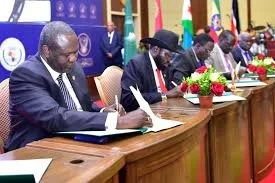
We have seen this Movie Before! Perspectives on the South Sudanese Peace Process
Guest Writer Dau Doldol discusses the importance of expanding opportunities for the women and youth populations for any peace agreement to last.
South Sudan’s painful history tells us that this summer’s installment is a movie that we have seen before and one that ends badly. The June peace agreement between President Salva Kiir and his rival and former vice president, Riek Machar, is not sufficiently different from the previous one to have an alternate ending. That these two villains of the story failed to even shake hands at the signing ceremony is an ominous preview.
War is the history of South Sudan. War is what led to independence in 2011 after more than six decades of conflict with the government of what is now South Sudan’s northern neighbor, Sudan. The current conflict started just two years after the independence of South Sudan, while the population was only beginning to build the new nation after so many years of violence and deprivation. The new fighting displaced more than 2 million people beyond South Sudan’s borders and about half of the remaining population has needed food aid just to survive. Horrific abuses and violence against ordinary civilians is what most characterized this conflict which has pitted communities against one another along ethnic lines, thereby only deepening the wounds and grievances which now threaten to destroy the social fabric of the world’s youngest country.
The recent agreement has silenced the guns for now, but few differences exist between the most recent peace agreement and past agreements that quickly failed. It is described as a power-sharing accord but looks more like a distribution of spoils. President Kiir will remain in power and his supporters will obtain 20 of 35 ministerial posts, and 338 of the 550 seats in an enlarged parliament. Meanwhile Dr. Machar will again become the first Vice-President of the five Vice-Presidents, and his supporters will have nine ministerial posts, and 128 of the remaining parliamentary seats. The remaining posts and seats will be distributed to smaller groups that have also become embroiled in the conflict. The peace deal even fails to specify how collective decision-making is supposed to work.
This type of transitional government is too large (and costly) and does not address the critical structural issues such as the distribution of resources from the central government to the local governments, to meet the needs of people where they live. South Sudan has yet to determine the number of administrative units (states) that will constitute the country, or even what system of governance will work best.
The agreement, moreover, does not address the crimes against humanity and war crimes that were committed during the last five years by the government and the opposition fighters. The impunity that this peace agreement actually bestows on the warring parties is mind-boggling.
South Sudan as a Nation faces complete collapse if the warring parties don’t put their nation first before any political interest. The competing political interests of the groups who control South Sudan’s future unfortunately impedes South Sudan from realizing its full potential. South Sudan as nation has an amazing potential for success, with over 73 percent of its population under 25 years old. This constitutes one of the youngest population in the world, and this population is empowered with South Sudan’s enormous natural resources from oil, diamond, gold, and Zinc etc. The unique characteristics of South Sudan itself are also imperiled by the inability of political leaders to reach a lasting agreement. The nation has the White Nile cutting the country into East and West and the biggest swamp the Sudd in Africa and an amazing animal resources with one of the biggest wildlife migration in the world. It has one of the most fertile land states in the world for agriculture and food production, yet unfortunately 50 percent of the population is in need of food aid.
The reality on the ground is that South Sudanese politics is run by old men and military generals who operate exclusively by the power of the guns. Women and young people are not allowed the space to contribute in a society where they make up the overwhelming majority of the population. South Sudan needs an inclusive environment for all its people, it is a diverse country with over 65 ethnicities and over 200 language dialects. That is an environment where everyone should and needs to have the space to voice their options and their ideas because of its diversity. The oppression and the suppression of ideological diversity leads to the quagmire we are in now as a nation.
An environment that is not only open but also empowering to its women and youth could enable South Sudan to finally reach its full potential. An environment that is peaceful means the reconstruction of schools, hospitals, and the development of institutional infrastructure of the country can occur. Such institutional infrastructure could support a functioning government with with checks and balance in place on the National Legislature, Supreme Court and executive branch so they do not have a blank check to destroys the lives of ordinary South Sudanese without consequences.
The Civil War in South Sudan caused the death of 400,000 people in a expand of a five-year period, it has a higher death rate per a year than Syria which is also in term oil, that tells all you everything you need to know about the brutality of the war in South Sudan. It has completely destroy the social fabric, political atmosphere, and the lives of countless millions of innocent South Sudanese which we can never put a prices on, it is something that is truly gone. This why this peace agreement must succeed not just because of the dead but because of the misery millions are suffering under the current status quo in the country. This must change and it need to change to save the country from totally collapse, you have an economy that is nonexistent and a population that sadly does not see a future in their own country.
While the fighting has stopped, South Sudanese politicians must try to build a better deal. A new peace deal should create a Special Court to bring to justice those who have committed crimes against civilians and, simultaneously, a truth and reconciliation commission to begin the hard work of publicly addressing this recent horribly violent history in a manner that permits South Sudanese to live in peace together. This is critical because of the strong revenge culture that has evolved in South Sudan due to the absence of justice. Truth, forgiveness, and reconciliation is the only way to reverse the negative cultural attitudes that exist.
The youth and women of South Sudan are the most marginalized populations in the country, yet they are not included in the peace process even though they are the most affected by the war. Their lives torn apart, and they often have no sense of hope because opportunities are hard to find. This is because competition among the political elites neither allows for space for the youth and women to have a say in their own affairs nor does it allow for investment in the development of opportunities for youth and women.
In order for this for this peace process to succeed this time around, women and youth must be included so that it reflects the demographics of the population of the country. It's in the best interest of the political leaders to invest in women and youth so that this peace process is not seen as the divide up of the riches between the political elites but instead a process that will transforms the country from war into a peaceful society where ordinary citizens can go about their daily lives without disruptive violence. The future of the country hang in balance unless true changes are made in regard to the inclusion of youth and women in the political process. Women and youth can make or break this peace agreement if they do not see a way forward for their lives for the better.
The South Sudan conflict must be addressed at more than the surface level and this requires new mediators to work with South Sudanese on the systemic issues at the heart of the conflict in South Sudan – representation and the distribution of national resources. The IGAD (The Intergovernmental Authority on Development) is a regional organization of east African countries. IGAD member countries have immediate, deep and often conflicting interests in South Sudan including unrealistic expectations regarding economic gains. A better mediator would be the African Union with the support of the international community, especially those countries – like the United States – who helped South Sudan gain its independence in the first place.
The African Union should be able to see the longer-term imperative of a lasting peace in the broader interest of not only South Sudan and it’s east African neighbors but of the continent as a whole whose urgent agenda of economic development absolutely requires an end to all regional conflicts. Through the assistance of neighbors and the adequate inclusion of women and youth populations in a new political space established by a revised South Sudanese peace agreement, the nation could realize its immense potential for success in the future.
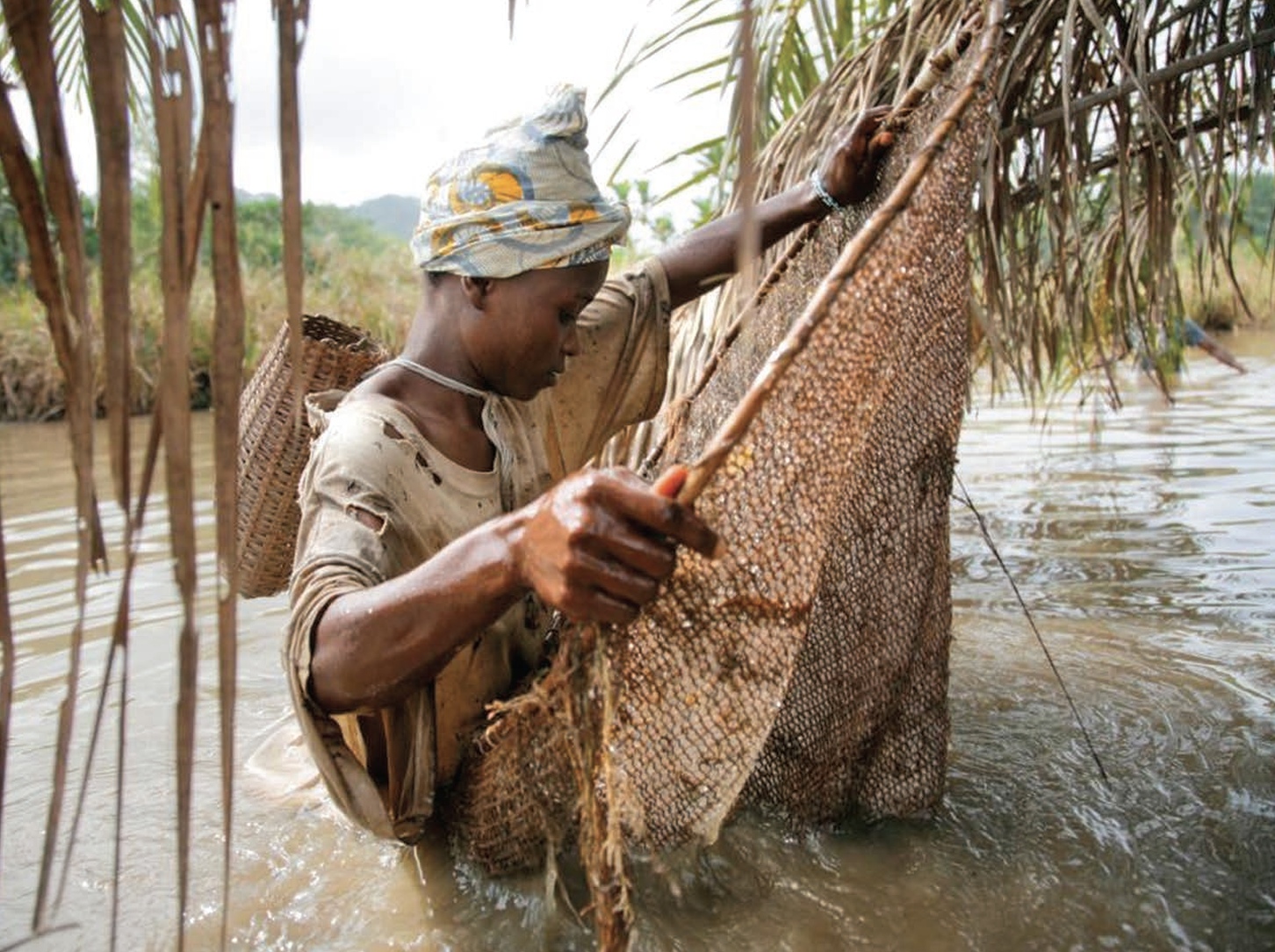
Fishers, Farmers, Craftspeople—Women: Gender in Post-Conflict Economic Reconstruction
Executive Editor Andrew Fallone illuminates the new challenges that women face establishing reliable livelihoods in post-conflict settings.
“Api anaarakshithay” repeat the widows created by 30 years of protracted war in northern Sri Lanka. The phrase translates to ‘we lack security,’ and such security can result from expanding women’s post-conflict economic inclusion. In the post-conflict setting, populations face new challenges that are created not only by the persistence of violence, but also by limited access to resurging economies. For women, such challenges compound with changing demographics and the ensuing societal restructuring. Women enter into new roles in restructured economies, offering key opportunities to establish stable post-conflict livelihoods, yet obstacles to women’s economic access too often linger unaddressed. Without addressing such structural impediments to gender equity, any progress made towards gender parity remains acutely vulnerable to backsliding if conflict reignites. Conflicts in both Sri Lanka and the Kashmir Glacier originated in the 1980s, and women’s roles in the economies of both nations transformed throughout the nearly three decades of both conflicts’ duration. Each case demonstrates a disparate component of the challenges that women face during regions’ economic reconstruction. In Sri Lanka, discriminatory systemic structures and sexual violence create obstacles to women’s economic independence. In Jammu and Kashmir, reliance on craftsmen for training and middlemen to sell their products impede women’s success as craftspeople. Analyzing both distinct contexts provides insight into the new roles that women take on in post-conflict economies. Both case studies illustrate that the full economic empowerment of women requires resolving underlying power disparities in structures that predate conflicts. Given the duress that extended conflicts inflict on nations’ female populations, it is crucial to expand women’s economic access in order to insulate their self-sufficiency against the shock of further conflict. Women in the post conflict setting can neither be essentialized as ‘helpless victims’ nor can they be assumed to be ‘fine on their own.’ National governments and international humanitarian aid organizations must consider women’s changing roles in post-conflict economies in order to most effectively support the conflict-affected populations.
Sri Lanka
The civil war in Sri Lanka lasted from 1983 until 2009, with insurgent actors endeavoring to create an autonomous Tamil state in Sri Lanka’s north: the length of the war adds emphasis on national unity in the post-conflict setting. Despite this emphasis, such call for national unity cannot be allowed to serve as grounds to prevent the discussion of gender inequity and social change. Sri Lanka’s Sinhalese majority population and the Tamil and Muslim minority groups in the nation’s north all exhibit historical gender inequity, yet conflict between the separatist Liberation Tigers of Tamil Eelam (LTTE) and the Sri Lankan government permanently altered the role women play in northern Sri Lanka’s economy.
The significant number of majority-male casualties in northern Sri Lanka acted as a catalyst for more women to transition into the role of primary income generators in order to support their households. The Sri Lankan government reports that the total number of war widows in the nation is greater than 80,000, with many husbands still missing but not yet confirmed dead. Scholars in The International Journal of Human Rights explain that “war widows, female heads of households, female ex-combatants, employed women and girls are especially at risk due to their often impoverished contexts, their lack of education as a result of the war and their lack of opportunities in post-war economic reconstruction and development plans.” These war widows assume traditionally male roles in the nation’s economy to support their families, now working in the fishing and agricultural sectors at higher rates than in the prewar economy. Indeed, as elucidated by the United Nations Food and Agriculture Organization, “another shift of women’s traditional to strategic roles occurred when women moved out of the domestic sphere and took on male roles in the absence of male family members; women consequently acquired more self-confidence and greater mobility and decision making powers within the family.” Such a transition in economic roles contributed to a 44 percent increase in hours worked by women in the service sector following Sri Lanka’s civil war. Troublingly, women’s transition into new sectors of the economy corresponds with 60 percent of women experiencing sexual harassment in the workplace in Sri Lanka, according to one survey in Colombo. Furthermore, upwards of 90% of women attested that they experienced sexual harassment in public spaces. This misogyny carries over to the conduct of regional government officials, who abuse their positions of power to ask women for sexual favors in exchange for services. While sexual violence may not be a direct result of the war, the predominance of men in positions of power and women’s need for self sufficiency during economic reconstruction creates conditions that inimically threaten to perpetuate such sexual violence. The combined antagonistic impacts of sexual violence and discriminatory land inheritance laws demonstrate the need for policies that address structural impediments to women’s success as they enter new roles in the post-conflict economy becomes clear.
In order to account for Sri Lankan women’s greater labor force participation, social and institutional impediments to their success must be confronted. The economic success that Sri Lanka enjoyed following the conflict’s close should not be seen as an overt success story, because structural gender inequalities remain. Women in Sri Lanka earn less than half of what men do, on average. While pay disparities are not a new challenge, the need for adequate compensation for women serving as their families’ primary income generators in the post-conflict setting is critical because “women who play multiple roles within households and society (such as cooking and carers of children and elderly) endure an opportunity cost for working outside the home for a wage,” according to Sri Lankan scholar Muttukrishna Sarvananthan. Women face additional challenges when working in the agricultural sector, resulting from inequitable inheritance laws. In Sri Lanka’s northern Jaffna province, women can control property in name only under the traditional Thesawalamai laws. In order to invest, receive loans, or sell their property, women need the written consent of a spouse – a spouse who the conflict possibly robbed them of. Additionally, when litigating disputes surrounding such property in court, women are treated as minors. Further difficulties are created due to the lack of equal economic growth across different sectors, for while Sri Lanka’s economic growth soared following the end of the civil war, 70 percent of this growth is in non-tradable sectors such as infrastructure construction. This unequal growth negatively impacts the livelihoods of women working in the agriculture and fishing sectors. Moreover, a large part of such construction is due to the heightened militarization of Sri Lanka’s north, and the expansion of the military presence often involves the military appropriating land that might have otherwise been farmed. The deep correlation between the military presence and sexual violence creates further impediments to women’s post-conflict livelihoods.
During the civil war, the use of sexual violence by both sides was prevalent, and the legacy of such violence persists in the post-conflict economy. The LTTE forcefully abducted women and girls previously both to use as human shields and for forced marriage, in addition to conscripting women as suicide bombers and combatants. The Sri Lankan military also used rape as a tactic to intimidate and procure information from the civilian populations in the north. Today, the growth of the Sri Lankan security sector continues, while its tendency towards sexual violence remains unresolved. Reports indicate that soldiers and police officers in some camps for displaced persons demand sexual favors in exchange for food and housing. Even outside of these camps, the military plays a large role in local economies, and that role in the economy prevents women from reporting sexual violence for fear that they will lose access to governmental support. Close to military bases, women report higher instances of sexual violence, and may experience societal exclusion due to the stigma attached to contact with the military, even when such contact was forced. In order to empower women to successfully manage their transition to the new role of breadwinners for families in the post-conflict setting, the government and international organizations must work to combat sexual violence and to promote growth in the economic sectors that women are primarily employed in.
Jammu and Kashmir
Conflict over control of Jammu and Kashmir exhibits both deep roots and sundry participants due to entrenched disputes surrounding territorial control. While China and India fought briefly over a portion of the Indian state of Jammu and Kashmir, the brunt of the conflict manifested between Pakistan and India over control of the state in 1989. In the years following, intermittently flares of violence turned the region into a flashpoint, and spurred the creation of irregular military forces such as the Jammu Kashmir Liberation Front (JKLF). The persistence of conflict damaged the success of sectors that rely on tourism, such as the craft industry that many women are transitioning in order to generate income in the post-conflict economy.
The discord that conflict over control of Jammu and Kashmir caused in the local economy forced many women in the region to assume new roles. Akin to the situation of women in post-conflict Sri Lanka, the region now has more women than men, with numerous war widows and ‘half widows,’ whose husbands’ whereabouts remain unknown. Such demographic changes coincide with changes in traditional roles in the economy, with one researcher’s fieldwork indicating that “the conflict has caused a shift in the gender ratio in terms of employment. Women have joined the crafts work force to generate income to support their families.” After losing their husbands in conflict, many women must now assume the role of the primary breadwinner in order to support their families. Given the historical strength of the craft industry in Jammu and Kashmir, many women joined the profession following conflict-induced demographic changes. The craft industry was traditionally dominated by men, with craftsmen also primarily driving the development of new techniques in the industry. This lack of historical experience in the craft leads women to follow established techniques, creating an obstacle for women hoping to launch their own businesses. Women entering the craft industry are prone to joining pre-existing enterprises in order to learn techniques from craftsmen already in the industry, due to the lower barrier to entry required to enter the industry in such a capacity. As more women transition into the Kashmiri crafts industry, further structural impediments to their success become evident.

Chart created by Neelam Raina.
Barriers to women’s success in the post-conflict craft sector include reliance on middlemen, attitudes towards women in the workplace, and the lasting impact of the conflict on the economy. The decentralized nature of the population in Jammu and Kashmir creates difficulties for craftspeople looking to sell their wares, resulting in many craftspeople entirely relying on middlemen to sell the products they craft. These middlemen pay for craftspeople’s pieces in advance, which provides income for craftspeople in the short term, but prevents them from accumulating a catalog in the long term. Craftspeople’s lack of a catalog forces them to rely on the word of middlemen to attest to the quality of their work. Furthermore, reliance on middlemen to sell their goods robs craftspeople of control over their financial futures, placing the sustainability of their livelihood at the mercy of fluctuations in the demand for their products. Middlemen reap the majority of the profits from the work of craftspeople, for because they are removed from the market, craftspeople do not have a good measure of the true value of their work. This disparity in power is exemplified by the chart above. Beyond this, Kashmiri women must also overcome the stigmatization of their employment. Kashmiri women who work to support themselves often feel shame in doing so, and combined with the prevalent lack of education and skills training among women, this contributes to women’s frustration and psychological struggles. Craftswomen also experience stigmatization from other people, who use women’s employment as grounds to question their morality and piety. This attitude translates to limited access to important information about opportunities for economic funding and support, due to an exclusionary tendency amongst majority male regional bureaucrats. This exclusion further extends to union involvement, which results in the benefits of such union action sometimes failing to extend to women. The conflict in Jammu and Kashmir greatly diminished the tourist trade in Jammu, and thus, “notwithstanding the fact that Kashmiri arts and crafts have enjoyed worldwide fame and name, their production suffered to a large extent …” according to economists in the International NGO Journal. To successfully ensure women’s livelihoods in the post-conflict setting, they must be equitably integrated into local industries, and regional and international actors must take action to spur the growth of such industries.
Conclusion
Women’s entrance into new roles in post-conflict economies heralds an opportunity to permanently, economically empower nations’ female populations. To achieve this goal, national and international actors supporting post-conflict economic development must proactively account for obstacles to women’s economic access and focus their support on the sectors of the economy that women transition into. Economic growth does not always extend to women, given that the specific industries they join may not grow at the same rate as nation’s broader economies. Moreover, antiquated laws and social dynamics hinder women’s ability to act independently, even when serving as their families’ sole breadwinners. Sexual violence in the workplace and by government officials must be eradicated. Women must be recognized as equal participants in the industries they join. While gendered power disparities in legal systems and industry practices may predate conflicts, resolving them is crucial to enabling women to fully participate in the post-conflict economy. Finally, gender-responsive development support requires a sector-by-sector analysis of women’s new workforce participation in order to rectify existing inequalities so that future conflict cannot erode the achievement of women in post-conflict economies.

Citizens United v. Our Democracy
Staff Writer Julia Larkin explains the power of Super PACs to influence both politicians and voters.
In 2016, Secretary Hillary Clinton, the Democratic presidential candidate, was thought to wield specific political advantages over her Republican opponent Donald Trump. Secretary Clinton had the experience, she was more knowledgeable than Mr. Trump was in regards to the issues being discussed, some said she was more articulate, and Secretary Clinton raised a lot more money. Typically, a candidate’s advantage in campaign fundraising was always an indicator that they had more support from more people, they had more exposure, and had more power to sway the undecided and independent voters. In the 2016 election, we learned that this is not always the case. Super PACs do not have complete sway power over the voters, but they do greatly influence the politicians in office.
In this day and age, campaign donations do not directly go to the campaign and candidate themselves. Since Citizens United v. FEC in 2010, the floodgates opened and soft money barreled into our elections. Super PACs, through independent expenditures, send money towards media buys in hopes of advancing their candidate of choice or encouraging the public not to vote for another candidate. Since the Citizens United decision was held, we saw dramatic increases in independent expenditure spending and independent expenditure spending posited as a significant and unfair game changer in elections, but Super PACs are not having the affect many people thought they would have. We are now entering an era where independent expenditures by Super PACs only have a large impact over politicians and are not reflective of the people.
Secretary Clinton raised over $563 million dollars and independent expenditures spent over $231 million in support of her. Mr. Trump raised a little over $333 million, most of which ($66 million) was his own money, and he received $75.2 million from independent expenditures. The significant amount of money flowing into Secretary Clinton's campaign coffers led political experts to come to the conclusion that she would win. However, Donald Trump beat Secretary Clinton - even taking states that historically supported democratic presidential candidates.

Super PACs funnel an exorbitant amount of money into political campaigns in order to sponsor and advocate for and against specific candidates. While ads and media buys by independent expenditures may have some sway on the undecided and in swing states, Super PACs and their outreach in campaigns are not the ultimate decider in elections. President Trump and his campaign proves this. He won the election, yet independent expenditure spending for Secretary Clinton spent was $155,849,637 more than it was for President Trump. However, just because Super PACs aren’t the ultimate decider in elections doesn’t mean they do not have a great impact on our government. What we are seeing is Super PACs becoming the deciders in how the politician they are supporting will view particular issues.
When a politician receives most of their support from Super PACS, either directly or indirectly, they are going to be likely to view issues in the eyes of the Super PACs regardless of their constituents’ views. The issue of gun control exemplifies how Super PACs shape politicians' views on issues. According to a Gallup Poll taken in October 2017, 60% of people want stricter gun control laws. This poll also revealed that 96% of people asked support background checks - with 86% saying they support a universal system, 75% support a 30 day waiting period when purchasing a weapon, and 70% of people polled would support privately-owned guns to be registered with the police. With all this information and other information from other polling organizations that reflect similar results, politicians would be jumping at the chance to put their name on a gun control bill or that the President would pass an executive order reflecting what the people want - but that is not what we are seeing.
Let’s look at everyone’s favorite lobbying group, the National Rifle Association. The NRA goes above and beyond, shelling out an exorbitant amount of money to defend the right to bear arms. The NRA's influence is felt not only through campaign contributions, but also through millions of dollars in off-the-books spending on issue ads. Lobbying expenditures for the National Rifle Association regularly exceed $1.5 million and increased from $3.2 million in 2016 to more than $5.1 million in 2017 and 2018. The organization's lobbyists frequently try to exert their influence over government agencies including members of Congress and they are consistently successful in doing so. In just 2018, the NRA lobbied for and against 283 bills concerning gun laws. Politicians, particularly Republicans in regards to this issue, are doing everything in their power to avoid the issue or appease public opinion by agreeing to small things because the money they receive through ad buys and media wants them to keep an anti-gun control stance.
The same can be said with Democrats as well, who receive a lot of support from Super PACs, like Priorities USA. In the 2016 election, Priorities USA acted as if they were Secretary Clinton’s actual campaigning team and they did more campaigning in states, like Pennsylvania, than Secretary Clinton did herself. Priorities USA actually broke fundraising records, raising over $175 million dollars in the 2016 election cycle. Priorities USA targeted swing states and battleground states, drafting specific pro-Clinton messages that would appeal to each state’s populations and needs. In a way this Super PAC did a better job than the Democratic Party did, yet it still didn’t work. States that Priorities USA targeted with big media buys didn’t swing in Clinton’s favor, contributing to her overall loss. A majority of people in states like Michigan, Florida, and Ohio - where a lot of those ads aired - voted for President Trump, clearly indicating that Super PACs’ ads did not do much to sway the voters. People in these states for the most part wanted to hear from the politician who was running for office. While voters wanted to hear from Secretary Clinton that she would meet their needs, it is possible that they didn’t respond well to hearing about it from an ad paid for by a Super PAC that wasn’t directly connected to Secretary Clinton herself.
The Center for Responsive Politics predicted that over $5.2 billion would be spent on the 2018 midterm elections, making it the most expensive midterm election ever by a wide margin. More than $4.7 billion was already spent by candidates, political parties and other groups such as PACs, super PACs and nonprofits a week before this year’s midterm elections. Prior to this election cycle, no midterm election had surpassed more than $4.2 billion in spending when adjusted for inflation. Sheila Krumholz, the executive director of the Center for Responsive Politics, postulates that “the significance of this election is clear. But whether it’s a blue wave or a red wave, one thing is certain: A wave of money is surging toward Election Day, much of it coming from the wealthiest donors targeting this year’s most competitive races.” Now that the midterms are over, the Center for Responsive Politics estimated that at least $5.1 billion was spent on this year’s midterm.
Established politicians align their views to those of Super PACs in order to receive their money and get away with it because they carry the incumbency advantage over opponents who barely have any visibility due to a lack of support from financially powerful Super PACs. It is too soon to see what kind of long term effect the 2016 election will have on the way politics is run in the country and how elections will function in the months and years to come. One thing, however, is clear. Super PACs do not have the sway many people believe they do. They are not representative of the population. Candidates’ ability to receive the benefit of ‘free media’ worth millions of dollars from independent expenditures does not mean they have the public support necessary to win an election. Voters have the power to control the election and it is politicians who have become hypnotized by Super PACs and what they believe those PACs can give them.
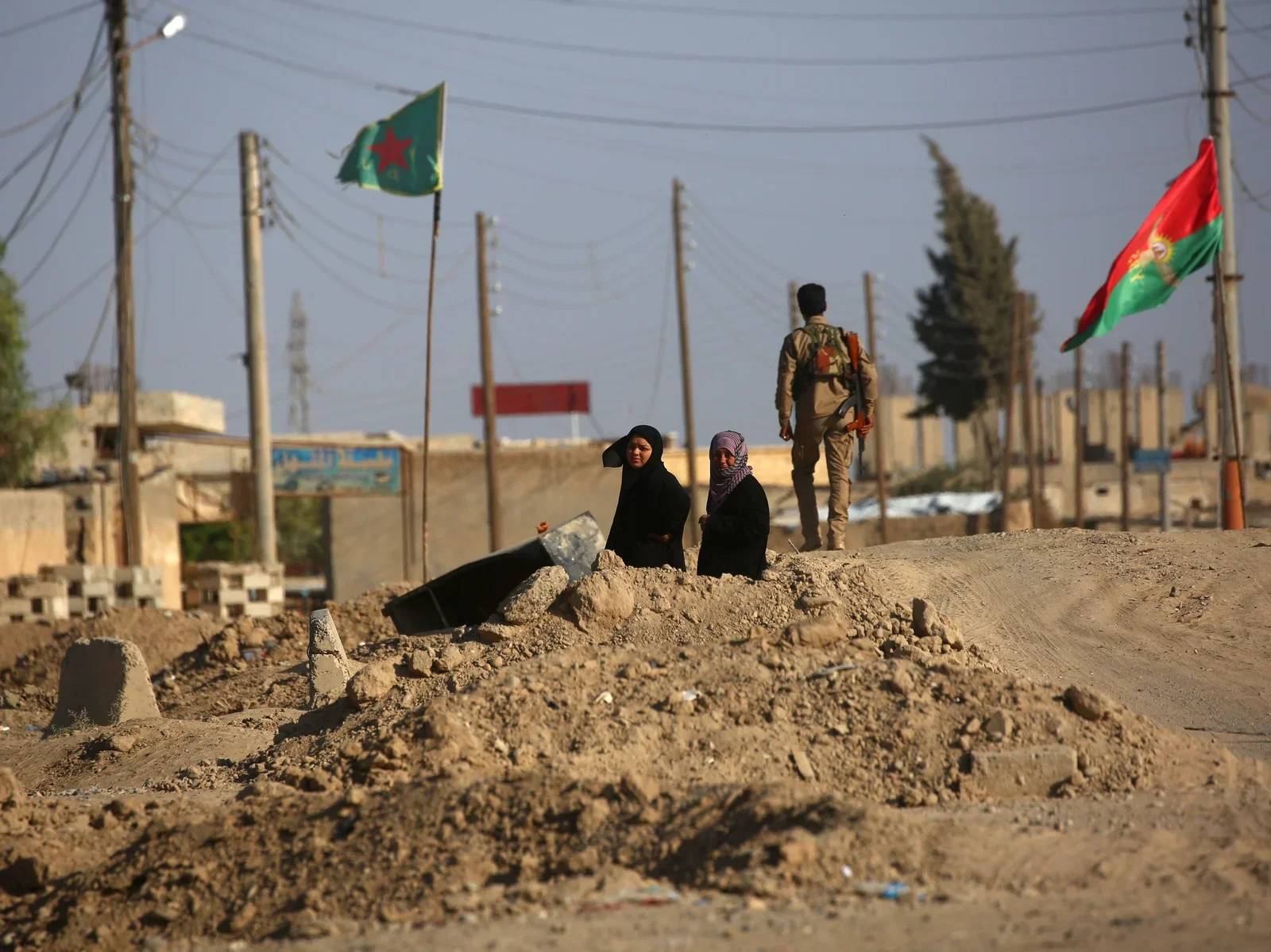
Fixing an International Dilemma in an Unstable Region: U.S. Mitigation of the Turkish-Kurdish Conflict
Contributing Editor Diana Roy postulates three plausible American actions to assuage Turkish-Kurdish tensions.
The Dilemma
The long-standing relationship between the United States and Turkey continues to deteriorate due to the intensifying armed conflict between the Turkish military and Kurdish insurgent groups in Syria, Iraq and Iran who desire an independent Kurdistan that would give them greater political and cultural rights.
To combat the Islamic State (IS), the United States supports the Syrian Kurdish Democratic Union (PYD) and relies on the PYD’s military wing, the People’s Protection Units (YPG). Yet the main reason for the ongoing U.S.-Turkey military conflict lies in US support of the PYD. Because Turkey is battling the Kurdistan Worker’s Party (PKK), a listed terrorist group that President Erdoğan believes is an offset of the PYD, Turkey sees American support for these Kurdish organizations as undermining their interests and regional power.
It is imperative that the United States act immediately to de-escalate the tensions between Turkey and various Kurdish insurgent groups while continuing the fight against the Islamic State, who, despite recently losing territory and influence in the region, continues to pose a threat to nearby countries and the US. The United States in particular is one of the leading actors in this issue, and must continue to be a primary fighting force, because national interests are at stake. As long-term NATO allies, the US and Turkey not only share an allyship, but Turkey is in a key geopolitical position, serving as a central point between Asia, Europe, and Africa. By mending their relationship with Turkey, the US will continue to be able to rely on Turkey as the only Muslim NATO member to serve as a bridge between the Western and Muslim worlds, which can help stabilize the volatile Middle East. Furthermore, Turkey similarly relies on the United States and its Western forces to battle the IS, a group that continues to engage in violent terrorist attacks within the country.
Failure to immediately rectify the situation may result in the degradation of the US-Turkey alliance and the growth of the Islamic State. Should the US side with the Kurds, they run the risk of Turkey strengthening their political and economic relationship with Russia, and it could push Turkey to further retaliate against the YPG and ultimately the US. Yet, the United States relies heavily on Kurdish insurgency groups, such as the PYD, as the main fighting forces against the IS on the ground, especially in aiding local Arab militias in Syria. Therefore, if the United States sides with Turkey, they may lose critical Kurdish trust and military support in the fight against the IS due to the tension between the Turks and the Kurds. Nevertheless, fixing the rising tensions is possible and can be done three ways: by revising the current Turkish Constitution, continuing to supply Kurdish fighters with American weapons, and utilizing the US-Turkey relationship as NATO allies to begin talks of a ceasefire.
First Recommendation: Modify the Turkish Constitution
The United States should encourage Turkey to make changes to its 1982 Constitution to grant basic rights back to the ethnic minority groups that reside in Turkey. Successfully updating the constitution should be a priority in solving the Turkish-Kurdish dispute. The conflict’s origins and subsequent intensification stems from the lack of rights attributed to the Kurds in the country’s constitution. The Turkish government historically oppressed Kurdish cultural identity and language through impediments in the process of assimilating them into society. After declaring itself a republic in 1923, Turkey’s capital of Ankara adopted an ideology with the goal of eliminating non-Turkish elements within Turkey, all of which were primarily Kurdish. The country’s efforts to “Turkify” individuals by relying on Turkish ethnicity to define citizenship resulted in the mass persecution of the Kurdish population, which is one of the driving forces behind the desire for an independent Kurdistan today.
As of now, the Turkish Constitution is authoritarian and alienating to those who aren’t of Turkish ethnicity, but unfortunately the discussion and possibility of revising the constitution has decreased. The lack of an inclusive constitution with rights and protections that extend to minority groups has been a factor in causing social unrest among the Kurdish population and furthering the mission of the PKK. This, again, contributed greatly to the Kurds’ desire to create an independent Kurdistan that would allow them to have greater political and cultural autonomy. Therefore, the Turkish Constitution should be revised immediately. Significant changes would make it more democratic and establish that all differences, such as ethnicity or language, are protected under the constitution. With this, the improvement in the view and treatment of the Kurds may lay the foundation for peace talks in the future.
Second Recommendation: Return to Supplying Arms
The United States should return to supplying weapons to Kurdish fighters in Syria who are combating the Islamic State. As of late 2017, President Trump announced that the US will no longer provide arms to the Kurds. However, the supply of weapons by the US is vital in creating a strongly armed group of Kurdish fighters that can successfully defend themselves as they counteract the IS. For example, in May 2017 President Trump approved a plan to arm the Kurds, and therefore the YPG, directly to prepare for their assault and capture of Raqqa, which was the IS’ de facto capital of the caliphate. Subsequently, after arming them with machine guns and other warfare weapons, the American-backed YPG successfully seized Raqqa in October of 2017 in what was a major blow to the legitimacy and control of the IS.
However, a drawback of this recommendation is that it could cause even more tension between the US and Turkey. Due to US support of the YPG, a group Turkey believes to be an extension of the PKK, Turkey’s President Erdoğan could see the supply of arms to the YPG as a threat to the country because those weapons could end up in the hands of the PKK. Yet, a benefit of this recommendation is that it aligns with America’s desire to decrease the number of troops deployed in Syria. By providing the Kurds with more weapons, the US can rely more on local forces and slowly begin to withdraw American troops from the conflict zone.
Third Recommendation: Negotiate a Ceasefire
Lastly, the United States should take advantage of its relationship with Turkey as NATO allies to lead a political peace process that negotiates a ceasefire between Turkish military forces and the Kurdish YPG in Syria. The YPG are instrumental in fighting the IS on the ground, yet they are suffering immense losses due to air and land attacks by Turkey’s military force.
However, a downside of this recommendation lies in the fact that Turkey views the YPG’s presence in Syria as a security threat to the country. Turkey’s President Erdoğan also considers the US’s support of the YPG militia to be a betrayal as he sees the YPG as an offset of the terrorist group PKK. Furthermore, the ceasefire would only provide a temporary solution to the complicated conflict so that the two sides could focus on defeating the IS.
An upside of this recommendation is that previous ceasefires between the Turkish government and the PKK succeeded for many years before they were eventually broken. While a ceasefire may be temporary, it would help centralize the fight around the IS and provide the foundation for more comprehensive peace talks and a long-term ceasefire in the future between the two groups.
Looking to the Future
The Turkish-Kurdish conflict began the moment Turkey failed to make a provision for a Kurdish state, thereby leaving the Kurds, a population of around 15 million in the country, with a minority status and a lack of both representation and rights. The tension between the two sides has been ongoing ever since, and as an ally to the United States politically and militarily, as they are instrumental in fighting the Islamic State, the US is heavily interested and involved in the conflict as well. As a result, all three recommendations for ways in which the United States can mitigate the Turkish-Kurdish conflict are presented with the following goals in mind: first, by successfully mitigating the conflict between the two groups, the US can begin to minimize the threat that the IS poses to them, as combating the IS would be easier when the two sides are working together with the same goal in mind; second, the US can start to decrease the volatility of the Middle East, as there will be one less pair of warring groups, and consequently states, to add to the mix.
The conflict continues in 2018, thirty-four years after the insurgency began, with little change. Since President Trump took office and called for a halt on the provision of arms to the Kurds, the Islamic State has lost territory, but still remains a threat, and tensions between the Turks and the Kurds remain high. Not much progress has been made between the two groups to de-escalate the situation, and the United States has failed to enact any significant changes. Unless these recommendations are made, the future for these two warring groups and the prospect of an independent Kurdistan looks to be the same as it currently is now: bleak.
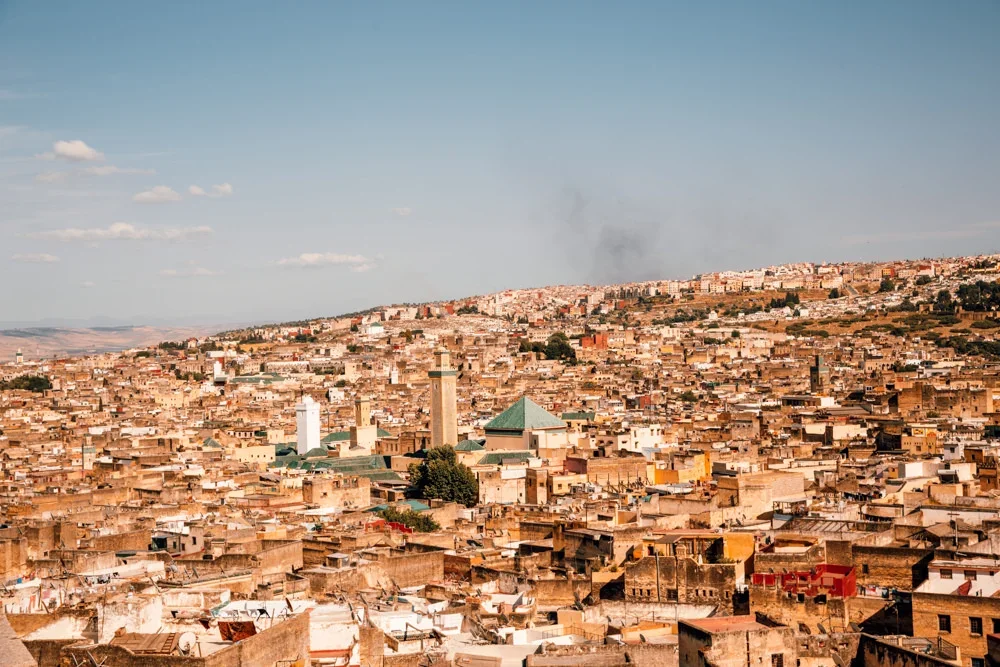
World Heritage in the Medina in Fez, Morocco: Blessing or Curse?
Contributing Editor Claire Spangler elucidates the complex impacts of UNESCO World Heritage sites in the Medina of Fez, Morocco.
The Medina in Fez, Morocco is a labyrinth of alleyways that intersect Moroccan culture, religion, and economy. It is a place like no other in the world, and indeed being inside the Medina walls is to be in an entirely different realm. To visitors, who are often left astounded at its sheer mass and intricacies, it may come as no surprise that the Medina is under UNESCO protection as a World Heritage site; it is truly unique. However, while the title of being a World Heritage site sounds beneficial, the Medina and its inhabitants may be suffering for it. Indeed, while some cultural buildings within the Medina have benefitted from rehabilitation, its inhabitants are suffering from a fresh wave of colonial prejudice. The original plans for the Medina’s rehabilitation relied heavily on French colonial literature about the Medina. Today, colonialism is coming back to life using UNESCO and other contributors’ money. Manifestations of these harmful policies include forcibly removing Medina inhabitants, moving traditional craft activities to outside the Medina walls, and proposing mandatory standards of hygiene. These policies inordinately affect the current Medina residents, primarily rural migrants from Morocco’s countryside seeking low-income housing. Thus, while the Ministry of Culture, which lays claim to the Medina, may enjoy UNESCO support and protection in its rehabilitation efforts, it is doing little for the Medina’s inhabitants. This paper will investigate the initial need for UNESCO protection, the proposal submitted, and how the program has affected the Medina to measure the consequences and benefits of the program.
History of the Medina
The Medina has historically been a cultural institution of the Fessi people, and a neighborhood bursting at the seams with craftspeople, religious centers, and buildings that seem to defy earth’s gravitational pull. Yet, the Medina is not considered to be a desirable residence, and just outside the Medina walls, lay cleaner and wealthier neighborhoods, which once belonged to the French protectorate. Following the French withdrawal from Morocco in 1956, there was a mass exodus of wealthier Fessi to Ville Nouvelle (the French quarter). The Fessi who moved did so to improve their quality of life, and their economic status as the French quarter was much closer to economic opportunities not accessible from the Medina. In the spaces that the wealthy Fessi left in the Medina, rural migrants from the countryside soon entered. Many large medina homes were divided into apartments and the population of the Medina began to spike. From 1957-1982 the average yearly increase of residents was 8,000. As the numbers rose, so did the social tensions: the Fessi people had long prided themselves on their ‘city’ lifestyles and crafts, and consequently looked down on Moroccans from the countryside. A narrative of crisis in regards to artisanal crafts appeared in the 20th century, whereas it does not appear in pro-colonial texts which praised the Fessi crafts and craftspeople. Much of this discourse is a thinly veiled commentary on the new social actors in the Medina and mimics discourse of the French, who delegated the Fessi as superior to all other Moroccans. Therefore, discourse of pride for Medina crafts disappeared and, in its place, narratives of a crisis and anti- rural Moroccan emerged. The shift in discourse corresponds with the French departure from Morocco, a power vacuum that allowed the Fessi to take control of the hierarchical narrative and used it to their advantage. However, the narrative of crisis that was employed to continue the set hierarchy became the public narrative and prompted outside intervention.
Proposal
In the 1970s the Moroccan Department of Urbanism proposed building an access road through the middle of the Medina. This road would have fundamentally changed the structure of the Medina and a proposal to protect the Medina was quickly constructed. In 1976 Medina actors petitioned UNESCO to include the Medina as a World Heritage site. This plan included the “continuation and blossoming of the ensemble of the social, economic, cultural, and religious life that made the particular genius of the Medina”. Thus, the plan included rehabilitation, economic aid, and the continuation of a way of life provided by the Medina’s ecosystem. In this vain, the Medina’s residents were explicitly included in the proposal. Indeed, one such project called for action by the residents in facilitating its success. The “Fez Medina Rehabilitation Project” funded by the World Bank, aimed at restoring heritage and improving the quality of life in the Medina, through participation and collaboration with locals. Yet, while the projects and proposals asked for local participation and directly affected the population, many projects seemed to undercut their way of life. The UNESCO and the United Nations Development Program jointly created a ‘master plan’ for Morocco. This plan recommended a decrease in the Medina’s population through building new housing outside the Medina walls and moving residents. In addition, this plan supported removing merchandised crafts from the Medina and introducing standards of hygiene. At face value, these recommendations may not seem of mal intent, yet, behind the eloquence of the plan a lay proposal for a forced mass exodus, the removal of the essential economy of crafts from the Medina, and the forced imposing hygiene codes. These programs were approved because the background information provided to aid organizations portrayed the Medina in a colonialist manner and relied solely on French writing about the Medina. Such writing reflected the aforementioned narrative of crisis, helping to prompt intervention. The source texts also reflected the unfavorable attitude of the Fessi people towards rural Morrocans (an extension of colonial implemented higherarchies). The consideration and later implementation of these texts in UNESCO action in the Media thus created a resurgence of colonial policies based on discriminatory racism.
Direct colonial policy is evident in the Atlas of the Medina in Fez (1990). The Atlas was created at the request of UNESCO, by academics at the University of Fez. The Atlas described the population density changes in the Medina as well as what the authors called ‘ruralization’ or “the impregnation of the city with semi-rural modes of life marked by deplorable hygiene and lack of urban traditions”. Furthermore, this ‘ruralization’ was described as directly causing the decline of traditional social relations in the Medina. This information, provided to UNESCO and other programs, scapegoated the rural migrants for deteriorating Medina conditions and the resulting programs acted as punishments. In this manner, 50,000 inhabitants were relocated outside of the Medina, and more found new restrictions on their crafts and lifestyles. Thus, through the façade of aid and preservation, colonial era hierarchies have been revitalized and are directly impacting the Medina and its residents today.
Conclusion
UNESCO World Heritage sites have the purpose of aiding places under its protection through the rehabilitation of cultural sites and through economic benefits. However, in the case of the Medina in Fez, intervention has caused more harm than good. Medina residents are being placed, once again, under colonial age policies as various programs and plans orchestrated to help, actually support a harmful social hierarchy first established under French rule. For effective and truly beneficial change to occur in the Medina it will be necessary for air organizations and UNESCO itself to base aid on recommendations by Medina inhabitants. Until such collaboration is met, however, the title of World Heritage will bring severe consequences to Fez.
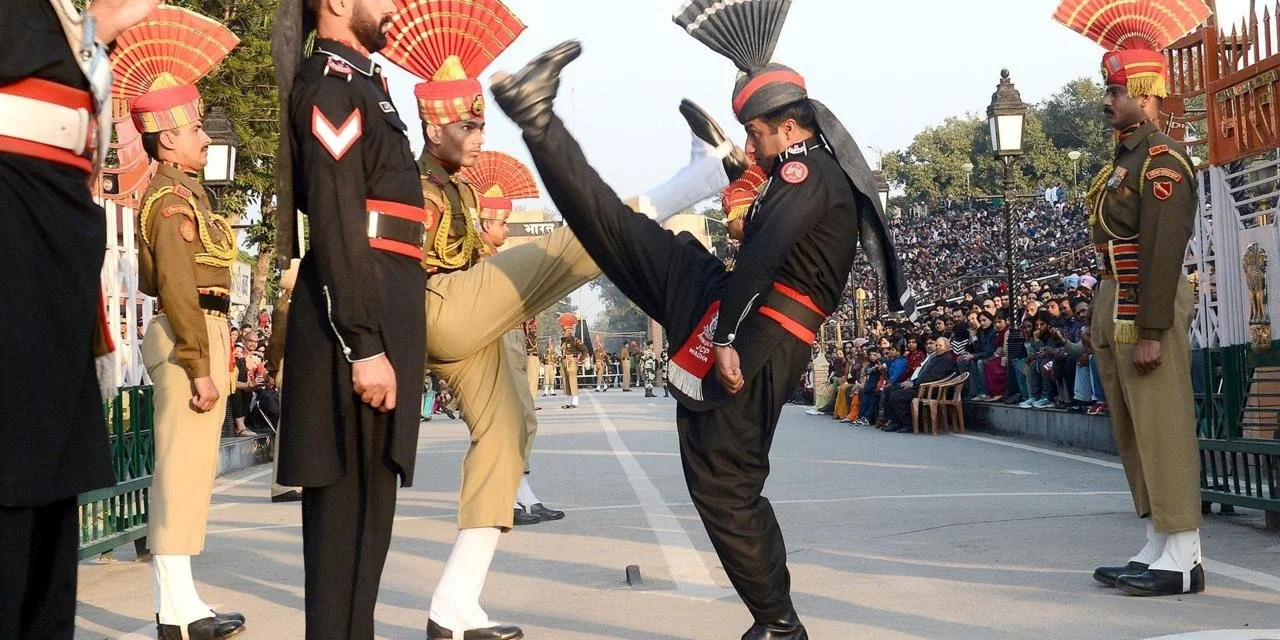
Nationalism in Asian Education
Staff Writer Madeline Titus explicates the relationship between the selective teaching of history in Indian and Chinese education systems and nationalism.
Origins and Impact
Franklin D Roosevelt stated that “we cannot always build the future for our youth, but we can build our youth for the future.” The use of nationalism in education is prevalent in many countries spanning from the United States to India. Often, state-sponsored and regulated education is synonymous with selective education, including and rejecting certain narratives and stories over others, bolstering the good and glimsming over the bad. Thus, through education policy, governments control the effective indoctrination of mass populations into a constructed idea of society. The use of selective education and taught nationalism creates biases that prohibits clear and effective diplomacy.
Combining the control of information and ideas with impressionable youth can result in a continuation of taught ideals and politics and ultimately control of a population. When taught values and stereotypes are passed down from generation to generation, prejudice and discrimination exist.
Every human has a set of values and habits that are based in language, religion, philosophies, and communal cultures. Taught nationalism is both good and bad; it is inherently a part of a culture identity. Nationalism creates an alterity that often results to discrimination, bigotry and at worst genocide for those who don’t fit into the nationalistic idea.
This concept is not only positively used in everyday cultural communication that creates identities, but also used negatively to manipulate people. Taught nationalism diffuses throughout the world, regardless of region, language and religion. This article explicates the causes, forms, and impact of taught nationalism in Asia, specifically in China and India, where textbooks are rewritten to curate students’ ideas of their national identity.
Asian Nationalism in Education - looking at China and India
Education is often a tool through which state sponsored nationalist ideas are instilled. With an increase of foreign influence from Western nations such as the United States, countries turn towards more conservative approaches as nationalism is on the rise globally.
China
Scholar Suisheng Zhao of University of Denver argues that the origin of Chinese nationalism came into existence during the Opium War in the 1840s that ultimately opened China to Western imperialism. Nationalism takes on many forms in China from Han ethnic based nationalism to ideological liberal nationalism, or “the nation as a group of citizens who have a duty both to support the rights of the state and to pursue individual freedom.” While China opened its doors to the West, a 3rd form, pragmatic nationalism gained popularity allowing legitimacy and political control of the Communist party. The pragmatic nationalism allowed for the adoption of democratic ideals and loosening of communist ideology as long as it aided the continued growth and stability within China. From this movement came about the Patriotic Education campaign.
The Patriotic Education campaign began in 1991, and shortly after the Tiananmen Square pro-democracy movement. The campaign targeted young school-aged children to teach about past greatness and the “humiliating experience in the face of Western and Japanese incursion” and how the Communist led revolution created China into the power it is today. A primary mode was through the use of changing the narrative of collective Chinese history with a version in favor of the communist one party rule. The textbooks were replaced and “the old class struggle narrative” was replaced with a “ Maoist ‘victor narrative’ (China won national independence) was also superseded by a new ‘victimization narrative; which blames the ‘West’ for China’s suffering”. The teaching of this narrative by Chinese textbooks instills a sense of shame and effectively associates China’s problems to the West imperialism and forces. This goes as far as questions of national humiliation have become topics in the nationwide examination for attending universities.
India
The rise in nationalism originated with the decolonization movements at the end of the 1940s and 1950s. While the idea of a national identity, especially in the case of India and Pakistan was formed before the founding of the nation-states, it wasn’t until after full independence from the British Empire that nationalism was able to fully manifest.
The decolonization of British India and the creation of India and Pakistan left complex feelings, with celebrations of independence tinged with regret surrounding the violence brought about by partition - essentially, a divided freedom. The independence movement of 1947 created different narratives in the history of partition in Pakistani and Indian textbooks. Many Indian textbooks often portray the Muslim League as focusing solely on Muslims’ interests and the National Congress party as “Guardians of all Indians, regardless of religious affiliation”. Many Indian textbooks focus and revere the work of Gandhi. Where as comparsionly the same events in 1947 are taught in Pakistani textbooks as freedom and created a nation-state focused on social justice and Islamic Ideology, and more critically, the justification for the creation of Pakistan and the Two-Nation Theory. In the past few year in India as the BJP party has come into power and the rise of Hindu Nationalism within India, has resulted in the rewriting of history textbooks to portray Muslim Mughals as military brutes and Hindu rulers as victorious. Standard social science textbook for class 8 fail to mention Prime Minister Neru and the events of Gandhi’s assassination, which is particularly significant because the assassin, Nathuram Godse, was a member of the RSS which was the precursor to the BJP, the current political party in power.
What Taught Nationalism means in IR
Nationalism itself is a purely constructivist political theory in that it is centered on collective ideas and communal identities. Nationalistic portrayals of collective identity can instill a chosen trauma, or “the horrors of the past that cast shadows onto the future” and a chosen glory “myths about a glorious future, often seen as a seen as a reenactment of a glorious past” in an attempt to strengthen a group identity. This directly impacts international relations when countries, such as in the case of China, blame “Western” powers for economic, political and social challenges.
How the collective Chinese population views Western powers creates challenges during diplomatic exchanges. If nationalistic educational narratives instill distrust in Chinese leaders and Western leaders, actors will either work to deconstruct biases held against them or they will internalize those biases if their experiences validate them. As relations between the United States and China are currently marred by economic tension in a trade war, knowing of the biases of collective histories in the United States with anti-communism movements and the Tiananmen Square anti-democracy movements could aid in more diplomatic solutions. When nationalism is effective, chosen trauma and chosen glory impacts generations and cannot easily be corrected or significantly altered.
In the case of India, the distancing of Indian history from Mughal history is another example of how education can increase tensions between Hindus and Muslims. As political parties focus on Hindu identity, often hate-crimes become overlooked and a narrative of religious-political battle becomes prevalent in the media. As India becomes more Hindu-centric, it disengages from the realities facing the nation and surrounding states. India, known for taking in Tibetans, Sri Lankan Tamils and other persecuted people purportedly turned away Rohingya Muslim refugees from Myanmar in the name of national security, while in reality the religious difference plays an important role in the decision.
Conclusion
Young Adults are powerful political entities that are often forgotten, however even without the right to vote, their voices are undeniable. Youth are often easily impressionable as well. Education systems instill their young students with values, ideals and cultural understandings. While schools instill positive qualities for youth, they can just as easily instill discrimination and hatred. China and India are not alone in the attempts to erase or hide specific aspects of their national histories. In understanding history, it is always important to be aware of what stories are being told and which ones are not. The education in the United States often glosses over many of the complexities of American History such as Native American massacres, freedom struggles for African Americans, modern-day race relations and institutional racism. When considering the impact of national education curriculums, it is important to ask what is missing and, more importantly, why?
Advocacy in American Politics: Examining the Quality and Effectiveness of Lobbying in the Trump Era
Managing Editor Kevin Weil discusses the changes that President Trump’s unorthodox administration has brought to the lobbying landscape.
The quality of the United States’ advocacy and lobbying practices, as well as the effectiveness of the profession’s role in policymaking, have become a recent subject of debate. The transition to the Trump administration has particularly served to amplify an ongoing criticism of the lobbying profession, particularly in regard to the influence of special interests and the economic elite. The quality of practice towards the end of a pluralist representative democracy and the profession’s ability to adapt was, and continues to be, scrutinized by the media, political pundits, and lawmakers alike. Ultimately, the quality of advocacy and lobbying practices within the United States is lacking, despite its effectiveness in adapting strategy and tactics to fit the unique political situation, particularly in response the growing distinction of partisan interests as well as congressional gridlock.
In measuring the quality of advocacy practices within the Trump administration, the standard that the Framers, particularly James Madison, envisioned for competing factions must be recognized. An “extended” republic, or a pluralist model of democracy, was proposed by Madison as the best defense against partisan factions, special interests, and a potential “overbearing majority.” This pluralist model ideally limits the influence of a singular dominate interest – the “tyranny of the majority:” a potential ill-effect of democracy addressed by Madison in Federalist No. 10 and later by Alexis de Tocqueville in his observation of American democracy. Ultimately, the standard of quality that contemporary advocacy practices should reflect is that of Madison’s “extended” republic, with special interests remaining numerous and equally competitive within the policymaking process.
The quality of contemporary advocacy practices, however, does not meet this standard of a well-functioning pluralist representative democracy. This concept is widely explored within political and sociological academia; one recent study conducted by Dr. Martin Gilens and Dr. Benjamin Page creates individual and comprehensive statistical models for four distinct theoretical perspectives of democracy. Gilens and Page measure the relationship between the policy preferences of average citizens, economic elites, and special interests and respective policy outcomes. The results suggest that organized interest groups maintain significant influence over the majority’s preference in the policymaking process, especially with the assistance of PAC contributions, lobbying expenditures, and membership. Moreover, this study reaffirms Madison’s argument that a domineering majority can be restrained as various interests in the United States compete for political influence. Yet, sociopolitical variables like money and organizational agency impede and conceivably discourage the open competition of interests. In short, today’s advocacy process fulfills the intent of a pluralist model of democracy, but the process is facilitated through an inequity of resources.
The inequity of monetary resources and organizational agency has led to an increased likelihood of ethical misconduct with contemporary advocacy practices. Indeed, these variables can influence how advocacy strategies engage in the policy-making process and influence their adherence to ethical standards. Attempts have been made, specifically by the American Bar Association, to limit the influence of financial contributions, “shadow” lobbying, and to emphasize organizational accountability by reforming the Lobbying Disclosure Act of 1995 (LDA), which made significant strides in establishing transparent and ethical advocacy practices. The recommended reforms that target these key issues include the requirement for LDA registrants to specify specific public offices that are being targeted, as well as reporting all activities of the advocacy and partner entities. Yet, these reforms have faced setbacks, especially following the landmark ruling of Citizens United v. Federal Election Commission in 2010 which lifted restrictions on campaign and advocacy donations. Nonetheless, the advocacy profession ideally fulfills the intent of a pluralist model of democracy with a competitive and level playing field for special interests.
The role of special interests and their influence in the policymaking process has contributed to the negative disposition that the public has of lobbying practices, prompting notable responses from the Obama and Trump administrations. With the media’s reinforcement of a negative special interest narrative, both President Obama and President Trump crafted unique responses pertaining to ethics in order to reflect the public’s negative opinion on lobbying and corruption. For instance, both administrations established direct ethical standards by way of executive order, targeting gift bans and the “revolving door.” Even more pertinent is the Trump administration’s unorthodox structure, which creates indirect challenges for advocacy practices. Specifically, the Trump administration’s lack of intervention points/points of contacts, as well as the President’s frequent use of social media, mainly Twitter, as a platform to disrupt, veil, and shape his intentions, creates a dynamic and unpredictable environment to maneuver for advocacy practices.
Though the methods and strategies vary by organization, there are three distinct tactics that have proven effective within the Trump administration: (1) anticipating unpredicted outcomes, (2) isolating and targeting key players, especially through social media, and (3) emphasizing the player over the policy. Each of these tactics effectively counters some aspect of the Trump administration’s direct and indirect approach to impede the role of special interests and advocacy practices. Ultimately, the ability for advocacy practices to maneuver this political climate is noteworthy and illustrates the adaptability and effectiveness of the industry.
The intense partisan gridlock and the unpredictability of Trump’s style of governance has prompted organizations to anchor their advocacy strategies with administrative networks and the rulemaking process. Though Trump’s victory was not predicted within most academic circles, engaging with the Trump campaign and transition teams proved to be advantageous compared to strategies that relied on their established connections in presuming Secretary Clinton’s Beltway-insider victory. Moreover, the executive institution has grown in administrative authority and is uniquely comprised of appointed and hired officials with backgrounds in advocacy and special interests, such as the appointments of former Secretary of State Rex Tillerson and Secretary of Education Betsy DeVos. With the anticipated momentum of a unified government falling short on several legislative failures, strategies sought key administrative intervention points, despite facing difficulties with empty roles and a lack of appointments. Demonstrating network connections within the Trump administration displays to potential clients that an advocacy organization maintains control within an unpredictable administration. As such, strategies have been reallocating efforts towards the rulemaking process in an increasingly partisan and gridlocked environment.
Isolating and targeting key players through social media, especially Twitter, has become an increasingly utile strategy within advocacy. Though it is unclear whether President Trump’s Twitter habits are impulsive or calculated, the acute fixation on Trump’s tweets and other social media platforms provides publicity and the potential for earned media to promote targeted messages. For example, a coalition effort known as “Boot Pruitt,” which targeted EPA Administrator Scott Pruitt, promoted a targeted Twitter-ad campaign to reach key public officials in areas that EPA and Trump administration heads frequent, like the White House, the EPA, and Trump’s private club Mar-a-Lago. In subscribing to the media effects model, in that the media takes on an agenda-setting role in the policymaking process, Trump’s usurpation of the conversation has now become a manipulation of the policy-making agenda. In adapting to President Trump’s governing strategy, advocacy groups can easily test, deploy, and reassess their messages, tracking them through polling, focus groups, or statistical data gathering software, to refined and better implement their issue campaigns. With the media’s, political pundit’s, and the public’s attention focused on social media, advocacy strategies have increasingly become centered on social media issue campaigns.
The most noticeable adaptation that advocacy practices have made in response to the Trump administration is how issue-oriented campaigns now focus on the key players as opposed to the policy. Rather than emphasizing an issue and anticipating the opposition’s arguments, targeted messaging now pinpoints key players within the policymaking and/or rulemaking processes, as opposed to specific policies. As it turns out, the Trump administration has a high tolerance for unpopular public officials and contentious issues, notably with Secretary of Education DeVos and EPA Administrator Pruitt. Rather than argue over policy provisions, advocacy organizations and coalitions, like “Boot Pruitt,” have targeted messages surrounding the player’s background, qualifications, and overall character, which can be measured through focus groups, benchmarks, and brushfire surveys. While these messages can vary, a successful campaign can dehumanize key players and render their policies unpopular and without support.
The state of advocacy and lobbying practices in the United States consists of several, yet surmountable, issues. In an ideal pluralist model of democracy, public competition between interests over policy preferences is undoubtedly encouraged. Advocacy strategies and tactics of the profession are rather effective in adapting to President Trump’s unorthodox administration. The ability for lobbying organizations to skirt professional norms and ethical codes, however, detracts from the demonstrated effectiveness of advocacy practices. It reaffirms the negative perception lobbying and strikes at the quality of the practices. In adapting strategies of network engagement, message targeting, and discrediting attacks, it is necessary to increase transparency and oversight of the industry in order to encourage an open competition of interests.
Bolsonaro and the Far Right’s Arrival in South America
Design Editor Camila Weinstock writes on Brazil’s storied history with right-wing politics and the factors contributing to President-elect Bolsonaro’s rise.
Introduction
In modern day studies of geopolitics and international relations, South America unfortunately lingers on the global backburner in comparison to regions such as Eurasia and the Middle East/North Africa (MENA). After centuries of colonialism and imperialist control by Western nations, many perceive South America as an underdeveloped continent with little political power. This belief stems from racist rhetoric and inaccurate assumptions. While many countries within South America are not considered “developed” in the eyes of the Western world, this is due to years of political and economic destabilization by the west. Perhaps this very history of Western meddling provided the right conditions for a growing far-right movement, which has steadily been gaining traction in several South American countries. At the end of October 2018, Brazil, South America’s most populous country, elected the far-right candidate Jair Bolsonaro as president. Believers in democracy and human rights defenders alike were shocked and dismayed in his election, and fear for the changes that Bolsonaro will inevitably bring to the continent, and their lasting implications on relationships with other countries and the geopolitical balance.
Political History and Legacy of Brazil
Brazil, unlike the majority of South America, was claimed as a Portuguese colony from 1500 until its independence in 1822. One of Brazil’s most distinguishing sociopolitical features is its long established history with slavery. Beginning in the sixteenth century, Brazil was noteworthy for having brought over more African slaves than would ever reach North America; in total, Brazil imported half of all the slaves that crossed the Atlantic Ocean. Brazil was the last Western country to abolish slavery, in 1888, more than two decades after the United States did. The social repercussions of the slave trade meant that Brazil became a heavily ethnically mixed nation, with significant intermingling of African, indigenous, and Portuguese populations. While it may expected that a sizable mixed race population would foster societal equality and tolerance, to this day Brazil remains a deeply unequal society, especially in regards to the intersections of race and socioeconomic status. The roots of Brazil’s unequal society largely stem from a failure to restructure society post-slavery. Freed slaves were left without land, money, or education, and centuries later millions of their descendants continue living with these same circumstances. In the modern day, Afro-Brazilians make up two thirds of the 60,000 annual victims of crime and two thirds of the prison population. After the eradication of slavery, Afro-Brazilians often still worked in modern forms of slavery, which was not outlawed until 1995. Contemporaneously, most instances of modern slavery and forced labor occur in rural areas, often in industries tied to environmental destruction, such as the logging industry. In 2016, the Global Slavery Index estimated that there were over 300,000 people in conditions of modern slavery on any given day.
In addition to the brutal and bloody legacy of Brazil’s slave trade, corruption also plays a large role in Brazil’s political history from colony to present day. Like many other South American countries in the 20th century, a military dictatorship ruled Brazil from 1930 to 1945. After less than two decades of democracy following 1945, the military once again intervened in 1964, overthrowing the leftist Goulart administration, and established Castelo Branco as the newest dictator. Following Branco’s regime, military governments ruled Brazil until 1985, and the country had its first democratic presidential elections in 1989. In the 21st century, Brazil’s many presidential administrations were marred by corruption and scandal, and a growing distrust in the Worker’s Party which had been in power for several decades. Both “Lula” da Silva and Dilma Vana Rousseff were criticized for reckless spending and corruption during their respective administrations. However, under these Workers’ Party-backed administrations, the government made combating and assuaging hunger and poverty one of their top priorities. On a social level, Brazil’s rural vs urban struggles also take on another dimension when considering the debate regarding the use of natural resources and sustainability. In present day, there exists little to no data on peoples living in the Amazon rainforest and little regard for their residency in the region.
Brazil’s society, like many around the world, found itself at a crossroads during its most recent election, with its people divided between leftist and right-wing movements. The left wing of Brazil’s politics has become fragile, weakened by widespread corruption, while the right came out as the party of reason, calling for the restoration of order at any cost. With Bolsonaro’s recent election, Brazil is waiting to see just how high the cost of order will be.
Bolsonaro’s Rise and Popularity
After suffering the frustration and betrayal of several leftist governments ending with corruption charges, a 2016 poll found that Brazilian society as a whole had become more conservative, with 54% of the respondents shifting their social and justice beliefs to the right. As a whole, this has been accompanied by a growing movement of conservative Christianity, both in the public sphere and in the national legislature. Later during the same election cycle, public-opinion polls demonstrated that one in three Brazilians would look favorably upon a military intervention to oust the leftist government. It is important to know these facts in order to properly contextualize the environment in which Bolsonaro’s administration was born.
Jair Bolsonaro is a figure that is mostly known to the Western world as a “tropical Trump.” In actuality, Bolsonaro’s political history and infamously controversial statements may prove him to be a much larger threat to democracy in the Southern cone. Bolsonaro rose in the public consciousness by serving as a seven-term congressman after his military career. During his congressional tenure, Bolsonaro became known as a hardlined believer in law and order, and for some of his more inflammatory statements. Beginning with Brazil’s military and dictatorial history, Bolsonaro gained attention for saying in 1999 that he believed the dictatorship should have killed 30,000 more people. Additionally, Bolsonaro became known for several misogynistic, homophobic, and racist statements, over the course of several years. Since the beginnings of his political career, Bolsonaro has established himself as an extreme member of the conservative party, with many cautioning his neo-fascist ideas.
Once Bolsonaro publically entered the presidential race, he advertised himself as the candidate who would defend democracy and uphold the constitution. To help him achieve these goals, Bolsonaro promised his policies would focus on relaxing gun laws, reducing state involvement in the economy, and leaving the 2015 Paris Agreement. Bolsonaro entered the race as the candidate of the Social Liberal Party (PSL), an anti-establishment party known for their combination of social conservatism and pro-market policies. Bolsonaro’s running mate, Mourãu, hinted that Bolsonaro’s administration would go as far as to redraft the 1988 constitution, taking away representative input, in order to stack the Supreme Court. One of Bolsonaro’s key campaign promises was to help address the growing violence in Brazil. Unlike most countries, Brazil’s biggest threat to national security is not terrorism, but the heavily growing homicide rate within cities, especially in the favelas. In 2017 alone, Brazil broke its own homicide record, with a 3% uptick in murders, resulting in the murder of 63,880 people. Bolsonaro promised to face security issues with no-nonsense iron fist policies, such as relaxing gun control laws, allowing police more freedom to use violent tactics, and employing military forces to occupy the notoriously violent favelas. In Brazil, the drug trade and the resulting war against drugs further contributed to a nation-wide increase in violence.
Bolsonaro’s supporters mainly come from the more conservative members of society, as well as those who have felt betrayed by the Workers Party (PT), including the middle class, small business owners, independent professionals, members of the police, and armed forces. While some poorer populations were motivated to support Bolsonaro due to the worsening public security situation, the majority of Bolsonaro’s supporters are the rich and educated-- members of society whose voices are seldom silenced. Many members of Brazil’s upper-middle classes and elite have been fueled by class hatred, aimed at the PT. Echoing the dictatorial roots of Chile, Bolsonaro’s chief economic advisor (also hailing from the University of Chicago) promises to focus on privatization, a policy very popular with financial markets as well as media representatives. Many political analysts have cautioned that much of Bolsonaro’s rise to power has followed traditional steps towards establishing a fascist regime; Bolsonaro has threatened political opponents, activists, and labeled leftist organizations as terrorist organizations.
Spread of Far Right Movements in a Post-Trump World
In a post-2016-election world, it has seemed like there has been an outcropping of far-right movements all over the Western world. In the last decade, new right-wing movements have combined neo-Nazi groups with traditional free-market conservatives. Under the Trump administration, right-wing political rhetoric, often stemming from the president himself, has begun to normalize these ideologies. In Western Europe, this same rise in right-wing thought is not necessarily attributed to the working-class’s response to the economic state, rather, according to Liz Fekete, it stems from reactionary prejudice surrounding the war on terror, and its resulting increase in refugee presence. In the last decade, Europe has experienced several stunning terror attacks, from the attack on the Charlie Hebdo offices to last year’s attack on an Ariana Grande concert. These attacks, often attributed to young people of color, have led to a distrust in the growing immigrant population, and a resurgence of xenophobic and islamophobic attitudes. In many European countries, the uptick in immigrant populations has led to stricter policies, including media censorship and frequent raids on left-wing organizations. The purported stress on welfare states brought on by an increase in immigration into Europe left many joining right-wing thinkers in criticizing the policies and norms as laid out by socialist states. As with the United States’ 2016 election, many who voted for right-wing parties did so out of frustration with the leftist parties and their governments.
Bolsonaro’s election is not only notable within the context of its impact in Brazil, but also the entire continent. His election seems to mark the arrival of the far-right wave into the Southern cone, after its spread to countries like Germany, France, and Sweden. Bolsonaro’s far right policies have two simultaneous effects: threatening Western-established democracy and following the Western neoliberal order. However, for some, fascism spells good business. Some Canadian and American businesses suggested that Bolsonaro’s presidency creates good business opportunities within the resource, finance, and infrastructure sectors. As outlined in his campaign promises, Bolsonaro has promised to considerably weaken environmental regulations in the Amazon and also privatize government-owned companies. While Bolsonaro’s administration presents a threat to democracy throughout South America, for many Western nations, fascism pairs nicely with neoliberalist economic policies.
Conclusion
Bolsonaro’s election was met with strong emotions from members of Brazil’s left and right wings. Throughout Brazil’s recent election cycle, Bolsonaro quickly gained notoriety for his offensive statements involving women, the LGBTQ+ population, and Afro-brazilians. Since its very inception, Brazil has been a socioeconomically unequal society, with racial and class tensions existing to this day. Brazil’s swing to the right is due in part to the population’s disappointment in the Worker’s Party, but also has much to do with rising inequality and violence in the country. Bolsonaro’s election means Brazil now joined the ranks of the United States, Hungary, and the Philippines in its election of a right-wing populist leader. Based on Bolsonaro’s campaign rhetoric, Brazil’s newest president exhibits a commitment to erase what the left-wing sees as years of progress towards a more democratic and socialist society. Analysts concerned with human rights within South America argue that Bolsonaro’s administration poses a great threat to democracy within South America, as well as human rights concerns for Brazil’s indigenous populations. The world will see if these fears manifest into reality when Bolsonaro takes power beginning in January of 2019.
Warding Off the Resource Curse: How Ghana’s Political Institutions Help Manage Oil Wealth
Outreach Editor Gabe Delsol writes on the Ghanaian potential to avoid rentier governance.
As global energy prices begin to recover from a four year slump, oil majors are shifting their focus towards oil and gas deposits in sub Saharan Africa. The African continent is rich in energy resources, and extractive industries play a prominent role in several African economies. At the same time, however, major energy producers including Nigeria and Angola suffer from underdevelopment, conflict, and varying degrees of corrupt governance. This is likely due to the resource curse, which describes how resource wealth undermines political, economic, and social growth. With strong empirical and real-world evidence to support the existence of the resource curse, observers may be worried about the growing oil industry in Ghana, a country often lauded for its healthy democracy. Yet Ghana continues to sidestep this expectation of instability, and its experience with oil highlights how strong political institutions can channel resource wealth into development funds, turning a curse into a blessing.
The Resource Curse: Too much of a good thing
Existing literature identifies several paths through which resource wealth undermines economic growth. When commodities account for a significant portion of exports, global commodity prices drive currency value, undermining other export bases. Fluctuating global prices also reduce the potential for long-term macroeconomic planning, as constantly shifting revenue bases undermine budgeting. Finally, resource rich states face much weaker incentives to raise productivity, reducing investment in education. Tellingly, Nigeria, Africa’s largest oil producer, continues to struggle with development and poverty reduction even as oil exports reached $34 billion in 2017.
Moreover, resource wealth appears to undermine good governance. Leaders in oil rich states often depend on patronage networks for support, weakening representative rule. These governments break the social contract; without the need to secure public support, and with it, tax revenue, they forego spending on public goods. Since Chad developed its domestic gas market with international funding in the early 2000s, notorious autocrat Idris Debby has bolstered spending on those security services which are personally loyal to him, while reducing his dependence on popular support for continued power.
Despite the strong body of evidence supporting the resource curse, countries like Botswana, Chile, Malaysia, and Norway stand apart from Nigeria, Venezuela, and Algeria. While both groupings hold significant resource wealth, the former have used their wealth to substantially reduce poverty and increase output as a direct result; the latter grouping struggles with corruption, poverty, and political violence. This disconnect points towards a new academic discussion regarding the role of political institutions in mediating economic outcomes, popularized by Acemoglu and Robinson’s Why Nations Fail. Acemoglu and Robinson argue that political and economic institutions exert feedback on one another, and are either extractive, in that they benefit the ruling elite at the expense of the public, or inclusive, in that they have low barriers to participation and provide collective benefits. Even within democratic and inclusive governments, specific types of political formation affect the management of resource wealth. Political institutions which promote political cooperation, distribute revenue to the local level, and maintain accountable institutions can ward off the resource curse, as seen in the case of Ghana.
Ghanaian Petropolitics
In 2007, the Ghanaian government announced the discovery of the Jubilee oil field in the Gulf of Guinea. With an estimated capacity of two to five billions barrels of oil, oil exports will generate approximately one billion USD in annual revenue for the Ghanaian government until 2032. The initial discovery resulted in tempered enthusiasm. Politicians expounded the benefits of oil, promising high rates of growth and increased government spending. Members of civil society, such as communal groups, community-based organisations (CBOs), national CSOs, and networks and coalitions, warned of the potential risks for corruption and environmental degradation. Given the literature on the resource curse, Ghana stands to lose significantly if governmental institutions fail to effectively manage resource wealth, with potential implications for economic and political stability.
As a model of post colonial political and economic success, Ghana is a stable democracy with competitive elections and a vibrant civil society. The two main parties, the New Patriotic Party (NPP) and the National Democratic Congress (NDC) hold similar levels of support, and the electoral process is bolstered by strong norms of accountability, as ineffective politicians are often voted out. The military is civilian controlled and independent media is prominent. To match its healthy political profile, Ghana also benefits from a robust economy, despite its dependence on commodity exports and agriculture for revenue. Ghana’s profile makes it a darling of the international business community, with FDI experiencing strong growth over the last three decades.
Ghana rapidly developed a complex legal framework to govern oil wealth in response to the 2007 Jubilee field discovery. Civil society groups, with the case of neighboring Nigeria in mind, put heavy pressure on both parties to develop a transparent governing body to oversee the management of oil export revenue, resulting in the creation of the Petroleum Revenue Management Act (PRMA). Under the PRMA, 70% of oil export revenue is allocated to the annual budget, where it is distributed into categorical grants across the four “pillars” of development identified by the PRMA: amortization of existing loans, infrastructure, agricultural modernization, and capacity building. The remaining 30% of funds are distributed between two sovereign wealth funds, the Ghana Stabilization Fund (GSF), which receives 21%, and services debts and hedges against price fluctuations, and the Ghana Heritage Fund (GHF), which uses the remaining 9% of funds to invest in economic diversification and maintain good credit standing. However, as Ifediora points out, the existence of sovereign wealth funds alone does not guarantee accountable resource wealth management. Instead, countries must avoid volatile political party competition, decentralize governance, and ensure strong mechanisms of accountability within and outside of government.
The first factor, party competition, determines the degree to which politicians in resource-rich states prioritize funding on long-term development versus partisan goals. In countries where fierce political competition , parties focus on delivering short term benefits to core constituents, undermining much-needed investments in infrastructure and modernization. Mohan and Asante characterize Ghana’s two-party system as a “competitive clientelist state,” as free and fair elections contrast with parties’ use of political office to dispense patronage. Moreover, the Ghanaian constitution concentrates power within the incumbent party, which turns elections into winner-take-all affairs. This system may exacerbate the risk of the resource curse. Given the current state of politics, it’s likely that the NPP and NDC would use oil revenue to spend on influential voting blocs, notably public servants, without making the investments needed to sustain development. While the PRMA should keep politician’s hands out of the money purse, both parties have raided special funds for mineral wealth in the past. In addition, the winner-take-all system undermines macroeconomic planning. When a new party comes into power, key civil service positions experience high turnover. With opposing ideological views of the management of oil wealth, the NDC and NPP will likely politicize key government organs involved in the process, undermining economic planning.
Another area of risk lies in the lack of decentralization of political power in Ghana. Government centralization determines the ability for resource wealth to be effectively distributed to sub-national units. Fiscal federalism is designed to channel wealth to local institutions, which are often more effective than the central government at spurring local development. Ghana’s unitary political structure is designed to centralize governance and weaken Metropolitan Municipal and District Assemblies (MMDAs), as MMDA’s are given little discretionary authority and are often controlled by nominees appointed by the ruling party in Accra. Oil wealth risks further centralizing political authority. As a small number of actors in a political system gain access to increased revenue, the risk of corruption increases, and the incentives for the government to pursue decentralization decrease. In the case of Nigeria, politicians in Lagos derailed early efforts at widespread fiscal decentralization in order to secure control over oil wealth. In the long term, even if Ghanaian politicians pursue development with their newfound funds, programs will likely be top-down and centrally driven, instead of the locally tailored development initiatives proven to be the most effective way to achieve poverty reduction.
The third and final area of focus is accountability. While volatile political party competition and centralized government increase the risk of a resource curse, a strong civil society can use accountability mechanisms to mitigate the worst outcomes. When oil was discovered in 2007, Ghanaian civil society responded with several demands. In March 2010, political and environmental activists established the Civil Society Platform on Oil and Gas to educate voters about their rights and expectations with an oil-exporting government, and to create linkages between politicians, oil companies, and communities affected by oil extraction. The Platform rallied the necessary political support to pass the PRMA and create the Public Interest and Accountability Committee (PIAC), which is a thirteen-member independent body which audits government oil-wealth expenditure. In response to attempts by political parties to secure control over the PIAC during the drafting process, the Platform used social media and rallies to ensure PIAC’s integrity. As a result, 90% of all Platform suggestions were incorporated into the final versions of the PRMA and PIAC. Yet, in terms of their operational capacity, the PIAC remains underfunded and the PRMA is occasionally flouted. The strength of these institutions doesn’t come from their formal capacity, which is weakened by top-down pressure, but from their bottom-up linkages to civil society, which can engage in activism on behalf of these bodies when political parties mismanage oil wealth.
A case for limited optimism
In summary, Ghana will experience nominal benefits from oil wealth. Due to the presence of sovereign wealth funds and civil society pressure, the worst effects of the resource curse on Ghana’s political economy will be avoided. On the economic front, Ghana will successfully avoid revenue instability and investment crowd out. Its diversified commodity exports and GSF serve as cushions, dampening the negative effects of price volatility. Investment crowdout is a low risk, since the GHF is committed to reinvesting into the agricultural sector, which is typically the first victim of currency valuation in oil-exporting nations. Ghana should invest more heavily into commodities with inelastic prices to bolster existing efforts within the GHF to keep the cedi’s value stable. On the other hand, the emergence of oil will require careful management of debt. The PRMA allows the government to use oil revenue as collateral for international loans, despite the best efforts of the Platform to get the provision removed. Given parties’ propensity to spend heavily before elections, and the ever shifting price of oil, the NDC and NPP risk raising the debt level. Since the discovery of oil, external debt has ballooned by 200% to $14.8 billion. On the political front, Ghana will see more volatile electoral politics, although the worst risks of corruption will be avoided thanks to the efforts of civil society groups. Incumbent’s access to oil revenue will make patronage more convenient and favor short-term spending. As elections become more polarized, independent institutions like the military and judiciary will be subjected to increased political pressures, already a growing issue in the status-quo. Centralized decision making reduces the chance that oil wealth will reduce poverty at the local level. If Ghana does move towards decentralization, the state should work with local civil society to create accountable institutions at the subnational level to ensure that it doesn’t end up exporting corruption to local governments.
Ghana represents an effective application of good governance to resource management. Despite the volatile structure of politics at Ghana’s core, the worst effects of the resource curse will be avoided, thanks to a combination of strong civil society and a few highly effective institutions. While a wholesale accountable government is the best possible scenario for a resource-rich state, it is not the only way to achieve accountable resource management. World Bank research highlights how the creation of just a few highly-effective institutions, or “pockets of effectiveness” can mimic these effects on a smaller scale. These islands of good governance can channel the positive effects of inclusive political systems without requiring serious governmental reform. In Ghana’s case, these institutions include the independent agencies set up by the PRMA, supported by civil society. Ghana therefore supports the growing body of economic literature which highlights the important role of institutions in managing sustainable growth. Policymakers should use Ghana as an example of how to implement effective reform to staunch the risk of a resource curse by supporting civil society and few strong institutions. While Ghana’s party system and unitary politics entail small risks, realistic development programs should focus on high-impact support to a few effective institutions instead of seeking wholesale reform of a political economy.