Revisiting the Genocide Convention
Staff writer Emily Fafard researches the theoretical concept of genocide in the Genocide Convention
The concept of genocide, as outlined in the Convention on the Prevention and Punishment of Genocide, is no longer useful and detracts attention and resources from other instances of systematic mass violence. In fact, the concept of genocide as we know it today, was not what Raphael Lemkin had originally conceived when he coined the term. Only four groups are protected under the convention: racial, ethnic, national, and religious groups. Other groups are excluded from protection including political groups. There are also no explicit prevention provisions within the Genocide Convention. The definition and conception of genocide as it currently exists allows us to pick and choose which acts of mass violence deserve the recognition that comes with labeling something a genocide.
There is a tendency to downplay instances of mass violence if they do not conform to the strict definition of genocide outlined in the convention. Taking away attention from mass atrocities because the victim pool is not homogenous or does not neatly fit into one of the four categories is cruel and dehumanizing.
The Original Conception of Genocide
It would be neglectful to not begin this paper with a brief overview of Raphael Lemkin’s original conception of genocide. This is to honor his role in coining the term but to also demonstrate how different the current definition is from what he imagined and how that limits our understanding of genocide today. Lemkin coined the term genocide in 1942, but the bones of the concept were there as early as 1933. Lemkin’s report titled “Acts Constituting a General (Transnational) Danger Considered as Offences Against the Law of Nations” developed the precursor to genocide which he called “barbarity.” Barbarity was “acts of extermination directed against the ethnic, religious, or social collectivities whatever the motive (political, religious, etc.). Barbarity was unique in that the attacks were “carried out against an individual as a member of a collectivity” with the goal being to damage the collectivity. A second type of attack on a collectivity was known as “vandalism,” or cultural and artistic destruction. Lemkin saw individual cultures as contributing to a wider world culture that all humans were part of. His argument was that destroying a particular culture inflicted a loss on world culture. These two acts, barbarity and vandalism, violated the law of nations and therefore a multilateral convention criminalizing these acts was necessary.
Lemkin coined the term ‘genocide’ in 1942, but it first appeared in print in his 1944 book Axis Rule in Occupied Europe. In Chapter 9, Lemkin defines genocide as “the destruction of a nation or of an ethnic group.” The word is
intended rather to signify a coordinated plan of different actions aiming at the destruction of essential foundations of life of national groups, with the aim of annihilating the groups themselves. The objectives of such a plan would be the disintegration of the political and social institutions, of culture, language, national feelings, religion, and the economic existence of national groups and the destruction of the personal security, liberty, health, dignity, and even the lives of the individuals belonging to such groups.
Lemkin identifies two phases of genocide: destroying the “national pattern” of the oppressed group and then imposing the “national pattern” of the oppressor.
Lemkin’s definition highlighted different techniques of genocide in various areas. He identified eight techniques of genocide. The first was political, which included the destruction of local institutions of self-government and the imposition of the oppressing government. The second was social, which meant the overhauling of social structure through the forced deportation of intellectual leaders and the clergy. The third was cultural, which included prohibitions on speaking and printing in local languages, as well as strict control over cultural activities and artistic expression. The fourth was economic, which included lowering the standard of living, expelling groups from certain industries, seizing private property, and controlling the banking system. The fifth was biological, which was taking measures to prevent the group from reproducing like separating men and women, and also taking steps to actively reproduce the oppressing group. The sixth was physical, which Lemkin outlines in the following ways: “racial discrimination in feeding;” “endangering of health;” and “mass killing.” The seventh was religious, which included forcing people to renounce their religious affiliations and persecuting clergy. The last was moral, which meant creating an atmosphere of moral debasement by forcing oppressed groups to watch pornographic movies, to overconsume alcohol, and to gamble. In the end, the concept of genocide officially adopted in the convention only focuses on biological and physical techniques of genocide.
It is important to note that Lemkin understood genocide as a process, not a singular event. Genocide was an attempt to destroy a nation, with ‘attempt’ meaning an “active social, political, or historical process set in motion intentionally” rather than a single act. Lemkin made sure to emphasize the role of the state in developing a genocidal policy over time through various laws, decrees, and administrative institutions that worked together to commit genocide. In this way, the apparatus of the state becomes a vehicle for genocide.
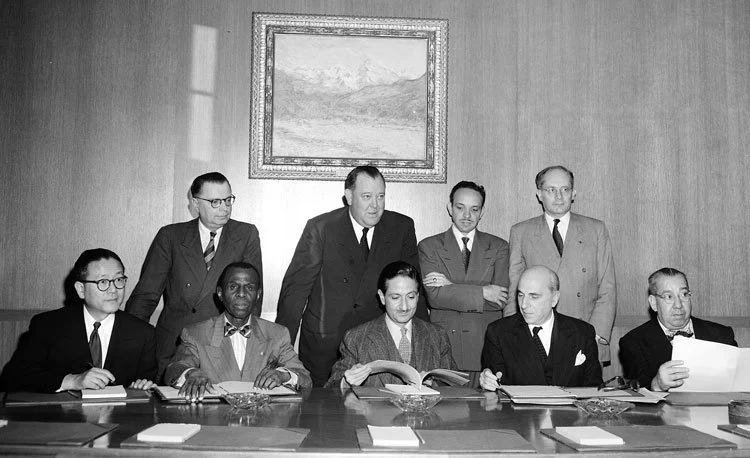
Lemkin lobbied heavily for a UN convention outlawing genocide and in 1947, along with Vespasian Pella and Henri Donnedieu de Vabres, he created the first draft of such a convention, now known as the secretariat draft. I want to highlight two notable provisions in this draft that are not included in the final version. First, the protected groups are not just racial, religious, and national, but also linguistic, cultural, and political. Second, genocide can be biological, physical, and cultural. Cultural genocide included “forced and systematic exile of individuals representing the culture of a group;” “prohibition of the use of the national language even in private intercourse;” “systematic destruction of books printed in the national language or of religious works or prohibition of new publications;” and “systematic destruction of historical or religious monuments or their diversion to alien uses, destruction or dispersion of documents and objects of historical, artistic, or religious value and of objects used in religious worship.” Lemkin’s original conception of genocide was lost throughout the drafting process. Each draft after the secretariat draft looked less and less like his original vision and he was forced to decide what his priority was: definitions or prosecuting genocide. Ultimately, he chose to fight for the provisions that would establish an international criminal tribunal for genocide. In the end, the work Lemkin put into preserving his original conception of genocide would not produce tangible results until the ad hoc tribunals for the former Yugoslavia and Rwanda were created in the early 1990s.
Specific Problems with the Genocide Convention
The Exclusion of Political Groups
The exclusion of political groups is one of the critical flaws of the Genocide Convention. The primary justification for the exclusion of political groups from the Genocide Convention is that people choose their political affiliation, but people cannot choose their race or ethnicity. This argument hinges on the idea that genocide is the targeting of a specific group solely because of some innate characteristic, but that is rarely ever the case. It is important to note, however, that nationality, religion, even ethnicity are not innate characteristics. While you are born into a nationality or religion, it is a choice to remain part of a national or religious group and we know that ethnicity is not an entirely biological phenomenon, but also socially constructed and ever-changing. “Groups formed on the basis of ‘religion’ or ‘nationality’ are in reality no more stable or permanent than groups formed on the basis of political affiliation” and “ethnicity can be shaped by political and economic factors as much as ancestry and inherited culture.” Extensive research has been done into why political groups were excluded from the initial drafting of the Convention (states wanted to be able to suppress political opposition, among other things), but as Beth Van Schaack explains, the exclusion of political groups is fundamentally at odds with the international human rights apparatus.
Discarding political groups from the Genocide Convention created an internally inconsistent human rights regime, because other major international agreements include the category. The prohibition of crimes against humanity prohibits persecutions on ‘political, racial, or religious grounds.’ Likewise, the provisions of the Refugee Convention protect individuals from persecution on account of ‘race, religion, nationality, membership in a particular social group, or political opinion.’
To solidify this point further, political persecution is a valid reason to seek asylum, which shows that political affiliation and expression, while not innate, is something worth protecting. Additionally, before the Genocide Convention was adopted, the UN General Assembly passed a resolution affirming that genocide is a crime under international law “whether the crime is committed on religious, racial, political, or any other grounds.” In sum, there is a history of political affiliation being a protected status under the international human rights regime that cannot be ignored.
The Exclusion of Cultural Genocide
Culture is a fundamental part of identity, and its destruction not only harms that culture, but humanity as well. But the Genocide Convention does not reflect this. The first two drafts of the Genocide Convention explicitly stated that cultural destruction is a form of genocide. In the Secretariat Draft, the definition of genocide included provisions such as “forced and systematic exile of individuals representing the culture of a group;” “prohibition of the use of the national language even in private intercourse;” “systematic destruction of books printed in the national language or of religious works or prohibition of new publications;” and “systematic destruction of historical or religious monuments or their diversion to alien uses, destruction or dispersion of documents and objects of historical, artistic, or religious value and of objects used in religious worship.” The Ad hoc Committee Draft succinctly reiterated these provisions, defining cultural genocide as “any deliberate act committed with the intent to destroy the language, religion, or culture of a national, racial, or religious group on grounds of the national or racial origin or the religious beliefs of its members…” As mentioned in the previous section, fifteen years before the creation of the Genocide Convention, Lemkin explained how vandalism, defined as the “destruction of culture and works of art,” constituted an attack on a collectivity. “The contribution of any particular collectivity to world culture as a whole, forms the wealth of all humanity…Thus, the destruction of a work of art of any nation must be regarded as acts of vandalism directed against world culture.” The definition of cultural genocide in the first two drafts of the Genocide Convention is simply a generalization of the examples Lemkin used to describe the cultural genocide committed by the Nazis in France and Poland.
Humanity clearly understands the importance of cultural preservation and appreciation. If we did not, UNESCO World Heritage sites would not exist, and museums would have nothing to exhibit. Culture gives life meaning and to destroy the culture of a particular group is to destroy the “social vitality” of that group, as identified by Claudia Card. She writes, “Social vitality is destroyed when the social relations—organizations, practices, institutions—of the members of a group are irreparably damaged or demolished.” Because culture gives groups social vitality, “When a group with its own cultural identity is destroyed, its survivors lose their cultural heritage and may even lose their intergenerational connections.” If people cannot participate in their culture because it was destroyed, life becomes devoid of meaning, leading to social death akin to physical death. “By limiting genocide to its physical and biological manifestations, a group can be kept physically and biologically intact even as its collective identity suffers in a fundamental and irremediable manner…the present understanding of genocide preserves the body of the group but allows its very soul to be destroyed.”
Forgets Prevention
The Genocide Convention as it currently exists fails to provide sufficient guidance on how states should prevent genocide, diminishing the utility of the convention as a legal instrument. For a crime like genocide, who implementation and methodology are constantly evolving, there simply needs to be more substantive explanation and guidelines for its prevention. Prevention is currently based on deterrence and the threat of punishment. But it is unclear how effective a deterrent punishment is. Preventing a genocide is a difficult task because the term tends to be retroactively applied via courts or independent fact-finding missions. The international community cannot prevent a genocide if it refuses to acknowledge one is happening and only do so after the violence has ended. Genocides can be prevented by understanding and mitigating the factors that are most likely to lead to genocide, a significant one being war. Prevention must be proactive and cannot be solely based on threat of punishment.
Moving Forward
After highlighting a few problems with the concept of genocide, I want to offer a few alternatives. In terms of Genocide convention, changes are possible. Article XVI of the convention states “A request for the revision of the present Convention may be made at any time by any Contracting Party by means of a notification in writing addressed to the Secretary-General. The General Assembly shall decide upon the steps, if any, to be taken in respect of such request.” All it takes is one state to request that the Genocide Convention be revised, and the General Assembly can decide where to go from there. Given that this convention is 75 years old, it is worth reevaluating its provisions given that the world has changed tremendously since 1948. Revisions to the convention can mean including cultural genocide and expanding the protection status to include political groups. Revisions can also make the prevention aspect clearer. While convincing states to make changes might be difficult, proposing revisions does no harm and can even bring greater attention to the issues with the convention.
One of the problems highlighted earlier in this paper is the exclusion of political groups from the Genocide Convention. Beth Van Schaack offers a new way of thinking of the protection of political groups from genocide and that is through the norms of jus cogens. Jus cogens is the idea that there are certain peremptory norms in international law, norms that cannot be violated no matter the circumstances. According to Article 50 of the Vienna Convention on the Law of Treaties
a treaty is void if, at the time of its conclusion, it conflicts with a peremptory norm of general international law. For the purposes of the present Convention, a peremptory norm of general international law is a norm accepted and recognized by the international community of States as a whole as a norm from which no derogation is permitted and which can be modified only by a subsequent norm of general international law having the same character.
Examples of peremptory norms are the prohibitions on genocide, crimes against humanity, war crimes, torture, human trafficking, slavery, apartheid, etc. Van Schaack makes the case for applying the norm of jus cogens to protect political groups from genocide. “When faced with mass killings evidencing the intent to eradicate political groups in whole or in part, domestic and international adjudicatory bodies should apply the jus cogens prohibition of genocide and invoke the Genocide Convention vis-à-vis signatories only insofar as it provides practical procedures for enforcement and ratification.” Enforcement and ratification can be found in Article IX which says the International Court of Justice has jurisdiction over disputes between states about the interpretation, fulfilment, and application of the Convention (although there are several reservations to this article). Article VIII says that any party can call upon “the competent organs of the United Nations to take such action…as they consider appropriate for the prevention and suppression of acts of genocide” or any enumerated acts.
Conclusion
There is a tendency to call instances of mass violence ‘genocide’ to garner attention and action from the international community because imbedded in the word is a certain gravity that necessitates action. The obsession with genocide makes equally grave crimes like crimes against humanity and war crimes secondary and something to settle for. This directs attention away from mass violence that is not genocide, leading to inaction and indifference.
There are changes that can be made to reduce our obsession with genocide. Contracting parties can propose revisions to the Genocide Convention; the norm of jus cogens can be the legal framework by which we view genocides and mass violence in order to include historically excluded groups from the convention; and we can think diligently about the language we use to describe instances of genocide and mass violence and use the more inclusive phrase of ‘crimes against humanity.’
To be reiterate once again, this is not an argument for genocide denial or even the concept as a whole. Rather, it is an argument against the concept of genocide as it currently exists. The concept of genocide can be strengthened by the inclusion of other groups, cultural genocide, and more prevention provisions.
Indonesian Democracy Under Threat
Staff writer, Sal Cerell, examines the implications of Indonesia’s fragile democratic status.
Indonesia represents one of the few functioning democracies in Southeast Asia. While its neighbors have languished under military rule, with little representation in government, Indonesia has built a sturdy democratic system that serves its citizens better than it hurts them. According to Freedom House, elections are free and fair, with alleged irregularities in the recent 2019 election being dismissed by the country’s top court. The elections themselves are competitive, with multiple parties representing a variety of interests running in elections and receiving votes in the national parliament. A free and independent press has flourished under a relaxed set of regulations, allowing proper scrutiny of the government and access to high-quality information. While there have been reports of intimidation of journalists, the country has largely allowed for a free press, much to the benefit of the country’s democracy. Peaceful protests have been allowed, albeit with limited outbreaks of violence leading to the use of force by security forces. This was exemplified in 2019, as protesters rallied against new government policy. Simultaneously, the country faces several challenges, including rampant corruption from businesses, an underrepresentation of minorities in government, excess military involvement in politics, and a judiciary too prone to making decisions informed by religious beliefs.
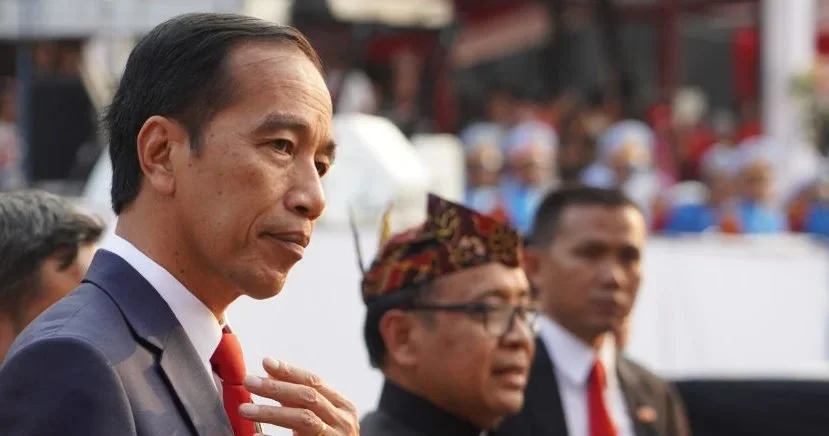
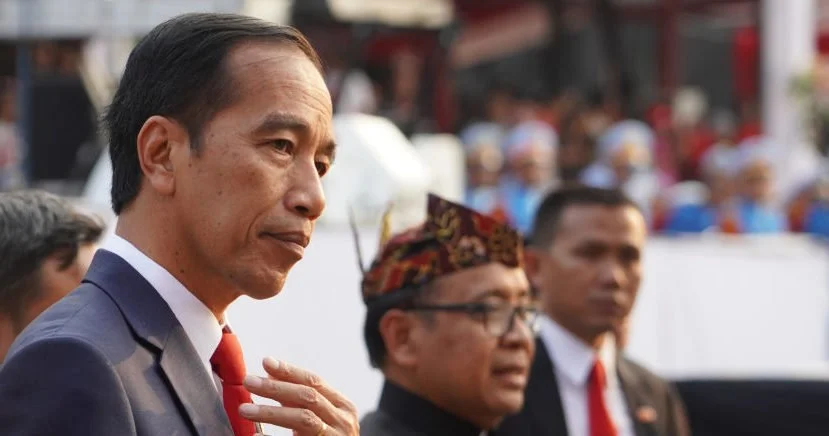
However, as this paper will argue, the biggest challenge facing Indonesian democracy is that of its reckless President Joko Widodo. While initially a marker of continuous democratic elections with his election in 2014 and reelection in 2019, he has shown himself to be incredibly power hungry, pushing for electoral reform that would allow him to seek a third term as President. This is specifically barred by the constitution and would represent a massive setback in the country’s democracy. As such This paper will argue that Joko Widodo represents the biggest threat to Indonesian democracy and should be barred from seeking a third term. Though he has been a monumental force for the country, pushing through massive investment in infrastructure, serving to bolster the country’s economy and making it a regional power, his power-craven ambitions have stained his legacy, and more concerningly, threaten to upend a flawed, yet massive democracy.
Indonesian sovereignty, like much of the developing world, was born out of a long history of colonial rule and exploitation. The British and Dutch arrived in the 16th century, establishing trading ports, and representing colonial expansion into Southeast Asia. The Dutch then obtained full control over the region, suppressing the local population, often brutally. Fraught relations between the colonizers and colonized people of Indonesia sparked frequent rebellion throughout the course of Dutch rule, particularly on the island of Java. The outbreak of World War II served to upend Dutch control of the region. While initially falling under the occupation of the Japanese as they moved to conquer Asia, their loss in the war prompted calls for formal independence from the Dutch. The rich ethnic diversity of Indonesia that had long divided the island along ethnic lines united in their opposition to colonial control and advocated for their freedom. Under mounting international pressure, the Dutch chose to relinquish control of the island, giving the island it’s freedom for the first time in nearly 400 years.
In the aftermath of World War II, Sukarno emerged as the country’s leader, inciting nationalist rhetoric that inspired the islands people to resist Dutch attempts to reestablish their control. As such, he was proclaimed President in 1945. Democratic aspirations were strengthened when the constitution was drafted that same year, establishing a formal separation of powers between the executive, legislative, and judicial branches of government. This mirrored other major democracies and inspired hope for a free Indonesia. However, this hope dwindled as the years progressed. Sukrarno, a once democrat that united the various ethnic groups of Indonesia, slowly evolved into an authoritarian, working to consolidate power in the executive branch and aligned himself with Islamist forces as well as the military. Despite term limits being imposed by a Constitution Sukarno helped to draft, he held office for more than 22 years. Sukrarno resisted calls for parliamentary elections until 10 years after the country’s constitution had been written. In 1955, when election finally occurred, split results amongst voters for the parliament gave way for Sukarno to dissolve parliament, further concentrating the power of the Presidency. This furthered popular disapproval of Sukrano’s rule, and delegitimized the democracy he had promised to his people. However, his main challenge came from an alliance he had bounded between a host of opposing forces. The main two factions he had aligned himself with were the Communist Party of Indonesia, or PKI, and the military, both of whom felt threatened by the other. Increasing Sukarno allegiances with the PKI threatened the military’s power, causing an attempted coup in 1965. With Sukarno’s power weakened, he ceded power to General Suharto, who let the armed forces. Under his rule, he undertook an anti-communist purge, which was aimed at rooting out all communist presence in Indonesia.
During the purge, it’s estimated that between 500,000 and 1,000,000 people were killed, in a horribly brutal display of authoritarian force. Under Suharto’s rule, opposition parties were delegitimized in elections, with the army playing a pivotal role in all forms of government. Backed by the United States, Suharto made Indonesia a hub for foreign direct investment, which led to increased urbanization and modernization of the country’s economy. While political representation was stifled and limited, Indonesians remained supportive of Suharto because of the economic prosperity that occurred over the course of his rule. However, his tenure was indeed marred by the brutality of opposition parties and figures, as well as increased military involvement in the political system, as well as heavy corruption from outside business interests. The 1997 Asian financial crisis brought Indonesia’s spiraling economic growth to a halt, and forced Suharto to leave power after 32 years as President. In the aftermath of the Suharto presidency, a number of Constitutional reforms were undertaken, aimed at increasing the separations of power between the three branches of government. It cemented regular elections with term limited presidents into the constitution. It also increased regional autonomy throughout the country, which was virtually non-existent under the dictatorships of the 20th century. Following the 1998 reforms, regular elections commenced in 2004, and have occurred every 5 years since then. Though the system has been critiqued for a lack of representation of minorities and persistent corruption from outside forces, the system has guaranteed electoral rights to hundreds of millions and have facilitated regular competitive elections, both of which are informed by a free press. Economic prosperity over the same democratic period has flourished, serving to further legitimize the political system.
In 2014, the country elected Joko Widodo, who has been the country’s longest serving President in the democratic period. He ran for and won re-election in 2019, with his fresh five-year term due to be up in 2024. However, Widodo has expressed interest in extended his term past the constitutionally mandated period of two five-year terms, culminating in a 10-year term in office if fulfilled, as Widodo is likely to do. There has been discussion amongst political leaders of either delaying the scheduled 2024 election or removing the two-year term limit in the constitution. Either scenario is equally as dangerous for Indonesian democracy. What is more concerning is that the idea is being propagated by political leaders other than Widodo and has tentative support from the Indonesian population given Widodo’s popularity. The rationale given for such a dramatic move is economic – the country wanned under the COVID-19 pandemic and Widodo is viewed as the best person to lead the recovery effort. Democracy has already stagnated under Widodo – the military has increased their role in politics, reminiscent of past dictatorial trends, and individual freedoms have been limited via legislation he has signed into law, such as giving the military more power in his government and drastically limiting the freedoms of the LGBTQIA+ community. Allowing Widodo to seek a third term in office sets a dangerous precedent in a country with a deep authoritarian past. Increasing their dependency on Widodo only furthers his grip on the political system, and could legitimize him to seek further years of the Presidency. Others in his circle have also raised the idea of having the legislature elect the President in the future, rolling back a key tenant of the 1998 reforms that allowed the populace to directly vote for the executive. Widodo has overseen a country that has backslid massively and has the chance to further erode its democracy should he try to extend his term.
In conclusion, Widodo’s efforts to lengthen his stay in office follow a string of actions that have weakened Indonesian democracy. He must be barred from seeking a third term if the country is to stay free.
The Implications of the Inflation Reduction Act and our Allyship with the EU
Staff writer, Sophie Verhalen, investigates how the Inflation Reduction Act has disrupted the US-EU relationship.
In the summer of 2022, the Biden Administration signed the Inflation Reduction Act (IRA) into law. This massive bill allocates federal spending towards reducing national carbon emissions, lowering healthcare costs, funding the Internal Revenue Service (IRS) and improving taxpayer compliance. One of the most significant aspects of this bill concerns clean energy and advancing climate technology. This aspect works in conjunction with the Infrastructure Investment and Jobs Act (IIJA) and the CHIPS and Science Act. All three of these bills invest spending in manufacturing, job creation, infrastructure, and research and development in clean energy. The Inflation Reduction Act directs nearly $400 billion in federal funding to clean energy via tax incentives, grants, and loan guarantees. Clean electricity and transmission received the largest sum, followed by clean transportation, such as electric vehicles. The goal of the IRA, in addition to the IIJA and the CHIPS Act is to improve U.S. economic competitiveness, innovation, and industrial productivity while considering advancing clean energy efforts and encouraging investment. Leaders of the European Union have voiced their disapproval of the U.S. enacting the IRA for fear that it will disrupt the clean energy market, driving investment away from EU member states due to incentives offered by the U.S. However, the EU’s fears have no real merit. The U.S.’s commitment to clean energy generates a net positive on the global scale in terms of addressing climate change and puts no significant dent in Europe’s clean energy economic sector.
Europe’s biggest concern in the IRA are the incentives it offers for private investment. The majority of funding for the bill is in the form of tax credits which are going primarily to corporations, approximately $216 billion of the nearly $400 billion bill. To be eligible for the full IRA tax credits, corporations must meet a set of criteria. These include prevailing wage and apprenticeship requirements, domestic-production, or domestic-procurement requirements, and in some cases a percentage of critical minerals that have been recycled, extracted, or processed in North America or a country that has a free trade agreement with the U.S. as well as being manufactured or processed in North America. EU leaders believe these incentives will encourage European corporations to relocate to the U.S. and their worries are not entirely unfounded.
During the World Economic Forum in Davos, U.S. governors from Michigan, Georgia, Illinois, and West Virginia Senator Joe Manchin attempted to lure European clean energy businesses to their states, promising cheaper costs of production. German, French, and Belgian leaders all denounced the U.S. politicians’ attempts to strip Europe of their clean energy producers. In response, French President Emmanuel Macron has indicated that he believes the EU should introduce a comparable spending package to the IRA to bolster clean energy corporations in Europe. Some potential issues with this reaction is that the EU is unable to provide tax credits in the way the U.S. can, as only nation states have this authority. Many nation states do provide tax credits and Germany is already operating under a similar model to the IRA, however it is unlikely it would make a significant impact due to the smaller scale of their clean energy production market. Other EU leaders, such as Dutch Prime Minister Mark Rutte, believe throwing money at their existing system would make no difference, rather they should redistribute funding that already exists in clean energy investment.
If the EU is content with the current state of the clean energy market, which considering their reaction to any possible shift they are, then they are realistically making a mountain out of a mole hill. Almost half of the funds provided by the IRA will be spent on upgrading, repurposing, and replacing the energy infrastructure and will be used as loans rather than subsidies. The biggest sector the EU may have concerns with is electric vehicles, however the EVs they are already manufacturing will most likely qualify for subsidies. Germany is the only major exporter of cars to the U.S. and Volkswagen is the only corporation that produces large numbers of electric vehicles. Its best-selling model is already being produced in Tennessee, making it qualify under the IRA as a corporation who will receive subsidies. Other major European automobile corporations such as Audi, BMW, and Mercedes already produce in North America as well. Because they all produce in either the U.S. or a nation with a U.S. free trade agreement, they will also qualify for subsidies.
Concerning our transatlantic allyship, any significant shift would be an overreaction. Although these new subsidies concern European nations, the primary focus should be on coordinating with the U.S. on how to approach the clean energy market. Europe’s trade commissioner, Vladis Dombrovskis said as a reaction to the IRA that the fight against climate change should be done by “building transatlantic value chains, not breaking them apart”. Importantly, the U.S. and the EU need to ensure that they do not battle to drive away business and investment through distortionary subsidies and place reasonable boundaries on the support they are able to give to corporations.
At first glance, it is reasonable for Europe to approach the enactment of the Inflation Reduction Act with a degree of hesitancy. It appears to threaten their existing clean energy market and disrupt this sector of the economy. Their fears were validated by U.S. politicians attempting to lure these corporations stateside with the appeal of subsidies, tax credits, and easy access to loans. Upon further analysis, however, it is highly unlikely Europe’s clean energy market will be disrupted at all by the IRA. The corporations which draw the most concern are manufacturing in the U.S. and already qualify for most of the IRA’s benefits. It is necessary for European leaders to take a less reactionary stance on the bill and focus on further coordination with the U.S. on how to approach clean energy and climate technology efforts moving forward.

Indigenous Communities: A Path to Self-Determination in Western Hemisphere
Staff writer, Milica Bojovic, examines the importance of securing actual self-determination rights to indigenous peoples of the Western Hemisphere .
The Western Hemisphere is a region that features some of the world’s constitutional frameworks that are most attentive and inclusive to the matter of indigenous rights. While many of these strides are highly commendable and even revolutionary, given humanity’s oppressive history, these texts stand in large contrast to the actual reality on the ground where indigenous activists continue to face ignorance, persecution, and, in some cases, death. Even amongst activist circles, the discussion surrounding indigenous communities tends to focus on land protection or a degree of land autonomy at best, which is itself often poorly enforced in practice, and indigenous people’s rights are seen as a means of enriching the nation’s diversity and standing against the colonial past but often with the result of mere commercialization of said culture. Without a more meaningful recollection of the past and an education geared towards a more in-depth appreciation of local customs and diversity, indigenous localities and cultures are reduced to a mere superficial acknowledgement and a figurine an indigenous artisan is attempting to sell to a mildly excited foreigner.
It is crucial to maintain and strengthen the present rhetoric of inclusion, as well as remember the injustices of the colonial past that saw indigenous people subjugated and stripped of their own land and basic human rights, and recognize the contributions of indigenous communities’ to the crucially needed struggle for environmental rights, but the only way to truly move forward is through a broader legal and social recognition of the right to self-determination of these communities. To truly acknowledge and guarantee indigenous people’s humanity and rights and allow for actual preservation and celebration of indigenous people’s identity, culture, language, and socioeconomic progress and inclusion, is to give indigenous people’s voices an actual platform, support better community organization, even across the modern national borders where possible, to listen to input coming from indigenous communities themselves rather than outside assumptions aimed at simply checking off an inclusionary-sounding box when making policy, to guarantee the right to land and meaningful preservation of one’s history, and not to reduce the conversation to a discussion on tourism and environmental rights happening in a vacuum but rather to acknowledge the imperative need of indigenous communities to participate at every level of societal organization and be able to contribute to legal, economic, and sociocultural practices of their country, neighborhood, and local community - to enjoy their human right to self-determination.
First Things First: The Land
When discussing the issue of indigenous peoples’ rights, this rhetoric is often inextricably tied to land. Each indigenous group, as understood by tribal alliances and modern understandings of ethnic boundaries, is assigned a specific geographic space and either given a certain degree of authority over it or paid certain symbolic respects as a reference to the original inhabitants of that geographic space. While land and territory are often key aspects of a group’s identity, it should also be acknowledged that conventional understandings of territorial boundaries may not apply to the indigenous societies of the Americas. To claim a certain territory for a certain group may actually discredit its group’s actual association with the land or impose a foreign and post-colonial worldview.
In the case of Canada, many indigenous groups prefer to not associate themselves with the Canadian identity and actually do not even agree with the very idea of the Canadian entity. While this does not mean Canada does not exist as a country in present world, and it does not necessarily imply these groups’ refusal to acknowledge or even operate within Canada’s framework, it is true that the very idea of citizenship, international and internal treaties, or the idea of land ownership and claims do not necessarily reflect the worldview of these groups and Canada’s attempts to formalize its relationship can be met with reasonable distrust as imposition of the idea of land claims, borders, or the idea of “Canadian” sovereign indigenous nations can come across as paternalistic and reminiscent of colonization. In fact, Canada has also introduced a statement of acknowledgement read in schools, official functions, and even concerts, sports events, and award ceremonies. These statements are meant to pay respect to a specific group that lived on this territory by mentioning their name and recognizing the “enduring presence of the Aboriginal peoples on this land.” The statements are also adapted to read specific region’s most prevalent indigenous groups and acknowledge their specific partaking in Canada’s historical and modern day state-formation processes.
While these statements are a step forward from previous history of forced assimilation, sterilization, and betrayal of prior treaties with the indigenous groups in modern-day Canada, the statements also do not acknowledge the modern lack of advancements in terms of addressing indigenous peoples’ concerns, such as the issue of disappearances of men and women, environmental rights, the very issue of historical injustice, forced assimilation, and illegal overtaking of land. Therefore, the very statements that are meant to pay respect can, at best, actually reveal the ironic hypocrisy of the promise of acknowledgement while not taking concrete action and are in fact potentially just another way to subjugate indigenous groups to the idea of Canada and presence of Canadian hegemony. Additionally, in some cases, the groups mentioned in statements, like the Haudenosaunee and the Anishinabe, may themselves be in disagreement over who had historical presence in certain areas, which can lead to additional confusion and alienation, and some with the authorities all the while continuing to insufficiently address concerns submitted by the peoples that these statements are supposed to protect. While acknowledgement of historical and present day contribution of indigenous people to the land is the very least a modern government can do, any discussion of land rights and historical and modern day presence should not be casually presented on behalf of the modern hegemon state but rather carefully discussed and presented in accordance with the indigenous groups’ worldviews and discussion.
All discussion, seemingly needless to say, should also be transparent and respectful of differences the governing present-day nation state has with cultural and legal frameworks of indigenous groups it is intending to include in these conversations and formal treaties. In the case of Argentina, for example, one can argue that historically most oppression and erasure of land settlements and original socio-cultural relations has been done by the colonial Spanish Crown. However, some of the nations that emerged out of anticolonial struggle for independence and freedoms, such as Argentina and Chile, have themselves expanded their borders thus pushing out original settlers, and the very entities of each modern state in the Western Hemisphere today can be considered a de facto hegemonic presence on behalf of the indigenous, settlers of these lands. While history cannot be undone and lands cannot simply be return due to complexity of demographic and cultural shifts, the very least each of these nation states can do is recognize the enduring legacy of pre-colonial nations, the painful colonial history of injustice and violence, but also continuous contributions of each of these original nations to modern day state-making and sociopolitical life, without implying the need of indigenous, or original (a term often used in some parts of South America to avoid colonial and othering connotations of the word “indigenous”), peoples’ need to assimilate in the modern concept of a nation state but rather allowing for this concept to be expanded to accommodate the people it is supposed to be composed of, which includes indigenous peoples and their homes.
However, going beyond this, present-day nation states should not leave indigenous people as part of a “tradition” and the “past” but rather recognize the very existence and agency of these groups in modernity. Indigenous, or original, peoples should be offered protections by the present-day hegemon state and their input should actively be acknowledged and respected, with concrete action taken to address these concerns. Going back to the Southern Cone, Argentina also is amongst states that presently and historically have had the most inclusive constitutional and legal texts as it pertains to indigenous peoples’ land rights and cultural acknowledgement. Regardless of this, on a regular quiet, breezy day in Buenos Aires, the historic Plaza de Mayo features a constantly present tent that proudly stands right across from Casa Rosada, with the raised Wiphala. While some of the reasons for protests are more structural, such as corruption, abuse of power by authorities, need for greater justice in local governance etc., many of the signs just ask for the government to grant indigenous women an audience, and each reason could best be addressed with greater effort to include indigenous leaders on negotiating tables, and actually listen to their input, their vision for land organization, and their understanding of governance and its principles.
Going north to the beautiful Falls of Iguazu, original communities are largely left to look for their own educational resources and recent treaties actually stripped some of the smaller but very present communities of their original land claims. I personally had the honor to visit these communities and saw hotels that were originally not supposed to be there inhabiting more than half of the area designated for this group. A 2005 accord with the government, according to local residents, encoded confusing language and manipulated tribal leaders into signing treaties that gave up virtually half of their territory. This meant that this society suddenly got hotels and tourists instead of assistance in programs meant to ensure preservation of the local language, history, and culture, assist the members of this group in capacity-building and use of modern professional tools needed to succeed and bring socioeconomic gain and recognition to the area. This discussion is not meant to critique or single out either Canada or Argentina, but rather to applaud existing well-meaning efforts at integration and acknowledgement these governments have undergone but also remind of the need to be critical and not only acknowledge but also address underlying inequalities in power dynamics between modern states and indigenous peoples.
In the end, any discussion about land is not just about land. It is about a larger question of identity, of the right to resources, and of recognition of the negotiating power and agency of the people of this land. To recognize this is to move beyond the idea of territorial claims, and even of the very concept of modern-day nation-state, and allow for changes necessary to ensure acceptance and actual transparent, educated, and democratic inclusion of the people that inhabit the land.
Communities Across Borders
Tied to the very idea of competing understandings of citizenship and belonging to land is the fact that indigenous groups of the Western Hemisphere oftentimes are situated and made to work within a territorially constricting modern nation-state boundary. In other words, indigenous communities are oftentimes separated from fellow community members by an international border, a reality that only makes community organizing, activism, negotiating, and retention of a linguistic, social, and cultural identity that much more difficult to obtain, maintain, and perfect. In some cases, like in the case of Guaraní-speaking groups of the Iguazu Falls, friendly relations amongst Brazil, Argentina, and Paraguay maintain the borders open and circulation and transport can be more easily negotiated, with Paraguay maintaining legal appreciation and practical fluency of Guaraní amidst its borders and facilitating retention of this language, even if colonial time changes. However, friendly relations and sociopolitical exchanges amongst these states have not historically been consistent to say the least and there is nothing, all three being sovereign states, that prevents any of these states from hypothetically choosing a more repressive legal framework that would, if not completely cut off, then more severely restrain movement and intragroup exchange of these regional peoples. In the case of the Miskito people, Honduras and Nicaragua have also enjoyed friendly relations and have also constituted a shared political entity at times. However, they enjoy sovereignty and can similarly choose to restrict the processes of community organizing of Miskitos across their sovereign borders. Furthermore, the effect that the recent proclamations of states of emergency in Honduras and the recent prosecution of journalists and international organizations in Nicaragua, as well as the recent assassinations of prominent environmental activists of indigenous descent in both countries, is yet to be better understood, especially as it pertains to indigenous groups that already lack acknowledgement of sovereignty, a seat at the UN, or another concrete legal recognition on national and international levels.
Here again we have to acknowledge that historical injustice cannot simply be undone and that inclusion cannot be achieved overnight. However, the United Nations have created working groups, forums, committees, and assembled conventions and proclamations to address the issue of indigenous rights and their representation in the international system, and have also invited actual tribal leaders to speak in the interest of their nations. This is a beginning but is a practice that is still lacking consistency, transparency, education, and mutual respect, and equal footing needed for actual democratic inclusion of the indigenous peoples. Furthermore, there should be more effort on behalf of regional bodies to address local concerns and assist in indigenous community organizing across borders. This does not mean that countries need to give up their sovereignty but is rather again connected with the aforementioned idea of care for all citizens that the present-day states claim are trying to protect.
It is Not Just About That Souvenir
I am adding this section because I all too often see people going to North American reservations to buy dream catchers or buying those Wiphala stickers as a proud souvenir from their trip to South America. This is not to say that there is anything inherently wrong with these practices, and they in fact oftentimes are the main source of income and sustenance for many indigenous groups throughout the Hemisphere and the world. The problem I see with this practice is when people buy these items without realizing they are more than just items, that their meaning contains actual spiritual and political significance. Furthermore, it should be questioned that this type of tourism and souvenir selling is what entire groups of people need to be able to survive. Why are indigenous peoples’ industries being reduced to consumption by tourists from mainstream hegemonic circles? Why are objects that hold spiritual, historical, and sociopolitical meaning to them being commercialized, instrumentalized, and misunderstood? This is another power dynamic that we can begin to address through greater education, transparency, and democratic respect for human rights and inclusion of these groups and their practices. A single tourist choosing to learn about what Wiphala stands for or choosing not to buy a dream catcher from Target but invest in a handmade product instead and learn of its origins will not generate a structural change individually. However, this may look like a step in the right direction.
More structurally speaking, however, the culture and very existence of indigenous groups would not be commercialized if proper respect were given to their identity, sovereignty, and sociocultural context. Does this mean sovereignty is necessary to allow for proper self-realization and self-determination of indigenous peoples? This seems to be the actual central question of each subset of issues that surround indigenous rights, be it citizenship, political representation, environmental protection, or cultural preservation issues. This of course depends on complex historical and political implications that are specific to each local and regional contexts. I do want to highlight current successes and implications in granting actual self-determination rights to indigenous peoples.
Of all current world constitutions, only the Constitution of the Plurinational State of Bolivia grants explicit rights to self-determination to the indigenous people on the country’s soil, as article 30 in its second clause contains reference to the rights of “self-determination and territoriality” when discussing the country’s “nations and rural native indigenous people.” Just the very phrasing in terms of the level of nationhood when talking about the country’s minority and indigenous communities is very unique and revolutionary as the very phrasing would be considered by some world leaders as dangerously giving up on the hegemon nation-state’s sovereignty. However, this particular permission has scarcely been exercised in practice given that the pandemic, a coup d'etat, and various administrative changes have delayed the process of granting autonomy to those that requested it or were in the process of requesting it. The case of Guaraní Charagua is fascinating because, since 2015, this particular nation has managed to gain a level of autonomy within its territorial boundaries, with deliberative assembly and traditional forms of governance creating a successful hybrid style of decision-making, functioning effectively in the broader global neoliberal framework while also introducing and maintaining the local customary decision-making processes. However, the tension with the departmental and state governments, and particularly with differently racialized groups, with white mestizos in particular, means that the ability to reach self-determination and own expression without de facto limitations and judgment is not yet realized. Constitutional provisions themselves might not yet be sufficiently detailed and widespread to guarantee self-determination, but Bolivia’s Constitution represents a potential step in the right direction, where nation-state recognized its plurality and that complexity of its constituents’ identities goes beyond the traditional framework of the nation-state, and provisions granted for local autonomy, language and collective knowledge-sharing as means of cultural and scientific preservation can be argued to have significantly supported Bolivian state-formation and human rights prospects.
Another particularly interesting case is that of Chile and the rejected new constitutional framework proposed officially in the latter half of 2022 following extensive protests demanding justice and a new constitution back in 2019. Amidst a constitutional drafting process that was designed to be exceptionally inclusive of the country’s women, minorities, and civil society but that also ended up embroidered in a degree of controversy and many delays given the pandemic and complex global realities, Chile saw its new constitutional proposal in September of 2022 that was widely rejected in spite of the fact that majority expressed a willingness to move away from Pinochet’s constitutional framework still in use in Chile. The sheer length of the text, as well as some of the vague and legally unsecured language embedded by largely politically inexperienced constitutional assembly, were signs of alarms for many voters. Additionally, some described the constitutional draft as utopian and as putting economic progress of Chile at risk due to potentially expensive social protections it guarantees. However, this attempt at a change in constitutional framework represents a very important subject of study to perfect future processes of constitutional drafting. Of particular interest to this article are provisions given to indigenous groups in Chile. The assembly of indigenous community leaders was proud to include clauses on self-determination and even on independent judiciary processes for indigenous communities. However, this proved to be some of the most controversial additions to the new constitutional draft as many felt that this would create a legal gray area and infringe upon Chilean sovereignty and equality of its people under law. This is a legitimate concern and legal implications of such decisions as well as the final supremacy of the constitutional law must be carefully discussed and understood. On the other hand, however, amongst the responses to these concerns on behalf of indigenous leaders also stands a clear understanding and promise by the Chilean state that, by signing to various international laws including the Declaration on the Rights of Indigenous People, the state already committed itself to allowing a degree of autonomy and self-determination rights and the peoples are in fact looking for what already was signaled as legally appropriate. While there is much to learn from this process and contradictions continue to present themselves, the fact that these attempts have occurred and that some other world regions, such as West Africa, have shown profound steps forward in terms of local judiciary and democratic assembly styles and representations being constitutionally recognized, there are avenues for learning and future advancements on this complex legal and social issue.
Conclusion
The issue of inclusion and granting and securing actual self-determination rights to indigenous peoples of the Western Hemisphere, and the world, is a very complex one. It is evident that the very definition of who gets the claim of belonging to a people, a territory, or the very status of a nation is a very complex problem. However, recognizing this complexity, allowing space for a greater conversation, more education, transparency, democracy, and supremacy of the issues of human rights and inclusion as conversational and constitutional drafting frameworks pose a potential step in the right direction. While these issues are becoming increasingly understood, which can be seen in the solutions proposed throughout the text of this article, practical examples from real life show that there is still a lack of education on the issue of indigenous rights, freedoms, and sociocultural integrity amongst the general populations, the modern nation-states stand largely in practical denial of their responsibility, and actual conversations that allow parity and conscious participation to indigenous communities in the state-building and rights-securing processes are still dangerously scarce in practice. It is only through involvement of indigenous communities themselves, one which goes across borders and beyond the present-day restrictions of the globalized neoliberal frameworks, that a change in the right direction can be taken.

Demystifying the Iron Lady and Her Legacy
Staff Writer Samantha Jennings investigates the leadership of female heads of state in a patriarchal world since Margaret Thatcher
Margaret Thatcher remains one of the most influential figures in modern international politics; a hardline conservative, a groundbreaking woman, and an inspiration to the many world leaders who have followed in her footsteps. What factors led to her enduring impact? Historically, opportunities for women in political leadership have been limited due to the domination of male gender bias in society. For the majority of human history, women have been denied the keys to power; even in the most democratic societies – from the birthplace of democracy, Athens, to our shining city on a hill, America – women were, as a matter of course, forced to the sidelines of political affairs. Though most women in the 21st century, in democratic countries, now have the right to vote, entrenched biases against women have only recently started to crumble. Perspectives on Thatcher’s rule have fluctuated over the decades, with some seeing Thatcher as a reactionary, others as a status-quo politician, and for some still as a pre-Reagan Reaganite. But for a woman to attain a position of such high relative importance in global affairs signifies something special. How did she manage to overcome negative biases against women in a time when those biases reigned supreme? How have female leaders since Thatcher adopted her strategies?
In the second half of the 20th century, female leaders were few and far between, and it was still a rather foreign concept for a woman to be the head of a world power. Margaret Thatcher recognized this bias and adjusted her persona accordingly. She knew that the simple fact of her gender could close political doors before she could so much as try to knock. This meant that appearing friendly might as well have been the lowest of her priorities. Her fight to implement “Britain First” policies eventually led to her infamous designation as the "Iron Lady.” (It is worthwhile to note that this nickname was originally intended as a derogatory slur by the Soviet press.) By the end of her tenure, Thatcher was often thought of as being tougher than most men.
Over 30 years since Thatcher’s time in office, how much has the stigma around being a female Head of State changed? In the present day, there are, of course, more female leaders than when Thatcher was serving as prime minister; as of September 2022, there are 28 female Heads of State. Has Thatcher’s legacy shaped how women in power act today? Do women in leadership positions feel the same need to correct for their femininity today?
In the summer of 1979, Margaret Thatcher was appointed Britain's first female prime minister by the Conservative Party. Growing up through World War II and attending college as the Cold War began in earnest, Thatcher carried through her 11 years of leadership a deep-rooted opposition to communism and a desire to correct the policies she believed were crippling English society.
Thatcher was a staunch capitalist who believed in the principles of classical liberalism, decrying the interventionist economic policies that she felt had led to Britain’s stagflation in the 70s. With rising inflation, constant energy shortages, frequent labor strikes, and expensive oil prices, this wasn’t hard to believe. Throughout her time in office, she worked to limit the power of trade unions and tighten what she saw as the state’s overly generous welfare programs. All of Thatcher’s actions in office were in furtherance of her goal of restoring England’s former economic status as a major player in Europe and internationally. By privatizing state-controlled and public goods industries, she also cut the amount of government subsidies to underperforming businesses, further increasing the country’s rising unemployment rate. These high unemployment rates significantly reduced the power of the trade unions and, some economists argue, successfully cut down on inflation. As her policies caused unemployment to skyrocket, Thatcher’s popularity declined equally precipitously. All the same, Thatcher is often cited as a pioneer for bringing Britain out of economic decline, and her legacy shaped policies of the Conservative and Labour parties for decades to come. Since Thatcher, there have been a small number of women in a position as powerful as hers, an even smaller number with the influence and political capital to shape their countries around their political ideologies.
Perhaps the closest analogue to Thatcher in recent years would be the first female chancellor of Germany, Angela Merkel, at least in terms of international stature. Merkel served as Germany’s head of government for over 16 years, from 2005 until 2021. Of course, the similarities between Thatcher and Merkel are apparent but rather limited. Similar to Thatcher, Merkel inherited a country during a time where the economy wasn’t as strong as it could have been. She was able to systematically balance the prioritization of safeguarding and promoting German economic interests with protecting her own popularity as a leader. This was always challenging for Thatcher, who was almost single-mindedly focused on economic protection. Merkel’s legacy shaped her as someone just as influential as Thatcher, but who is seen in a very different light. Merkel was given the endearing term “Mutti” (or “mother”) by the German people. In 2021, she was the leader who scored the highest approval rating of any world leader in a survey of six countries for her work in strengthening the German economy and the European Union (EU) as a whole. So how did she learn from Thatcher’s mistakes? By finding the delicate balance between seeking the public’s trust and fighting for her policy goals.
While Thatcher fought for a dramatic reduction in the English welfare state, Merkel’s tenure was characterized by support for expanded social programs. Merkel was widely considered to be a defender of liberal democracy, prioritizing national social welfare programs and helping to lead Europe’s response to faltering international economies. Merkel didn’t seek to command the center stage of EU politics, but her decisive actions had a tendency to put her there anyway. Merkel’s balanced decisiveness echoes Thatcher’s leadership style, but through a completely different tone. Merkel’s leadership personality was “understated but achieving,” vouching for herself as a servant to the German people. This was something Thatcher couldn’t relate to; during her career, she was famously quoted saying “society does not exist.” Considered an underdog by her own party, as the only woman, Protestant, or East German to become chancellor, Merkel was accustomed to fighting for the “little guy” in her pursuit of policies. She advocated for debt relief during the aftermath of the financial instability in the years following 2008 and loosened the country’s immigration laws when other European countries were turning refugees away.
Her cool handling of a crisis became her trademark, as Merkel’s leadership spanned across multiple issues of foreign and domestic upheaval. Merkel, perhaps, learned from Thatcher’s legacy and understood that being a true “Iron Lady” didn’t mean she necessarily had to lead with abrasiveness and what was interpreted as a lack of compassion towards the people of her country to accomplish political goals. The takeaway from her legacy comes down to one characteristic: Merkel’s balance of her maternal nature coming into how she enacted policy and led the country. This was one of the biggest traits that Thatcher lacked, and it appears to have worked wonders for Merkel’s political legacy.
Of course, it is important to note that Merkel was not without her own criticism. Merkel faced strong opposition for supporting continued robust trade with Russia following its occupation of Crimea – an economically-advantageous move – rather than taking a more hardline position. Critics argue that this policy not only helped Russia protect its advantages over Europe, but also that Merkel’s lack of a reaction was taken as a sign that further incursion into Ukrainian territory would not be treated harshly by Germany.
In 2017, Jacinda Ardern was elected as New Zealand’s third female prime minister by the Labour Party. She is also the country’s youngest prime minister in over one hundred years to hold office. The similarities between the leadership of Thatcher and Ardern are antitheses of each other. Ardern’s leadership can be understood in a few words: compassion, honesty, and strength through unity. Ardern’s charisma, her ability to come across as a person rather than a politician, sets her apart from Thatcher and most other political leaders. This core strength is something that helped Ardern gain favor with the people of New Zealand, winning election and a subsequent reelection by a landslide majority. Her policies focused around enacting government subsidies for impoverished citizens and families as well as climate change legislation. Unlike Thatcher, the world saw Ardern’s policies having dual priorities of both social and economic reform. Recently, Ardern spoke to the press, announcing her decision to resign from the role of Prime Minister, which she had held for five and a half years. When asked about how she wanted people to remember her legacy, she responded by saying, “As someone who always tried to be kind.”
The last statement Ardern left the public with was one of honesty and grace: “I hope in return, I leave behind a belief that you can be kind but strong, empathetic but decisive, optimistic but focused, that you can be your own kind of leader.” Jacinda Ardern’s leadership style is trailblazing in the face of modern politics where the narrative has been centralized around maintaining power by any means necessary. This also means not appearing weak and therefore, incapable of leading. The power struggle of politics leaves little room for the appreciation of empathy and kindness. Ardern’s leadership approach is a sharp contrast to Thatcher’s as a result.
Her tenure, too, was not without its own controversies. Ardern was praised for her swift and effective policies on controlling the COVID-19 outbreak in New Zealand; a major policy critique of Ardern’s administration, however, was its reported failure to fairly distribute vaccines among indigenous populations in the country. By the end of 2021, 49% of Māori were fully vaccinated compared with 72% of the entire eligible population.
While Thatcher, Merkel, and Ardern are all widely considered to be successful politicians and changemakers, their legacies can teach new generations of female leaders and politicians that policy is important, but nothing is more vital than personality of a leader, because this is the backbone of their policy decisions. Since Thatcher, there have been leaders such as Merkel and Ardern who have shown that a politician doesn’t have to be a forceful, unrelenting, and manly person to be followed and respected; their empathetic effectiveness and popularity have convinced us that this should not be the grand narrative of politics. Thatcher might have assimilated into this role to become the “Iron Lady” because she felt the burden of her gender and needed a way to gain respect in a masculine world. The widespread popularity of Merkel and Ardern’s policies and personalities is something that world leaders, both men and women, would do well to remember when faced with difficult leadership decisions. Rising female leaders might find it helpful to consider that aggression is not the only way to demonstrate strength.
National Pride and a National Healthcare System: The Strikes Defining the UK’s Future
Executive Editor, Caroline Hubbard, investigates the impact of the NHS strikes on the British psyche
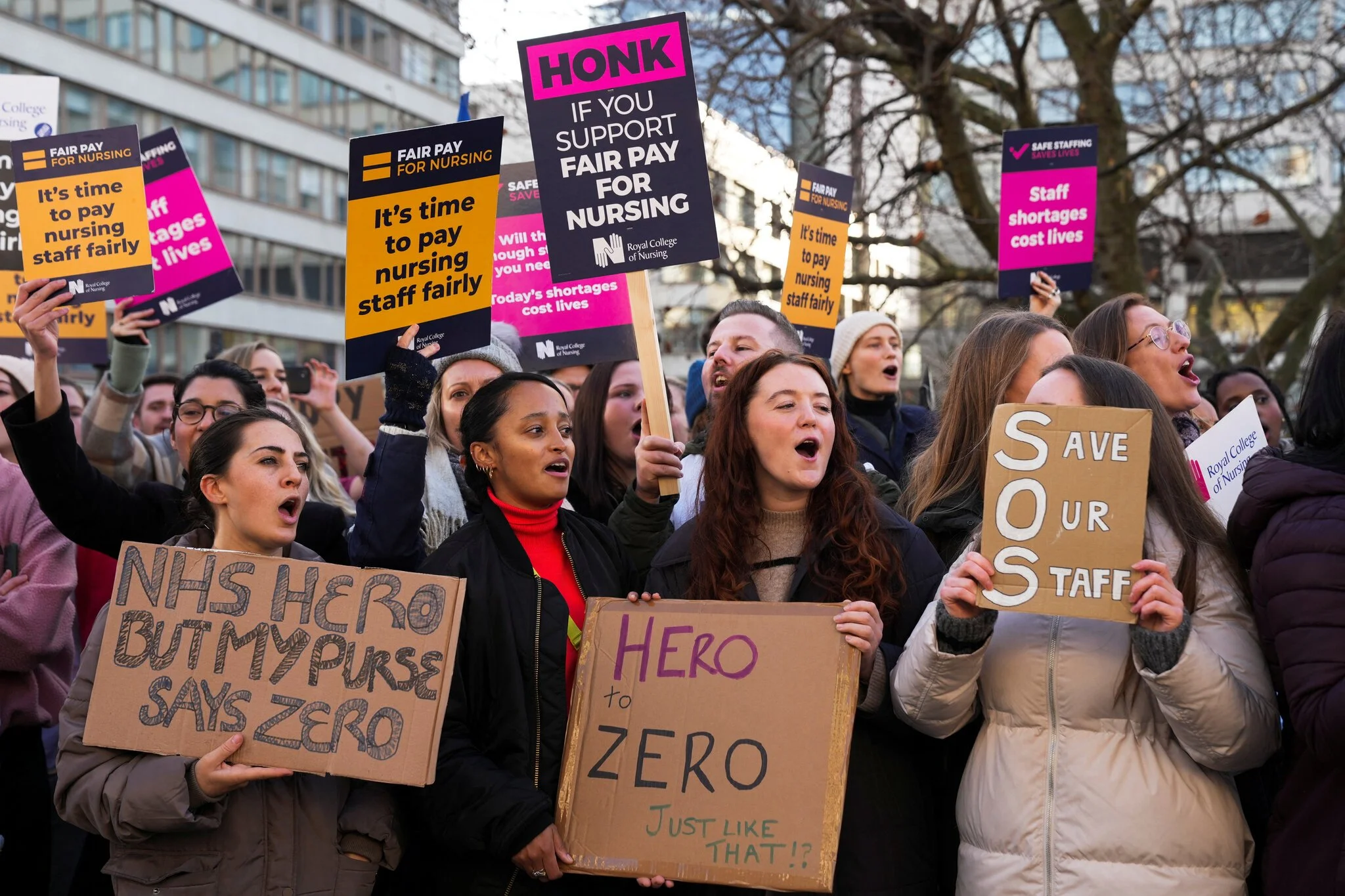
In December of 2022, months of separate public service worker protests spiraled into the largest national health service strikes ever witnessed in British history.. Now, more than three months on since their start, Britain’s National Health Service workers show no signs of stopping as the stakes have only strengthened. At the core of these strikes are key demands by employees that have been routinely denied by the British government. The workers are asking for pay raises due to historic levels of inflation and greater overall funding for the NHS.
This marks the NHS’ largest strike, and yet the government is still refusing to meet union demands. The government is refusing to meet the pay raises of NHS workers because they claim to be unable to afford it and for fear of increased pay leading to higher prices, thus worsening inflation and raising interest rates and mortgage payments.
The UK has undergone a ‘cost of living crisis’ since late 2021 which has led to an decrease in British disposable incomes thanks to inflation. Although the government has attempted to aid in this crisis through support packages, such as capping household energy prices, many NHS workers say that this is still not sufficient support. Over 120 NHS trusts are expected to strike, including nurses in cancer wards, A&E departments and intensive care units.
The strikers are adamant that the public understand their need to protest. David Hendy, a 34 year old nurse, revealed his thoughts on the issue: “This job is slowly killing nurses. The nursing workforce in the last 10 years has been through hell and back. We've got through COVID, I've got colleagues who died from COVID. I myself have had it three times…morale is rock bottom.” Hendy is not alone in his experience, after decades of poor pay and the trauma of the COVID-19 pandemic, nurses are fed up. Despite being publicly supported for their heroism throughout the pandemic, many NHS workers feel unappreciated and ignored. Victoria Banerjee, a nurse for over two decades, stated that "The workload is phenomenal now and our patients are sicker than they’ve ever been.”
Many nurses feel unable to keep up with the pressing demands placed upon them. There is a resource and staffing crisis within the NHS, magnified by over 25,000 nurses leaving the profession in the last year alone. The staff shortage means that many nurses are forced to double up on shifts and patients, performing unprecedented levels of care. Nurses have expressed their fear at endangering patients simply because they cannot adequately attend to each and every one. Pediatric nurse, Jessie Collins, revealed that “During one of my worst shifts I was the only nurse to 28 unwell children … it’s not safe and we cannot deliver the care that these children need at times.” Nurses on the picket lines have described their working conditions as dangerous and scary and their testaments reveal not just anger, but blatant fear for themselves and their patients.
A Department of Health and Social Care spokesperson stated in an interview that “Ministers have had constructive talks with unions, including the RCN and Unison,” however these talks have not led to any sufficient action. The RCN (Royal College of Nursing) have rejected pay deals that do not properly address the impact of inflation. The core argument of the government is one of financial prudence. They refuse to increase salaries given the increase it will lead to in regards to the national budget and its potential to only worsen inflation.
The National Health Service has played an influential role in the national fabric for decades, ever since its creation in 1948. It is regarded as a source of pride and unity for all citizens, which adds to the intensity of the recent strikes.
History of the NHS
In 1948, following the devastation of World War II, a recently established Labour Party prime minister, Clement Attlee, set about establishing a radical new system for the British people. Atlee’s government implemented the economic reforms advocated by famed economist, John Keynes, that prioritized nationalizing industries, improving national infrastructure, and developing a welfare state designed to actively take care of three vulnerable groups in society: the young, the old, and the working class. Perhaps the most pivotal creation brought about by the new welfare state was the National Health Service, founded in 1948.
The NHS did not provide new forms of medicine or care, but it radically transformed the average British individual’s relationship to healthcare. No longer did people pay for healthcare service on an individual basis, instead they paid collectively as taxpayers. The NHS redistributed and equalized the healthcare process, allowing everyone access to care for the first time in British history. British citizens no longer had to worry about affording care or going into debt due to high medical bills. Aneurin Bevan served as Minister of Health under Atlee’s government and was directly responsible for the creation of the NHS. The son of a coal miner, he spent his political career advocating for the working class. His foundational philosophy of the NHS can best be understood through his poignant statement that “Illness is neither an indulgence for which people have to pay, nor an offence for which they should be penalised, but a misfortune the cost of which should be shared by the community.”
The NHS continued to grow all throughout the latter of the 20th century despite major economic crises, such as the Winter of Discontent in 1978 and the rise of mass striking and inflation. Developments in healthy living and improved national knowledge surrounding daily health habits brought about lower mortality rates and changes in fatal diseases. The NHS sought to expand their care process and better understand how more external factors, such as diet, exercise, geography, and economic class were playing a role in the health of British citizens. Changes in daily habits and medical breakthroughs transformed people's understanding of the modern medicine and the NHS was capable of.
The Politicization of Healthcare
By the end of the 20th century, the NHS was widely beloved and respected for its life-changing impact on the British public; but it was also becoming an increasingly controversial institution in politics, with both Labour and Conservative using the NHS as a campaign and voting strategy. The demand of the NHS seemed endless and the services continued to grow in number, but this constant growth fueled by media and political attention only created a gap in which “what was possible and what was provided seemed to be widening.”
As the NHS continued to grow, so did the political debates surrounding it. Both Labour and Conservative argued over funding and regulation. In particular, many of the debates focused on the distribution of the financial burden to taxpayers and overall distribution of the national budget. Increases in immigration and national health crises became key factors in helping to politicize this institution.
The British government has been defined by Conservative, Tory rule and a large variety of prime ministers for the past decade. As a result, the changes made to the NHS are rooted in Conservative policies. The recent downfall of the NHS is rooted in over a decade of underfunding from a Conservative government.
A lack of staff and available resources destroyed the NHS. Waitlists for appointments are now a factor of daily life, forcing many citizens to wait months to receive basic care. This shortage has a death toll; in November of 2022, at least “1,488 patients are estimated to have died in Scotland as a result of waiting too long in emergency departments.” British citizens are dying in emergency rooms because nurses and doctors cannot tend to them with the urgency required but they are also slowly dying at home as they wait for an appointment. Delayed appointments are affecting overall well being according to a survey in which 25% of individuals said the wait for treatment has a “serious impact on their mental health” as over 7.2 million people are currently waiting for treatment. The inability of the NHS to properly support its citizens reveals a profound failure in matters of funding and organization.
Identity Lost
Viewing the NHS strikes solely as a salary issue does not accurately portray the true issue at large. NHS employees are striking because the system is failing and the UK government is unwilling to help. The inability of the NHS to effectively provide for its patients reveals a far darker issue that goes beyond low salaries and inflation: The United Kingdom can no longer afford to take care of itself.
The NHS is a tremendous source of pride for individuals all across the United Kingdom. In a recent study by Engage Britain, over 77% of British citizens polled stated that the NHS makes them feel proud to be British. However 20% of those surveyed also revealed that they had been forced to turn to private sector care due to limited appointments and resources. Private healthcare companies are growing rapidly as the “market for private health care in the United Kingdom has doubled since before the pandemic.” The growing influence of private healthcare across the UK demonstrates the dire nature of the situation.
Perhaps that is why these strikes feel more intense than any other historically, and not just due to record turnout. The strikers are asking for more than a living wage; they are asking for a sense of dignity and pride that they can collectively unite behind, and above all they are asking for a sense of hope. The NHS strikes show a healthcare system that is clearly in shambles, but they also show a nation destroyed and without a unifying identity to rally behind. Even if the strikers and the government can come to an agreement based on each of their demands, it is unlikely that the true underlying issues of the strike will be solved anytime soon.
The Development of the Modern-Mauritian State
Staff writer, Sal Cerrell, examines the economic success behind the modern-Mauritian state.
The small island nation of Mauritius is one of the world’s top destinations for a luxury vacation. Its natural beauty makes it a hot spot for the wealthy communities of Europe and Asia alike; an appeal that draws in around 1.4 million people every year, or about 110% of the country’s population (World Bank). Visitors of Mauritius, lacking any political research, will likely be unaware that the country represents a positive rarity in African politics: a relatively well-functioning democracy. Freedom House, a think-tank that measures democracy around the world, gives Mauritius and 86 out of 100 on their scoring of the country (100 being a full democracy, and 0 being fully undemocratic) (Freedom House). It has perfect civil liberties score and has all but 4 points to have perfect political rights. Its impressive score makes it the most democratic country in Africa, and even ahead of well-recognized democracies such as South Korea and the United States. The country also has the third highest GDP per capita in Africa, at roughly $23,000 (World Bank). Its political system is characterized by a competitive system with regular elections and a respect for, or at least a tolerance of the rich ethnic diversity that the island possess. The country’s credentials are impressive but are both underappreciated and under reported. This paper will not only attempt to highlight their successes, but also argue that they are the causes of a strong political system that has consistently promoted and adopted policy that has burgeoned economic growth, and used its revenue to expand the political system, all while preserving and expanding political rights for ethnic minorities. I will also argue that relics of the Mauritian colonial structure, while most certainly impeding the country’s political, social, and economic development by subjecting the population to tyrannic rule that fostered a system of slavery and oppression, did nonetheless serve as a foundational starting point, from which the country’s government and economy flourished.
Mauritian history is much like that of the rest of colonial Africa. Initially established as a Dutch trading port in 1598 (Lange), it was quickly deserted and found itself under the rule of French colonialists. Much of French rule was characterized by a rapid economic development of the island. Sugar production, a staple of colonial trade, was expanded massively. Plantations were created, which led to the importation of slaves from continental Africa. France established Mauritius as key colony in the production of sugar, which led to its transfer of ownership from the French to the British, in the Treaty of Paris in 1814 that ended the Napoleonic Wars. When the British abolished slavery on the island, as it took similar steps in many of its other colonies, the country’s economy still required laborers to work on the ever-growing sugar plantations that gave Mauritius its economic importance. To solve this problem, the British imported indentured workers from its colonies in India and China, who were effectively slaves as they lacked basic political and civil liberties and were sent to Mauritius against their will. Nevertheless, their arrival on the island in the hundreds of thousands forever changed the demographic makeup of the country (Lange).
As Britain and much of Europe decolonialized in the aftermath of World War II, Mauritius too gained its independence from the British on March 12th, 1968. The country almost immediately adopted a Westminster-like parliamentary form of government, with the position of Prime Minister serving as the head of government, and the more ceremonial role of President serving as the head of state. The legislative body had 70 elected seats. The country’s constitution granted all people equal political representation regardless of their ethnic background, a key facet in establishing the country as a democracy given the diversity in the country. The country’s political system was reflective of this constitutional detail, as well as the country’s diversity, as it established several political parties that represented its various groups. None has been influential in the politics of the country then the Mauritian Labor Party, which was initially formed to represent agricultural workers in wage negotiations with the British. The government has historically maintained a strong social safety net that has prevented poverty and has limited inequality. This system has several functions that make it effective. For the elderly, the government provides a comprehensive pension program that roughly equates to 70 dollars a month. The program is incredibly popular amongst Mauritians, and politicians have been punished electorally for threatening to gut the program (Osei-Hwedie). The Mauritian government also provides free healthcare for all its citizens and pays for both primary and secondary schooling for its children. This keeps kids in school until they are at least 16 years old. The country has two institutions of higher education to serve those with higher academic pursuits. Mauritian students also frequent top schools in Europe and the United States. The plethora of social programs offered by the Mauritian government is made possible by an ever-growing economy that provides much of the funding for the national government (Mehta).
The country’s economic development ran parallel its political development. Given the country’s natural beauty, tourism emerged as a large segment of the country’s economy. What started with just 1,000 visitors annually at the end of decolonialization, swelled to around 600,000 in the late 1980’s and currently stands at over a million every year. While tourism flourished, the Mauritian government continued its former colonial exportation of sugar, this time leveraging its strong relationships with France and Britain to negotiate fixed purchasing prices that were higher than the market rate. In addition to an inflated purchase price, Mauritius also levied a roughly 20% tariff on the export, furthering their revenues from the crop . This helped maintain low-skilled labor jobs. Mauritius also expanded into textile production, specifically producing sportswear. This furthered their integration with European markets and served to diversity the economy (Sandbrook). The government established an Export Processing Zone (EPZ) which provides companies with a cheaper means of importing machinery for their goods. The economy has since diversified into banking and businesses and has begun investing in continental African firms (Industrial Free Zones Boost Mauritius' export-led manufacturing).
Mauritius owes its success to many different factors. The first of which is the strong relationship between its government and its economy. The country has had a fluid relationship between its political and economic institutions, that has been relatively free of corruption. The Mauritian government has exercised its authority on economic matters well, implementing tariffs and negotiating fixed prices for goods, both of which benefited the country’s economy. Additionally, the country’s system of government was designed to be inclusive. The electoral system encourages the nomination of minority candidates to ensure that the island diverse ethnic groups are represented in politics. The system goes as far as to appoint eight loosing candidates to the legislative branch to ensure representation is maintained. The government also required that parties in the legislative branch form coalition governments. Since each party traditionally represented specific ethnic groups in the country, the coalition requirement functioned to erase the ethnic differences between each party.
Additionally, the Mauritian governmental structure under colonial rule was much different than the rest of British-controlled Africa. Unlike other colonies in Africa, Mauritius had a much more developed system of governance that included a strong bureaucratic structure. As such the government had 4 times as much state revenue, 3 times as many police officers, and 10 times as many judges as the average British-governed African colony. They had a generally system of state infrastructure, that mimicked Singapore’s government, which too was a post-colonial success. The British also allowed Mauritians to participate in this government, with around 60% of workers in the Mauritian government being Mauritian. Once independence was achieved, Mauritians inherited a much stronger political system then their continental African counterparts. Though colonialization most certainly harmed Mauritian economic and political development, the form of government Britain established made it easier for the country to begin its process of independent political advancement.
Another reason Mauritius found political and economic success was the division of land that took place in and around its independence. As sugar plantations were dissolved as colonial bosses left the country, the land was reclaimed by the local inhabitants, forming strong village communities. This empowered local leaders, who now possessed land from which they could harvest sugar and lead more productive lives. It also served as the foundation for the development of local political parties, which served to diversity and expand the reach of the Mauritian political system (Lange).
In conclusion, the development of the modern-Mauritian state is rooted in a strong political system that catered to the needs of the economy, creating a strong flow of revenue that was used to fund social programs.
Works Cited
“BTI 2022 Mauritius Country Report.” BTI 2022, https://bti-project.org/en/reports/country-report/MUS#pos2.
“GDP per Capita (Current US$).” Data, https://data.worldbank.org/indicator/NY.GDP.PCAP.CD.
“Industrial Free Zones Boost Mauritius' Export-Led Manufacturing.” UNIDO, https://www.unido.org/stories/industrial-free-zones-boost-mauritius-export-led-manufacturing.
“International Tourism, Number of Arrivals - Mauritius.” Data, https://data.worldbank.org/indicator/ST.INT.ARVL?locations=MU.
Lange, Matthew. “Embedding the Colonial State: A Comparative-Historical Analysis of State Building and Broad-Based Development in Mauritius.” Social Science History, vol. 27, no. 3, 2003, pp. 397–423. JSTOR, http://www.jstor.org/stable/40267814. Accessed 24 Feb. 2023.
“Mauritius: Freedom in the World 2022 Country Report.” Freedom House, https://freedomhouse.org/country/mauritius/freedom-world/2022.
Mehta, Rani. “Ethnicity, Ethnic Relations and Development of Mauritian Society.” Indian Anthropologist, vol. 45, no. 1, 2015, pp. 47–60. JSTOR, http://www.jstor.org/stable/43899415. Accessed 24 Feb. 2023.
Osei-Hwedie, Bertha Z. “Successful Development and Democracy in Africa: the Case of Botswana and Mauritius.” Il Politico, vol. 65, no. 1 (192), 2000, pp. 73–90. JSTOR, http://www.jstor.org/stable/24005439. Accessed 24 Feb. 2023.
Sandbrook, Richard. “Origins of the Democratic Developmental State: Interrogating Mauritius.” Canadian Journal of African Studies / Revue Canadienne Des Études Africaines, vol. 39, no. 3, 2005, pp. 549–581. JSTOR, http://www.jstor.org/stable/25067498. Accessed 24 Feb. 2023.
“Why Africa's Island-States Are Generally Freer.” The Economist, The Economist Newspaper, https://www.economist.com/middle-east-and-africa/2021/06/26/why-africas-island-states-are-generally-freer.
“BTI 2022 Mauritius Country Report.” BTI 2022, https://bti-project.org/en/reports/country-report/MUS#pos2.
“GDP per Capita (Current US$).” Data, https://data.worldbank.org/indicator/NY.GDP.PCAP.CD.
“Industrial Free Zones Boost Mauritius' Export-Led Manufacturing.” UNIDO, https://www.unido.org/stories/industrial-free-zones-boost-mauritius-export-led-manufacturing.
“International Tourism, Number of Arrivals - Mauritius.” Data, https://data.worldbank.org/indicator/ST.INT.ARVL?locations=MU.
Lange, Matthew. “Embedding the Colonial State: A Comparative-Historical Analysis of State Building and Broad-Based Development in Mauritius.” Social Science History, vol. 27, no. 3, 2003, pp. 397–423. JSTOR, http://www.jstor.org/stable/40267814. Accessed 24 Feb. 2023.
“Mauritius: Freedom in the World 2022 Country Report.” Freedom House, https://freedomhouse.org/country/mauritius/freedom-world/2022.
Mehta, Rani. “Ethnicity, Ethnic Relations and Development of Mauritian Society.” Indian Anthropologist, vol. 45, no. 1, 2015, pp. 47–60. JSTOR, http://www.jstor.org/stable/43899415. Accessed 24 Feb. 2023.
Osei-Hwedie, Bertha Z. “Successful Development and Democracy in Africa: the Case of Botswana and Mauritius.” Il Politico, vol. 65, no. 1 (192), 2000, pp. 73–90. JSTOR, http://www.jstor.org/stable/24005439. Accessed 24 Feb. 2023.
Sandbrook, Richard. “Origins of the Democratic Developmental State: Interrogating Mauritius.” Canadian Journal of African Studies / Revue Canadienne Des Études Africaines, vol. 39, no. 3, 2005, pp. 549–581. JSTOR, http://www.jstor.org/stable/25067498. Accessed 24 Feb. 2023.
“Why Africa's Island-States Are Generally Freer.” The Economist, The Economist Newspaper, https://www.economist.com/middle-east-and-africa/2021/06/26/why-africas-island-states-are-generally-freer.
A broken immigration system: the extension of the Title 42 immigration policy leaves many Cuban asylum seekers in crisis
Staff Writer, Candace Graupera, explores the impact of the extension of Title 42 on specifically Cuban asylum seekers and the perpetuation of the United States’ broken immigration system.
After five years of saving money, Patri, from Havana, Cuba, was ready to make the trek to the United States. Cuba’s economic crisis has become so dire in the past few years, due to COVID-19. The cost of living has been steadily rising and there has been an increase in food shortages. In 2022, 2% of Cuba’s population left for the U.S. and Patri hoped to be one of them. She saved up the equivalent of 8,000 dollars. However, this was rendered impossible by the Supreme Court’s decision that extended Title 42’s immigration policy. Now if you are seeking asylum, as Patri is, from four countries, Cuba, Venezuela, Nicaragua, and Haiti, you have to apply for a parole process. The process allows only 30,000 migrants to enter the U.S. per month and the qualifications are steep. You need to have a valid passport, pass a background check, afford the airfare, and have a sponsor with legal status who is already inside the U.S. that can help to support you financially. If you do not have a sponsor, as Patri doesn’t, you will be turned away at the border and forced to remain in Mexico for the time being. For many, this can be a death sentence, left vulnerable to theft, homelessness, and kidnapping for ransom. Despite these risks, many migrants make the trek anyway because they simply have no other alternative. The extension of the harmful Title 42 immigration policy by the Supreme Court and the Biden Administration leaves many Cuban asylum seekers in a crisis due to unreasonable restrictions. In response, the Biden Administration has put forth future policy changes to counteract the extension of Title 42 that will hopefully accomplish its goal of fixing the broken immigration system.
What is Title 42?
Title 42 is a U.S. law used in issues such as civil rights, public health, social welfare, and more. The government can use it to take emergency actions to keep contagious diseases out of the country. It was first used in 1929 during a meningitis outbreak to keep Chinese and Filipino ships from entering the U.S. and spreading the disease. The law was only enacted again in 2020 by then-president, Donald Trump, due to the global COVID-19 outbreak. However, Trump also used this law and its implications to turn away migrants from the border more quickly without having to consider their cases for asylum. Since this law has been put into effect in 2020, 2 million people have been barred from entering the U.S.
The Trump Administration’s impact on immigration policy
Donald Trump’s campaign and presidency are defined largely by his harsh views and policies on immigration and enforcement. There are 100 million displaced refugees in the world today, a number that only grew worse during Trump’s presidency. He reduced legal immigration into the United States by 49%. From 2016-2019, there was an increase in denials for military naturalizations by 54%. During his presidency, 5,460 children were separated from their families at the U.S.-Mexico Border. In 2017, he announced that he would dismantle DACA, Deferred Actions for Childhood Arrivals, which provides relief from deportation and work authorization for immigrants brought to America as children. He also tried to terminate TPS, Temporary Protected Status, a program that grants legal status – including work authorization and protection from deportation – to people from designated countries facing ongoing armed conflict, environmental disaster, or other extraordinary conditions preventing their safe return. Hate crimes against Latinos and Hispanics rose by 21% in 2018. By increasing his anti-immigrant rhetoric, he made the issue of immigration one of the top priorities in the 2020 election.
The Biden Campaign’s immigration policy promises
Since immigration played a powerful role in the 2020 election, the Biden campaign put out extensive information on how he was going to help fix the immigration crisis if he was elected to office. He starts by evoking emotion in his plan by saying, “It is a moral failing and a national shame when a father and his baby daughter drown seeking our shores. When children are locked away in overcrowded detention centers and the government seeks to keep them there indefinitely.” He ultimately, flat-out states, “Trump has waged an unrelenting assault on our values and our history as a nation of immigrants. It’s wrong, and it stops when Joe Biden is elected president.”
Biden states overall goals for immigration policy, such as modernizing the immigration system and welcoming immigrants into the community. However, since this election was about defeating Trump and reversing his policies, Biden created promises for his first 100 days in office. These include, “Immediately reverse the Trump Administration’s cruel and senseless policies that separate parents from their children at our border” and “End Trump’s detrimental asylum policies.” He wants to end the separation of families at the border by ending the prosecution of parents for minor violations since these are mostly used as scare or intimidation tactics. He said that he wants to restore asylum laws so they can actively protect people fleeing persecution. The Trump Administration put restrictions on access to asylum for anyone traveling through Mexico or Guatemala and those fleeing from gang or domestic violence.
The economic crisis in Cuba
Why are there record numbers of migrants leaving Cuba for the United States? The number of migrants (200,000 in 2022) reflects percentages that haven’t been seen since the 1990s, and it's because Cuba is facing its worst socio-economic crisis since the collapse of the Soviet Union. There are daily shortages of food and medicine. There are regular power outages and last year during a protest against the government, the internet was switched off. Shortages of resources have culminated since 1962 when the U.S. trade embargo was imposed. To survive, Cuba has become reliant on earnings from international tourism and Cuban nationals working abroad. Due to COVID-19, the island was mostly closed off to foreign tourists and reduced visitor numbers by 75% in 2020. When Trump was elected in 2016, he reinstated longstanding travel and business restrictions between Cuba and the U.S., further closing them off from U.S. resources. He also reinstated Cuba to the list of state sponsors of terrorism, which obstructed the country’s access to international finance.
In the last few years, resistance to the government has risen, partly due to social media and the internet. There are increased demands for political and economic change and for government officials to be held accountable. In 2021, there were massive Cuban protests that were fuelled by COVID restrictions and food and medicine shortages. Due to limited resources provided by the government, many were forced to turn to the black market. Many preferred to work for and sell on the black market because they usually made more money than a salary at a typical job to cover basic needs. The Cuban's ability to be resourceful and stretch themselves thin is running out and unless there is significant economic change, many more are bound to follow the 2% of the population that have already left in 2022.
Impact of the continuation of Title 42 on Cuba and asylum seekers
The continuation of Title 42 could create an asylum crisis for many Cubans. An official from the Washington Office on Latin America, a human-rights nonprofit, estimates that people like Patri, without a sponsor, have no chance of crossing the border anytime soon. While she and many others wait in Mexico for their case to be heard, they would be risking dangerous conditions such as homelessness and kidnapping for ransom. Oftentimes, appointments for Title 42 expectations get booked as soon as they become available and people have to wait weeks to have their cases heard.
Since there are so many restrictions, many Cubans are turning to more creative ways to migrate to the U.S. In 1994 there was a Cuban rafter crisis or balseros crisis where 35,000 Cubans migrated to the U.S. on makeshift rafts. They spent all their money on the materials to make a raft and row across the Gulf of Mexico to Miami, Cuba. After five weeks of riots, Fidel Castro announced that anyone who wanted to leave Cuba was welcome to do it without hindrance. However, President Clinton mandated that any rafters captured be detained at Guantanamo Bay Naval Base. About 31,000 of those 33,000 were detained at the base while many others were lost at sea. Even though this process of immigration is risky and dangerous, many are worried that the balseros crisis will happen again.
The extension of Title 42
On December 27th, 2022, the U.S. Supreme Court voted to keep Title 42 in place, allowing asylum-seekers to be turned away at the border, even though it would have expired at the end of 2022. It is now in place indefinitely after 19 Republican state attorneys general filed an emergency appeal to the Supreme Court to keep it in place. U.S. District Judge Emmet Sullivan ruled that Title 42 should expire at the end of this year because the Centers for Disease Control and Prevention’s implementation of this policy was “arbitrary and capricious.” While many, such as Supreme Court Justice Neil Gorsuch, argued that the public-health justification of Title 42’s implementation has lapsed, they still voted for it to stay in place. Some Democrats, such as California Governor Gavin Newsom, think that if Title 42 is ended, the asylum system would break. White House Press Secretary Karine Jean-Pierre said in a statement that “Title 42 is a public health measure, not an immigration enforcement measure, and it should not be extended indefinitely.” Yet, the Biden Administration is complying with the Supreme Court’s Order and enforcing Title 42, offering no alternative to those trying to seek asylum on the border.
However, there are steps in the right direction being made. In January of 2023, Biden issued an executive order restricting asylum applications on the U.S.-Mexico border for four countries, Cuba, Venezuela, Nicaragua, and Haiti. As mentioned in the first paragraph, the qualifications for asylum applications are steep, including needing a sponsor in the U.S. that can sponsor you financially. If one goes to the border without a sponsor, they will be turned away and the “Remain in Mexico” policy under Title 42 will be in effect. This Executive Order talks about expanding legal pathways for safe, orderly, humane, and legal migration. This includes increasing humanitarian assistance to Mexico and Central America, expanding the parole process, launching an online appointment portal to reduce overcrowding and wait times at the border, and tripling refugee resettlement from the Western Hemisphere. Biden has also reopened the U.S. embassy in Havana for visa applications allowing some an official route to emigration to the U.S.
Conclusion
After the extension of Title 42 by the Supreme Court, the NGO, The Washington Office on Latin America, WOLA, gave a list of 5 reasons why Title 42 must end immediately. Title 42 was not designed to protect public health, it creates a discriminatory system because it targets four specific countries, it puts people in need of protection in danger, and it undermines the U.S. ability to promote a protection-centered response to regional migration. However, the foremost reason is that Title 42 is illegal. It denies refugees protection from life-or-death situations. The Biden administration expels around 2,500 migrants every day. Section 1158 of Title 8 of the U.S. Code does not allow for the blocking of fundamental protection and safety of migrants seeking asylum. Instead of perpetuating and prolonging a broken immigration system, it would be beneficial to invest time and resources in other areas. This would start with restoring the right of all refugees to seek asylum at the border. Using a COVID-era policy is not a justification anymore to keep implementing this law. Another is ensuring humanitarian support for the migrants that are arriving while also coordinating the response of federal, state, and local organizations to make sure everyone gets the same resources and treatment. Finally, there needs to be improvements to the adjudication capacity and resources, as the wait time could be anywhere from 2 months to 1 year. There is a shortage of lawyers at the border who have impossible caseloads. By increasing the number of public defenders at the border, due process can still be ensured in a timely manner. The US immigration system has been broken for decades. Every day we wait to fix or come up with a new policy, thousands of people fall through the cracks and succumb to the danger they are running from. The system needs to be fixed, for the sake of rebuilding our asylum process and the democratic values that the U.S. was founded on.
A Deliberate Strategy
Staff writer, Emily Fafard, analyzes the impact of the international community and atocity prevention within the Russia-Ukraine War.
Introduction
On February 24, 2022, Russia invaded Ukraine, violating the UN Charter and creating the largest threat to European unity and security since World War Two. While the threat to European security is undeniable, the threat posed to international humanitarian law is equally alarming. In the year since the invasion, more than 8,000 civilians have been killed and 8 million Ukrainians have become refugees. As the war continues and Russia retreats from regions it once occupied, evidence of possible violations of international law is being discovered.
While media coverage in the West has focused on alleged violations committed by Russia, that does not mean Ukraine is innocent. In the eyes of the law, Russia and Ukraine are equal and they are held to the same standards. Any breach of those standards, even once, cannot and should not be tolerated because any potential violation that is not investigated or prosecuted to the fullest extent of the law risks being repeated, either in Ukraine or elsewhere by states who watch how this war is being conducted and think they can do the same. Understanding the various alleged violations of international law that have been committed by both sides since the war began is critical if we are to not repeat them and if there is to be any measure of justice once this war is over. There are people still alive today who remember the horrors of World War Two, who remember what this world was like without the Geneva Conventions to regulate the conduct of war.
History of the Russia-Ukraine Conflict
Tensions between Russia and Ukraine can be traced back to 2004 and the Orange Revolution. The revolution began in November 2004 after the second-round results of the presidential election proclaimed Viktor Yanukovych the winner, despite exit polls showing opposition leader Viktor Yushchenko in the lead. The elections were marked by widespread voter fraud and corruption in favor of Yanukovych, the Kremlin’s candidate. Russian election monitors had “validated” the results of the run-off and proclaimed Yanukovych the winner. However, the Supreme Court of Ukraine annulled the results of the first run-off and ordered a repeat of the vote in December. Yushchenko won comfortably, much to the chagrin of people in eastern and southern Ukraine, as well as Russia. Yushchenko’s victory was a setback for Russia’s plans to keep Ukraine within its sphere of influence. However, Russia got its way in 2010 when Yanukovych became president after Yushchenko’s term was riddled with infighting and he failed to integrate Ukraine with the West.
Yanukovych’s presidency did not last long before he was ousted during the Euromaidan Revolution in 2013 when protests erupted across Ukraine after he rejected a deal that would have led to greater economic integration with the EU. The protests spread across the country and Yanukovych fled to Russia in February 2014. A month later, Russia annexed Crimea, citing a duty to protect the rights and lives of ethnic Russians, who comprise a majority of the Crimean population. Not long after the annexation, separatist groups in Luhansk and Donetsk in eastern Ukraine declared independence from Ukraine. Russia supported the separatist groups in the war against the Ukrainian military, with some reports suggesting that Russian soldiers had crossed the border and were fighting alongside the separatists and that some shelling had come from inside Russia.
In 2015, Russia, Ukraine, France, and Germany began negotiating the Minsk Accords, with “provisions for a ceasefire, withdrawal of heavy weaponry, and full Ukrainian control of the regions.” However, the agreement and ceasefire collapsed, and fighting resumed. In October 2021, Russia began substantially building up its troop presence on the Ukrainian border, with over 100,000 troops stationed there by the end of the year. In early February 2022, Russia deployed troops to its border with Belarus, surrounding Ukraine from the north, east, and south. Finally, on February 24, 2022, Russia launched a full-scale invasion of Ukraine, and the war has only deteriorated: more than 71,000 alleged war crimes are being investigated by the Ukrainian authorities.
International Law
After World War Two, the international community agreed that the conduct of war needed to be regulated or the atrocities committed during that time would be repeated. The Geneva Conventions, which are the foundation of international humanitarian law (IHL), are a set of four treaties and three additional protocols that regulate how states can wage war. One of the innovations of the Geneva Conventions is the concept of grave breaches, which are the most serious breaches of the law of war. Grave breaches are unique in that they are only applicable in international armed conflicts (e.g., the current Russo-Ukrainian war). There are articles common throughout the four conventions (the Common Articles) that describe what a grave breach is. Articles 50 and 51 of the first and second conventions describe grave breaches as “wilful killing, torture or inhuman treatment, including biological experiments, wilfully causing great suffering or serious injury to body of health, and extensive destruction and appropriation of property, not justified by military necessity and carried out unlawfully and wantonly.” Article 130 of the third convention includes the previous language, adding that “compelling a prisoner of war of the right of fair and regular trial prescribed in this Convention” is also a grave breach. Finally, Article 147 of the fourth convention, building on the three previous articles, includes “unlawful deportation or transfer or unlawful confinement of a protected person, compelling a protected person to serve in the forces of a hostile Power, or wilfully depriving a protected person of the right of fair and regular trial” and the “taking of hostages.” Grave breaches of the Geneva Conventions are legally and colloquially referred to as war crimes, which must be prosecuted by the High Contracting Parties.
It is widely accepted that international human rights law (IHRL) is applicable during times of war and that principle has been affirmed by numerous international legal bodies. Even though states are technically allowed to derogate some of their responsibilities under IHRL, they are only allowed to do so “to the extent strictly required by the exigencies of the situation. The measures of derogation may not be inconsistent with the state’s other international obligations, such as those under IHL.” There are also certain human rights that are considered non-derogable, such as the right to life, the right to liberty and security, and freedom from torture and inhumane or degrading punishment. Crimes against humanity are the most serious breaches of international human rights law, including violations of non-derogable rights.
This is where international criminal law (ICL) becomes applicable. ICL applies to four broad sets of crimes: war crimes, crimes against humanity, genocide, and the crime of aggression. These are the four crimes the International Criminal Court has jurisdiction over, as outlined in the Rome Statute. The Rome Statute defines war crimes as both grave breaches of the Geneva Conventions, as well as “other serious violations of the laws and customs applicable in international armed conflict” such as intentionally targeting civilians and civilian infrastructure. The Rome Statute also has defined crimes against humanity as acts “committed as part of a widespread or systematic attack directed against any civilian population, with knowledge of the attack.” Examples of crimes against humanity include, but are not limited to, “murder, extermination, deportation or forcible transfer of population, imprisonment or other severe deprivation of physical liberty, torture, and rape, sexual slavery… and any other form of sexual violence of comparable gravity.” Even though neither Russia nor Ukraine are state parties to the Rome Statute, war crimes and crimes against humanity committed on the territory of Ukraine are within the International Criminal Courts' jurisdiction because the situation was referred to the ICC by 43 state parties, and Ukraine lodged a declaration formally accepting the ICC's jurisdiction over crimes committed on the territory indefinitely.
Probable Violations of International Law
On October 18, the UN Independent International Commission of Inquiry on Ukraine published a report detailing the findings of its investigation into events that occurred between February and March 2022 in the Kyiv, Chernihiv, Kharkiv, and Sumy provinces of Ukraine. The Commission “has found reasonable grounds to conclude that an array of war crimes and violations of human rights and international humanitarian law have been committed in Ukraine since 24 February 2022.” Russian armed forces were responsible for the vast majority of war crimes and human rights violations. The Commission found that Russia most likely used explosive weapons indiscriminately in civilian areas, including indiscriminate attacks on residential buildings, schools, hospitals, and other buildings of non-military importance. Attacking civilian infrastructure not out of military necessity is a grave breach of the Geneva Conventions. Additionally, “The Commission found numerous cases in which Russian armed forces shot at civilians trying to flee to safety and obtain food or other necessities, which resulted in the killing or injury of the victims.” The Commission also found that “violations against personal integrity” were committed in the four provinces under Russian occupation. “These violations included summary executions, torture, ill-treatment, sexual and gender-based violence, unlawful confinement and detention in inhumane conditions, and forced deportations.” These are also grave breaches under the Geneva Conventions. Furthermore, the Commission found “a pattern of summary executions in areas temporarily occupied by Russian armed forces" including in Bucha, where over 400 people were executed during the month of Russian occupation. Many Ukrainian civilians were also illegally confined, tortured, and forcibly transferred to Russia. “Russian armed forces inflicted severe physical and mental pain and suffering upon the victims.” Sexual and gender-based violence was rampant with victims as young as 4 and as old as 83. Each of these crimes described by the Commission constitutes grave breaches under the Geneva Conventions and can be considered war crimes.
Even though Russia is responsible for most of the violations of international law, Ukraine is not absolved of wrongdoing. The Commission also found evidence of war crimes committed by the Ukrainian armed forces. “The Commission has also documented two cases in which Ukrainian armed forces shot, wounded, and tortured captured soldiers of the Russian armed forces.” In the first case, between March 24 and March 26, Ukrainian soldiers deliberately shot three Russian prisoners of war while interrogating them. The second instance occurred on March 29 when a Ukrainian soldier shot an already wounded Russian soldier three times at close range.
The Commission’s investigation was limited in scope. It only investigated violations of international law committed through March 2022. As more Russian forces began retreating, evidence of possible war crimes and other violations of international law have been reported. In September, the Ukrainian news agency, Ukrainska Pravda, reported that 447 bodies had been exhumed from a mass grave in Izium, Kharkiv Oblast. Most of the bodies are civilians and their exact causes of death will be investigated, although most show signs of violent death, and 30 showed evidence of torture. As stated above, attacking civilians is a war crime, and the evidence, in this case, speaks volumes, but it must be properly investigated for this to be definitively called a war crime.
A Deliberate Strategy?
International law is clear, but it seems that every day the world discovers another possible war crime or another violation of human rights. This begs the question: why? Why violate the laws of war and international human rights law? The answer is different depending on which country you are asking about, even though the law is equally applied to both. "This equal application of IHL to both belligerents is particularly difficult to accept in the current situation, where Russia is the aggressor and therefore responsible for all human suffering in Ukraine, whether or not it results from violations of IHL and even when it is directly caused by Ukraine because even that would not have occurred if Ukraine had not to defend itself from the Russian invasion.” The answer to why Ukraine committed those two war crimes is very simple: self-defense. The extent to which committing war crimes is the best way to defend your country is questionable, but that is the reason.
On the other hand, Russia appears to be violating international law as part of a deliberate strategy. In the months and days before the war, Vladimir Putin made a series of addresses to the nation. On July 12, 2021, Putin wrote an article titled “On the Historical Unity of Russians and Ukrainians” in which he wrote there is no historical basis for Ukrainian independence from Russia, that Ukraine is a product of historical Russia and as such owes its existence to Russia. In this article, Putin accused Ukraine of fratricide by forcing Russians to assimilate into Ukrainian culture to create an “ethnically pure Ukrainian state, aggressive towards Russia.” Ironically, Putin ends the article by stating “we respect the Ukrainian language and traditions. We respect Ukrainians’ desire to see their country free, safe, and prosperous,” but the only way to do that is by aligning itself with Russia.”
Exactly eight months later, three days before the invasion, Putin addressed the nation, repeating the same sentiments on the historical unity of the two nations, and proclaiming that Ukraine “actually never had any stable traditions of real statehood.” On the day of the invasion, Putin's intention for Ukraine became clearer. He stated that Ukraine was perpetrating genocide against ethnic Russians. "The purpose of this operation is to protect people who… have been facing humiliation and genocide perpetrated by the Kyiv regime. To this end, we will seek to demilitarize and denazify Ukraine, as well as bring to trial those who perpetrated numerous bloody crimes against civilians, including against citizens of the Russian Federation.” Vladimir Putin’s thinly veiled eliminationist rhetoric is contrasted by the outright eliminationist rhetoric of Russian media pundits like Timofey Sergeytsev. At the beginning of the war, Sergeytsev called the Ukrainian masses “passive Nazis” and “accomplices of Nazism” and called for a “total lustration” of Nazis (i.e., the Ukrainian people and government). Sergeytsev, echoing Putin, wrote, “Ukraine, as history has shown, is impossible as a nation-state, and attempts to "build" one naturally lead to Nazism.” Any Russian citizen or soldier, reading these articles and listening to these speeches in the Russian state media echo chamber, would undoubtedly internalize this as the truth. Many Russians have: 74% support the military’s actions in Ukraine.
Russia has made it abundantly clear it does not recognize the existence of an independent Ukraine, going as far as saying that Ukraine is run by Nazis that need to be “liquidated.” To achieve this goal of demilitarizing and denazifying Ukraine, the Russian armed forces have been deliberately brutal towards civilians in the towns they occupied. For example, Germany’s foreign intelligence service, the BND, intercepted radio communications among Russian military personnel when they were north of Kyiv. One soldier said that they shot a person on a bicycle and another soldier said, “First you interrogate soldiers, then you shoot them.” Killing a civilian and prisoners of war are both violations of the Geneva Conventions. Committing atrocities serves as a means to an end. By terrorizing civilians and committing gross violations of international law, Russia is trying to deter resistance and assert its dominance over the Ukrainian people. “Russia’s political goals in Ukraine lend themselves to violence against civilians, even more so after Moscow’s narrative shifted the motive for the war from liberating the Ukrainian population to cleansing it from “Nazi” elements.” Asserting control over the Ukrainian people can only be achieved by dehumanizing them to the point where they no longer have the will to fight back.
Moving Forward
There is strong evidence both Russia and Ukraine have violated international law during this war. The Independent International Commission of Inquiry on Ukraine found evidence of such violations, disproportionately committed by Russia. There is also evidence supporting that this is a deliberate strategy by Russia to assert control over the Ukrainian people. Atrocities do not happen in a vacuum, but when they happen, they must be documented and investigated with the utmost urgency and respect for the people harmed. There are currently numerous international and domestic investigations open, but investigations of this nature can take months, even years, to complete. The Commission of Inquiry needed seven months to investigate crimes committed in just one month. This war has lasted for over a year, so the world may not find out the extent of war crimes until long after the war has ended. This poses its own set of challenges. Witnesses could emigrate, evidence could be destroyed, and victims, who are severely traumatized, may need years before they can tell their stories. It is also highly improbable that Russia will cooperate with any investigation, seeing as it does recognize the authority of the International Criminal Court, nor does it recognize Ukraine as a sovereign nation. None of these challenges should deter the international community from investigating, documenting, indicting, and, hopefully, prosecuting these gross violations of international law. Europe has seen the ‘cleansing’ narrative before and it, along with the rest of the world, must set the precedent now that any crimes and violations of a similar nature in a similar context will be thoroughly investigated and prosecuted, lest they will be repeated.
Crumbs in the Breadbasket: A Global Food Crisis on the Horizon
Contributing Editor Luke Wagner explains the coming food shortage and why the Black Sea Grain Initiative is only a first step.
In September 2022, Ukraine’s farmers began sowing winter wheat, rye, barley, and rapeseed with the echoes of Russian artillery and the smell of burning cities fresh in their minds. Many agricultural fields such as those in Ozera, Ukraine were cratered by rockets, flattened by tanks, and littered with the vestiges of war. Tractors started with no guarantee that Russia would respect Ukraine’s right to export grain from its Black Sea ports. Many of those who would be working in these fields were off fighting against the Russian military. Ukraine’s rich black soil and its seaports which give it access to international markets make the country a critical global agricultural exporter and is the reason why it is commonly referred to as “the breadbasket of Europe.” Unfortunately, Ukraine’s Ministry of Agrarian Policy and Food anticipated the land dedicated to winter grain crops would decrease by up to 35 percent. The time and resources lost to Putin’s war not only threaten Europe’s food security but could cause a devastating disruption in global food distribution. The international community recognized this threat and has acted. In November 2022, Türkiye and the United Nations negotiated a deal to extend the Black Sea Grain Initiative (BSGI), which assures Ukraine’s grain exports safe passage past Russian naval blockades, by 120 days. Although the BSGI took a critical step in staving off the worst consequences of a global food shortage, there is more to be done.
As the March expiration-date soon approaches, Russia has telegraphed that reupping the crucial deal will come with some foot-dragging. Russian Deputy Foreign Minister Sergei Vershinin said during a February 13 interview that without the “real removal of sanctions restrictions on Russian agricultural exports,” the extension of the deal is “inappropriate.” However, this statement bends reality, because Western sanctions have not explicitly targeted Russian agricultural exports. Moscow has argued that blocks on its payments, logistics, and insurance industries are a “barrier” to the export of grains and fertilizers. The Kremlin seems to be using the threat of a global food crisis to further its own interests and weaken Ukraine’s economy.
Moscow is not too proud to hide its intentions. As a condition of the BSGI, joint teams from Ukraine, Russia, the United Nations, and Türkiye must inspect each ship to prevent the arrival or departure of unauthorized cargo and passengers. Ukrainian ship inspector Ruslan Sakhautdinov claims that his Russian counterparts systematically delay inspections by double and triple-checking fuel gages and scrutinizing crewmembers’ personal belongings. The practice has become routine and created serious backlogs. In October 2022, Istanbul’s typically beautiful sunrise on the Marmara Sea was littered with 165 cargo ships waiting for inspection. In January 2023, Ukraine exported 3.1 million tonnes of grain which fell far short of its 5 million tonne goal. In fact, the BSGI has not once met its goal since the deal was signed in August. October was the month that came closest to the target— when 194 ships were cleared for passage exporting 4.3 million tonnes of grain (compared to the 85 ships in January). October’s brief success was thanks to Moscow stepping away from the deal which in consequence allowed for the Ukrainian, U.N., and Turkish inspectors to work without the obstruction of their Russian colleagues.
One consequence is that, as the U.S. Department of Agriculture’s Economic Research Service observed in January, “Ukraine farm prices remain low due to the increased stockpiles and decrease in export demand as some countries shifted to other suppliers.” Facing market volatility and lower expected returns, many of Ukraine’s wheat producers have made the calculation that it is in their best interest to plant fewer acres so that they aren’t stuck with silos of grain which can’t be sold. Russian farmers on the other hand have increased their grain production and exports since the war started. However, they don’t have the capacity to supplant Ukraine’s agricultural losses. Moscow has critically damaged Ukraine’s production capabilities and continues to undermine global food networks with threats to the BSGI.
Russia’s actions come as World Food Programme (WFP) boss David Beasley stressed at the Munich Security Conference that nonrenewal of the grain deal would be catastrophic for millions in Africa who are on the cusp of starvation. Beasley noted too that the initiative’s current grain flows have still not been sufficient for the needs of poorer countries that are reliant on regional exports.
Together, Ukraine and Russia constitute 12 percent of the global market share in calories. The most vulnerable countries to food shortages share some common characteristics. They typically (although not all applicable) are reliant on Ukrainian and Russian imports, are low-income, have active conflicts, and lack robust internal food distribution systems. Countries in the Middle East & North Africa (MENA), Central Asia, and Eastern Africa are most at-risk due to the Ukraine conflict. In the MENA region, Jordan, Yemen, Israel, and Lebanon are most vulnerable. Armenia (92 percent of its grain imports come from Ukraine and Russia), Azerbaijan, and Georgia are the most vulnerable Central Asian countries. In Eastern Africa, the countries with the highest reliance on Ukraine and Russian grain imports are Eritrea, Rwanda, Sudan, Somalia, Uganda, Kenya, Djibouti, Burundi, and Ethiopia.
The Brussels-based thinktank Bruegel in March 2022 following Russia’s invasion anticipated the global food implications of the conflict and forecasted three possible scenarios. In their worst-case scenario, Ukraine would need all of its grain for domestic consumption and exports fell 100 percent year-over-year. Thankfully this has not materialized and unless there is a dramatic turn in the war (possibly from Russian use of strategic nuclear warheads), this will scenario will remain a hypothetical. The second worst-case scenario would see Ukraine export half of its normal production. In the best-case scenario, Ukraine would export roughly 70 percent of its normal production. The current situation hovers in between the second-worst case and best-case scenarios. Although Ukraine exported 23.6 million tonnes of grain in the 2022/23 season (70.4% of its exports from the same stage the year prior), decreases in production will allow Ukraine to harvest only 51 million tonnes which is 59 percent of 2021 pre-war harvests.
High food prices also pose a danger to global food security. In the first stages of Russia’s War in Ukraine, food prices lept and the greatest costs were felt in low-income countries. For instance in August 2022, it cost Ayan Hassan Abdirahman— a mother of 11 children who lives in the capital of Somalia— twice as much as it did just months before to buy the wheat flour that she needs to prepare breakfasts. Increases in crude oil prices and disruption to Russian fertilizer exports have increased food production costs globally. These consequences are most visible in the ports of Brazil. The South American country is the 4th largest agricultural producer in the world and imports 85 percent of the fertilizer it requires— mostly from Russia. Sea ports across the country reached their maximum capacity due to growing stockpiles of imported fertilizer. Farmers were unable to purchase the products, delaying the sowing process, because the price of fertilizer became too expensive. In recent months, prices have decreased but are still roughly 150 percent more expensive than the 5-year average. The higher cost of production will result in higher food prices which would be unreachable from millions globally without international assistance.
WFP estimates that today 349 million people across 79 countries are facing acute food insecurity (which the Global Network Against Food Crises defines as when a person’s inability to consume food puts their life into immediate danger). This number rose nearly 200 million from pre-pandemic levels. 60 percent of the world’s malnourished populations live in areas affected by armed conflict which makes the successful delivery of food assistance more difficult. Food insecurity can be both begotten and beget violence with the notable examples of the 1789 French Revolution and the 2011 Arab Spring which were precipitated by historically-high food prices. Global food instability caused by the Russian invasion of Ukraine would not only be a dramatic humanitarian catastrophe but could bring a massive destabilizing event to the world order.
Although the situation seems overwhelming, many policymakers and groups such as the Consortium of International Agricultural Research Centers (CGIAR) propose solutions to systematically reduce the risks and consequences of a global food crisis. CGIAR emphasizes the importance of reliable, real-time data analyses of food and input price volatility which can inform appropriate international and national policy responses. Governments must provide their farmers with targeted subsidies for productivity-enhancing inputs, machinery, fertilizer, and energy costs to increase yields in low and medium productivity environments. International assistance must be provided to low-income countries so that the higher costs of inputs is not passed onto consumers. Governments should invest in sustainable crops which require less water than wheat and barley and can better survive climate shocks such as quinoa and seaweed. However, not all policy responses are made equal and many government interventions could worsen the situation. Experts recommend that countries should avoid sanctions and export restrictions on food and fertilizer products and refrain from hoarding or panic buying input-products. This is not a crisis of anyone but Vladimir Putin’s making, yet it is incumbent upon the international community to make comprehensive policy solutions so that the world’s breadbasket can hold enough for everyone.
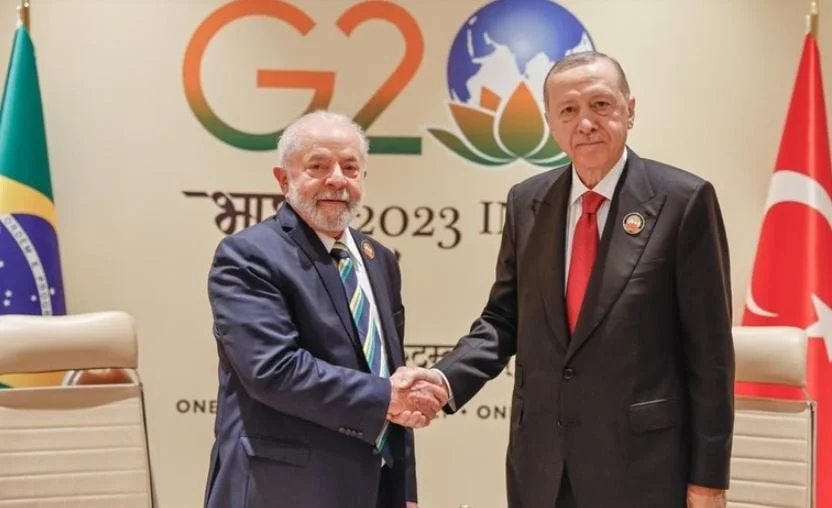
The Implications of Türkiye and Brazil on Global Democracy
Staff writer, Carmine Miklovis, examines the broader implications of democratic backsliding by Turkey and Brazil.
Fears of global democratic backsliding have become all but ubiquitous among international relations scholars, as complications emerge from fracturing in established democracies, such as the United States, and the rise of authoritarian powerhouses like China that offer an alternative political system for countries to consider. Are such fears warranted? Is democracy in retreat worldwide? To expand upon this discussion, this article will focus on two specific case studies of countries that could help forecast the future directions of democracy: Türkiye and Brazil.
This article will take a retrospective look at the political atmosphere in Brazil in the aftermath of Bolsonaro’s tumultuous 4 years in office, and a prospective look at the democratic outlook in Türkiye in the wake of the earthquakes and the forthcoming 2023 elections. In doing so, it will analyze what the domestic politics in these countries can tell us about what’s in store for global democracy.
Türkiye
Türkiye is in a crucial transition point, wherein the intersection of earthquakes, the general election, and the war in Ukraine could prove to have a ripple effect on democracy in Eastern Europe and beyond. Türkiye is facing a dire humanitarian crisis, with tens of thousands of casualties, billions of dollars in property damage, and millions of people being displaced, because of earthquakes in the region. The sheer scale of these earthquakes and the disruption of life that has ensued for large swathes of the Turkish population makes it pertinent for the AKP to address the immediate damage and mitigate the long-term effects to avoid adding insult to injury for Türkiye’s already struggling economy. With Türkiye’s elections mere months away, there’s little room for error, as resentment from a lackluster long-term response on Erdoğan’s part could jeopardize his bid for re-election. In that regard, the decision to call for elections a month earlier could backfire if the aftermath from the earthquakes isn’t addressed properly and lingers in the minds of voters when they’re casting their ballots.
The world is watching Erdoğan’s response intently, as it could prove to be a decisive moment for Western democracy and NATO unity. Another 5 years could embolden Erdoğan to consolidate more power, further endangering the already fragile system of checks and balances in place and eroding democratic institutions. Domestically, an emboldened Erdoğan could take past efforts to restrict the information available to the public one step further, through cracking down on dissent and curtailing the freedom of press, endangering a lifeline of any functioning democracy. Internationally, a successful re-election bid would provide Erdoğan with a concrete victory for him to tout as proof of the popularity of his policy, which he could use to justify further distancing from the West. Erdoğan’s intent and willingness to stall NATO operations is present and clear, it’s just restrained so he can gauge whether his base is receptive to it or not. Erdoğan’s refusal to let Sweden and Finland join NATO until he extracted concessions from alliance members was a clear example of this, and it could only be light work compared to what could happen if he wins re-election. A re-election would serve as validation for his foreign policy that promotes Türkiye’s self-interest above all else, including its NATO allies. The war in Ukraine is a test of Western resolve, and more pushback from Türkiye in NATO operations would only undermine the narrative of a cohesive unit that is committed to upholding international norms, and with it, Eastern European security.
Conversely, if Erdoğan’s election efforts are unsuccessful, a more democratic Türkiye could help NATO present a more unified front against Russia and put more pressure on countries such as Hungary and Poland to fall in line and undertake reforms to reinvigorate their democracies. If NATO’s greatest spoiler were to suddenly embrace cooperation with its fellow alliance members, it would send a clear signal to Putin that NATO is stronger than ever. Any desire Putin may have had to see whether NATO is bluffing about Article V commitments in the event of an invasion of the Baltics would be extinguished, effectively deterring further expansion in the region.
Furthermore, if Türkiye is on board with NATO operations, focus would be redirected towards two other members of the alliance that are struggling with democracy: Hungary and Poland. Without Türkiye to hide behind, Hungary and Poland would either fall in line with NATO initiatives, or risk being condemned by alliance members now that they’re in the spotlight. Hungary and Poland need not completely reform their democracies to be an asset for the alliance, nor should we expect them to, so long as they don’t stall NATO initiatives. Once Hungary and Poland are pressured into cooperation, NATO could reap the benefits of a more cohesive alliance, which would allow it to be more effective at accomplishing objectives across the board, but also would put autocracies on the defensive. In the absence of hurdles, NATO could pursue large initiatives that would make them more integrated than ever before. Further interdependence would strengthen NATO even more and allow it to take additional steps to promote democracy and condemn autocracy worldwide.
Brazil
Jair Bolsonaro ran on a platform that stoked nationalism among the populace by scapegoating globalization, gender minorities, and environmentalist efforts to protect the Amazon for the economic problems that the country was facing. By diving headfirst into the culture war, Bolsonaro was able to draw upon and weaponize the resentment brewing among the Brazilian public for his own political gain, a tactic that’s being increasingly used by politicians around the world. Populists like Bolsonaro are able to tie people’s economic qualms to social issues, such as climate change and equality for members of the LGBTQIA+ community, areas which they may be underinformed or misinformed about, and use that confusion to steer them towards them. They identify that there is a problem that is causing dissatisfaction among the general public, pin the problem on something, and then argue that their policies can remedy the fabricated “cause” of the problem. By exploiting the ability to spread information quickly and the willingness of some to take this news at face value and without skepticism, Bolsonaro was able to win the Brazilian Presidential Election in October 2018.
Bolsonaro’s tenure was marked by repeated attempts to undermine democratic institutions, restrict the freedom of press, weaken the checks and balances in place, and was capped off with the promotion of unwarranted claims of electoral fraud. The installation of military officials into high-ranking government positions and efforts to close Congress and the Supreme Court sparked concerns of a return to Brazil’s military dictatorship. Then, in last October, Bolsonaro was unseated by former President Luiz Inácio Lula da Silva in a run-off election, putting an end to his four years in office. Bolsonaro’s war on democracy was far from over, however, and was carried out by his supporters, who stormed the capital, calling for Bolsonaro to be reinstated as president, in an event that quickly drew comparisons to the January 6th insurrection. A cynic may look at these events over the past five years and be pessimistic about for the future of Brazilian democracy; however, Brazilian democracy’s perseverance through all of this offers reason for optimism, as it shows the resiliency of robust institutions in the wake of right-wing challenges.
Among the reasons to be sanguine about the outlook of Brazilian democracy is the durability of institutions. Brazil was only able to survive four years of constant attacks on democracy and an extravagant grand finale at the capital because of its durable institutions, which have been quick to adapt and respond to the attempts at unraveling the system. The Supreme Court’s consistent blocking of Bolsonaro’s undemocratic attempts to expand his power were complemented by Congress’ refusal to pass bills that condoned such behavior. The future looks bright for these institutions as Brazilians have elected a president who has shown a strong commitment to maintaining the integrity of them and working with them to achieve his efforts. Furthermore, the rejection of Bolsonaro’s particular brand of far-right populism by the masses is an indication of the strength of the movement against autocratic governance. The fact that Bolsonaro’s blatant disregard for the liberal international order and his anti-globalization, anti-environmental, and anti-immigrant stances were ultimately dissuasive to the Brazilian public is a win for liberalism and can inspire people worldwide to pushback against far-right populists. While skeptics might point to the recent election of far-right populists in other parts of the world, such as Giorgia Meloni in Italy, as a reason to be cautiously optimistic, or even pessimistic, about the future of global democracy, they underestimate the effect that experiencing a far-right populist presidency has on the strength of the resistance movement. In the United States, for example, a major reason that Joe Biden got 15 million more votes in the 2020 presidential election than Hillary Clinton got in 2016 was because of the resentment people had for the Trump administration—resentment that was only amplified by the administration’s incompetent response to the COVID-19 pandemic. Similarly, after experiencing 4 years of Bolsonaro’s abrasive style of politics, Brazilians reached the same conclusion, and there’s fair reason to believe that Italians will too, and that Italian democracy will emerge stronger than ever.
Closing Thoughts
This article sought to expand the conversation on democratic backsliding by examining the democracies of two powerful international players: Türkiye and Brazil. Turkish democracy is at a crossroads, and it’s likely that the road it embarks upon will depend on the Erdoğan administration’s response to the earthquakes. If the response is successful and receives public praise, it could allow Erdoğan to secure another term, which could spell the end of Turkish democracy. If the response is lackluster and receives continued scrutiny, then a challenger could unseat Erdoğan and revitalize Turkish democracy through pursuing domestic reforms to strengthen the institutions and increase cooperation with its NATO allies, bolstering European democracy in the process. Similarly, Brazil’s democratic resilience offers a case for optimism about the ability of democracy to persevere against right-wing power grabs. Brazil’s ability to withstand several massive shocks to the system indicates remarkable democratic resilience, and not only does Lula’s victory offer a beacon of hope for protestors around the world who are fighting to reverse democratic backsliding in their country, it provides optimism for democratic prospects in other countries, such as Italy. Ultimately, it’s time to look closely at Turkish politics and see if their democracy shares the same resilience as Brazil’s.
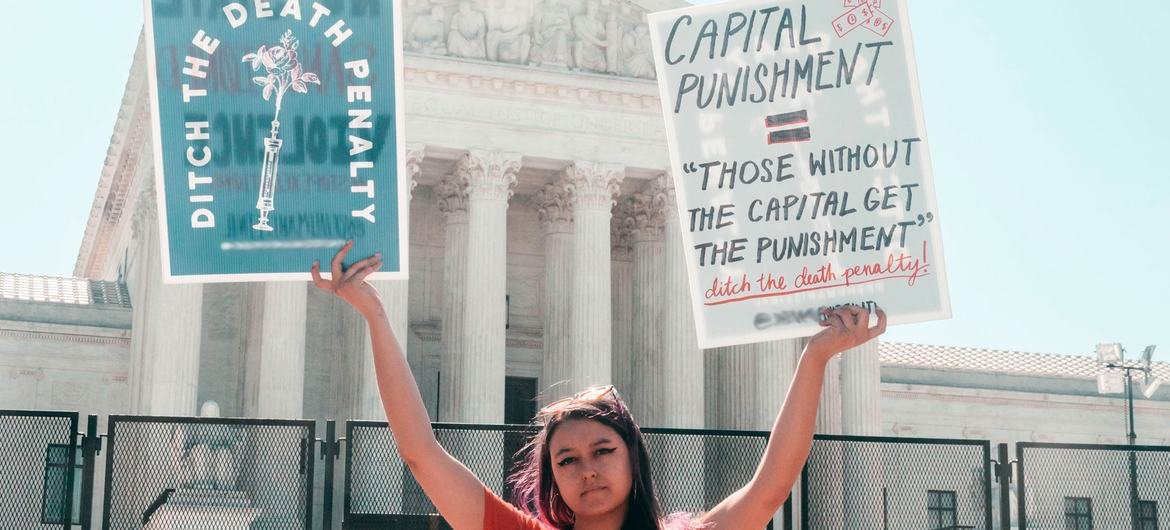
Life? Liberty, and the Pursuit of Happiness
Guest writer Josie Bloom explores the U.S. death penalty through the lens of America’s founding principles, human rights, and diplomatic relations.
Introduction
“Land of the free and home of the brave.” That’s how the United States describes itself. It prides itself on being a paradigm of human rights and individual freedom, founded on the principles of life, liberty, and the pursuit of happiness. It’s surprising how a country like this can become associated with authoritarian regimes with horrible human rights records such as China or Iran, yet its continued use of the death penalty demonstrates how its so-called commitment to life, liberty, and the pursuit of happiness might not even include the right to life after all.
International non-governmental organizations (NGOs) like the United Nations have called upon their member States to abolish the use of the death penalty, stating it violates the “right to life, liberty, and security of person” guaranteed by Article 3 of the Universal Declaration of Human Rights. Despite the constant backlash throughout recent history, the United States continually uses the death penalty and defends it on the international stage. It is one of the only nations to still do so. Nations that have abolished the death penalty see this as a sign of ignoring basic human rights and group the United States’ human rights index with that of nations like Sudan and Iraq. To put it simply, the United States’ use of the death penalty hurts its diplomatic relations and reflects poorly on the nation’s values.
Capital punishment’s role in United States foreign affairs is severely affecting its image on the world stage, given that much of the world is opposed to the death penalty. Gaining a fuller understanding of why many nations have abolished the death penalty, makes it easier to understand how the United States’ commitment to the death penalty has such strong implications on the international stage.
Historical Context
In “Death, Dissent, and Diplomacy: The U.S. Death Penalty as an Obstacle to Foreign Relations,” Mark Warren details foreign perceptions of the United States concerning its continued use of the death penalty. In 1971, the United Nations (UN) General Assembly reached the opinion that capital punishment no longer served as an acceptable exception to the right to life guaranteed in Article 3 of the Universal Declaration of Human Rights. Many of the UN member states began adapting their legislature to reflect this new opinion. By the mid-90s, for example, a “commitment to abolition” of the death penalty became a requirement for membership in the Council of Europe and in the European Union. Meanwhile, the United States was making no such changes, and consequently starting some very rocky diplomatic relationships. In 2001, the UN had taken notice of the United States’ static position on capital punishment and temporarily removed the United States from the UN Human Rights Council as a result. Later, in October of 2003, the forty-five nation Council of Europe, which contains many of the United States’ allies, stated that the United States’ “intractable position” towards the death penalty was “intolerable.”
The United States gained even more negative attention in 2004 when the International Court of Justice’s Avena decision declared the United States had, according to the 27th session of the UN Human Rights Council “failed to provide consular notification and access” to 51 Mexican nationals awaiting execution. Within the 27th session, the UN publicly rebuked the United States for this in 2014, stating that “the denial of the right to consular notification leads to the violation of due process and the execution of a foreign national deprived of his or her right to consular services constitutes an arbitrary deprivation of life.” Later that same year, the UN Human Rights Council took a firm stance on the use of capital punishment in their annual report to the Secretary General, stating that they still have numerous concerns regarding the “lack of respect for relevant international human rights norms and standards in States where the death penalty is still imposed.” Despite the continual concerns expressed by the international community throughout recent history, the United States continues to use the death penalty as a form of punishment within its criminal justice system.
The Human Rights Perspective
A vast number of international organizations have repeatedly expressed negative opinions about the death penalty. Most people reference the human rights perspective, claiming the death penalty is a violation of human rights. However, abolitionist views towards capital punishment are just as easily justifiable for other reasons. Many anti-death penalty advocates use the often-discriminatory implementation as a key argument. Other proponents, especially the UN, use its implications on juvenile offenders as a reason for its abolition.
The human rights perspective is arguably the most common criticism of capital punishment. Dongwook Kim addresses this in her article “International Non-Governmental Organizations and the Abolition of the Death Penalty,” where she cites then Secretary General of the UN Ban Ki-moon’s 2012 statement that “The right to life is the most fundamental of all human rights.” Aside from the views of the UN expressed by Kim, human rights NGOs use this perspective to promote the abolition of capital punishment. Amnesty International, one of the largest human rights NGOs in the world, calls the death penalty the “ultimate cruel, inhuman, and degrading punishment.” Amnesty International also claims that the death penalty impedes on “the right to life and the right to live free from torture or cruel, inhuman or degrading treatment or punishment,” which are both protected by the Universal Declaration of Human Rights. The use of the death penalty for juvenile offenders, which is a direct violation of international law, is also a key argument against capital punishment. According to Amnesty, the United States is the only Western nation to report having used capital punishment on juvenile offenders since 1990, the other 9 countries being: China, Iran, the Democratic Republic of the Congo, Nigeria, Pakistan, Sudan, South Sudan, Yemen, and Saudi Arabia. Organizations like Amnesty, Kim argues are “key to the worldwide abolition of the death penalty for all crimes.”
Unfair or discriminatory implication of the death penalty is a well-known, although less common, argument against the use of capital punishment. Within the UN, human rights groups have expressed continued concern over the “lack of fair trial in death penalty cases in a number of States,” as stated in the 27th session of the Human Rights Council. Human rights NGOs, according to Kim, insist that capital punishment is used as a “social control tool” against the poor and minority groups. In the United States, for example, one is “22 times more likely to get [sentenced to death] if the defendant is Black and the victim is white.” The previously aforementioned Avena decision of 2004 also serves as an example of this. Amnesty International further elaborates on this topic, stating how capital punishment is often disproportionately used on those with limited access to legal representation. Additionally, social activist and New York University professor of law Bryan Stevenson argues that American use of capital punishment is “defined by error.” He states that one out of every nine people executed was later found to be innocent. Human rights activists often use the consistent errors found within American death row to further their point.
Role in US Diplomatic Relations
The United States’ continued use of the death penalty isolates it from the rest of the world. According to Daniel Baer, former United States Ambassador to the Organization for Security and Cooperation in Europe, there are many different examples of the United States demonstrating a different viewpoint than the rest of the world. Out of the 30 member countries in NATO, the United States is the only one still using the death penalty. On top of that, more than 70% of the world’s nations have abolished or imposed a moratorium on capital punishment. The European Union, one of the closest and most important diplomatic relationships for the United States, has even banned the use of the death penalty in all member states. The United States is the only Western country to have carried out executions from 2013-2019. The United States, however, also emphasizes the importance of following global norms, with diplomat Stefanie Amadeo stating in an article from the New Yorker that “the United States is committed to complying with its international obligations” during her time as deputy representative to the UN Economic and Social Council. Despite assuring their aforementioned commitment to following along with the rest of the world’s views, the United States continues to demonstrate their inability to let go of the death penalty.
The United States’ continued defense of the death penalty has led to some problems within the international community. In 1999, five years before the abolition of the death penalty in Turkey and fifteen years since their last execution, the Turkish government sentenced Abdullah Öcalan, a guerilla leader for the Kurdistan Workers’ Party, to death. Many, including the United States, saw this as a grossly unfair trial, and encouraged the Turkish government to undo Öcalan’s sentence. However, according to Warren, when the United States got involved, the Turkish government questioned the “authority of the United States to ask another country to forego the death penalty,” referencing its frequent use of capital punishment. While some countries (in this case, Turkey) have questioned the United States’ authority to criticize their implementation of the death penalty, some countries go a step further. According to international death penalty expert Mark Warren, some countries use the United States’ continual use and support of the death penalty to “legitimize their own appalling domestic practices.” Warren references Nigeria, who used this United States’ actions concerning capital punishment to support their 2002 ruling that adulterers will be sentenced to death by stoning.
Modern Values
When looking at it from this perspective, it is obvious that the United States’ continual usage of capital punishment makes it look out of touch and, as some would argue, barbaric. Using the death penalty isolates the country from modern views towards human rights. It puts the United States on the wrong side of a modern fundamental human rights issue.
The United States was founded on the principles of life, liberty, and the pursuit of happiness. Using the death penalty blocks the right to life, and therefore that principle as a whole. If the United States cannot stay true to the very principle it was founded upon, how are other nations supposed to respect them?
Moreover, by capital punishment, the US not only looks bad in comparison to other developed nations, but also reflects poorly on itself and its own values. Its history of defending the death penalty time and time again groups the United States with countries with atrocious human rights track records like Saudi Arabia, China, and Iran. As the New Yorker’s Lincoln Caplan puts it, the United States ranks with other nations “not in full compliance with their international obligations.”
Careful consideration of international law, modern human rights views, and the country’s founding principles makes it painfully obvious that the death penalty has no place in the United States. Historical evidence shows how the United States has continually used capital punishment to violate what many see as a basic human right, and, in the case of the Avena decision, to violate international law. Aside from that, the use of capital punishment groups the US with countries with terrible human rights track records like Iran, Russia, or Belarus. Overall, the usage of capital punishment makes the United States look outdated and barbaric. It does not represent the “modern” nation the founding fathers intended. Interacting with such a “barbaric” country represents other countries poorly, leaving the United States isolated on the diplomatic stage.
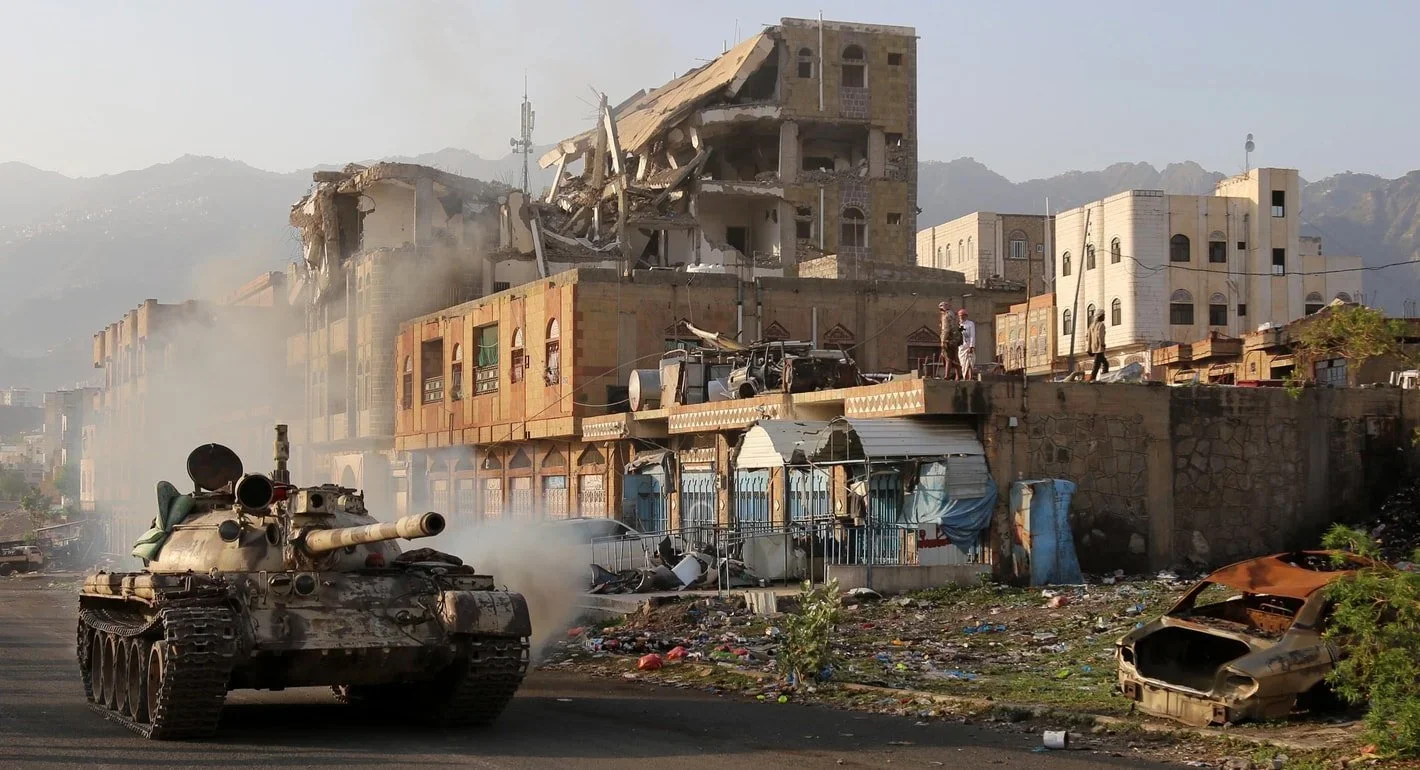
The United States is Failing Yemen
Staff Writer, Katie Barnett, investigates the war in Yemen and the United States’ failure to take meaningful action to help the Yemeni people.
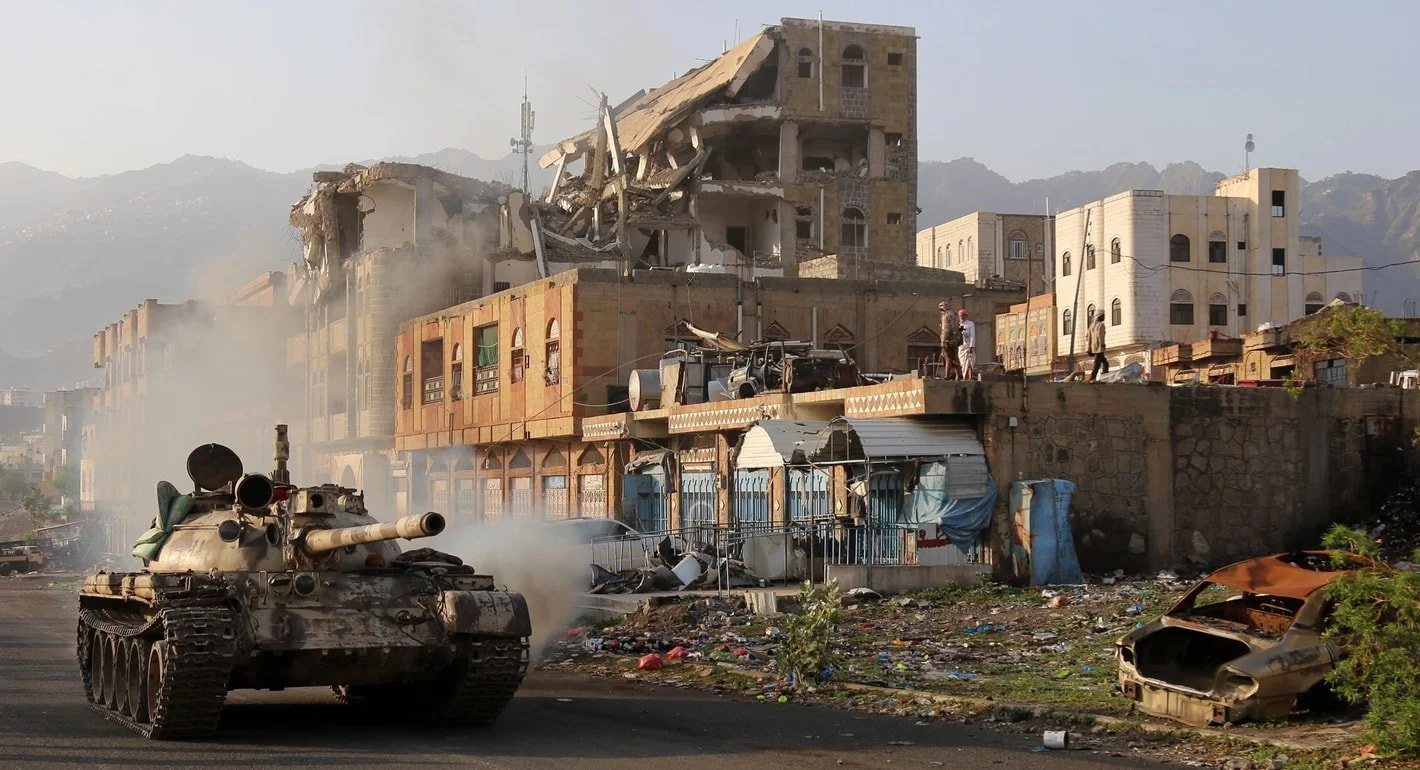
Earlier this year, US Secretary of State Antony Blinken announced $585 million in humanitarian assistance for the war-torn nation of Yemen. The US was quick to celebrate its own generosity, asserting that it remains “one of the largest donors of humanitarian assistance to Yemen” in the world. US leaders also called on other nations to contribute more to the chronically underfunded international response. However, while America takes its victory lap, the people of Yemen will still have to shelter from barrages of US-provided missiles. The US government has quietly facilitated the Yemeni Civil War through “incoherent” policy that the US media and public have largely failed to notice. Meanwhile, the struggles of the Yemeni people caught in the “world’s worst humanitarian crisis” are lost in the background. This article will examine the origins of Yemen’s current conflict, its impacts on civilians, and the many ways in which the United States is failing the desperate nation.
Origins of the Yemeni Civil War
The conflict in Yemen began in 2014 when Houthi rebels seized control of Yemen’s capital, Sana’a. The Houthis are Shiites who have long been at odds with their nation’s Sunni government. Contrary to popular belief, however, the Yemeni Civil War was not caused by Sunni-Shiite antagonisms alone. Fuel price hikes and corruption in former President Ali Abdullah Saleh’s government also caused tensions to rise throughout the early 2000s and 2010s. Massive protests erupted from these tensions when the Arab Spring reached Yemen in 2011. President Saleh was eventually ousted in 2012 and succeeded by his vice president, Abd Rabbu Mansour Hadi. Hadi’s tumultuous presidency came to a brief pause in January 2015 when he resigned as president after rebels took Sana’a. The Houthis took advantage of his absence and seized control of the Yemeni government. However, while Hadi fled his palace and sought exile in Saudi Arabia, he rescinded his resignation a month later, declaring himself the rightful leader of Yemen.
Hadi has since been embroiled in various clashes with the Houthis. However, these two parties are not the only ones involved in the conflict. Saudi Arabia and a cohort of other Gulf nations sided with Hadi’s government and launched a campaign against the Houthi insurgents, with arms and logistical support from the United States. Iran, Saudi Arabia’s bitter enemy, has supplied the Houthis with weapons, deepening the divides between the two nations. Although separate from the civil war, there are also ongoing military operations in Yemen that target Al-Qaeda in the Arabian Peninsula (AQAP).
Despite the occasional ceasefire, the conflict and chaos in Yemen only seem to be escalating, and innocent civilians are undoubtedly suffering the most. According to UNICEF, hunger and starvation are widespread, with 17.4 million people in need of food assistance—over half of Yemen’s population. This number is expected to balloon to 19 million by 2022. Further, nearly six million people have been displaced from their homes, most of them internally displaced in Yemen. Access to healthcare, clean drinking water, and sanitation services is scant at best. There are few areas of Yemen that are untouched by poverty and adversity.
Meanwhile, the Russo-Ukrainian War has compounded the suffering of the Yemeni people. “It’s another blow to Yemen, driving food and fuel prices further up,” said Abeer Etefa, a senior spokeswoman at the UN World Food Programme. Exports continue to fall as Ukraine grapples with its own conflict, sending shockwaves through the global food supply chain. The Middle East, Asia, and Africa have been hit the hardest, and the burden is the greatest in conflict-stricken nations. “Yemen depends entirely on food imports, with 31% of its wheat coming from Ukraine over the past three months.” Wheat has disappeared from Yemeni food markets, making it extremely difficult for families to meet their basic needs. At the same time, humanitarian donors are feeling the financial strain of providing aid to both nations, and given that the conflict in Yemen has stretched on for eight years, its assistance is dwindling rapidly.
The Yemeni people are clearly in dire need of help from the international community, and the responsibility for their situation lies with those who created it in the first place. As a contributor to the conflict and subsequent humanitarian crisis, the United States must do more to provide meaningful help to Yemen.
Policy Problems
The United States has allocated $4.5 billion to humanitarian assistance for Yemen since the conflict began. However, it has also sold more than $355 million worth of arms to Saudi Arabia—one of the main instigators of the Yemen conflict—and has signed off on $4.5 billion more in future sales. It appears that America wants the world to think that they care about Yemen while they quietly pour money into the war. Not only does this render the $4.5 billion in humanitarian aid a very poor investment, but it is endlessly destructive to the Yemeni people. The Biden administration made moves to rescind support for Saudi Arabia and prioritize peace, but foreign policy experts agree that these are now nothing more than “broken promises.” US policymakers have also consistently blamed the Houthi rebels for the Yemen conflict and crisis. While the Houthis undoubtedly have a large role, breaking the war down into this “false binary” fails to account for the massive role that Saudi Arabia plays in Yemen. The United States must sever its ties with Saudi Arabia and put down its arms if it truly wants to end the conflict.
Experts also point out numerous issues with the peace process that has been led by the United States for the last several years. Katie Kizer of Foreign Policy writes: “The peace process led by the United States and United Nations has remained where it has for years: pursuing a top-down ceasefire between the men with guns—a strategy that has already failed multiple times—instead of engaging Yemen’s vibrant civil society which is interested in peace.” This assertion is true, as the UN brokered a six-month truce in early 2022 that temporarily reduced hostilities, but negotiators were unable to renew it. It expired on October 2nd, leaving civilians uncertain about their future. The US should be focusing its efforts on the resilient Yemeni people and rebuilding the local and state institutions that have collapsed since the start of the war. However, the US government currently faces little pressure to change its ways, so the gaping holes in its foreign policy will persist until the rest of the world takes notice.
Media Mistakes
America has clung to stories about conflict in the Middle East for the last several decades. The public hung onto journalists’ every word about the invasion of Afghanistan throughout the 2000s and the conflict in Syria for the last decade. Both of these wars have one thing in common: one big, scary enemy. It seems clear to Americans that Al-Qaeda was the enemy in Afghanistan and ISIS was the enemy in Syria. This makes both wars classic cases of good vs. evil (as it is painted by US media, at least) and portrays the United States as the hero of the Middle East. The conflict in Yemen, on the other hand, is complicated. It is difficult to sort through the complex politics and culture of the region and find the heroes and villains. Since it does not make Americans feel like they are on the right side of history, it is not worth covering for many news organizations.
As easy as it may be to point the finger solely at the media, its audience is also partly to blame. The conflict in Yemen is largely contained to the Middle East, meaning spillover onto US soil is unlikely. Since the conflict has no tangible effects on American citizens, many are content to live in their blissful ignorance. Journalists will understandably not go out of their way to cover an event that their audience will not read about, so the lack of public interest perpetuates negligent reporting. However, in the interest of fairness to US media, it is important to note that the sheer complexity of Yemen’s situation can make reporting particularly difficult. “You don’t see photos of Yemeni refugees anywhere because a lot of them are actually inside of [Yemen],” says activist Sama’a Al-Hamdani. Most Yemeni refugees are internally displaced, meaning they are trapped in dangerous areas and unable to speak to journalists. Despite this, it should also be remembered that journalists were willing to fly into war zones with troops to cover Afghanistan, but they do not seem to display the same drive to cover the situation in Yemen. Once again, this is due to the lack of public concern.
The Lost Generation
Why should the United States care about Yemen? In the middle of all the bad arms deals, failed attempts at peace, and the massive humanitarian crisis are the Yemeni people. They are just as entitled to security and peace as the citizens of every other nation involved in the Yemen conflict. But the United States' contributions to the conflict that surrounds them are part of the reason that they now face the loss of an entire generation of children. If Yemeni children make it through the conflict and into their adult lives, they will be forever hindered by illiteracy and lack of education. Two years ago, then UN humanitarian coordinator for Yemen Lisa Grande said, “If the war doesn’t end now, we are nearing an irreversible situation and risk losing an entire generation of Yemen’s young children.” The war still rages two years later. The lack of tangible impacts on US soil does not merit citizens’ ignorance of this conflict, and the US government certainly cannot continue to fund it. The US owes the suffering Yemeni population so much more.
The World Cup: Sustainability, Human Rights and the Economy
Staff Writer, Sarah Marc Woessner, explores the World Cup in Qatar, following months of investigations and concerns that arose amid the start of this renown international competition.

Every four years, spectators from around the world come together to celebrate their passion for soccer, more importantly, their love for their national team. The FIFA World Cup 2022 has been the most anticipated event for soccer fans for the past four years, as many wonder who will win the championship and dethrone France as the world champion. This year - and for the first time - soccer fans will gather in Qatar from mid-November to mid-December, marking the first time a World Cup will take place during the winter season. The decision was made in 2010 after the county won a ballot of Fifa's 22 executive members. The country has been preparing ever since for this highly anticipated international competition. However, as Qatar prepares to welcome hundreds of thousands of fans, questions about sustainability, human rights, and regulations are raised.
Qatar is a country in the Middle East; although small, the current population of Qatar is 2,995,736 as of Sunday, November 12th, 2022. Qatar has the world's third-largest proven natural gas reserve and the second-largest natural gas exporter. As a small oil country, Qatar has been preparing to host the FIFA World Cup Qatar 2022 for the last 12 years, a competition expected to generate a lot of revenue. However, Qatar's economy is expected to slow down after the World Cup. Indeed, the country has estimated the influx of 1.2 million visitors will add $17 billion to its Gross Domestic Product. However, after the World Cup, tourism and consumption will decrease, which will slow down the economy of Qatar, a very well-known country for its oil economy.
It was in 2010 that FIFA Executive Members designated Qatar to host the World Cup in 2022. As a result, the country has had to make massive investments to host this five-week competition. Qatar has spent $200 billion on infrastructures and other development projects since winning the bid to host the World Cup. To build these infrastructures, the country employed migrant workers, which exposed the country's history of human rights violations. These migrant workers from Nepal, India, Pakistan, and Bangladesh came to Qatar because they lacked job opportunities in their home country. In order to build such infrastructures for the World Cup, Qatar needed the help of migrant workers who seek better opportunities and higher pay. However, the harsh reality of the life of migrant workers in Qatar was unveiled. Many migrant workers lost their lives by working on construction sites in the host country's most essential soccer tournament, which unites millions of people every four years.
The World Cup will be played following years of serious migrant labor and human rights abuses in Qatar, Human Rights Watch said. The only way through which Qatar could build so many infrastructures was by hiring migrant workers from Nepal, India, Pakistan, or Bangladesh. Nonetheless, FIFA awarded the games to Qatar in 2010, with little human rights due diligence and no clear restrictions regarding protections for migrant workers who would be required to build the vast infrastructures. This lack of control and regulations has led to the death of hundreds of migrant workers, who allegedly passed away while working on the infrastructure for the FIFA World Cup Qatar 2022. As a result, more people became aware of the human rights violations in Qatar over the last decades. Human Rights Watch identified Qatari laws, norms, and practices that enforce discriminatory male guardianship standards that deprive women of the ability to make important life decisions in a report from 2021. In Qatar, women must seek their male guardians' consent before getting married, receiving reproductive health care, working in several government jobs, and studying abroad on government scholarships. In 2017, FIFA adopted a Human Rights Policy, pledging to take "measures to promote the protection of human rights," saying, "FIFA will take adequate measures for their protection, including by using its leverage with the relevant authorities. However, by granting Qatar the right to host the World Cup, FIFA is going against its words to promote the protection of human rights as the host country has been the source of various human rights violations over the last decades.
Fifa, the World Cup organizer, has been blamed by many for its lack of recognition and responsibility in electing Qatar to host and organize the World Cup. This worldwide event is expected to have an influx of over 1 million visitors in a country with a population of less than 3 million. FIFA ought to have understood that millions of individuals providing their foreign labor would be required to create and maintain the World Cup's infrastructure. This was anticipated to have cost US$220 billion and included eight stadiums, an airport expansion, a new metro, numerous hotels, and other significant infrastructure. Additionally, FIFA is responsible for those workers and ensuring safe working conditions. However, according to Human Rights Watch, FIFA failed to impose strict conditions to protect workers despite repeated warnings from the workers themselves and civil society organizations and instead became a complacent enabler of the widespread abuse workers endured, including illegal recruitment fees, wage theft, injuries, and deaths.
Qatar is a country with many rules that have been extended to visitors of Qatar, even during the World Cup. Such restrictions have created a lot of controversies but also shine a light on government laws in Qatar that indicate human rights violations. For example, a rule that visitors and fans must follow is no sexual intercourse outside of marriage. Qatar's penal code criminalizes all forms of sex outside marriage, with sentences of up to seven years in prison. In addition, Qatar's penal code punishes consensual sexual relations between men above age 16 with up to 7 years in prison. A penalty of up to 10 years is imposed on anyone who engages in consensual sexual relations, which could apply to consensual same-sex relations between women, men, or heterosexual partners. Minky Worden, a news reporter and writer for Human Rights Watch, said that journalists would help ensure that these crucial issues of human rights violations are brought to light by the World Cup, as Qatar, FIFA and its sponsors still have a chance to rescue the tournament's legacy by addressing migrant rights abuses related with the World Cup and enacting reforms to increase protections for women, LGBT people, and migrant groups - not just during the World Cup but also beyond.
Currently, there are no reports of tourists being arrested for violating any of the rules stated above. However, tourists and fans are expected to abide by Qatari laws, with the risk of getting arrested, detained, and potentially put into jail. It has been reported, however, that fans have attempted to enter the stadium with an LGBTQ+ flag. This was the fan's way of showing their support for the LGBTQ+ community of Qatar, which is subject to abuse and mistreatment in the nation. These fans were denied access to the stadium unless they gave up the flag.
While human rights abuses are still present in Qatar and millions of migrant workers work in horrible conditions, questions arose regarding the environmental effort of Qatar during this World Cup. According to Fifa, an international governing body of association football, "The FIFA World Cup Qatar 2022 Sustainability Strategy includes a comprehensive set of initiatives to mitigate the tournament related emissions, including energy-efficient stadiums, low emission transportation, and sustainable waste management practices".The 2022 FIFA World Cup sustainability strategy will enable the host country to deliver a tournament that sets new benchmarks in social, human, economic, and environmental development. However, according to recent discoveries, Qatar has been going against the above ethical standards established by FIFA. In its recent report, Carbon Market Watch found that when FIFA tabulated the carbon footprint for building seven new stadiums, it ignored enormous carbon sources, underestimating emissions by a factor of eight.
Furthermore, with newly built air-conditioned stadiums and 150 daily flights to bring in fans, the 2022 World Cup has been dubbed one of the competition's biggest environmental disasters. Even though Qatar claimed that its World Cup met the environmental standards that FIFA set, many concerns have arisen as to whether or not this World Cup is sustainable or greenwashing. After further research, it has been discovered that although Qatar has shown sustainable efforts, this promise of carbon neutrality is not possible, according to Gilles Dufrasne, lead author of the Carbon Market Watch report published in May 2022, examining Qatar's claims.
Known for being an oil country, Qatar's economy will only benefit from this international tournament, even at the cost of human rights and sustainability. In the past, it has been shown that hosting the World Cup could generate a lot of revenue for the nation. However, it is also true that hosting this competition may be a bad idea for others. The Qatar World Cup in 2022 is estimated to generate $4.7 billion in income. However, given the amount of money invested on investments and infrastructure for this internationally known competition, Qatar's unprecedented outlay is unlikely to pay off. There is the typical assumption that billions of people will witness this mega-event, putting Qatar on the figurative map and encouraging tourism, foreign trade, and investment. It might also give Qatar a larger influence in geopolitics. The historical data is negative for these promises of developing "soft power" and long-term economic gains. Being seen on the global stage is a two-way street. Qatar receives a lot of attention, but the majority of it could be more positive. It paid bribes to secure hosting privileges. It has brought in tens of thousands of foreign laborers and subjected them to its cruel kafala labor system, which has reportedly killed thousands of people. The games were rescheduled from summer to November/December due to the extreme heat. Its unfinished investment projects will be prominently shown. The expulsion of foreign workers from their homes to accommodate soccer fans and, ultimately, the removal from the country, among other embarrassments, is not likely to enhance Qatar's positive power.
The FIFA World Cup Qatar 2020 has been the most controversial sporting event in the last few decades. While the renowned competition unveils the ongoing issues that the host country has been facing for decades, it is also leaving the future of the country unknown as hatred has built up against Qatar, a small oil country under the spotlight for hosting the World Cup, but also for its violations of human rights, and allegations of greenwashing. It is now up to Qatar and its Executives to live up to the expectations that it set for itself.
Covering the Regime: The Story of Iranian Journalists
Staff Writer Luke Wagner explores the stories of Iranian journalists standing up against a brutal regime despite the high costs.
Journalist Niloofar Hamedi boldly stood up against a brutal regime and now is facing the consequences.
On September 16th 2022, Hamedi gained access to Kasra Hospital in Tehran— the capital of the Islamic Republic— to document the final hours of a young woman being treated there. Later that day, this young woman by the name of Mahsa Amini would die from injuries sustained during detention by Iran’s morality police. Hamedi, a journalist for the reformist daily newspaper Shargh, broke the news of Amini’s death with a tweet that rocked the core of Iran. In this tweet, Amini’s parents are holding each other in tears outside of their daughter’s hospital room. Amini’s father who looks small in the lifeless emergency room hallway is burying his head into his wife’s neck. He holds her veiled body and whimpers. From the place that Hamedi took the picture, her camera captured Amini’s mother’s head poking out above her husband revealing a sliver of her black hair— the same crime that killed her daughter.
Six days later on September 22nd, Iranian security agents raided Hamedi’s house, arrested her, searched her home, and confiscated her belongings, according to her lawyer Mohammad Ali Kamfirouzi. Her twitter accounts were suspended and she was taken to Evin Prison which has grown in infamy for its vile treatment of prisoners and mass imprisonment of journalists and activists. Iranian-American researcher Holly Dagres tweeted October 15th that Evin Prison holds “so many of the country’s best and brightest that it earned the nickname ‘Evin University’.” Hamedi’s reporting was the spark for nationwide protests which began in opposition to treatment of Iranian women but grew to oppose the Islamic Republic’s iron-fisted rule. Anonymously, journalists at Shargh spoke in support of Hamedi after her arrest. One of which said that “if it weren't for her courage, the tragic incident that happened to Mahsa Amini would not have been reported to the media so quickly.” Another of her colleagues shared their fears with a foreign correspondent that their conversations about Hamedi would be overheard by Iranian security and said “I might be next.” These two accounts represent competing sentiments from Iran’s press. The first is that brave journalism is impactful and necessary for the protection of human rights under a brutal dictatorship. The second quote shows the well-founded fear that any act of brave journalism will threaten one’s freedom, life, and family.
This truth effectively silences the journalists of Iran. Either the press bends to the tremendous pressure from the regime to report falsehoods and keep silent or journalists such as Niloofar Hamedi report truth and are imprisoned, disappeared, or found dead.
Iran has a deep history of criminalizing journalism. Under the rule of Reza Shah between 1925 and 1941, any reporting critical of the state was censored and all other publishers were strictly monitored. Media controls loosened under the less powerful Mohammed Reza Shah. In 1951 Mohammed Mosaddeq became Prime Minister with the aid of print media as a national mobilizer. This period of partial press freedom quickly ended with the US-Britain orchestrated 1953 Coup which reinstated and strengthened Mohammed Reza Shah. Under his new royal dictatorship, criticism was muzzled and free thought was outlawed. Then, the 1979 Iranian Revolution— which saw the rise of Ayatollah Ruhollah Khomeini— outlawed any expression counter to the goals of the Islamic Republic. Since the revolution, at least 1000 journalists have been arrested, detained, murdered, disappeared or executed by the Iranian regime. However, it is not only journalists based in Iran that are subject to harassment but journalists throughout the world.
In July 2021, the FBI foiled an Iranian plot to abduct and transport back to Iran exiled journalist and woman’s rights activist Masih Alinejad. Alinejad is a prominent critical voice of the regime who received a human rights award in 2015 for creating a Facebook page that encouraged Iranian women to remove their headscarves in opposition to the government’s gender based repression. One year later a man carrying an AK-47-style assault rifle was arrested outside of Alinejad’s Brooklyn home. Fortunately, no harm came to her and today her voice rises loudly in support of Iran’s protestors. However, the message from the regime to both Alinejad and exiled reporters is clear: criticism of the regime will not be tolerated whether it happens in the streets of Tehran or from a bungalow in Brooklyn.
The threat that Iran poses to journalists is credible and deadly in some unfortunate cases. In September 2019, while traveling in Iraq, Iran’s Revolutionary Guards detained and abducted exiled-Iranian journalist Ruhollah Zam. He was transported to Evin Prison to await trial. Iranian officials stated that the reason for his imprisonment was stoking the 2017 nationwide protests through his popular news service, Amad News, that ran on the messaging app Telegram. During a June 2020 trial, prosecutors unfairly accused Zam of “crimes against national security” and “cooperation with the hostile state of the United States.” He was sentenced to death and, on December 12th 2020, Zam was hanged leaving husbandless his wife and fatherless his two daughters.
The Islamic Republic does not only extend its foreign threat to journalists but all free-thinkers. Ayatollah Ruhollah Khomeini issued a fatwa February 14th, 1989 condemning author Salman Rushdie to death after Rushdie published the “Satanic Verses” which fictionalized parts of the Prophet Muhammad’s life. Rushdie began living under 24-hour protection in a secured safe-house in Britain for the next ten years after the fatwa. Proponents of the fatwa targeted people connected to the publication of the book. In July 1991, an unknown man stabbed to death the novel’s Japanese translator, Hitoshi Igarashi. That same month Rushdie’s Italian translator Ettore Capriolo was attacked and suffered stab wounds to his neck, chest, and hands. Two years later the novel’s Norwegian publisher William Nygaard was shot three times outside of his home.
Three decades after the initial fatwa was issued, 24 year-old Hadi Matar charged a stage in Chautauqua, New York to stab and punch Rushdie 10 to 15 times as he was being introduced. Rushdie and the event moderator Henry Reese who sustained facial injuries were set to discuss the United States as a refuge for writers in exile before the attack. The Iranian state is committed to ensuring that there is no refuge safe enough for anyone who is deemed an enemy of the regime. Rushdie survived the attack but lost vision in one eye and movement in one hand, according to his agent Andrew Wylie. Iranian newspaper Kayhan praised the attacker: “Bravo to this courageous and duty-conscious man who attacked the apostate and depraved Salman Rushdie in New York. Let us kiss the hands of the one who tore the neck of the enemy of God with a knife.” Although there appears to be no links between Matar and the Iranian Revolutionary Guard Corps, there has been consistent pressure towards Rushdie. As recently as 2019, Ayatollah Ali Khamenei reaffirmed his predecessor’s death sentence towards the novelist stating in a tweet that the fatwa was “based on divine verses” and is “solid and irrevocable.” With the continued reign of the ayatollah, global freedom of speech and thought is threatened. While violence is perpetrated abroad to silence the government’s critics, it is doubly as prevalent at home in Iran.
In a shocking moment of defiance, Iranian hacktivists under the Twitter username @EdaalateAli1400 bypassed the cybersecurity measures of Iranian State TV to broadcast the live message: “Join us and stand up.” More text which appeared above the head of Mahsa Amini and three young women who had died in the protests read: “The blood of our youth is dripping from your hand.” Just before the State TV broadcast resumed, an image of Ayatollah Ali Khamenei appeared burning in flames. Upon the Supreme Leader’s forehead, a sniper’s target drifted from eye to eye.
Social media and the internet have been useful tools for many modern opposition movements. Twitter, Instagram, and Facebook megaphoned young people’s anger in Tunisia against President Zine El Abidine Ben Ali where some began to refer to his overthrowing as the “Twitter revolution”. The Iranian state recognizes the power of the internet and limits its citizens’ access whenever possible. One week into the protests, Iran restricted access to Instagram and WhatsApp. According to Reporters Without Borders (RWB), 81.92 % of all Iranian social media traffic in 2021 occurred on Instagram. The government has blocked access to free VPN services and mobile networks are shutdown. An Iranian journalist interviewed by RWB explained that the “duration of network shutdowns depends on the region. In Tehran, the network may only be cut from mid-afternoon until midnight, but in Iranian Kurdistan, the shutdowns may start in the morning with no prospect of the network returning before midnight.” These conditions leave few options for information spreading; the journalists and people of Iran are left guessing the state of their country and the protests.
Since the protests began in September, 450 people have been killed; however the regime has only acknowledged the deaths of 300. As of December 5th 2022, 71 reporters and citizen journalists have been arrested for covering the anti-regime protests. Niloofar Hamedi remains in Evin Prison. In November, government officials stated that she had been charged with “colluding with the intention of acting against national security and propaganda against the state.” More human rights violations will occur in Iran. The regime aims to occupy Evin Prison with every Iranian journalist living at home or abroad. The duty of telling stories of abuse will fall on the Iranian people. Niloofar Hamedi may remain in prison for exposing the murder of Mahsa Amini, but her example of bravery will empower Iranian women and men to raise their voices higher than the threats from an ayatollah. It is words that will defeat this regime that thrives in silence.
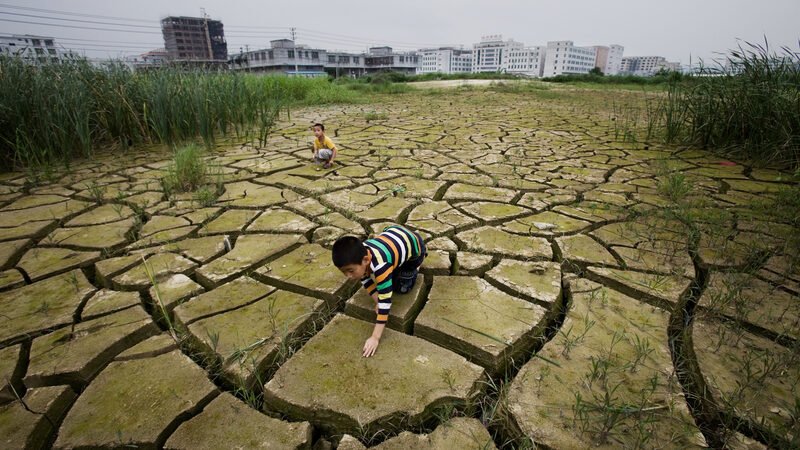
The Future of Climate Policy for Brazil and the United States after Bolsonaro and Trump
Staff Writer, Candace Graupera, investigates the similar rollback of environmental policies of right-wing presidents of Brazil and the US and how the new left-wing president will help these countries bounce back from environmental policy reductions.
On October 30th, 2022, former president Luiz Inacio Lula da Silva beat incumbent Jair Bolsonaro in the Brazilian presidential election. It was a close election, with Lula getting 50.9% of the vote and Bolsonaro getting 49.1%. Bolsonaro had a turbulent and divisive one-term presidency with attacks on the democratic institutions in Brazil, improper COVID-19 policies which left 700,000 citizens dead, unfounded claims of voter fraud in the most recent presidential election, and telling his supporters to take to the street in protest. Now, if you think that this all sounds familiar, you are right. Former United States president, Donald Trump, also had quite a divisive and controversial presidential term that has similarities to Bolsonaro’s in terms of ideologies and policies. However, one of the most impactful and important ways that these two conservative presidents were similar was their climate and environmental policies. The two almost seemed to copy and bounce off each other with such matching policies and rollbacks. Donald Trump and Jair Bolsonaro have similar degradation of environmental policies such as wanting to withdraw from the Paris Climate Accords and dismantling their federal environmental agencies, the EPA and the MMA. However, now that both countries’ recent elections have ousted both the right-wing presidents, Biden and Lula are now cutting back on conservative climate policy to try to fill the gap.
The Paris Climate Accords
What exactly are the Paris Climate Accords? Put simply, they are a legally binding international treaty concerning climate change. In December 2015, world leaders came together at the UN Climate Change Conference (COP21) in Paris, France because they agreed that climate change is a global emergency that all the countries of the world need to concern themselves with. The agreement that they came up with a set of long-term goals for the 194 countries in attendance. The agreement’s main goals were to reduce global greenhouse gas emissions, limit the Earth’s temperature rise to 1.5C, review countries’ commitments to cutting emissions every five years, and provide financial aid to developing countries who need help financing environmental policies. Every five years, each country is expected to submit a climate action plan to the United Nations. In that plan should be the actions they plan to take to meet the agreed upon long-terms of the Paris Agreement, which are mandatory. This plan lets countries chart their own course on how they contribute to fighting climate change that best suits them. This will spark a huge economic boom for the rest of the century. There are greener jobs everywhere now, from the manufacturing of electric cars and the installation of solar panels. Not only will this plan help fight global climate change but it will also help the global economy. So why then, did Trump and Bolsonaro want to withdraw their countries from the Paris Climate Accords? In 2017, not even two years after the agreement was signed by the United States, Trump announced that the United States will withdraw from the agreement. In a press statement from the State Department that came out in November 2019, it stated that the US would withdraw from the accords because of “its unfair economic burden imposed on American workers, businesses, and taxpayers by the US pledges made under the Agreement.” It also claimed that the United States does not need the help or regulations of the UN because they have already been reducing emissions and ensuring the citizen’s access to affordable energy options. However, it promised to continue to work with other countries to react to the effects and impacts of climate change. Others believe that Trump pulled out of this agreement because it would be popular with his voters and supporters, who work in the fossil fuel industries.The US now represents around 15% of global greenhouse gas emissions, it remains the world's biggest and most powerful economy. So, when they are the only country so far to withdraw from this agreement, it raises a global problem of trust and responsibility.
Bolsonaro’s presidency
Early on in Bolsonaro’s presidential campaign, he said that he wanted to withdraw Brazil from the Paris Agreement. Just before the election, Bolsonaro changed his plan saying that he would keep Brazil in for now but only if certain conditions were met. While his mind kept changing about this particular agreement, he was dead-set on pulling out of others, such as the 2019 United Nations Climate Conference (COP25) and Brazil’s 2015 carbon emissions education pledge. In 2018, Bolsonaro said that Brazil would remain in the agreement if someone could give him a written guarantee that there would be no “Triple A” project and no “independence of any indigenous area” Triple A is a proposal of an NGO from Colombia for some protected areas between the Andes and the Atlantic. Bolsonaro thought that this proposal is a conspiracy to take the Amazon rainforest away from Brazil. When he referred to the “independence of indigenous areas,” what he really meant was foreign governments are trying to get indigenous communities to declare independence from Brazil so that those governments can take the Amazon as their own. While Bolsonaro eventually scraped his pledge to withdraw from the agreement, and the US remains the only country to actually do so, this could have set a dangerous precedent for other powerhouse countries to leave the agreement as well, effectively nullifying it.
Comparing Trump’s environmental policies to Bolsonaro
Trump and Bolsonaro also had similar plans to defund or dismantle their federal environmental agencies, for the US, the Environmental Protection Agency (EPA), and in Brazil, the Ministry of the Environment (MMA). In the US, the Administrators of the EPA were deep in scandal and controversy. The first one was Scott Pruitt, a senator from Oklahoma, who was a fossil fuel industry enthusiast and had a disdain for climate science. He supported Trump in his rollbacks of the EPA regulation on multiple different issues. Trump signed an executive order in 2017 that would lift bans on federal leasing for coal, lifts restrictions on the production of oil, natural gas, coal, and shale, returns the power of such regulation to the states, and a re-evaluation of the Clean Power Plan. This is Obama’s signature climate policy which intended to cut 32% of power plant emissions by replacing coal with renewable energy. This plan only works if the EPA has regulation power of carbon pollution regulations. However, under Trump, this was not going to happen. If these carbon pollution regulations do not happen, the American people, especially the poor and people of color will suffer from it. There is also something called the Waters of US Rule, which Trump also wanted to eliminate. This was passed by the EPA in 2015 to include smaller streams in the Clean Water Act that could provide drinking water to a third of Americans, especially some in rural areas where access to clean drinking water is sparse. If the EPA’s ability to regulate the Clean Power Plan and the companies that produce fossil fuels, we could have a global climate crisis on our hands. Bolsonaro has used similar tactics to dismantle his federal environmental agency, the Ministry of the Environment (MMA). In 2019, he announced that he would be stripping the environment ministry’s authority over regulations in the forestry and water agency, which is a big problem since the Amazon rainforest is included in that description. Critics of this decision said that the lack of clear directives to fight against climate change is not allowing Brazil to meet its commitments to cut greenhouse gasses, which Bolsonaro has already done. Environmentalists at the time feared that since the ministry does not have as much regulatory power, deforestation in the Amazon will increase. In addition, in 2020, his government published 195 acts, ordinances, decrees, and other measures which would continually dismantle Brazil’s environmental laws. These acts would allow those who illegally deforested and occupied conserved areas of the Amazon to receive full amnesty for their crimes. Also, the supervision of fisheries was being relaxed so this could increase the illegal trafficking of tropical fish. These acts have also led to the firing of specialized agency heads and the hiring of personnel with little to no experience in environmental management. Under Bolsonaro, the Amazon rainforest has suffered an increase in deforestation rates. Brazil was once the standard for environmental conservation since they have a rainforest, whose protection is necessary for survival on Earth. However, since Bolsonaro took office in 2019, he stripped enforcement measures of the MMA, cut funding for the MMA, fired environmental experts and replaced them with personnel with little to no experience, and weakened indigenous land rights. There have been many forest fires and criminal activity such as illegal logging due to the MMA’s inability to enforce its regulations and protections. In the first three years of his being in office, the Amazon had lost 8.4 million acres, which just for context, is the same size as the entire country of Belgium. It is a 52 percent increase from the deforestation rates from previous years. In 2021, 17% of the whole rainforest had been destroyed. There are estimations that if that number reaches 20 to 25 percent, it could threaten millions of people and animals whose lives depend on the rainforest.
The new presidents and their policies: Biden and Lula
However powerless we feel as individuals about the inevitability of climate change, there is hope for the United States and Brazil in their new leaders. Both new presidents have promised to undo a lot of the policies, cuts, and setbacks to the environment from the last administrations. In the 2022 Brazilian presidential election, many felt that the Amazon’s fate was at stake. Lula has pledged to protect the Amazon and is the ‘greenest’ candidate that ran in the election. He was president also in 2003 and he often points to his track record during that term to show that he can succeed in his plans. He started enforcing a policy called the Forest Code which got many government agencies to work together to decrease deforestation. When Lula was in power, deforestation fell dramatically by 80%. Since Lula’s win of the office only occurred a short while ago, we can only look at his past performance to see if he will hold to his future promises to reduce deforestation. In the United States, the same environmental promises were made by Joe Biden when he was elected. Since Biden has been in office since 2020, we can look to see how the promises he made during his campaigns have fared. Biden has started protecting land that was opened to drilling. Trump approved the Keystone XL and Dakota Access pipelines, which invaded Native American and farming land. He also opened up federally managed land and ocean for oil and gas drilling. Biden, however, has halted oil and gas leasing, reserved land and ocean drilling for oil and gas, and blocked the Keystone pipelines. In addition, Biden has started enforcing environmental regulations again. Trump allowed businesses that polluted to not be prosecuted by the federal government for any broken environmental laws. Biden has started cracking down on pursuing and prosecuting polluters while also suing fossil fuel companies for the climate damage they have caused. He restored flood protection standards, revoked the executive order that made it harder for agencies to issue environmental rules, and reserved the requirement to reduce climate considerations when assessing the impact of a project. All that being said, the future of the environment and the impact of climate change will be decided in the next few years. All we can do as individuals are elect the officials with the Earth’s best interests in mind and hopefully, the policies being created now will help prevent irreversible damage further down the line.

Irreversible Catastrophe: Climate Change as a Human Security Concern
Ashton Dickerson investigates how climate change impacts human security domestically and internationally.
The effects of climate change are already being felt across many parts of the world, increasingly causing new dangers to domestic and international security in the United States. With increased natural disasters, refugee flows, and conflicts over essential resources like food and water, climate change is an urgent matter that seems to only get more alarming. The present-day effects of climate change are felt from the Arctic to the Midwest and natural disasters are sweeping across every country. Increased sea levels are affecting coastal regions, destroying infrastructure and making land unlivable. In return, the global economy is suffering, requiring many to spend more and more money on rebuilding and reestablishing buildings. It is no surprise that climate change is transforming the way we think about security. “This will not be the first time people have fought over land, water and resources, but this time it will be on a scale that dwarfs the conflicts of the past”, said the Congolese representative at the UN Security Council debate in April 2007. The French called it the “number one threat to mankind.” This danger is an ever-changing, tremendous conflict that will produce problems that won’t care about transnational borders. Rather, climate change will impact every single one of us and everyone is vulnerable.
In a report in 2021, the Pentagon found that “increasing temperatures; changing precipitation patterns; and more frequent, intense, and unpredictable extreme weather conditions caused by climate change are exacerbating existing risks” for the U.S. This report highlights that at a fundamental level, climate change will affect the national security of the entire country. Analyzing the consequences of the next two decades, The National Intelligence Estimate written in 2021 is a joint assessment produced by the entire U.S. intelligence community, which is a total of 18 agencies. There are a sequence of immediate security threats that the report remarks. For example, it is likely that the temperature will rise by 1.5 degrees by 2030. Not only are we unlikely to stop this from happening, but the report also reveals the consequences of the inability to prevent it. U.S. direct consequences relate to territorial integrity which the U.S. military has been talking about rising sea levels on bases since the 1970s, if not earlier. Rising sea levels are affecting how the military undertakes military operations and then scarce resources lead to political violence and terrorism. Domestically and internationally, climate change is an issue that affects everyone.
Federal literature outlining the domestic security implications of climate change directly looks at regional areas that are impacted, like the coastal areas or in the Arctic and also looks at how those domestic risks influence broadly. The White House’s Findings from Select Federal Reports: The National Security Implications of a Changing Climate in May 2015 suggest that climate change is not isolated to any one region, and the impacts will be felt in distinct ways. For example, coastal areas are cited as the most vulnerable to rising sea levels as critical infrastructure, major military installations, and hurricane evacuation routes are increasingly vulnerable to storm surges, and flooding worsened by climate change. An example of this domino effect is Superstorm Sandy, as the storm’s effects were exacerbated by the sea level in the New York Harbor, which had risen one foot since 1900. The storm, which left 8.5 million people without power, caused infrastructure to be destroyed, hospitals were evacuated and train and roadway tunnels and wastewater treatment facilities were flooded.
Just like the coastal regions, the Arctic faces an interconnection between national security and climate change that is undeniable. Although this is a remote area to most Americans, the changing Arctic climate will be felt far beyond that of the region itself. According to a 2022 journal published in the Communication Earth & Environment, the Arctic has warmed nearly four times faster than the globe since 1979. Rising ocean temperatures are causing northward range shifts of certain fish species, affecting ocean ecosystems and the communities and economies that depend on them. Placing additional burdens on economies, societies, and institutions around the world, the problems that face the Arctic showcase that climate change is far-reaching and extensive. The consequences of climate change are in your backyard, in the country, and around the globe.
Coupled with other global dynamics, climate change will devastate the international community. Food scarcity and urbanizing populations could devastate homes, land, and infrastructure. In a Stanford article by Josie Garthwaite, Garthwaite noted, “ as early as 2025, the World Health Organization estimates that half of the world’s population will be living in water-stressed areas. The pressures caused by climate change will influence resource competition while placing additional burdens on economies, societies, and governance institutions around the world.” In one recent example, India has lost 70 million hectares of farmland since 2015 due to climate change. A farmer from Harigarh village in Punjab’s Barnala district, Manjeet Singh, explains this crisis, “When the crop was almost ready to harvest, there was heavy rainfall in the last week of September, followed by another two-day rain spell between Oct. 7 and 8.” Many governments will face challenges to meeting even the basic needs of their people as they confront demographic change, resource constraints, and risks of global infectious disease outbreaks. The risk of conflict may increase exponentially as well. Undoubtedly, U.S. relations with Russia and China are the worst they have been since the end of the Cold War, with a recent Department of Defense policy document warning of an “increased potential for regional conflicts involving nuclear-armed adversaries … and the potential for adversarial nuclear escalation in crisis or conflict." The intelligence report identified 11 countries as being particularly vulnerable to the effects of climate change and particularly unable to cope with its effects. That list included four countries near the United States, among them Guatemala and Haiti; three countries with nuclear weapons (North Korea, Pakistan, and India); and two countries, Afghanistan and Iraq, that the United States invaded in the aftermath of the 9/11 attacks. The National Security Council released there own report that takes a look at how climate change is already pushing people to flee their residences. The report noted one forecast suggesting that climate change could lead to almost three percent of the populations of Latin America, South Asia, and sub-Saharan Africa moving within their countries by 2050, which is more than 143 million people. The problems that the world is facing today are illustrated by science and governments. But, are there ways in which the effects of climate change can be reduced?
Regarding natural disasters, the recommendations of the Hurricane Sandy Rebuilding Task Force and the White House have emphasized the importance of rebuilding damaged infrastructure to a higher standard that can withstand the risks posed by higher sea levels, increased flooding, and other impacts. This would allow buildings to be built that fight tremendous damage and therefore prevent interminable economic struggles. On December 8, President Joe Biden signed an executive order to spearhead his administration’s efforts to combat climate change. The Biden executive order “will reduce emissions across federal operations, invest in American clean energy industries and manufacturing, and create clean, healthy, and resilient communities.” In addition to his executive order, Biden has backed infrastructure spending that would incentivize industry to produce more electric vehicles and other technologies that could eventually lower emissions. Most countries have set aspirational nationwide net neutrality goals for 2050. Suriname and Bhutan claim already to be net neutral, while other nations, including Uruguay and Sweden, are aiming for sooner, and a few, like China and Singapore, are targeting later dates. However, even with this optimism, few nations have made urgent domestic legislation or detailed plans to meet this goal for a full energy transition. The urgency of the effects of climate change is far more than lacking, it is disturbing. If governments and the international community continue to do little, we will promise the worst possible outcome for future generations.
Climate change needs to be prioritized as a human security issue. Not only will there be catastrophic damage to infrastructure, but there will also be mass migration and unyielded competition in the international community for resources. Certain regions will be far more at risk than others, including third-world countries, but the effects of climate change will be disastrous and fatal to all. Destroying ecosystems, homes, and livelihoods, climate change doesn’t raise questions about whether it will affect human security, but it is a question of when. The international community needs to collaborate with one another to prevent conflict and future fatal impacts. Policies must be urgent, global agreements must be ensured, and a sense of desperation must be acquired to create change that is crucial for the health of the population. The world is changing rapidly, and the more we address these global security challenges, the better it will be for everyone. Climate change needs to be taken seriously, and these natural disasters are no longer containable. The planet is practically screaming it’s time to wake up.
Autocratic Elites and American Television
Staff Writer Will Brown uses existing theories of autocracies and empire to analyze the autocratic regimes central to two of 2022’s most popular TV shows (House of the Dragon and Andor).
American audiences are increasingly finding the conflict within autocratic power structures to be entertaining drama. Two of the most popular shows dominating American airwaves and conversation revolve around how autocratic elites manage their empires. HBO’s House of the Dragon and Disney’s Andor both portray autocratic systems under stress and under threat as the show’s central conflict. However, there are noted differences in how they approach portraying this conflict. While there has been a lot of valuable analysis on how individual characters or events have impacted the conflicts inherent to these shows, this paper will attempt to use the existing academic literature around autocratic elites to help explain how the events in the show unfolded the way that they did.
House of the Dragon
HBO’s House of the Dragon is a sequel to its wildly popular fantasy epic Game of Thrones, and is itself based on George RR Martin’s Fire and Blood. The first season of the show focuses on a slow-moving succession crisis within the dominant ruling Targaryen dynasty of Westeros, that culminates in the outbreak of a large civil war following the death of the incumbent King Viserys. While on paper the show and its dragons, magic, and Iron Throne make a poor venue for serious analysis, a closer inspection reveals it as an interesting case study to examine how autocratic elites govern themselves and how failures can lead to internal conflict.
It’s important to begin with an analytical framework that explains how autocrats hold on to power, and why elites colace behind an autocrat, whether that be a monarch, dictator, or warlord. In their book “The Dictator's Handbook,” Bruce Bueno de Mesquita and Alastair Smith (both of NYU) proposed that autocracies revolve around a small inner circle of elites, known as “Keys.” In a modern dictatorship these may include the heads of the military, police, and intelligence services, as well as regional governors and the ministers for key institutions like the treasury. The goal of any autocrat is to manage their limited resources (including coercivity and inducements) to convince a majority of those “keys'' that the autocrat is the best option for managing those resources and mediating the different needs each “key” has. One way to minimize the work required to placate these allies is to minimize the number of allies that need to be supported. Of course, this risks introducing uncertainty and alienating key supporters, so it is only done when the autocrat is confident in their position. Importantly, this system isn’t exclusive to the ruling autocrat. Every member of the ruling elite has their own “keys.” The commander of the armed forces relies on the support of his generals, who in turn relies on their colonels, all the way down to the individual foot soldiers. In that way, an autocracy resembles a pyramid, where each level on the pyramid has to secure the support of the lower rung for its own survival.
Importantly, de Mesquita and Smith argue this system applies to all political regimes, but with autocracies the number of “keys” is reduced to the point where the leader can individually manage each key. In Saudi Arabia, for example, they argue that there is “a tiny nominal and real selectorate, made up of the royal family and a few crucial merchants and religious leaders.” Ensuring that these key figures remain placated is key to Saudi regime survival. When Mohammed bin Salman took power in 2017 for example, he did it on the pack of several of these key members. Once he took power, he then tried to minimize the number of supporters he needed via a large purge.
The Kim dynasty in North Korea is also another successful (as in long lasting) example of how to manage this pyramid. Political power is highly centralized into a few key family members, generals, and businessmen. The regime, to ensure the loyalty of these key supporters, in turn allocates the vast majority of its tax revenue to the military, and to businesses run by key supporters. North Korean leaders use their strong levels of control to frequently purge key supporters who are deemed unnecessary (especially after a leadership change to another member of the family).
And, while the likelihood of this depends on the strength of the regime, these key supporters have the ability to remove the autocrat. In 2002, Chinese premier Jiang Zemin tried to convince his keys in the party Politburo to back him for another term. However, the key supporters in the Politburo felt that Jiang’s economic policies would threaten their own bases of support, and then backed Hu Jintao as leader instead.
This pyramid model, where each level supports, coups, and purges each other to various degrees, breaks down when the keys have access to dragons. The dragons of Westeros are a military advantage without parallel in the fictional world they inhabit, a weapon of mass destruction, and Westerosi military planners will treat an individual dragon as a similar or larger threat than an army of tens of thousands. This breaks the pyramid. If the commander of an autocratic military in our world wants to rebel against his autocrat, he needs to convince hundreds of lower keys to join his rebellion. If Aemond Targaryen, the second son of King Viserys, wants to rebel he only needs to convince a single key, his dragon Vhaegar.
While dragons lower the threshold for rebellion, they are the core of Targaryen power. The Targaryen dynasty is best understood through the framework of a foreign colonial power. The Targaryens aren’t from Westeros, instead they are from the now-destroyed Valyria. They practice a different religion and have separate cultural traditions than their subjects, and rely on overwhelmingly superior military technology (in the form of their dragons) to maintain their control over their keys.
An advantage of overwhelming military force is that the Targaryen dynasty had some ability to reshape the constituency of their key constituents. Westeros is dominated by seven great houses, who serve as regional leaders. This is augmented by several national level-keys, including the king's family members and representatives of national level institutions. During his initial conquest of Westeros, theTargaryens used their military advantage (and the complete destruction of several great houses) to replace several great houses with one's perceived as more loyal.
In this way the Targaryen model of governance mirrored the empire building projects of France and Britain in Africa during the 19th century. They co-opted existing traditional leadership and appointed their own leaders from the local elite if the existing ones were perceived as insufficiently loyal.This ensured that the “keys” they relied on for power were loyal to them. They also implemented several other policies that mirrored the actions of other colonial elites in our world. Nearly fifty years after the Conquest, when the Targeryan leadership felt their rule had been sufficiently stabilized, they invested in a highly-expensive series of highways across their holdings. Importantly, all of these highways (with one exception) terminated in the newly established capital, Kings Landing. This mirrors several European infrastructure projects in Sub-Saharan Africa during the 19th century, such as the British-made Uganda Railway that linked Uganda with the Indian Ocean port of Mombasa. These infrastructure projects were aimed at linking the resources in the periphery that Imperial elites valued with the Imperial core. These roads linked Westeroses key cities and production centers (such as gold mines) with the capital, but crucially not with each other.
Of the replaced houses, House Tyrell is of particular note here. The kingdom of the Reach is generally considered the most important constituent kingdoms. It has the largest population, largest economy, and the largest city (Oldtown). There are several notable and famous houses from the Reach, any of whom would be strong leadership candidates. Instead, the Targaryens opted to appoint House Tyrell as their successors, who at the time were described as “mere stewards.” This ensured that House Tyrell remained loyal, but at the price of excluding several key constituents from power. Most notably House Hightower, who were lords of Westeros’s largest city and had deep ties to both the national religious and educational organizations.
The political order was relatively rigid and centralized. It lacked the ability to accommodate major stakeholders that had been excluded from the current arrangement (such as the Hightowers). It also lacked the ability to accommodate the rise in power of previously insignificant subjects. House Velaryon was, at the start of Targaryen rule, a relatively minor town known for their merchant fleets. By the time of House of the Dragon their lord, Corlys Velaryon, had embarked on several trade voyages to distant lands that made House Velaryon the richest in the realm. He raised a new castle, High Tide, and married into the Targaryens. However, House Velaryon's position as a minor house remained static, and the political order wasn’t able to adapt to their new-found wealth. It’s no coincidence that the two most powerful houses left out of the existing power structure (Velaryon and Hightower) were also the main backers for each of the two factions during the Dance during House of the Dragon.
Perhaps part of this static order relates to the source of their power: dragons. It is generally accepted by the Targaryens (though unproven) that only those of Targaryen blood are capable of riding dragons. Besides, the Targaryen keep a monopoly on the dragon eggs and thus adult dragons. Inter-marrying with other houses means that there are more dragon-riders in Westeros, more outside House Targaryen, and a loss of the Targaryen monopoly on dragons that underpins their rule. However, inter-marriage is also how the Westerosi political order adjusts to different power dynamics by reinforcing alliances, strengthening ties, and concluding peace agreements. This dilemma, and the failure of successive Targaryen rulers to navigate it, was the root cause of the Dance.
There were also several other factors that, while not a core driver of the conflict, were escalating factors that led to the disputed violent outcome. First, there was no clear succession law and no laws or norms that protected potential rival claimants from harm, even if they never planned to press that claim. That factor led to both potential claimants to the throne taking the view that, if they did not press their claim, they would be killed by the other along with their family. While neither side actually wanted to do this, the lack of norms and laws to prevent such behavior led to miscalculation that escalated the conflict. “You win or you die” is a catchy slogan, but a poor norm in an autocratic system.
It’s also important to note how the Targaryen dynasty functioned after they lost their dragons. Once the dragons died out following the Dance, there was a marked and notable increase in instability within the kingdom. There were a series of Blackfyre rebellions, as well as many revolts by regional lords that eventually culminated in Roberts’ Rebellion, which overthrew the dynasty. In summary, the Targaryen dynasty were able to use their significant military advantage as a way to cover up the deep inefficiencies within their own governing system, which led to said system collapsing after they lost that military advantage.
Andor
The world of “Star Wars,” where Disney+’s new show “Andor '' is set, is on the surface level radically different from Westeros. Instead of a rural peasantry ruled from large castles, the citizens of “Star Wars'' live in a deeply interconnected and networked galaxy. Instead of a military dominant but feudal Targaryen dynasty, the galaxy is ruled by a Galactic Empire that, while ever present, lacks the technological dominance that the Targaryen’s had with their dragons. Despite these surface level differences, however, these two governing regimes operated under similar governing principles.
“Andor '' represents a deeper dive into the actual minutiae of how the Galactic Empire functioned compared to other movies and TV shows in the setting, which took a grander perspective. This deep dive lets us explore how the Empire governed its various territories, and the results are fascinating. While the Empire is known for its overwhelming displays of power: thousands of TIE fighters, hundreds of towering Star Destroyers, and the terrifying Death Star, they actually relied on local partners for day-to-day governance. On the planets of Ferix and Morlana One, for example, governance was handled by the Preox-Morlana Corporation. Security personnel from that corporation, rather than the ubiquitous Stormtroopers, handled security in the area. These sort of partnerships appear to be common throughout the galaxy, with hundreds of separate vassel governments represented in the Imperial Senate. In addition, direct imperial power was also decentralized. Regional rulers, known as Moffs, had a large amount of local autonomy. In that way the Galactic Empire has similarities with the feudal Westeros governance system, but through a system of power divestment that is less apparent on first dance.
However, the Galactic Empire is also far more bureaucratic than the aristocratic Westerosi state. Bureaucratic autocracies have several key differences from more personalistic autocratic structures. As Kent Weaver of Georgetown argues, bureaucratic politics is structured around blame avoidance. Individual bureaucrats don’t want to be punished or reprimanded for failure, so they take steps to limit their personal risk in the event of failure. This is especially true in autocratic regimes, where the risks of failure extend beyond simply losing one's job (this applies triply so in the Empire, where force-choking failed administrators appears to have been common practice).
One key way to mitigate personal risk is by outsourcing to contractors. This gives bureaucrats a convenient scapegoat if things go wrong and ensures they only have to carry out limited oversight functions. As Don Moynihan of Georgetown notes, Imperial bureaucrats embraced contractors like this in the form of security forces like the Preox-Morlana Corporation. They ensured that, when there was an incident on one of their worlds, they were there to take the blame instead of Imperial bureaucrats. This is similar to how large-scale military bureaucracies have functioned, even in established democracies. The United States, for example, have relied on a armada of military contractors to fight the War on Terror in the form of trainers, logistics support, and even armed personnel. These forces are able to do the same tasks as the conventional military, but with greater cover for the military if there are any errors or issues involving the contractors.
The Galactic Empire also has a large standing army, unlike the Targaryen dynasty. This means that we see a principle of autocratic rule: coup-proofing. Caitlin Talmadge of Georgetown argues that, in authoritarian states where there are no clear external threats, ruling elites will implement “coup-proofing” measures that limit the military's ability to seize power in a coup. This is because, in the absence of an external threat, a strong well-organized military is a danger rather than a benefit to the current authoritarian elite due to the prevalence of military coups. Common coup-proofing practices include promoting based on loyalty rather than merit, limiting joint training exercises, overly-centralized command structures, and a lack of information sharing. Coup-proofing measures decrease that military's total effectiveness, at both being an internal threat and preventing external threat.
A real world case that Talmadge uses to examine these ideas is North and South Vietnam during the Vietnamese civil war. Both North and South Vietnam were autocratic regimes, and both countries were very similar in terms of population, economy, and ethnic make up. Despite this, North Vietnam’s military was highly effective compared to their South Vietnamese counterparts, and they were ultimately able to earn a military victory despite the large-scale assistance that South Vietnam received from the United States. Talmadge argues that this difference in effectiveness was driven by the differing threats that South Vietnamese and North Vietnamese leadership faced. South Vietnam had a series of successful and attempted military coups before and during the conflict, while North Vietnam never faced an internal challenge from the military. This led to South Vietnamese autocrats to impose coup-proofing measures on their own military, despite the external threat from the North. South Vietnamese commanders were appointed based on perceived loyalty rather than ability, command and control was centralized, and cross-training and information-sharing was limited. This had a negative impact on battlefield effectiveness. At the Battle of Ap Bac, for example, the South Vietnamese military lost a battle where they held a 4:1 military advantage in part because the force lacked a cohesive command and control structure. These measures led to a series of military defeats and their eventual defeat in the conflict.
At the time of “Andor '' the Empire was at the height of its power, and the nascent rebellion was the only small external threat. Thus, we see several key coup-proofing measures in place. In the Empire's ISB intelligence agency, for example, information was kept divided. Every senior official was assigned a certain geographic region, and intelligence was not shared between sectors. At the same time, ISB command was centralized, where every senior and mid-level official reported directly to the head of the agency, who then in turn reported directly to the Emperor. Loyalty to the ruling regime was also viewed as valuable.
The fledgling rebellion was able to take advantage of this. They exploited the incompetence of local non-imperial security forces and spread their operations across multiple sectors which prevented the ISB, with their lack of information sharing, from properly tracking rebel activity. When the Empire became aware of the scale of the Rebellion, however, they quickly realized the external threat was more dangerous than the internal threat, and begane to adapt. They started to encourage greater information sharing, subsumed several poorly-performing vessels, and tightened security measures. This demonstrates that the Imperial ruling elite were reactive.
Conclusion
American television audiences have been increasingly drawn to the internal workings of fictional autocracies as a form of entertaining drama. While many audiences focus on the soap opera-like conflicts between individual characters based on their own needs, values, and desires, the structural factors that underpin these personal conflicts are equally interesting to study. While there are plenty of additional lenses that academia can use to analyze these systems, this paper introduced a few of them.
These series have drawn mass market appeal, and that’s important for a few reasons. First, it offers an avenue for academic engagement. Many of the academic theories presented in this article have been confined to academia, but using these fictional cases as an avenue to present existing and new ideas on how autocracies function to the public could further the broader public's understanding of how real-world autocracies function, leading to a better informed electorate.
Second, perhaps audience fixation on elite politics betrays something about our society's values. As Autocratic parties and policies are on the rise both domestically and abroad, it's possible that audiences want to find some sort of catharsis by watching these autocratic systems, initially viewed as unstoppable within their own worlds, topple either due to internal pressure (House of the Dragon) or external revolt (Andor), and in doing so reminds the audiences of the inherently transient nature of autocratic regimes.
The Not-So Faint Remnants of Colonialism: Neo-Imperialism in Museum Curation
Staff writer Anna Berkowitz explores the way that Western museums continue to perpetuate the racist and antiquated ideals of imperialism in their collections of ancient artefacts.
It is safe to say that most university-aged students can appreciate a free museum. For many students who are lucky enough to attend college in a major city from Washington, DC to Paris, museums often offer free or discounted entry. Museums are wonderful monuments to the arts, antiquity, and culture, of that there is no doubt. However, in recent years, it’s become increasingly apparent that many museums function also as sites of display for a bounty of goods from former colonies. Western museums and the countries in which they reside have been beset for decades by requests from foreign governments to return these relics to their “rightful owners”. However, the arguments that these museums make for keeping them is often tinged with imperialist perspectives. For museums to keep their cultural relevance and reflect the true liberal internationalist, humanitarian ideals they supposedly champion, their governments must return these stolen items to do their part, however minor, in helping to restore the cultural heritage they worked so hard to destroy.
The Elgin Marbles Story
The British Museum is one of the primary culprits in this debate and its Elgin Marbles are often touted as the prime example of a looted good that they are refusing to return. For context, between 1801 and 1812, Thomas Bruce--7th Earl of Elgin and ambassador to the Ottoman Empire--removed a considerable amount of original marble sculptures that had decorated the then-dilapidated Parthenon for centuries. They were taken first to Malta, and then to Britain, where he wanted them to decorate his private home in Scotland, but then due to a costly divorce, was forced to sell them to the British government for around £35,000 pounds, or around £1 million in today’s pound sterling. Elgin argued that his authority for this endeavor came from a mandate given to him by the Sultan of the Ottoman empire, which at the time controlled the territory in Greece, but the original document was never procured, and its authenticity is highly disputed.
Unsurprisingly, the Greek government has requested the marbles back several times. After the restoration of the Hellenic Parliament in 1974, the country first submitted a request through the United Nations. The issue was brought to UNESCO, which went unresolved, and then an official diplomatic request was submitted to the Government of the UK in 1983, which also fell on deaf ears. The Greek government has made this ask in various forms over the subsequent decades, only to be rejected by the British every time on different grounds. Most recently, in November of 2021, the Greek Prime Minister Kyriakos Mitsotakis met with Boris Johnson, who insisted that the matter is not the responsibility of the British government, but the trustees of the British Museum. Taken together, the general picture is that the government is unwilling to return them, and blatantly do not wish to give them back.
Legal Grounds
The Universal Declaration of Human Rights Article 27 that “everyone has the right freely to participate in the cultural life of the community, to enjoy the arts and share … its benefits.” This human right has been widely applied to a range of issues, and has also been interpreted as applying to an individual’s right to their own cultural history without infringement by other sovereign nations. Following the end of the Second World War the Constitution of UNESCO was adopted, and with it the idea that cultural property warrants international protection. In 1970, the very succinctly titled Convention on the Means of Prohibiting and Preventing the Illicit Import, Export, and Transfer of Ownership of Cultural Property was drafted by UNESCO, which as the name suggests, encourages cooperation among nations to prevent the illicit movement of cultural property. More recently, the International Committee of the Red Cross established that the prohibition of looting of cultural heritage and obligation to return artifacts illegally exported from an occupied territory falls under international law and should apply to all states, regardless of whether they have ratified the UDHR or the UNESCO treaties.
The limits of such treaties and declarations are evident. They are non-enforceable and are non-retroactive, meaning that countries are unable to cite them as the legal grounds to return objects stolen before they were ratified. With the absence of international binding legal obligations, their return often rests on ethical grounds and increasing public pressure. Additionally, the US, the UK, and France have carefully cultivated their image as the proponents and leaders of the so-called liberal international order, upon which international treaties the United Nations, and the values of UNESCO are supposedly upheld. The hypocrisy of the British, as well as the rest of the Western world to continually ignore the claims of foreign governments is almost comically apparent.
The Imperialism of It All
In addition to their role as valuable cultural institutions, museums also serve as sites of former imperial glory and as monuments to state glory and power. There are many explanations thrown around by Western institutions that attempt to explain away their seeming inability to return the items, but an oft-cited reason is that returning the artifacts to their countries of origin would put them at risk of damage, that they are safe in Western institutions then they would be in their home countries. Art dealer Andre Emmerich summed up the crux of this argument when discussing pre-Columbian Peruvian artifacts, stating that “if Peru cannot properly take care of its national treasures, the rest of world will take care of them for the Peruvians, as it should be.” This argument is more than obviously tinged with imperialist era attitudes, that these countries whose art was stolen from them are somehow lesser than the western institutions who would be able to take care of them “properly.”
Putting aside the reason many of these countries are so unstable is due to centuries of imperial exploitation, the British Museum itself does not have a perfect record when it comes to caring for its collection. In the 1930’s there was an attempt to “clean” the marbles, and significant damage was done to them due to improper and heavy-handed methods. This example is just one of many that undercuts the argument that Western countries must take care of these objects because we can’t possibly trust the countries from which they came. Additionally, the collections that are often on display are just a fraction of the museum’s collection. The British Museum’s collection totals around 8 million objects, and only 80,000 are on display at any given time, around 1% of the total collection. This means that the remaining 99% are kept in storage, oftentimes underneath the museums or in offsite locations. So even when these museums might be keeping them “safe” by keeping them out of sight and out of the public mind, they are still contributing to the continuation of a destruction of cultural heritage.
The argument that countries are unable to care for their own objects also does not hold much merit when almost every country can claim at least one national museum that showcases their history and art that are perfectly capable of showcasing it to their own population. Oftentimes, their collections are so small simply because it’s all held elsewhere. Turning back to Peru, the Museo de Arte Precolombiano in Cusco houses an impressive exhibit of objects created by ancient Andean civilizations. It is the sister institution of the larger Larco Museum in Lima, which was established in 1925, and has an extensive collection of Pre-Columbian art. And in the case of the Elgin Marbles, Greece is more than capable of caring for their own artefacts. The Acropolis Museum is one of the largest and most storied museums in Greece today, housing over 4,250 objects exhibited over 14,000 square meters.
The Met Opportunity
The Metropolitan Museum of Art in New York is a wonderful place. It’s a beautiful building on the border of Central Park, and houses thousands of pieces of art, both ancient and modern, and hosts an excellent party once a year. Recently however, it has been at the center of several legal issues relating to their purchasing and displaying of stolen goods. In September of 2022, the Manhattan District Attorney’s office seized twenty-seven artefacts, as part of a larger investigation that has led to the repatriation of nearly 2,000 artefacts to their home countries. There has always been a thriving illegal art trade, and much of it can be connected to more illicit organized crime operating outside of official government actions, but this presents an opportunity for countries to work together under the liberal international order they have created to deal with such cross-border issues.
While the Met might be cooperating fully with investigators and has returned said items to Greece, Italy, and Egypt, this should be the norm. In some instances, the Met has even returned objects voluntarily, as in the case of the Benin bronzes, which it has returned to Nigeria. It should be the responsibility of the museums, as well as the governments to take it upon themselves to do the due diligence, the provenance, on all the items in their collections.
These incidents present an opportunity for museums to rethink their role in housing ancient artefacts from former colonies or countries in the global south and their role in attributing rightful ownership where it is due, as part of a larger project of decolonizing the social and cultural sphere. The nature of art, culture, and antiquities might not be as pressing to the international community as other more hot-button topics, but this specific issue is directly tied to the legacy of colonialism. It highlights the responsibility that western countries have to level the playing field which they have dominated unjustly for decades and restore these relics to their rightful owners as well as treating other countries as equals in the global system.
Looking to the Future
While this issue could seem minor in the grand scheme of international global relations, these
cultural artifacts in question are the visible and tangible manifestations of a country’s history, memory, and culture. For them to exist outside of their place of origin works to further perpetuate the cultural genocide of which western countries are guilty. There are simply so many stolen artifacts around the world it is hard to fathom. Some estimates state that between 80-90% of all Africa’s cultural heritage is held outside of Africa by major museums. This article does not even cover a fraction of the larger issue surrounding reparations and the return of cultural artifacts in the post-colonial era. But every country has the right to their history, and if it means, as PM David Cameron once put it, “if you say yes to one, you suddenly find the British museum… empty” then so be it.
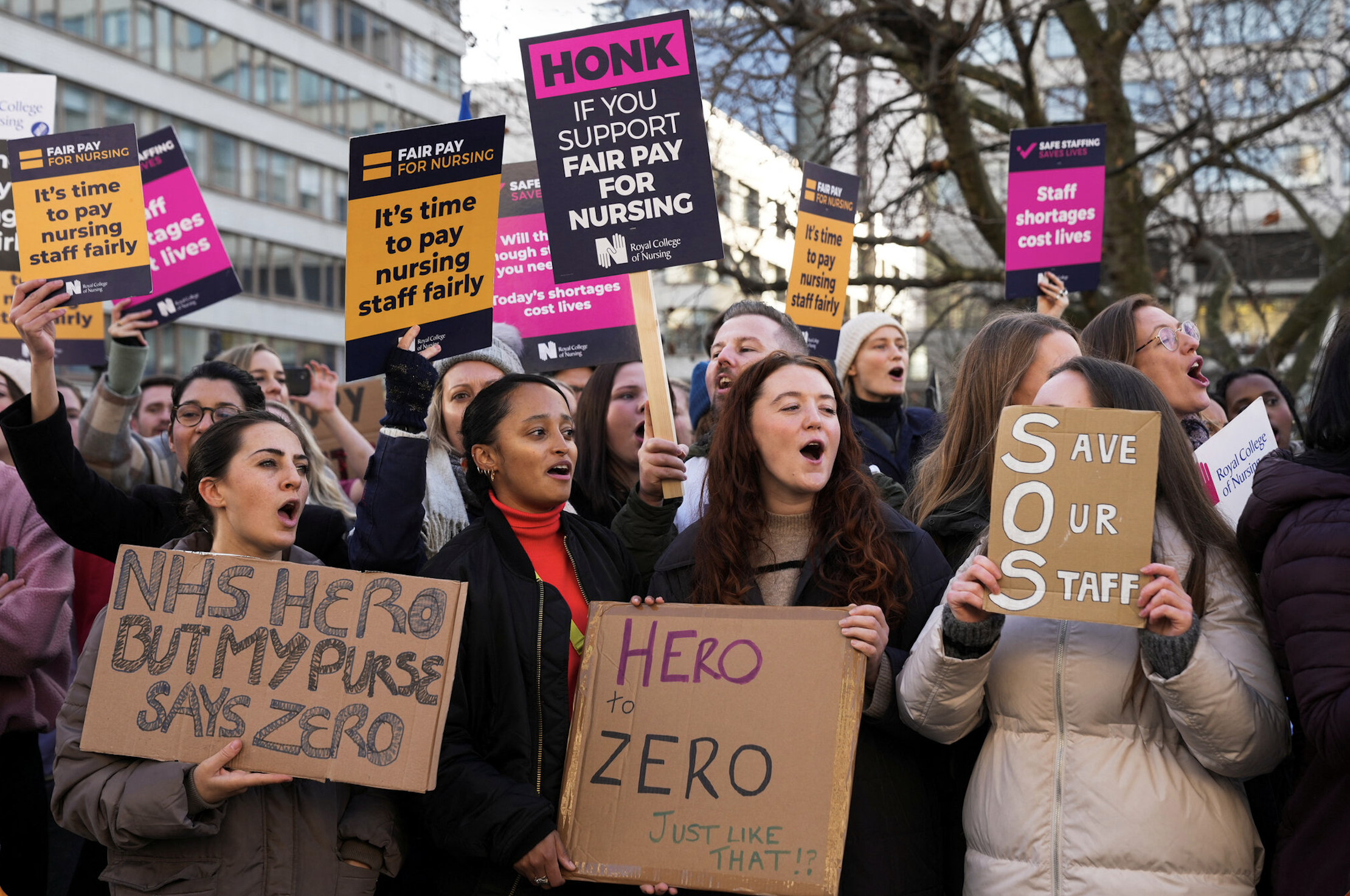
Turkish Honor Culture and the Philosophy of Surveillance
Executive Editor, Caroline Hubbard, researches the origins of femicide in Turkey, examining societal practices of honor and state surveillance.
By all accounts Pınar Gültekin was an ordinary, young Turkish woman studying economics at the Muğla University School of Economics. She was bright, ambitious, and beloved by her family. In the summer of 2020 she disappeared. After days of searching, her body was found, having been brutally strangled. Following a police investigation and court case it was revealed that Gültekin had been killed by her former partner, Cemal Metin Avcı, who claimed to have murdered Gültekin in a “moment of anger.” However, further investigation revealed that Avcı had the help and support of his family members in covering up his crime. Originally condemned to life in prison, Avcı’s sentence was then dramatically reduced to twenty-three years, given the “unjust provocation” by Pınar Gültekin that drove him to murder her.
Femicide
The tragic and horrifying death of Pınar Gültekin is unfortunately one of many murders of Turkish women in recent years. Femicide, the intentional killing of women or girls, is the most violent form of misogyny, and its rise across Turkish society is cause for international concern. The Stockholm Center for Freedom recently reported that thirty-one Turkish women in the month of August alone were victims of femicide. These women were murdered by their male partners and relatives, frequently after having already issued a restraining order or having left the relationship. The World Health Organization defines femicide in four distinct categories: intimate femicide (committed by a current or former husband or boyfriend); non-intimate femicide; “honor killing” (when the motive is to preserve/restore his family’s honor); and dowry-related femicide (the husband and in-laws kill the bride when the family does not meet the dowry demands) (Toprak and Gokhan, 2). Experts have traced the increase in femicide killings to the “policies of the Justice and Development Party (AKP) government, which protects violent and abusive men by granting them impunity.” Cemal Metin Avcı’s reduced sentence and the practice of reducing sentences on the basis of female provocation are examples of such policies.
Pınar Gültekin’s death is an example of both an intimate death and an honor killing within the categories of femicide. Examining the origins of honor-based femicide killings lies in the Turkish societal practice of honor and surveillance.
Honor Culture
Honor culture is an international phenomenon which has existed across societies for thousands of years. Across cultures and continents there are thousands of examples of varying forms of honor culture. In ancient Rome, honor culture frequently led to justified honor killings, and Roman law punished men who refused to kill their adulterous female family members. Thousands of years later, the British Empire established the British Penal Code of 1860 which introduced “the notion of ‘modesty’, and related concepts of ‘chastity’, ‘enticement’ and ‘abduction’, as part of a framework of collective ‘honor’. Rather than safeguarding the rights of the affected individual woman, the law upheld the rights of third parties, be it the state, community or immediate family members.” Honor culture exists in varying forms; it can not be understood as a national issue applying to each and every citizen, but varies at a regional, familial, and individual level. In contemporary Turkish culture, honor determines both an individual's worth and societal structure through connecting individual honor to one's family. Therefore, honor exists as a collective that can be applied and upheld by an entire family. However, this complicates an individual’s relation to honor, because their honor can be destroyed by the actions of another family member. Turkish families must broadcast their honor as a collective unit to society. When women break behavioral norms, such as by acting more masculine or immodest, they not only destroy their own honor, but also the honor of their male family members which in-turn affects societal harmony by destroying the honor of the family unit. Retaliation often takes the form of violence or murder which has led to the increase in femicide and phenomena of “honor killings.” Honor killing refers to the cultural practice of killing an individual to protect the family or society’s honor. However, in Turkey there is a further complicated element in which “there seems to be a social apprehension that man’s violence against the ‘insubordinate’ female is understandable and justified.” Turkish male violence is directly linked to the longstanding multicultural acceptance of justifying violence when it stems from defending one’s honor. Consensual understanding that women’s purity is seen as the symbol of family honor, thus allowing family members to avenge anyone who compromises her honor, especially if it is the woman herself.
Unpacking the Origins of Honor Culture
French philosopher Michel Foucault was fascinated by society’s obsession with surveillance as a means of control and regulation, and much of his philosophical analysis can be seen as an attempt to create a visual metaphor for modern day surveillance. Applying the Foucauldian [BJ1] concept of surveillance provides a new lens of analysis and method of understanding for the intersection between honor culture and surveillance. Foucault described societal surveillance as a panopticon: a philosophical concept based on a unique prison design that was structured to ensure constant surveillance for all individuals within the prison. The panopticon has become a metaphor in surveillance studies as a tool to analyze the role of surveillance in a certain culture or industry. Honor culture relies on the societal acceptance of being watched constantly, as if under the watch of an ever-present panopticon. Constant surveillance creates a unique human experience, as individuals adjust their behavior to cope with the limitations imposed upon them due to a constant “assumed gaze.” Much of the self-regulation that exists in Turkish honor culture is directly linked to individuals dealing with the pressure of being constantly watched. Foucault also wrote about how self-regulation due to surveillance creates a “discipline blockade” that refers to how individuals regulate their behavior in dangerous and fatal ways as a response to surveillance. Although it may not directly kill, constant surveillance creates environments in which individuals can put their own life at risk because of the constraints against them. In Turkey the highest rates of suicide occur for young women under the age of twenty-four. Although experiences of suicide are highly individual, there are numerous reports of Turkish women attempting to end their own lives as a result of the pressure they felt from their family and community to protect their honor and purity. When seventeen year old Derya’s [BJ2] family discovered her romantic relationship, they informed her that she had blackened the family name and needed to kill herself in order to end the family’s shame. Despite wanting to live, Derya felt immense pressure and obligation: “My family attacked my personality, and I felt I had committed the biggest sin in the world..I felt I had no right to dishonor my family, that I have no right to be alive. So I decided to respect my family’s desire and to die.” Thankfully, her suicide attempts failed, and she sought refuge at a Turkish women’s [BJ3] shelter. However, Derya’s story reveals that the lack of agency and opportunity that Turkish honor culture gives to young women is deadly.
The severity and devastation of Turkey’s honor culture lies in its systemic surveillance, which both requires and encourages a constant shared observation of every individual. Justified male violence against women may first appear as a result of patriarchal culture that is dominated by misogynistic thinking; however further examination of honor culture reveals that it is rooted not in misogyny, but in surveillance. Pearce and Vitak explain that “Surveillance is the norm in such cultures because others must validate that an individual is adhering to the behavioral code.” An individual must be constantly watched by their family and society, while simultaneously watching others, in order to make sure that their collective honor is respected. As previously mentioned, an individual cannot determine one’s own honor, instead it is directly linked to their family and community; this collective concept of honor therefore demands a culture of surveillance. Individuals are both constantly watched and constantly watching others.
Surveillance as a tactic
An awareness of constant surveillance is behind the fear and motivation for engaging in honor culture, but awareness also requires understanding how surveillance can appear as different manifestations of power. Surveillance can exist at the state sanctioned level; this type of surveillance manifests itself in virginity examinations imposed upon women that can be requested at the behest of individuals, police, and schools. In a survey conducted on virginity examinations, 70% of Turkish doctors reported conducting at least one virginity examination that year. The legal system is another form of institutional and state sanctioned surveillance. By refusing to adequately punish men accused of honor killings, the legal institution is indirectly contributing to surveillance culture by creating an atmosphere in which surveillance and violence can thrive. However, surveillance can also occur at the private level, such as between families. As revealed above, honor killings are frequently carried out by a woman’s male relations, thus revealing how surveillance is conducted in the home. Familial surveillance builds relationships of cynicism and distrust between family members.
Conclusion
Understanding the role that systemic surveillance plays in honor culture is key for Turkey to overcome the issue of femicide. In order to eradicate femicide rooted in honor killings, Turkish legal institutions must place greater effort towards recognizing the larger institutional barriers that surveillance supports. Although there is dire need for reform and justice, Turkish activists are rallying and protesting across the country to ensure that the deaths and lives of Pınar Gültekin and other victims of honor killings are not forgotten or ignored. Organizations, such as the Turkish Women and Democracy Association, known as KADEM, work tirelessly to advocate for greater gender equality for men and women across Turkey. The Turkish Women Union seeks to promote women’s political rights and agency across the country. Other organizations, such as We Will Stop Femicide (WWSF) actively combat the issue itself. These varying organizations all demonstrate the important role of Turkish civic society and collective organization. Despite Turkey’s current authoritarian regime, the brave work done by feminist and human rights organizations, as well as individual citizens can allow us to be optimistic.
Recent Articles