
From Terrorist to NATO Ally: Kosovo Liberation Army
Staff Writer Anna Keyes investigates the endurance of the Kosovo Liberation Army (KLA) during the 1998-1999 Kosovo War, outlining the broader historical ehtnic conflict of the region in the process.
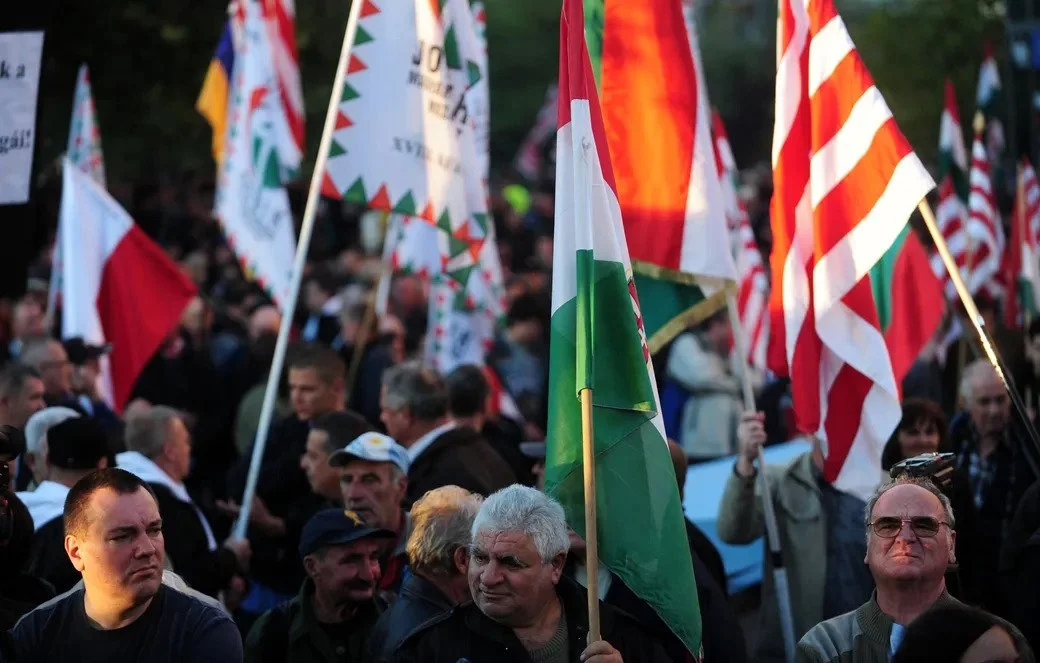
Twenty thousand mourners congregated to bid a somber farewell to Halit Gecaj, a revered Kosovar Albanian teacher who had been killed by a stray bullet during a fight between the Kosovo Liberation Army (KLA) and Serb policemen. Amidst the solemn crowd were a trio of masked figures, shielded by a cloak of enigma. One of the men took a stride forward and addressed the crowd, calling upon his fellow countrymen to resist the “inhuman violence of the Serbian invader” (Mueller 26). It was November 28th, 1997 and the KLA had made its first public appearance (“Background”).
The KLA was instrumental during the Kosovo War, which lasted from February 28th, 1998 to June 11th, 1999, an irredentist conflict fought over control of Kosovo, a province composed of majority ethnic Albanians yet dominated by Serbia under communist rule. Belligerents consisted of the Federal Republic of Yugoslavia (Serbia) versus the ethnic Albanian guerilla groups, the KLA and Armed Forces of the Republic of Kosovo (FARK), which were joined by NATO in March 1999. A Muslim-majority nation, secular nationalism had superseded religious infiltration in Albanian politics since the 1878 founding of the League of Prizren, a party which coalesced at the cessation of the 1877-1878 Russo-Turkish War, opposing the proposed partition of neighboring Balkan states and asserting Albanian independence (Koktsidis and Ten Dam 1 and Gawrych 147). Albanians had never been granted sovereignty until November 28th, 1912, coincidentally the same day as Halit Gecaj’s funeral. Fighting an enduring struggle for independence, Albania, and by extension, Kosovo, boast a history rampant with guerilla movements, yet most of those that existed between 1979 and 2001 enjoyed a brief glory period, then withered away as fast as they emerged. The sheer resilience of the KLA shocked western policymakers who had been monitoring regional trends (Koktsidis and Ten Dam 1). The KLA suffered tremendous losses, yet achieved massive success mobilizing popular support and won the war, alongside NATO. A plethora of factors have contributed to the success of the KLA, which arose out of severe ethnic strife. Thus, this article explores the ethnic conflict that permeated Kosovar society and analyzes the origins and success of the KLA.
Ethnic Conflict in Kosovo
Spirits lifted for Kosovar Albanians in the mid-1960s through the 1970s. Long-time communist president Josip Tito had dismissed anti-Albanian secret police chief Aleksandar Rankovic in 1966, and in 1974 Yugoslavia had adopted a new constitution which granted Kosovo de facto republic status under Serbia, permitting it to “Albanize.” Almost immediately, a backlash erupted: The following years witnessed a mass exodus of Serbs, Turks, Roma, and other ethnic minorities from Kosovo as Albanians gained stride toward equality. Those fleeing complained of discrimination from Albanians, who had always been the majority ethnic group in Kosovo. Kosovar Albanians refuted these claims, suggesting economic despair as the impetus.
Simmering ethnic tensions finally boiled over after 1980 upon Tito’s death, splintering the decentralized political system and abandoning it to the reckless forces of nationalist politics (Woehrel and “Background”). No longer barred by repressive barriers integral to the communist regime, March 11th, 1981 witnessed mass demonstrations led by students in favor of full republic status for Kosovo. Students were joined by thousands of laborers who demanded better living conditions in addition to independence. The standard of living had certainly exacerbated under decaying economic conditions during the 1980s, fueling the strength of the protests and the violence of the retaliation (Koktsidis and Ten Dam 2). Massive crackdowns and incidents of police brutality ensued: Serbian police arrested over 2,000 protestors, between 1,200 and 2,000 of whom received lengthy prison sentences (Walsh and Koktsidis and Ten Dam 2). Officials of Kosovo’s League of Communists, who were blamed for the protests, were fired from their positions, and expelled or convicted. Serbian authorities claim the crackdown resulted in 11 deaths, Albanians assert 1,000 people perished, while Amnesty International suggests the figure is closer to 300. Belgrade’s ruthless response radicalized a portion of Kosovar Albanians, although until the late 1990s most adhered to peaceful resistance against Serbian oppression (Koktsidis and Ten Dam 2, Judah 21 and Walsh).
The trend of brutality soared after Slobodan Milosevic was elected as president of Serbia in 1989. Milosevic weaponized centuries of anti-Albanian sentiment and fabricated tales of Serbian historical linkages to Kosovo in a strategic attempt to rouse public support for the regime’s suppression of independence claims. This rhetoric was prevalent not only in his speeches; Serbian nationalism and anti-Albanian sentiment were deeply embedded in law. In 1990, Serbia adopted a new constitution which revoked the autonomy of both Kosovo and another de facto republic, Vojvodina. 350,000 Kosovar Albanians fled during this time. Police brutality, arbitrary detention, and torture continued within the corrupt penal system, ethnic Albanians the usual target. Police invaded civilian homes lacking a warrant and arrested those merely passing through areas with high rebel activity. Ethnic Albanians were even increasingly fired from their professions (“Background”). Amidst this ethnic turmoil the KLA had been born.
Origins of the KLA
Economic tensions and concerns over living conditions enabled radical political groups to swarm in, casting a tinge of communism to cries for secession. Such groups included the Group of Marxist-Leninists of Kosovo (GMLK), the Movement for the National Liberation of Kosovo (MNLK), the Communist Party Marxist-Leninist of Yugoslavia (PKMLSHJ) and the Movement for the Albanian Republic in Yugoslavia (LRSHJ) (Koktsidis and Ten Dam 2-3). The LRSHJ, for example, was a Maoist organization founded in 1982 by loyalists to Albanian communist dictator Enver Hoxha. They asserted Kosovo could only be freed from Serbian oppression through an armed uprising and longed for a “greater Albania,” comprising Kosovo, western Macedonia, eastern Montenegro, and Albania itself (Judah 21). In 1982, these four communist parties consolidated into one, the Popular Movement for the Republic of Kosovo (LPRK). At a clandestine conference in August 1993, the LPRK renamed itself as the People’s Movement of Kosovo (LPK) and abdicated from its communist stance. Furthermore, it officially declared an army, the KLA (Walsh and Koktsidis and Ten Dam 3). The KLA, however, had debuted its first attack earlier that year in May: In Glogovac, a town in central Kosovo, KLA members murdered two Serbian police officers and wounded an additional five (Hedges 26). In 1996, the KLA began executing coordinated attacks on both Serbian police and civilians, although research suggests an opposing group, the National Movement for the Liberation of Kosovo (LKCK) to have been responsible for the February 11th, 1996 series of assaults on Croatian Serb refugees (Koktsidis and Ten Dam 2 and “Background”). By the spring of 1998, the group had seized control over roughly 40 percent of Kosovo, forcefully expelling Serbs, resorting to abduction and murder in the process (“Background”). Unlike the LPK, the KLA was never a unified movement that adhered to a single ideology. After the outbreak of war in 1998, its tremendous popularity propelled it to the center stage of the fight, eclipsing the LPK and rival groups. Ultimately, the KLA was a collection of armed formations stringed together by a shared desire for independence. Furthermore, several armed groups were strictly “KLA” in name only.
Researchers have identified six factions of the KLA, the first being the LPK. The second is the LKCK after the outbreak of war in 1998, which merged with the KLA. The third is KLA official Hashim Thaci and his crowd of student activists, the fourth is longtime KLA rival Democratic League of Kosovo (LDK)’s prime minister Bujar Bukoshi and his supporters, the fifth Adem Demaci, often deemed the “Yugoslav Mandela,” who served as the KLA’s spokesman from August 1998 until May 1999, and the sixth the Jashari Clan, who had been massacred by Serbs in 1998 (Koktsidis and Ten Dam 3-4).
Ideological Makeup and Membership
The KLA is unique as a guerilla group for its pervasive ideological divide: it attracted both fascists and communists. Among fascists were those descended from Albanians who served in right-wing militias and the Skanderbeg volunteer division of the SS during World War II. Many also claimed ancestral ties to Albanian right-wing kacak rebels who led revolts against Serb rulers in the 19th and 20th centuries. Among the kacak descendants were the Jasharis (Hedges 26 and Koktsidis and Ten Dam 3). The communists who staffed the KLA were largely Stalinists and loyalists to Hoxha who had been educated at the University of Pristina (Hedges 28). A substantial portion of KLA members had been incarcerated during Tito’s reign for separatist activity (Hedges 26). A collective yearning for independence and adherence to Albanian nationalism sustained the ideologically messy KLA and undoubtedly contributed to its success.
Opposition to Ibrahim Rugova and the LDK
Before the official outbreak of war in 1998, the KLA battled with its opposition: Ibrahim Rugova’s LDK. Former literature professor Rugova presided over the LDK from its founding in 1992 until 2000. Rugova advocated nonviolence and peaceful resistance, citing Serbia’s wins in the Croatian and Bosnian wars as reasons to stray from outright armed uprising (“Background”). Until the late 1990s, the general Kosovar Albanian public gravitated toward the LDK’s pledge to nonviolence (Walsh). Yet a pivotal moment occurred in 1995 that would steer the public in the direction of the KLA’s calls for an armed struggle. In 1995, the 1992-1995 Bosnian War ceased upon the signing of the Dayton Agreement. Conditions of the accords humiliated Kosovar Albanians, whose struggle for independence was omitted entirely. Furthermore, Bosnian Serbs were also handed control of nearly half of Bosnia and Herzegovina, despite being responsible for genocide and Serb-dominated Republika Srpska was granted EU recognition. Feeling betrayed by western powers and disillusioned with peaceful resistance, Kosovar Albanians increasingly mobilized in favor of the KLA (Hedges 31).
The opposition between the LDK and the KLA furiously raged on. The KLA accused Rugova of being a “traitor” while Rugova publicly alluded to Serbian infiltration within the KLA (Chossudovsky 31 and Perritt 15). Both groups operated competing funds, the LDK orchestrating the “Three-Percent Fund” calling on the Albanian diaspora to donate three percent of their income to the Kosovar cause, while the KLA administered the “Homeland Calling Fund” which employed revenue for training and purchase of arms (Perritt 16 and Walsh). During the war, money meant for the LDK was often diverted to the KLA (“Background”).
In the mid-1990s Bukoshi established the LDK’s military wing, FARK, advertised as a better-organized, more professional alternative to the KLA (Perritt 81 and 86). FARK membership consisted of ethnic Albanians who had served Sarajevo during the Bosnian War (Koktsidis and Ten Dam 4). Both groups endured a vicious rivalry, KLA officials referring to FARK as “cowards” and “traitors,” suspecting them to be sympathizers of the Serbian regime (Brown 6). Curiously, FARK soldiers had been spotted donning the KLA insignia (Brown 6). Perhaps this choice was a manifestation of the rivalry, for Serbian-aligned paramilitaries were documented to have sported similar KLA patches in mockery (HRW D1108). On September 21st 1998, the conflict reached a climax when KLA members assassinated FARK official Ahmet Krasniqi (Koktsidis and Ten Dam 4). FARK continued to battle with the KLA until later that year when the KLA absorbed it as the 138th Brigade (Rathfelder).
Ultimately, FARK had been established too late in the conflict to gain an advantage over the KLA’s superior recruiting and funding. The KLA had been preparing for an armed rebellion since its founding in the early 1990s and dutifully manufactured propaganda and recruiting networks. The LDK’s harsh scrutiny toward the KLA led a substantial portion of the public to lose their trust in the LDK (Koktsidis and Ten Dam 5). The public was also ready to embrace an armed struggle after a decade of immense violence inflicted toward them and the overall futility of peaceful resistance.
The Kosovo War of 1998-1999
Kosovo was crawling with Yugoslav army personnel, who numbered 50,000 by February 1998. Between February 28th and March 5th, 1998 units of the Serbian Army assembled in Kosovo’s central Drenica valley and unleashed a maelstrom of destruction under the guise of “anti-terrorism.” On February 22nd, U.S. official Robert Gelbrand branded the KLA as a “terrorist organization,” greenlighting the attacks (Koktsidis and Ten Dam 5 and “Background”). Collectively known as the Drenica Offensive, this series of attacks is considered the beginning of the Kosovo War. Unable to beat the more powerful Serbs, the KLA’s first major offensive attempting to capture Orahovac in July 1998 failed. Serbia rapidly regained control over Kosovo territory, including areas that had once been KLA strongholds (“Background”). Despite suffering brutal losses during the summer, the KLA refined its strategy as the war progressed: In the few areas still dominated by the KLA, police and courts remained functioning. Accounts from the battlefield reveal KLA soldiers were disciplined, obeyed commanders, adhered to strict security procedures for foreign journalists, distributing press passes and regulating entry (“Forces of the Conflict”). Nevertheless, the KLA conducted precarious tactics that jeopardized the safety of civilians. For example, they often directed guerilla attacks against Serbian checkpoints or patrols located not far from villages, heightening the risk of retaliatory assaults on innocent villagers. A theory put forth is that the KLA intended to lure the Serbs into retaliation, in which they would reap the benefits of publicized massacres. In other words, increased publicity generated from civilian death would boost sympathy for the KLA’s cause (“Forces of the Conflict”).
Ethnic cleansing of Kosovar Albanians occurred during the war. Evidence suggests the campaign was tactical in motive, directed toward residents of KLA strongholds (Hedges 25). During the Kosovo War, ethnic cleansing was marked by summary executions, forced relocation, mass killings, false imprisonment, rape, and the systematic destruction of farmland and towns (Kosovo War Crimes doc 1999). By March 11th, 1999 over 400,000 people had been forced to flee Kosovo. Estimates range from 20,000 to 45,600 for the number of rape victims (House Committee, Kosovo’s Wartime Victims). A multitude of firsthand accounts confirm Serbian forces brutalized anyone they suspected of having ties to the KLA. Broken limbs, shattered jaws, and gunshot wounds were among the most commonly reported injuries (“Background”).
The KLA owes much of its success during the latter portion of the war to Western aid, specifically NATO’s involvement. The January 15th, 1999 slaughter of 45 Kosovar Albanians in Racak appalled the West. Thus, the Rambouillet Conference was convened in February, where Milosevic refused to sign a peace treaty that Albania had agreed to. Given Serbia’s unrelenting refusal to concede, NATO launched the air-bombing campaign Operation Allied Force on March 24th, 1999. The war finally concluded on June 11th, 1999 (“Background” and Koktsidis and Ten Dam 6).
Albanian Gun Culture
A profound and enduring affinity for firearms saturates Albanian culture, dispersing into nearby Albanian-dominated Kosovo: By early 1989, Kosovars held permits for 58,612 weapons (Koktsidis and Ten Dam 7). The Kanun, the secular law code integral to Albanian society, stipulates a “blood feud” if one’s honor has been tainted. During a “blood feud” the aggrieved family attempts to kill a male relative of the offending family. Thus, Albanians utilize guns to streamline this process. In post-war Kosovo, many produced guns in the event of a property dispute (Koktsidis and Ten Dam 1-2). Guns and weaponry are vital components of Albanian society and this is one reason why the KLA successfully rose.
The KLA endured through tumultuous times because of the easy access to weapons after neighboring Albania’s catastrophic economic crisis: In 1997, its pyramid scheme economy collapsed. Dissatisfied with ruling President Sali Berisha of the Democratic Party of Albania (DPA), people rioted in the streets, burning down police stations and town halls, looting the weaponries (Koktsidis and Ten Dam 5). Over 100,000 small arms found their way smuggled into Kosovo, where they were sold for prices as low as fifty Deutsche Marks (2 USD in 1997) (“Background”). The economic collapse of Albania fueled the resilience of the KLA, providing the guerilla group with an adequate supply of arms.
Conclusion
The KLA suffered tremendous losses during the 1998-1999 Kosovo War yet managed to maintain its reputation as a formidable force and, with the aid of NATO, ultimately won the war. Their success stemmed from a deeply embedded gun culture in Albania, assistance from NATO and the West, poor capabilities of rival groups, a single unifying demand for independence that cut across political divides, and a significant history of ethnic tensions that invigorated the Kosovar population’s drive for armed conflict.
References
Brown, Justin. “New Guerillas Rival Old Rebels to Kosovo.” The Christian Science Publishing Society. 3 Sept, 1998, p. 6.
Chossudovsky, Michael. “Kosovo ‘Freedom Fighters’ Financed by Organized Crime.” Peace Research 31, no. 2, 1999, pp. 29-42.
Gawrych, George. The Crescent and the Eagle: Ottoman Rule, Islam and the Albanians, 1874-1913. Bloomsbury Academic: London, 2006.
Hedges, Chris. “Kosovo’s Next Masters?” Foreign Affairs 78, no. 3, 1999, pp. 24-42.
Human Rights Watch. “Background” in Under Orders: War Crimes in Kosovo, 1st. Human Rights Watch, 2001.
Human Rights Watch. “Forces of the Conflict” in Under Orders: War Crimes in Kosovo, 1st. Human Rights Watch, 2001.
Judah, Tim. “The Growing Pains of the Kosovo Liberation Army” in Kosovo: The Politics of Delusion, 1st. Michael Waller and Kyril Drezov and Bulent Gokay, eds. New York: Routledge, 2001. Pp. 20-24.
Koktsidis, Pavlos-Ioannis and Caspar Ten Dam. “A Success Story? Analyzing Albanian Ethno-Nationalist Extremism in the Balkans.” East European Quarterly 42, no. 2, 2008, pp. 1-20.
“Kosovo: ‘Ethnic Cleansing’ in the Glogovac Municipality.” Human Rights Watch. D1108. 1 July 1999.
Mueller, Jennifer A. “International Norms as Weapons of War: The Kosovo Liberation Army, 1996-1999, A Preliminary Discourse Analysis.” American Political Science Association, 2011.
Perritt, Henry H. The Kosovo Liberation Army: The Inside Story of an Insurgency. Champaign, IL: University of Illinois Press, 2008.
Rathfelder, Erich. Kosovo: Geschichte eines Konflikts. Berlin: Suhrkamp Verlag, 2010.
Walsh, Lynn. “The KLA and the Struggle for Kosovar Self-Determination.” Socialism Today 39. June 1999.
Woehrel, Steven. “Kosovo: Historical Background to the Current Conflict.” CRS Report for Congress. CRS Issue Brief 98041. Washington D.C.: GPO, 5, June 1999.

The KDF and Diverging Views on the Protection of Civilians in AMISOM
Contributor Will Brown uses new research to probe the relationship between the conceptualization of the Protection of Civilians by peacekeepers and their operational environment, focusing on the Kenyan Defence Forces in Somalia.
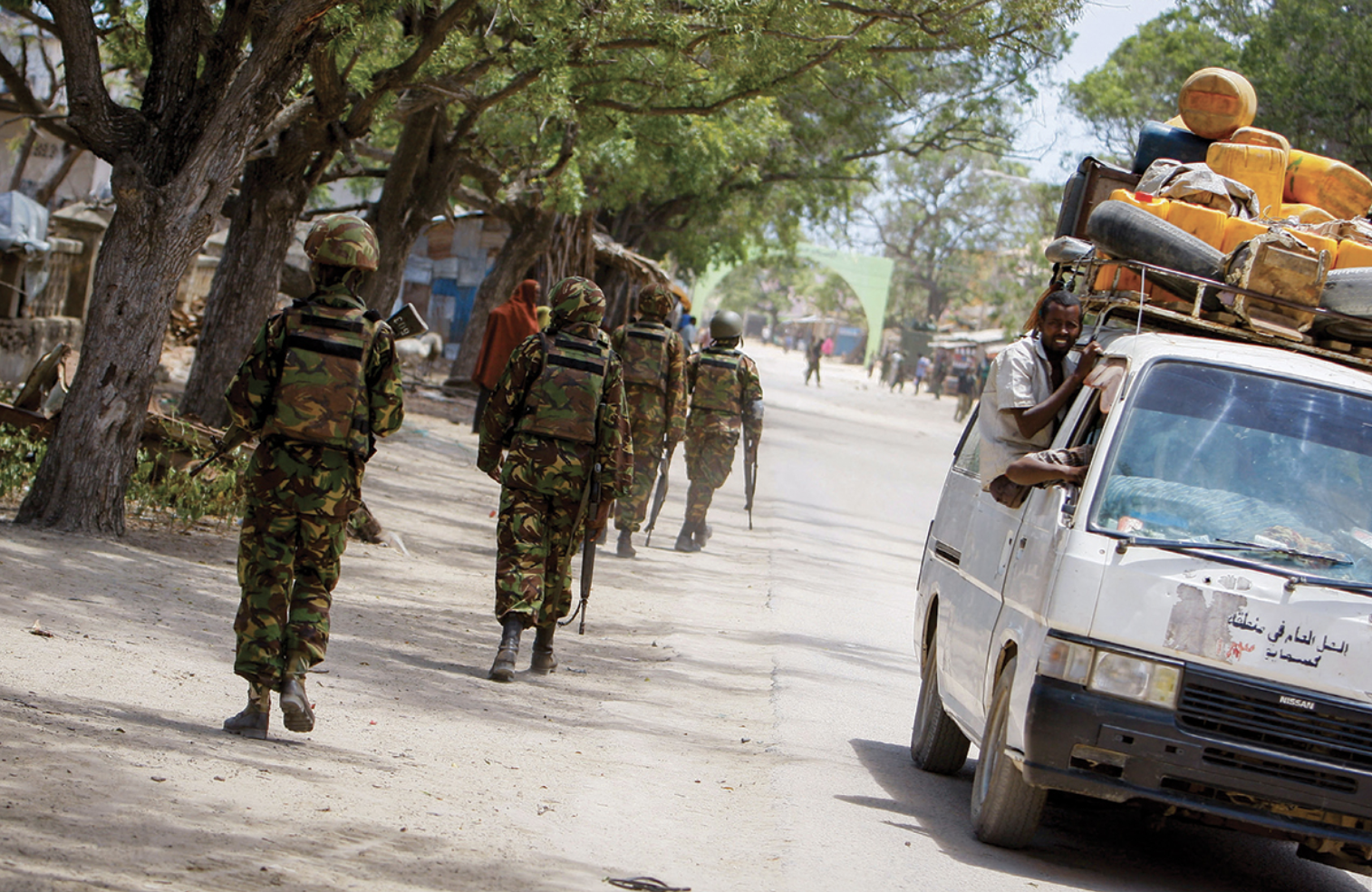
It is generally understood that uniformed personnel serving in peace operations, from a variety of different militaries and in a variety of different settings, will understand and conceptualize their experiences and operations in different ways. This is true when we examine how personnel from different Troop Contributing Countries (TCCs) view the Protection of Civilians (POC). As Fiifi Edu-Afful notes in his IPI report on peacekeeping in non-permissive environments, “the mindset of peacekeeping contingents is often predicated on the concepts and attitudes imparted through the training and doctrinal perspective of the TCC that deployed them.” However, what happens when the views of peacekeepers differ from their training? I explore a possible case of this occurring through the example of Kenyan peacekeepers deployed in the African Union Mission in Somalia (AMISOM).
Through conducting interviews, reviewing archival documents, and analyzing open-source information, I found that there is a disconnect between what Kenyan Defence Forces (KDF) personnel were taught regarding protection and what they actually believe. This article examines that difference, how it came to be, and the implications of the existence of that disconnect for future research and policy. However, it is important to caveat that this research is currently exploratory as it is based on relatively limited data and observations.
This article begins by examining how KDF personnel are taught about POC and what concepts they are taught, which are based around conventional existing UN doctrine. It then looks at how KDF personnel who served in AMISOM actually view POC, which is more outcomes-based, community-focused, and holistic. It then examines possible reasons why this disconnect occurred, building off the KDF’s organizational history and the operating experience they found themselves in in Somalia. It then concludes by presenting some concluding thoughts and implications for policymakers and academics.
KDF pre-deployment training, mostly based at the International Peace Support Training Center (IPSTC), had limited specialized protection training, and what specialized POC training was offered was based on pre-existing UN doctrine, such as the published “Policy on The Protection of Civilians in United nations Peacekeeping” and the “Protection of Civilians Handbook,” that emphasizes certain methods and objectives One reviewed training schedule, for infantry units deploying to a UN mission, included only a single 45 minute training block fully dedicated to the “Protection of Civilians.” It’s likely that personnel deploying to AMISOM received similar levels of total pre-deployment training but with even less of a theoretical emphasis on POC. A civilian working at the center noted that both UN and AU pre deployment training used a similar structure and two-week training schedule. However, multiple trainers who worked with the KDF noted that units deploying to Somalia received a stronger focus on “basic soldiering skills,” given the harsh environment and by extension a lesser focus on academic topics, such as the module on POC compared to pre-deployment for UN missions. These modules were usually a combination of lectures, discussions, and scenario-based learning.
While we don’t currently know what material is specifically taught in AMISOM pre-deployment training, a review of training material gives us a strong idea of how the IPSTC conceptualized POC as a general concept before it was made mission specific. This can be determined by their facilitators’ guide for their specialized “Protection of Civilians” course that, while not in and of itself widely attended within the KDF, shows how the IPSTC views POC and might teach at a smaller scale to those deploying to Somalia.
The conceptualization of POC offered by the specialized POC course is almost entirely in line with existing UN doctrine. In the course, POC activities are divided into three tiers of operation (Protection through Political Process, Protection from Physical Violence, and Establishing a Protective Environment) across four phases (Prevention, Pre-emption, Response, and Consolidation). In UN doctrine, POC activities are also divided into three tiers of operation (Protection through dialogue and engagement, Provision of physical protection, and Establishment of a protective environment) also across four phases (Prevention, Pre-emption, Response, and Consolidation).
Despite the differences in mandate and operating environment, the use of UN doctrine makes sense. It is already well established, developed, and tested. Thus, it makes sense to teach it to those deploying to AMISOM. Even if the difference in mandate (AMISOM, for example, does not have an active protection mandate unlike many UN missions) makes some parts of it irrelevant. However, the ways in which personnel trained in UN doctrine interact with their operational environment combine to form a new conceptual framework for POC.
KDF personnel who had served in AMISOM, however, displayed a very different conceptualization of POC. This manifested itself in two ways. First, they conceptualized POC as community based and outcome based rather than process based and based around particular incidents as in standard doctrine. Second, they focused on how POC could “work” for the KDF.
Firstly, KDF personnel viewed POC on a community level. When asked what a “successful POC” looks like, one KDF officer who had served in AMISOM answered that it involved a scenario with reduced violence, where people could go back to businesses and students could go back to school. Importantly, this is outcome-based. It describes what happens when POC activities are implemented well rather than describing what activities would help create that environment. It was also community-based. It describes improving conditions for the community as a whole rather than protecting specific targeted individuals or groups from imminent physical harm, which is what UN POC doctrine prioritizes.
There was also a desire to view POC through the lens of AMISOM’s stabilization and peace enforcement mandate. Another KDF officer, who served in AMISOM as part of a EOD unit, described teaching civilians how to recognize IEDs as a POC success. While this obviously mitigates civilian harm and is a clear-cut case of POC, he also highlighted how that was useful for the KDF because it allowed for local civilians to better report possible threats to KDF patrols. Similarly, many AMISOM public statements on POC and increased POC awareness focus on civilian harm mitigation or reducing the threat to civilians from one’s own action, instead of from other actors. This is in order to prevent backlash and loss of support amongst the mission. Several sources spoke of established loss of local support, partially as the result of civilian casualties caused by AMISOM, as a key challenge to mission effectiveness. This suggests that, especially in non-permissive environments where POC is not a core mandated activity, POC activities (such as training civilians to recognize IEDs) is viewed as a means to an end (stabilization) rather than an end in and of itself.
While there is a clear difference between what KDF personnel are taught regarding POC and what they actually believe, it is less clear why that gap occurs. One reason may relate to the operational environment. AMISOM and the Somali context is very different from the average environment where UN peacekeeping operations operate (such as the DRC and South Sudan) in two major ways: the mission mandate and the operating environment.
Compared to many other African conflicts, the conflict in Somalia features fewer cases of large scale and deliberate targeting of civilian population. Using data from the Armed Conflict Location & Event Data Project (ACLED), we can track violence dynamics. During AMISOM’s 8+ years of operation, ACLED only recorded 37 attacks against civilians with 10 or more fatalities. In contrast, during the first six months of 2022 alone, the DRC saw 29 such attacks, the Central African Republic 12, Mali 34, and South Sudan 19. In contrast to other conflicts, where the large-scale massacre of civilians is a common tactic by armed groups, most Somali civilians who died in conflict die in smaller scale incidents such as assassinations, IEDs, and crossfire during battles between different armed groups.
There are also key differences between UN peacekeeping mandates and AMISOM’s mandate. While all large-scale UN peacekeeping operations are mandated to protect civilians from imminent physical harm, AMISOM lacks such an explicit mandate. However, interviews with KDF personnel showed an internal buy-in to do POC amongst KDF personnel, and conducting POC activities was still encouraged to some extent by AMISOM leadership.
These two factors partially explain the difference in POC conceptualization. In UN missions, where the explicit mandate is to protect civilians from “Imminent Physical Harm,” POC becomes focused on ways to prevent incidents, where “Imminent Physical Harm” occur on a large scale such as massacres. There are a variety of ways to accomplish this, such as mediating local conflict, conducting military patrols, and developing early warning networks, but the objective is the same. The conceptualization of POC develops along that line. In contrast, civilian casualties in Somalia don’t largely occur as a result of large-scale attacks that result in “Imminent Physical Harm.” Instead, they largely occur as a byproduct of the conflict between the government and Al-Shabaab. Thus, the KDF vision of POC, where the successful implementation of POC programs is framed around communities returning to normalcy as a result of stabilizing the community in general, rather than preventing specific negative events. This is speculative, but the view could be that, by reducing and ending the conflict between armed groups, the threat to civilians brought by the conflict is coincidentally ended, thus protecting civilians. The lack of mandate also means that AMISOM personnel aren’t mandated to intervene in cases of “Imminent Physical Harm.” They are, however, mandated to defeat Al-Shabaab and (theoretically) end the conflict and, thus, the threat to civilians as a result of that conflict.
While environmental effects of the Somali context were the primary driver in the division between what KDF personnel were taught regarding POC and what they believed, there are probably also other secondary contributing factors. While these factors would require further research to be fully understood, there are some factors within the KDFs organizational culture that might influence the development of their views on POC. The KDF was formed immediately after independence with the assistance of their former colonial masters and have had a close working relationship with the British ever since. The KDF fits the mold of a colonial military, where the military is consistently trained, equipped, and supported by the former colonial power. Compared to many of its neighbors, the KDF has a strong history of political non-interference in domestic affairs. The KDF also hasn’t fought in any major conflicts beyond some small domestic counterinsurgency efforts until their commitment to AMISOM. Several foreign trainers I’ve spoken with highlighted how this level of intensity marked a new challenge for the KDF, forcing the organization to further professionalize, receive additional training, and adopt modern COIN doctrine when they previously never had to. This collective experience means that the Kenyan experience in Somalia is possibly formative for the KDF’s conceptualization of itself and how it operates. The reason why the KDF’s view on POC lines up with the Somali context so well, versus being incorporated into a wider schema, is because AMISOM has represented the first and most dominant experience of the KDF with regards to POC.
Peacekeeping is becoming an increasingly multilateral institution, as more and more countries from different regions and backgrounds deploy troops to peacekeeping missions. As this article has established, the environment peacekeepers are deployed in has a significant impact on their views towards their activities and peacekeeping concepts. There is room for more research on this topic. While it has been laid out here that KDF personnel have a unique view on protection, there is room to explore how personnel from different TCCs view POC through their own separate lenses. Within that, there is also room to explore how the different combinations of military culture, training/doctrine, and operational experience can impact the perceptions of peacekeepers. This, in turn, will help policymakers, planners, and practitioners better understand the diversity of views within peacekeeping and help them better conduct successful implementations of POC mandates.

Propagate By Poison: The Landscape of China's Rural-Urban Dichotomy
Staff Writer Mia Westfere outlines the multifaceted dimensions of China’s urban-rural divide, untangling its historical roots and the web of contemporary challenges it poses to political-economic stability.

For thousands of years, the agrarian heartlands were the very heartbeat of Chinese civilization. Writing years before the establishment of the first imperial dynasty and long before the industrialization of China, reformer Shang Yang deduced that harnessing the plow was the path to harnessing power in the context of the tumultuous Warring States era. His recommendation of “emphasizing agriculture and restraining business” to the Qin state passed down through the subsequent dynasties. Though Shang Yang’s reforms were a boon to Qin productivity, state wealth, and facilitated the establishment of the first Chinese empire, modern China has chosen to address its current challenges with a different approach. While the contrast between agriculture and business remains intact, the growing chasm between the rural and urban worlds may have more negative political ramifications than positive ones in the current Chinese political economy.
Today, the People’s Republic of China’s wealth and power can be found concentrated on the coasts, which have rapidly developed since the 1978 implementation of an “open door policy” ushered in a frenzy of technology absorption and economic entwinement with the world market, marked especially by special economic zone development. Around this time, prevailing perceptions in China conceived the rural sector and the developed, urbanized one as rather disjointed, with economists and policymakers at the forefront of the Coastal Development Strategy envisioning an increased interdependence between the two spheres. The last phase within this roughly 20 to 30 year plan prescribed a leveraging of the wealth derived from industry to develop the agricultural inland areas.
More than 30 years have gone by since this framework was first introduced, and the integration of urban and rural prosperity leaves much to be desired. Income inequality, disparity in education opportunities, and stark differences in market participation show the huge gaps that persist between the urban and rural worlds of the same nation. This sharp contrast is due largely in part to the Hukou system, a policy set by the central government under Mao in 1958, which local governments possess the authority to enforce today. Under this system, citizens must register their birthplace as their permanent residence and can only change this registration by obtaining a special permit. Local governments set numerous bureaucratic hurdles for would-be migrants to jump over in order to control demographics and human capital. Given that the typical direction of migration in China is from poorer, rural areas to wealthier, urban ones, newcomers to the metropolises have an especially onerous time obtaining permits, and therefore frequently find themselves barred from accessing public social support services and stalled in their quest for upward mobility. As a result, the polarization between urbanites and country-dwellers persists.
Sowing Division Under Maoist Socialism
Mao Zedong, a so-called son of the soil, led his army of peasants to victory against the Chinese Nationalist Party and ushered in an age of “Socialist Serfdom.” On an ideological level, Maoism is grounded in the quest for equality, in the destruction of the hierarchical feudal ways and days of old. In reality, the disenfranchisement of Chinese rustics is in many cases firmly rooted in Mao-era policies. As with many other facets of modern Chinese society, stepping out of the shadow cast by Chairman Mao’s legacy poses a serious challenge to untangling the political, economic, and social aggravations of this fissure.
From the very beginning of the Chinese Communist Party’s (CCP) rule, cities have been an exceptional pressure point on regime stability. For most of the Chinese Civil War, cities stayed loyal to the Chinese Nationalist Party, and before that, were largely beholden to foreign interests and exploitation. The CCP desperately needed to grab the reins of these hotspots of crime and dissension, and they perceived the influx of post-civil war migration as a key source of destabilization. Hence, while the immediate aftermath of the war saw the pattern of urban migration that one might expect in the wake of major upheaval, the CCP began to devote serious time and effort to taming both the urban and rural populations- typically by offering the former a carrot and the latter a stick. For example, the countryside was negatively affected by the implementation of the Unified Purchase and Unified Sale system in 1953 by the state setting the price at which it would buy the mandated quota of crops, which naturally came under market value. The government then distributed the purchased food in urban centers, lowering the cost of living there and thereby necessitating more stringent migration policies. Consequently, the hukou system came into effect in 1958, granting governments the power to control people’s movements.
The government promptly began to exercise its newfound powers by recruiting millions to work in the factories meant to fuel the Great Leap Forward. This leap landed with a faceplant, and tens of millions of workers were deported back to the countryside, where tens of millions of people subsequently starved to death. The consequences of this were not only that migration to cities became even more difficult, but also that rural areas were increasingly left to fend for themselves. Depressed by unemployment and all the social ills that entails, rural regions were mandated by Mao to dust themselves off and get to building infrastructure that would boost agricultural production. That surplus, of course, would be handed over to the government at cheap prices to then be exported overseas in order to fund industrial development. The Mao era undoubtedly exhibited urban bias, a bias which persists today. Back then, as is largely the case now, urbanites enjoyed many more public goods and social services than their rural counterparts, such as education, maternity leave, pensions, medical care, and housing assistance. Moreover, the welfare provided to urban residents was in no small part funded by the labor of farmworkers, as by some estimates, the practice of buying agricultural goods at low prices resulted in the government transferring around 534 billion yuan away from the rural sector between 1955 and 1985.
It might be curious that for all the CCP is anxious about discontentment breeding regime instability and achieving social harmony, their long-held practice of neglecting the well-being of the rustics continues to drive a wedge in between the urban and rural populaces. But this is not without consequences; dissatisfaction on both sides has long driven protests and government insecurity, perhaps hinting at an overall pattern of poison from within.
Seedlings of Social Unrest
So what about the reform era? Surely, the government after Mao’s death saw some improvement in the lives of farmers. And indeed, while fiscal policy did raise the price at which the government purchased agricultural goods, thereby benefiting rural areas, the government quickly caved to pressure from urbanites, who sought to maintain their relative advantages. As was the case under Mao, the CCP feared the political repercussions of disgruntled city-dwellers and thus resumed the pattern whereby urban citizens cowed the government into maintaining their higher standards of living.
Even when the government chose to respond to political unrest with military action, such as in 1989 when inflation racked the urban cost of living to the point of protest, the follow-up included amendments to the economic policies in order to quell urban discontent. Furthermore, although the reform period is known for walking back the controlled economy model, pressure for urban protections led to fund transfers to subsidize struggling state-owned enterprises.
For all that the reform period championed economic growth, the government considered it worthwhile to sacrifice economic efficiency in order to ensure regime stability. At the same time, the CCP greatly relies on its ability to deliver on economic outcomes in order to keep the peace. By centering the economic heart of China in urban centers, and devoting significant resources to keeping that heart beating, even at the expense of rural reforms, the government has trapped itself in an unsustainable cycle. With every turn of this cycle, the second-class status of rural citizens becomes more entrenched.
To better compare, consider the CCP response to rural outcry. In the 2000s, the government continued to take over land for urban development with an explicit lack of regard for local input, and these protests were punctuated with a 2010 demand to end the Hukou system. At the time, Premier Wen Jiabao had alluded to the possibility of dismantling the system, but when the government had to respond to the clamor by suppressing circulation of these sentiments, he quickly changed his messaging to suggest more moderate changes.
Herein lies the tension between social stability and economic improvements. To some degree, the economy is an ever-growing vine attached to the tree of Chinese societal harmony. The vine enhances the outward vibrancy of the tree, bestowing a majestic weight, and to remove the vine would peel off the protective bark with it. And yet, cultivating the vine has allowed it to grow beyond the tree’s control, consuming the life force of its host.
This Season’s Harvest
While the economic risks the CCP continues to run by not addressing the growing gulf between rural and urban residents are surely troubling, it is important to acknowledge that the divisions Hukou creates have a human impact on real people’s hopes and dreams and happiness. Where someone lives and what industry they work in is part of a much greater story about what they call home.
The families of those migrants who attempt to make it in the metropolises despite their rural Hukou status are left behind on one side of the river while their loved ones desperately try to swim across. This has led to the phenomena of “left behind children,” a vulnerable group of youths who are emotionally, mentally, and academically delayed while their parents attempt to escape rural poverty. As an earlier section mentioned Socialist Serfdom, whereby Chinese society under Mao saw the systematic treatment of rural residents as the underclass, it appears this lowest class has split off into an additional caste, made up of migrants. While they do not have the same privileges as urban Hukou holders, they do have access to the amenities of city living and in general enjoy higher standards of living compared to the countryside. This comes at the cost of the families they leave behind, as Hukou restrictions limit access to both childcare and quality education. It is estimated that 1 in 5 children in China are “Left Behind,” unable to see one or more of their parents for most of the year.
On the flipside of this, the fallout from the Covid pandemic and the subsequent rise in youth unemployment saw numerous remarks made in the spring of this year regarding a push to return China’s youths to the countryside. Are we seeing the start of a new wave of “rustication”? President Xi has recently encouraged young professionals to focus on reenergizing rural areas, to convert their urban-bred talents into countryside innovation. The idea seems to have had a decent reception, with reports by the Chinese government of increased migration to rural parts leading to improved agricultural production and higher quality rural tourism. Social media has likely played a role in idealizing farm life, an Asian counterpart to the popular cottagecore aesthetic. However, the idyllic pastoral life is not at all like influencers portray, which the young rusticated urbanites soon discover. The comforts and economic opportunities of the city still hold considerable sway over someone’s choice of where to live, especially if that person is born with an urban Hukou and thus has greater options available. These accounts make it difficult to believe at face value CCP messaging about the great enthusiasm the youth supposedly have for rural life and reads more like an attempt to preempt social turmoil brought on by idle, disillusioned young people. The government’s decision to stop reporting the rate of youth unemployment altogether makes the whole narrative even more suspect.
This sense of disillusionment is growing stronger especially in the housing market, which like many aspects of the Chinese economy is an incoming crisis of the government’s own making. The housing market remains a sector under immense government oversight if not outright control, and the current issues it poses is in no small part linked to the Hukou system. Hukou is an instrument with which the government can control demand, and this leads to neglect of the supply side. Moreover, poor property tax systems render them an inadequate means of adjusting housing prices. And of course, in spite of the difficulties the government sets in citizens’ ways, the advantages of living in a city are still much greater in many cases than the difficulties. Decades of urban bias have built myriad social services, and even for those migrants who do not have the urban Hukou status to take full advantage of welfare, having some benefits is better than none. Although, because of the aforementioned informal caste system, migrants tend to be relegated to renting, which comes with significantly fewer benefits than home ownership. Home ownership is made even more valuable by the fact that it often dictates who gets priority to send their children to the best schools. Sometimes, even the length of time a person has resided in a school district can give them the upper hand in admissions.
In essence, the urban populace has been pitted against one another to fight for limited housing, but the government has made housing so necessary to access the full benefits of being an urban resident that demand climbs even as the fight becomes more fatiguing. The Hukou system ostensibly seeks to curb the demand, but in fact it only aggravates these various points of contention.
The housing crisis is a symptom of the Hukou system failing both Chinese citizens and the Chinese government. But while the former would likely be better off with the abolition of the system, the latter clings to any means of controlling its people. Some have suggested that the government simply does not know how to bring Hukou to an end without sparking an upheaval that would threaten the very stability it is trying to maintain, while others speculate that this is a sign of local governments flouting central government recommendations. Perhaps it is instead correct, if radical, to say that the system of Chinese government itself is unsustainable, constantly locked in desperate need to bolster prosperity and keep a leash on the beast it scrambles to feed.
With this understanding, the urban-rural divide is clearly antithetical to the themes of social harmony and cohesion that the CCP supposedly desires. And yet, to stay in power the CCP has had to exacerbate this divide time and again or risk its grip on power. It seems that this contrast is useful neither for economic efficiency nor for stability, and yet without it those goals could not stay afloat. There is a Chinese saying that warns not to drink poison to slake one’s thirst. The poison here is the polarization between the urban and rural worlds, while the Chinese government thirsts for authority and economic strength.

Schrodinger’s Breakaway Region: Russia and the Issue of Transnistria
Contributor Charlotte Freer explores the effects of the war in Ukraine and other geopolitical factors on the “Transnistria problem.”

Since February 2022, the existence of “breakaway” or separatist regions in Eastern Europe have skyrocketed into mainstream news and political analysis. A full year into the Russian-Ukrainian war has heightened the discussion of what could come post-war for separatist regions and the consequences of those outcomes. This also has implications for the separatist region of Transnistria, located in Ukraine’s neighboring country of Moldova. While recognized only by Abkhazia, South Ossetia, and the Republic of Artsakh, Transnistria, or the Pridnestrovian Moldavian Republic, has operated as a quasi-state since the government of Moldova designated it as an autonomous territorial unit in 2005. It is crucial to remember that the day when the existence of Transnistria is questioned is imminent. It is not whether this question will be raised, but more so when Transnistria’s existence will be questioned, how it will be questioned, and whether there is an answer to the “problem of Transnistria.”
Before delving into these questions, it must be explained why Transnistria is a “problem.” From a Western perspective, Transnistria is occupied territory. With the war in Ukraine raging, more conversations are being had about the status of separatist regions with a Russian military presence. Increasingly, these areas are being looked at as regions that must be liberated from Russian militarization. In the words of Ukrainian President Volodymyr Zelenskyy, “we believe that the territory of Transnistria is the territory of the independent state of Moldova, and they [Russians] are constantly making provocations.” The outcome of the war in Ukraine will have ripple effects globally. As such, from a western democratic perspective, the existence of Transnistria is a problem that will eventually need to be resolved.
In early 2023, it seemed the day of reckoning for Transnistria was on the horizon. On February 9th, President Zelenskyy announced that Ukrainian intelligence had discovered a Russian plot to “destroy” Moldova. Moldova, like Ukraine, has continued to drift further away from Moscow’s sphere of influence after the election of President Maia Sandu in 2020. Since her election, Sandu has been vocal in her belief that Russia should withdraw its military personnel from Transnistria. Early in her presidency, Sandu stated that it was her opinion that there was foreign interference during the dissolution of the Soviet Union which created the Transnistrian conflict to hinder Moldova’s strides towards independence. There has been a Russian military presence in Transnistria since 1992, when the cease-fire agreement between Moldova and Transnistria established the presence of troops as “peacekeepers.” As of today, Transnistria houses approximately 1,500 Russian armed forces personnel, seven Mi-24 attack helicopters, and around 100 armored vehicles. While these numbers may not call for immediate alarm, the presence of Russian military, and the memory of the Transnistrian war in the early 90’s, has been a looming presence since the start of the Russian invasion of Ukraine. Zelenskyy’s announcement of Russia’s plans for Moldova stoked pre-existing concerns over whether Moldova is the next country to be invaded.
As one of the Eastern Bloc’s “frozen” conflicts, Transnistria has remained in stasis since the end of the Transnistrian War in 1992. The region itself is often referred to as a relic of the Soviet Union, complete with a statue of Lenin in front of its parliament building. As a result, Transnistria can be viewed as one of the few remaining areas that is deeply entrenched in the Soviet sphere of influence. Over the years, as tensions and annexations in Eastern Europe have ebbed and flowed, so have concerns over conflict flaring in Transnistria. None of these concerns have resulted in tangible conflicts, but with the war in Ukraine seriously upending the status-quo, there seems a real possibility that Russia may jolt Transnistria out of its liminal state and into conflict.
Skeptics of this argument would claim that Russia will not want to risk angering the West further by instigating violence in a second country. However, one must look back to February 2022 and realize that Russia fully intended to drag Moldova into its invasion of Ukraine. In late January of 2022, it was reported that Russia intended to pursue a false-flag operation in Eastern Ukraine, supposedly to justify what was at the time, a hypothetical invasion. If this plan had worked, it is not unfounded to say that Russian troops could have moved into Ukraine through Transnistria. American officials even went so far as to say that this operation could occur in Transnistria as well as in place of Eastern Ukraine. In March 2022, a photo showed Belarusian President Aleksandr Lukashenko in front of a war map wherein there appeared to be Russian troop movement into Transnistria from Odessa. So far, none of these scares have resulted in troop movement or violence in Transnistria- potentially because Russia has yet to formulate a feasible excuse to do so. While the Russian invasion of Ukraine is in flagrant violation of international law; Russia has stuck with its claims of “denazifying Ukraine” and “protecting the Russian minority” in Ukraine while also preventing Western encroachment via NATO expansion.
In early 2023, news coming from Russia and Moldova told a story of a frozen conflict thawing out at a concerning rate. After President Zelenskyy’s announcement on February 9th, Russia moved quickly to deny these claims. However, these claims were soon corroborated by President Sandu who announced that Russia’s plans were to use foreign saboteurs to attack government buildings in Chisinau with the goal of creating violence and havoc in the city. Externally, Russia has started to increase the severity of the narrative involving Transnistria. On February 23rd, Russia stated that Ukraine intended to launch an invasion into Transnistria as retaliation for an “alleged” offensive by Russian troops from the territory of Transnistria.” The Russian Defense Ministry alleged that Ukraine was “amassing troops” along Ukraine’s border with Moldova and that this provocation posed a “direct threat to the Russian peacekeeping contingent legally deployed in Transnistria,” which Russia would protect if necessary.
This builds to answer the question of how the existence of Transnistria may be reckoned with. Despite Russia’s leaked plans and thinly veiled threats, as of April 2023, it seems unlikely that Russia has the military capacity or wherewithal to successfully invade Transnistria and/or Moldova. As reported by The Economist in March 2023, Russia has had an estimated 60,000-70,000 fatalities in Ukraine since the start of the invasion in February 2022. Adding the additional soldiers who were wounded or missing brings the total losses to an estimated 200,000-250,000. For perspective, in the early days of the war, it was estimated that approximately 150,000 Russian troops had entered Ukraine. This would mean that approximately a year after the initial invasion, Russia has lost 100% of its initial troops plus anywhere from 50,000-100,000 more. The rate at which Russia is losing troops is also incredibly high; American General Mark Milley said in an interview, that an estimated 1,200 Russian soldiers were killed in a single day around the area of Bakhmut. Russia has also suffered heavy artillery losses, having lost 1,000 tanks with another 544 tanks captured by Ukrainian forces. These losses have accumulated to roughly 30% of Russia’s tank force. Oryx, an open-source monitoring website, calculates total Russian equipment losses at 9,100, while Ukraine’s total losses are estimated to be 2,934.
It could be argued that Moldova does not have the military strength to fend off a potential Russian invasion regardless of Russia’s troop losses. Moldovan Armed Forces only consists of approximately 6,500 personnel with an additional 2,000 yearly conscripts. They also face a modernization issue. In October 2022, Moldovan Defense Minister Anatolie Nosatii said that roughly 90% of Moldova’s military equipment is of Soviet origin, ranging as far back as the 1960’s. However, it would be counter-productive for Russia to send forces to Transnistria when they are facing such significant troop and artillery loss in Ukraine. Doing so would only further strain Russia’s army, diverting it away from Ukraine, and further Western involvement in the conflict.
Now, why must the issue of Transnistria be dealt with? Most simply put- Moldova’s current westward trajectory is fundamentally incompatible with the existence of a Russian-occupied Soviet state.
From the Russian perspective, there is Russia’s russkiy mir and sphere of influence ambitions. Russkiy mir or translated “Russian world” refers to a policy and cultural belief that all Russian speakers globally are part of Russian civilization and therefore must be protected against “persecution.” Unlike Ukraine, which has contended with conflicting claims over Kyivan Rus, Moldova has almost always been considerably distinct from Russia. The Principality of Moldavia was formed in 1346 and existed until 1859 when it formed with Wallachia, the geographical area of modern Romania. Today, the western section of Moldavia is part of Romania, and a portion of the eastern section is now Moldova. The Russian Empire did hold Bessarabia, a section of Moldavian territory in 1812, however it was ceded back in 1856. The native population spoke Romanian, although it was banned in 1836 as part of forced Russification. Stalin also mandated Moldovans to write Romanian in Cyrillic, a process which continued to drive a wedge between Moldova and its cultural ties to its western neighbor. As per the Moldovan 2014 census, (excluding Transnistria,) 4.1% of the population identified as Russian. In Transnistria, 29.1% identified as Russian. In the same census, 90.1% of Moldovans who reported to be religious self-identified as Eastern Orthodox; another key component of russkiy mir. With a respectable Russian minority and a majority Orthodox faith, Moldova, and more specifically Transnistria, have all the makings of a state to be incorporated into the “Russian World” that Putin so desires.
With NATO expansion also being a key player in the Russo-Ukrainian conversation, it can argued that Russia is looking to prevent NATO expansion, and Western influence further eastward. As of 2022, Russia is surrounded by NATO on its western side. Despite Moldova being considerably smaller than Belarus or Ukraine, the “loss” of it to either NATO or the European Union would be antithetical to Russia’s desire to maintain and even expand its sphere of influence. Russkiy mir is even enshrined in Russia’s national security policies. The National Security Strategy outlines the perceived threat to russkiy mir as “the erosion of traditional Russian spiritual and moral values and the weakening of the unity of the Russian Federation’s multinational people by means of external cultural and information expansion (including the spread of poor-quality mass cultural products), propaganda of permissiveness and violence.” Although the population of Transnistria is only 475, 373, it remains of symbolic importance to the Kremlin’s ideas of preserving Russian culture and influence.
From the Moldovan perspective, the shift westward has already begun. The beginning of this change could be felt when Maia Sandu was first elected in 2020. Running on a pro-Western campaign, she won with 57.7% of the vote against Igor Dodon, who was backed by Russia. This was further reinforced with parliamentary election results in 2021. Sandu’s Party of Action and Solidarity (PAS) won 63 of 101 seats in Parliament with 58% of the vote. The Party of Action and Solidarity is pro-European, and prior to the invasion of Ukraine had the long-term goal of Moldova’s accession to the European Union. The success of the PAS in the parliamentary elections was broadly considered to be detrimental to Russia’s influence in Moldova.
The invasion of Ukraine has expedited Moldova’s political movement westward. In March, the Moldovan Parliament passed a bill which formally restored Moldova’s national language to Romanian. Although 80% of Moldovans speak Romanian as their native tongue, the official language of Moldova was legally “Moldovan” which remained until March 2023 as a cultural relic of Stalinism. While the linguistic differences between Romanian and Moldovan are negligible, the change in policy represents a substantial distancing of Moldova and its ties to Russia. Other significant policy maneuvers include submitting Moldova’s official application for European Union candidacy in the early days of the Russo-Ukrainian war. As of April, the European Union agreed to accelerate European Union-Moldovan entrance negotiations to take place before the end of 2023.
While Sandu is facing falling approval rates because of high inflation and multiple energy crises; general approval of Moldova joining the European Union remains steady among the Moldovan population. The International Republican Institute’s Center for Insights in Survey Research reported that in November of 2022, 36% of Moldovans were reported to “strongly support” Moldova joining the European Union, and 27% “somewhat supported” this motion. In the municipality of Chisinau, 42% of respondents strongly supported accession, and 37% somewhat supported it. The study also showed that Moldovans believe the European Union is Moldova’s strongest political partner, with Romania placing second and Russia third. In 2019, The European Union and Russia were tied in the IRI’s data on top political partner to Moldova. In 2018, Russia placed higher than the European Union. While Russia remains of political importance in the eyes of Moldova, it clearly has been losing primacy to Moldova’s Western neighbors.
However, the question of whether or not the issue of Transnistria can actually be solved remains.
In October 2017 (the last year that the IRI asked about Transnistria in annual polling,) 70% of Moldovan respondents said that Transnistria should be a regular region in Moldova, without autonomous designation. This is the largest percentage since 2010, with numbers dipping as low as 48% in March 2016. This would indicate that Moldova would like to see Transnistria be reintegrated into Moldova. But what about Transnistria? Unsurprisingly, Transnistria has remained politically inclined towards Russia since its inception. Russia originally backed Transnistria during the civil war and has continuously provided economic support, despite not formally recognizing Transnistria’s statehood. After the Russian annexation of Crimea in 2014, Transnistrian officials appealed to the Duma to consider accepting Transnistria into the Russian Federation. Political scientist Antoly Durin, who himself is from Transnistria, said of public opinion, “people here feel Russian. Not just as a nationality, but as a people who love Russia and want to be part of a Russian civilization.” So, while Moldova, (as an entity separate from Transnistria,) does not wish to be part of the Russian world/russkiy mir, Transnistria regards itself as intrinsically Russian.
This creates a scenario wherein the existence of Transnistria diametrically opposes Moldova. This opposition, combined with the economic and militaristic realities of Moldova, Transnistria and Russia means that despite all the posturing and polling numbers, Transnistria may very well remain frozen for the foreseeable future. There are multiple hypotheticals about what could happen, all under different sets of circumstances.
The scenario wherein Transnistria agrees in diplomatic negotiations to be reabsorbed into Moldova is currently too unlikely to be discussed here.
A second possibility is another civil war. Moldova could attempt to use military might to forcibly reunite Transnistria with Moldova. This scenario also seems unlikely. Any military action taken by Moldova that is “unprovoked” would greatly jeopardize Moldova’s foray into the Western European community. There has also been no rhetoric from the Moldovan government that would indicate a desire to utilize military action. In fact, the rhetoric has been the opposite, with Maia Sandu reaffirming her commitment to diplomatic resolution throughout her presidency. With Moldova facing a cost-of-living crisis, and increasing concerns over inflation, avoidable conflict would be highly unpopular. Additionally, Neither Moldova nor Transnistria have the military capacity to engage in unnecessary conflict. If there was conflict between them, Russia would likely get involved to support Transnistria. However, Russian involvement in a conflict would divert resources and attention away from Ukraine, which is of higher importance to Russia.
The third scenario is that an economic collapse in Russia and/or Transnistria would force the dissolution or reintegration of Transnistria and Moldova. Transnistria has a semi-independent economy; however, it remains reliant on Russian support. As with other quasi-states, Russia acts as a “patron” of Transnistria and subsidizes a large portion of the Transnistrian economy. This allows Transnistria’s continued existence despite their lack of international recognition. In February of 2023, a leaked contract between Russian company Gazprom and Moldovan company Moldovagaz unveiled that Transnistria owes roughly 7 billion dollars in gas bills. Russia has continued to supply Transnistria with gas, even though (as of 2019,) Transnistria had not paid for gas since 2009. In Moldova, it costs approximately $1,000 per thousand cubic meters of gas. In Transnistria, the same amount of gas is estimated to cost around $168. Russia also provides millions annually to Transnistria in humanitarian support, which keeps the economy afloat. In the event of a Russian economic collapse, the Transnistrian economy theoretically could collapse as well. If Russia forces Transnistria to repay their gas debt, or can no longer subsidize the Transnistrian economy, the Transnistrian economy could give way. An economic collapse could force Transnistria to reintegrate into Moldova.
However, a Russian economic collapse does not seem to be predicted any time soon. When Russia initially invaded Ukraine, it was predicted that the economy would contract by 10%. A contraction of 10% would have effectively crippled the Russian economy and potentially had rebound effects on the Transnistrian economy. However, heavy western sanctions have only been marginally successful in stifling the Russian economy. In the first 2023 fiscal quarter, the Russian economy contracted by 2.2%. Organizations like the International Monetary Fund are projecting that the Russian economy will recover in the coming year as a result of military production and mass amounts of state spending.
So, what does all of this theorizing accumulate to?
For better or worse, it seems that the situation is too tumultuous to make a long-term prediction. What can be said is that given the paradoxical nature of its existence, Transnistria will be stuck in its interjacent state until it is galvanized by external circumstances. As a quasi-state, it has not made any recent moves to change its status. Despite saying that they wish to join the Russian Federation, Transnistria has not properly attempted to join, nor provided military support to Russia.
In all, the answers to the question of Transnistria can only be found in due time. There is not a singular clear path for the future of Russia, Moldova, or Transnistria. Time will tell how the domino effect of events in Ukraine will play a role in the future of its neighbors. What can be said is that the global community must continue to monitor the situation in Transnistria. One day Transnistria will be called out of its intangible state, and when it is we must all watch with a critical eye.

Heavy Metal Harvest: Impacts of Heavy Metal Soil Contamination on the Food and Health in China
Staff Writer Sofiya Cole examines the implications of growing soil contamination on China for the food chain and public health.
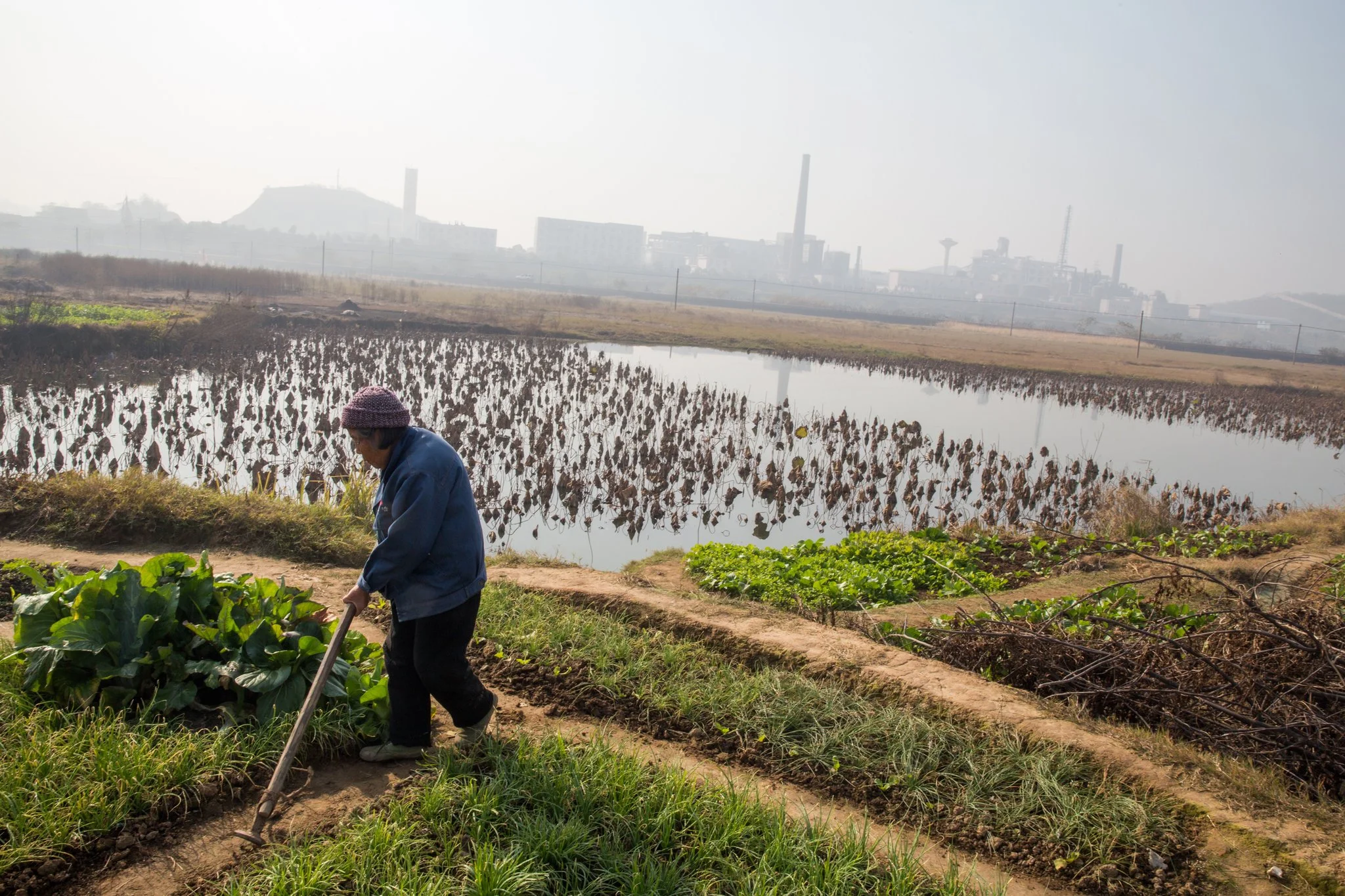
In ancient Chinese literature, one of the oldest and most influential pieces of divination text is the I Ching, or Book of Changes. It features the story of Shennong, the first Yan Emperor and the “Divine Husbandman”, who taught the Chinese people agriculture:
“When Pao Hsi’s clan was gone, there sprang up the clan of the Divine Husbandman. He split a piece of wood for a plowshare and bent a piece of wood for the plow handle, and taught the whole world the advantage of laying open the earth with a plow.”
- I Ching, Book II: The Material
It is likely the Divine Husbandman believed China would continue to use his knowledge to cultivate the land indefinitely. Thousands of years later, however, it is beginning to look like this will not be the case. Heavy metal soil contamination, caused mostly by industrial activity, means that the percentage of arable land in China is decreasing. This is increasing health risks of consuming crops grown in this poisonous soil and threatening the stability of the food chain as
The origins of soil contamination
Before the 20th century, China was a completely agrarian society. However, the creation of the People’s Republic of China in 1949 under the Chinese Communist Party (CCP) spurred a new age of industrialization within the country. Development of the country came in several phases. Communist leader Mao Zedong ushered in the first phase with the first Five Year Plan (1953-57), the goal of which was to increase industrial production and output. The subsequent phase, called the Great Leap Forward (1958-1950), intended to continue advancement of industry within China. However, due to imbalances between industrial and agricultural growth and inflexibility of leadership, this plan was largely a failure. In fact, it caused the largest man made famine in history, killing an estimated 45 million people.
In the 1960s the second Five-Year Plan was able to recover some of the devastation of the preceding years, but it wasn’t until Mao Zedong’s death and new leadership was assumed within the CCP that the country completely made up for their losses. Beginning in 1978, the Chinese Communist Party reformed their economic policy. The CCP targeted deficiencies and imbalances in production, with the goal of growing exports. Unlike previously, however, this time was met with success. For about the next 30 years, China’s economy would grow about 10% each year, bringing with it a whole slew of environmental issues.
The uninterrupted expansion of China’s economy has since winded down, but the environmental impacts of that period of unchecked growth have not. One of the most pressing consequences of this has been heavy metal contamination of soil. Heavy metals are naturally present in soil in small quantities, however, certain human activities can introduce higher than normal levels into the soil. In 2013, the Ministry of Environmental Protection produced a book stating that one-sixth of China’s arable land - nearly 50 million acres - was polluted with dangerous metals like arsenic, cadmium, and nickel. This caused nationwide panic as the government had always kept information on the state of the environment tightly under wraps, leaving most people unaware of the true scale of pollution. But these “state secrets” were finally starting to reveal themselves and the true extent of heavy metal contamination was beginning to be uncovered.
Food chain dilemmas
China’s per capita land area is less than half of the world average, meaning that it cannot afford to lose any of that valuable property to pollution. So far, China has been able to utilize this small fraction of the world’ arable land to feed nearly 20% of the world’s population. The country produces ¼ of the world’s grain, reaching a 686.53 million ton output in 2022. In addition, it is the top global producer of cereals, fruit, vegetables, fishery products, meat, poultry, and eggs. However, over the last two decades, China has begun to rely more and more on food imports, indicating that they are no longer able to produce a sufficient harvest to support their population.
Heavy metal soil contamination is known to decrease productivity of cropland. Excess heavy metal in the soil is taken up into plants through their roots, accumulating and causing damage. They decrease seed germination, root elongation, plant biomass, and chlorophyll biosynthesis.
In 2000, China’s food self-sufficiency ratio was at 93.6 percent. In 2022, it was 65.8 percent. The ratio is predicted to decrease about 10% more by 2030, largely in part to reduction of safely cultivable land. Still in the shadow of the famine caused by the Great Leap Forward, China cannot afford another food security crisis. Recent events have already begun to unveil how sensitive China is to food distribution disruptions. Supply chain disruptions during the COVID-19 pandemic caused food shortages and frantic appeals from people starving under lockdown. More recently, the Russian war on Ukraine has again demonstrated China’s food instability. Ukraine is one of the largest corn exporting countries, and China is its biggest buyer. Ukrainian grain production suffered a heavy blow due to the Russia-Ukraine, and China was not left undisturbed by this.
Health risks and “cancer villages”
A 2022 study found the main sources of soil heavy metal pollution in China to be metal mining and smelting, industrial activities, power generation, agricultural activities (e.g. utilization of fertilizer and animal manure), waste disposal, urban development, and transportation. Certain areas of the country constitute heavy metal contamination levels greater than others. Hunan Province in central China, for example, has some of the worst soil in the nation. This is mainly due to the area being a top provider of nonferrous metals. Byproducts associated with production of these metals, including industrial and mining wastewater, as well as dust released during mining and smelting, lead to toxic levels of heavy metals into the soil. This has severe implications as nonferrous metals are not the only major contribution of the region. Hunan Province also makes up around 15% of China’s rice production. In 2021, the region produced 26.83 million metric tons of rice. Grain samples collected and tested for heavy metals from various locations around China revealed that rice originating in Hunan Province contained the highest levels of cadmium and lead. In addition, several other provinces were discovered to have grain samples that contained greater than acceptable levels of multiple heavy metals.
One could imagine the implications of crops being grown in such poisonous soil. Crop production does decrease from heavy metal contamination, but the plants that do survive will contain a dangerous accumulation to toxins. Humans who then consume these plants are exposed to their effects. For example, cadmium is a probable human carcinogen that also causes kidney disease and weakened bone structure after long periods of exposure. When ingested, it causes stomach irritation, vomiting, and diarrhea. Another example, lead, is a probable human carcinogen and that can accumulate over time, wreaking havoc on the body. It is especially detrimental to young children, causing brain and nervous system damage, learning disabilities, delayed growth and development, and hearing and speech problems. For both lead and cadmium poisoning, there are no cures, with the only available option being to manage symptoms as they arise. Other heavy metals cause similarly disastrous effects.
Many studies done in China have suggested higher health risks associated with heavy metal soil pollution in China. Some of the most pressing evidence comes from the so-called “cancer villages”. Various sources claim that there are around 400-500 different cancer villages in China, which are locations in which an unusually high level of cancer cases are recorded, most likely having to do with environmental problems. These villages first started appearing in the 1980s, which coincides with the time when the Chinese Communist Party revamped their economic policy and industrialization really began to take off. The Chinese government has admitted to the existence of these villages, but has continued to keep information about them shielded from the public. A 2015 study attempted to use the limited available data on these villages to create a map of their locations. They concluded that cancer villages tended to cluster around major rivers and their tributaries, almost always densely populated and near industry facilities. In addition, the researchers noted that the highest levels of cancer morbidity came from grain producing regions in China. Hunan Province was one such region where the densest locations of cancer villages were found.
Current efforts and future actions
In February of 2015, the documentary “Under the Dome” went viral in China, revealing shocking portrayals of soil contamination, as well as air and water pollution, within the country. Within one month the Chinese government blocked access to the film. This extreme censorship makes it very difficult to gauge the levels of heavy metal soil contamination in China, let alone solve it. Despite this, it seems like the government is beginning to understand the severity of soil contamination within the country. In 2019, the Chinese government declared a “farmland redline” policy stating that China’s total arable land should never fall below 120 million hectares. In February of 2022, the government announced the first national soil survey in 40 years. The survey will take more than four years to complete, but when finished it should give the country a better understanding of what they are dealing with.
The future of China’s soil in the face of heavy metal soil contamination is largely unknown. We do not know for sure whether the country will fully commit to their pledge of reversing the damage caused by industrialization and heavy agriculture. It remains to be seen whether Shennong, the Father of Agriculture’s, legacy will remain within the soils of China.

The Ghosts of Past and Present - Why the US and Iran Can’t Find a Way to Revive the Iran Nuclear Deal, and its Haunting Implications
Staff Writer Diya Jain analyzes the Iran Nuclear Deal and its implications for U.S.-Iran relations.
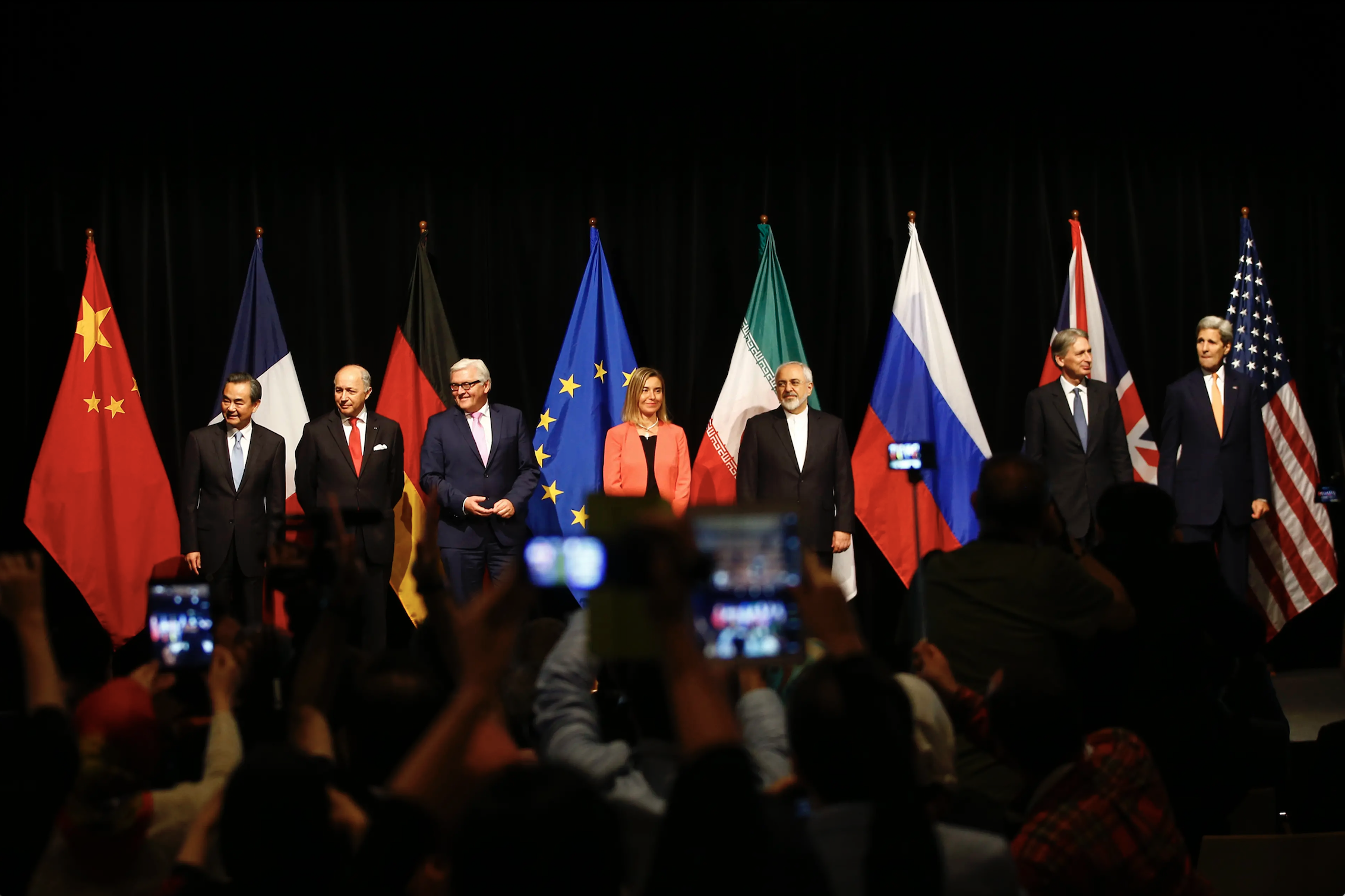
How long does it take to bring a treaty back to life? As diplomats from Iran and the United States work to renew a version of the 2015 Iran Nuclear Deal, they are finding out that the answer may be longer than the world would have expected - and longer than it can afford. Tehran and Washington continue to duck in and out of negotiations as pressure from their constituents and their people continues to mount. Disappearing and appearing like apparitions, the two have left political analysts puzzled about the prospect of new nuclear policy. Although 2023 has marked a promising turn of events in rekindling diplomatic relations between the two after eight years of hostility, disagreements and demands small and large keep the two powers from coming together to revive their 2015 deal.
The Joint Comprehensive Plan of Action (JCPOA), more commonly referred to as the Iran Nuclear Deal, was an agreement between Iran and member nations of the UN Security Council in collaboration with the EU. Encompassing issues from uranium enrichment to sanctions relief, it was able to broadly address the various complexities of the situation at that time. The 2015 deal made significant strides towards limiting Iran’s development of nuclear capabilities: it saw strict restrictions on the construction of nuclear centrifuges, limits on uranium enrichment and plutonium, two key components powering nuclear warheads, and an extensive monitoring and verification system, amongst other terms. In return for Iran’s compliance with these requirements, many of the sanctions levied against the nation by the EU, US, and UN would be raised, and progress would be made towards lifting the arms embargo on Iran’s transfer of military weaponry.
Two years after taking office, however, former President Donald Trump terminated US involvement in the deal, calling it “defective at its core.” Spurred on by hardline Congressional Republicans who claimed the 2015 negotiations represented a striking loss of ground and a sullying of American power on the world stage, he cut diplomatic ties with Iran and reinstated crippling sanctions on the nation’s trade capabilities. According to UN reports, European leaders and UN representatives condemned Trump for abandoning a commitment to global security. Meanwhile, Iran itself lamented the US’s departure from the agreement, with then-President Rouhani pledging to continue to abide by its terms in the hopes that cooperation may be revived. In the years following the 2018 scuffle, Iran struggled to find its direction for the future.
Their direction was charted in 2021 with the election of President Ebrahim Raisi. A political hardliner and staunch combatant of Western influence, Raisi’s nuclear policies are in striking contrast to those of his relatively progressive predecessor. The US Institute of Peace has estimated that within the first year of his leadership, Iran had exceeded the amount of enriched uranium permitted by the 2015 deal by over 18 times. Particles enriched up to 84% were found in late 2022, per a report published by the International Atomic Energy Agency (IAEA); these levels draw dangerously close to the 90% purity mark necessary for its use in a nuclear warhead.
Rather than quell proliferation efforts, the past year’s negotiation attempts seem to have only further fueled Iran’s dash towards nuclear capabilities. In August of 2022, talks between Tehran and Washington nearly resulted in a deal that would restore key components of the JCPOA. Negotiations fell apart at the last minute due to disagreements over investigation and verification practices, however, and by November of that year, Iran had unveiled plans for the construction of fourteen new nuclear centrifuges. In a blatant nod towards the failure of the summer 2022 talks, the government also suspended safeguard arrangements, rendering nuclear energy inspectors from the IAEA unable to access and determine the status of Iran’s centrifuge workshops and uranium mines.
The threat of Iran holding nuclear warheads extends beyond distrust of the government’s intentions or the paranoia of other world leaders, although both play a meaningful role in the issue. The Washington Institute for Near East Policy points to the potential for an arms race to break out as other Middle Eastern nations seek defensive measures against Iranian nuclear weapons. In fact, Saudi Arabia’s Crown Prince Mohammad Bin Salman has stated unequivocally his intentions to begin nuclear proliferation should Iran obtain a bomb. “If they get one, we have to get one,” he posited in a recent interview, citing their need to maintain balance of power in the region. A nuclear arms race in a region already rocked by conflict and instability has the potential to produce catastrophic consequences; thus, a nuclear-armed Iran must be looked at in the context of other key players in the region.
Issues also lie within the nation itself. Tehran is known to be one of the most notorious state sponsors of terrorism, having been found providing groups like Hamas and Hezbollah with weapons and funding. For the government of Iran to possess large amounts of weapons grade uranium means the risk of some of it ending up, intentionally or not, in the hands of terrorist organizations. If they are able to construct even small-scale, rudimentary nuclear weaponry, these groups would shatter the nuclear security of the world like a glass pane, rendering established concepts like “mutually assured destruction” and “no-first-use” inapplicable. The scope of the danger of terrorism would explode, driven by the threat of future attacks that are unprecedented in death and destruction.
As world leaders grapple with these possibilities, looking to the UN Security Council to intervene, US President Joe Biden has seen diplomatic efforts hindered by conflicting interests within government. Hardline Congressional republicans, many still proponents of Trump-era political sentiments, have criticized the Biden administration for participating in negotiations with Iran in the first place. They argue that the US has already afforded Iran far too many concessions and that compromising with the Iranian government would represent a significant blow to America’s image and perceived power on the world stage. Just last year, forty-nine out of the fifty Republican senators in office pledged to vote against any revived version of the JCPOA unless its terms are akin to that of a harsh crackdown, placing strain on Iran’s self-determination and their allocation of resources. Promoting this iron-fisted approach in lieu of collaboration has, as in years past, antagonized diplomats in Tehran and left multiple empty seats at recent attempted peace summits. Given that any new deal would have to gain a ⅔ majority for approval and confirmation, the Biden administration faces the puzzling task of forging a deal that would be amenable to both its domestic constituents and to the Iranian government.
President Raisi faces similar struggles in reconciling disputes with Iranian legislators. Despite his belligerent political reputation, the leader of Iran has begun to demonstrate a willingness to participate in peace talks, understanding the importance of extending communication with the West after a challenging past few years. After the US abandoned the JCPOA in 2018, sanctions levied by the Trump administration plunged Iran into a deep, lengthy two-year recession. One of the world’s largest exporters of energy, Iran’s sales of oil and gas across the world represent a whopping 47% of its national revenue and comprises 1/5th of its foreign exports, making it a prime target for strict embargos. Their economic woes worsened as EU nations joined in to implement more restrictions, angered by Raisi’s efforts to reinvigorate his country’s nuclear program. The extent of trade sanctions were staggering: Iran exported an average of 2.1 million barrels of crude oil each day while the JCPOA was in effect. Post-2018 restrictions saw this rate plummet to just one hundred thousand barrels daily. Coupled with social and economic strife from the Covid-19 pandemic, government officials have recognized the pressing need to finalize a resolution that would grant them relief from Western sanctions.
The Iranian Revolutionary Guards, a branch of the Iranian armed forces with significant influence in government and policy-making, however, remain staunchly opposed to cooperation with the global West. They claim that retaining control of their nuclear program is essential to Iran’s national autonomy and dignity. These ideas echo the sentiments of other non-nuclear regimes across the world who seek nuclear capabilities, citing their importance in deterring attacks from foreign adversaries, maintaining national security, and balancing out global power inequities. Iran, in particular, emphasizes their precarious position in a highly volatile Middle East, arguing that their nuclear program will act only as a mechanism of protection and national defense.
Due to Iran’s bifurcated government structure, Raisi’s administration also has to contend with the interests of Supreme Leader Ayatollah Ali Khamenei, who holds the final say in all matters of domestic and foreign policy and who, unfortunately for world leaders, stands by the Revolutionary Guards in opposing compromise with the US. At each turn in negotiations, Khamenei has fended off proposals and pledged not to sign an agreement until significant concessions are provided to bolster Iran’s power - that is, the complete lifting of sanctions, the reintegration of Iran into the world financial system, and a decrease in oversight regulations demanded by the US. With Iranian interest groups attempting to stretch their benefits beyond even the scope of the 2015 Nuclear Deal and US congressional Republicans hesitant to even approach the JCPOA’s level of compromise, negotiations and even informal talks between the two leaders drag on without resolution. With the onset of Russia’s invasion of Ukraine and the outbreak of war in the Gaza Strip region, the diplomats on either side have had to table their efforts to revive an agreement, dashing global hopes that a rekindling of communication between Iran and the US will translate into a new frontier in nuclear security.
Today, debate continues over whether the Joint Comprehensive Plan of Action could be deemed successful. Critics argue that the deal provided Iran too many concessions because it still permitted some quantities of uranium enrichment. Proponents, on the other hand, point to the agreement’s unprecedented verification system, which ensured there would never be enough resources available for an Iranian warhead. Regardless, it remains the only comprehensive and successful approach towards preventing nuclear proliferation in Iran in history, and today’s no-deal world faces pressing dangers as relations between the parties break down, economic strain from sanctions mount, and nuclear operations in Iran continue at a faster rate than ever. Despite popping in and out of negotiations repeatedly, the two phantom-like powers seem unable to reach a point of alignment in their paranormal game of peek-a-boo, never sticking around long enough to work together and form a resolution. Until they emerge from the shadows and meet in the middle, the world will have to continue with bated breath for an answer to their question - how long will it take to resurrect the Iran Nuclear Deal? And if they stop playing altogether and the ghost of the JCPOA fades away, they will never get an answer; instead, they will face even more daunting questions and haunting uncertainties regarding the state of global security itself.

The United States and China: A Cyclical Relationship, Both Backwards and Beyond
Contributing Editor Helen Lallos-Harrell examines United States-China relations through both historical and modern contexts, drawing parallels to rebuild future relations.

The relationship between China and the United States is akin to a circle. Tensions rise, are broken, and rise again. It is a pattern that has continued for decades; the divide between the countries is palpable. But the United States and China are more alike than reported. The countries are fundamentally similar in economic and military policies; China’s problems are ours. Examining U.S.-China relationship history and investigating and addressing these issues is the key to mending the U.S.-China relationship and fixing cardinal issues in the modern United States.
When asked about China, Americans report undoubtedly strong opinions. A poll concerning the global superpower found that 67% of Americans have negative opinions of China. Even more striking, 89% of Americans now classify China as a competitor or an enemy. When asked, “What’s the first thing you think about when you think of China?”, responses overwhelmingly leaned towards human rights and the economy (each issue making up 20% and 19% of responses, respectively). With only 15% of U.S. citizens viewing it favorably, it is time to re-examine U.S.-China tensions to repair future relations.
These numbers do not manifest from thin air. They are a cumulation of decades of nervous tension between the United States and China, leading to prominent unease among U.S. citizens. The two countries have endured a rocky relationship since the establishment of the People’s Republic of China in 1949. Soon after, hostility rose during North Korea’s 1950 invasion of South Korea, when U.S. troops aiding South Korea approached the Chinese border. Although the United Nations, China, and North Korea signed an armistice agreement in 1953, this strain initiated a long pattern of U.S.-China tension.
By 1964, the stress went nuclear. In October of that year, China conducted its first atomic bomb test. The test exacerbated the already tense U.S.-Sino relationship amid conflict in Vietnam. Relationships improved after China and Russia’s Sino-Soviet split, with Beijing mending connections and cordiality with the United States. President Richard Nixon visited China in 1972, signing the Shanghai Communiqué, a document representing the first official diplomatic communications between the countries. Presidents Carter and Reagan continued the pattern of diplomacy through the 1980’s, maintaining a cooperative relationship with China. For almost twenty years, the U.S.-China relationship thrived.
Unfortunately, peace was not enduring. In 1989, after military troops killed hundreds of student protestors during Beijing’s Tiananmen Square Massacre, the United States immediately froze relations with China, suspending the only recently approved sale of U.S. military equipment to Beijing. It was not until 1993, when President Bill Clinton propelled a policy of “constructive engagement” with China, that unease began to lift. By 1996, the capitals agreed to exchange diplomatic officials again, and in 2001, President Clinton signed the U.S.-China Relations Act that gave Beijing permanent trade relations with the United States. Once again, peace fractured in 2005. An American reconnaissance plane made an emergency landing on Chinese territory after colliding with a Chinese fighter. The U.S. crew members were detained on Hainan Island for twelve days. Only after a tense standoff did Chinese authorities release the American detainees. China experienced a significant leadership turnover in 2012, with approximately 70% of leadership body members replaced after the new election. It was also the year Xi Jinping assumed power as President, delivering speeches promising a “rejuvenation” of China. This turnover was shortly followed by President Obama’s 2013 effort to ease U.S.-China relations. He hosted President Xi for a California summit where the executives established a “new model” of relations. This presidential friendliness stuck around after the 2016 election. In 2017, President Trump hosted President Xi for a meeting to build relations and promised “tremendous progress.” Progress, however, did not last.
Throughout 2018 and 2019, tariffs on Chinese imports enforced by the Trump administration hit China hard. The Chinese government fights back with tariffs of its own, fanning the flames of a U.S.-China trade war. Although tensions eased after President Trump and Chinese Vice Premier Liu He signed the “Phase One” trade deal in January 2020, they quickly seized again several months later during the outbreak of the COVID-19 pandemic. Both administrations blamed the other for their mishandling of the disaster. For the remainder of the Trump administration, this anger remains. Shortly after he took office, President Biden stressed the need for U.S. infrastructure to compete with China, maintaining Trump-era ideologies. After Russian-related disagreements sparked further tension, Presidents Biden and Xi eventually sought relationship repair in November of 2022. Speaking at the Bali G20 summit, the leaders expressed their wishes to alleviate hostility.
When this history is analyzed, a pattern emerges: China and the United States butt heads over an infraction on the part of the other. A new U.S. President is elected, who tries to ease tensions and foster a healthy diplomatic relationship with China. An inciting incident (i.e., the expulsion of American journalists or the spotting of a potential spy balloon) severs that friendliness, and tensions rise again. Each country demonstrates power and influence by implementing trade tariffs and making threats. And the cycle repeats itself.
Documenting a clear pattern of behavior allows everyday citizens and politicians alike to analyze relations and make predictions accordingly. However, it makes for an easy trap to fall into, time and time again. If conflict is viewed as inevitable, that defeatist attitude will permeate international relations and allow tension to be viewed as the natural outcome. In recent headlines, an alleged “spy balloon” originating from China was shot down in U.S. airspace in February of 2023. It contained what U.S. officials defined as intel-gathering equipment, which the Chinese government vehemently denied, describing as a civilian meteorological airship. Regardless of the specifics, this incident indicates newfound strain, with more to come. Once again, we see the pattern emerge. In order for the pattern to be broken, the cycle needs to be stopped in its tracks.
The key to stopping the cycle is analyzing the United States and China differently. We must ditch the old analysis model and replace it with a novel system: parallels. Instead of focusing on the rise and fall of strained relations, key similarities must be examined. Unsurprisingly, U.S.-China differences are highlighted more predominantly than their likenesses. After almost eight decades of frosty relations, the United States and China seem like separate entities. But maintaining that distinction only worsens the long-standing tension. Simultaneously, it will only exacerbate problems within the United States in the long run. Relationship difficulties should not be an “us vs. them” approach. It hasn’t worked in all these decades; there’s no reason to believe it will work in the future. The focus needs to be on collaboration after matching problems are identified.
In 2007, China announced a military budget increase of 18%, continuing China’s increasing military expenditures and bringing their total spending allowance to 62.14 billion USD. This aligned with the United State’s budget increase at the time. By 2007, the U.S.’s military budget had expanded to 589.59 billion dollars, a 269.5 billion increase from 2000. In 2023, the United States' military budget sits at 800.67 billion USD, while China boasts one the largest military budgets worldwide at 224 billion USD. In addition to military spending, the economies of the United States and China share a prominent global role. As of 2023, they hold the top two spots by gross domestic product (GDP). These economies, primarily centered around military spending, hold significant weight worldwide. China and the United States are uniquely positioned in that they hold major international influence. They reflect each other’s values, but this reflective relationship is not represented in United States media despite these crucial similarities. Additionally, on September 28th, 2023, The Seattle Times posted an article detailing China’s recent property crisis. It outlines how developers are hurting as apartment sales dwindle. Real estate stocks are plummeting, and house hunting is difficult. Conditions are similar in the United States. Real estate prices are skyrocketing, and becoming a homeowner is less feasible than ever. These economic problems in each country mirror each other. Acknowledging similarities such as these breaks the cycle that builds and protracts the us-them mentality. When the problems are examined, it becomes a matter of “us vs. them” problems.
There is a fear, however, surrounding that acknowledgment. A fear of the countries being “alike.” This fear is built off of the “us vs. them” mentality that, to this day, dominates United States coverage of China. Decades of U.S. communism placed into historical context explain this. Communism is a hot-button topic in the United States. Post World War 2, a “Red Scare,” or fear of a communist threat, plagued the United States, aligning with the ongoing Cold War with the then Soviet Union. As hysteria over a USSR takeover grew, communism became synonymous with “un-American.” Communist fear has been hammered into U.S. culture for over a century. Now consider the fact that the People’s Republic of China has been a communist regime since its founding in 1949. It makes sense that to Americans, acknowledging that the United States and China share fundamental problems is akin to anti-patriotism. To admit the countries share those issues is to admit they are fundamentally similar. And when China is identified with communism, that threatens the American paradigm.
This fear exacerbates the cyclical relationship and will kill any hope for future long-term civility. Right now, relations between the United States and China seem uncertain. On October 10th, Newsweek reported that Chinese vessels entered territorial waters surrounding Japanese-controlled islands. Any attack on these islands (or any Japanese government assets) would require the United States to respond and aid Japan, launching troops against China. Where is there to go from here? Perhaps the cycle of tear and repair will continue. But perhaps not. It is up to everyone, from politicians to the layman alike, to make this change. Acknowledging the similar plights the countries face is the key to creating a long-term, sustainable relationship that works for all parties. But that is, ultimately, up to each country’s leadership. Let’s hope they make the right choice.

Ya es Tiempo de Aprender Otro Idioma: Expanding Access to Internationalized K-12 Education in the U.S.
Executive Editor Chloe Baldauf explores the vital role of internationalized K-12 education in U.S. education reform.
“Why have we normalized that we are primarily a monolingual country – even though our nation has only become more multicultural, more interdependent with the rest of the world? Why is it that in 2023, in many school systems in our country, we treat our English learners as students with deficits – rather than assets in a globally competitive world?” These were the questions U.S. Secretary of Education Dr. Miguel Cardona asked at the National Association for Bilingual Education (NABE) 52nd Annual International Bilingual and Bicultural Education Conference. While it is impossible to formulate a simple answer to these questions, it is clearer now in 2023 than any other time in the twenty-first century that school reform has become an overwhelmingly polarizing issue with little bipartisan agreement over policies, resource allocation, or school reform. In an increasingly competitive marketplace of education reform ideas, internationalized K-12 education finds itself moderately supported but ultimately neglected due to “more pressing” issues within the education landscape, such as COVID-related learning loss and addressing political polarization. One could argue that doubling down on Mandarin classes for middle schoolers who are grade levels below their expected math proficiency should be somewhere at the bottom of our most vital education reform ideas, but this could not be further from the truth. As demand for school reform grows and new education policies are rapidly proposed and implemented, expanding access to internationalized K-12 education must be prioritized by the federal government, state governments, and schools.
From learning loss recovery policies to school voucher programs, recent U.S. education policies aimed at fixing what has been broken have been prioritized over revitalization efforts. Policymakers look at “failing” inner-city schools and see an emergency that must be fixed rather than a hub of resilience, innovation, and multicultural expertise waiting to be plugged into our globalized society. Within a damage-centered framework, U.S. K-12 students have lost too much learning from COVID-19 to be focusing on much else beyond meeting basic grade-level requirements, and the best path forward is ensuring students “catch up” by focusing solely on literacy and math proficiency. This damage-centered framework would also lead us to believe increased family-school tension and polarization are irreparable, and the best path forward is a school voucher system that allows families and educators to self-sort into private schools most aligned with their views. As any educator will understand, however, there is rarely ever one right way to solve a problem, and the current zeitgeist of the 2020s calls for the prioritization of internationalized K-12 education policies that work to creatively and equitably address a myriad of issues including but not limited to COVID-related learning loss and polarization. To America, Dr. Cardona passionately called for the bringing in of a “new era of multilingualism,” and to students? “¡Ya es tiempo de aprender otro idioma!”
Conceptualizing Internationalized Education
Internationalized education can be described as “a process of incorporating international, intercultural, and global perspectives into different education contexts.” Framed as a necessary tool to sculpt young Americans into globally competitive citizens, internationalized education remains very popular in higher education institutions. Internationalized education materialized in the K-12 sector through the creation of private, internationally-minded schools. With the purpose of internationalized education being framed as primarily economic, policymakers and school leaders seemingly had little reason to support expanding access to internationalized education for poor students. International schools first came into existence with the goal of engaging in missionary activities and colonization, and while the restricted access of Black and Brown students to language classes and K-12 study abroad problematizes the claim that international schools have changed drastically from their exclusionary roots, internationalized curricula and programs can be seen in both private and public schools today. It is precisely this - the internationalized public school - that has the power to redirect the path that U.S. education reform is heading from deepening polarization and further inequities to a generation of multilingual, globally competent Americans.
Access to dual-language immersion programs, K-12 study abroad opportunities, and instruction from educators with a global perspective not only increase economic outcomes and career opportunities for students but also help develop students’ social and emotional development in cross-cultural settings, reduce polarization, and increase a sense of belonging and excitement within school communities. Amid the growing implementation of school voucher programs and pressure on “failing schools” to increase test scores, refraining from incorporating internationalized education into public K-12 schools across the U.S. will only make our next generation of global ambassadors more homogenous. If the federal government, state governments, and schools work together to rapidly implement education policies that prioritize expanding access to internationalized education for all students, it is very likely that the most pressing educational issues of our time will be thoroughly addressed in the process.
Federal Policy Recommendations for Expanding Access to Internationalized Education
As the federal government navigates internationalized education reform, the priority must be well-informed but hands-off investments in public K-12 schools and making international partnerships. The COVID-19 pandemic has highlighted how innovative and effective schools can be even in dismal circumstances. From Kansas’s use of COVID-19 relief funds to offset the cost of field trips to museums and historical sites to South Carolina using the funds to make school bus Wi-Fi a reality, it is evident that states have different needs and are most innovative when policies are imagined using a bottom-up approach as opposed to top-down. To expand access to internationalized education in public K-12 schools, the federal government should invest in well-informed but hands-off grant programs for state education departments to use within their public school systems. A competitive global education grant program, accompanied with comprehensive monitoring and evaluating practices, will give states the capital they need to ensure stronger multilingualism and global educational opportunities in public schools while still having the freedom to address their own state-wide or community-wide needs. Additionally, the federal government should prioritize working with other countries’ education ministries as well as international education organizations from other regions to connect states’ education department leaders with international perspectives and policy suggestions. These ideas can then be used to inform and inspire leaders at the community or city level to use grant funds for expanding globalized education access in ways previously not considered. Global cooperation between the U.S. Department of Education with other countries’ education ministries will set the foundation for comprehensive, globally-minded R&D on K-12 internationalized education initiatives in the U.S.
State Policy Recommendations for Expanding Access to Internationalized Education
State governments play an essential role in expanding student access to quality internationalized education in a public school setting. Moving forward, it is vital for states to not only implement education policies that address COVID-related learning loss but also policies that increase students’ global competency and language skills. While some may argue falling literacy and math proficiency scores are proof that language skills need to be put on the back burner for now, there is data that dual language immersion boosts proficiency in other subjects for both English-speaking and ESL students. Not only are other academic subjects bolstered but dual language programs increase friendship and cultural competency between students of different racial or cultural backgrounds and increase overall confidence. When states neglect language immersion for “failing” schools, they often end up barring predominantly lower-income Black and Brown students from the internationalized education that sets so many upper-income white students up for success at the collegiate and vocational level. State governments must prioritize education policies that incentivize private-public school collaboration to put public schools in conversation with international schools within their state. This can also look like incentivizing state colleges to work with local K-12 public schools to grow language immersion programs or allow for high school students to audit college courses on intercultural communication and global politics. Additionally, states should center internationalized education at the core of their teacher shortage efforts. This could look like teacher pipeline programs that incentivize bilingual adults or immigrants within the state to pursue a teaching role through lowered teaching requirements at public schools and a pipeline that leads to these teachers earning a Bachelor’s or Master’s degree in education.
School Policy Recommendations for Expanding Access to Internationalized Education
At the school level, low-cost policies can still lead to high-impact results when it comes to making internationalized education a reality for all students. Dual-language programs have been extremely successful in providing English-speaking and ESL students the opportunity to hone their language skills, build cross-cultural friendships, and gain tutoring experience. School districts can also reward student engagement in cross-cultural contexts or with language programs through biliteracy or bicultural certificates. A certificate program could function in a cohort-based model with a lead teacher mentoring students seeking biliteracy in or outside the classroom. Other school policies could include investing in a more internationalized library, organizing dual language exchange programs for parents and teachers, supporting student efforts to obtain passports for study abroad, prioritizing the hiring of bilingual community members and family members when filling part-time school positions, emphasizing teacher professional development on bilingual students as assets not deficits or tools, and ensuring students on vocational or technical tracks can still engage in internationalized education through work with immigrant-owned businesses and professionals in the community.
Conclusion
From polarizing international events being broadcast everyday on the news to deepening disparities in graduation and attendance among students across the country, the current zeitgeist of 2023 can be used to implement successful and equitable expansion of internationalized K-12 education that has the potential to address COVID-related learning loss, fill teacher shortages, increase global cooperation, and reduce polarization. With school voucher systems becoming more commonplace across states and family dissatisfaction with public schools on the rise, it is vital that public school innovation and autonomy in addition to family-school engagement is incentivized and encouraged at the federal and state education policy level. Internationalized public education proves to be an overlooked but much-needed reform strategy that may look different in each school or state but could ultimately unify America’s students as they grow up in a world more globalized and interconnected than ever before. Upper-income private school students can no longer be the only young Americans engaging in internationalized education in 2023. A global education must be accessible to all students. With the right policies from the federal and state government in accompaniment with innovative school policies, teachers can confidently tell their students: “¡Ya es tiempo de aprender otro idioma!”

The Most Violent Police Force in Europe: Police Brutality in France
Contributing Editor Aaron Shires explores the rise in excessive use of force by French police forces and the disparate impact this has on racial minorities in France.

“Liberté, Égalité, Fraternité.” This phrase, meaning “Liberty, Equality, and Fraternity,” first appeared during the French Revolution of 1848 and has since become entrenched in the history of France. It is part of their current constitution and is considered to be a central piece of French heritage; however, France has yet to successfully live up to this promise, due in part to deeply entrenched institutional racism. One dangerous manifestation of this racism is in the country’s policing. French police officers are more heavily armed than any other police force in Europe and, in recent years, they have also been the most aggressive. Since 2022, French police officers have killed 15 people during traffic stops. Most recently, on June 27, 2023, a 17-year-old boy named Nahel Merzouk was shot in the chest at point-blank range by a French police officer during a traffic stop in Paris. The police officers claimed that Merzouk (who is of Algerian descent) had been physically threatening them with his car; however, witness statements and video footage told a different story. According to passengers in the car at the time of the shooting, the two police officers pulled up on motorcycles next to their car in stand-still traffic after Merzouk, who was too young to have a license, failed to stop for them. One passenger claimed that the officers took turns hitting Merzouk with the butt-ends of their rifles while they threatened to shoot him. On the third hit, the witness recounted that Merzouk let go of the brake pedal, causing the car to restart. It was at this moment that one of the officers fatally shot the teenager, causing the car to continue to accelerate until it crashed. Merzouk was pronounced dead at the scene. Merzouk’s mother believes the shooting was racially motivated, having said the officer “saw an Arab face, a little kid, and wanted to take his life.” The murder of Merzouk sparked nation-wide protests against racially-motivated police brutality. President Macron responded to the protests by employing heavy police presences, which resulted in the arrests of over 3,600 people. Still, Macron was quick to condemn the murder of Merzouk and one of the police officers involved in Merzouk’s death has been charged with voluntary homicide. However, proponents of racial justice movements in France point out that this incident is part of a larger pattern of excessive use of force by police officers in which police officers are rarely charged.
Police brutality in France has been a heated topic of discussion for years. It first became a major political issue after the gilets jaunes (meaning “yellow vests” in English) protests in 2018 and 2019, in which French workers with long commutes took to the streets in yellow vests to protest against the proposed rise in diesel taxes. The movement slowly transformed into a larger movement against President Macron’s general economic decisions, and, at its peak, 285,000 people were protesting across France. During these protests, around 2,500 protesters were injured (some losing eyes and limbs) in violent encounters with police. While this led to a smaller movement calling for a ban on police use of explosive grenades and rubber bullets, government representatives argued that this use of force was necessary because, while the overwhelming majority of protesters were peaceful, some did turn to acts of vandalism and violence. In fact, the French Ministry of the Interior reported that around 1,800 security personnel were injured in the protests. In response, Lauren Nuñez, Secretary of State to the Minister of the Interior from 2018 to 2020, expressed that he had no regrets about the use of force against protesters and stated that “Just because a hand has been torn off or an eye damaged doesn’t mean that this [response] is illegal. Above all, it’s important to make it clear that it’s not acceptable for police officers to be attacked in a violent manner by those wishing to express their convictions.” The general argument made by those supporting the police is that police officers are using an appropriate amount of force because some of the protests have turned into riots with significant property damage. They argue that police officers must use teargas and other weapons to protect themselves and to quell the riots in order to protect French society.
While some excuse the violence perpetrated by French police in response to the gilets jaunes protests as a necessary evil, others like Dunja Mijatovic, the human rights commissioner for the Council of Europe (an international human rights organization), have argued that police brutality is never acceptable. In response to police violence committed during anti-pension reform protests in March of 2023, Mijatovic stated “violent incidents have occurred, some of which have targeted the forces of law and order. But sporadic acts of violence by some demonstrators or other reprehensible acts committed by others during a protest cannot justify excessive use of force by agents of the state.” French police forces have demonstrated a pattern of increasingly violent behavior, especially in regards to their handling of protests and demonstrations. From March through May of 2023, French police forces were criticized for their excessive use of force against protesters during the anti-pension reform demonstrations as some felt that the heavy police presence at the protests escalated the potential for violence. On March 25, 2023, police officers engaged in another polarizing, violent confrontation with protesters during a separate demonstration in Sainte-Soline over environmental concerns. During this confrontation, police officers launched tear-gas grenades at protesters, injuring 200 demonstrators and sending one demonstrator into a coma with life-threatening injuries. Similarly to the anti-pension reform protesters, protesters at Sainte-Soline blamed the police presence for the violence that erupted. An engineering student (referred to as David) who was present at the protests said, “This is the first time I have attended a demonstration that was this violent, but, in fact, the violence did not come from the protestors. It was violent because the police were violent.” Human rights organizations have increasingly raised alarms over police violence in France as they use aggressive crowd control tactics even against peaceful protesters. French police forces have been criticized for using weapons that are often banned elsewhere, including flashballs, grenades, water cannons, batons, and firearms. These weapons exacerbate the risk of injury at the hands of an overzealous, potentially aggressive police force.
While police forces in France have been criticized for racial biases in their application of force, this violence does not exist in a vacuum. It is heavily influenced by the larger social dynamics and stigmas present in French society, which include racial and religious biases against minority groups. In a study presented to the French national assembly by the Representative Council of France's Black Associations, 9 in 10 Black people in France reported experiencing racial discrimination. This racial prejudice manifests in a variety of ways, including in the country’s policing practices. The Défenseur des droits, an independent constitutional authority in France, found in a 2017 study that a young man who is perceived to be Black or Arab is 20 times more likely to be stopped than other members of the French population. However, these French racial biases do not only manifest in policing policies. For example, recent public discourse has revolved heavily around discriminatory educational practices. France has strict laws banning religious symbols in public schools. The French government justifies these laws by arguing that they are necessary to promote secularism; however, they have a disparate impact on Muslim students and are often said to be targeted to restrict the wearing of hijabs and other articles of clothing associated with Muslim students. Most recently, in August of 2023, the Minister of Education Gabriel Attal announced that students will no longer be allowed to wear abayas in schools. Abayas are long, loose traditional dresses worn primarily in North Africa and the Arabian Peninsula. This decision caused outrage since there is no direct link between abayas and Islam, so these dresses could be considered a cultural item rather than a religious one. France has attempted to guard against racial biases by creating laws without explicit mention of people's race; however, this does not prevent laws from disproportionately impacting minority communities. The French police can provide information on how many people have been killed by police officers; however, they cannot provide information on the race of those victims because it is illegal to collect that information in France. The French government’s attempts to create color-blind laws ignores the realities of life in France for minorities. It exacerbates the problem of racial injustice because it strips the oppressed of the ability to quantify their oppression as a weapon to combat it.
Still, some are working to combat racial prejudice in policing. In 2021, six French and international human rights groups, including Amnesty International, Human Rights Watch, and Open Society Justice initiative, filed the first class-action lawsuit against French police forces in which the plaintiffs are asking for mandatory police reform. This lawsuit, heard by the Conseil d’État (the highest administrative authority in France), began proceedings on September 29, 2023. The plaintiffs argued that there is significant, systemic discrimination in police action, including racial profiling and discriminatory identity checks. On October 11, 2023, the court found that police activities surrounding racial profiling in identity checks did constitute discrimination and were not “limited to isolated cases”. However, the court did not impose measures to force the French government to end these discriminatory practices because the court said it did not have the authority to change political policy. While this decision was disappointing to proponents of this case, the court did recognize the repeated abuses of identity checks in policing as racial discrimination. This is significant because some political leaders have historically denied the notion that racial discrimination exists in policing at all. For this reason, it is possible that proponents of racial justice in France could still use this finding to force their political leaders to confront the realities of racial inequality in France and enact some real change.

A $6 Billion Deal: The US-Iran Prisoner Swap
Staff Writer Aliyah Jaikaran examines the US-Iran prisoner swap that freed five Americans imprisoned in Iran and whether or not this intensified relations and polarization between Iran and the US.
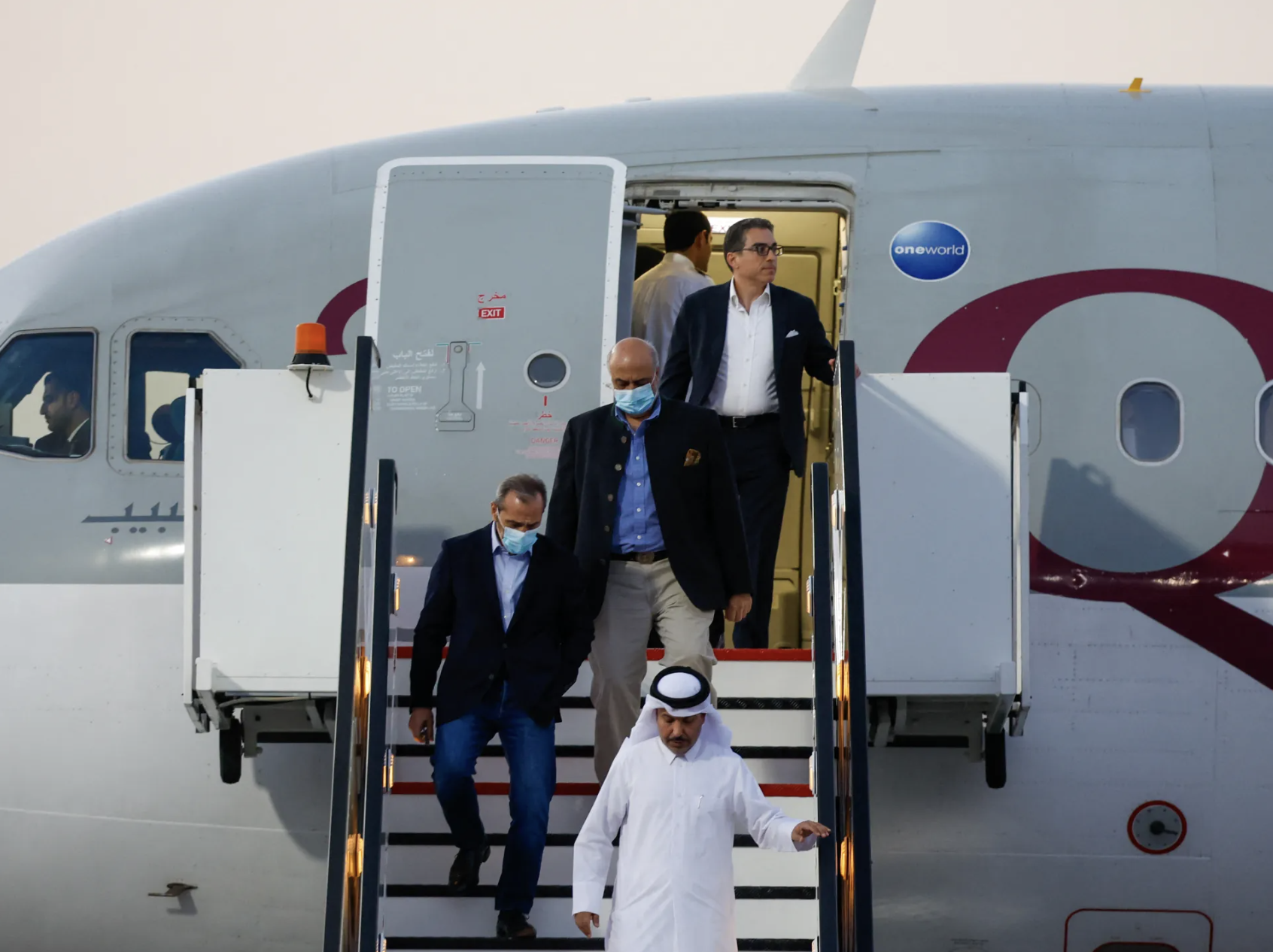
On September 19th, five Americans returned home after being imprisoned, some for years, in Iran. Their return was swapped for the five Iranians held in U.S. custody–accused of violating U.S. sanctions– along with the unfreezing of $6 billion in Iranian oil revenue funds. After two years of volatile negotiations, President Biden said the swap was finally executed bringing innocent Americans home. However, the deal garnered much criticism from Republicans claiming the release of billions in Iranian oil revenue would only incentivize the capturing of more Americans.
The swap was cautiously arranged with mediated talks between the U.S. and Iran through Qatar when the oil revenue funds were successfully transferred to banks in Doha. When the transfer was confirmed, the five U.S. prisoners departed on a Qatari plane from Tehran– Iran’s capital– while simultaneously, two of the Iranians in U.S. custody arrived in Doha on their route home. Three of the five Iranian hostages chose to not return to Iran.
Businessmen Siamak Nazami, 51, and Emad Sharqi, 59, along with environmentalist Morad Tahbaz, 67, are amongst some of the freed Americans– the other two choosing not to be publicly named.
The exchange dissipates a small portion of the extensive tense relations between the U.S. and Iran. Although this major humanitarian issue has been resolved between the two countries, it is uncertain whether or not they will work on other issues they have– such as Iran’s nuclear program– or if tensions between them have even deescalated despite President Biden’s efforts. Although there is still much contention between the countries, Iranian President Ebrahim Raisi believes the prisoner swap “...can certainly be a step based upon which in the future other humanitarian actions can be taken." Although it is a mere point of friction that has been resolved, it poses a possibility of cooperation between Iran and the U.S. in renewing their relations.
On the contrary, many Republicans believe that this swap has further polarized relations between the countries as it may prompt Iran to hold more Americans hostage in anticipation of some monetary reward. Biden aides, however, express that the $6 billion in oil revenue belongs to Iran and is not some extraneous form of payment. The money was wired to restricted bank accounts in Qatar for the purpose of surveilling the money– laden with financial sanctions– to ensure it is spent on humanitarian goods. Both parties acknowledge, however, that the deal may allow Iran to spend the money they were previously allocating towards humanitarian goods for other purposes. There have been concerns not only about the issue of releasing extensive funds to Iran but the issue of American safety. Republican Senator Tom Cotton, of Arkansas, declared on X, the social media platform previously known as Twitter, that “Joe Biden’s embarrassing appeasement not only makes Iran stronger, it makes America less safe.” There is concern that the money they once dedicated towards humanitarian goods are now freed to be used as funding for their nuclear program, which is another strained conflict between Iran and the U.S.
Before freeing the prisoners, there were talks between the U.S. and Iran to convene on a broader conflict– Iran’s nuclear program. The countries strived to reestablish the Obama nuclear deal, which limited Iran’s nuclear program in exchange for sanctions relief, but Iran continued making insistences on its nuclear program that was not sustainable for the U.S. Along the way, talks of a redefined nuclear deal had become intertwined with the release of the American prisoners. To the negotiators acting on behalf of each country, it was eminent that the U.S. would not continue with an expensive prisoner swap when a nuclear deal was not settled. Suddenly, the release of the prisoners was contingent upon a solidified nuclear deal, which showed potential for a breakthrough in a cooperative relationship between the countries in easing tensions. However, it has also illuminated the growing concern for America’s safety in regards to Iran’s nuclear program.
Despite this, much time elapsed and no deal was confirmed. Many individuals, including the families and lawyers of the prisoners, urged President Biden to overlook politics and bring their loved ones back home. Iran had come to the conclusion that, if they could not obtain a nuclear deal with the U.S., they first had to settle smaller matters– the prisoner swap– to begin to minimize tensions with the U.S. in order to eventually settle larger matters such as achieving sanctions relief and a nuclear deal breakthrough. Within a few weeks, a written agreement was produced and the American prisoners were finally free. However, there was yet another delay. The fifth prisoner, a California woman, was recently arrested while doing aid work in Afghanistan. The release was delayed for another several weeks as they had to rearrange the agreement to encapsulate her release as well. Finally, the American prisoners were released– some from the Evin Prison (a detention center in Iran notorious for torture) and returned home.
The success of bringing the prisoners back home sparked hope for Biden’s vow to continue to work for the release of more U.S. citizens imprisoned internationally. The Democratic party, in particular, views this as a stepping stone in working together with Iran to solve its humanitarian issues along with other broad affairs between the countries. However, there is widespread concern from the Republican party on this exchange and what it implies for the future. Many believe it is far too costly of a deal and there is no insurance of whether or not Iran will spend the billions in funds on humanitarian purposes. Secretary of State Anthony Blinken asserts that the deal did not give Iran access to U.S. funds but their own money. He also claimed Washington will ensure that the $6 billion oil revenue only goes toward humanitarian purposes. But how will this be ensured? On September 12th, just days before the prisoners’ release, Iranian President Ebrahim Raisi proclaimed in an interview with NBC News that Iran will spend the $6 billion “wherever” it wants. This assertion goes directly against the convictions of government officials assuring Iran will spend the money on humanitarian needs leaving much uncertainty around the deal.
There is certainly heightened polarization between the parties regarding the prisoner swap. With the multitude of views on the issue, it is difficult to discern what it implies for the future of Iran-U.S. relations. Most Democrats believe that the deal has opened up a forum for the countries to work together in resolving more of their conflicts. Most Republicans believe that this return of immense funds will only propel Iran to capture more Americans. They also believe it has generated a state of precariousness as we wait to see what Iran does with the funds. Republican Senator Marsha Blackburn condemned the swap on X writing, “On the anniversary of 9/11, Joe Biden handed over $6 billion to Iran. Under this administration, our enemies are getting stronger.” However, Iran was not a part of the 2001 terrorist attack. This post undeniably contributes to the already prevalent racial and cultural polarization between the U.S. and Iran by associating a Muslim country– Iran– with the 9/11 attack. This narrative along with the uncertainty surrounding the use of the funds may add to an already tense, polarized relationship between the U.S. and Iran.
It is not yet clear whether the swap bolsters polarization between Iran and the U.S. In a way, they have worked together on an agreement that solved a common conflict; however, there are still many more central issues between them to be resolved along with the apprehension of what is to arise from Iran’s choice of spending on the funds. Although the return of American prisoners has restored hope in the United States’ future dealings with Iran, the premises on how the deal was arranged may prove to further sever the countries relations with one another.

Unveiling Gender Inequality: The Balkan Sworn Virgin and the Ongoing Struggle for Equality in Albania
Staff Writer Anna Keyes explores gender inequality in Albania from the historical to the current era through the lens of the Balkan Sworn Virgin phenomenon, unique to the Dinaric Mountains of the wider Balkans region.
Introduction
Enshrouded in swathes of clouds and adorning the landscape with lush forests and jagged cliffs, the formidable Accursed Mountains envelop the traditional, patriarchal societies of Northern Albania. Ancient traditions linked to rural mountain life linger here, such as that of the Balkan Sworn Virgin. Abiding by the duty to maintain family honor, a woman— perhaps even a child— relinquishes her femininity, abandoning her gendered clothing. Adopting her new role, the woman will abdicate total compliance to men purely on the basis of sex and will now serve as the guardian of family honor, upholding a tradition rooted in both misogyny and the strict respect for honor in Albanian culture. The woman converts her gender from female to male. This is an illustration of the Balkan Sworn Virgin, a phenomenon native to the Balkans, originating from at least the fifteenth century under Ottoman rule (Brujic 114).
Typically, a woman becomes a Balkan Sworn Virgin in order to preserve household honor. Other reasons include avoiding an arranged marriage, proceeding with an otherwise “dishonorable” or illegitimate divorce to continue the male family members’ manual labor duties in the event of a blood feud, in which male presence beyond the household is forbidden, or at the very least, unwise (Brujic 117).
Once a woman became a Balkan Sworn Virgin, she took an oath (besa) of celibacy and could no longer marry (Young 42). Many of these women donned clothing typical of men, associated with men, disdained the company of women, adopted male names and male pronouns, took on male social obligations, such as participating in the blood feud, and enjoyed the privileges of men, such as being able to smoke, drink, and enter spaces reserved purely for men (Brujic 115). Some entered the world as newborns already having been dictated as a Balkan Sworn Virgin by their father, while others either had the choice made for them during childhood or opted themselves to take the besa (Brujic 117).
Nevertheless, the tradition, which has been vanishing since the decline of Ottoman rule and the beginnings of communism, remains a significant relic of patriarchal tribal society in the Balkans for its portrayal of a deep ridge between men and women. Gender equality has been on the rise today in the region, but this cultural practice, despite its perishing, reveals the violently patriarchal conditions responsible for sustaining it (Brujic 114). Few ethnographic studies have been conducted, although most existing documentation focuses on the practice in Albania rather than in the rest of the Balkan nations. Therefore, this article will concentrate on the practice conducted in Albania and how notions of honor uphold the endurance of patriarchal standards today.
Historical Context: The Kanun, Honor, and the Bloodfeud Among Gheg Albanians
Historically, Albania had been a feudal society dominated by tribes and ruled by the Ottoman Empire in name only, for the Accursed Mountains proved too difficult to trek (Young 2 and Brujic 125). Despite acknowledging Turkish suzerainty and the technical supremacy of sheriat (Ottoman Sharia Law), Albanians were, and still are, heavily guided by the Kanun, a set of twelve books of oral tradition regulating “all aspects of mountain life,” codified not until the nineteenth century but in existence long before Ottoman domination (Young 41, 51, and 132). Several versions of the Kanun exist, all named after a patriarchal figure, but the Kanun of Lekë Dukagjini reigns supreme in Northern Albania. Book Eight of this version outlines the crucial need for preserving honor, stipulating that if honor is offended, only a pardon or the “spilling of blood” (a blood feud) can redeem the transgressor (Young 41). A blood feud is a form of honor killing in which the men of one family are tasked with murdering a male relative of the offender’s family. Since Ottoman authority lacked the capacity to regulate Albanian society, the blood feud emerged as a disincentive for offensive violence (Brujic 125).
Here, a paradox emerges, for the Kanun’s authority couldn’t counter the extreme sensitivity of “honor” in Albanian society. Not much violence had been prevented: Until the 1920s, up to 30% of Albanian men died from blood feuds, leaving a severe shortage of men (Young 2). In one instance, eighteen men were noted to have died in a disagreement over a dog, while Albanologist Edith Durham records a dispute that killed seventeen and maimed eleven over which star was actually the biggest in the night sky (Shryock 114).
It is precisely this sensitivity of honor which drives the Balkan Sworn Virgin custom. A family deprived of an honorable male heir, meaning one who exudes respectability and embodies Albanian customs, would turn to a daughter to attain this role to further the prestige of the family. Furthermore, refusing to enter an arranged marriage with the intent of marriage to someone else would certainly insult the proposed fiance’s family, leaving women who wanted to break off a marriage little choice but to become a Balkan Sworn Virgin. Many divorcees and widows also took this role instead of remarrying. In addition, women would also have to fulfill both household duties and the additional tasks of men outside the home during a blood feud, for their status as women made them immune to death or injury from the rivaling group (Brujic 117-120).
Historical Gender Inequality in Albania
The Kanun and Domestic Violence
While honor initiates the custom, when combined with a strictly patriarchal culture, the Balkan Sworn Virgin illuminates the stark reality of gender inequality in Albania. Men can only preserve the family’s honor; otherwise, no gender conversion would be necessary, and neither would be an oath to virginity, a relic of purity culture which only serves to sustain esteemed morality (Brujic 127). Anthropologist Berit Backer notes that Albanian tribal culture is considered “one of the most patriarchal in the world” (Young 14). The Kanun’s dictates on familial life underscore this claim: Article XX of the Kanun of Lekё Dukagjini “considers a woman as a superfluity in [her parents’] household,” and elsewhere within the Kanun are provisions providing for domestic violence when “appropriate” (Gjeçov 28 and Young 22). Unfortunately, even today, little record of domestic violence exists in Albania and the other Balkan states; harsh societal stigma dissuades most women from reporting it, and among those who do present their case to court, many receive an adverse response from male lawyers and judges. Up until the late 1990s, the Albanian government recorded no statistics on domestic abuse and no shelters existed for battered women (Young 148).
Marriage and Family Life
In the heyday of tradition, girls in Albania were expected to remain in the house to perform household duties, leaving little opportunity to socialize. Meanwhile, their male counterparts were permitted to come and go as they please, with no requirement or expectation to engage in household chores (Young 22). Even in the modern era, some girls face restrictions to their education on account of household duties as well as preservation of family honor (Young 22 and 25). The maintenance of a girl’s reputation and her family honor is integral to the marriage custom of rural Albania: the value of the bride-to-be depends on the girl’s “purity and her willingness and ability to work hard” as well as the status of the girl’s entire family (Young 24). Simply attending school and being away from the family compound can jeopardize a girl’s, and by extension her family’s, reputation, for she might be raped or fall in love with someone outside the arrangement (Young 26). Traditionally, betrothals are arranged before birth or during childhood, and the bride or groom may not meet beforehand (Young 22). Following the wedding ceremony, the bride will relocate to her husband’s house, where she must “take a humble place in the corner, standing,” for three days and three nights, as well as going six months without speaking unless spoken to by the elder men (Young 28). Albanian women interviewed by ethnographic researcher Susan Pritchett Post in the late 1990s describe the “dictatorship of [the] husband,” claiming divorce is not socially accepted, domestic violence is permitted and enforced, and women are not allowed to make decisions nor can they even speak to men or enter their spaces (Young 23 and 28-29). Albanian women are also expected to birth children, although only sons are considered respectable. To have a daughter is a tragedy (Young 30). One woman comments that she only became a Balkan Sworn Virgin to prevent her family the shame of birthing five daughters and no sons (Young 57). Today, these attitudes and the custom of arranged marriages have largely died out in Northern Albania, although the UN has assessed the custom is still practiced in some isolated rural communities.
Contrasting Behavior and Attitudes Ascribed to Respective Sexes
In some cases, men are free to express themselves, while women are not. This division begins as early as childhood, as one researcher observing a Kosovar refugee camp in Macedonia notes that only boys were permitted to swim and play as children do (Young 32). Muslim women of the south were expected to renounce their religion to marry the Catholics populating the north, even though the opposite trend would have been considered apostasy and an affront to family honor (Whitaker 148). Deep in the foothills of the Accursed Mountains, male homosexuality was permitted when no women were around. In fact, homesexual relations were viewed as “expected” among younger men, arousing no sense of shame. Women, on the other hand, could not pursue such relationships, for deriving pleasure from sex was not the woman’s prerogative; only procreation was (Whitaker 149). The rich heritage of Albanian epic songs features many lyrical interpretations relating to male sexual gratification, juxtaposing this idea with the woman’s duty to maintain her sexual morality and family honor by remaining chaste until marriage (Whitaker 149).
Historically, attitudes toward women were quite demeaning, viewing their existence and role in the social order as a cause of the blood feud and as an obstacle to maintaining family honor (Shryock 115). The utilization of women as points of arbitration among feuding families denied their humanity, for they would be stripped of any remaining scrap of autonomy and sold to a rival family in marriage as a form of remediation. (Shryock 115). Durham, who visited Albania and is responsible for most information recorded on the Balkan Sworn Virgin, writes that her position as a “writing woman,” was viewed negatively by some Albanian men, who claimed such a woman would not perform household duties (Durham 36). The Balkan Sworn Virgin, by preserving her family’s honor, escaped bearing the burden of this patriarchal system, though continued to reinforce it through adopting a form of misogyny of their own, having nothing but scorn for the company of women (Brujic 115).
Additionally, a woman, by account of her gender, did not have the capacity to possess honor of her own accord; it came through the decisions her male relatives made for her. A woman could simply remain “pure,” execute a diligent work ethic within the household, and birth sons to further her family’s dignity, though she had no stake in the blood feud and no say in the decisions of the tribe. Women were not considered individuals of their own right.
The Balkan Sworn Virgin and Gender Inequality in Modern Albania
Before analyzing the status of the Balkan Sworn Virgin and of women in Albania today, it is important not to misconstrue Albanian society as “savage” or one that needs “saving” based on this account of the misogyny deeply embedded in its society. It’s long been a tendency for academics and other professionals to castigate the alleged violence of unusual depravity in the Balkans, despite Durham aptly pointing out that Western critics, too, engage in the blood feud and call it “war” (Durham 25). The verb “to balkanize,” meaning the fragmentation of a state into smaller states, typically as a result of war, presents a derogatory usage, deriving from the “lawlessness” and “chaos” of the Balkans (Young 131). Although a woman had to surrender her female identity and assume a male role in order to enjoy the privileges a man receives on the mere status of his gender, Albanian society is not primitive and has come a long way in achieving gender equality today since the era of the Balkan Sworn Virgin.
Balkan Sworn Virgins as a practice have largely died out as the state emerged as a legitimate political force with subjugation over the population. State authority means the law is no longer up to the people to enforce; thus, the grip the blood feud once had on the population is not as strong as it traditionally was, although it is still practiced in the northern region. With an ample supply of men, women no longer had to convert their gender in this circumstance. Modernization has also reduced the impact of rural isolation and improved women’s status through a greater exposure to external influences in the region (Brujic 127). Therefore, the extent to which women are subjugated by patriarchal ordinance isn’t as tremendous as it had been. Women are free to divorce and no longer need to adopt a male status to preserve the honor of a household in the event no suitable man exists (Molla 122).
Gender Inequality Under Communism
Women achieved much of their gains in post-socialist Albania, although subtle progress began under the communist era. In 1941, Enver Hoxha began his reign as the country’s first communist leader, enforcing a strict interpretation of Stalinism. Between 1945 and 1991, Albanians were not permitted to leave the country or freely practice religion (Young 3). Despite significant isolation and harsh authoritarianism, communism still presented an external force that granted women some freedoms, such as opening up participation in government, improving access to education, and furthering the state of adequate women’s healthcare. However, Hoxha’s reign did little to improve women’s status within the domestic sphere. This resulted in a double workload for women as they worked outside the home and continued to perform household duties. Furthermore, even though healthcare had been improved, birth control and abortion were still illegal in order to conform to the societal expectation to bear a large family (Young 147-148). Despite a handful of gains for women under communism, it’s rumored several women in northern Albania became Balkan Sworn Virgins in the 1950s as a form of protest against Hoxha’s communist regime, implying the persistence of structural misogyny (Young 149-150).
Gender Inequality After Communism
In 1992, Sali Berisha and the Democratic Party took over the government (Young 4). Abortion had been legalized a year prior in 1991, and by 1996, up to fifty five groups advocating for equality for women had been established (Young 150). Despite feminism soaring in popularity, violent manifestations of misogyny still plague Albanian society today. According to the UN, 60% of Albanian women aged fifteen to forty-five report having been victims of domestic violence. In addition to domestic violence, prostitution and sex trafficking persist. After the fall of communism, the opening of borders and the country’s prime location along the Ionian and Adriatic Seas made it a “haven” for sex trafficking of women into Western Europe (Tabaku 99). Organized crime thrived during the transition from communism to democracy and was further strengthened by the Kanun’s emphasis on honor and loyalty as criminals swore their allegiance (Tabaku 100). Furthermore, studies have found that notions of male honor exacerbate male violence, which has already been reflected in the blood feud and domestic violence of Albania’s history (Maguire 64). Trafficking of women and girls from Albania to Western Europe reached its peak between 1997 and 2001 and is now on the decline, but enough Albanian women and children are still lured into trafficking rings with false promises of marriage or work for the U.S. Department of State, as of 2022, to classify the country as “Tier 2” out of three tiers along the Trafficking in Persons Report guideline (Tabuku 99).
In the 2020s, Albanian feminists demand justice for rape and domestic violence victims, taking to the streets in Tirana in support of 28-year-old Irvana Hyka, who was murdered by her husband in 2021. When interviewed, these feminists claimed domestic violence is a “normalized social routine within a patriarchal suppressive system.” Unfortunately, improvements in gender equality have not been able to counter the violent misogyny that persists in Albania, even if women no longer have to become men to be treated like human beings. Albanian feminists of today condemn the insidious Balkan Sworn Virgin practice for being “anti-feminist” and “horrible” as they combat widespread societal acceptance of domestic violence and prostitution.
Conclusion
Although the Balkan Sworn Virgin custom has died out, it presents a drastic contrast between the status of men and women which, unlike the phenomenon, still hasn’t died out today. Albanian women continue to face challenges in securing their equality with men, facing domestic violence and exploitation through prostitution at alarming rates. Multiple avenues for future research present themselves through this exploration on the history of Balkan Sworn Virgins, which may also be illuminated by the phenomenon.
References
Brujic, Marija and Vladimir Krstic. “Sworn Virgins of the Balkan Highlands.” Traditiones, vol. 51, no. 3, 2022, pp. 113-130.
Durham, Edith. High Albania. London: Centre for Albanian Studies, 2015.
Gjeçov, Shtjefën. The Code of Lekë Dukagjinit. Translated by Leonard Fox, Gjonklekaj Publishing Co, 1989.
Maguire, Sarah. “Researching ‘A Family Affair’: Domestic Violence in Former Yugoslavia and Albania.” Gender and Development 6, no. 3, 1998, pp. 60-68.
Molla, Alketa. “Divorce in Albania and the Problems that it Carries.” European Scientific Journal 11, no. 26, 2015, pp. 122-129.
Shryock, Andrew J. “Autonomy, Entanglement, and the Feud: Prestige Structures and Gender Values in Highland Albania.” Anthropological Quarterly 61, no. 3, 1988, pp. 113-118.
Tabaku, Arben. “Ethnic Albanian Rings of Organized Criminals and the Trafficking and Smuggling of Human Beings: An International, Regional and Local Perspective.” SEER: Journal for Labour and Social Affairs in Eastern Europe, 11, no. 1 2008, pp. 99-109.
Whitaker, Ian. “A Sack for Carrying Things: The Traditional Role of Women in Northern Albanian Society.” Anthropological Quarterly 54, no. 3, 1981, pp. 146-156.
Young, Antonia. Women Who Become Men: Albanian Sworn Virgins. Oxford: Berg, 2000.
The Rise of Artificial Intelligence in the Global Economy
Staff Writer Sarah Woessner explores how the rise of artificial intelligence in the global economy is expected to influence productivity and labor markets around the world.
The rise of artificial intelligence (AI) has already begun to influence labor markets around the world, and its impact is set to continue evolving in a variety of ways. The advent of artificial intelligence has opened up an era of transformation for labor markets worldwide. As AI technologies continue to advance at an unprecedented scale, their impact on the world of labor is indisputable. AI has the potential to re-shape our approach to employment, skills development and economic growth. Against this backdrop, it's essential to study not only how AI is influencing labor markets, but also focus on how governments are beginning to feel the rise of AI in their own economies, forcing them to develop policies to ensure that AI is used for the benefit of individuals, rather than harming the global economy, potentially impacting trade, nation-state relations and society.
Over the last decades, the rise of emerging markets has led to various companies outsourcing their manufacturing activities in countries where the cost of labor is relatively cheaper. While doing so benefited companies who enjoyed cheaper labor costs, it presented a threat to domestic companies as jobs once performed by domestic workers were outsourced abroad, leading to a rise in unemployment, especially in the manufacturing sector. This tendency to outsource manufacturing and low-skilled activities abroad was a first important shift in the labor market of many countries, creating new opportunities in emerging economies. Now, a new threat has arisen in the labor market, not only in the United States, but throughout the world, which could further impact the global economic landscape. Indeed, the technological advances and the rise of artificial intelligence more particularly are increasingly being integrated into professional workflows and business applications. This integration could further impact the stability of the labor market worldwide, causing a shift in productivity and efficiency due to a potential disruption of labor markets.
The Brookings Institution, a prominent research organization, is delving into the future impact of advanced AI tools on worker productivity and labor demand. It's crucial to distinguish between earlier AI technologies and the emerging generative AI tools. Historically, AI and automation have mainly affected jobs with routine tasks, jobs that tend to be low-skilled such as manufacturing occupations whose tasks could be replicated more efficiently and at a lower-cost by machine automation. However, generative AI tools are poised to influence a broader range of professions involving non-routine tasks. In today’s world, the heavy focus on innovation and technological advances – mainly from emerging markets who attempt to increase their role in an increasingly competitive landscape –have led to the development of technologies in various sectors of the economy, such as banking, teaching, or biotechnology. This shift marks a significant change in the labor market dynamics, as it encompasses roles previously thought to be safe from automation. This growth in the influence of AI in non-routine tasks highlights the need for proactive and policy-driven adaptation to ensure the successful and sustainable integration of AI tools. Brookings Institution research provides valuable insights for navigating this changing technological landscape.
The rise of the automation of routine tasks, which has been an increasing threat for the workforce, as individuals have witnessed the growing role of AI and robotic process automation, with many seeing their jobs disappear to this new advanced technology. Automation and AI represent transformative forces reshaping the business landscape, promising not only increased efficiency but also substantial contributions to economic growth through heightened productivity. However, they also pose a threat to individuals who work in manufacturing or service jobs. As these technologies further grow and develop, they are able to perform tasks that even humans cannot yet accomplish. This trend, if it continues, could lead to a decline in demand for manual labor in certain segments of the economy. Society will have to cope with major workforce transitions and upheavals. Workers in different sectors of the economy will have to acquire new skills and adapt to the increasingly powerful machines to maintain their important position in the labor market and compete against technologies that appear to get better and smarter everyday. In some cases, the rise of AI and automation may lead workers to rethink their career path and pursue a path that aligns with the new reality of the labor market, one in which technology is deeply integrated. Although the rise of these technologies have benefits in terms of added efficiency and productivity, it will require workers, and businesses to reinvent their way of working to mitigate job loss and displacement. It is important that we highlight the importance of working with technology, and not against it, especially when countries develop different technologies and competition rises. Threats become more evident with rising competition and geo-political tensions.
The rise of automation looks very different in developed and less developed countries where the labor market is significantly different. In the United States, automation and other forces will continue to reshape the labor market. According to a McKinsey report, the integration of generative artificial intelligence is expected to cause 30% of hours worked today to be automated by 2030. Research has also demonstrated that automation and AI will boost productivity, showing that generative AI has the potential to increase U.S. labor productivity by 0.5 to 0.9 percentage points per year through 2030 in a medium adoption scenario. It is important to remember that the United States is a developed and highly skilled country, other forces are also expected to reshape the workforce in the country, including but not limited to federal investments with recent federal legislation stimulating momentum and investment in other areas that will have an impact on employment. As the country goes through this period of technological transformation, it needs to consider not only the potential of automation to improve productivity, but also the wider implications of these changes on employment, workforce development and the overall economic landscape.
In emerging markets, often referred to as developing economies, the rise of artificial intelligence could accelerate the de-globalization process, making it easier to bring production back onshore without incurring significantly higher costs, as mentioned by Standard Chartered’s Madhur Jha and Christopher Graham in a Bloomberg article. Due to the rise of technological advances, emerging countries have been able to increase their role in the global economic landscape, adapting in an ever-changing world, even catching up to developed markets. Emerging markets can greatly benefit from AI: its applications offer new ways of bridging infrastructure gaps and solving pressing development issues in key sectors. In terms of labor market, the rise of these generative technology will potential lead to job displacement, but also will cause a shift in skills demand, because emerging markets are increasingly demanding a workforce with skills in AI, data science and other related fields; as AI becomes more widespread, there is a growing need for people who can develop, maintain and operate AI systems. Lasly, emerging markets will greatly benefit from artificial intelligence that is expected to increase productivity and efficiency, which will in turn result in the creation of new jobs in industries related to the development and maintenance of AI technology.
However, the rise of AI technology in the global economy is not without its challenges. Leading economists, known for their expertise in this field, have issued a message of caution regarding the potential repercussions of artificial intelligence on the middle class. They fear that the integration of AI and automation into the workforce could further worsen the current decline of the middle class. This imminent threat, they argue, is anchored in a dual mechanism: firstly, the progressive undermining of traditional, stable and well-paid job opportunities that don't require advanced educational qualifications, and secondly, the rapid pace of automation, which could overtake the simultaneous creation of new roles for human workers. This confluence of factors poses a challenge to middle-class stability and prosperity, and justifies a closer look at the potential economic and societal transformations associated with AI advances. Questions have risen concerning the ethicality of these technologies in terms of privacy, prejudice and job displacement. Governments in developed and emerging markets are faced with the need to establish regulatory frameworks to address these issues.
In response to the current challenges posed by AI and the need to mitigate the potential risks associated with these transformative technologies, the Brookings Institution highlights the need to develop sophisticated tools and strategies to manage AI's influence on the labor market. As we saw earlier, AI introduces a significant measure of uncertainty into the world of employment, particularly with regard to its implications for middle-class stability. However, it is essential to recognize that assessing the deep and multifaceted effects of AI on labor demand is a complex undertaking, characterized by nuanced intricacies that require careful consideration. Governments around the world are working hard to develop and implement policies to regulate the use of AI, with an emphasis on protecting data privacy and strengthening security measures. These regulatory efforts represent an important step towards responsibly harnessing the capabilities of AI while minimizing potential risks to individuals and society as a whole. In the ever-changing landscape of advanced technologies, it must be acknowledged that the future remains somewhat of a mystery, and that it is difficult to predict the exact impact of AI on the labor market.
However, it is essential to underline that AI, despite its remarkable capabilities, lacks certain essential human attributes. Elements such as creativity, emotional intelligence, ethical and moral reasoning, and the profound ability to understand and navigate complex social and cultural contexts remain exclusively in the human domain. While the role of AI continues to expand, and there is potential for the displacement of certain jobs, it is essential to recognize that the global labor market is a dynamic ecosystem that is constantly adapting to the changing landscape. In this landscape, those who manage to adapt, upskill and embrace the opportunities offered by AI will be the most successful. AI-driven transformation is a call to reimagine our roles, cultivate unique human qualities and harness AI as a supplementary resource in the drive for shared prosperity.
As emerging markets have demonstrated their resilience and adaptability as they recovered from the pandemic, it is important to note their heavy focus on the research and development of new technology, competing with developed markets to gain a competitive advantage and boost productivity. It will be interesting to see how trade organizations will be reacting to the growing impact of AI technologies on international trade, and more specifically on job displacement throughout the world. Indeed, as emerging markets are further developing, they are shifting away from low-skilled labor, giving opportunities for less developed countries such as Vietnam, to develop their manufacturing sector. As previously mentioned, governments and trade organizations will have to focus their policies and regulations on job protections, to ensure that countries do not negatively suffer from these innovative technologies, but that they are rather used as a supplementary tool for success.

Climate Refugees: Their Phantom Protections
Staff Writer Cait Holmstedt explores climate migration and the need for international recognition and protection of climate refugees.
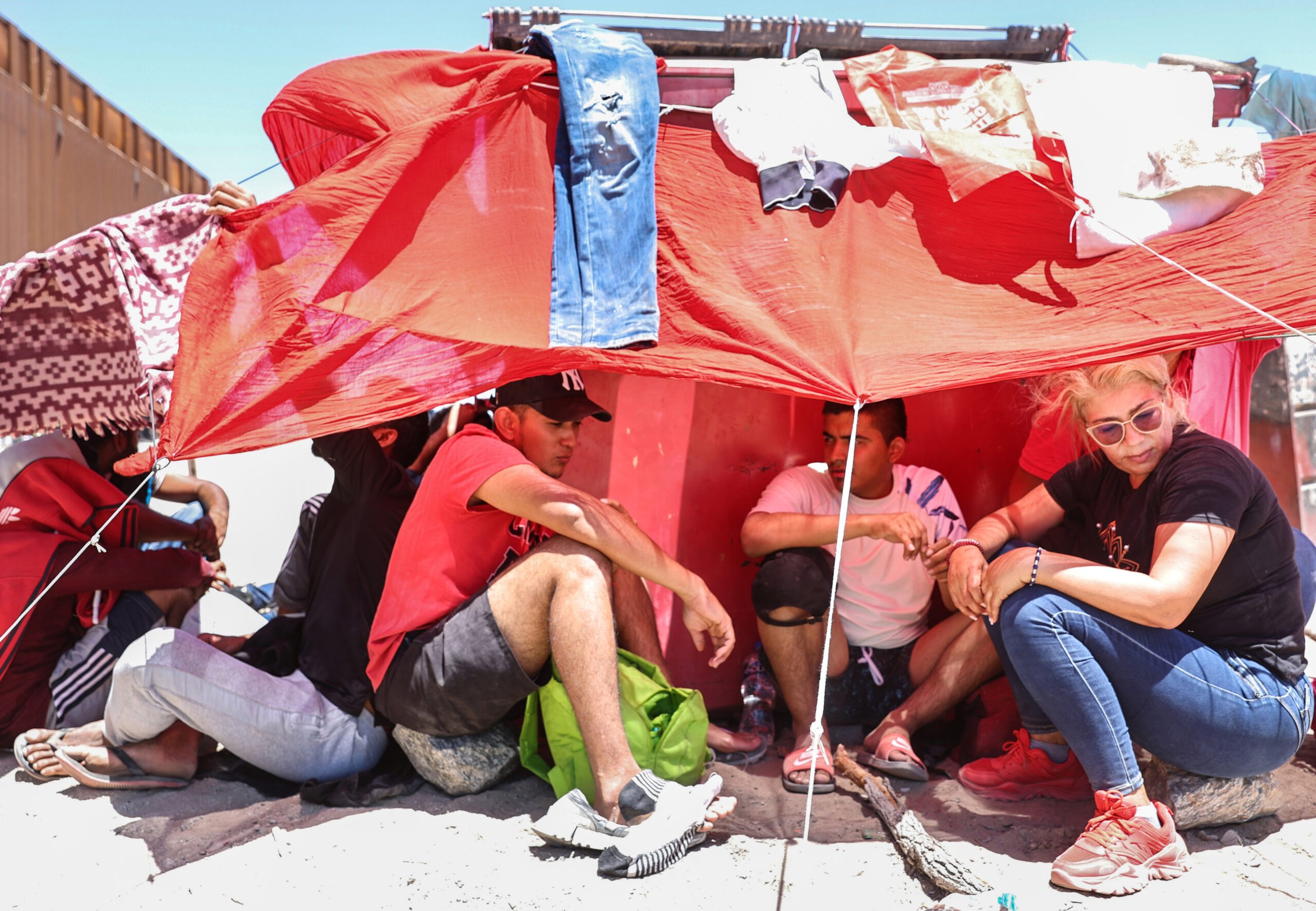
In 2020, unprecedented flooding in rural areas of Afghanistan displaced thousands of Afghans. This resulted not only from more extreme storms, but also from the destruction of trees that protected and aggregated the soil. Farmers were forced to move to higher ground, local cities, and to Iran as their homes, crops, and livestock washed away. Since then, flooding has continued to increase year to year during the wet season, making the region inhabitable and contributing to global climate migration.
Climate change poses a major threat to nations around the world. In the coming decades, millions of people will be displaced as a result of natural disasters, coastline erosion, and lack of resources. As of 2021, the UN High Commissioner for Refugees released data saying that the rate of climate related migrants has risen 21.5 million since 2010, and the Institute for Economics and Peace estimates that at least 1.2 billion people will be displaced as a result of these disasters by 2050. The facts are clear: climate migration will become a major policy issue as an eighth of the world’s population is expected to migrate in the next thirty years, so how are governments responding to the looming climate-caused refugee crisis? The answer: they are not. Current policies and standing meetings like the Paris Agreement (adopted in 2015), the annual Conference of Parties (COP), and the Loss and Damage Finance Facility (LDFF) set standards for net zero emissions and began reparations work that hold major emitter, industrialized countries accountable for climate change. But these do not establish individual protections for climate migrants who are the face of climate adaptation and the bearers of environmental injustice.
Climate migrants fall into three categories: refugees, internally displaced peoples (IDPs), and stateless peoples. Yet they cannot be defined by their relation to the climate alone as they often live in the cross hairs of conflict, making them even more vulnerable. Climate hotspots are areas more susceptible to the effects of climate change, leaving the people within them particularly vulnerable. They contribute to the lack of the necessary resources needed to adapt to climate change in their regions, forcing communities to move once again. Environmental damages are even being used against minority groups in existing national conflicts, as seen in the Azerbaijan/Armenia conflict. For the past three decades, Azerbaijan has demolished the biodiversity in the Nagorno-Karabakh region, the disputed territory of the Armenian minority population, to make them more vulnerable during their attacks. This is just one example of how the environment is weaponized by states to debilitate populations already in crisis.
While the UN General Assembly acknowledged in 2018 that climate change is a major contributor to migration, “climate refugee” is still not an official status. Without refugee status, individuals cannot seek asylum abroad, are waitlisted for medical care and social services, and are not protected as stateless people by their receiving countries. Additionally, the acknowledgement of climate refugees would signal that “wealthier countries, which are most responsible for planet-warming greenhouse gas emissions, [have a] global responsibility to help those harmed by climate change,” according Mia Prange of CFR. With the rates of climate migration growing, the international community is currently unprepared for the rise in refugees they will have to take in and will likely need more lenient refugee policies that encompass victims of climate change to support them.
In 1950, the United Nations High Commissioner on Refugees (UNHCR) was organized, and in 1951, the Refugee Convention defined a refugee as, “someone who is unable or unwilling to return to their country of origin owing to a well-founded fear of being persecuted for reasons of race, religion, nationality, membership of a particular social group, or political opinion.” This definition is still the framework for defining refugees today, and while its broad outlook on refugees makes it adaptable to many different conflicts and circumstances, its stagnant definition has prevented it from adapting to modern issues like climate change. Since migrants moving as a result of natural disasters and climate change are not facing direct persecution by another group of people, they are not covered in all cases in the way that they would be if they were their own designated group.
In 2008, the Brookings Institution identified five categories of migrants who have to move for climate and natural disasters: hydro-meteorological disasters, situations of environmental degradation, sinking of small island states, zones too dangerous for human habitation, and climate change induced. In many instances, the initial reason for migration is to look for economic advantages abroad, but when things get drastic and a sudden hurricane or fire wipes out a region destroying homes and livelihoods, the move is more urgent. While economic migrants have protection, climate refugees do not have the designations protecting them when disaster strikes.
Without climate refugees being a defined status, individuals do not get the protections that legal refugees do. These can range from resettlement documentation and health care to case work and recreational activities. The most significant of these protections is non-refoulement in Article 33 of Refugee Convention, which gives everyone the right to seek asylum and protects asylum seekers from being turned away or sent back to their country of origin at international borders. This is important because, even before a person receives their official refugee status and the process of resettlement, they are protected by international governments and supported in their journey to liberty. Therefore, the concern advocates of climate refugees have is that, without protection and a legal category by the international community, climate migrants will be deported back to their homes of origin, which may be demolished, in famine or drought, and uninhabitable, as in the case of Ioane Teitiota. He is a citizen and resident of Kiribati, a small island nation in the Pacific threatened to “sink” as result of rising tides. In 2015, he sought asylum in New Zealand but was denied because there was no imminent threat to his life, as scientists still predict a few decades before sea levels rise to the point of island consumption. This resulted in him being sent back to Kiribati where he appealed to the UN Covenant on Civil Liberties.
So what’s stopping the international community from stepping up and protecting climate refugees? One argument is that expected migration as a result of land loss and degradation is not severe enough for it to pose a threat to life or well-being, as was the conclusion of the court in Teitota’s appeal. Yet, even though they upheld the New Zealand decision, the UN ruling was critical for how climate refugee status is discussed. They acknowledge that in countries like Kiribati, life threatening effects of climate change are likely and that climate refugee status must be determined on a case by case basis. They also affirmed that slow on-set effects, like sea level rise and long term drought, can be just as deadly as quick on-set effects, like wildfire and cyclone decimation.
In this case, the UN court used judicial activism to push the international community towards official climate refugee status but failed once again to legalize it. The true reason for the polarization of this debate is the responsibility of colonization that would fall on Western countries, and the economic burden they would have to bear. Research from the Netherlands Organisation for Scientific Research shows the countries that will be hit hardest by temperature increases are those nearer the equator. The propensity for drought, soil degradation, monsoon level storms, heat waves, and wildfires are all projected to “reach 560 a year – or 1.5 each day, statistically speaking – by 2030,” according to the UN in 2022. And the states carrying the brunt of this burden are those in the global south, where these events occur more frequently. Additionally, equatorial developing countries are substantially more vulnerable, which leads to “long-term economic disadvantages,” whereas developed countries closer to the poles “tend to show no significant vulnerability.” When rich, colonizer nations block climate refugee status and modern migrant protections from passing on the global level, they are protecting themselves from the backlash of the inequalities they created, and they will not atone for their errors until it is too late.
One cannot discuss the global response to climate change without talking about reparations, and this would be just one way that wealthy countries can make amends. At COP28 in Dubai last year, two dozen countries committed to a “loss and damages” fund that would distribute wealth from countries responsible for the creation of global warming, to countries suffering the impacts. While this is a monumental step towards adapting to climate change on a state by state basis, COP and the UN still need to support individuals on the frontlines of natural disasters. Adaptation can only take the world so far when major action to stimmy the burning of fossil fuels has failed time and again. Eventually, people, often the economically disadvantaged from underdeveloped countries, will be forced to move, and when they do, states have to be ready to take them. Waiting for the day when a flood of people land on a country’s doorstep looking for aid to make a decision, is neither constructive nor sustainable.
And the day has already come. In March, Cyclone Freddy hit southern Africa, killing more than five hundred people and displacing hundreds of thousands of people across Malawi, Madagascar, and Mozambique, leading to record breaking internal and external migration. Migration as a result of climate change is not just the future, but the present, and until governments put aside their prides and end the debate on refugee status, people will not be safe to move where they need to protect themselves and their families against the rising water levels, increased temperatures, and extreme weather. In decades to come, inaction during the case of climate refugee status is the same as inaction during a human rights crisis. Definitions in the law are important - they define who has rights and who doesn't, who is secure and who isn’t. This is just one definition that could make a world of good if the international community took up the mantle and protected migrants.
PARLACEN: The Rats Den
Staff Writer Diego Carney analyzes what the Central American Parliament is and how it is used as a vessel for corruption by Central American politicians and businessmen.
What is the PARLACEN?
The PARLACEN (Parlamento CentroAmericano) or CAP (Central American Parliament) is the parliamentary body of the political organization known as SICA (Central American Integration system) whose objectives is to help integrate and develop, peace, political freedom, development, and promote free trade among Central American Countries. However, it has recently been used as a vessel for former Presidents, elected officials, businessmen, and even the families of these involved parties to escape crime in their home countries.
The PARLACEN, being an international organization between states, grants diplomatic immunity to those who are members in Latin America, meaning that these politicians are immune for crimes in Central America. With the rare of exception of Honduras, who suspended their diplomatic immunity after Ex-President Porifio Lobo Sosa who at the time was the President of the Honduran National Congress suspended their diplomatic immunity. This is interesting because a few years after that decision, Lobo Sosa's wife, former First Lady Rosa Lobo, was indicted in Honduras for misuse of Public Funds. Lobo Sosa himself has been accused of many crimes and headlines as one of the most recent Central American politicians who has been blacklisted from the U.S. a big first in the country’s history. Lobo Sosa was indicted in the United States for charges of Drug Trafficking, Racketeering, Tax Evasion and more. Even without these protections, it is rare for a country like the United States to prosecute them while they’re international deputies regardless of whether there is clear evidence of a crime because of diplomatic red tape. Countries with charismatic leaders or whose parties control a majority of the government would most of the time not allow a fellow member of that party to be extradited and being a member of the PARLACEN would only make that harder.
What grants them immunity?
The rules of Parlacen are extremely ambiguous, essentially granting the countries the freedom to pursue their own agendas and rules. They base other countries' diplomatic powers on the Vienna Convention on Diplomatic Relations. What does this mean? The internal rules of the Parlacen allow for the same immunity and protections stipulated in the Vienna Convention if the sending state (the country that sends the deputies) agrees to them. This rule in the Parlacen allows that any elected official (as long as they're permitted) is granted this immunity in Central America. There are exceptions to this, like a host country may ask the PARLACEN to lift or suspend a specific deputies privileges.
As of 2023, each country sends twenty officials, each with a deputy, to the Parlacen. The rules of the Parlacen also state that each elected official is elected the same way they would in their own country. For example, in Guatemala, there is a direct election, while in other countries, primaries are held or in some cases parties will appoint a specific person for the ticket. Furthermore, former heads of states (presidents) of a member country also qualify as members of parliament; however, this grace period is dependent and given by each individual country.
Electoral Courts
Most Latin American Countries have within their public administration an entity known as Electoral Courts, which are in charge of overseeing every election. Amongst their powers and responsibilities is this jurisdiction in which they can bend some rules during elections; even if unconstitutional. For example, there has been ruling by these courts to allow private citizens with legal trouble to run for office. This is known as a fuero, here on now referred to as special privileges These special privileges allow the courts to acknowledge this legal trouble, whether domestic or abroad, and still allow that candidate to run for office. Most recently, we see the Tribunal Electoral of Panama rule in favor of former President Ricardo Martinellli,who has been sentenced to 10 years in prison yet still allowed to run because his appeal negates the guilty conviction needed to bar him from the election. While some may be quick to point out how judges can be bought and that judicial accountability is a rare phenomenon in Latin America; I argue that these courts are the most overseen by justice department because, just as they have the right to give you special privileges as a politician or party leadership, they can take it away.
Unethical by purpose or design?
One country who is notorious for using the PARLACEN as a vessel for special privileges is Panama. In 2023, the sons of aforementioned former president of Panama Ricardo Martinelli, whose sons were involved in money laundering, bribery, and illicit enrichment charges in Panama and the United States were sworn in to the PARLACEN as alternate deputies. This means that they get the immunities granted to them by the Vienna Convention, essentially stalling out their sentence. Ironically enough, Ricardo Martinelli himself attempted to leave The Parlacen, at the time calling it “a den of thieves,” However, both international and Panamanian courts found the action rash and unconstitutional.
The Martinelli brothers are not the only Panamanian Politicians seeking this special benefit. Former President of Panama Juan Carlos Varela, who is blacklisted from the United States for alleged involvement in corruption, is also seeking a seat in the Parliament. Varela is facing serious charges of corruption and bribes. Ricardo Martinelli, whom Varela once served as Vice President under, is leading the polls in the upcoming presidential election in 2024 (even despite all of those corruption charges) which for Varela, who is considered a nemesis of Martinelli, means he’s in really hot water if elected.
During many of these elections, it is often seen in a lot of campaign trails for these politicians, who later attempt to benefit from the special privileges, their disdain for the governmental entity. Martinelli tried to leave the PARLACEN, as did Varela,yet, they did not revoke their privileges as Honduras did. Honduran politicians agreed to leave ability for immunity off the table while Panama still kept theirs. This begs the question: did these politicians foreshadow their future intentions or do they really believe in these anti-corruption methods? Because if they truly believed in the PARLACEN being a den of thieves and leaving did not work, why not revoke the immunity anyway to deter and avoid the loophole? They do this by mix of saying what they need to win a crowd, and planting the idea in their minds to diminish the shock when they run PARLACEN after leaving office. One of the reasons why they get away with it is a mentality of “nothing is going to change”. A lot of people refer to Martinelli’s Administration with the quote “Robó pero hizo” (Stole but did) referring to the Millions of dollars embezzled from projects and the subsequent bribes that brought his alleged crimes. Furthermore, in a lot of Latin American countries, voting is seen as important; most citizens see the Central American Parliament as a joke entity for thieves, and they don’t actively participate in these elections other than to support their favorite former politicians from the hands of “injustice.”
Panama, however, is not the only instance where we’ve seen this; they’re just the most recent. In 2003 Nicaragua’s former president, Arnoldo Aleman also sought refuge within the Parliament,which ended up stripping him from his immunities and allowed him to be charged in an effort to save its reputation; there are also instances of corruption from Members of Parliament. The former president of the Central American Parliament, Mario Facusee Nadal, was charged with illegally appropriating some properties that belonged to the state. He also once sought to repeal the immunity, with Panama as a co-sponsor.
Conclusion
A lot of politicians and political pundits do not really see the point in the PARLACEN. While its reputation precedes itself, the same people are seen to be claiming it is an institution in which accountability is not enforced. The mission of the PARLACEN is to foster economic and cultural alliance between central american countries. More than three decades later it is now just a question of, is it worth it? Consequently, I believe that there are several solutions that could fix this problem if all parties agree to it. Firsty, amending the internal rules of the body itself, abolishing this diplomatic immunity, and special privileges that are given to these congresspeople. Likewise, they can also make membership more exclusive by adding a morality or similar clause barring citizens who have open investigations against them or have been charged with a crime before. The last solution I propose is to abolish the organization. If concern for corruption is high, and there have been efforts to leave the PARLACEN, then I believe this is an option worth considering, while extreme it would make facing accountability in Central American countries easier.

When Diplomacy Joins Sports: An Overview of Sports Events Turned an IR Feast
Staff writer Milica Bojovic explores the intersection of international relations and sports in today’s political landscape.
Does it even make sense to discuss these two concepts together? Sports exist to test our physical and mental boundaries, a chance to engage in some friendly teamwork and entertain or challenge others, and diplomacy is all about fancy suites and long conversation-heavy gatherings that do not necessarily reflect the thrill and musicality of a good baseball game. The UN Assembly meetings and the Super Bowl or World Cup do not necessarily have much in common at first glance - in fact, they are as opposite as things can get. You see my point, we do not often think of sports and international relations as things that go hand in hand, and we cannot so easily envision an ambassador and a famous basketball star sipping coffee at the same table. They are just one of those pairings that simply do not exist, like the opposite of yin and yang. This explains why we seldom discuss sporting events at international relations courses, and why the Super Bowl does not necessarily revise the UN Declaration of Human Rights at halftime.
However, are they really that different? To what extent are the goals and outcomes of sporting and diplomatic events related? As someone who had the honor to find herself in Buenos Aires for that historic World Cup final on December 18th, 2022, I can testify that watching this final in one of the central parks in Palermo and hearing the public accompany the national team in the singing of the national anthem with jumps and cries was one of the most zealous and evident portrayals of national unity and participation. Witnessing this, as someone deeply curious about the way nationalism emerges and manifests itself, and someone who during my study abroad in Buenos Aires continuously passed by posters and graffiti expressing critique about the way the public only comes together for World Cup and is not equally united in the country’s stance against the ongoing inflation and a myriad of economic and socio-political issues, I found myself thinking of the power of sporting events and their relationship to a country’s or a region’s politics and sense of self. This article is meant to provide an overview of moments in which sporting events and major diplomatic statements and action converged to create powerful messages and results.
Sports and Diplomacy Through World Regions
Asia
Beginning with the largest, most populous region, that also happens to be the first one to face the morning sun, it is important to reflect on how regional organizations here happened to recognize and center sporting events as cornerstone of multilateral and intercultural cooperation. ASEAN, a main Asian regional body composed of 10 Southeast Asian members and in charge of facilitating political, economic, and cultural interaction and regional integration. ASEAN is also interesting due to its particular emphasis on sports. As such regional bodies are a newer, modern trend, it is enlightening to see the emphasis ASEAN has placed on sports as part of its mission towards fulfilling its pillars of integration and supporting amicable relations. ASEAN specifically recognizes the ancient roots of the practice of sports and sporting events and tournaments across the region, with an understanding of the intersection of sports and race, gender, religion, age, ethnicity, and nationality and ways that these identities manifest and interact through sports, as well as the sports’ ability to instill and promote the values of “respect, inclusion, fairness, and duty” as a way to contribute to a sense and prosperity of the ASEAN Community. ASEAN has come to facilitate football (soccer) and chess regional associations as part of its role as a regional body, which is unique and not observed to the same extent in other regions.
Sports have also played a key role in breaking up tension between warring countries or countries in dispute. The case of a ping pong tournament organized in 1971 as a way to allow for lessening of tension and first official interactions in Cold War between China and the US serves as a great example, to the point that this initiative known sometimes as ping pong diplomacy, was also featured in popular culture masterpieces such as Forrest Gump. More recently, however, we were able to bear witness to a historic merger of North and South Korea at 2018 Winter Olympics following days of talks between the two countries. While the degree to which interactions and exchanges occurred was limited in time and scope, fans from both sides of the 38th parallel could join in the celebrations and cheering together, and athletes marched side by side at the opening ceremony, with some additional future collaboration being planned and later materializing to a degree, such as a unified Korean women’s hockey team for that season. While the Olympics also feature some well-known and continuous tensions such as disputes over Taiwan’s name and flag, and more recent controversy over national attire, national dishes, and their promotion, these cases still show the impact of sports on the regional and international psyche and their contribution to our meaning making and positionality of modern nation states.
On the other side of the continent, Turkey and Armenia, still at crossroads due to Ottoman colonial heritage and subsequent disputes over acknowledgement of genocide against the Armenian people, managed to get their presidents to sit together and see visa regulations relaxed thanks to the 2008 World Cup qualifying match. This event even contributed to kickstarting additional diplomatic channels and, albeit arguably for only a very limited window of time, the two countries saw a potential to make amends and deepen their diplomatic interactions.
Australia and Oceania
The Australian Government has an entire 2030 Sports Diplomacy Strategy, with its goals being to affirm and deepen the ideals of sports diplomacy “to bring people together, generate goodwill and cultivate partnerships for Australia across the world.” The Plan also recognizes and lists the exact economic contribution of sports to Australia annually and outlines the competencies of Australian industries in competition and participation as much as in hosting, opening additional facilities, and being engaged in sports-related innovation. This attitude centers investment in sports and allows Australia to explicitly rely on sports in its diplomatic efforts.
Over in New Zealand, a unique node to Native culture has been expressed precisely through the haka dances, a traditional Māori ceremonial dance, performance of which went viral during the 2014 Basketball World Cup game against the baffled US. While the internet and modern culture led to the popularity of the New Zealand basketball team, it is important to note that the practice actually dates back to the New Zealand Native football team of the 1880s and has continued on through rugby and basketball associations for over a century. While this is celebrated as a way to honor the ways of the Native people of New Zealand, the practice has also been seen as controversial when performed erroneously by non-Native members of New Zealand’s society. New Zealanders with Māori origins historically and presently greatly contribute to the country’s sports culture, but it is crucial to ensure these sporting tributes to them and their culture are not purely performative and that they are accompanied by a proper way to honor and contribute to the communities these cultural practices come from in order to ensure the dance’s intended purpose of unifying the country and celebrating Native culture.
Oceania famously joins New Zealand in its focus on rugby as a national sport, although there are increasingly many efforts to honor traditional sports and associated ceremonies unique to this part of the world. Still, the focus remains particularly strongly on sports such as rugby, football, cricket, and basketball. It is the Olympics that are at play once again here as the Tongan sports sensation Pita Taufatofua represented his country three times so far and has famously done so with his shirtless walks in various traditional outfits, both as the country’s first taekwondo player and also even in the Winter Olympics where he was a sole representative of his country, having qualified for the cross-country skiing category. A fellow regional representative rower Rillio Rio Rii of Vanuatu joined in the showcase of traditional outfits. While critique can be placed here as well due to global gaze and objectification of these athletes that ensued, these all represent important potentials, when done and observed properly, to celebrate world traditions but also amplify knowledge about these countries living in a particularly unique and increasingly vulnerable part of the world.
Africa
Africa, the birthplace of humanity and forever a hub of great sportsmanship, both through talent and sports virtue, continues to impress the world with its many top-notch athletes, who defiantly win against all odds following centuries of colonial oppression and continued global inequality in earnings, which is of course also dangerously and tragically reflected in sports. The Olympic Games have bestowed a number of medals going to African athletes, with South Africa, Nigeria, and more recently Botswana reaching for the stars. However, it is also important to note that, while records have been broken and consistent medals received in longer distance running, with brilliant anecdotes about winning under excruciating circumstances such as Kenyan Kip Keino winning a 1500-meter race, while hurt and even after running for 2 miles in order to arrive on time for the competition when his bus was caught in traffic in Mexico City. In spite of this, the lack of proper investment, infrastructure, and necessary preparation and equipment that requires continuous funding and lifestyle that African athletes cannot always afford back home often prevents these exceptional athletes from reaching their full potential - and this is best manifested in the fact that African short distance sprinters are less likely to break records, with short distance running being a discipline where consistent prior preparation and very specific infrastructure is required. These complexities show how sports results may be impacted by inequalities of the global setting, albeit sports and athletes still often find ways to overcome neo capitalist competition and allow raw talent and hard work to shine.
Sports, however, can also be used to not only push our limits and always reach for a higher, faster, and stronger achievement, but also break the social mold and help us move beyond stereotypes. Movies such as the Egyptian Maye Zayed’s documentary Lift Like a Girl can help break the stereotypes and showcase true potential that sports have to offer for everyone, including girls and women that are often cut off from investment and support of male counterparts in the sporting world.
When it comes to brilliant results by African athletes, one cannot overlook the incredible advancement of African football (soccer) showcased throughout team games as well as in the World Cup, with the most recent World Cup featuring Morocco at the forefront of action and reaching 4th place thus breaking African records, and countries like Cameron and Ghana boasting incredible strategy, power, and true love of the game, not to mention the strength of the fans themselves and their dance moves and sportsmanship. While this helps position Africa as a force to be reckoned with in world football (soccer), it is important to note that this attention that African players receive on such big events also invited the corporations’ gaze and has facilitated the buying and selling of African players, which erodes development of local clubs as players are invited elsewhere, though this practice still brings fame and recognition to Africans and can help diversify the world of football (soccer). However, looking further into the outcomes of commercialization of sports, it should be noted that this phenomena also provides platform for a lucrative business of clandestine trafficking of young African talent where young athletes, especially boys, are promised jobs as players in Europe only to be left at mediocre clubs or made to essentially engage in forced labor as poverty and lack of protections at home are being exploited to trick young talents with false promises of success. Thus, the sporting world remains intricately connected with the globalized world and finds itself in constant interaction with the global development policies and current disparity.
Europe
Making our way westward, Europe comes with some important examples from recent history, showing just how powerful and influential sporting events can be. The event that is a more widely known case but that cannot be left out of any analysis of this type is the uncomfortable decision to allow the 1936 Summer Olympics to be organized by Hitler’s Third Reich. Having won the bid in 1931 to organize the Games in 1936, Berlin proudly assumed the role of an internationally-savvy host. Hitler and his Cabinet worked hard to outmaneuver records of the previous Olympic Games hosted in Los Angeles, ensuring larger track fields, bigger stadiums, and more gymnasiums, all the while sprinkling, and usually not at all subtly, the now painfully known elements of Nazi propaganda. Visitors were welcomed by the Nazi eagle and insignia, and, after the US and its allies came out of heated debates agreeing to not boycott the Games but rather send their representation and compete, the 1936 Games came to showcase almost 4000 athletes and 49 teams competing in 129 events.
While this event dangerously contributed to glorification of Hitler’s regime and deepened the influence of contemporary Nazi propaganda, painting the image of the Third Reich as a tolerant and peaceful nation, some events that were impossible for Hitler to predict went down in history as some of the biggest challenges to the Nazi ideology. Most notably, the biggest star of the games was Jesse Owens, an African American who captured four gold medals and was constantly on the podium. In fact, African Americans tended to dominate the popular track and field events and were welcomed with cheers by the German audience, demonstrating the ability of sports to uniquely bring people together and break the societal molds. The censorship prevented offensive remarks for the duration of the game, but it became obvious that Nazi publishers and thinkers were struggling to process the event, and this certainly threatened to shake up the dubious ideology of the Third Reich. Obviously, this sadly could not prevent the bloodshed that was to ensue with the onset of WWII, as Jewish athletes and citizens had already been prosecuted and excluded by this time. A great irony also comes from the fact that Jesse Owens and his compatriots had to return to a deeply segregated society that rejected them and never properly compensated for their successes despite calling itself a free country and supposedly being a perfect foil to Nazi Germany. While the sporting world cannot function as a peace treaty in its own right, the events of these Olympic Games allow us to see the ability of sports to showcase socio-political irony and once again help us to think critically and beyond stereotypes, although it cannot be ignored that the influence of sports has been used in this case to promote the opposite - a dictatorial regime with grotesque, horrifying policies looking to justify itself through sports.
Since we inevitably reach the topics of the two World Wars when talking about Europe, it is also important to note that, although sports are sometimes seen as a “war minus the shooting”, it is sports that often assisted in normalization of relations and at least brief truces, as well as means to support the troops’ sanity during the toughest of times. It is on European soil stained by blood and tragedy during the horrendous conflicts of the 20th century that some of the most curious truces have been established, with sports events used as an excuse for ceasefire and brief moments of joy and camaraderie. In fact, while the threat of an air attack made it impossible to do so in WWII, the Football Association (FA) allowed football (soccer) matches to continue as normal in WWI, boosting the morale of everyone involved, and this served as continuous recreation throughout the war. In WWII, the armed forces still retained the rights from FA to organize matches, and women working in munition factories formed their own teams, which shows the reach and inclusionary potential of sports in spite of societal challenges. While sports can be used to motivate competitive spirit not dissimilar to that which leads to conflict and war, sports also allow us to conceive a world in which we all come together to play and treat each other fairly and respectfully, showing the potential of sports towards in fact ending the conflict when appropriately organized and facilitated.
The Americas
Last but not least are the Americas. People say that football (soccer) is the world’s favorite pastime, and as someone who has had the utmost pleasure of witnessing a World Cup while in Latin America, I would be lying if I said that this statement can be truer anywhere else. The sport has fascinated the region ever since its first arrival with European fans in the Southern Cone. It has spread from the port of Buenos Aires, a city which today holds America’s record for the greatest concentration of football (soccer) stadiums per capita, and today it encompasses a large part of regional identity of Latin America, to the point where countries such as Argentina, Brazil, Mexico, and Colombia, to name just a few regional representatives, use this sport essentially as part of the nation-building processes.
It is important to note that here too we see some less-than-ideal conditions that sports are exposed to. Football (soccer) in particular is often associated with the hooligan culture, also known as the barra bravas in many countries of the region. These groups are not always the same as traditional street gangs and their cliques, and they oftentimes in fact find themselves in conflict with other violent groups/gangs. However, in many parts of Latin America and Europe, they are also known to consistently engage in violence both inside the stadiums and on the streets, often themselves participate in the selling and distribution of drugs and other illicit deals as a way to attract and organize youth and attain more earning for their activities, and have more recently been observed performing the function of paid protestors and rioters that catalyze corrupt political aims, once again revealing the power and socio-political reach of sports. The groups started with the supposed intent to support the club, and the fervor for the club is still there through impressive percussion and energy they always bring to the stadiums, but in some cases, and this happens all too often, these groups’ behavior goes out of hand and this becomes detrimental to other fans’ presence at the stadium, leading to some clubs and entire countries, as is the case with Argentina, to ban stadiums from hosting both competing teams’ fans just to avoid clashes of the barra bravas at the expense of sportsmanship-loving fans’ ability to follow their club to each game.
However, the relationship that clubs retain with their supporters and neighborhoods is impressive. I saw that some of the clubs I had the honor of interacting with in Central America and the Southern Cone function essentially as non-profits where all, or a significant portion, of additional profits are used to finance the building of sporting infrastructure for the youth of the neighborhood, and they also provide educational opportunities in their own facilities or through educational programs or school supplies they help finance. This is just one example of how football (soccer) remains the sport of the people and is able to retain its neighborhood spirit and local appeal as much as it has also presently become a lucrative business investment and a part of the system of multinational corporations. It is also, as previously mentioned, crucially used for the process of nation-building and a form of symbol for national identity, hope, persistence, and unity. Uruguay is a great example as it is the glorious host of the very first World Cup, an event that also coincided with the celebration of the centennial anniversary of the country’s first constitution and led to construction of Uruguay’s national stadium. It was a great struggle and honor to receive the title of host for the inaugural competition, and Uruguay is now working with partners from across the region to bring the World Cup back to its initial hosts for the World Cup 2030 bicentennial celebration of Uruguayan first constitution and centennial anniversary of the World Cup itself. Later renditions of the World Cup in the Americas have both been praised for infrastructure projects they brought in and a focus on increased security and social cohesion, but also critiqued as a distraction from national issues ranging from debt to dictatorial governance, again revealing the complexity of the world of sports and its influence on political matters, willingly or not, stretching all the way to present-day World Cup history.
It is again revealed that corrupt and power-hungry gangsters, officials, and even political leaders manage to successfully manipulate the world of sports, with football (soccer) in particular even having been used as a supposed prelude and an instrument to support wartime efforts in the infamous example of the 1969 conflict between Honduras and El Salvador, with the war even being referred to as “The Soccer War” as much as root causes of exactly zero examples of international warfare in the world are actually due to any sporting event. Better understanding the impact that sports and the rhetoric and feelings surrounding sports is necessary for policy makers to delegate the world of sports appropriate thought and protections, keeping in mind that sports are also a means of supporting one’s patriotic pride as well as a way to nurture the spirit of sportsmanship, fair play, and proper treatment of rivals, and facilitate infrastructure projects and community development efforts. Sports thus become a key issue of governance and the people’s trust in sports must be carefully cultivated and protected through proper policymaking.
Conclusion
Sports are inevitably connected to issues ranging from nation-building, global trade, and development to issues of governance, peacebuilding, and transnational crime, and, with their power having been recognized by those in leadership positions, sports have been used to meet both noble and corrupt goals in each world region. For the world of sports to not be corrupted and exploited but rather retain its significance as an honest, productive, and unifying pastime and fulfilling activity for people of all walks of life, it is necessary to ensure proper policymaking is applied. Sport disciplines and athletes, across gender, age, nationality, and bodily ability divisions, should be properly celebrated and rewarded. Issues such as inequity and impact of global inequality on the world of sports and trade in athletes should be examined. Comments made by FIFA higher-ups claiming that “less democracy is sometimes better for organizing a World Cup” should not be taken lightly so that fans around the world, myself included, and hopeful hosts do not have to suffer through the controversies that continue to surround the World Cup. Finally, sports should be seen as a way to celebrate humanity’s competitive spirit and need for teamwork and group association, but in a purely constructive manner that cherishes the spirit of cooperation and respect for rivals. One way to begin addressing these issues is to revive the UN Office on Sport for Development and Peace (UNOSDP) with a greater emphasis on monitoring mechanisms, possibly through sustained cooperation with the International Olympic Committee which currently completely overtook UNOSDP’s mandate as a cost-saving measure. This is all just the beginning and apparently a lot to ask, but if those in positions of leadership in the international political scene do not recognize and always keep the impact of sports in the back of their minds and at the forefront of some of the policymaking, we can amplify the positive impact of sports, which in one way or another reach and impact every human being on this planet. This article serves to be the catalyst of change.

A Deadly Profession: The Role of Journalism in Conflict Analysis and Resolution
Contributing Editor, Ashton Dickerson, investigates the growing deaths of journalists worldwide and what this could mean for the international community.
Anna Politkovskaya, a Russian investigative journalist, is best known for her reporting on corruption and human rights abuses in Chechnya. She was shot in broad daylight in the lobby of her Moscow apartment building on October 7, 2006. In a CNN article titled, “Media Martyrs,” Anna Politkovskaya is put on a long list of reporters who have died working as journalists in the last 15 years. Her tragic story highlights a crisis around the world. According to NPR, the total of journalist deaths was almost 50% higher than in 2021. This is mostly due to the coverage of Russia's invasion of Ukraine, as well as violence in Latin America. Over half of 2022's killings occurred in just three countries, including Ukraine with 15, Mexico with 13, and Haiti with 7. This staggering report is the highest yearly number the Committee of Protecting Journalists (CPJ) has ever recorded for these countries since it began compiling data in 1992. In the recently released 2021-2022 Freedom of Expression report, UNESCO noted the deaths of 86 journalists last year, amounting to one every four days, up from 55 killings in 2021. The findings emphasize the serious dangers and vulnerabilities that journalists continue to encounter during their work and even once they go home. UNESCO Director-General Audrey Azoulay stated this problem as alarming, noting, “Authorities must step up their efforts to stop these crimes and ensure their perpetrators are punished because indifference is a major factor in this climate of violence.” UNESCO noted that nearly half of the journalists killed were targeted while off duty, while the rest were targeted while traveling, or while others were in their homes at the time of their killing. This report not only showcases the horrendous, dangerous conditions journalists must face during their work, but it gives a warning to us all about the perils of providing coverage and reporting to the population in times of conflict and widespread human rights crises. Journalists construct the foundations of healthy political societies with vital information. Their position is particularly important in areas of conflict, violence, and under repressive regimes.
According to the Freedom of Expression report, despite improvements in the past five years to limit risk, the rate of impunity for journalist killings remains high at 86 percent. Journalism continues to remain a deadly profession with nine times out of ten, the murder of a journalist is unresolved. From 2016 to the end of 2021, UNESCO recorded 455 journalists killed for their work or while on the job. Murder is not the only crime for which journalists are at risk. Disappearances, kidnappings, detention, legal harassment, and digital violence all remain likely possible threats. While institutions and organizations continue to monitor these crimes, the increasing numbers since 2015 continue to be a cause for concern. Even more concerning, journalists are being killed outside of war zones, including half of the deaths that were documented last year were in the Latin America region, which is officially not in any conflict. With global insecurity and political instability, this is an indication of the disregard for democracy and could lead to an increase in censorship. It isn’t just other parts of the world in which this threat can be felt, with one killing of a journalist being reported in the United States in 2023 so far. Dylan Lyons, a Florida TV journalist, and a nine-year-old girl were fatally shot near Orlando, Florida. In 2021, there was a new global high in the number of journalists being imprisoned, with the total number reaching 293. This is another glaring red flag that could be detrimental to the global community, suppressing journalists to report on corruption and mistreatment. Commenting on this dangerous environment, the president of the Committee to Protect Journalists, Jodie Ginsburg, stated, “When you think about it, the killings and the imprisonments of journalists are just the tip of the iceberg. They're indicative of a much broader pattern of declines in press freedom more generally. We see thousands of journalists harassed online every day, and unfortunately, often that turns into offline, real-world violence, physical threats against journalists, and that's something we're seeing more and more.” Seeing this decline in democracy is accompanied by an undermining of democratic norms, the target is increasingly becoming journalists who can report on wrongdoing by leaders, organizations, and institutions. Additionally, UNESCO reported that over the past five years, press freedom has continued its downward trend across the globe with 85 percent of the world’s population experiencing a decline in press freedom in their country over the past five years. What would the world look like if the number of journalists continued to be in a downward spiral? Furthermore, what would the world look like if journalism became only censored, restricted, and blocked in times of conflict?
The essential service mission of journalism is particularly vital in times of crisis, like reporting on wars and conflict zones, environmental and climate issues, natural disasters, and on public health emergencies like COVID-19. This is why many countries under the curfews introduced under the pandemic recognized journalism as an essential service. Journalists are not only important in spreading the news to the international community, but journalists and media institutions can also help diplomats contact intended target audiences. When embassies, diplomats, and other international foreign affairs institutions invest in their media presence, they are awarded. The U.S. Embassy in Pakistan, for instance, has more than 200,000 followers on Twitter and more than 6,000,000 page likes on Facebook. Using social media, embassies can communicate directly with the local population and use the media landscape to their benefit. Journalism cannot now fully be understood or analyzed apart from globalization. This process refers to the intensification of social interconnections, which allows apprehending the world as a single place, creating an interconnectedness and greater correspondence. Using communication media, journalism can be studied to showcase social interactions, movements, and the intersection of identities. International media sources such as the BBC, CNN, al Arabiya, and al Jazeera have global reach, and as such have an "agenda-setting effect." This effect, as professor of Media and Public Affairs and International Affairs at the George Washington University Steven Livingston, explains, “revolves around the ideological components of political disagreements, and more specifically the way key actors in conflict seek to manipulate public perceptions of the disagreement. That is, actors in any conflict will seek to either minimize or exaggerate the conflict, depending upon their relative position of power.” The international media can sweep communities, drawing them together, and has the potential to influence governments and international organizations. This is seen in countless occasions and case studies, including when studying Cyprus.
In conflict-affected communities, journalism has a crucial part in shaping the public’s perception and knowledge of a given issue, surrounding topics such as identity, conflict, and important peace efforts. When mediating a conflict abroad and at home, journalists do more than information reports, they also define, frame, deliberate, and promote it. Using Cyprus as a case study, a 2021 journal article titled, “Journalism in conflict-affected societies: Professional roles and influences in Cyprus,” highlights just how journalists define their roles and responsibilities. Disseminating political and military messages, journalists took part in the very creation of these messages for the public. Journalists on both sides of Cyprus articulated proficient roles that varied from monitoring the political and business elite, acting as watchdogs, promoting social change, and educating and informing the public about societal problems. When asked about professional roles, journalists on both sides of the island stressed that accurate reporting is a crucial part of their professional roles. In both communities across the divide, information, especially on the Cyprus problem, can be controlled and manipulated by the political elite and be shaped by outside interests. The journal research shows that journalists in conflict and post-conflict societies assume more comprehensive obligations than other journalists in democratic countries, and advocacy for peace is one of them. Journalists are more likely to adopt an active role in the resolution of the problem. When asked about it, in a 2019 personal interview, a journalist remarked: “If we lived in another society, one without conflict, then we could have answered this question differently, but we live in Cyprus and we have concerns about our future.” This underlines that journalists’ identities are not fixed but fluid and journalists struggle to find a balance between their professional role and their identities. Depending on the state of the conflict or the transition their communities are going through, journalists renegotiate and reproduce the meaning and role of journalism. They outline the potential to harness social change and change policy, informing the public and persuading the population. With the increasing number of targeting and deaths related to the field of journalism, the advocacy to promote journalists' individuality and press-related freedoms is pivotal in maintaining a transparent world.
There is no doubt that journalism is an essential, integral part of the international community. UNESCO’s work on monitoring and reporting on the safety of journalists helps keep this information accessible and able to be used in policy-making decisions, forming an integral component of the UN Action Plan on the Safety of Journalists and the Issue of Impunity. Media organizations must be sure to adopt safety protocols, allocate enough resources to protect journalists, and ensure proper training of journalists. Deputy director of the International Press Institute, Scott Griffen, emphasizes the need for accountability, noting, "If some of these journalists were directly targeted, we need to start collecting the evidence for possible war crimes prosecutions." The need to be vigilant and prepared to adapt has never been more useful than now. With a public health crisis and the Russian invasion of Ukraine, journalism remains a critically ingrained part of humanity. If journalism is declining and persists to be as dangerous as it is heading, this says a lot about society and the future of everyone in the world. The voices of so many communities will increasingly become silenced, leaving a painful disregard for verity.

Social Media in the Middle East: A Double-Edged Sword
Staff Writer, Katie Barnett, examines the complex role of social media in shaping communication and activism in the Middle East.
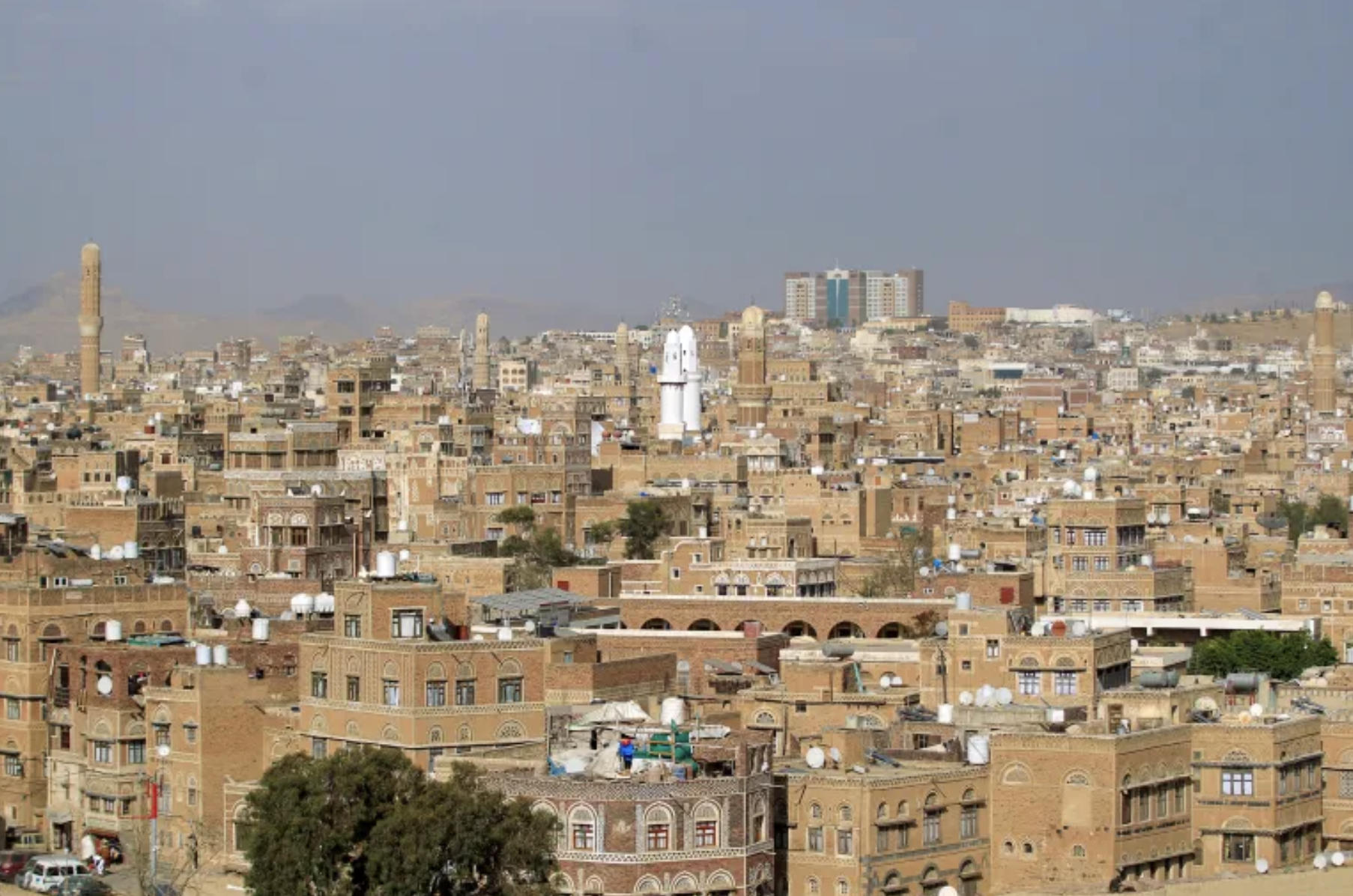
In late March 2023, three YouTubers received prison sentences ranging from three months to six years for content deemed inappropriate by the Houthi government in Yemen. A court in Sanaa, the capital city of Yemen, found that the YouTubers were guilty of “inciting chaos, disrupting public peace and insulting the Houthis,” according to their lawyer. One of the YouTubers, Ahmed Hajar, posted a video on December 22, 2022, that alleged corruption and oppression by the Iran-backed Houthi regime. Hajar was violently detained by armed rebels the same day the video was uploaded; the other two YouTubers involved in the case were subjected to similarly terrifying and unjust detainments. The recent crackdown on YouTubers is emblematic of the Houthi government’s continuing crusade against free speech. Since its takeover of Sanaa in 2014, the Houthi rebel group has clamped down hard on both the free press and political dissent on social media. “Sanaa has become the heart of a republic of fear,” writes exiled Yemeni journalist Afrah Nasser. Problems around social media and free speech are not unique to Yemen, though. Social media has become an increasingly important tool for activists and youth across the Middle East, but those using it face challenges like the rampant spread of misinformation and propaganda, as well as the ongoing threat of government repression. This article will examine the complex role of social media in the Middle East—both as a platform for connectivity and change and as a battleground for geopolitical conflicts.
Social Media Trends in the Middle East
The people of the Middle East region are some of the most avid social media users in the world. According to the New Media Academy, the average social media user in the Middle East spends over 3.5 hours on social networks per day, which is significantly higher than the global average of approximately 2.5 hours per day. Users in the Middle East also have an average of 8.4 social media accounts each, with those in the United Arab Emirates (UAE) having 10.5 accounts. This is “the highest number of social media accounts per person globally,” according to Forbes. The most popular apps in the region are Whatsapp, YouTube, Facebook, and Instagram, with TikTok and Snapchat seeing explosive growth in recent years. Twitter is the only app that has seen a recent decline in usage as social media users move to newer platforms and the platform’s functionality declines.
The benefits of social media in the Middle East are readily apparent: the region has seen massive growth in e-commerce, and social media platforms like Snapchat were useful tools for facilitating the dissemination of essential public health information during the COVID-19 pandemic. But while the ubiquity of social media in the Middle East has positive implications for connectivity and commerce, it has also facilitated the spread of dangerous misinformation in recent years. In 2020, Facebook removed two networks of fake accounts linked to digital marketing firms in Egypt and India because they were pushing false narratives that pitted the UAE, Saudi Arabia, Bahrain, and Egypt against Qatar. Twitter has similarly removed hundreds of fake accounts of so-called “experts” that were actually fake personas pushing propaganda.
Although the problem of misinformation is not unique to social media platforms in the Middle East, it can pose a heightened threat when it is weaponized to tip the delicate balance of one of the many ongoing conflicts in the region. For instance, journalists in the United Kingdom found that the Iraqi terrorist group Kata'ib Hezbollah has established a large social media network and paid vast sums of money to Facebook to boost engagement with its fake news posts. According to the nonprofit Journalismfund Europe, “failure to clamp down on these networks is hugely damaging to efforts to stabilise Iraq and negatively impacts the lives of millions of Iraqis.” While many governments in the Middle East have made legitimate attempts to crack down on misinformation from groups like Kata'ib Hezbollah, some states have merely used misinformation as an excuse to crack down on free speech by citizens, as was seen in the case of the Yemeni YouTubers. The following section will examine the ways that these governments have used social media to advance their interests—often harming their own people along the way.
A New Kind of State-Sponsored Militia
Saudi Arabia has spent the last several years building a bot army—a coordinated network of fake social media accounts used to spread pro-state information. This army has seen action on multiple occasions. For instance, after the arrest of seven prominent women’s rights defenders in May 2015, concerned Saudi citizens started an Arabic hashtag “Where are the activists?” on Twitter to raise awareness about the detainments. Almost immediately after this hashtag began to trend, hashtags labeling the activists as “Agents of the Embassies” and “traitors” were circulated by state-backed news organizations and countless additional Twitter accounts. These hashtags were “pushed” in a highly coordinated way, according to John Kelly, CEO of social media intelligence firm Graphika. Researcher Marc Owen Jones of Exeter University says tactics like this amount to “digital authoritarianism,” a fad that is spreading rapidly in the authoritarian regimes in the Middle East. Other nations, like Bahrain, have been experimenting with bot armies for more than a decade. An Institute for the Future report found that government-backed Twitter accounts were engaged in “mass identity-revealing and doxing” of critics during the 2011 uprising against the Bahrain monarchy.
Bot armies are not confined to a nation’s borders, though, and they are not the only tactic used by Middle Eastern governments. Some nations have mounted much more complex disinformation campaigns to influence public opinion on global conflicts. Iran, for example, barrages both its neighbors and its own population with propaganda on multiple fronts. A report by ClearSky Cyber Security found that Iran created many fake websites in multiple languages to impersonate legitimate news organizations in surrounding nations. Examples of these include the phony “Yemen Press News Agency” and “Tel Aviv Times”. Iran also steals propaganda from other authoritarian governments, such as Russia, to promote on its pro-state social media accounts and websites. In 2018, an Iranian news source that targets American and European audiences published an article titled "Idlib to become Syria’s final battle with terrorists… if the West stays out of it,” an article that was first published on a website that is a known source of Russian propaganda.
While tactics like these are incredibly frightening, there is still some good news. “Fortunately,” writes Brookings’ Daniel L. Byman, “Middle Eastern regimes are not at the level of Russia when it comes to disinformation” (hence their need to plagiarize Russian propaganda). Middle Eastern regimes’ efforts to spread misinformation are often “hasty in execution” and easy to spot, especially in unstable nations like Iran. Another piece of good news is that there is already an incredibly strong safeguard in place against authoritarian misinformation campaigns: the youth of the Middle East.
Young Voices of Resistance
The young people of the Middle East are extremely engaged with social media, and many of them use it as a tool for political mobilization. For instance, in the aftermath of the 2020 Beirut explosion, Lebanese activists and youth used social media to share the aftermath of the disaster and appeal to the international community for aid. They later used it to hold their government accountable after it was discovered that it was the government’s failures that had caused the blast. These efforts were successful—millions of dollars of aid poured into Lebanon and multiple government officials resigned in recognition of their role in the tragedy. Youth in Lebanon and across the Middle East are aware of the failures of their governments and remain a consistent driving force for change.
When it comes to social media misinformation campaigns by their governments, young people in the Middle East remain incredibly vigilant. Although their heavy reliance on social media for news puts them at risk—some 79% of Arab youth say they get their news from social media—81% of teens are aware of the prevalence of internet hoaxes. Many young activists use their platforms to bravely call out government misinformation, despite the risk of punishment from their authoritarian regimes. But the burden of taking on authoritarian regimes on social media cannot fall solely on youth. As Daniel L. Byman writes, “The United States and other democratic governments must improve their technical capacity and, with it, their ability to detect these [misinformation] campaigns.” Social media platforms must also improve their ability to both protect the accounts of activists and to take down accounts spreading false information. Further, these platforms should increase the availability of their data so that independent researchers can study and monitor potentially dangerous activities. Social media has taken on a complex role in the Middle East, and the entire international community must unite to ensure that it remains a largely positive one.

Venezuela in Crisis: What Does the West’s Waning Opposition to the Current Regime Mean for the Future of the Country?
Staff writer Candace Graupera explores Venezuela’s current political and economic crisis. The West’s initial opposition to Maduro’s presidency is fragmenting and Venezuela’s future hangs in the balance of becoming a failed state or waning off their oil dependence to become a more diversified economy.

Introduction
Venezuela is a country full of striking natural beauty and one of Latin America's most urbanized places. It is the birthplace of Simon Bolivar, contains the Los Roques Archipelago, and is famous for its Pan de Jamon (bread filled with ham and olives) and Hallacas (corn or cassava dough stuffed with meat, olives, raisins, onion, and more.). However, in recent years, Venezuela has been plagued with social, political, and economic strife. 7 million people have left Venezuela, fleeing poverty and political crisis. Many are at risk of eviction, exploitation, and are forced into debt that they could never repay. Of course, the COVID-19 pandemic made things worse, plunging Venezuelans into an even deeper economic crisis. People are forced to flee in unconventional and unsafe ways, many falling prey to smugglers, kidnappers, and traffickers. While some Venezuelans make it to the United States, many go to surrounding Latin American countries, such as Ecuador, Colombia, and Brazil. Adding to their suffering, Venezuelan refugees are stigmatized and scapegoated by the countries they flee to, with limited job opportunities and access to public services, they are often left to fend for themselves. While host communities and countries remain committed to helping the refugees, the sheer numbers mean that resources are stretched thin and finances are almost nonexistent. Understanding the present reality for many Venezuelan citizens requires examining the external factors at play.
In this article, I explore how a country with such a rich culture and economy, due to its oil reserves, came to be in such a perilous situation politically and economically. I will also discuss how the West’s initial opposition to the current Venezuelan government is fragmenting, after many years of strong condemnation. Finally, I will discuss what is next for Venezuela and how the international community is assisting in one of the biggest humanitarian crises of the 21st century.
How did Venezuela get here?
There are two parts to how Venezuela got into its current situation, political reasons and economic reasons. However, they intertwine and together they have engulfed the country in a crisis that has caused millions of people to flee. The executive powers of the president are incredibly strong and have only been strengthened in the past few decades. Since 1999, Venezuela has been run by two individuals from the same political party: Hugo Chavez and Nicolas Maduro. Chavez was a socialist president from 1999 until his death in 2013. He emphasized key elements such as nationalism, a centralized economy, and a strong military that frequently engaged in public projects. His approval rating was quite high, reaching up to 80% public support. He ran on an anti-corruption platform which made him very popular. He increased social welfare programs and redistributed the country’s oil wealth. Riding this wave of popularity, Chavez’s party gained control of key institutions, such as the judiciary, electoral council, and the Venezuelan Supreme Court. Over time, the system of checks and balances became weakened and the president’s power was often left unchecked. When Maduro was elected following Chavez’s death, global oil prices decreased. Venezuela’s economy relies heavily on oil, which led the country into a 7-year recession. Basic goods were scarce and inflation skyrocketed. It was clear that Maduro was not as beloved by the public as Chavez was because there were many anti-government protests between 2014-2017. It did not help that Maduro ordered a brutal police crackdown on the protestors. During this time, many Venezuelans left the country to escape the economic repression and political crisis.
Everything came to a head in the 2018 presidential election. Despite public discontent with Maduro, he was reelected president. This election was dismissed by citizens as neither free nor fair and many accused the government of corruption to help Maduro hold onto power. Many other candidates that planned on running were imprisoned or ran from the country out of fear of imprisonment. As discussed earlier, many of the institutions in Venezuela that performed checks and balances were under the socialist party’s influence. So when these institutions were called upon to investigate the claims of a corrupt democratic election, they refused and there was a lot of division. In January 2019, the speaker of the National Assembly, one of the only institutions that was still credible and influential, Juan Guaido, declared himself the “interim president” of Venezuela. He proclaimed the seat of president vacant because Maduro’s re-election was not valid. He predicted that he would be governing the country within a few months. In hindsight, this process would become extremely complex and detrimental to the people of Venezuela.
Venezuela’s economy is very dependent on the income from oil imports and exports. So much so that Venezuela could be thought of as a petrostate, where the government is dependent on oil, power is concentrated, and corruption runs rampant. The country is home to one of the world’s largest oil reserves and while that has been financially beneficial in the past, it has also been its downfall because there has been no diversification in the economy. The oil price in Venezuela has plunged from $100 per barrel in 2014 to $30 per barrel in 2016. Even though the prices have started rising again in recent years, Venezuela is still in an economic recession where conditions remain in turmoil. This is because of oil dependence, falling production rates, high levels of debt, and hyperinflation. Many experts believe that economic diversification will be difficult for Venezuela in the future. It would take an enormous investment to first put the oil sector back on track and then develop and cultivate other industries.
The West’s Opposition
More than 50 countries, including the United States and the United Kingdom, recognized Guaido as Venezuela’s legitimate president. Yet the international influence was limited, as the military stayed loyal to Maduro. He remained firmly in charge of the country with the support of China and Russia behind him. In response, the US put sanctions on the Maduro government making it harder for him to sell his country’s oil in 2019 on Petróleos de Venezuela (PDVSA). These sanctions cut off the US as PDVSA’s main destination for oil exports, which restricted Venezuela’s access to foreign currency. Because the economy was in freefall, Maduro loosened the foreign currency regulation brought in by Chavez. This helped a little with the economic crisis but the majority of citizens do not have access to foreign currency, leaving them to continue to struggle.. In August 2019, the US issued sanctions on Maduro’s government blocking and freezing the property and interests in the United States and within the control of US persons. In January 2021, the US imposed oil-related sanctions on Venezuela. The Treasury targeted three individuals, fourteen entities, and six vessels for their ties to organizations attempting to assist PDVSA. This network allegedly helped PDVSA sell oil to Asia despite the US sanctions. The Treasury argues that any profits from the sale of oil help to contribute to the corruption in Venezuela’s government.
The United States and the international community have also condemned Venezuela’s current government for its human rights abuses. The government has been repressing dissent and opposition as they did during the protests between 2014-2017. There are violent crackdowns on peaceful street protests. Since 2014, more than 12,500 people have been arrested in connection to the anti-government protests. There has been imprisonment of any potential political opponents and the prosecution of civilians in military courts. On top of removing the checks and balances system, the government has also stripped power from the opposition-led legislature. There are shortages and scarcity of medical supplies, food, medicine, and a lack of access to essential healthcare. In 2018, 80% of Venezuelan households experienced food insecurity. The infant mortality rate has increased by 30%, cases of malaria by 76%, and maternal mortality by 65%. For more than a decade, the government has abused its power to regulate the media and has worked to reduce the number of media outlets that criticize them. Self-censorship is a serious problem for fear of the media outlet being suspected, flagged, or its journalists arrested.
The humanitarian crisis, human rights abuses, and persecution of dissents have caused a refugee crisis. According to the United Nations High Commissioner for Refugees, more than 7 million people have fled Venezuela however it could be more as many who are not registered by authorities have also left. Many are vulnerable to exploitation and abuse while in other countries because they have limited access to jobs, healthcare, schooling for their children, and other public services.
Is the Opposition fragmenting?
Despite initial opposition and sanctions by the United States and the international community, recently the opposition has been fragmenting and waning. They have recognized that these restrictions are only making the humanitarian crisis worse. In March 2023, the United States announced that it will be sending 120 million dollars in humanitarian aid to Venezuela. This is to help relieve the limited resources that are causing the current humanitarian crisis. In November 2022, the US announced that they will be easing oil sanctions after Maduro signs an accord to create an UN-administered fund to provide humanitarian aid to his people. This agreement is part of a long-term solution to finding a common path out of Venezuela’s complex economic crisis. This will include the relaxation of limitations on Chevron’s operations in Venezuela and would allow them to re-enter global oil markets. Canada, the United Kingdom, and the European Union have recently pledged to review their own sanctions in exchange for the release of political prisoners. The Biden Administration has signaled that they are prepared to ease up on their sanctions in exchange for concrete steps by Maduro and his government to not ban opposition parties from running against him in the 2024 presidential elections.
What is next for Venezuela?
So who is the president of Venezuela? Is it Maduro or Guaido? If you ask who the current president is, it is clearly Maduro who has the support of the military. If you ask who the rightful president of Venezuela is, that is a more complex question. What is next for Venezuela? How will they get out of the crisis that they are currently in? How are they going to fix the economic situation in their country so more citizens have to leave in order to survive?
For one, the Biden Administration has signaled that they are prepared to ease up on their sanctions in exchange for concrete steps by Maduro and his government to not ban opposition parties from running against him in the 2024 presidential elections. In order to survive and fix its economy, many experts believe that Venezuela must diversify its income and end its dependence on the export of oil and natural gas. This has worked in other countries such as Norway and Saudi Arabia where oil accounted for a large part of their GDP. If strong democracy was redeveloped in Venezuela, with an independent press and judiciary, this could help hold the government and oil companies accountable. They have to strengthen their political institutions so there are checks and balances within the government. Anti-corruption is important in order to keep the government accountable in the eyes of the public to win back their trust. Most of all, they must expand their social service programs as Chavez did early on in his presidency. The humanitarian and refugee crisis is an immediate threat to people’s lives, the short-term goal if you will. The long-term goal is to push Venezuela away from being a state reliant on one source of income. International aid and intervention can only do so much; governmental and institutional reform has to come from the Venezuelan government itself by recognizing the precarious situation of becoming a failed state they are in danger of falling into.

Meloni's English Ban: An analysis into Italian Prime Minister, Giorgia Meloni's proposed legislation to fine foreign languages
Executive Editor, Caroline Hubbard, analyzes the implications of a proposed foreign language ban within Italy’s governmental institutions.
In March of 2023 the party of Italian Prime Minister, Girogia Meloni, proposed introducing a new piece of legislation that would seek to address the growing issue of the dominance of the English language across Italy and the issue of Anglomania (the obsession with English customs), all in hopes of countering growing fears over the loss of Italian language and culture. The legislation proposes fines of up to 100,000 euros on public and private entities using foreign vocabulary in their official communications and requiring all company job titles to be spelled out in the official local language.
Meloni’s new legislation seeks to address what her party sees as key cultural issues affecting Italian society. On the surface level, the legislation is an attack against EU integrationist policy and an attempt to promote Italian cultural power. Although this legislation may seem both amusing and bizarre from an outside lens, its implications, both politically and socially, could be tremendous. Only through placing this language ban in the context of Meloni’s immigration policies can we understand the greater intent; Meloni’s legislation is a direct threat towards Italy’s growing immigrant population, who often lack Italian language skills and can often only hope to communicate with Italian government officials in a shared second language, English.
Italy’s changing image
At its core, Meloni’s legislation reveals a growing fear and frustration brought on by fear over losing Italian cultural identity and frustration with the English language's dominance across all sectors.
Like their fellow EU neighbors, Italy has struggled in recent decades to come to terms with its new multi-cultural identity, brought on by increases in immigration and participation in international communities and systems. Italy’s recent immigrant population is largely dominated by migrants and refugees from Eastern Europe and Northern Africa. Non-white Italians report a level of discrimination and isolation despite spending decades in the country. Michelle Ngonmo, a Black Italian fashion designer stated that “there is a real struggle between the people-of-color Italians and [white] Italian society. Asian Italians, Black Italians are really struggling to be accepted as Italians.”
The changing demographics of Italy reflect a country grappling with its newfound cultural identity. While many have embraced the tide of immigration as both a benefit and reality of globalization, Meloni’s political party has deliberately ignited anti-immigrant spirit.
The Brother’s of Italy
Meloni leads the Brother’s of Italy party (Fratelli d'Italia), a nationalist and conservative far-right party that has its roots in neofascism. After co-founding the party in 2012, she led the party through a series of political victories, eventually emerging as the preeminent far-right party in Italy.
Similar to other far-right parties across the continent, such as the National Rally in France or the UKIP party of the UK, the Brother’s of Italy embodies many populist values and policies, including anti-globalization efforts, xenophobia, and an emphasis on national unity and heritage. However, the Brother’s of Italy has deeper roots in historical notions of facism, tracing back to the first postwar Italian neo fascist party known as the Italian Social Movement (Movimento Sociale Italiano or MSI, which existed from 1946 to 1995) as well as the Salò Republic which was known for its Nazi-origins. The predecessors behind the Brother’s of Italy party reveal a political party that is steeped in decades of fascist theory. Meloni was a member of the MSI youth party in the early 90s that became known for its far-right magazine, Fare Fronte and adoption of French far-right ideals. Political upheaval and turmoil caused by political corruption scandals across Italian politics led to the end of the MSI in 1995, but elements of the party continued.
Meloni’s rise to power
The well known youth party transformed into Azione Giovani (Young Action) which was at this point associated with the Alleanza Nazionale (National Alliance party or AN) the successor of the MSI. Meloni held a position on the youth leadership committee which led her into politics. At age 19 she was filmed praising fascist dictator, Benito Mussolini, as an example of strong leadership in Italian politics.
She was elected as Councilor for the Province of Rome in 1998 which she held for four years. She continued to develop her political career by becoming the youngest Vice President to the Chamber of Deputies in 2006. Her experience in far-right youth organizations led her to become the Minister of Youth under the fourth Berlusconi government. Then in 2012, she founded the Brother’s of Italy party alongside fellow politicians, Ignazio La Russa and Guido Crosetto. Throughout Italy’s rocky political climate of the 90s and 2000s, Meloni positioned herself as a politician loyal to far-right causes, but also able to adapt to contemporary political climates.
In a speech from 2021, Meloni identified her far-right values, saying, “Yes to the natural family, no to the LGBT lobby, yes to sexual identity, no to gender ideology... no to Islamist violence, yes to secure borders, no to mass migration... no to big international finance... no to the bureaucrats of Brussels!”
Meloni has routinely denied that her party has any connection with fascism; she has denounced Mussolini and his reign of fascist terror in speeches, citing Mussolini’s racial laws as one of the darkest points in Italian history. However, her latest proposed legislation to restrict the use of English and promote Italian reveals Meloni’s nationalistic approach to uniting the Italian people as well as a denial of Italy’s multiculturalism.
Contemporary fascism
Meloni’s political career has flirted with fascism from the beginning. We can witness it in her blatant statements of support for Mussolini as a young youth leader, but also in the inherent nature of her political positioning in parties rooted in fascism. Meloni’s critics are quick to call her a fascist or “fascist-adjacent” for her political remarks, her friendship with Hungary’s authoritarian leader, Viktor Orbán, and her ultraconservative values. Although these points are all valid and true, they do not actually threaten Meloni’s political standing or reputation, but instead allow her to counter the remarks and paint her opponents and critics as irrational left-wing radicals. Meloni simply has to deny her associations with fascism, something she has done on numerous occasions, such as during her pro-EU speech following her inauguration in which she also spoke out against Italy’s fascist past. International attention on Meloni’s fascist roots has shifted attention away from the real danger of her ultra-conservative politics, which intend to restore traditional Italian values and relies on tactics of alienation and discrimination.
Anglomania
Meloni has stated that her proposed legislation is an attempt to protect Italian national identity, which she sees as weakened by the dominance of English as the international language of business and politics. It is true that English has become the lingua franca of the world, dominating arenas such as international institutions, cultural interests, and educational institutions. However the bill does not only call for the ban of English but words from all foreign languages in businesses. The legislation also called for university classes that are “not specifically aimed at teaching a foreign language” should only be taught in Italian, thus preventing the likelihood of English-speaking classes taking precedence. Yet Meloni’s legislation makes it clear that her desire to protect Italy’s cultural heritage is rooted in populist and far-right xenophobia.
Foreign residents make up around 9% of Italy's population. Italy is also home to the third largest migrant population in Europe, following the migrant crisis of the past decade. The change in population has brought varying forms of anti-immigration sentiment. Meloni has been at the forefront of the movement during her political campaign and time in office. Her first act of anti-immigration legislation in November of 2022 attempted to prevent adult male asylum seekers from entering the country. Italy’s interior minister, Matteo Piantedosi, claimed that the reason behind this policy was that these people are “residual cargo,” unworthy of being rescued and Meloni referred to recent immigrants to Italy as “ethnic substitution,” implying that ethnic Italians are in danger simply from their population’s change in ethnic and racial diversity.
Meloni’s proposed language ban must be understood in the context of her prior legislation and political viewpoints; this is more than a critique of the dominance of the English language and the promotion of Italian culture. Meloni’s ban is a threat to all immigrants and foreign-born Italians as a sign of Italy’s growing preference for an homogenous ethnic population and anti-immigration policies.

How I Learned to Stop Worrying about the Bomb
Staff Writer Carmine Miklovis re-examines predictions about the effects of the war in Ukraine on nuclear proliferation, a year after its onset.
In the wake of Russia’s invasion of Ukraine, many scholars last year wrote about the ramifications that the war would have on international security. Among the concerns was the distress about the potential impacts that the war would have on the nuclear nonproliferation regime. In their article for Foreign Policy (published in March of last year), Andreas Umland and Hugo von Essen, analysts at the Swedish Institute of International Affairs, argue that the war in Ukraine will cause middle power states to derive three main lessons. First, nuclear weapons remain a powerful source of power in the international system. Second, if you are a state with nuclear weapons, it is foolish to relinquish said weapons. Third, treaties, alliances, and the like cannot be trusted as a means of ensuring security. In this article, I aim to expand the discussion via addressing and disputing these claims. I argue that even though middle power states may recognize that nuclear weapons are a powerful tool, they’ll still refrain from acquiring them and instead make use of other methods (such as international agreements), either willingly or by the coercion of a great power, to quash their security concerns.
Umland and von Essen argue that states with nuclear weapons or aspirations to acquire such weapons will perceive the invasion as proof that nuclear weapons are essential to their security. They argue that states will see Ukraine’s past efforts to denuclearize as foolish, as they eliminated the deterrence effect that was preventing a Russian invasion. Because of this, they conclude that non-nuclear weapons states are likely to rush to obtain nuclear weapons before their regional adversaries, and that nuclear weapons states are unlikely to agree to disarmament measures in the future.
I disagree with the notion that states will take away that Ukraine was invaded because it denuclearized. To start, Ukraine gave up its nuclear weapons 30 years before the invasion. Assuming Umland and von Essen are right in their claim that the decisive factor determining whether Russia decided to invade the former Soviet state was its possession of nuclear weapons, then it seems illogical that they would wait so long to launch an invasion. Instead, I would argue that there is another factor that has more explanatory power regarding Russia’s behavior: Ukraine’s position relative to the West. Simply put, it seems as though the more Ukraine has panned towards the West, the more aggressive Russia’s behavior has become.
In February 2014, after Ukrainian President Viktor Yanukovych rejected a proposal to increase cooperation with the European Union in favor of expanding ties with Russia, large-scale protests erupted across the country, culminating in the ousting of Yanukovych on February 22nd. As the reality became increasingly clear to Russian elites that their attempts at influencing Ukraine were facing staunch resistance from the populace, they responded by launching an invasion of Crimea, a region in southern Ukraine. Russia’s response then was motivated primarily by the fear of a Ukraine that aligns itself more towards the West and away from Russia. This factor remains prevalent in their decision calculus today, as it likely undergirded the decision to launch a full-scale invasion in February of last year, a decision that coincided with President Volodymyr Zelenskyy’s goal of Ukrainian integration with the EU and NATO by 2024.
Additionally, an important caveat I’ll add to Umland and von Essen’s argument is that, while the weapons were on Ukrainian soil, Ukraine didn’t have control over the weapons, which limits the ability of the weapons to act as a deterrent. For a nuclear weapon to act as a deterrent that changes the behavior of other actors, there must be a credible threat that the state would use it in the face of a provocation, a condition that cannot be meet if a state is unable to use them, whether initiated in a conflict or otherwise. Regardless, while the weapons nonetheless influenced Russia’s decision to invade, I disagree with Umland and von Essen’s analysis that states will believe their presence (or lack thereof) was the single most decisive factor behind the invasion.
Instead of focusing on their nuclear weapons, I would argue that states will recognize that Ukraine was not part of a regional alliance, such as NATO or the European Union, with a guarantee to protect its members in the face of encroachment or invasion. This development will compel states to strengthen bilateral relations with a great power, realizing that it is a much more efficient and effective means of ensuring security than pursuing a nuclear weapon, as states can enjoy the same benefit of security without the costs of acquiring nuclear weapons.
To clarify, I think that Ukraine was in a unique situation, in which a country’s pursuit of a network of alliances prompted an aggressive response from another. Russian President Vladimir Putin has long sought after Ukraine, a former Soviet state that he argues is “ethnically Russian” and should therefore reintegrated into Russia. Ukraine suffered from the illusion of choice: either pursue alliance commitments and aggravate Russia or don’t and risk fighting Russia alone in the event of an invasion. The lack of alliance commitments left Ukraine as a sitting duck in the event of Russian encroachment. Conversely, the shift towards the West to form alliance commitments angered Russia and accelerated any desire to invade. In this case, what Ukraine believed was in their self-interest clashed with what Russia believed was in their self-interest, which caused conflict.
In terms of the international reaction, this is where Umland, von Essen, and I agree: middle power states will look to avoid an instance in which a conflict emerges from their self-interest clashing with another state, and thus will look to bolster their security. Where we disagree, however, is in the methods by which these states will use. Umland and von Essen argue that other middle power states will interpret Russia’s attack as an indication of the necessity of nuclear weapons to ensure international security, whether it is to deter confrontations with regional adversaries or encroachments from great powers. While I won’t deny that middle power states will reconsider the power of nuclear weapons on the international stage in the wake of the war in Ukraine, I don’t think that sentiment will necessarily translate into them seeking a nuclear weapon of their own. Instead, I would argue that it provides a reason why they should enhance cooperation with their allies, especially great power allies, to achieve an enhanced sense of security.
Regarding treaties, Umland and von Essen argue that the war in Ukraine undermines the credibility of treaties to prevent non-proliferation, such as the Treaty on the Non-Proliferation of Nuclear Weapons (NPT), and leaves middle power states with little incentive to abide by treaties writ large, given the willingness of great powers (such as Russia) to completely disregard them. However, it seems as though the opposite is happening. Instead of abandoning treaties, assurances, and the like, middle powers have begun to (and will likely continue to) cling to them, recognizing that their livelihood may depend on the security provided by a great power.
Consider the increase in cooperation between Taiwan and the US in the past year, as evidenced by high-profile meetings, for example. Taiwan, a state that many would argue is a likely candidate for an amphibious invasion in the coming years from its neighbor China, is reaffirming the importance of its relationship with the United States. Former Speaker of the House Nancy Pelosi’s visit to Taiwan and current Speaker Kevin McCarthy’s meeting with president Tsai Ing-Wen have signaled to China that the US’ commitment to Taiwan remains stronger than ever. These visits are rooted in a Taiwanese desire for security, as enhanced cooperation is an indication that the US recognizes the vital role Taiwan plays in advancing its national interests. This recognition is informally hinting towards a willingness by the US to defend Taiwan in the event of a conflict, thus deterring a Chinese invasion without involving the pursuit of nuclear weapons. Based on Umland and von Essen’s analysis, one would expect Taiwan, as a middle power, to pursue nuclear weapons to resolve their security qualms. Instead, they’ve taken steps to fortify their relationship with the United States, leveraging their relations with a great power to hedge back against China.
Additionally, even if states decide that it is in their best interest to pursue a nuclear weapon, international actors will intervene to prevent this desire from translating into concrete action. China has played a key role in preventing Iran from acquiring a nuclear weapon, because (among other reasons) they recognize that any such effort would be seen as aggressive by its adversaries in the region, namely Israel and Saudi Arabia, and set off a regional arms race. China cannot afford such an outcome, as they benefit immensely from stability in the region, as it ensures they can continue to trade extensively with both Saudi Arabia and Iran. As a result, they have a unique incentive to step in to prevent any actions that would jeopardize access to those markets, which, much to their dismay, means no bomb for Iran.
Regardless of whether this is an instance of a middle power reaching out to a great power to ensure its security (without the pursuit of nuclear weapons) or a great power reaching out to a middle power to provide security (to prevent the acquisition of nuclear weapons), or something in between, the result remains the same: no nuclear proliferation by the middle power.
Umland and von Essen’s fears that the war in Ukraine will collapse the non-proliferation regime are overblown. The war in Ukraine has done little to fundamentally change the costs and benefits of pursuing a nuclear weapon as a means of addressing security concerns, meaning that states will opt to pursue treaties and other agreements. These declarations allow countries to achieve the same security without the international backlash associated with developing a nuclear weapons program. Additionally, while the NPT in its current state may have lost credibility, any residual loss will be supplemented by the intervention of state actors. The interest of great powers to cap the proliferation of nuclear weapons (and their accompanying destabilizing effect on regional and international security) will ultimately continue to prevent any remaining desire by states to pursue nuclear weapons from materializing.
Recent Articles